2027 Best Psychology Degree Programs Ranking in Massachusetts

Co-Founder and Chief Data Scientist
Choosing the right psychology degree program can shape your future in meaningful ways. This article presents the 2027 Best Psychology Degree Programs Ranking in Massachusetts, developed by the Research.com team of data scientists. Their thorough analysis helps you identify the top programs worth considering.
Whether you're passionate about understanding human behavior or planning a career in mental health, this guide makes the decision easier. Exploring these programs can open doors to rewarding opportunities and personal growth.
Discover options that align with your goals and take confident steps toward your future in psychology.
Key benefits of getting psychology degree in Massachusetts
- Psychology degree graduates in Massachusetts can expect competitive salaries such as $76,060 annually for Human Resources Specialists and $83,190 for Marketing Research Analysts, highlighting strong earning potential.
- Graduates from local universities often find diverse career paths, including roles in research, clinical settings, and business, offering rewarding opportunities to make a real difference.
- Choosing an online psychology degree from a Massachusetts college provides flexibility and work-life balance, making it easier to gain valuable skills while managing personal commitments.
- 2027 Best Psychology Degree Programs Ranking in Massachusetts
- What can I expect from psychology degree in Massachusetts?
- Where can I work with psychology degree in Massachusetts?
What can I expect from psychology degree in Massachusetts?
The average cost of pursuing a psychology degree in Massachusetts varies significantly depending on the institution and the level of study. For example, graduates from public universities like the University of Massachusetts system typically pay lower tuition compared to private schools such as Boston University or Tufts University. Undergraduate tuition at public universities can range from around $15,000 to $25,000 per year for in-state students, while private universities may charge $45,000 or more annually.
Graduate programs, especially doctoral degrees like the PhD or PsyD, usually come with higher tuition and additional fees. Many students account for living expenses, textbooks, and research materials, which can add several thousand dollars more per year. Graduates often share how scholarship opportunities or assistantships at places like Boston College helped ease financial stress and allowed them to focus on gaining hands-on clinical experience.
It's practical for students to budget beyond tuition, considering Massachusetts' higher cost of living, and to explore financial aid early. Planning ahead by comparing public and private options empowers students to make informed choices tailored to their financial situation and career goals.
Where can I work with psychology degree in Massachusetts?
Graduates with a psychology degree in Massachusetts find diverse career paths across healthcare, education, corporate sectors, and research. Many clinical psychology graduates secure roles at renowned institutions like Massachusetts General Hospital or Boston Children's Hospital, where they provide therapy and assessments-experiences that deeply impact patients' lives and bring personal fulfillment. Others work in school settings as counselors or psychologists, supported by the Massachusetts Department of Elementary and Secondary Education, helping students overcome mental health and learning challenges.
Industrial-organizational psychology is thriving in Massachusetts' tech hubs such as Cambridge and Boston. Graduates here help improve workplace productivity and culture at biotech or tech firms, gaining hands-on experience that makes their work exciting and impactful. Research roles abound at universities like Harvard and MIT, offering opportunities to engage in cutting-edge studies on cognition and mental health, an inspiring path for those who enjoy discovery.
Social services provide another meaningful avenue, where graduates support vulnerable populations through nonprofits or rehabilitation centers. Understanding state licensure requirements early-especially for clinical roles-is essential to plan your career effectively while building confidence in each step ahead.
Graduates with a psychology degree in Massachusetts often start their careers in roles like clinical research associates or survey researchers, where the mean annual wage is about $62,370. For those who pursue opportunities closer to their university towns-such as Boston University or UMass Amherst-this salary level reflects solid entry points while gaining practical experience.
Many graduates find work as marketing research analysts, leveraging their psychology training to understand consumer behavior. In Massachusetts, these roles typically earn around $83,190 per year, offering a comfortable income and room for advancement in sectors like healthcare or education.
Another promising path lies in human resources, where specialists make a mean salary of $76,060 annually. Graduates working in larger cities like Cambridge often report satisfaction balancing competitive pay with meaningful work, as HR roles blend psychology principles with organizational communication.
Though entry-level salaries for psychology-related jobs vary, the statewide average psychology-related positions hold a strong market presence, with many recent graduates appreciating the mix of stable earnings and career growth opportunities available in Massachusetts.
- Undergraduate tuition in Massachusetts ranges from $15,000 at public universities to over $50,000 at private institutions.
- Graduate psychology programs cost more and include additional expenses like fees, books, and high living costs, especially in Boston.
- Entry-level psychology salaries average $50,000 to $60,000 annually, while licensed doctoral psychologists earn $90,000 to $110,000 per year.
- Job growth in psychology is above average, with strong demand in clinical, counseling, school, and industrial-organizational fields.
- Regional accreditation from bodies like NECHE is essential, and licensed practitioners must complete accredited programs and supervised clinical hours.
Completing a psychology degree in Massachusetts usually fits within clearly defined timeframes, helping you plan smartly. For undergraduates at places like the University of Massachusetts or Boston University, expect about four years of full-time study. Graduates often recall balancing general education with psychology courses, finding summer classes a useful way to stay on track or even accelerate their progress.
If you're aiming for a master's, anticipate 1.5 to 2 years full-time. Many master's graduates appreciate programs that blend advanced theory with practical opportunities, making the experience both challenging and rewarding.
Doctoral candidates, whether pursuing a PhD or PsyD, typically invest 5 to 7 years. This period includes research, clinical training, and a dissertation. Graduates describe this as an intense but fulfilling journey, especially when supported by internships often found through Massachusetts' competitive programs.
Keep in mind that part-time studies, course availability, and licensure clinical hours can extend timelines. Planning ahead, using summer courses, or exploring accelerated options available at some schools can help you stay motivated and meet your goals within Massachusetts' unique academic environment.
Affordability should be one of the first filters students use when comparing psychology programs in Massachusetts. Tuition is only part of the total price. Fees, housing, transportation, textbooks, technology costs, lab requirements, practicum expenses, and lost work hours can all affect the real cost of earning the degree.
Students should compare programs by total cost of attendance, not just published tuition. A lower-priced program may become more expensive if it offers limited aid or requires relocation, while a higher-tuition program may become more manageable through scholarships, assistantships, employer reimbursement, or strong transfer-credit policies.
- Start with net price: Review what students actually pay after grants and scholarships, not only the sticker price.
- Check residency rules: Public universities may offer lower tuition for in-state students, but eligibility requirements matter.
- Ask about psychology-specific costs: Some programs include research labs, practicum placements, assessment materials, or internship-related expenses.
- Compare outcomes with cost: Career services, internship access, graduate-school placement, and alumni employment can affect return on investment.
- Look for flexible formats: Online, hybrid, evening, or part-time options may help working students reduce indirect costs.
Students who want to narrow their search by cost can compare the most affordable psychology schools in Massachusetts while still checking accreditation, faculty expertise, transfer policies, and career support. The best financial choice is usually the program that balances manageable cost with credible training and a realistic path to the student’s intended career.
In Massachusetts, choosing between an online and an on-campus psychology degree often comes down to how you want to experience your education. On-campus students at places like Boston University and the University of Massachusetts benefit from hands-on lab work, face-to-face interactions with professors, and easier access to internships within local healthcare settings. Graduates often recall the value of in-person networking events that helped them land practicum opportunities essential for licensure.
On the other hand, online programs provide flexibility ideal for those balancing work or family. For example, a graduate from an accredited online program in Massachusetts shared how asynchronous lectures allowed study hours late at night, fitting coursework around a full-time job. However, securing supervised internships requires proactive local arrangements since these aren't directly facilitated by the university.
Cost-wise, both formats can be comparable-private schools like Harvard charge upwards of $40,000 annually, while public universities hover around $14,000. On-campus students should also budget for commuting and housing, expenses online learners often avoid.
Ultimately, the decision depends on your schedule, need for community engagement, and access to practical experience within Massachusetts' psychology landscape.
Accelerated online master’s options can appeal to psychology graduates, working professionals, and career changers who want advanced training without spending several years away from the workforce. These programs typically compress coursework into shorter terms and rely on online learning tools, structured weekly deadlines, and intensive assignments.
A fast format can be useful, but students should evaluate it carefully. Psychology is a field where theory, research methods, ethics, and applied skills all matter. A shorter timeline should not mean limited faculty interaction, weak assessment, or unclear practicum expectations. Before enrolling in a program marketed as accelerated, review admissions requirements, course sequencing, transfer-credit limits, faculty access, and whether the degree supports your intended career or licensure pathway.
For students comparing accelerated options, a 1 year masters in psychology online may offer a faster route to graduate-level knowledge, especially for those seeking roles in research support, human resources, organizational settings, education-related services, or preparation for further doctoral study. However, students pursuing clinical licensure should confirm whether the program meets state-specific requirements before enrolling.
- Best fit: Motivated students who can handle concentrated coursework and steady weekly deadlines.
- Potential advantage: Faster completion may reduce time away from career advancement.
- Potential drawback: Less scheduling room for students with heavy work, caregiving, or practicum obligations.
- Key question: Does the program’s format, curriculum, and supervision model match your career goal?
The average cost of a psychology degree in Massachusetts typically centers around a median total of $57,230, with in-state students seeing a somewhat lower median total cost near $44,571. Graduates from well-known public universities, such as those in the University of Massachusetts system, often share how the more affordable in-state tuition of about $16,000 per year contributed significantly to making their psychology degree attainable without excessive debt. These public institutions offer a practical route for Massachusetts residents seeking quality education within a reasonable budget.
At the same time, private colleges like Boston University or Boston College frequently come up in conversations among graduates for their prestigious psychology programs, albeit with costs generally exceeding $50,000 annually. Students choosing these private routes often weigh the higher tuition against the benefits of smaller class sizes or specialized research opportunities. Understanding psychology degree tuition and fees Massachusetts requires looking beyond tuition alone since expenses like books, housing, and fees also factor in, especially in urban areas.
Pragmatic students find it helpful to explore financial aid thoroughly. Scholarships, grants, and loans can offset the costs significantly, and many have successfully navigated this with support from state resources. For those curious about affordable options, it is worthwhile to review the most affordable psychology schools in Massachusetts to make an informed choice that balances quality and cost.
Accreditation is one of the most important quality checks for psychology students in Massachusetts. It affects credit transfer, graduate-school eligibility, employer confidence, and in some cases licensure. Students should confirm both institutional accreditation and any relevant program-level accreditation before enrolling.
For students pursuing professional psychologist licensure, accreditation and supervised training requirements deserve special attention. APA accreditation is especially relevant for doctoral training in health service psychology and related internship pathways. Students should also review requirements from the Massachusetts Board of Registration of Psychologists, because licensure rules can depend on degree level, field experience, examination results, and documentation.
In Massachusetts, prospective psychologists should plan for a rigorous pathway that includes advanced graduate education, supervised clinical experience, and the Examination for Professional Practice in Psychology (EPPP). The commonly cited supervised clinical experience benchmark is at least 3,500 hours. Applicants should confirm current board rules before making enrollment decisions, because requirements may change and may differ by role.
- Before applying: Ask whether the program’s graduates are eligible for the licensure path you want.
- Before enrolling: Request clear information about practicum, internship, and supervision placement support.
- Before graduating: Keep records of transcripts, supervised practice logs, evaluations, and references.
- Before relocating: Compare Massachusetts requirements with those of any state where you may later practice.
Students exploring lower-cost accredited options outside the state can also review the Most Affordable Psychology Degree Programs Ranking in South Dakota to compare affordability with accreditation considerations.
Psychology students in Massachusetts can tap into several financial aid sources to make their education affordable. Graduates from schools like Boston University and UMass Amherst often emphasize the importance of starting with federal aid. Completing the FAFSA early unlocks Pell Grants, which help reduce costs without the stress of repayment. These grants are especially valuable for undergrads balancing tuition around $17,000 yearly at public schools.
State-specific programs like the Massachusetts State Grant offer an extra layer of support, rewarding need-based students attending in-state colleges. Many psychology majors at private institutions, where costs can exceed $40,000 annually, rely on institutional scholarships tied to academic excellence or financial need. Checking in with the financial aid office at your chosen school can uncover such tailored opportunities.
Professional bodies such as the Massachusetts Psychological Association also provide scholarships and fellowships. Graduates engaged in research or community work have found these awards pivotal in easing their financial journeys. Combining these with federal work-study jobs helps students maintain steady income without overwhelming their study schedules.
A psychology degree is often the foundation for further credentials rather than the final step. In Massachusetts, graduates who want to work in applied, clinical, educational, behavioral, research, or organizational roles may need continuing education, supervised experience, certifications, or additional graduate training depending on the position.
One common credential for professionals interested in behavior analysis is the Board Certified Behavior Analyst (BCBA) credential. BCBA preparation generally involves approved coursework, supervised fieldwork, and a certification exam. Students who need flexibility can compare bcba certificate programs online, but they should verify that any option aligns with current certification and state requirements before enrolling.
Psychology graduates may also pursue continuing education and credentials in several areas:
- Continuing Education Units (CEUs): Licensed professionals often need continuing education for renewal. Requirements vary by credential and state board, so graduates should track approved providers and renewal deadlines.
- Specialty training: Areas such as forensic psychology, health psychology, school psychology, neuropsychology, and industrial-organizational psychology may require advanced coursework, supervised experience, or specialized credentials.
- Professional memberships: Organizations such as the American Psychological Association and the Massachusetts Psychological Association can provide access to journals, conferences, ethics guidance, networking, and mentorship.
- Employer-based training: Hospitals, schools, research centers, human services agencies, and corporate employers may offer training in assessment tools, compliance, trauma-informed care, data analysis, or workplace behavior.
Students should plan continuing education early. The most useful credentials are those that match a defined career path, meet recognized standards, and improve eligibility for specific roles rather than simply adding letters after a name.
To enroll in a psychology degree program in Massachusetts, you'll first need a high school diploma or equivalent like a GED for undergrad entry. Graduates from colleges such as UMass Amherst often highlight how maintaining a GPA around 3.0 in core subjects like English and science really opened doors during admissions. Many programs expect standardized test scores like the SAT or ACT, though since 2020, several universities have made these optional-always check the specific school's current policy.
For master's or doctoral programs, students typically must hold a bachelor's degree, preferably with a psychology focus. Those coming from other fields often take key prerequisite courses-introductory psychology, statistics, and research methods-to qualify. Graduates recall how completing these helped them feel more confident starting graduate coursework at schools like Boston University.
Additionally, applicants should prepare personal statements and letters of recommendation to demonstrate their passion and readiness. Clinical tracks may also require background checks for practicum placements, so planning ahead prevents last-minute surprises.

Return on investment in psychology depends on the degree level, debt load, career path, licensure requirements, and whether a student gains practical experience while enrolled. In Massachusetts, psychology graduates may benefit from proximity to hospitals, universities, research centers, schools, nonprofits, and employers in the Greater Boston economy, but outcomes still vary widely by program and student goal.
Reported outcomes for psychology degree programs in Massachusetts include 92% of graduates securing employment or enrolling in advanced studies within six months of commencement. Alumni carry an average of $26,500 in student loan debt and report starting salaries of $55,000 to $65,000 in entry-level roles such as clinical research assistants and human resources coordinators. Five-year income trajectories show median earnings surpassing $75,000.
Practical experience is a major factor in these outcomes. Internship participation is reported at 87%, with students completing at least one practicum. Programs with embedded career services report a 30% higher job placement rate, which makes advising, employer connections, alumni networks, and resume support worth evaluating alongside tuition.
- For ROI: Compare net cost, debt, completion time, and likely salary in your intended role.
- For graduate school: Look at research experience, faculty mentorship, thesis options, and placement into master’s or doctoral programs.
- For employment: Prioritize internships, applied projects, data-analysis skills, and employer partnerships.
- For licensure: Confirm that the program supports the required degree, practicum, internship, and supervision sequence.
Students comparing cost and outcomes across regions may also find the Most Affordable Psychology Degree Programs Ranking in South Dakota useful as a benchmark for tuition and value outside Massachusetts.
Psychology degree programs in Massachusetts typically include core courses designed to build a solid foundation and practical skills. Graduates from universities like Boston University and UMass Amherst often mention how starting with "Introduction to Psychology" provided a clear view of the field's scope, making the heavy theory approachable. This course covers basic psychological principles and history-essential for understanding later material.
Students then move on to "Research Methods in Psychology," where they learn crucial experimental design and data analysis skills. Many recall hands-on labs where they designed simple experiments, helping them grasp concepts they'd use in advanced study or internships. Courses like "Biopsychology" and "Developmental Psychology" connect brain function and behavior or track psychological growth across life stages, making theory relevant to everyday human experiences.
Additional mandatory classes include "Social Psychology," which explores how social contexts shape behavior, and "Abnormal Psychology," focusing on mental health disorders. Electives vary but often involve specialized fields such as forensic or clinical psychology, giving students real-world insight alongside theory.
Psychology degree specializations in Massachusetts commonly include Clinical Psychology, Counseling Psychology, School Psychology, Developmental Psychology, Industrial-Organizational Psychology, and Forensic Psychology. Graduates from well-known Massachusetts institutions often share that clinical and school psychology are especially hands-on, requiring practicum hours and supervised work that prepare students for licensure and real-world impact in healthcare or educational settings.
Those intrigued by mental health therapy might find counseling psychology programs appealing, as these courses focus on skills to assist diverse populations managing emotional challenges. Developmental psychology, popular among students who enjoy research on lifespan changes, offers a foundation for work in education or human services at flagship universities across the state.
For students aiming to apply psychology in business environments, industrial-organizational psychology programs at Massachusetts colleges provide practical tools for improving workplace dynamics. Meanwhile, forensic psychology tracks combine legal systems with behavioral analysis, attracting students interested in criminal justice.
Exploring Massachusetts psychology program concentration options early helps tailor your education to career goals. Some graduates leverage accelerated routes like a 1 year masters in psychology online to efficiently advance their qualifications while balancing life commitments.
Start by verifying the accreditation of programs in Massachusetts, focusing on those with regional recognition like NECHE to ensure quality education and licensure eligibility. Graduates from popular universities often emphasize how this foundation simplified their path to licensure and employment.
Next, align the program's curriculum with your career goals. Students from well-known Boston colleges praise programs offering specializations in clinical or industrial-organizational psychology that matched their interests and enhanced job prospects. Many valued hands-on practica in nearby urban clinics, which boosted their confidence and skills.
Consider affordability carefully. Massachusetts has both prestigious and affordable psychology colleges; graduates from public universities highlight manageable tuition averages near $15,000 compared to private schools. Also explore financial aid and scholarships, especially for psychology majors, to ease costs.
Faculty expertise matters. Many students appreciate learning from active researchers whose work shapes psychology trends. For practical experience, strong internship placements across the state, including rural areas, prepare students well.
For additional certified training, you might explore options like bcba certificate programs online that complement your psychology degree and expand career choices.
Graduates with a psychology degree in Massachusetts can pursue several practical career paths depending on their interests and goals. Many find rewarding work in clinical and counseling psychology, working in hospitals, private practices, or schools. For example, graduates from universities like Boston University often start by completing doctoral programs and obtaining licensure through the Massachusetts Board of Registration of Psychologists to become practicing clinicians.
Job opportunities for psychology graduates Massachusetts also include industrial-organizational psychology. These specialists collaborate with HR departments to enhance workplace culture and productivity, a career path popular among graduates of institutions such as Northeastern University. The strong demand in the Boston metro area supports excellent prospects in this field.
Research roles in cognitive neuroscience or behavioral health are common starting points, especially at leading research centers including Massachusetts General Hospital. School psychology is another solid option, with certification regulated by the state's Department of Elementary and Secondary Education, supporting student well-being in public and private schools.
Those interested in affordability might explore the Most Affordable Psychology Degree Programs Ranking in South Dakota for comparison while planning their education, balancing cost with career goals.
The job market for psychology degree holders in Massachusetts is strong and expanding, particularly for graduates holding advanced degrees from well-regarded institutions like Boston University or University of Massachusetts. Many psychology degree job opportunities in Massachusetts come from hospitals, schools, and private practices where licensed psychologists and therapists are in high demand. Graduates often share how clinical internships and research projects at local universities have helped them secure roles quickly, tapping into the state's rising need for mental health professionals.
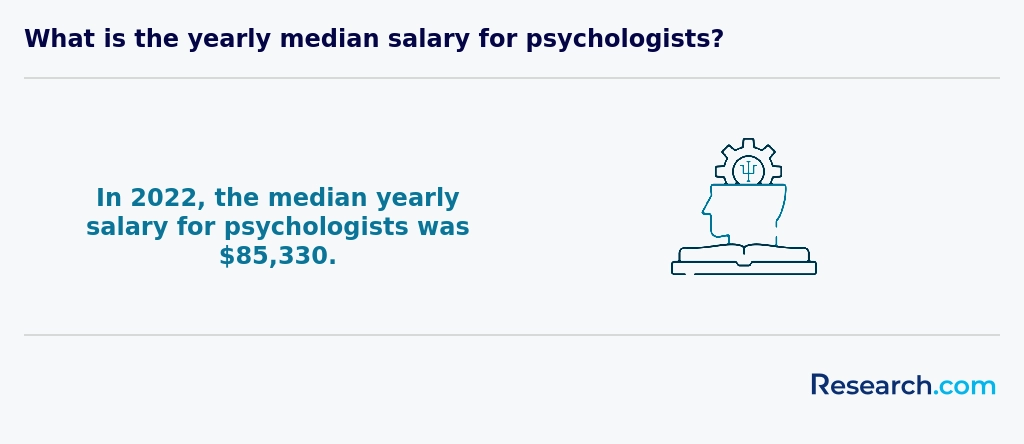
Massachusetts psychology career outlook 2027 shows wages above the national average, with median salaries exceeding $90,000. This reflects not only a competitive job environment but also the state's commitment to supporting mental health services. Those willing to specialize in areas like neuropsychology or forensic psychology, particularly in urban centers, see even more niche opportunities. Graduates often find a good balance between tuition costs at in-state public universities and strong career returns, especially when they consider programs like the top 6-month online associate degree programs for early credentialing.
2027 Best Psychology Degree Programs Ranking in Massachusetts
Investing in your education is a significant decision that can shape your future, and the Research.com team understands the importance of making informed choices. To assist prospective students in Massachusetts, we have meticulously crafted the "2027 Best Psychology Degree Programs Ranking in Massachusetts." Our commitment to quality, credibility, and accuracy is reflected in the extensive research and analysis conducted to compile this ranking.
We utilized the following reputable data sources to ensure a comprehensive evaluation of psychology programs:
By exploring this ranking, readers will gain valuable insights into the top psychology degree programs in Massachusetts, empowering them to make well-informed decisions about their educational journey. For more details on our methodology, please visit our Research.com methodology page.


Frequently Asked Questions About psychology
Psychology degree students in Massachusetts can maximize their learning by engaging actively in both coursework and practical experiences. Many programs emphasize internships or research assistant roles, which are valuable for applying theory in real-world settings. For example, the Massachusetts Department of Higher Education notes that hands-on experience improves job prospects and understanding.
Students should also take advantage of the diverse academic offerings available at Massachusetts institutions, including electives in cognitive, clinical, or social psychology. Networking through student organizations and attending local psychology conferences can deepen understanding and build professional connections.
Furthermore, Massachusetts offers access to renowned research centers such as the Harvard Brain Science Initiative, which can provide collaborative opportunities.
Emerging niches within the psychology field in Massachusetts reflect broader national trends, offering exciting opportunities for students. One growing area is neuropsychology, which explores the relationship between brain function and behavior. This niche benefits from Massachusetts' strong medical research infrastructure, including institutions like Massachusetts General Hospital.
Another expanding field is health psychology, focusing on how psychological factors affect physical health and illness management. With Massachusetts' aging population, demand for health psychologists is rising. Additionally, industrial-organizational psychology has gained traction, driven by local businesses seeking to improve workplace productivity and employee well-being.
Environmental psychology is also developing, as concerns about climate change increase. According to the U.S. Bureau of Labor Statistics, psychology-related employment in Massachusetts grew by 8% from 2019 to 2023, highlighting these evolving specialties.
Graduates with a psychology degree in Massachusetts can enhance their job prospects by gaining practical experience through internships or research assistant positions, often available at local universities and healthcare facilities. Licensure is essential for many psychology careers; candidates should prepare for the Massachusetts Board of Registration of Psychologists' exam if pursuing clinical roles. Networking through state organizations like the Massachusetts Psychological Association can also open doors to job opportunities. According to the U.S. Bureau of Labor Statistics, Massachusetts has a higher-than-average demand for psychologists, expected to grow about 6% through 2031, emphasizing the importance of relevant experience and credentials.
Employers in Massachusetts seek psychology degree graduates with strong analytical and communication skills. According to the Massachusetts Department of Higher Education, graduates proficient in data interpretation and psychological assessment stand out in the job market. Employers also value critical thinking and ethical decision-making, which are essential for clinical and counseling roles.
Interpersonal skills remain crucial, especially for those working in healthcare or social services. Familiarity with research methods and proficiency in statistical software like SPSS or R provide a competitive edge. Knowledge of local mental health regulations and cultural competence is increasingly important in Massachusetts' diverse communities.
Finding internships in Massachusetts relevant to a psychology degree involves leveraging multiple local resources. Many universities in the state, like Boston University and UMass Amherst, have established partnerships with hospitals, mental health clinics, and research centers that offer internships specifically for psychology students.
Students should also explore organizations such as the Massachusetts Psychological Association, which often lists internship opportunities and networking events. The state's rich healthcare sector, including well-known institutions like Massachusetts General Hospital, provides valuable clinical internship placements. According to the Bureau of Labor Statistics, Massachusetts employs over 9,000 psychologists, indicating strong demand.
It is advisable to start early, use campus career centers, and apply to internships offering hands-on experience in clinical, counseling, or research settings. Additionally, online platforms focused on psychology internships in Massachusetts can help identify current openings tailored to your academic and professional goals.
In Massachusetts, earning a psychology degree significantly enhances career mobility and advancement opportunities. The state is home to numerous healthcare, educational, and research institutions that value psychology graduates.
According to the U.S. Bureau of Labor Statistics, Massachusetts has one of the highest concentrations of psychologists in the nation, offering a competitive job market with a median annual wage above the national average.
A degree in psychology often serves as a foundation for roles in clinical psychology, counseling, human resources, and social services, which are growing fields in Massachusetts. Graduates with advanced degrees, such as a master's or doctorate, typically experience better job prospects and higher salaries.
Furthermore, continuing education and licensure requirements encourage professionals in the state to pursue higher credentials, directly impacting career advancement and specialization options.
Studying for a psychology degree in Massachusetts equips students with skills to work across various disciplines such as healthcare, education, and social services. Many programs emphasize collaboration with fields like neuroscience, social work, and business, reflecting the state's diverse professional landscape. Massachusetts hosts numerous research universities where interdisciplinary coursework and practical experiences are prioritized.
According to the Massachusetts Department of Higher Education, psychology graduates often engage in cross-sector roles, supported by curricula that include statistics, ethics, and behavioral science. These programs foster critical thinking and communication skills essential for teamwork.
Additionally, partnerships between universities and medical centers in Massachusetts provide hands-on opportunities, preparing students to navigate complex roles that blend psychology with medicine, technology, and policy analysis.
When deciding between a thesis and a non-thesis psychology degree program in Massachusetts, students should consider their career goals and learning preferences. Thesis programs typically require original research and a formal written document, preparing students for doctoral studies or research-intensive roles. According to the Massachusetts Department of Higher Education, about 40% of psychology graduate programs in the state offer thesis options, reflecting strong research emphasis.
Non-thesis programs often focus on applied skills and coursework, appealing to students aiming for clinical practice or professional roles. These programs generally require a comprehensive exam or capstone project instead of a thesis.
Financial considerations and program length also differ; thesis tracks might extend study by a semester or more. Evaluating faculty expertise, available resources, and specific program requirements is essential for making an informed choice.
Students based in Massachusetts who wish to study psychology abroad have several avenues to explore. Many Massachusetts universities, such as Boston University and the University of Massachusetts Amherst, offer exchange programs allowing psychology students to study at partner institutions worldwide. These programs usually last one semester or one academic year, enabling students to gain international experience while earning credits toward their degree.
The Massachusetts Department of Higher Education highlights that nearly 15% of psychology undergraduates participate in study abroad programs, reflecting strong interest in global learning.
Additionally, some U.S. accredited online psychology degrees provide opportunities to study virtually with international perspectives. This is beneficial for students seeking flexible schedules.
Students should verify that their overseas institution's psychology curriculum aligns with Massachusetts licensure requirements if they aim to work as licensed psychologists in the state.
Students pursuing psychology degrees in Massachusetts have several part-time job opportunities that complement their academic learning. Many find roles as research assistants at universities or medical centers, where they gain hands-on experience with psychological studies and methodologies. Institutions like Harvard and Boston University offer such positions, strengthening practical skills alongside coursework.
Additionally, psychology students often work as behavioral health aides or mental health technicians in clinics, supporting licensed professionals while learning patient communication and care techniques. According to the Massachusetts Department of Labor, healthcare support jobs in this field grow faster than average, increasing local opportunities.
Other common roles include tutoring psychology underclassmen or assisting in community outreach programs centered on mental health awareness.
Psychology students in Massachusetts benefit from numerous networking opportunities that can support their academic and professional growth. Institutions like Boston University and Harvard offer active psychology clubs and honor societies, which often host guest lectures and social events. These gatherings enable students to connect with peers and established professionals.
Massachusetts also hosts the Massachusetts Psychological Association (MPA), a key resource for networking events, workshops, and conferences that attract experts across various psychology fields. Membership provides students access to mentorship programs and internship listings.
Additionally, annual events like the Boston Psychological Association's meetings allow students to engage with local practitioners and researchers, fostering valuable connections for future careers.
Alumni networks play a crucial role for psychology degree students in Massachusetts by offering valuable professional connections and support. Graduates often remain engaged, providing mentorship opportunities that help current students navigate career paths and graduate school applications. According to the American Psychological Association, strong alumni ties can increase job placement rates by up to 30% in psychology fields.
In Massachusetts, renowned institutions like Boston University and UMass Amherst maintain active networks linking thousands of psychology alumni. These networks facilitate exclusive internships, research collaborations, and job leads in a competitive market.
Students also benefit from regional events and online platforms coordinated through these networks, which promote continuous learning and professional growth within the state's psychological community.
In Massachusetts, psychology students can tailor their degree programs by selecting specialized tracks such as clinical, counseling, developmental, or industrial-organizational psychology. Many universities offer elective courses and research opportunities aligned with these specialties, allowing students to develop skills relevant to their career goals.
Students can also gain practical experience through internships or fieldwork with local healthcare providers and organizations, enhancing their resumes and professional networks. According to the Massachusetts Department of Higher Education, flexibility in course choices is a key feature in state psychology programs to meet diverse career needs.
Additionally, some programs provide options for dual degrees or certifications, such as combining psychology with education or social work. This approach helps graduates adapt to growing job markets in Massachusetts, where employment for psychologists is expected to grow by 8% from 2020 to 2030, per the U.S. Bureau of Labor Statistics.
Psychology students in Massachusetts often face several common challenges throughout their academic journey. One key difficulty is balancing rigorous coursework with the demand for extensive research and practicum hours, which are essential for professional development. According to the Massachusetts Department of Higher Education, many psychology programs require students to complete between 300 to 600 practicum hours, which can be challenging to fit alongside classes and part-time work.
Additionally, competition for clinical internships in Massachusetts is intense due to a high number of graduates seeking limited spots. This can delay licensure and career progression.
Financial pressures also affect many students, as tuition rates at Massachusetts public universities average around $15,000 per year for in-state students, with private institutions often charging significantly more.
Lastly, navigating the requirements for licensure can be complex, as Massachusetts demands both graduate degree completion and supervised experience, which sometimes leads to confusion among students.
With a psychology degree in Massachusetts, graduates can pursue several professional certifications that enhance their career opportunities. One common path is becoming a Licensed Psychologist, which requires a doctoral degree in psychology, supervised experience, and passing the Examination for Professional Practice in Psychology (EPPP). According to the Massachusetts Board of Registration of Psychologists, this is essential for independent practice.
Other certifications include becoming a Licensed Mental Health Counselor (LMHC) or Licensed Clinical Social Worker (LCSW), where psychology graduates with appropriate graduate education can qualify by completing supervised hours and passing state exams. Additionally, the National Certified Counselor (NCC) credential is available for those seeking national recognition.
Specialized certifications such as Certified School Psychologist are offered through the Massachusetts Department of Elementary and Secondary Education, supporting careers in educational settings. These certifications require specific graduate coursework and state licensing exams.
Writing a winning application for a psychology program in Massachusetts requires careful attention to academic credentials and personal motivation. Most programs expect a bachelor's degree with a strong foundation in psychology and related sciences. Highlight your GPA, ideally above 3.5, as top schools like Boston University and UMass Amherst value academic excellence. Massachusetts' psychology departments often look for candidates with research experience. Include any internships or lab work to demonstrate your commitment and practical skills.
Craft a compelling personal statement that explains your interest in psychology within Massachusetts' diverse population context. Tailor it to each program's focus, referencing faculty or research themes you want to engage with. Also, obtain strong recommendation letters from professors familiar with your research and academic abilities. According to the American Psychological Association, these elements significantly impact admission chances.
Globally, psychology is recognized as a vital field addressing mental health, human behavior, and social challenges. In the United States, including Massachusetts, psychology careers benefit from standardized education and licensure requirements, ensuring professionals meet high competency standards.
The U.S. Bureau of Labor Statistics expects a 8% growth in psychologist jobs nationwide from 2022 to 2032, reflecting increasing demand. Massachusetts mirrors this trend, with a strong network of hospitals, research centers, and schools supporting psychology graduates.
Internationally, psychology practice varies with cultural contexts, yet the core principles remain consistent, allowing Massachusetts-trained psychologists to collaborate globally or pursue advanced studies abroad.
Research institutions like Harvard and Boston University contribute to Massachusetts's reputation as a global psychology education hub, attracting diverse students and fostering innovation.
Students pursuing psychology degrees in Massachusetts can gain valuable practical experience through internships and research assistant positions offered by many universities. Schools such as Boston University and University of Massachusetts provide access to diverse clinical settings and labs. According to the Massachusetts Department of Higher Education, around 70% of psychology students participate in internships before graduation.
Additionally, students can volunteer at local hospitals, community centers, or organizations focused on mental health services, which enhances hands-on learning. Networking with faculty often leads to research opportunities, allowing students to contribute to ongoing studies and publish their work. This combination of academic and practical experience is essential for licensure and career advancement in psychology fields.
Choosing the right concentration within a psychology degree program in Massachusetts depends on your career goals and interests. Common concentrations include clinical, counseling, developmental, and forensic psychology. Massachusetts has strong programs offering practical experience due to the state's numerous healthcare facilities and research institutions.
Consider the job market: according to the U.S. Bureau of Labor Statistics, Massachusetts employs a high number of clinical and counseling psychologists, reflecting local demand. Research-intensive concentrations might suit those interested in academic or scientific careers, especially given Massachusetts' focus on innovation and universities like Harvard and MIT.
Review program curricula carefully, noting available internships or practicum placements, which are crucial for licensure in Massachusetts. Also, check if faculty specialize in your preferred area. This approach ensures your concentration aligns with your long-term professional objectives.
- 2027 Best Psychology Degree Programs Ranking in Connecticut
- 2027 Best Psychology Degree Programs Ranking in Maine
- 2027 Best Psychology Degree Programs Ranking in Delaware
- 2027 Best Psychology Degree Programs Ranking in Maryland
- 2027 Best Psychology Degree Programs Ranking in Georgia
- 2027 Best Psychology Degree Programs Ranking in Illinois
- 2027 Best Psychology Degree Programs Ranking in Florida
- 2027 Best Psychology Degree Programs Ranking in Alabama
- 2027 Best Psychology Degree Programs Ranking in Iowa
- 2027 Best Psychology Degree Programs Ranking in Louisiana
See What Experts Have To Say About Studying Psychology
Read our interview with Psychology experts

Robin M. Kowalski. Ph.D.
Psychology Expert
Professor of Psychology
Clemson University

Elizabeth L. Jeglic Ph.D.
Psychology Expert
Professor of Psychology
City University of New York

Joann Farrell Quinn, Ph.D., MBA
Psychology Expert
Director at the College of Medicine Department of Medical Education
Morsani College of Medicine

- 2026 Rankings of the Best Psychology Degree Programs in Massachusetts https://psychologyonlinedegrees.org/programs/massachusetts/
- How to Become a Psychologist in Massachusetts | Starting Out in MA | Psychologist-License.com https://www.psychologist-license.com/psychologist-requirements/massachusetts-psychologist/
- Massachusetts Psychology Schools, Colleges & Universities https://www.psychologycareercenter.org/massachusetts-psychology-schools.html
- Have You Found a Niche? https://www.apaservices.org/practice/business/marketing/building/niche
- Call for papers https://www.hogrefe.com/us/journal/international-perspectives-in-psychology-research-practice-consultation
- Best Types Of Online Psychology Degrees 2025 https://www.psychology.org/degrees/
- Psychology and Sociology: Career Paths https://www.massbay.edu/academics/humanities-social-sciences/psychology-sociology/career-paths
- Why Get a Psychology Degree Online? | University of Bridgeport https://www.bridgeport.edu/news/reasons-to-get-your-psychology-degree-online/
- Ontario Psychological Association - Networking and Community Resources https://www.psych.on.ca/become-a-member-(1)/member-services/networking-and-community-resources
- Know more about thesis vs non- thesis: what is the difference? https://studyfans.com/en/blogs/816