2027 Best Psychology Degree Programs Ranking in Georgia

Co-Founder and Chief Data Scientist
Choosing the right psychology degree program in Georgia can feel overwhelming. That's why we created the 2027 Best Psychology Degree Programs Ranking in Georgia, crafted by the expert Research.com team of data scientists.
This article will guide you through top programs, helping you make an informed decision that fits your goals. A psychology degree opens doors to meaningful careers and personal growth.
Explore your options with confidence and take the first step toward a rewarding future in psychology.
Key benefits of getting psychology degree in Georgia
- Salary for psychology degree graduates: Graduates in Georgia can expect competitive salaries, such as Clinical Research Associates earning about $62,370 annually and Marketing Research Analysts around $83,190, showing strong financial opportunities.
- Potential career paths: Psychology degree holders from Georgia universities often pursue roles in human resources, marketing research, or clinical research, providing diverse and rewarding job options.
- Benefits of online psychology degrees: Online graduates enjoy flexible schedules and the ability to balance work and study, making it easier to earn their degree without sacrificing current commitments or work experience.
- 2027 Best Psychology Degree Programs Ranking in Georgia
- What can I expect from psychology degree in Georgia?
- Where can I work with psychology degree in Georgia?
What can I expect from psychology degree in Georgia?
The average cost of earning a psychology degree in Georgia varies depending on whether you attend a public or private institution. For example, graduates from the University of Georgia, a popular public university, often report paying around $10,000 to $12,000 per year for in-state tuition. Meanwhile, those attending Emory University, a private school known for its strong psychology program, face annual tuition closer to $50,000. Financial aid and scholarships can significantly reduce these expenses, something many graduates emphasize as crucial to managing costs.
Students pursuing a Bachelor's degree typically spend about four years completing roughly 120 credit hours. Practical costs include textbooks and supplies, but many find internships and research projects at Georgia State University help justify these investments by providing hands-on experience that eases job placement after graduation.
For graduate studies, expect to pay between $15,000 and $40,000 per year depending on the program and institution, with Georgia Southern University offering more affordable options for licensure-focused master's programs.
Where can I work with psychology degree in Georgia?
With a psychology degree in Georgia, you can pursue careers in mental health services, working as a licensed counselor or psychologist in community centers, hospitals, or private practices. Graduates from universities like Georgia State often find these roles rewarding, especially as demand rises due to greater mental health awareness.
Many psychology graduates land jobs in educational settings, becoming school psychologists or counselors in public and private schools across the state. For example, students from the University of Georgia have shared how they contribute to supporting student well-being and learning, addressing real challenges faced in classrooms.
Social service agencies and nonprofits also offer meaningful opportunities. Working with at-risk communities or managing substance abuse programs in places like Atlanta allows graduates to make a tangible difference. These roles often require strong interpersonal skills developed through practical experience in college.
In Georgia's bustling business hubs, industrial-organizational psychology roles in companies provide career paths focused on enhancing workplace productivity and employee wellness. Graduates frequently mention the satisfaction of applying research skills from their studies to improve real-world outcomes.
Research and academic positions at institutions like Emory University offer further avenues, where graduates engage in designing studies or teaching, fueled by passion and rigorous training. Remember, many clinical and counseling jobs require advanced degrees and state licensure, so plan accordingly to meet these requirements.
Graduates with a psychology degree from schools like the University of Georgia or Georgia State University often start their careers in roles such as human resources specialists or marketing research analysts, where annual salaries average around $76,060 and $83,190 respectively. These figures align with practical experiences shared by recent graduates who found employment in Atlanta's competitive job market.
Others pursue positions as clinical research associates or survey researchers, earning about $62,370 per year. These jobs provide solid entry points for psychology majors interested in research, allowing them to gain hands-on expertise while earning a dependable income.
For students aiming to work with children, roles like childcare workers offer a starting salary near $32,070. Many graduates appreciate that these positions offer direct impact and valuable experience, especially for those planning to advance into school psychology or counseling.
By strategically choosing careers aligned with Georgia's labor market, psychology graduates can build rewarding paths with salaries reflecting both their education and professional growth.
- In-state undergraduate tuition at public universities in Georgia averages between $10,000 and $12,000 per year, while private colleges can charge more than $25,000 annually.
- Graduate psychology programs typically cost between $30,000 and $60,000 in total, depending on the school and program length.
- The average starting salary for psychology graduates in Georgia is around $40,000 per year, with higher wages in metro areas like Atlanta.
- Licensed clinical psychologists in Georgia earn a median annual salary of $80,000 to $90,000, with specialized fields potentially offering more.
- APA accreditation is essential for many doctoral programs in Georgia and is required for licensure in clinical and counseling psychology.
- The Georgia Professional Licensing Boards Division oversees psychologist licensure, ensuring compliance with state rules for practicing professionals.
A bachelor's degree in psychology in Georgia typically takes about four years of full-time study to complete. Graduates from schools like the University of Georgia or Georgia State University often find this timeline realistic, as it aligns with the standard 120 credit hours required nationwide. Many students appreciate the clear structure and the ability to plan their coursework efficiently within this timeframe.
For those pursuing a master's degree, expect an additional two years. Master's programs in Georgia often focus on clinical or research psychology, and some universities offer combined bachelor's/master's paths, which can shorten your overall study time. Students report feeling motivated by the clear progression and the opportunity to deepen their expertise in a focused area quickly.
Doctoral degrees such as PhD or PsyD programs generally require between 4 to 7 years beyond the master's level. This timeline accounts for research, internships, and dissertation work. Many doctoral students from Georgia institutions note that managing this workload builds resilience and professional confidence, preparing them well for licensure and future careers.
Part-time study or changes in major can extend these durations, but the solid support systems at popular Georgia universities provide flexibility and guidance to keep students on track.
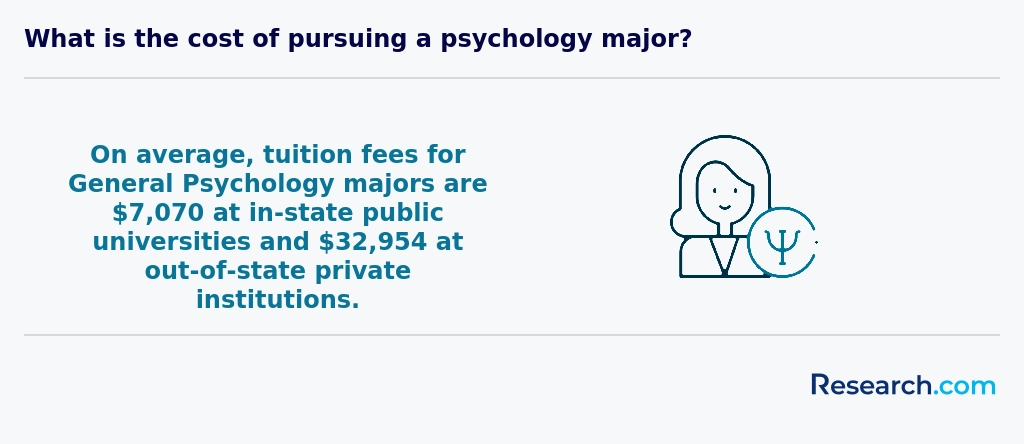
A psychology degree in Georgia represents not only an intellectual journey but also a financial commitment that should be measured against future earnings and career growth opportunities. On average, in-state tuition at public universities in Georgia is $7,070 per year, while private institutions may charge up to $33,467 annually. When you factor in fees, textbooks, and living expenses, the total cost of a four-year bachelor’s degree can range from $40,000 to $150,000. However, graduates with a bachelor’s degree in psychology report median annual salaries of around $53,830, with roles like Human Resources Specialists earning $73,080 and Clinical Research Associates commanding $57,760. Based on these figures, most students can expect to recoup their investment within 6–8 years after entering the workforce. Financial metrics like the payback period and salary-to-debt ratio are crucial for evaluating the ROI. For example, if you finance $60,000 in total education costs at a 4% interest rate and earn $53,000 post-graduation, your break-even point typically occurs in under a decade. On the other hand, students who minimize debt by attending affordable programs drastically shorten this timeframe. To explore cost-effective options, consider reviewing the Cheapest Psychology Degree Programs Ranking in Hattiesburg, MS, which highlights institutions where lower tuition can accelerate your ROI without compromising educational quality. Beyond pure numbers, it’s important to consider non-monetary returns such as professional network development, access to cutting-edge research, and the emotional fulfillment of a career in psychology. Programs with strong alumni networks and robust career services often yield superior outcomes, enhancing job placement rates and long-term salary growth. When comparing potential schools, weigh both the quantitative ROI metrics and qualitative factors like mentorship opportunities, internship placements, and specialization tracks to ensure your psychology degree in Georgia delivers maximum value for your investment.
When comparing online and on-campus psychology degrees in Georgia, flexibility and learning style are key differences. Online programs at schools like Kennesaw State offer asynchronous classes, letting students study after work or family time, which many graduates appreciate for balancing daily life. One such graduate shared how online learning allowed them to keep a full-time job while earning their degree.
In contrast, on-campus study at the University of Georgia provides direct face-to-face interaction and access to campus labs and counseling centers, which is ideal for those who thrive in structured, social environments. Graduates often highlight how hands-on clinical practica and internships on campus helped them build confidence and professional networks.
Cost-wise, in-state tuition for on-campus psychology programs usually ranges from $4,500 to $8,000 annually, but living expenses can add up. Online students may pay similar tuition but save money on commuting and housing. Both formats require ensuring programs are regionally accredited by agencies like SACSCOC to safeguard degree recognition.
To maximize the benefits of pursuing a psychology degree in Georgia, it's essential to consider factors that enhance your educational journey and future career prospects. One critical aspect is affordability, and researching institutions that offer competitive pricing without compromising on quality is vital. For instance, finding an affordable psychology school in Georgia can significantly impact your financial stability and peace of mind, allowing you to focus more on your studies and less on financial burdens. By weighing the cost against the potential return on investment, including job opportunities and salary expectations, you can make informed decisions about your education. Furthermore, understanding the different specializations available, such as clinical psychology, counseling psychology, and industrial-organizational psychology, can help you tailor your degree to your interests and career aspirations, ultimately leading to a more fulfilling and successful professional life.
The average cost of a psychology degree in Georgia typically centers around $11,450 for in-state students and can rise to $37,208 for out-of-state students. These figures reflect median total tuition fees, which means students enrolling at popular institutions such as the University of Georgia or Georgia State University usually find costs within this range. Graduates often recall balancing their budgets carefully, especially when factoring in additional expenses like lab fees or practicum requirements that come with psychology programs.
Many students pursuing a psychology degree in Georgia appreciate the advantage of attending public universities, where in-state tuition remains notably affordable compared to private colleges. A psychology graduate's experience often emphasizes the importance of exploring scholarships and financial aid options early. For example, students frequently mention how securing state grants and leveraging federal aid was crucial in managing the total tuition fees. When comparing options, looking up an affordable psychology school in Georgia can make a meaningful difference in the net cost of education.
Understanding the average cost of psychology degree in Georgia also means preparing for related expenses such as textbooks and clinical internship fees. Graduates share that planning realistically for these additional costs helps maintain financial stability throughout the program. By researching detailed tuition fees and financial assistance well in advance, prospective students can make informed decisions and gain confidence in their investment toward a psychology career.

After completing a psychology degree in Georgia, most graduates seeking clinical or counseling roles must obtain state licensure. The Georgia Composite Board of Professional Counselors, Social Workers, and Marriage & Family Therapists oversees licensure for Licensed Professional Counselors (LPCs) and related credentials. Key steps include: 1. Educational Prerequisites: A master’s or doctoral degree in psychology or counseling from a regionally accredited institution, with specific coursework in ethics, assessment, and intervention. 2. Supervised Experience: 3,000 hours of post-degree supervised clinical practice under a board-approved supervisor, typically completed over two years. 3. Examination: Passing the National Counselor Examination (NCE) or National Clinical Mental Health Counseling Examination (NCMHCE), and for psychologists, the Examination for Professional Practice in Psychology (EPPP). 4. Application and Fees: Submission of official transcripts, supervisor verification forms, criminal background check, and payment of the licensure application fee. Beyond LPC or psychologist licensure, many psychology graduates pursue specialized certifications. For example, those interested in behavior analysis can explore a bcba degree online to fulfill educational prerequisites for Board Certified Behavior Analyst (BCBA) certification through the Behavior Analyst Certification Board (BACB). Maintaining licensure requires ongoing professional development: Georgia mandates 36 hours of continuing education every two years, including at least three hours in ethics. Understanding these requirements early ensures a smooth transition from student to licensed professional, empowering graduates to deliver competent psychological services across diverse settings.
When pursuing a psychology degree in Georgia, start by submitting the FAFSA to access federal aid options like Pell Grants, which can provide up to $7,395 annually. Many psychology students at institutions like Georgia State University have successfully used these grants to lower their tuition costs while focusing on studies and research projects.
Don't overlook the HOPE Scholarship and HOPE Grant offered by the State of Georgia, which support residents attending in-state colleges. For example, a graduate from the University of Georgia shared how maintaining a strong GPA made them eligible for HOPE funds, easing the financial burden and allowing more time for internships.
Look for scholarships specifically targeting psychology majors, such as those provided by the American Psychological Association or departmental awards at Georgia universities. These can reward academic excellence or active involvement in research, turning ambition into financial relief.
For graduate students, assistantships and fellowships offered at these schools often cover significant tuition portions and include stipends. Several graduates have described how balancing teaching or research roles with studies transformed their psychology education experience.
Lastly, consider on-campus work-study programs to gain valuable experience while earning income and review private loan options only after maximizing federal aid opportunities.
Students can enhance their educational experience and future career impact by actively seeking opportunities beyond the classroom. Engaging in internships, joining professional organizations, and participating in networking events are powerful ways to maximize the return on your psychology degree. For example, connecting with peers and alumni can open doors to mentorship programs and exclusive research projects that further develop practical skills. Additionally, exploring accelerated paths such as online psychology degree masters can offer flexible options to continue your education while working, thereby enhancing both your academic and professional credentials. Taking advantage of campus resources like career counseling, workshop seminars, and alumni associations not only helps in building a robust resume but also ensures that you are well-prepared to navigate the ever-evolving job market in psychology. This proactive approach enables students to stay ahead of industry trends, secure competitive positions, and ultimately transform their passion for psychology into a thriving career.
To enroll in a psychology degree program in Georgia, start by ensuring you have a solid academic foundation. For undergraduate studies, most universities, like Georgia State University, expect a high school diploma or GED with a GPA around 2.5 to 3.0. Although some schools have made SAT or ACT scores optional, submitting strong test results can still boost your application.
Practical experience matters. Graduates from the University of Georgia often recount how volunteering or internships related to psychology helped them stand out. Getting involved in community services or human services roles showcases genuine interest and dedication, which admissions committees appreciate.
If pursuing graduate degrees, be prepared with a bachelor's degree, ideally in psychology. Many programs ask for a 3.0 GPA, letters of recommendation, and a clear statement of purpose. Having research or counseling experience will strengthen your application, as emphasized by Georgia Psychological Association guidelines. This practical background not only eases admission but also enriches your study journey.

Becoming a licensed psychologist in Georgia involves several key steps:
- Obtain a doctoral degree (PhD or PsyD) from an APA-accredited program.
- Complete a minimum of 1,500 postdoctoral supervised hours under a licensed psychologist.
- Pass the national Examination for Professional Practice in Psychology (EPPP).
- Pass the Georgia Jurisprudence Exam covering state laws and ethical standards.
- Submit your application and fees to the Georgia Board of Examiners of Psychologists.
- Consider an accelerated psychology degree online to meet education requirements more quickly.
Psychology degree programs in Georgia begin with essential courses like General Psychology, offering students a practical overview of behavior and mental processes. Graduates from universities such as the University of Georgia often recall how this foundational course helped them connect theory to everyday interactions, like understanding why people react differently under stress.
Students quickly move into specialized subjects like Biological Psychology and Neuroscience, which reveal the link between brain activity and behavior. Those who studied at Georgia State University noted how laboratory sessions made abstract concepts tangible, sparking excitement about real-world applications in healthcare settings.
Research skills are a critical part of the curriculum, with courses such as Research Methods in Psychology and Statistics for Behavioral Sciences training students to design studies and analyze data effectively. Graduates often emphasize how mastering these skills boosted their confidence when engaging in internships or presenting projects locally.
Core classes also include Developmental, Cognitive, Social, and Abnormal Psychology, each exploring distinct facets of human behavior. Practical experience through Clinical Psychology or Counseling Techniques, often paired with internships in Georgia-based clinics, helps students apply classroom learning to community needs, making their studies feel meaningful and directly impactful.
Georgia psychology programs concentration options typically include Clinical Psychology, Counseling Psychology, Industrial-Organizational Psychology, Developmental Psychology, Forensic Psychology, Health Psychology, and School Psychology. Graduates from institutions like Georgia State University often recall engaging deeply in practicum experiences in Clinical Psychology, preparing them effectively for licensure and real-world patient interactions. Others found their strengths in Industrial-Organizational Psychology, applying workplace psychology concepts firsthand during internships connected through the university.
These specializations offer practical avenues whether you aim to work in clinical settings, schools, or organizational environments. Students frequently appreciate how programs at Georgia's universities balance theory with applied research, which boosts confidence in employment prospects. For example, learners specializing in School Psychology describe how their training enabled them to support children's emotional well-being during school placements.
Those interested in exploring these options further might consider pursuing an online psychology degree masters for flexibility while focusing on their chosen specialization. Carefully matching your interests with the specialization can help you build a satisfying career aligned with Georgia's growing mental health and organizational development sectors.
Start by matching the degree level to your career goals: many graduates from Georgia universities share that earning a Bachelor of Science in Psychology provided a solid foundation, while those aiming for clinical roles pursued APA-accredited doctoral programs available within the state. Consider affordability too; public institutions like the University of Georgia offer in-state tuition between $9,000 and $12,000 annually, which relieved financial pressure for several students starting out.
Look closely at curriculum details-graduates often recall how hands-on internships or specialized courses in clinical or forensic psychology prepared them effectively for the workforce. Some students benefited greatly from programs blending online flexibility with traditional classes, easing the balance between study and life commitments.
Explore outcomes by reviewing graduation and employment rates; successful alumni networks and licensure exam pass rates matter when choosing among the best psychology degree programs in Georgia. For those interested in advanced certifications, it's worth checking out options like a bcba degree online to complement psychology studies and expand career opportunities.
Graduates with a psychology degree in Georgia find diverse career paths that align with their interests and skills. Many pursue clinical or counseling psychology, providing vital mental health services and earning around $77,000 annually. Those studying at institutions like the University of Georgia often share how hands-on practicum experiences there prepared them for licensure and real-world assessment challenges. Another clear option is school psychology, supporting students' emotional and behavioral needs in Georgia's schools-a field with promising growth as education systems expand mental health support.
For those interested in workplace dynamics, industrial-organizational psychology offers roles in Atlanta's thriving business centers, including HR and consulting. Graduates from Georgia State University report feeling empowered using psychological principles to boost employee well-being and productivity. Other career paths include research jobs at universities or government agencies, which help shape policies through data-driven insights. Social service roles, health psychology, and forensic psychology also offer fulfilling opportunities across Georgia's communities.
When exploring these options, carefully weigh program costs versus career prospects; for reference, students can look into the Cheapest Psychology Degree Programs Ranking in Hattiesburg, MS. This practical step helps balance investment with job prospects with psychology degree Georgia graduates pursue.
The job market for psychology degree holders in Georgia remains steady and promising, with a projected growth of about 8% through 2031. Graduates from well-known institutions such as the University of Georgia and Georgia State University often find roles in clinical settings, schools, and private practices, especially in cities like Atlanta where demand is higher. These Georgia psychology career opportunities benefit those who pursue advanced degrees and licensure, which open doors to higher salaries and greater job security.
Many graduates start as psychological assistants or behavioral specialists, gaining practical experience that leads to independent practice. Salaries typically range around $83,000 annually but vary with experience and location. Students balancing costs find public universities in Georgia offer relatively affordable tuition compared to national averages. Prospective students might explore accelerated degrees to earn credentials faster, entering the workforce promptly while meeting the region's growing mental health needs.
Understanding this realistic psychology degree job outlook Georgia-wise helps to plan a rewarding career aligned with local market demands and personal growth goals.
2027 Best Psychology Degree Programs Ranking in Georgia
Investing in your education is a significant decision that can profoundly impact your future, and the Research.com team recognizes the importance of providing trustworthy guidance. To support prospective students interested in psychology degrees in Georgia, we have carefully developed the "2027 Best Psychology Degree Programs Ranking in Georgia." Our dedication to quality, credibility, and accuracy is demonstrated through thorough research and detailed analysis.
We utilized the following reputable data sources to ensure a comprehensive evaluation of psychology programs:
By reviewing this ranking, readers will gain valuable insights and clarity on the top psychology degree options in Georgia, empowering them to make informed educational choices. For further information on our approach, please visit our Research.com methodology page.


# 18 position
Georgia Southern University
Doctoral Degree in Clinical, Counseling and Applied Psychology


Frequently Asked Questions About psychology
Psychology degree students in Georgia can maximize their learning by engaging actively in both academic and practical experiences. Many universities in Georgia, such as the University of Georgia and Georgia State University, offer opportunities for undergraduate research and internships, which are critical for skill-building. According to the Georgia Board of Psychology, hands-on experience in applied settings enhances understanding of psychological concepts.
Students should also utilize campus resources like tutoring centers and join psychology clubs to collaborate with peers. Attending workshops and conferences within Georgia broadens perspectives and networking opportunities. Additionally, staying current with Georgia-specific mental health policies and demographic trends, reflected in reports by the Georgia Department of Behavioral Health, can enrich classroom learning.
Emerging niches within the psychology field in Georgia reflect national and state trends shaped by growing societal needs. One notable area is neuropsychology, which focuses on brain-behavior relationships and is expanding due to increased awareness of brain injuries and neurological disorders. Another fast-growing niche is health psychology, addressing behavioral factors in chronic illness management, an important focus given Georgia's higher rates of diabetes and obesity reported by the Centers for Disease Control and Prevention (CDC).
Additionally, forensic psychology is gaining ground in Georgia's legal system, offering opportunities to assist with criminal justice cases and policy development. Lastly, industrial-organizational psychology is rising as businesses seek experts to improve workplace productivity and employee well-being, supported by data from the Georgia Department of Labor indicating growth in corporate sectors.
Preparing for the job market after earning a psychology degree in Georgia involves strategic planning and skill development. Graduates should seek internships or practicum experiences during their studies, which many universities in Georgia strongly encourage. These experiences provide practical skills and professional networking essential for employment.
Georgia's Department of Labor reports that the state's psychology-related fields, including counseling and social services, are growing by about 8% annually, faster than the national average. This growth creates opportunities in schools, healthcare, and private practices.
Additionally, obtaining relevant certifications and considering graduate studies such as a master's or doctorate can expand job prospects. Joining local professional organizations like the Georgia Psychological Association can also provide valuable resources and connections.
Employers in Georgia seek psychology degree graduates who demonstrate strong critical thinking and analytical skills. These abilities help in interpreting complex behavioral data and applying psychological principles effectively. According to the Georgia Department of Labor, communication skills are also essential, as professionals often work in interdisciplinary teams or directly with clients.
Additionally, practical experience with research methods and statistical analysis is highly valued. Graduates familiar with tools like SPSS or R have an advantage in both clinical and organizational settings. The American Psychological Association emphasizes cultural competence as vital in Georgia's diverse communities, enabling graduates to provide inclusive care.
Time management and ethical decision-making round out the top skills desired. These ensure that graduates adhere to professional standards while managing caseloads efficiently.
Finding internships in Georgia relevant to a psychology degree involves leveraging multiple resources. Many universities, such as the University of Georgia and Georgia State University, have dedicated career centers that connect students to local psychology clinics, hospitals, and nonprofit organizations.
Students should also explore state agencies like the Georgia Department of Behavioral Health and Developmental Disabilities, which often offer internship opportunities in mental health services. According to the Bureau of Labor Statistics, Georgia employs over 7,000 psychologists, creating practical internship demand.
Professional organizations like the Georgia Psychological Association provide listings and networking events to help students secure internships. Additionally, online platforms like Handshake and local hospital internship programs are valuable tools for locating relevant placements.
A psychology degree in Georgia significantly enhances career mobility and advancement opportunities across various sectors. Graduates with bachelor's or higher degrees in psychology can access roles in healthcare, education, business, and social services, reflecting the state's growing demand for mental health professionals.
According to the U.S. Bureau of Labor Statistics (BLS), Georgia's employment of psychologists is projected to grow by 14% from 2021 to 2031, higher than the national average of 8%. This growth supports strong job prospects and upward career movement for degree holders within the state.
Advanced degrees like master's or doctoral qualifications are often required for leadership or specialized positions, such as clinical psychologists or counselors. Further, psychology graduates can leverage their skills in human resources, research, and organizational development.
Additionally, local universities often offer internships and networking opportunities that contribute to professional advancement. These elements collectively increase the likelihood of career growth and salary improvements for individuals holding psychology degrees in Georgia.
Studying for a psychology degree in Georgia equips students with foundational knowledge in human behavior, cognitive processes, and emotional health, essential for interdisciplinary collaboration. Programs often integrate courses from related fields such as sociology, biology, and statistics, fostering a multi-faceted understanding of human experiences.
Georgia universities emphasize applied research methods and data analysis skills, preparing graduates to work alongside professionals in healthcare, education, and criminal justice. According to the Georgia Board of Regents, over 60% of psychology graduates pursue roles requiring cross-disciplinary knowledge.
This holistic approach helps students communicate effectively with specialists across diverse sectors, making them valuable contributors to team-based problem solving and innovation in practical settings statewide.
When choosing between a thesis and a non-thesis psychology degree program in Georgia, consider your career goals and learning preferences. Thesis programs focus on original research and can prepare students for doctoral studies or research-based careers. Non-thesis options often emphasize coursework and practical experience, leading to quicker completion and suitability for applied psychology roles.
In Georgia, universities like the University of Georgia and Georgia State offer both tracks. According to the Georgia Board of Regents, about 40% of psychology graduates pursue thesis options, reflecting strong research emphasis.
Evaluate faculty expertise, available resources, and your interest in conducting research to make an informed choice.
Students in Georgia seeking psychology degrees abroad have several options through established exchange programs and partnerships. Many universities in Georgia participate in study abroad programs with institutions in Europe, Canada, and Australia, allowing psychology majors to gain international experience while earning credits transferable to their home institution.
The University System of Georgia supports such opportunities, with programs often lasting from a semester to a full academic year. According to the Georgia Board of Regents, the number of students studying abroad from Georgia universities reached approximately 2,000 annually before the pandemic, with psychology among the popular fields.
Additionally, some private Georgia colleges offer their own faculty-led study abroad courses focused on psychology, integrating cultural psychology and research methods in different settings. These programs provide valuable exposure to diverse psychological theories and practices.
Students pursuing psychology degrees in Georgia have various part-time job opportunities that complement their education. Popular roles include behavioral health technicians, where students assist in mental health facilities or clinics. These positions provide direct exposure to clinical settings, enhancing practical skills. Another common job is research assistant on university projects, helping collect and analyze psychological data. According to the Georgia Department of Labor, the behavioral health sector is expected to grow by 14% from 2022 to 2032, signaling increasing job availability. Additionally, tutoring psychology or related subjects allows students to reinforce their knowledge while earning income.
Psychology students in Georgia have access to a variety of networking opportunities that can enhance their academic and professional growth. Many universities, such as the University of Georgia and Georgia State University, host psychology clubs and honor societies like Psi Chi, which connect students with peers and faculty. These organizations often offer guest lectures, workshops, and career fairs.
Additionally, Georgia's proximity to Atlanta provides students access to professional psychology associations, such as the Georgia Psychological Association, which holds annual conferences attracting hundreds of local professionals. Internship placements at nearby hospitals and research centers also facilitate valuable real-world connections. According to the National Center for Education Statistics, these experiences contribute to stronger job prospects after graduation.
Alumni networks play a crucial role for psychology degree students in Georgia by providing valuable professional connections. Graduates can access job opportunities through alumni referrals, a key advantage in the competitive psychology job market. According to the American Psychological Association, networking improves employment prospects by about 70% in psychology fields.
In Georgia, schools like the University of Georgia and Georgia State University maintain active psychology alumni groups that organize mentorship programs and career workshops. These initiatives help students navigate licensure requirements and gain insight into local mental health industries.
By engaging with alumni, students enhance skills and receive career guidance, which increases their chances of successful employment after graduation.
Customizing a psychology degree in Georgia allows students to tailor their education around specific career goals. Many universities in Georgia offer elective courses in areas like clinical psychology, counseling, or industrial-organizational psychology. Students can choose internships or research projects relevant to their intended career path, enhancing practical skills and building professional networks.
Some programs also offer concentrations or minors, such as forensic psychology or child development, enabling deeper focus. According to the Georgia Board of Regents, more than 15 institutions provide psychology degrees with flexible curricula.
Students should work closely with academic advisors to select courses that align with licensure requirements or graduate school prerequisites. This approach ensures the degree supports both immediate job placement and long-term professional advancement.
Psychology students in Georgia often face several common challenges during their studies. One major issue is managing the demanding coursework, which includes both theoretical learning and extensive research projects. The average program requires understanding complex concepts in cognitive, developmental, and clinical psychology, which can be overwhelming for many.
Financial constraints are another significant hurdle. According to the National Center for Education Statistics, the average in-state tuition for public universities in Georgia is around $10,000 per year, which can strain students without sufficient scholarships or aid.
Additionally, gaining practical experience through internships or practicum placements can be competitive due to limited availability in the state's mental health facilities. This hands-on training is crucial for licensure and employment but may delay graduation if not secured timely.
Finally, students must navigate licensing requirements set by the Georgia Composite Board of Professional Counselors, Social Workers, and Marriage & Family Therapists, which include specific supervised hours that can extend the pathway to full qualification.
With a psychology degree in Georgia, graduates can pursue several professional certifications that enhance career opportunities. Common certifications include the Licensed Professional Counselor (LPC), which requires a master's degree, supervised experience, and passing a state exam. LPCs often work in mental health clinics or private practice. Another key certification is the Certified Alcohol and Drug Counselor (CADC), valuable for those focusing on substance abuse treatment.
For those interested in school settings, the National Certified School Psychologist (NCSP) credential is recognized and requires meeting state-specific licensure criteria. According to the Georgia Board of Professional Counselors, licensure options are growing as demand for mental health services rises statewide.
To write a winning application for a psychology program in Georgia, start by emphasizing your academic achievements, especially in psychology and related sciences. Many Georgia universities, including the University of Georgia and Georgia State University, look for applicants with strong GPAs, typically above 3.0. Highlight any research experience, internships, or volunteer work in mental health settings, as real-world exposure is highly valued.
Craft a compelling personal statement that explains your passion for psychology and specific career goals. Use clear examples to show your commitment and understanding of the field. Additionally, obtain strong recommendation letters from professors or professionals familiar with your skills.
Meet all application deadlines and clearly follow submission guidelines. Some programs may require GRE scores or undergraduate coursework in statistics and research methods. Checking each school's specific criteria online or through the Georgia Board of Regents website can give an advantage in preparing a complete and focused application.
Psychology careers in the United States, including Georgia, are influenced by global trends that emphasize interdisciplinary research and applied practice. Internationally, psychology integrates cultural competence, highlighting the importance of understanding diverse populations-a focus that resonates with Georgia's growing multicultural communities. According to the U.S. Bureau of Labor Statistics, psychology employment is projected to grow 8% from 2022 to 2032, slightly faster than average across all occupations.
Globally, psychologists address mental health challenges shaped by social, economic, and technological forces, a trend reflected in U.S. training programs emphasizing evidence-based therapies and technology use. In Georgia, universities incorporate these global perspectives into their curriculums to prepare students for diverse career opportunities.
The growing need for mental health services worldwide impacts job availability, making psychology a viable and competitive field. Networking through international research collaborations is also common, enriching educational experiences for students in Georgia pursuing psychology degrees.
Students pursuing a psychology degree in Georgia can gain practical experience through internships, research assistantships, and onsite lab work offered by many universities. Institutions such as the University of Georgia and Georgia State University have partnerships with local clinics and mental health organizations, enabling students to engage with real-world psychological practice.
Participating in research projects under faculty supervision is common, providing hands-on experience in data collection and analysis. The Georgia Board of Psychology notes that internships are essential for licensure, encouraging students to complete supervised hours during their studies.
Additionally, joining psychology clubs or volunteering at community centers can supplement practical skills and networking opportunities within the state.
Choosing the right concentration within a psychology degree program in Georgia involves understanding your career goals and interests. Psychology programs in the state typically offer concentrations such as clinical, counseling, industrial-organizational, and developmental psychology. It is important to research how each concentration aligns with job prospects; for example, clinical psychology is in demand due to Georgia's growing mental health initiatives, as reported by the Georgia Department of Labor.
Consider also the licensing requirements in Georgia if you aim to become a practicing psychologist, since certain concentrations better prepare you for licensure exams.
Additionally, look for programs accredited by the American Psychological Association (APA), which ensures quality education relevant to Georgia's standards.
- 2027 Best Psychology Degree Programs Ranking in Florida
- 2027 Best Psychology Degree Programs Ranking in Alabama
- 2027 Best Psychology Degree Programs Ranking in Louisiana
- 2027 Best Psychology Degree Programs Ranking in Indiana
- 2027 Best Psychology Degree Programs Ranking in Maryland
- 2027 Best Psychology Degree Programs Ranking in Illinois
- 2027 Best Psychology Degree Programs Ranking in Delaware
- 2027 Best Psychology Degree Programs Ranking in Kansas
- 2027 Best Psychology Degree Programs Ranking in Iowa
- 2027 Best Psychology Degree Programs Ranking in Connecticut
See What Experts Have To Say About Studying Psychology
Read our interview with Psychology experts

Elizabeth L. Jeglic Ph.D.
Psychology Expert
Professor of Psychology
City University of New York

Robin M. Kowalski. Ph.D.
Psychology Expert
Professor of Psychology
Clemson University

Joann Farrell Quinn, Ph.D., MBA
Psychology Expert
Director at the College of Medicine Department of Medical Education
Morsani College of Medicine

- Georgia Psychology Programs https://www.onlinepsychologydegrees.com/states/georgia/
- CLINICAL PSYCHOLOGY (THESIS / NON-THESIS) - Lisansüstü Eğitim Enstitüsü https://lee.nisantasi.edu.tr/en/clinical-psychology-thesis-non-thesis/
- Ontario Psychological Association - Networking and Community Resources https://www.psych.on.ca/become-a-member-(1)/member-services/networking-and-community-resources
- Professional Networking For Psychologists | Psychology.org https://www.psychology.org/resources/professional-networking/
- Staying connected, made simple: how associations and alumni networks grow with Socie - Socie App https://socie.eu/staying-connected-made-simple-how-associations-and-alumni-networks-grow-with-socie/
- What Can You Do With a Psychology Degree? Careers, Paths, and What to Study https://www.griffith.ie/knowledge/what-can-you-do-with-a-psychology-degree-careers-paths-and-what-to-study
- Psychology - SWPS University https://english.swps.pl/academics/warsaw/ba-programs/psychology
- Psychology Jobs - Georgia Psychological Association https://careers.gapsychology.org/
- Undergraduate Program in Psychology https://ug.edu.ge/en/rogor-da-ratom-unda-chaabaro-fsiqologiaze-1
- Mental Health Challenges Faced by Psychology Students | The Healthcare Guys https://healthcareguys.com/2023/11/23/mental-health-challenges-faced-by-psychology-students/