
2027 Most Affordable Psychology Degree Programs Ranking in Pullman

Co-Founder and Chief Data Scientist
Choosing the right psychology degree can shape your future in meaningful ways. For students in Pullman, finding an affordable program that fits both your goals and budget is essential.
This article introduces the 2027 Most Affordable Psychology Degree Programs Ranking in Pullman, created by the Research.com team of data scientists. It offers clear insights to help you make well-informed decisions about which programs truly stand out.
Exploring these options can bring you closer to a rewarding career, all while managing costs effectively. Your journey toward a fulfilling psychology path starts here.
Key benefits of getting psychology degree in Pullman
- Salary for psychology degree graduates: Graduates in Pullman can expect strong earnings, such as Clinical Research Associates earning around $62,370 annually and Marketing Research Analysts making about $83,190 per year.
- Career paths: Psychology graduates from Washington State University in Pullman pursue diverse roles like Human Resources Specialists and Survey Researchers, opening doors to exciting and fulfilling careers.
- Benefits of online degrees: Earning a psychology degree online from a university in Pullman offers flexibility and convenience without sacrificing quality, perfect for balancing life and study while advancing your career.
- 2027 Most Affordable Psychology Degree Programs Ranking in Pullman
- What can I expect from psychology degree in Pullman?
- Where can I work with psychology degree in Pullman?
What can I expect from psychology degree in Pullman?
If you're thinking about getting a psychology degree in Pullman, Washington State University (WSU) is the go-to spot, and the tuition usually runs around $11,000 per year for in-state students. For those coming from out of state, it can jump closer to $26,000 annually. Graduates often talk about how investing in the program feels totally worth it because of the hands-on research opportunities and close faculty support they get at WSU, which really helps bring the theories to life.
Many students mention how working in labs or doing internships at local hospitals gives them a real taste of what a psychology career looks like. It's not just books and lectures; it's practical stuff that keeps the learning exciting and useful. Plus, even though Pullman's a small town, the community vibe makes the price tag feel less intimidating since you're not caught in the hustle of expensive cities.
The grad programs, like the Master's and Ph.D. in psychology, tend to cost more but open up awesome career doors in research and counseling. For anyone eyeing psychology in Pullman, the balance between cost and quality is something past students often highlight as a major plus.
Where can I work with psychology degree in Pullman?
If you earn a psychology degree in Pullman, you've got some cool local job options to explore. Many grads from Washington State University jump into education roles like school counselors or research assistants, helping students and staff navigate mental health challenges right on campus or nearby schools. It's really rewarding, especially when you see how your work makes a difference in someone's day.
Healthcare is another solid path. Places like Pullman Regional Hospital regularly need folks with psychology backgrounds as behavioral health techs or counselors. A lot of graduates love this because it's hands-on and gives you a chance to support people going through tough times in a clinical setting.
Some grads find themselves working with social services, helping coordinate programs or support families in Whitman County. These jobs often come with a real sense of purpose, knowing you're improving community wellness. And if you're into business, you can even apply your degree in HR or organizational roles, using your understanding of people to boost workplace vibes.
Overall, studying psychology in Pullman opens doors to meaningful work where you can truly connect with people-whether it's at the university, hospital, community center, or inside a company.
If you're graduating with a psychology degree in Pullman, your paycheck can vary a lot depending on the path you take. For example, some grads land jobs as human resources specialists, earning about $76,060 a year on average, which is pretty solid for starting out. Others dive into roles like marketing research analyst, where the national average hits around $83,190 annually-nice if you enjoy digging into data and consumer behavior.
Some grads find their way into clinical research or survey research jobs, usually making about $62,370 a year. Picture yourself working at Washington State University on a research project, gaining hands-on experience while earning that salary. If you're thinking about entry-level roles like childcare work, the pay is understandably lower, around $32,070, but it's a great way to get your foot in the door and build valuable skills.
Living in Pullman helps too since the cost of living is pretty reasonable compared to big cities. Many grads from local universities say this balance of decent pay and affordable living makes their early career feel doable and even exciting.
- Psychology degree tuition in Pullman ranges from about $8,000 to $12,000 per year for in-state students.
- A bachelor's degree typically takes four years and includes courses like cognitive psychology, developmental psychology, and research methods.
- Starting salaries for psychology graduates in Pullman are around $40,000 to $50,000 annually, increasing to $60,000-$80,000 with experience or advanced degrees.
- Job growth for psychology roles in Pullman is expected to be about 8% through 2030, reflecting rising demand for mental health services.
- Financial aid options include scholarships, grants, and assistantships specifically for psychology students, helping to reduce tuition costs.
If you're thinking about getting a psychology degree in Pullman, you'll likely spend about four years finishing your bachelor's if you're studying full-time at places like Washington State University. Many grads talk about how those years fly by thanks to engaging classes in research methods and interesting electives that really make the subject come alive.
Now, if you decide to keep going and earn a master's degree in psychology, expect to add roughly two more years. Grad students often share how rewarding it is to dive deeper into supervised research or practicum experiences, which you can find at local universities in Pullman. It really helps you build hands-on skills and gain confidence.
For those aiming higher and shooting for a doctoral degree like a Ph.D. or Psy.D., the journey is longer-usually 4 to 7 years after finishing your bachelor's. Graduates describe this phase as intense but fulfilling, often juggling research, internships, and writing a dissertation that feels like a personal accomplishment.
All in all, studying psychology in Pullman offers a solid and realistic timeline that matches the classic U.S. academic experience, with plenty of opportunities to grow and explore the field.
Aspiring psychologists in Washington must meet state licensure standards to practice legally and ethically. Key steps include:
- Enroll in an APA-accredited doctoral program (PhD or PsyD) in psychology.
- Complete at least 1,500 hours of supervised practicum and internship experience.
- Pass the national Examination for Professional Practice in Psychology (EPPP) and the Washington jurisprudence exam.
- Submit your license application, official transcripts, supervision verification, and fees to the Washington State Department of Health.
- Maintain licensure with biennial renewal, including 36 hours of continuing education to stay current with professional standards.
For those pursuing related counseling credentials, explore accredited online options like marriage and family therapy online programs accredited.
If you're thinking about getting a psychology degree in Pullman, the biggest difference between online and on-campus programs boils down to how you connect with people and manage your time. On-campus programs at places like Washington State University mean you're right there in classrooms, chatting face-to-face with professors and classmates. Graduates often say how much they enjoyed those lively group discussions and hands-on lab work, which really helped them understand tricky concepts. Plus, being on campus means easy access to cool resources like labs and counseling centers, making the experience pretty immersive.
Online degrees, on the other hand, give you way more flexibility. You can study from home or wherever fits your schedule, which is awesome if you're juggling work or family. Some graduates mention that while they miss in-person hangouts, virtual lectures and forums still let them connect and learn effectively. Just keep in mind that internships might take a bit more effort to arrange since you're not physically at the university.
Cost and convenience play a role too-on-campus tuition at WSU is about $11,900 a year for locals, plus living costs, while online programs can save on things like housing. So it really depends on what fits your lifestyle and learning style best.
When considering a psychology degree in Pullman, WA, one of the critical factors to evaluate is the cost and the potential return on investment. Given the financial commitments involved, it's essential for prospective students to assess not only the tuition fees but also the overall value that a psychology degree from institutions in Pullman can offer. For those looking to pursue higher education at an affordable rate, exploring affordable psychology schools in Washington can provide a comprehensive insight into cost-effective options. This involves understanding the average cost of obtaining a psychology degree, available financial aid, and the potential career paths and salaries that graduates can expect. By analyzing these aspects, students can make informed decisions about their educational investments, ensuring that they choose a program that aligns with both their academic goals and financial situation.
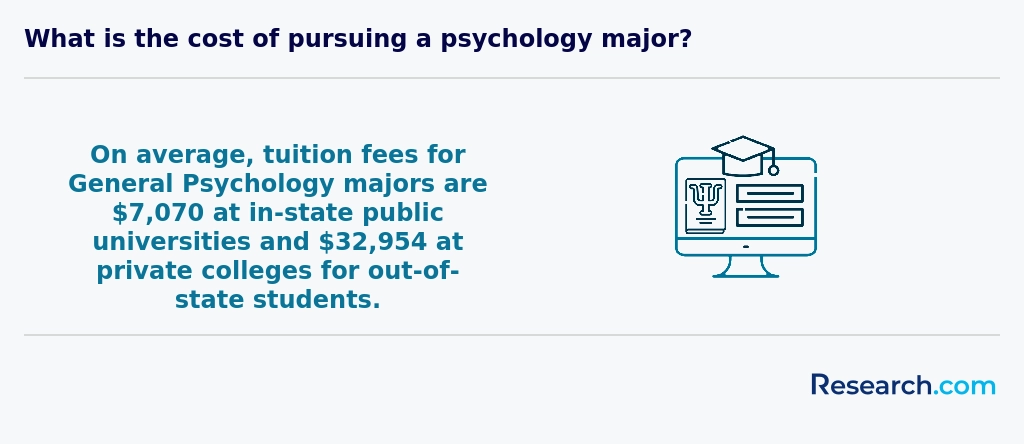
If you're planning to study psychology in Pullman, the average cost of a psychology degree here typically falls around $44,334. This figure covers the full journey through the program and is pretty aligned with what many students at Washington State University, the go-to school for psychology in Pullman, experience. Graduates often mention that while the tuition is a major part of the expense, other costs like textbooks, housing, and day-to-day living add up too, but overall, it feels like a solid investment in their future.
Many students looking for an affordable psychology degree programs Pullman WA find that in-state tuition fees are much kinder to the wallet, often totaling something closer to $13,391. This lower cost can make a huge difference when budgeting for everything from rent in Pullman's college neighborhoods to those all-important psychology textbooks. It's cool hearing how some students manage to balance part-time jobs and scholarships to make their education manageable without sacrificing what they love about their studies.
One common theme among psychology grads is the value of financial aid and scholarships, which can really help bring down those overall costs. For example, those involved in graduate-level research often find assistantships that offset tuition expenses and provide great hands-on experience. If you're considering a path toward licensure, you might want to check out resources like the LPC application South Carolina for guidance on next steps after your degree. Pullman offers a friendly, affordable atmosphere for diving into psychology without breaking the bank.
Accreditation ensures that psychology programs in Pullman, WA meet rigorous academic and professional standards, qualifying graduates for licensure and advanced study. Prospective students should verify both regional and programmatic accreditation:
- Regional Accreditation: Institutions like Washington State University are accredited by the Northwest Commission on Colleges and Universities (NWCCU), confirming overall educational quality.
- Programmatic Accreditation: Look for American Psychological Association (APA)‐accredited doctoral programs or Counseling Accreditation Council for Programs in Psychology (CACREP)‐accredited counseling tracks to ensure eligibility for licensure. Licensure Requirements in Washington State Graduates aiming to practice as licensed psychologists or counselors in Washington must complete the following steps: 1. Earn an APA‐ or CACREP‐accredited degree from a regionally accredited institution. 2. Accumulate supervised experience-typically 3,000 hours under an approved supervisor. 3. Pass the Examination for Professional Practice in Psychology (EPPP) and any state‐specific law and ethics exams. 4. Apply to the Washington State Department of Health’s Psychology Board with all academic and supervision documentation. Maintaining Licensure Licensed professionals must complete continuing education credits-usually 75 hours every five years-and adhere to ethical guidelines set by the Washington State Board of Psychology. For broader comparisons of cost‐effective, accredited programs, consider our Inexpensive Psychology Degree Programs Ranking in Baltimore, MD to see how Pullman’s offerings align with national affordability and quality benchmarks.
If you're diving into a psychology degree in Pullman, there's good news: plenty of financial aid options can lighten the load. Most students jump on federal aid by filling out the FAFSA. This opens doors to Pell Grants, which you don't have to pay back, and low-interest federal loans. Lots of grads from Washington State University have shared how these grants helped them breathe easier financially during tough semesters.
On top of that, Washington State offers the Washington College Grant, which can cover up to $4,000 a year if you're a resident attending a public school like WSU. That kind of support really makes getting through school feel achievable.
Departments also hand out merit-based scholarships and assistantships. Some psychology grad students score teaching or research gigs that come with tuition perks and a paycheck, which is a win-win.
Plus, there are outside scholarships from groups like the American Psychological Association, which a few Pullman students have tapped into to boost their budgets. Between that and work-study jobs offering real experience, there's a solid mix of aid to help you focus more on your studies and less on money stress.
If you're aiming to dive into a psychology degree in Pullman, the basics start with a high school diploma or GED. Many students I know from local universities found that having solid grades in English, math, and science really helped smooth the way. Some schools in Pullman still ask for SAT or ACT scores, but plenty are now test-optional, which took some pressure off those graduates I chatted with.
For undergraduates, keeping a GPA around 2.5 to 3.0 usually fits the bill, though aiming higher can only boost your chances, especially if you're eyeing a competitive program. If you're thinking about grad school here, a bachelor's degree is a must. A lot of folks who got into psychology grad programs at Pullman colleges shared how taking intro psychology, stats, and research classes beforehand made them feel confident and ready.
Beyond grades and courses, schools often want to see letters of recommendation and a personal statement that really shows your passion. Some grads found that mentioning any mental health volunteer work or research projects made their applications stand out. It's that real-world experience combined with classroom learning that helps make studying psychology in Pullman feel rewarding and totally doable.
As students complete their undergraduate studies, many consider advancing to graduate level programs to enhance their expertise and career prospects. Graduate studies, including specialized online programs, can provide the advanced training necessary for leadership roles in diverse psychology-related fields. For instance, programs such as behavior analysis masters online are designed to accommodate busy professionals seeking flexibility, while still delivering rigorous coursework that deepens understanding of research, clinical techniques, and behavioral intervention strategies. Advanced degrees not only bolster your academic foundation but also open doors to higher earning potential and specialized career paths within healthcare, education, research, and corporate settings. Moreover, many of these programs emphasize practical experience and networking opportunities, ensuring that graduates are well-prepared to contribute effectively in their chosen fields. This investment in further education reinforces the long-term value of your degree and positions you strongly in a competitive job market.
If you're diving into a psychology degree in Pullman, expect to start with core classes like General Psychology, where you'll get a solid grasp of what makes people tick. Many grads from Washington State University love how these early courses lay a foundation for understanding everything from emotions to behavior.
You'll get hands-on with Research Methods and Psychological Statistics too, which can sound tough, but it's actually rewarding-imagine designing your own study or making sense of real data, just like many Pullman students do in their labs.
Then, there are fascinating classes on the brain and behavior, cognitive processes, and development, helping you see how memories form or why kids act the way they do. Social and abnormal psychology courses help you understand how people influence each other and what challenges someone faces with mental health issues.
Plus, most programs offer practicum experiences-think of it as your chance to step into real clinical or counseling roles, building the skills you'll actually use after graduation. It's a pretty cool way students in Pullman get ready for the real world while still on campus.

If you're diving into a psychology degree in Pullman, you'll find some pretty awesome specializations to explore. At Washington State University, for example, grads often talk about how they loved focusing on areas like Clinical Psychology, which gets you ready for mental health work and sometimes grad school for licensure. Others have found their passion in Cognitive Psychology, digging deep into how we think, learn, and solve problems-perfect if you're into research vibes. Social Psychology is also a popular pick, helping you understand why people act differently around others.
These options are not just labels; they're real paths that students tailor to fit their career dreams. It's what makes the psychology degree special in Pullman because it lets you zero in on what excites you. If you're interested in the best psychology concentrations Pullman WA offers, Industrial-Organizational Psychology is a solid choice-perfect for those curious about workplace dynamics and the growing job market there. Plus, if you're aiming for licensure, checking out guidelines like the arizona board of psychology licensure can really help you map your journey.
Picking the best psychology degree in Pullman is all about balancing what matters to you-cost, curriculum, and opportunities. Many grads from Washington State University rave about how the hands-on internships and research projects helped them get real-world experience before graduating. If you're eyeing affordable psychology degree programs in Pullman, WSU's in-state tuition is a major plus, usually much lower compared to private colleges nearby.
Look for programs that dive into areas like cognitive and social psychology but also offer chances to work with faculty involved in current research. It makes the learning more exciting and relevant. Plus, strong career support in Pullman means many students land internships or jobs easily after school. And if licensing in counseling interests you, it's good to check out local specifics like Georgia counseling regulations to understand your career path better.
If you want the best psychology colleges near Pullman, focus on accredited programs that not only teach theory but help build connections and future careers with real-life applications.
Graduates with a psychology degree in Pullman have plenty of exciting career paths to choose from. Many find themselves working as clinical or counseling psychologists, helping people cope with mental health challenges, thanks to hands-on experiences gained through Washington State University's strong research and internship programs. Others take on roles like school psychologists, supporting students' well-being in local schools, or industrial-organizational psychologists, improving workplace dynamics for businesses around town.
Jobs for psychology graduates in Pullman also include research positions on campus or with local community health organizations, where they apply their skills in real-world settings. Some even become human resources specialists or case managers, bridging psychology with business and social services. What's great is that these career options feel very tangible to students here-graduates often share how their internships and assistantships make the field feel approachable and rewarding.
If affordability matters to you, check out affordable psychology schools in Washington that include local options, helping keep education costs manageable while preparing you for these diverse roles.

If you're thinking about a psychology degree in Pullman, you'll be glad to hear the job market here offers some solid opportunities. Pullman's small-city vibe combined with Washington State University's strong psychology programs means graduates often find roles in healthcare, education, and social services. Many grads land positions as behavioral health counselors or school psychologists, which typically pay around $65,000 a year-pretty decent given the local cost of living.
Employment opportunities for psychology graduates Pullman are especially promising if you have a master's or doctorate, since many roles require advanced degrees. Plus, with WSU investing in psychology research, some grads dive into academic or research jobs, which can be really rewarding if you love digging into behavior studies.
A lot of students here even start building experience while studying, grabbing entry-level jobs around $40,000 that help cover costs. And if you want extra options, you could look into a behavior analysis masters online, which can open more doors in clinical fields as well.
2027 Most Affordable Psychology Degree Programs Ranking in Pullman
Investing in your education is a significant decision that can shape your future, and the Research.com team fully appreciates the importance of making well-informed choices. To support prospective students in Pullman, we have carefully developed the "2027 Most Affordable Psychology Degree Programs Ranking in Pullman." Our dedication to quality, credibility, and accuracy is evident in the thorough research and analysis performed to compile this ranking.
We utilized the following reputable data sources to ensure a comprehensive evaluation of psychology degree programs:
By exploring this ranking, readers will gain valuable insights into the most affordable psychology degree programs in Pullman, empowering them to make sound decisions about their educational investments. For more details on our methodology, please visit our Research.com methodology page.

Frequently Asked Questions About psychology
Psychology degree students in Pullman can enhance their learning by engaging actively both inside and outside the classroom. Washington State University, located in Pullman, offers well-regarded psychology programs with access to diverse research opportunities. Students should take advantage of faculty-led research projects to gain hands-on experience.
Joining psychology-related student organizations can foster peer collaboration and networking. Internships with local health services or counseling centers provide practical insights into real-world psychological practice. According to the National Center for Education Statistics, experiential learning improves retention rates by up to 60%.
Additionally, utilizing campus resources like the WSU Academic Success and Career Center can support academic growth and career planning.
The field of psychology is evolving rapidly, with new niches developing in response to societal needs. In Pullman and across the US, emerging areas like neuropsychology, health psychology, and forensic psychology are gaining attention. Neuropsychology explores the connection between brain function and behavior, while health psychology focuses on how psychological factors affect physical health. Forensic psychology involves applying psychological principles within the legal system.
Additionally, Industrial-Organizational (I-O) psychology is expanding due to growing demand for workplace mental wellness. According to the Bureau of Labor Statistics, I-O psychology jobs are projected to grow 12% from 2020 to 2030, well above average.
Pullman's universities offer research opportunities in these specialties, reflecting national trends in psychology education.
Graduates with a psychology degree in Pullman should focus on gaining practical experience to enhance employability. Internships or volunteer roles in local clinics, schools, or research centers provide valuable skills and networking opportunities. Washington State University, located in Pullman, offers resources such as career counseling and job fairs tailored to psychology majors.
Understanding job market trends is essential. According to the U.S. Bureau of Labor Statistics, psychology-related occupations are expected to grow 8% from 2021 to 2031 nationwide, with healthcare and social services in demand.
Consider obtaining relevant certifications or pursuing graduate education to specialize and improve job prospects. Skills in data analysis, counseling, and critical thinking remain highly valued across psychology careers.
Employers in Pullman seeking psychology degree graduates prioritize strong analytical and critical thinking skills. Graduates must interpret behavioral data accurately and apply evidence-based solutions in various settings. Communication skills, both written and verbal, are also highly valued, enabling professionals to convey complex psychological concepts effectively to clients and colleagues.
Local employers emphasize proficiency in research methods and statistical analysis due to the growing demand for data-driven decision-making. According to the U.S. Bureau of Labor Statistics, psychology-related roles in Washington state grew by 6% from 2019 to 2029, indicating steady job prospects.
Additionally, empathy and cultural competence are essential skills in Pullman's diverse communities, ensuring graduates can support clients with sensitivity and respect.
Finding psychology internships in Pullman involves leveraging both university resources and local organizations. Washington State University (WSU), the main institution in Pullman, offers a dedicated internship program through its Department of Psychology, connecting students with community agencies and research labs.
Students should utilize WSU's career services and psychology faculty for guidance. Internships often include clinical settings, research, or social services. Local healthcare providers and nonprofit organizations in Pullman provide opportunities that complement academic work.
The Bureau of Labor Statistics notes internships improve employment prospects by 30% for psychology graduates. Actively networking and applying early in the academic year increases chances of placement.
Earning a psychology degree in Pullman can enhance career mobility by opening doors in diverse fields such as counseling, social services, and education. Washington State University, located in Pullman, offers accredited psychology programs that emphasize research and practical experience, improving graduates' competitiveness.
According to the U.S. Bureau of Labor Statistics, psychology-related occupations are expected to grow by 8% nationally through 2031, a trend reflected locally in Pullman's expanding health and social assistance sectors.
Degree holders often qualify for advanced roles that provide higher salaries and leadership opportunities, especially with graduate studies.
Employers in Pullman value the critical thinking and communication skills developed in psychology programs, which support long-term career advancement.
Studying for a psychology degree in Pullman offers strong preparation for interdisciplinary roles by combining core psychological theories with practical applications across fields. Programs often emphasize collaboration with departments such as education, health sciences, and social work. This approach equips students with diverse skills applicable in healthcare, counseling, and community services.
Washington State University in Pullman features research opportunities and partnerships that foster teamwork between psychology and other disciplines. According to the university's 2023 academic catalog, students engage in projects integrating psychology with neuroscience, business, and environmental studies. This broad foundation improves adaptability and problem-solving in varied professional settings.
Moreover, the curriculum includes training in statistics, research methods, and communication, essential for interdisciplinary collaboration. This holistic education model aligns with workforce demands showing that nearly 60% of psychology graduates work in multidisciplinary teams, as reported by the American Psychological Association in 2022.
Choosing between a thesis and a non-thesis psychology degree program in Pullman depends on your career goals and academic interests. Thesis programs require students to conduct original research, which is ideal if you plan to pursue a PhD or work in research-heavy roles. At Washington State University in Pullman, roughly 40% of psychology graduate students opt for thesis tracks, reflecting a solid research focus.
Non-thesis programs often emphasize coursework and practical skills, appealing to those aiming for clinical practice or industry jobs. These programs may require a comprehensive exam or project instead of a traditional thesis. This option suits students seeking faster completion and less research intensity.
Consider faculty expertise, research facilities, and your preferred learning style. Consulting academic advisors in Pullman programs can clarify the fit between your ambitions and program requirements.
Students based in Pullman interested in studying psychology abroad have several options through established US university partnerships and exchange programs. Washington State University (WSU), the main institution in Pullman, offers study abroad programs that may include psychology coursework in collaboration with partner universities worldwide. These programs allow students to earn credits toward their degree while gaining international experience.
Additionally, organizations like IES Abroad and CIEE provide structured internships and study programs focused on psychology, available to Pullman students via WSU's study abroad office. According to NAFSA, approximately 13% of US psychology students participate in some form of international study.
Understanding requirements and financial support options through the WSU Global Campus and academic advisors can help students plan their abroad psychology studies effectively.
Students pursuing psychology degrees in Pullman can benefit from various part-time job opportunities to enhance their education. Working as a research assistant at local universities, such as Washington State University, allows students to gain hands-on experience with psychological studies and data analysis. According to the university's career services, research assistant positions typically pay between $12 and $18 per hour.
Additionally, roles in community mental health centers or campus counseling services provide valuable client-interaction experience. These positions often involve administrative support or peer counseling, which aligns well with psychology coursework. Job listings in Pullman highlight that many employers value students with foundational psychology knowledge even for entry-level roles.
Part-time work in social services or educational support, such as tutoring, also complements classroom learning. Combining employment with study helps develop communication and organizational skills essential for a psychology career.
Psychology students in Pullman benefit from various networking opportunities linked to Washington State University, a major educational institution in the area. The university's Psychology Department sponsors events such as research symposiums and guest lectures, where students can meet faculty and professionals.
Local chapters of national organizations like Psi Chi, the International Honor Society in Psychology, provide students with platforms for collaboration and leadership experience. Participation in these groups enhances connections with peers and experts.
In addition, internships arranged through the university often connect students to nearby clinics and research centers, enabling hands-on professional networking. According to recent WSU data, about 75% of psychology undergraduates engage in internships before graduation.
Alumni networks offer significant benefits to psychology degree students in Pullman by providing access to professional connections and career opportunities. Graduates from local institutions, such as Washington State University, often engage with current students through mentorship programs and networking events. According to the National Association of Colleges and Employers, 70% of jobs are found through networking, highlighting the importance of these connections.
In Pullman, alumni often work in diverse psychology-related fields including clinical practice, research, and counseling. Their guidance helps students understand industry expectations and navigate licensure requirements specific to Washington State. Regular alumni-hosted workshops also enhance students' skills beyond classroom learning.
Such networks can facilitate internships and research collaborations, essential for graduate school applications or immediate employment. This local support system strengthens a student's professional growth and enhances long-term career success.
In Pullman, students pursuing psychology degrees can tailor their programs through elective courses and research opportunities aligned with career goals. Washington State University, the primary institution in Pullman offering psychology studies, provides specializations such as clinical, cognitive, and developmental psychology. This allows students to focus on areas matching their interests.
Additionally, internships and community engagement are encouraged to gain practical experience. Students can customize their curriculum by combining psychology with minors in related fields like neuroscience or sociology. Advisors in Pullman often help craft individualized study plans to support professional aims in healthcare, education, or research sectors.
According to WSU's 2023 enrollment data, over 1,000 undergraduates participate in psychology programs annually, reflecting diverse academic paths available locally.
Psychology students in Pullman often face several typical challenges during their academic journey. One significant difficulty is managing the intense coursework combined with research responsibilities, especially as psychology programs emphasize both theory and practical application. According to data from the National Center for Education Statistics, retention rates for psychology undergraduates nationwide show a decline around the sophomore and junior years, often due to academic pressure and time management issues.
Additionally, access to local internship opportunities in Pullman can be limited compared to larger urban centers. This sometimes forces students to seek placements in nearby cities, adding transportation or relocation concerns. Financial stress is another common issue, as tuition and living costs in Pullman, while generally affordable, still require careful budgeting. Students also highlight balancing fieldwork with academic demands as a key challenge noted in surveys by the American Psychological Association.
With a psychology degree in Pullman, you can pursue several professional certifications that enhance career opportunities. Common options include becoming a Licensed Psychologist, which requires completing a doctorate, supervised experience, and passing the Examination for Professional Practice in Psychology (EPPP).
Alternatively, you might seek certification as a Licensed Mental Health Counselor or a Licensed Clinical Social Worker, both requiring a master's degree and state licensure exams in Washington. The Pullman region supports these paths through local internships and practicum opportunities, often available at Washington State University's counseling centers.
Additionally, certifications in school psychology or behavior analysis are available with specific graduate training and exams overseen by national boards like the Behavior Analyst Certification Board (BACB).
When applying to a psychology program in Pullman, it is important to highlight your academic background and relevant experience. Most programs require a strong GPA, typically above 3.0, especially in psychology and related coursework. Including research experience or internships can significantly strengthen your application, as Pullman institutions value practical exposure.
Writing a clear, focused personal statement that explains your interest in psychology and your career goals is crucial. Tailor the statement to reflect familiarity with the specific program and faculty at Pullman-based schools, such as Washington State University, known for its psychology research.
Additionally, secure strong letters of recommendation from professors or supervisors who can attest to your interest and aptitude in psychology. Preparing for and submitting GRE scores, if required, should follow published guidelines carefully.
Psychology is a diverse field valued worldwide for its scientific approach to understanding human behavior. In the United States, including Pullman, a psychology degree often leads to careers in clinical practice, research, or counseling. Globally, the demand for mental health professionals is rising, reflecting increased awareness of mental well-being.
Data from the U.S. Bureau of Labor Statistics indicates that psychology jobs are expected to grow 8% from 2021 to 2031, faster than average. Pullman residents benefit from access to Washington State University's programs, which emphasize both research and applied psychology.
Internationally, psychology education standards vary, but U.S. degrees are respected for their rigorous training. Many students in Pullman consider the global applicability of their studies when pursuing advanced credentials or licensure for diverse career opportunities.
Gaining practical experience while studying for a psychology degree in Pullman is crucial for skill development and future employment. Many students at local institutions, such as Washington State University, take advantage of internships offered through university partnerships with healthcare facilities and community organizations. These placements allow hands-on experience in clinical, counseling, or research settings.
Additionally, students can participate in faculty-led research projects, which provide exposure to experimental methods and data analysis. According to the university's Psychology Department, over 60% of undergraduates engage in such research, enhancing their resumes.
Volunteer work at mental health centers or support groups in Pullman also offers valuable practical experience outside the classroom.
Choosing the right concentration within a psychology degree program in Pullman involves understanding your career goals and interests. Psychology offers diverse fields such as clinical, cognitive, developmental, and social psychology. Each concentration shapes your skills and job prospects differently.
Research local universities like Washington State University, where psychology students can select specializations aligned with regional healthcare and research opportunities. For example, clinical psychology paths may lead to licensure and therapy roles, while cognitive psychology suits those interested in brain science or AI applications.
Consider internships and faculty expertise available in Pullman programs, as these enhance practical experience. The U.S. Bureau of Labor Statistics notes psychology employment is expected to grow 8% through 2031, emphasizing the importance of aligning your focus with in-demand specialties.
- 2027 Most Affordable Psychology Degree Programs Ranking in San Francisco
- 2027 Most Affordable Psychology Degree Programs Ranking in Boulder
- 2027 Most Affordable Psychology Degree Programs Ranking in Denver
- 2027 Most Affordable Psychology Degree Programs Ranking in Santa Barbara
- 2027 Most Affordable Psychology Degree Programs Ranking in Pasadena
- 2027 Most Affordable Psychology Degree Programs Ranking in Claremont
- 2027 Most Affordable Psychology Degree Programs Ranking in Los Angeles
- 2027 Most Affordable Psychology Degree Programs Ranking in Riverside
- 2027 Most Affordable Psychology Degree Programs Ranking in Irvine
- 2027 Most Affordable Psychology Degree Programs Ranking in Phoenix
See What Experts Have To Say About Studying Psychology
Read our interview with Psychology experts

Joann Farrell Quinn, Ph.D., MBA
Psychology Expert
Director at the College of Medicine Department of Medical Education
Morsani College of Medicine

Robin M. Kowalski. Ph.D.
Psychology Expert
Professor of Psychology
Clemson University

Elizabeth L. Jeglic Ph.D.
Psychology Expert
Professor of Psychology
City University of New York

- How To Find Psychology Internships https://www.psychology.org/resources/how-to-find-an-internship/
- Financial Aid for Psychology Students https://www.onlinepsychologydegrees.com/financial-aid/
- Application and tuition fees - SWPS University https://english.swps.pl/programs/apply/application-and-tuition-fees
- What can I do with a psychology degree? https://www.hull.ac.uk/study/undergraduate/courses/psychology-bsc-hons/what-can-i-do-with-a-psychology-degree
- How Long Does it Take to Complete a Bachelor's in Psychology | University of Bridgeport https://www.bridgeport.edu/news/how-long-to-complete-bachelors-in-psychology/
- Society for the Teaching of Psychology https://teachpsych.org/page-1784686/8675326
- Psychology Online Degree Pathway https://www.learndirect.com/course/psychology-online-degree
- Know more about thesis vs non- thesis: what is the difference? https://studyfans.com/en/blogs/816
- A Guide to Psychology Internships | Psychology Degree Guide https://psychologydegreeguide.org/resources/internships/
- Alumni Perspectives - Meet Our FPN Alumni https://www.aanmelder.nl/alumni-perspectives-june-2023


