
2027 Most Affordable Psychology Degree Programs Ranking in Denton

Co-Founder and Chief Data Scientist
Choosing the right psychology degree program in Denton can feel overwhelming. To make this easier, the Research.com team of data scientists created the 2027 Most Affordable Psychology Degree Programs Ranking in Denton. This ranking helps you find quality programs that fit your budget and goals.
Reading this article will guide you toward smart choices for your education and future career. Earning a psychology degree opens doors to meaningful work and personal growth. Let this ranking inspire your next step with confidence and optimism.
Key benefits of getting psychology degree in Denton
- Psychology degree graduates in Denton can expect strong earning potential, with jobs like Marketing Research Analyst paying around $83,190 annually and Human Resources Specialist roles averaging $76,060 per year.
- Career paths are diverse, including opportunities in clinical research, childcare, and survey research, reflecting success stories from Denton college graduates who find rewarding roles fitting their skills and passions.
- Online psychology degrees offer flexibility and convenience, allowing graduates to balance work and study while gaining credentials respected by local employers in Denton, as shown by many successful online graduates from nearby institutions.
- 2027 Most Affordable Psychology Degree Programs Ranking in Denton
- What can I expect from psychology degree in Denton?
- Where can I work with psychology degree in Denton?
What can I expect from psychology degree in Denton?
Imagine walking through the vibrant halls of the University of North Texas, where psychology students gather, notebooks in hand, eyes bright with curiosity. The average cost of a psychology degree here is a patchwork of in-state tuition, fees, and living expenses, typically more affordable for Texas residents. Public universities like UNT often offer in-state tuition that hovers around a few thousand dollars per semester, making the dream of studying cognitive patterns and behavioral quirks feel within reach rather than out of grasp.
Graduates recall juggling classes, internships, and part-time jobs-each dollar invested a step closer to unraveling the mysteries of the mind. Scholarships and financial aid paint a hopeful backdrop, allowing students to focus on lab experiments and senior theses instead of worry about bills. The blend of rigorous education with accessible costs creates an energizing space where learning feels less like a burden and more like a thrilling intellectual adventure.
Where can I work with psychology degree in Denton?
Graduates from Denton's well-known psychology programs often find themselves weaving through a tapestry of job opportunities that feel both dynamic and impactful. Imagine stepping out of the University of North Texas, energized by internships at local mental health clinics, ready to become behavioral health technicians or case managers. These roles aren't just jobs-they're gateways to tangible change in community hospitals or rehabilitation centers where every day holds a new story of healing.
Others drift toward Denton Independent School District, where psychology grads become the lifeline for students, serving as counselors or academic advisors. Here, the hustle of school hallways meets the quiet power of emotional support, where graduates witness firsthand the positive ripple effects of their work on young lives.
Picture social service agencies invoking passionate psychology graduates to craft programs addressing youth counseling and substance abuse treatment, turning theory into heartfelt action. Even Denton's corporate corridors buzz with opportunities in HR and market research, where understanding human motivation transforms workplace culture and consumer insight.
Each path radiates optimism, creativity, and purpose-forming a career mosaic only a psychology degree in Denton can inspire.
Graduates armed with a psychology degree in Denton often dive into roles like Human Resources Specialist, where the mean annual wage gleams around $76,060. Imagine starting your day at a local company, applying knowledge from the University of North Texas to navigate workplace dynamics while enjoying a solid paycheck.
Others chase the analytical thrill as Marketing Research Analysts, clocking an average salary near $83,190. Picture yourself collaborating with Denton's vibrant business scene, decoding consumer behavior data, and feeling the rewarding buzz of meaningful insight tied to your psychology background.
Some graduates step into the Clinical Research Associate role, earning about $62,370 annually. Visualize contributing to groundbreaking studies connected to mental health, right from Denton's academic hubs or community clinics, your work powering advances in psychological science.
Finally, there are those who embrace nurturing spirits as Childcare Workers, drawing salaries near $32,070. Envision supporting children's emotional growth in the Denton area, attending classes at Texas Woman's University while building a heartfelt, stable career.
- Annual in-state tuition for a psychology degree at the University of North Texas is about $13,000, while out-of-state students pay around $30,000.
- Starting salaries for entry-level psychology positions in Denton range from $40,000 to $48,000 per year.
- Experienced professionals with advanced degrees in psychology often earn more than $70,000 annually, especially in clinical or counseling roles.
- Jobs related to psychology in Denton are expected to grow by about 8% over the next decade, reflecting strong demand for mental health services.
- Denton's location near Dallas-Fort Worth provides students with valuable internship and research options during their studies.
- A doctoral degree is needed for psychologist licensure in Texas, while bachelor's and master's degree holders often work as counselors or research assistants.
Imagine stepping into the vibrant halls of the University of North Texas, where a psychology journey usually unfolds over four full years. Graduates recall long afternoons spent unraveling the mysteries of the mind, balancing foundational courses with engaging electives, all while weaving in general education classes. For full-timers, this four-year path feels like a thrilling quest, steady and sure.
But for those craving deeper dives, a master's degree beckons with about two additional years of focused exploration. Alumni speak of this phase as a time of sharpening tools-specializing in areas that ignite passion and challenge intellect, like cognition or clinical psychology, right here in Denton's supportive academic community.
Now, the doctoral odyssey can stretch between four to seven years, a marathon fueled by research discoveries and intensive clinical work. Though fewer Denton schools offer this, the experience molds students into thoughtful experts, ready to make a real impact. These timelines are more than numbers-they shape stories of perseverance and growth amid Denton's unique educational rhythm.
For many psychology graduates in Denton, TX, the journey does not end with the bachelor's degree-pursuing advanced education can open further avenues for specialization, enhanced career growth, and higher earning potential. Continuing education, whether through on-campus programs or flexible online options, equips professionals with the specialized skills required to excel in fields such as clinical psychology, forensic psychology, or industrial-organizational psychology. Many students are now considering seamless transitions to graduate-level studies, including online psychology masters degrees, which allow them to balance professional responsibilities while advancing their academic credentials. These advanced programs often offer tailored coursework, research opportunities, and hands-on training that are crucial for meeting licensure requirements and excelling in competitive job markets. Furthermore, earning a master’s degree can significantly boost a candidate’s profile, improving prospects when applying for internships, assistantships, and higher-level positions in both public and private sectors. As you consider your long-term career strategy, exploring accredited master’s programs and certification opportunities is essential to stay ahead in the evolving field of psychology.
Envision a psychology student navigating Denton's academic maze: one wakes up, logs in from a cozy nook at home, and dives into lectures hosted by the University of North Texas, savoring flexibility that bends around work shifts and family life. This online journey feels like a mental dance, where deadlines are partners and the screen hums with distant connection. Another student strides across a bustling campus, the air thick with debates in counseling centers and hands-on lab experiments-feelings charged by face-to-face energy and spontaneous conversations with peers and professors.
Online learners relish cutting costs; no gas, no dorm fees-just content and coffee. On-campus peers invest in immersive experiences-psychology labs, internship opportunities, and networking vibes pulsing through Denton's university halls. Graduates from both paths smile recalling moments where practicality met passion, whether wrestling with behavioral therapy concepts via webcam or bonding over late-night study sessions under Denton's sky.
The choice pulses with personal rhythm: flexible freedom or tangible campus life, both rooted deeply in Denton's accredited offerings that shape tomorrow's psychologists.
Pursuing a psychology degree in Denton, TX, is a significant investment in one's future, and affordability plays a crucial role in this decision. For students like Sarah, who are eager to delve into the world of psychology without accumulating substantial debt, exploring affordable options is essential. That's where institutions like the University of North Texas come into play, offering competitive programs that balance quality education with financial feasibility. When considering the cost of attending a psychology program, it's vital to weigh the tuition fees against the potential return on investment, including career prospects and salary expectations. For those interested in finding the most affordable psychology school in Texas, researching and comparing different programs is key. You can start by checking out the affordable psychology school in Texas to find a program that fits your budget and academic goals, enabling you to embark on a fulfilling career in psychology without breaking the bank.
The average cost of a psychology degree in Denton paints a realistic picture for students envisioning their journey through the University of North Texas or similar campuses. Graduates often recall balancing lively campus debates with managing tuition around $9,974 for in-state students, a figure that resonates deeply when budgeting for life beyond textbooks and lectures. This affordability makes Denton an appealing choice for those pursuing affordable psychology degree programs Denton Texas offers, without compromising the richness of academic experience.
Stepping into graduate studies, those same students often describe the challenge of weighing cost against opportunity. Graduate programs in Denton hover higher in price, but the investment is clear: career doors opening wider, and a deeper immersion into social sciences. Out-of-state learners encounter a notably steeper climb-$33,041 typically sums the total cost-but many find scholarships and financial aids a helpful companion along the way, easing the weight of expenses while they chase their passion.
Beyond tuition, the tapestry of student life adds subtle costs-coffee-fueled study sessions, conference trips, or the occasional psychology journal subscription. Denton's welcoming college environment turns these expenses into investments in unforgettable experiences. To explore options with the most budget-friendly routes, check out the affordable psychology school in Texas, which guides prospective students through pathways to savings without sacrificing quality.
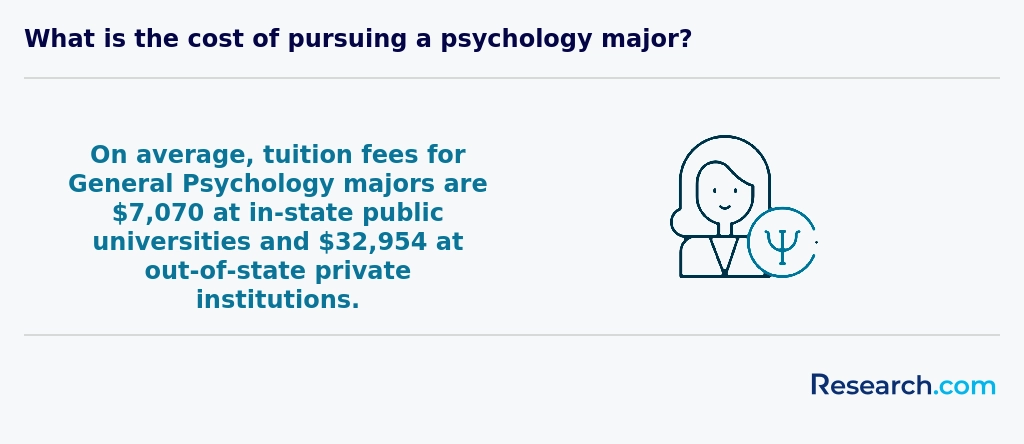
Calculating the return on investment (ROI) for a psychology degree is essential for students balancing educational quality with long-term financial outcomes. ROI measures how quickly graduates recoup their tuition costs through post-graduation earnings. In Denton, TX, where in-state tuition averages $7,070 per year and typical bachelor’s programs span 120 credits, the total sticker price is approximately $28,280. Upon securing an entry-level position as a Human Resources Specialist with a mean annual wage of $73,080, graduates can expect to recover tuition costs in less than six months of full-time work (before taxes and living expenses). When comparing programs, slight variations in tuition and graduate salaries can influence ROI significantly. For example, students at the University of North Texas benefit from extensive internship networks, potentially leading to starting salaries 5–10% above the local average, whereas graduates from Texas Woman’s University often cite a faster timeline to complete online courses, reducing opportunity costs. By factoring in indirect expenses-such as textbooks (around $500 per semester) and living costs (average $12,000 per academic year)-most Denton graduates still achieve positive net earnings within their first year. Beyond local benchmarks, it’s valuable to explore how affordability and career returns compare across regions. Prospective students interested in alternative models of cost-effectiveness may review broader analyses, such as our Affordable Psychology Degree Programs Ranking in Kentucky, to see how program costs align with regional salary trends and to identify best practices for maximizing ROI regardless of location. Ultimately, by examining both direct and indirect costs alongside realistic salary projections, students can choose the psychology degree program in Denton that offers the strongest financial and career payoff, ensuring their investment in higher education yields both personal fulfillment and economic stability.
Imagine a psychology student at the University of North Texas in Denton, juggling textbooks and research while a Federal Pell Grant quietly cushions the heavy tuition load-up to $7,395 makes that sleepless night a bit less daunting. Many Denton students tap into the Texas Grant Program, where up to $5,790 annually feels less like aid and more like an academic high-five from the state, acknowledging their dedication.
Merit and need-based scholarships here are like hidden treasures, with some students sharing stories of snagging awards that slice through tuition costs or even cover full rides. Work-study gigs on campus double as paid internships, blending paycheck and psychology practice-a win-win scenario.
Graduate students dive deeper with assistantships and fellowships, turning their passion into stipends and tuition relief. These roles transform their study spaces into collaborative laboratories of discovery, fueling both wallets and futures in Denton's vibrant academic ecosystem.
Accreditation ensures your psychology degree is recognized by employers, graduate schools and licensing boards in Denton.
- Regional accreditation by the Southern Association of Colleges and Schools Commission on Colleges (SACSCOC)
- American Psychological Association (APA) accreditation for clinical and counseling psychology tracks
- State licensure approval through the Texas State Board of Examiners of Psychologists
Accredited programs maintain rigorous standards for curriculum, faculty expertise and student support services, and are often required for federal financial aid eligibility. For students seeking a faster pathway without compromising quality, explore accelerated psychology programs online.
To unlock the door to a psychology degree in Denton, students first must demonstrate a sturdy foundation-starting with a high school diploma or GED, much like graduates from the University of North Texas have described their journeys. Imagine stepping into your first lecture, having already danced with statistics and flirted with biology, feeling confident because you met those prerequisite courses: Introduction to Psychology, Statistics or Quantitative Methods, and Biology or Neuroscience classes. These aren't just hoops; they're your backstage pass to understanding the mind's intricate theatre.
Many Denton students recall the mix of excitement and challenge as they balanced these classes, often needing a minimum grade of C to advance. Beyond coursework, some found the admissions process eased by test-optional policies, removing pressure and sparking hope. Meanwhile, community college enrollees in Denton chose a savvy path, blending general education with introductory psych classes while saving money. These steps are the ladder, each rung lifting you closer to your dream amid Denton's vibrant academic scene.
Ensuring your psychology degree in Denton, TX comes from an accredited institution is crucial for licensure, graduate school admission, and long-term career success. Both the University of North Texas and Texas Woman’s University hold regional accreditation through the Southern Association of Colleges and Schools Commission on Colleges (SACSCOC), with additional programmatic approval by the American Psychological Association (APA) for clinical and counseling tracks. Key outcome metrics include: • Graduation Rate: UNT reports a four-year completion rate of 58% for its Bachelor of Science in Psychology, while TWU’s on-time graduation sits at 55%. • Retention Rate: First-year to second-year retention averages 80%, reflecting strong academic support services and peer-mentoring programs. • Job Placement: Within six months of graduation, 72% of psychology majors secure employment or enroll in graduate studies, underscoring a solid return on investment. • Student Debt: Average debt at graduation for psychology majors in Denton is approximately $22,000, below the national average for social sciences, thanks to generous state grants and institutional scholarships. For students aiming to advance clinical practice beyond a master’s degree, exploring online psyd programs can further boost licensure eligibility and earning potential. By choosing accredited programs with transparent outcome data, prospective students can confidently assess affordability, academic quality, and career readiness in Denton’s psychology landscape.
Imagine walking through the halls of the University of North Texas, where students dive into the fascinating world of psychological theories starting with an introduction course that feels like opening a door to the mind's mysteries. Denton's psychology programs typically launch with this foundational class, setting the stage for more immersive studies.
Graduates often recall the challenge and thrill of exploring biological bases of behavior-unraveling how neurons and brain chemistry sculpt emotions and choices, a course that makes you see yourself as a walking, thinking marvel. Cognitive psychology then invites you to dissect memory and perception like a detective piecing together the human experience.
- Developmental psychology classes showcase the remarkable journey of growth from infancy to old age, sparking awe in many students
- The social psychology course immerses learners in real-life dynamics, illuminating why a simple conversation can shift moods and decisions
- Abnormal psychology confronts mental health head-on, empowering students with knowledge about disorders and treatments that feel relevant to everyday people in Denton's community
- Research methods and statistics form the backbone of this adventure, offering hands-on projects where you craft experiments and decode psychological data
This blend of courses, offered in local institutions like Texas Woman's University, keeps students engaged and passionate, blending textbook theory with lively class debates and community-based research that make every lesson a step closer to becoming a psychology professional.
Diving into psychology degree specializations in Denton feels like opening a door to diverse worlds within the mind's landscape. Imagine a graduate from the University of North Texas passionately describing their journey through clinical psychology, where they learned the delicate art of decoding mental health challenges and wielding therapeutic tools to heal. Another might recall counseling psychology, a field where empathy meets strategy, helping real people navigate life's storms with resilience.
In Denton psychology program concentrations, the spectrum widens. One alum embraced cognitive psychology, uncovering the mysteries of memory and decision-making, all while crunching data and designing experiments in lively labs. Yet another found purpose in industrial-organizational psychology, blending human behavior with the buzz of business offices, enhancing workplace happiness and efficiency.
Educational psychology also draws students into classrooms and research, sparking ideas on how learning truly clicks for different minds. These specializations offer more than theory-they're vivid, hands-on, and deeply personal journeys. To expand your horizons further, consider exploring online psychology masters degrees tailored for Denton's academic spirit.
Choosing the best psychology degree in Denton feels like unlocking a personal treasure map-follow the markers of affordability, accreditation, and flexibility. Denton's crown jewel, the University of North Texas, offers psychology programs where graduates recall late-night study sessions inside buzzing research labs, blending theory with real-world practice. These students often highlight how accessible in-state tuition makes their dreams less of a stretch compared to pricier options elsewhere in Texas.
One unforgettable tip from alumni is to seek programs accredited by bodies like the APA, ensuring your degree holds weight when chasing clinical psychology licenses. For those craving freedom, Denton's psychology degrees embrace the hustle of modern life with hybrid and evening classes, letting working adults and parents rewrite their scripts without missing a beat. If you want to discover psyd programs that fit your path, Denton provides a rich palette to mix affordability with quality. Realizing your goals here means weaving your story into the vibrant tapestry of the best psychology schools near Denton TX.
When navigating choices, rely on the nuanced wisdom of graduates sharing how financial aid softened their load and how faculty with real-world edge ignited their curiosities. Denton's affordable psychology degree programs in Denton don't just educate-they empower.

Envision graduating from the University of North Texas, stepping into Denton's vibrant network of mental health clinics and community centers, ready to make an impact as a mental health counselor or case manager. These graduates find vibrant psychology career opportunities in Denton, where the demand for licensed therapists and school psychologists surges, creating a nurturing environment for those inspired by human behavior and emotional support. Imagine working in Denton Independent School District, aiding children with learning challenges-a role that transforms daily lessons into moments of breakthrough and joy.
The energy of Denton's expanding businesses also beckons as a playground for industrial-organizational psychology graduates, applying science to boost workplace harmony and productivity, redefining employee well-being close to home. Research enthusiasts cherish the opportunity to join university labs filled with exciting studies, tapping into Denton's academic pulse. For those curious about education costs, explore affordable options by consulting the Affordable Psychology Degree Programs Ranking in Kentucky. Graduates reflect on how their Denton journey uniquely blends practical experience with hopeful career prospects, making job prospects with psychology degree Denton a truly inspiring chapter.
Psychology degree job prospects Denton come alive in a dynamic interplay between the city's vibrant educational hubs and its growing mental health landscape. Graduates from the University of North Texas often describe stepping into roles at local clinics and schools, where their training feels immediately impactful. Picture a recent graduate walking the halls of Denton ISD, supporting students as a school psychologist-earning a competitive salary while nurturing future minds. The pulse of Denton's job market beats steadily with opportunities in counseling, clinical roles, and social services, though some graduates note social service positions tend to offer lower pay in exchange for meaningful community work.
Employment opportunities for psychology graduates Denton are broadened by proximity to Dallas-Fort Worth, inviting a range of possibilities from research to therapy. Those balancing financial concerns appreciate exploring 6 month certificate programs that lead to high paying careers as a quick entry path. Ultimately, Denton's landscape offers hope and a horizon where psychology grads can thrive both professionally and personally.
2027 Most Affordable Psychology Degree Programs Ranking in Denton
Investing in your education is a significant decision that can shape your future, and the Research.com team understands the importance of making informed choices. To assist prospective students in Denton, we have meticulously crafted the "2027 Most Affordable Psychology Degree Programs Ranking in Denton." Our commitment to quality, credibility, and accuracy is reflected in the extensive research and analysis conducted to compile this ranking.
We utilized the following reputable data sources to ensure a comprehensive evaluation of psychology degree programs:
By exploring this ranking, readers will gain valuable insights into the most affordable psychology degree options in Denton, empowering them to make well-informed educational decisions. For more details on our methodology, please visit our Research.com methodology page.


Frequently Asked Questions About psychology
Psychology degree students in Denton can maximize their learning experience by actively engaging in both academic and practical opportunities. Enrolling in internships or research projects offered by local institutions, such as the University of North Texas' psychology department, allows students to apply classroom knowledge to real-world settings. According to the American Psychological Association, hands-on experience improves retention and job readiness.
Joining student organizations related to psychology also helps build professional networks and develop soft skills. Attending local seminars or workshops can keep students updated on current trends and methodologies.
Additionally, leveraging Denton's access to diverse populations for field studies broadens understanding and cultural competence.
The psychology field is evolving with new specialized areas gaining attention. In Denton, emerging niches include neuropsychology, focusing on brain-behavior relationships, and health psychology, which examines how mental health affects physical wellness. These areas reflect national growth trends, supported by data from the American Psychological Association, showing 10% annual increases in job openings.
Another growing niche is forensic psychology, where professionals apply psychological principles to legal issues. Denton's proximity to Dallas-Fort Worth courts offers practical opportunities for students.
Additionally, industrial-organizational psychology is expanding as businesses seek experts to improve workplace productivity and employee well-being.
Graduates with a psychology degree in Denton should begin preparing early for the job market by gaining practical experience. Internships and volunteer opportunities at local mental health facilities or nonprofits provide valuable skills and networking connections. According to the U.S. Bureau of Labor Statistics, employment for psychologists is projected to grow 8% from 2022 to 2032, faster than the average for all occupations, suggesting steady demand.
It is also essential to consider licensure requirements if aiming for clinical roles. In Texas, becoming a licensed psychologist requires a doctoral degree and supervised hours, so graduates might start with positions such as psychological assistants.
Developing strong communication and research skills enhances employability. Joining professional organizations like the Texas Psychological Association can offer career resources and job leads.
Graduates with psychology degrees in Denton are expected to demonstrate strong communication skills. Employers value the ability to clearly explain complex psychological concepts to diverse audiences. According to the U.S. Bureau of Labor Statistics, effective interpersonal skills are critical in applied psychology roles, prevalent in Denton's growing mental health sector.
Analytical thinking and research skills are also vital. Psychology programs in Denton emphasize data interpretation and critical evaluation, which prepare students for evidence-based decision-making. Employers often seek graduates familiar with statistical software and experimental design.
Additionally, cultural competence is important. Denton's diverse population requires psychologists to adapt approaches sensitively across various backgrounds. Problem-solving ability and ethical judgment complete the core skills list, aligning with state licensure requirements and professional standards.
Finding psychology internships in Denton involves leveraging local university resources and community organizations. The University of North Texas (UNT) provides a strong network with its Department of Psychology, regularly posting internship opportunities on its career services platform. UNT collaborates with local mental health clinics, schools, and nonprofit organizations to offer practical experience for students.
Additionally, students can explore opportunities at Denton County behavioral health centers and local hospital systems. According to the Texas Workforce Commission, Denton's health services sector has grown by 3.5% annually, indicating increasing internship availability. Networking through faculty and attending local psychology or counseling events also enhances internship prospects.
A psychology degree in Denton can significantly enhance career mobility by opening various professional pathways. Graduates often find opportunities in counseling, social services, education, and human resources. According to the U.S. Bureau of Labor Statistics, employment in psychology-related occupations in Texas is expected to grow by 14% from 2021 to 2031, reflecting strong demand.
Holding a degree from accredited Denton institutions, such as the University of North Texas, adds local recognition, which employers value when considering promotions or advanced roles. Many positions require at least a bachelor's degree, while higher roles often demand graduate qualifications. Internships and networking available through Denton's academic programs also aid in gaining professional experience, boosting advancement chances.
Studying for a psychology degree in Denton equips students with a broad understanding of human behavior combined with research and critical thinking skills. Many programs emphasize collaboration with other fields such as neuroscience, education, and social work, reflecting the growing trend of interdisciplinary careers.
For example, the University of North Texas integrates psychology coursework with applied experiences that prepare graduates for roles in healthcare, business, and criminal justice. According to the National Center for Education Statistics, psychology graduates often pursue careers requiring interdisciplinary knowledge, such as counseling or organizational development.
This approach leverages Denton's access to diverse industries, helping students develop communication and analytical skills that transfer across various sectors. As a result, psychology graduates here can more readily contribute to team-based problem solving in fields beyond traditional psychology.
When choosing between a thesis and a non-thesis psychology degree program in Denton, consider your career goals. Thesis programs typically cater to students interested in research or pursuing a PhD, as they involve completing original research under faculty supervision. Non-thesis options focus more on coursework and practical application, making them suitable for those aiming for professional roles or further study in applied psychology fields.
In Denton, institutions like the University of North Texas offer both paths. According to UNT's 2023 graduate catalog, about 40% of psychology master's students opt for the thesis route, reflecting local academic preferences. Additionally, thesis students often develop stronger research skills, which may enhance employability in research-intensive roles.
Non-thesis students benefit from more flexible schedules and typically graduate faster. When deciding, review program curricula, speak with advisors, and consider how each aligns with your future plans and timelines.
Students based in Denton who wish to study psychology abroad have several pathways aligned with the US higher education system. Many universities in Denton, including the University of North Texas, offer study-abroad programs or exchange agreements with institutions in Europe, Asia, and Australia. These programs typically count credits towards a psychology degree, allowing students international experience without extending graduation time.
Additionally, students may opt for accredited online psychology degrees offered by foreign universities that comply with US standards. This option supports flexible learning while gaining global perspectives on psychology.
Financial aid and scholarships specific to study abroad may be available through Denton-based schools or national programs like the Benjamin A. Gilman International Scholarship, which supports US undergraduates pursuing international study.
Students pursuing psychology degrees in Denton have access to various part-time job opportunities that complement their academic learning. Local mental health clinics and counseling centers often seek interns or aides to assist with patient management and administrative support.
Additionally, Denton's public schools may hire paraprofessionals or behavioral aides, offering practical experience in child psychology and educational psychology settings. The University of North Texas, a major institution in Denton, frequently provides research assistant positions focused on psychological studies, valuable for gaining hands-on experience in data collection and analysis.
According to the Texas Workforce Commission, social and community service assistant roles in the Denton area are expected to grow by 12% through 2030, indicating increasing opportunities. These jobs help students develop communication and counseling skills relevant to various psychology careers.
Psychology students in Denton have access to several valuable networking opportunities that can enhance their academic and professional growth. The University of North Texas (UNT), the primary institution offering psychology programs locally, hosts regular events such as guest lectures, career fairs, and research symposia. These gatherings allow students to meet faculty experts and professionals in the field.
Additionally, UNT's Psi Chi chapter, the international honor society in psychology, offers networking mixers and professional development workshops. Local internships and practicum placements in Denton-area clinics and mental health agencies further provide students with real-world connections.
Students benefit from Denton's proximity to the Dallas-Fort Worth metroplex, expanding opportunities to attend regional psychology conferences and join professional groups like the Texas Psychological Association.
Alumni networks provide valuable benefits to psychology degree students in Denton by fostering professional connections and mentoring opportunities. Graduates often share job openings, internships, and research collaborations within the community, improving students' access to the local job market.
In Denton, schools such as the University of North Texas maintain active psychology alumni groups, which support networking events and workshops. According to UNT's Career Development Center, students involved in these networks have a 20% higher rate of employment within six months post-graduation.
These networks also offer guidance on graduate school options and licensure preparation, which is crucial for careers in clinical psychology. Alumni can provide insights into the evolving demands of psychology professions in Texas, helping students tailor their education effectively.
In Denton, students pursuing a psychology degree can tailor their programs by selecting various elective courses and specialized tracks that align with their career goals. Many institutions offer concentrations such as clinical psychology, counseling, or developmental psychology, allowing students to focus on areas of interest.
Students may also participate in research projects or internships, which provide practical experience and networking opportunities. According to the Texas Higher Education Coordinating Board, Denton's universities often collaborate with local healthcare facilities and counseling centers to support hands-on learning.
Additionally, some programs allow flexible course scheduling, enabling part-time study or evening classes to accommodate working students. Exploring certificate programs or minors in related fields like social work or education can further enhance career prospects in psychology.
Psychology students in Denton often face a range of challenges typical to the field of study within the U.S. higher education system. One major difficulty is managing the demanding coursework, which includes understanding complex theories and applying research methods. According to the National Center for Education Statistics, many psychology undergraduates nationwide report high levels of stress balancing classwork and personal commitments.
In Denton, students may also encounter limited local internship opportunities, crucial for gaining practical experience. Access to research participation and mentorship can be competitive, affecting skill development. Financial constraints pose another challenge, with some students struggling to afford tuition and materials despite financial aid options.
The need to develop strong critical thinking and statistical analysis skills also adds to the academic pressure. Furthermore, as mental health awareness increases, psychology programs often require students to approach sensitive topics carefully, which can be emotionally taxing.
With a psychology degree in Denton, you can pursue several professional certifications that enhance your career opportunities. Common certifications include becoming a Licensed Professional Counselor (LPC) or a Licensed Psychological Associate (LPA), both of which require graduate education and supervised experience.
The Texas Behavioral Health Executive Council oversees these licenses, which permit you to provide counseling and psychological services. Additionally, certifications like Certified Addiction Counselor (CAC) are available for specialization in substance abuse treatment.
For research or academic careers, certifications in applied behavior analysis (BCBA) can also be pursued. These credentials increase job prospects in Denton's growing mental health sector.
Applying to a psychology program in Denton requires careful preparation to stand out. Start by researching local schools such as the University of North Texas, which offers respected undergraduate and graduate psychology degrees. Admissions committees value a strong academic record, especially in courses like biology, statistics, and psychology.
Highlight relevant experience in your application, including volunteer work, research participation, or internships related to mental health. Many programs appreciate applicants who demonstrate a clear understanding of psychology's role in society.
Write a compelling personal statement that explains your motivation for studying psychology, your career goals, and how Denton's programs align with your aspirations. Be concise and focused, avoiding vague or generic language.
Remember to submit all required documents on time and secure strong letters of recommendation, ideally from professors or professionals familiar with your abilities in psychology or related fields.
Psychology careers in the United States, including Denton, benefit from a global perspective shaped by increasing international collaboration and research. The American Psychological Association highlights the growing demand for psychologists worldwide, with the U.S. Bureau of Labor Statistics projecting a 8% growth in psychology jobs nationally through 2031. Denton's universities often incorporate global mental health topics in their curricula, preparing students for diverse career opportunities.
Understanding cultural contexts is essential as psychology practices vary internationally. Graduates in Denton can expect to find opportunities in clinical, counseling, and research roles that engage with global trends in mental health. This global outlook enhances employability and broadens career paths beyond local boundaries.
Students pursuing psychology degrees in Denton can gain practical experience through internships commonly offered by local universities such as the University of North Texas. These internships often collaborate with community mental health centers, hospitals, and nonprofit organizations, providing hands-on learning opportunities. According to UNT's College of Science, about 70% of psychology students complete an internship before graduation.
Additionally, research assistant roles are available within psychology departments, allowing students to work directly with faculty on ongoing studies. This experience is valuable for understanding research methodologies and data analysis.
Volunteering at facilities like Denton County MHMR can also build relevant skills while contributing to the community. Such practical experiences are essential for career readiness in psychology fields.
Choosing the right concentration within a psychology degree program in Denton depends on your career goals and personal interests. Popular concentrations include clinical psychology, counseling, industrial-organizational psychology, and developmental psychology. According to the Texas Higher Education Coordinating Board, Denton-area schools like the University of North Texas offer varied tracks that combine theoretical coursework with practical experience.
Consider the local job market in Denton, where growth in healthcare and educational services increases demand for clinical and counseling psychologists. Exploring program curricula, faculty expertise, and internship opportunities can also guide your choice. Align your concentration with licensure requirements if you plan to become a licensed psychologist or counselor in Texas.
- 2027 Most Affordable Psychology Degree Programs Ranking in Wichita
- 2027 Most Affordable Psychology Degree Programs Ranking in Springfield
- 2027 Most Affordable Psychology Degree Programs Ranking in Baton Rouge
- 2027 Most Affordable Psychology Degree Programs Ranking in Kansas City
- 2027 Most Affordable Psychology Degree Programs Ranking in New Orleans
- 2027 Most Affordable Psychology Degree Programs Ranking in Hattiesburg
- 2027 Most Affordable Psychology Degree Programs Ranking in Lincoln
- 2027 Most Affordable Psychology Degree Programs Ranking in Saint Louis
- 2027 Most Affordable Psychology Degree Programs Ranking in Mobile
- 2027 Most Affordable Psychology Degree Programs Ranking in Birmingham
See What Experts Have To Say About Studying Psychology
Read our interview with Psychology experts

Elizabeth L. Jeglic Ph.D.
Psychology Expert
Professor of Psychology
City University of New York

Robin M. Kowalski. Ph.D.
Psychology Expert
Professor of Psychology
Clemson University

Joann Farrell Quinn, Ph.D., MBA
Psychology Expert
Director at the College of Medicine Department of Medical Education
Morsani College of Medicine

- Psychology Placement Opportunities for Year 12 Students https://studymind.co.uk/ucas-guide/year-12-guide-to-gaining-psychology-work-experience/
- Alumni Network - https://efpsa.org/alumni-network/
- Mental Health Challenges Faced by Psychology Students | The Healthcare Guys https://healthcareguys.com/2023/11/23/mental-health-challenges-faced-by-psychology-students/
- Sample letters in psychology https://www.mystudies.com/en-in/human-and-social-sciences/psychology/letter-model/
- Society for the Teaching of Psychology https://teachpsych.org/page-1784686/7161006
- Financial Aid for Psychology Students https://www.onlinepsychologydegrees.com/financial-aid/
- Why Get a Psychology Degree Online? | University of Bridgeport https://www.bridgeport.edu/news/reasons-to-get-your-psychology-degree-online/
- A Guide to Psychology Internships | Psychology Degree Guide https://psychologydegreeguide.org/resources/internships/
- 5072 Master Psychology, Counseling Psychology - University of North Texas - UNT https://www.findcourse.com/en/highereducation/course/5072/
- 10 Career Paths You Can Follow With a Psychology Degree https://www.dbu.edu/blog/10-career-paths-with-psychology-degree.html


