
2027 Most Popular Psychology Degree Programs Ranking in Queens

Co-Founder and Chief Data Scientist
Exploring psychology degree programs in Queens can be exciting yet overwhelming. To help you navigate this journey, this article presents the 2027 Most Popular Psychology Degree Programs Ranking in Queens created by the Research.com team of data scientists.
Designed with students like you in mind, this ranking offers clear insights to guide your decision on which programs truly stand out. Earning a psychology degree opens doors to meaningful careers and personal growth. Reading this article will empower you to find the best fit and take confident steps toward your future.
Key benefits of getting psychology degree in Queens
- Salary for psychology degree graduates: Graduates can expect competitive earnings, such as a Marketing Research Analyst's mean annual wage of $83,190 or a Human Resources Specialist earning around $76,060 yearly, showing promising financial potential.
- Career paths in Queens: Psychology graduates from Queens colleges often pursue diverse roles in research, human resources, or clinical settings, reflecting the local job market's variety and opportunity for growth.
- Benefits of online psychology degrees: Earning a degree online offers flexibility for busy students in Queens, allowing them to balance work and study while gaining skills that open doors to rewarding psychology careers.
- 2027 Most Popular Psychology Degree Programs Ranking in Queens
- What can I expect from psychology degree in Queens?
- Where can I work with psychology degree in Queens?
What can I expect from psychology degree in Queens?
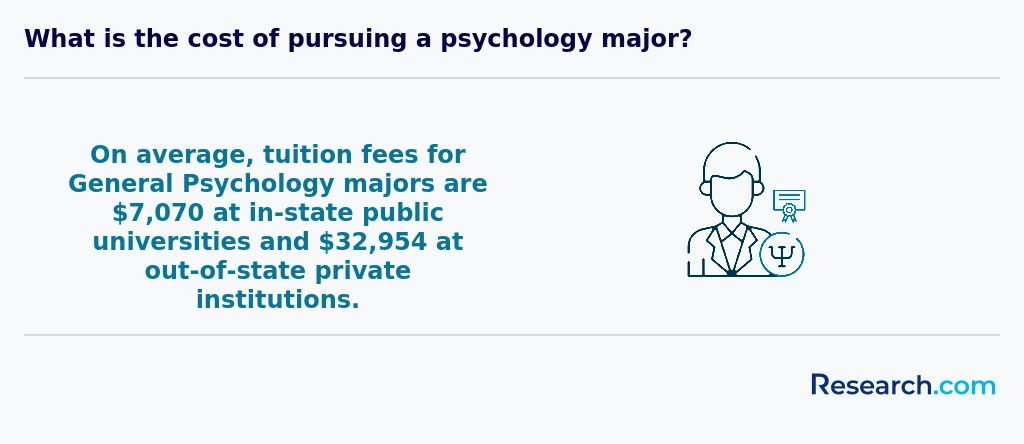
The average cost of pursuing a psychology degree in Queens is notably accessible, especially at public institutions like Queens College, where in-state tuition is just over $7,000 annually as of 2023. Graduates often recall balancing tight budgets while embracing the affordability that allows them to focus more on their studies and hands-on experiences rather than financial stress. This affordability is a key factor enabling many students to enroll without the overwhelming burden of debt.
Psychology students in Queens benefit from access to scholarships and financial aid tailored specifically for their field, which many former students attribute to helping them achieve academic and professional milestones. Imagine attending classes at Queens College or St. John's University and engaging in internships across New York City's mental health clinics without worrying excessively about the cost.
Given the city's vast network of resources and universities, students can envision a future where affordable tuition combines with expanding financial support, making quality psychology education increasingly attainable and rewarding.
Where can I work with psychology degree in Queens?
Psychology graduates in Queens find vibrant career opportunities that reflect the borough's unique urban fabric and growing community needs. Many alumni from Queens College and St. John's University share how they secured roles in mental health services, often working at Queens Hospital Center or Elmhurst Hospital Center, where they provide crucial support to patients facing emotional challenges. These settings offer a meaningful way to apply classroom knowledge in real-world impact, fueling a sense of purpose and connection.
Others have stepped into educational roles within NYC public schools, assisting students with learning difficulties and emotional development. This path feels rewarding as graduates witness firsthand the positive changes in young lives. Social services agencies also attract psychology degree holders eager to engage in community programs addressing substance abuse or child welfare, making a tangible difference in Queens neighborhoods.
Looking ahead, growing interest in organizational psychology creates new openings within local businesses, where understanding human behavior translates into improved workplace dynamics and innovation. Research roles at Queens-based institutions promise involvement in cutting-edge studies addressing urban mental health, energizing graduates eager to contribute to academic progress. The expanding demand in these diverse sectors makes studying psychology in Queens an exciting choice filled with future-facing potential.
Graduates holding psychology degrees from Queens colleges often find promising salary opportunities in roles like Human Resources Specialist, with a mean annual wage around $76,060, or as Marketing Research Analysts earning approximately $83,190 per year. These figures highlight a strong earning potential right in Queens, where some grads from institutions such as Queens College and St. John's University feel confident stepping into competitive job markets.
Many recent graduates recall starting as Clinical Research Associates or Survey Researchers, both averaging $62,370 annually. These positions offer hands-on experience that feeds future career growth, helping to build specialized skills and networks within healthcare or corporate research-sectors thriving in New York's dynamic economy.
Queens' vibrant diversity and expanding industries also open doors to roles like Childcare Workers, earning roughly $32,070 a year, providing a meaningful way to apply psychological knowledge while making a positive community impact. Local graduates often describe the satisfaction of seeing direct outcomes of their work with families and children.
Looking ahead, psychology students in Queens can expect to leverage their degree in various fields, supported by solid salary prospects and the city's evolving professional landscape.
- The cost for a bachelor's degree in psychology in Queens ranges from $30,000 to $60,000, varying by school type and tuition status.
- Psychology programs often include practical experience opportunities like internships and local research to prepare students for clinical or counseling careers.
- Starting salaries for psychology graduates in Queens typically range between $40,000 and $50,000, increasing to $70,000 or more with advanced degrees.
- Job growth for psychology majors in Queens is moderate, with key employment sectors in healthcare, social services, education, and private practice.
- State licensure for practicing psychologists or counselors requires completing accredited programs and supervised clinical hours, which many Queens programs provide.
Completing a psychology degree in Queens typically spans about four years for a bachelor's program at popular schools like Queens College and York College. Many graduates fondly recall balancing full-time classes with internships, feeling invigorated by the hands-on experiences that brought their studies to life. This timeline feels manageable yet enriching, allowing students to absorb both general and specialized psychology courses deeply.
For those pursuing a master's degree in Queens, the journey often extends another two years, though part-time options offer flexibility for working students. Graduates frequently share how this phase deepened their passion for counseling or research, even if it meant juggling work and study. Imagining evenings spent reviewing case studies or participating in group projects reveals the rewarding nature of this stage despite its challenges.
Doctoral paths, usually 5 to 7 years post-bachelor's, invite ambitious students toward advanced research or clinical roles, often at institutions in the greater NYC area. Alumni describe the excitement of rigorous practicum hours and dissertation milestones as transformative parts of their Queens-area education, emphasizing how time invested mirrors profound personal and professional growth.
Emerging trends such as accelerated and joint degree programs in Queens hint at future possibilities for reducing these durations, empowering students eager to advance swiftly without sacrificing quality learning experiences.
Choosing an accredited psychology program in Queens, NY is critical for ensuring quality education and eligibility for professional licensure. Prospective students should confirm that their institution holds regional accreditation from the Middle States Commission on Higher Education, as this status validates academic rigor and facilitates credit transfer. For those aiming at clinical or counseling careers, enrolling in an American Psychological Association (APA)-accredited master’s or doctoral program is essential; graduates from non-APA programs may face barriers to licensure in New York State and beyond. Beyond institutional accreditation, licensure in New York requires completion of supervised clinical hours and successful passage of the Examination for Professional Practice in Psychology (EPPP). Many Queens programs integrate practicum and internship placements at local hospitals and community centers to help meet these requirements. Applicants should review program handbooks for detailed practicum structures, supervisor qualifications, and timelines for licensure application. For advanced study considerations, explore what schools offer a masters in psychology that combine affordability with accreditation, ensuring your degree not only fits your budget but also aligns with career licensing standards. Verifying both institutional and programmatic accreditation safeguards your investment and paves the way for a seamless transition from academia to a licensed psychology practice.
Choosing between online and on-campus psychology degrees in Queens shapes the entire student experience in unique ways. Graduates from Queens College often reminisce about dynamic, face-to-face discussions in classrooms and hands-on internships that brought theory to life. These interactions foster a sense of belonging and active collaboration, especially beneficial in learning research methods or clinical skills where in-person guidance matters.
Meanwhile, students who pursued online psychology programs appreciate the freedom to study around work or family commitments. One graduate from a fully accredited online program shared how being able to log in after a late shift made continuing education manageable without sacrificing personal responsibilities. This flexibility also opens doors to nationally recognized programs beyond Queens, expanding opportunities.
Costs factor heavily too. The on-campus experience at places like St. John's University includes extra expenses-housing, commuting-which can impact budgets but also build life skills. Online pathways might ease financial strain but sometimes require self-discipline to stay motivated.
Future trends may blend both worlds more seamlessly, offering hybrid models that combine face-to-face practicums with digital convenience. For Queens students, this could mean personalized pathways that fit evolving lifestyles while maintaining strong academic and practical training foundations.
Ensuring your psychology degree program in Queens, NY is accredited by the American Psychological Association (APA) is critical for licensure and graduate school eligibility. APA accreditation signifies that a program meets rigorous standards for curriculum, faculty qualifications, and practicum experiences. Graduates of APA-accredited programs are more likely to qualify for state licensure exams and competitive internships. Before applying, verify each institution’s accreditation status via the APA’s Commission on Accreditation and confirm that clinical, counseling, or school psychology tracks carry the proper recognition. Licensure requirements vary by state but typically include a minimum number of supervised clinical hours, passing scores on the Examination for Professional Practice in Psychology (EPPP), and completion of a graduate-level degree from an accredited institution. In New York, aspiring psychologists must complete 3,500 supervised hours post-degree and pass both the EPPP and New York State Law and Ethics Examination. Early planning-such as choosing practicum sites within APA-approved settings-can accelerate your path to licensure. For students comparing cost and accreditation quality, it’s helpful to explore programs beyond Queens. For example, our Affordable Psychology Degree Programs Ranking in Arkansas highlights accredited, cost-effective options that may offer competitive practicum placements and licensure support.
Students pursuing a psychology degree in Queens can expect the average total cost to be around $53,020 for in-state residents, with out-of-state students facing higher costs near $70,668. These figures include tuition, fees, and estimated expenses over the entire program duration. Graduates from locally renowned institutions often share how carefully budgeting for tuition and materials made their academic journey manageable despite these substantial figures. Many find reassurance knowing that public colleges in Queens typically offer more affordable tuition rates compared to private institutions, which may charge significantly more but provide extensive financial aid.
Reflecting on the psychology degree tuition and fees Queens 2027 landscape, it's clear these costs reflect not only educational quality but also access to valuable resources like research opportunities and experienced faculty. For example, those studying at CUNY-affiliated schools frequently highlight a sense of community and support that enhances their learning experience, even as they navigate financial planning. Supplementary expenses such as textbooks and materials add another $1,200 to $1,500 annually, emphasizing the need to anticipate these alongside tuition fees.
Looking ahead, prospective students considering the most popular psychology school in Queens will benefit from exploring institutional aid and federal support options like FAFSA early in their planning. This strategic approach can transform the financial challenge into a rewarding investment in their future careers and personal growth.
While a traditional psychology degree remains a popular route, many aspiring mental health professionals are exploring alternative paths to launching a career in therapy. For those who feel drawn to the field but may not have followed the conventional academic track, non-degree certification programs, intensive boot camps, or specialized short-term courses can offer accessible entry points. These programs often emphasize hands-on training, practical skills, and state-specific licensing requirements to prepare individuals effectively for therapeutic roles. In today’s dynamic job market, expanding your skillset through alternative credentials can be a strategic move. By supplementing your education with internships, mentorship opportunities, and professional networking events, you can build a robust foundation in mental health care. Additionally, if you’re considering alternative educational pathways and need guidance on the process, check out how to become therapist for expert insights on pursuing a career in therapy without a traditional psychology degree. This alternative approach not only broadens your career prospects but also allows you to design a personal roadmap that aligns with your professional goals and lifestyle. With growing demand for mental health services and an increasing emphasis on interdisciplinary skills, exploring these non-traditional routes can serve as a key differentiator in a competitive field.
Psychology students in Queens often find financial aid through federal programs like the Pell Grant, which can cover up to $7,395 annually, easing the strain of tuition at schools such as Queens College. Graduates recall how this support allowed them to focus more on their studies and research without constant financial stress. The state's Tuition Assistance Program (TAP) also plays a crucial role, offering up to $5,665 yearly for eligible in-state students, which many Queens-based psychology students rely on to afford reputable public universities within the CUNY system.
On-campus scholarships targeted specifically at psychology majors provide additional relief, with awards sometimes reaching $5,000. Students describe these funds as game-changers, allowing them to pursue internships and extracurricular activities that boost their careers. Local nonprofits and foundations in Queens and New York City increasingly focus on supporting behavioral science students, adding vibrant opportunities for funding that can make a noticeable difference.
Work-study programs remain a popular choice, offering hands-on experience in counseling centers or research labs while offsetting expenses. Many graduates highlight how this blend of financial aid not only lightened their financial load but also enriched their academic journey and future prospects.
Ensuring your psychology degree program in Queens, NY is properly accredited and aligned with New York State licensing requirements is critical for both academic credibility and professional eligibility. Most reputable programs will hold accreditation from the American Psychological Association (APA) or regional bodies such as the Middle States Commission on Higher Education (MSCHE). APA accreditation signals that a doctoral or master’s program meets rigorous standards in curriculum, faculty qualifications, and practicum experiences-essential for licensure as a clinical psychologist or school psychologist. Before enrolling, verify that your chosen institution’s undergraduate curriculum includes coursework approved by the New York State Education Department (NYSED) if you intend to pursue a master’s or doctoral track. Key milestones for licensure include: • Completion of an APA-accredited graduate program • Supervised professional experience (1,750–2,000 hours) under a licensed psychologist • Passing the Examination for Professional Practice in Psychology (EPPP) • Fulfilling any additional NYSED requirements, such as ethics coursework or jurisprudence exams Many Queens colleges partner with local mental health clinics and school districts to facilitate practicum placements, accelerating your path to licensure. Graduates often report that the structured supervision and integration of research projects into fieldwork were pivotal in meeting state mandates. For those comparing affordability alongside accreditation, our sister ranking highlights cost-effective, accredited options beyond New York-see the Affordable Psychology Degree Programs Ranking in Arkansas for a detailed overview. By confirming accreditation status and understanding licensure pathways upfront, you’ll safeguard your investment and ensure seamless entry into the New York psychology workforce.
Enrolling in a psychology degree program in Queens often begins with meeting basic academic prerequisites, such as holding a high school diploma or its equivalent. Many graduates recall how achieving a solid GPA-typically between 2.5 and 3.0-was critical for gaining acceptance into local programs like those at St. John's University. The emphasis on strong foundations in English, math, and science prepares students for the challenging coursework ahead and boosts their confidence as they dive into psychology studies.
Some students share that submitting personal statements expressing their passion for psychology helped personalize their applications, making them stand out in competitive environments, especially at schools like York College. Others found that letters of recommendation from teachers who knew their dedication added a supportive edge to their files.
Queensborough Community College's open-admissions policy offers an encouraging entry point for aspiring psychologists, allowing students to embark on their academic journey without excessive barriers. This variety in entrance requirements across Queens universities encourages hopefuls to envision a future where diverse backgrounds and stories enrich their psychology education.

Attending a top-ranked psychology school in Queens, NY, can significantly enhance one's educational experience and future career prospects. By choosing a highly regarded institution, students can benefit from a rigorous curriculum, expert faculty, and valuable networking opportunities. For instance, students interested in exploring various psychology programs can visit our most popular psychology school rankings to find the best fit for their academic and professional goals. This proactive approach enables students to make informed decisions about their education, ultimately leading to a more fulfilling and successful career in psychology.
Psychology degree programs in Queens, such as those at Queens College (CUNY), typically include foundational courses that immerse students in core psychological concepts. Graduates often recall how courses like Introduction to Psychology opened their eyes to diverse perspectives, from cognitive to developmental psychology, providing a strong base for understanding human behavior.
Research Methods in Psychology stands out as a favorite, equipping students with skills in designing studies and analyzing data-essential for those excited by scientific discovery. Biological Psychology courses create vivid connections between brain function and behavior, making complex ideas relatable through lab experiments or real-world case studies.
Many students in Queens also appreciate hands-on learning in Developmental or Social Psychology, where they explore how individuals evolve and interact over time. Personal experiences highlight the practical value of internships and lab work that Queens-based programs emphasize-these opportunities inspire confidence and readiness for careers or graduate school.
Emerging trends suggest future courses may integrate digital mental health tools, enhancing the rich, experiential curriculum already valued by psychology students in Queens.
Psychology degree specializations in Queens often include clinical psychology, educational psychology, and industrial-organizational psychology, each tailored to meet the community's unique needs. Graduates from popular colleges in Queens frequently share how their clinical placements provided hands-on experience with diverse populations, fostering a strong sense of purpose and readiness to support mental health in local neighborhoods.
Queens psychology program concentration options are expanding to include forensic and health psychology, reflecting future workforce demands. Students at Queens-based universities feel excited by how these emerging areas connect psychology directly to legal cases or healthcare settings, imagining careers that blend science, compassion, and social impact. One graduate recalled how educational psychology studies prepared them to enhance support systems in schools, a vital service in this vibrant multicultural borough.
Moreover, the real-life applicability often inspires students to explore unconventional routes; some choose to discover how to become therapist pathways beyond traditional degrees. This forward-thinking mindset underscores the evolving nature of Queens psychology degrees, continuously adapting to provide relevant, hands-on training that genuinely resonates with student ambitions and local community needs.
Choosing the best psychology degree programs in Queens means looking ahead to how education and career paths are evolving in the field. Graduates from Queens College often highlight the benefit of hands-on internships at local hospitals and counseling centers, which bridges classroom learning with real-world application. Envision yourself engaging in research projects guided by faculty whose interests align with emerging trends like digital mental health or neuropsychology, gaining a cutting-edge advantage.
Affordability plays a crucial role for many students exploring affordable psychology colleges in Queens. Several graduates recall balancing work and study, appreciating public institutions that offer solid programs without the heavy financial burden of private schools. Investigating scholarships or financial aid tailored specifically for psychology majors can open doors that feel within reach. For those curious about program options, numerous students find success by considering what schools offer a masters in psychology locally and online, adapting to flexible learning that meets their lifestyle demands.

Graduates from popular colleges in Queens, such as those attending CUNY campuses, find that psychology degree career opportunities in Queens are expanding alongside growing community needs. Clinical roles remain vital, where licensed professionals provide mental health treatment in local hospitals and private practices, offering a rewarding path for those passionate about direct patient impact. Many graduates describe the fulfillment they feel when supporting diverse Queens neighborhoods, where cultural understanding enhances clinical work.
Another vibrant avenue is school psychology, with many working in the city's public schools, helping students navigate emotional and academic challenges. These roles foster a sense of purpose and daily connection to families and educators, making the job highly gratifying. Jobs for psychology graduates in Queens also stretch beyond traditional boundaries, including roles in counseling and social services, where graduates assist individuals facing substance abuse or trauma, often through nonprofits and government agencies.
Business sectors in Queens are increasingly recognizing the value of psychology skills in human resources, marketing, and organizational behavior. Graduates report exciting prospects applying behavioral insights to improve workplace culture and consumer engagement. For those fascinated by knowledge, research roles at local universities provide opportunities to shape future mental health policies. Many students exploring affordability alongside opportunity refer to the Affordable Psychology Degree Programs Ranking in Arkansas as part of their broader planning, highlighting the importance of cost-effective education in their journey toward these diverse career paths.
The psychology degree job opportunities in Queens are expanding, fueled by the borough's diverse population and strong demand for mental health services. Graduates from well-known local institutions often find themselves working in hospitals, public schools, and community centers, where their skills are invaluable. For example, recent graduates from colleges in Queens have shared positive experiences working in multilingual counseling roles, addressing the unique challenges of this vibrant urban population.
Employment outlook for psychology graduates Queens is optimistic, especially for those with advanced degrees who pursue clinical or counseling licensure. Many find rewarding positions in human services agencies and nonprofit organizations that focus on culturally sensitive mental health care. Some graduates have described these roles as fulfilling opportunities to make a real impact in communities that are increasingly aware of mental health needs.
Students considering the investment in a psychology degree in Queens should also explore options for a fast track undergraduate degree to enter the workforce sooner. With salaries aligning with New York state averages and strong employment prospects, the future for psychology graduates here looks bright and meaningful.
2027 Most Popular Psychology Degree Programs Ranking in Queens
Investing in your education is a significant decision that can shape your future, and the Research.com team understands the importance of making informed choices. To assist prospective students in Queens, we have meticulously crafted the "2027 Most Popular Psychology Degree Programs Ranking in Queens." Our commitment to quality, credibility, and accuracy is reflected in the extensive research and analysis conducted to compile this ranking.
We utilized the following reputable data sources to ensure a comprehensive evaluation of psychology degree programs:
By exploring this ranking, readers will gain valuable insights into the most sought-after psychology degree programs in Queens, helping them make well-informed decisions about their academic and professional futures. For more details on our methodology, please visit our Research.com methodology page.


Frequently Asked Questions About psychology
Psychology degree students in Queens can maximize their learning by engaging actively with local internships and research opportunities. Institutions like Queens College offer access to community-based programs that allow hands-on experience. According to the American Psychological Association, practical exposure enhances skill development and employability.
Joining psychology clubs and attending related workshops can broaden understanding and networking. Utilizing resources such as campus counseling centers for observational studies also adds valuable insight into clinical practices prevalent in New York City.
Additionally, students should seek mentorship from experienced faculty familiar with Queens' diverse population, helping tailor psychological approaches to local community needs. Staying updated with current research via databases provided by Queens libraries supports academic growth.
The field of psychology is rapidly evolving, with several emerging niches gaining attention among students pursuing degrees in Queens. One notable area is health psychology, which focuses on how behavior and mental well-being affect physical health. The U.S. Bureau of Labor Statistics projects a 15% growth in clinical, counseling, and school psychologists between 2021 and 2031, reflecting increasing demand.
Another niche is neuropsychology, studying brain-behavior relationships. Queens institutions are expanding research opportunities in this area. Additionally, sports psychology is growing, fueled by awareness of mental health in athletics.
Positive psychology and digital mental health are also emerging, driven by technology's role in therapy and wellness. These specializations offer diverse career paths for local students.
Preparing for the job market after completing a psychology degree in Queens involves a combination of education, experience, and networking. Graduates should consider gaining practical experience through internships or volunteer work at local mental health clinics, hospitals, or community organizations. According to the Bureau of Labor Statistics, clinical, counseling, and school psychologists in New York State have a median annual wage of about $90,000, but this often requires advanced degrees and licensure.
Networking within Queens is crucial; attending local psychology association meetings or job fairs can connect graduates with employers. Pursuing certification or graduate studies can further improve job prospects.
Employers in Queens seeking psychology degree graduates prioritize strong communication skills. Graduates must clearly explain complex psychological concepts to diverse clients and interdisciplinary teams. Analytical thinking is also essential, enabling graduates to interpret data effectively and support evidence-based decisions. According to the New York State Department of Labor, critical thinking and problem-solving rank among the top competencies for psychology professionals statewide.
Additionally, cultural competence is vital in Queens's diverse population. Psychology graduates should demonstrate sensitivity to varied cultural backgrounds to provide appropriate care. Research skills, including proficiency in designing studies and interpreting results, are often required, particularly for roles linked to healthcare and education sectors. These combined skills increase employability in the competitive Queens job market.
Finding internships in Queens relevant to a psychology degree involves several strategic steps. Start by exploring local universities such as Queens College and their career centers, which often have partnerships with community agencies and hospitals. According to the New York State Education Department, internships are crucial for licensure and gaining practical experience in psychology.
Next, consider applying to nearby institutions like Queens Hospital Center or the New York State Office of Mental Health, both of which offer opportunities in clinical and counseling settings. Networking through professional organizations, such as the New York State Psychological Association, can also help discover openings not widely advertised.
Additionally, online platforms tailored to psychology internships, including Handshake and Indeed, list programs specific to Queens. These resources combined increase chances to secure valuable placements that align with academic goals and licensure requirements.
In Queens, a psychology degree significantly enhances career mobility and advancement opportunities across various sectors. Graduates can enter roles in healthcare, education, social services, and business, reflecting the region's diverse economy. According to the U.S. Bureau of Labor Statistics, employment for psychologists in New York City is projected to grow 8% from 2022 to 2032, signaling steady demand.
Holding an advanced degree in psychology can lead to higher earning potential and leadership positions. For example, licensed psychologists or counselors in Queens often advance to clinical director or administrative roles. Moreover, Queens' growing mental health awareness has increased community-based opportunities for psychology professionals.
Studying for a psychology degree in Queens equips students with skills essential for interdisciplinary roles, integrating knowledge from various fields such as social work, education, and healthcare. Local universities emphasize practical experience through internships and collaborations with community organizations, enhancing applied understanding. The diverse population in Queens offers unique opportunities to study cultural and social dynamics, valuable in fields like counseling or public health.
Programs often include coursework in biology, statistics, and communication, fostering a broad skill set. According to the National Center for Education Statistics, psychology remains a top major in Queens, reflecting strong academic resources. This interdisciplinary training prepares graduates to work effectively across sectors addressing complex human behavior.
Choosing between a thesis and a non-thesis psychology degree program in Queens depends largely on your career goals and learning preferences. Thesis programs typically involve original research and a written dissertation, preparing students for doctoral studies or research-focused roles. Non-thesis options emphasize coursework and practical experience, suited for those aiming at applied psychology careers or immediate workforce entry.
Queens institutions offering psychology degrees align with accredited US education standards. According to the National Center for Education Statistics, about 40% of psychology master's students nationwide opt for non-thesis tracks, valuing the flexibility.
Consider your interest in research, time commitment, and potential for funding, as thesis programs often provide assistantships. Consult academic advisors in Queens colleges to understand specific program structures and outcomes.
Students based in Queens interested in studying psychology abroad have several options through a range of U.S. university exchange programs and study-abroad partnerships. Many institutions in New York City, including those serving Queens residents, collaborate with universities in Europe, Canada, and Australia, allowing psychology students to earn credits overseas while maintaining progress toward their degrees.
These programs often include semester-long exchanges or summer research opportunities. According to the Institute of International Education's 2023 Open Doors Report, psychology remains among the top fields participating in study abroad, reflecting growing student interest. Students should consult with academic advisors at Queens colleges like York College or St. John's University to explore approved international psychology courses and ensure smooth credit transfer.
Financial aid and scholarships are also available to support studying abroad, making these options accessible. This approach enriches students' global perspectives on psychological theory and practice.
In Queens, several part-time job opportunities complement psychology degree education by offering practical experience. Positions such as research assistants at institutions like Queens College allow students to engage in data collection and analysis. According to the US Bureau of Labor Statistics, about 18% of psychologists spend time assisting in academic research, making these roles relevant for undergraduates.
Additionally, part-time roles in mental health facilities or community centers provide hands-on exposure in counseling and patient support. Local nonprofits in Queens often seek interns or aides to assist with program delivery focused on mental health.
Lastly, positions like behavioral health technician or psychiatric aide in hospitals offer experience working with patients, enhancing understanding of clinical settings. These jobs provide valuable skills applicable to future graduate studies or careers in psychology.
Psychology students in Queens benefit from diverse networking opportunities that enhance their academic and professional growth. Many local institutions, including Queens College and St. John's University, host psychology clubs and chapter events of national organizations such as the Psi Chi International Honor Society. These groups regularly organize guest lectures, workshops, and community service projects, facilitating connections with peers and faculty.
Additionally, Queens' proximity to New York City enables students to attend conferences, internships, and career fairs focused on psychology and mental health fields. According to the New York State Education Department, more than 50 psychology-related internships are offered annually at hospitals and nonprofit organizations in Queens, providing valuable experiential learning and networking.
Students also engage with the New York State Psychological Association's local branches, which arrange professional mixers and continuing education sessions. These activities offer direct access to practicing psychologists and researchers, fostering mentorship and professional collaboration.
Alumni networks offer valuable resources for psychology degree students in Queens by providing connections with experienced professionals. These networks often facilitate mentorship opportunities, helping students navigate academic challenges and career planning.
Through alumni events and online platforms, students gain access to internships and job openings within local healthcare facilities and research institutions. According to the National Association of Colleges and Employers, 85% of jobs are filled through networking, highlighting the importance of these connections.
In Queens specifically, alumni networks from schools like Queens College support collaborations that enhance practical training and community engagement, crucial for psychology fields.
Customizing a psychology degree program in Queens to fit your career goals involves selecting specialized courses and practical experiences that align with your interests. Many Queens colleges offer electives in areas like clinical, developmental, or industrial-organizational psychology.
Internships and research projects are key components. For example, Queens College emphasizes community-based internships, allowing students to gain hands-on experience in settings such as schools or healthcare facilities.
Additionally, students can tailor their studies by choosing certificate programs or dual majors. The US Bureau of Labor Statistics highlights that such focused training improves job placement rates in local psychology-related fields.
Psychology students in Queens often face challenges balancing rigorous coursework with personal responsibilities. Many juggle part-time jobs or family duties alongside academic demands, which can increase stress levels. According to the National Center for Education Statistics, about 45% of undergraduates in New York engage in employment while studying, affecting their study time and focus.
Access to hands-on clinical experience can also be limited. Although Queens is home to several hospitals and community centers, competition for internships in psychology-related fields is fierce, requiring students to seek opportunities early. This practical exposure is critical for licensure and future employment.
Additionally, navigating the complex state requirements for psychology licensure poses a challenge. Students must complete supervised hours after graduation, which may extend their career timelines. Awareness of these steps is essential for success in the field.
With a psychology degree in Queens, graduates can pursue various professional certifications to enhance their career opportunities. One common path is becoming a Licensed Mental Health Counselor (LMHC), which requires completing a master's degree, supervised experience, and passing a licensing exam. This credential is especially relevant in Queens, where demand for mental health services is growing.
Other certifications include becoming a Certified Alcohol and Substance Abuse Counselor (CASAC), important for those focusing on addiction treatment. Additionally, school psychology certification allows professionals to work within educational settings.
These certifications often require ongoing education to maintain, reflecting evolving practices in psychology.
When applying for a psychology program in Queens, it is crucial to present a clear and focused personal statement. This statement should highlight your passion for psychology and your understanding of its practical applications in diverse communities, such as those in Queens. Admissions committees value applicants who demonstrate both academic readiness and community engagement.
Include relevant coursework and research experiences to show your preparedness. Queens hosts several institutions with strong psychology departments, so tailoring your application to align with their specific program strengths can boost your chances. According to the U.S. Department of Education, emphasizing GPA (typically above 3.0) and GRE scores can also be important.
Letters of recommendation from professors or professionals familiar with your academic abilities and character enhance credibility. Additionally, consider mentioning any volunteer work or internships that reflect psychological services in local Queens settings, as this reflects meaningful community involvement and practical experience.
The psychology career landscape in Queens reflects broader global trends while maintaining distinct U.S. characteristics. Globally, psychology is valued for its role in mental health, education, and human behavior research, offering diverse job prospects. In the U.S., a psychology degree opens doors in clinical, counseling, industrial-organizational, and research fields. According to the U.S. Bureau of Labor Statistics, employment for psychologists is projected to grow 8% from 2022 to 2032, a rate faster than average.
Queens, with its diverse population, provides unique opportunities for applied psychology, particularly in multicultural counseling and community mental health services. Local institutions often emphasize culturally competent practice to address the needs of various groups. Students studying psychology in Queens may gain experience relevant to international perspectives on mental health, enhancing their career flexibility globally.
Gaining practical experience while studying for a psychology degree in Queens is essential for career readiness. Many colleges encourage students to participate in internships within local mental health clinics, hospitals, or social service agencies. For example, institutions like Queens College coordinate placement opportunities for students in community centers and counseling facilities.
Students can also engage in research assistant positions alongside faculty, allowing hands-on experience with psychological studies. Queens offers numerous such roles, reflecting its commitment to applied learning. Volunteering in crisis hotlines or youth programs is another practical way to build relevant skills.
According to the American Psychological Association, practical experience significantly improves job prospects after graduation.
Choosing the right concentration within a psychology degree program in Queens involves considering personal interests, career goals, and local opportunities. Popular concentrations include clinical, counseling, developmental, and industrial-organizational psychology. Each offers distinct career paths, from therapy and assessment to research and human resources.
Queens has a growing demand for mental health professionals, with the New York State Department of Labor projecting a 14% job growth for psychologists through 2032. Students should explore program curricula and internships linked to Queens' diverse communities.
Consulting faculty expertise and local licensure requirements can help align your concentration with long-term professional goals.
- 2027 Most Popular Psychology Degree Programs Ranking in New York
- 2027 Most Popular Psychology Degree Programs Ranking in Bronx
- 2027 Most Popular Psychology Degree Programs Ranking in Amherst
- 2027 Most Popular Psychology Degree Programs Ranking in Albany
- 2027 Most Popular Psychology Degree Programs Ranking in Worcester
- 2027 Most Popular Psychology Degree Programs Ranking in Boston
- 2027 Most Popular Psychology Degree Programs Ranking in Rochester
- 2027 Most Popular Psychology Degree Programs Ranking in Buffalo
- 2027 Most Popular Psychology Degree Programs Ranking in Cleveland
- 2027 Most Popular Psychology Degree Programs Ranking in Durham
See What Experts Have To Say About Studying Psychology
Read our interview with Psychology experts

Joann Farrell Quinn, Ph.D., MBA
Psychology Expert
Director at the College of Medicine Department of Medical Education
Morsani College of Medicine

Robin M. Kowalski. Ph.D.
Psychology Expert
Professor of Psychology
Clemson University

Catherine Caldwell-Harris, Ph.D.
Psychology Expert
Associate Professor of Psychology
Boston University

- Psychology - SWPS University https://english.swps.pl/academics/warsaw/ba-programs/psychology
- What Certifications Can I Get With A Bachelor's In Psychology? https://www.psychology.org/resources/certification-skills-for-psychology-major-resumes/
- Study Psychology Abroad | Go Overseas https://www.gooverseas.com/study-abroad/psychology
- Current Student Resources https://www.queensu.ca/psychology/undergraduate-program/current-students/resources
- Psychology Placement Opportunities for Year 12 Students https://studymind.co.uk/ucas-guide/year-12-guide-to-gaining-psychology-work-experience/
- A Guide to Psychology Internships | Psychology Degree Guide https://psychologydegreeguide.org/resources/internships/
- Have You Found a Niche? https://www.apaservices.org/practice/business/marketing/building/niche
- Psychology at the University Level: What to Expect and How to Prepare https://www.enrichedmindset.com/post/psychology-at-the-university-level-what-to-expect-and-how-to-prepare
- Mental Health Challenges Faced by Psychology Students | The Healthcare Guys https://healthcareguys.com/2023/11/23/mental-health-challenges-faced-by-psychology-students/
- Why Get a Psychology Degree Online? | University of Bridgeport https://www.bridgeport.edu/news/reasons-to-get-your-psychology-degree-online/


