
2027 Most Popular Psychology Degree Programs Ranking in Rochester

Co-Founder and Chief Data Scientist
Choosing the right psychology degree program is an important step for students in Rochester who want to make a positive impact on others' lives. This article features the 2027 Most Popular Psychology Degree Programs Ranking in Rochester, created by the Research.com team of data scientists to guide you in your decision.
By exploring this ranking, you'll discover programs that align with your goals, helping you build a rewarding career. Whether you're passionate about mental health, research, or counseling, this guide will make your path clearer and more confident.
Key benefits of getting psychology degree in Rochester
- Psychology degree graduates in Rochester can earn competitive salaries, with roles like Human Resources Specialist earning about $76,060 annually and Marketing Research Analysts earning around $83,190 per year, reflecting strong earning potential.
- Graduates often pursue rewarding careers such as Clinical Research Associates or Survey Researchers, gaining valuable experience in healthcare, research, and business sectors linked to Rochester's diverse job market.
- Online psychology degrees offer flexibility and accessibility, allowing students in Rochester to balance studies with work or family, just like many successful online graduates from local institutions have experienced.
- 2027 Most Popular Psychology Degree Programs Ranking in Rochester
- What can I expect from psychology degree in Rochester?
- Where can I work with psychology degree in Rochester?
What can I expect from psychology degree in Rochester?
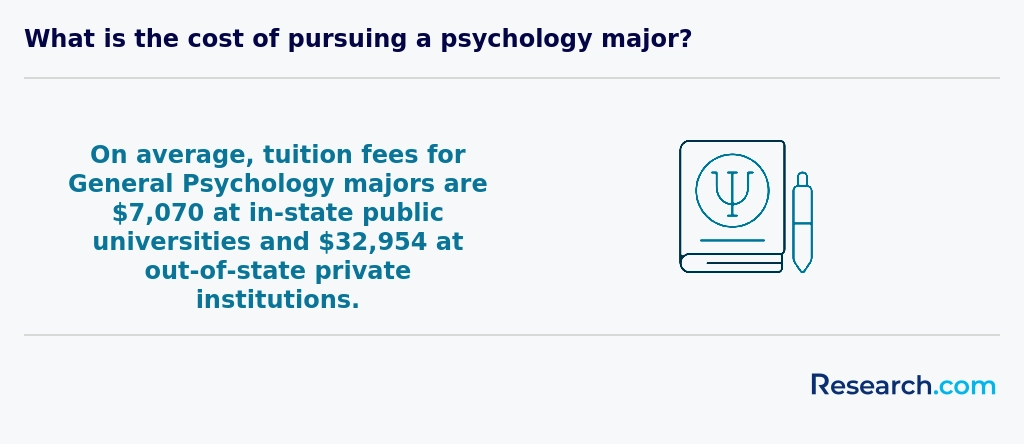
In Rochester, the average cost of pursuing a psychology degree varies significantly depending on the type of institution. Graduates from public universities often recall the affordability of in-state tuition, which generally falls between $10,000 and $15,000 per year. This lower cost can ease financial stress, allowing students to focus on their coursework and practical experiences. In contrast, private institutions like the University of Rochester present a different financial picture, with annual tuition frequently exceeding $50,000. While this steep price tag might seem daunting, many students appreciate the extensive research opportunities and personalized support available, which can justify the investment for those seeking advanced specialization or doctoral study.
Former psychology students often reflect positively on combining assistants- ships or scholarships with their studies, which helped mitigate expenses. Such financial aid reflects the programs' recognition of both academic promise and financial need. These experiences underscore a broader reality: the cost of a psychology degree in Rochester is as much about planning and resourcefulness as it is about tuition figures. Understanding this balance is crucial before committing to a program.
Where can I work with psychology degree in Rochester?
Graduates from psychology programs at institutions like the University of Rochester often find themselves employed in healthcare settings such as Strong Memorial Hospital, where clinical and counseling psychologists contribute directly to patient mental health. One graduate shared how working alongside experienced professionals at Rochester Regional Health enriched their understanding of behavioral health programs and enhanced their confidence in real-world clinical applications.
Others have reported rewarding experiences working within the Rochester City School District, supporting students with diverse learning needs, which reflects the city's active investment in educational psychology. Similarly, research assistant roles at local universities provide hands-on opportunities to engage with groundbreaking studies, offering a blend of academic rigor and community impact.
Community agencies like Connections Health provide fulfilling roles centered on counseling and social work, where empathy and psychological knowledge translate into tangible support for families facing challenges. Meanwhile, some graduates appreciate the versatility psychology offers, branching into human resources or organizational development in Rochester's varied economy, where understanding behavior aids effective teamwork and marketing strategies.
Graduates with psychology degrees in Rochester often find that their earnings vary widely depending on the specific career path and level of education they pursue. For instance, roles like Human Resources Specialist offer a mean annual wage of around $76,060, which is encouraging for those leveraging their psychology knowledge in business contexts. Similarly, Marketing Research Analysts with a psychology background can expect to earn roughly $83,190 annually, reflecting strong demand in data-driven fields.
Bachelor's degree holders sometimes start in positions such as Clinical Research Associates or Survey Researchers, both averaging about $62,370 per year. These roles, common among graduates from institutions like the University of Rochester or Monroe Community College, often serve as stepping stones to more specialized careers.
Students often report feeling optimistic about entering fields like human resources or market research, where psychology insights enhance their effectiveness. However, it's important to consider that starting salaries may be moderate, requiring additional experience or certifications to reach higher pay brackets in Rochester's competitive job market.
- Tuition for a bachelor's degree in psychology in Rochester ranges from $20,000 to $35,000 per year for in-state students, depending on the school.
- The average starting salary for psychology graduates in Rochester is about $45,000 per year, increasing to around $70,000 for mid-career professionals.
- Rochester's job market for psychology graduates is strong, with opportunities in healthcare settings, educational institutions, and private research organizations.
- Advanced degrees like master's or doctoral programs improve job prospects and earnings, with licensure requirements including supervised practice hours in New York State.
- Internships and practicum opportunities are widely available through local universities partnering with area mental health providers, aiding practical experience and employment chances.
Completing a psychology degree in Rochester often depends on the specific program and personal circumstances. Most bachelor's degree graduates from institutions like the University of Rochester report finishing in about four years, balancing core psychology classes with general education requirements. This aligns with the typical 120 credit hours needed but can feel intense when juggling social life and part-time work.
Master's students frequently mention the benefit of flexible schedules offered by local colleges, which can stretch their programs from two to three years. Part-time enrollment helps many working students manage coursework alongside jobs or family commitments, though it may extend completion time. Clinical psychology tracks requiring supervised practicum add an extra layer of commitment but provide rewarding hands-on experience.
Doctoral candidates at Rochester's prominent universities often face a five- to seven-year journey due to the blend of coursework, research, and internships. Graduates recall the challenge but also the deep satisfaction of comprehensive preparation needed for licensure and specialized practice. Factors such as enrollment status and transfer credits can speed or slow progress, making each student's timeline uniquely their own.
In today's dynamic job market, there are several alternate routes to build a rewarding career in psychology without strictly adhering to traditional degree pathways. Many individuals with a passion for helping others and a natural aptitude for empathy are successfully carving out careers in therapeutic fields by leveraging certificate programs, specialized training, or practical experience. For instance, some professionals choose to bypass conventional college routes and instead gain industry-recognized credentials that enable them to work in roles such as behavioral coaching, peer counseling, or community mental health support. Exploring these flexible options can be especially beneficial for those who face financial, time, or academic barriers that make traditional degree programs challenging. In fact, individuals interested in non-traditional routes might consider checking out how to become a therapist without college for practical advice and firsthand success stories. By broadening their perspective on educational pathways and focusing on continuous professional development, aspiring professionals can gain the skills and confidence needed to excel in the diverse world of psychological services. This alternative pathway not only enhances career opportunities but also aligns with the growing demand for flexible, accessible routes in the mental health field.
Choosing between online and on-campus psychology degrees in Rochester hinges on how you prefer to engage with your learning environment. Graduates from the University of Rochester often recall vibrant lab sessions and face-to-face discussions that deepened their understanding through immediate feedback and hands-on practice. This direct interaction with faculty and peers fosters a sense of community and can enhance clinical skills essential in psychology.
In contrast, alumni of online programs appreciate the flexibility that allows them to balance studies with work or family, accessing lectures and assignments remotely at their own pace. For those who need to manage busy schedules, this convenience is invaluable, although it may reduce spontaneous collaboration opportunities.
Both pathways offer accredited credentials and research options, but on-campus students in Rochester frequently highlight easier access to local grants and active participation in university labs or clinics. Meanwhile, online students benefit from reduced living expenses and no commute, which can alleviate financial and logistical stress.
Obtaining the necessary licensure is a critical step for psychology graduates in Rochester, NY, who wish to practice clinically or offer professional counseling services. In New York State, licensure typically involves three core phases: completing graduate-level coursework, accruing supervised experience, and passing the Examination for Professional Practice in Psychology (EPPP). Most candidates must first earn a regionally accredited master’s or doctoral degree in psychology, ensuring coursework covers ethics, assessment, and intervention strategies. Many aspiring clinicians pursue an affordable online master’s in clinical psychology to fulfill academic requirements while balancing work and personal commitments. After graduation, New York requires a minimum of 3,500 hours of supervised experience-split between acceptable settings such as community clinics, hospitals, or private practices-and supervision by a licensed psychologist. Applicants must document this experience through the New York State Education Department (NYSED) portal, verifying dates, hours, and supervisor credentials. Following approval, candidates register for and pass the EPPP, a comprehensive exam evaluating knowledge across biological bases, social and cultural diversity, and assessment techniques. Upon passing the EPPP and meeting all state requirements, the NYSED issues a license to practice. Licensure must be renewed every three years, with 36 hours of continuing education-including ethics, child abuse identification, and suicide risk assessment-required to maintain active status. Understanding this roadmap empowers Rochester graduates to confidently transition from the classroom to professional practice, ensuring both compliance and competence in serving their communities.
The average cost of a psychology degree in Rochester typically falls around $58,000 to $59,000 in total, reflecting both in-state and out-of-state expenses. This figure highlights the substantial financial commitment required, whether attending public institutions like those in the State University of New York system or prestigious private universities such as the University of Rochester. Graduates often recall balancing tuition costs with the emotional rewards of gaining valuable expertise in human behavior and mental health, which can make the financial strain feel more worthwhile.
Psychology degree tuition fees in Rochester vary notably by institution and residency status. For example, public universities offer a more affordable route, with tuition closer to the lower end of the spectrum, while private universities tend to have higher fees, sometimes exceeding $50,000 annually. Still, many students find opportunities through scholarships, assistantships, or financial aid that ease this burden and foster positive experiences throughout their academic journey.
Beyond tuition, other expenses such as textbooks, fees, and living costs contribute to the overall financial picture. Rochester's moderate cost of living helps, but students often mention budgeting carefully for these essentials. Those interested in exploring further cost details or identifying universities to fit their goals can explore the best popular psychology colleges in the area to make informed decisions aligned with their circumstances and aspirations.

Planning your Psychology degree journey in Rochester, NY starts with understanding the application timeline and ensuring you meet all critical deadlines. Most institutions offer both Fall and Spring admissions cycles, with the following general schedule: • Early Decision/Early Action (Fall Entry) – Applications due by November 1; notification by mid-December. • Regular Decision (Fall Entry) – Applications due by January 15; notification by late March. • Spring Entry – Applications due by October 1; notification by mid-November. Key steps and recommended dates: 1. August–October (Prior Year): Research programs, attend virtual info sessions, and request campus visits. 2. September–November: Prepare transcripts, letters of recommendation, and personal statements. If you seek more cost-effective options, consider our Affordable Psychology Degree Programs Ranking in California for comparison. 3. November–January: Complete standardized test submissions (if required) and finalize FAFSA to maximize financial aid eligibility. 4. January–March: Follow up with recommenders to ensure timely submission of references; monitor application portals for status updates. 5. March–April: Review acceptance letters, compare award packages, and confirm your enrollment by May 1 for Fall or December 1 for Spring. Missing a deadline can delay your start by an entire semester-set calendar reminders, join mailing lists, and connect with admissions advisors early to stay on track.
Students pursuing psychology degrees in Rochester often rely on a blend of financial aid options tailored to their local context. Graduates from institutions like the University of Rochester recall how completing the FAFSA opened doors to Pell Grants, which can provide up to $7,395 annually without the stress of repayment. This grant is especially valuable for those balancing studies and part-time work.
State-based aid such as New York's Tuition Assistance Program (TAP) often reduces the tuition burden by up to $6,165, which many Rochester residents find essential when attending schools like Rochester Institute of Technology. These scholarships ease financial pressure but still require careful planning and eligibility awareness.
- Some psychology graduate students benefit from research or teaching assistantships, gaining practical experience at colleges while receiving stipends or tuition remission.
- Local psychology associations may offer niche scholarships, providing additional though less predictable support.
- Federal loans remain an option but have to be approached cautiously due to potential debt after graduation.
Rochester psychology students often emphasize the importance of early engagement with institutional financial aid offices to navigate these overlapping opportunities successfully.
Choosing an accredited psychology program is essential for ensuring your degree is recognized by employers, graduate schools, and licensure boards. In Rochester, NY, look for programs accredited by the American Psychological Association (APA) or regionally accredited institutions such as the Middle States Commission on Higher Education. Accreditation verifies that a program meets rigorous academic standards, provides adequate practicum and research experiences, and prepares you for state licensure exams. Without proper accreditation, you may face significant hurdles when pursuing clinical positions, school psychology certifications, or doctoral studies. When evaluating accreditation status, verify each institution’s standing on the APA’s official directory and consult state licensing boards-such as the New York State Office of the Professions-for specific requirements. For instance, if you aim to become a licensed clinical psychologist, ensure your chosen program offers the APA-accredited sequence of courses, supervised clinical hours, and practicum placements that satisfy New York’s postdoctoral supervision mandates. If your career goals extend beyond Rochester, compare accreditation criteria nationally; for example, explore our Affordable Psychology Degree Programs Ranking in California to see how programs in other regions stack up. In addition to APA accreditation, consider programs that facilitate licensure reciprocity. Some institutions maintain partnerships with other states’ licensing boards, streamlining your transition if you relocate. Always consult with academic advisors and licensure specialists early in your studies to map out requirements for supervised hours, exam preparation, and continuing education credits. By prioritizing accredited programs and staying informed about licensure pathways, you’ll be equipped to embark on a successful, legally compliant career in psychology.
Enrolling in a psychology degree program in Rochester generally requires a high school diploma or equivalent, such as a GED, which serves as the foundational credential. Graduates from Rochester's universities often emphasize how prerequisite courses in biology, statistics, or introductory psychology helped them build confidence before diving deeper into the field. For instance, students at the University of Rochester describe feeling more prepared when they had taken these core subjects beforehand, making the transition smoother and less intimidating.
Application requirements can vary, but many programs request a completed form and may still consider standardized test scores like the SAT or ACT, despite their optional status in some schools. Letters of recommendation and personal statements are key, as they provide insight into a candidate's genuine interest in psychology. These elements often prove pivotal when graduates reflect on how they distinguished themselves during admissions.
Graduate psychology programs in Rochester expect a bachelor's degree, generally with relevant coursework or a psychology major, along with competitive GPAs and sometimes GRE scores. Students with research or clinical experience share a sense of accomplishment, noting these prerequisites offer practical readiness rather than just academic credentials, helping them navigate graduate studies with enthusiasm and clear purpose.
To maximize the benefits of your psychology degree in Rochester, NY, it's essential to align your educational pursuits with your career aspirations, considering factors such as program type, practical experience, and research opportunities. As you navigate the realm of psychology, understanding the nuances of each specialization can significantly enhance your career prospects. For instance, exploring the best popular psychology colleges can provide valuable insights into which institutions offer the most comprehensive and specialized programs. By leveraging such resources and focusing on developing strong analytical, communication, and interpersonal skills, you can position yourself for success in a variety of roles, from clinical psychology and counseling to industrial-organizational psychology and beyond. Remember, the key to a fulfilling career in psychology is not only about the degree you earn but also about the experiences you accumulate, the networks you build, and the continuous learning and professional development you pursue.
Psychology degree programs in Rochester generally include core courses that provide a broad yet detailed understanding of human behavior and mental processes. Graduates from local institutions often recall how foundational classes like Introduction to Psychology helped them connect theories of cognition and emotion to real-world experiences, such as observing group behavior in campus organizations.
Key subjects typically cover Developmental Psychology, which allows students to appreciate changes from infancy through adulthood, and Abnormal Psychology, offering deep insights into mental health challenges often encountered in healthcare settings around Rochester. Social Psychology courses frequently stand out, as students relate class concepts to their own interactions in the diverse Rochester community.
Biological Psychology and Research Methods are also emphasized, equipping students with a scientific approach that enhances critical thinking, a skill celebrated by many Rochester graduates who pursued internships at hospitals and community centers. Electives further let students specialize, inspiring enthusiasm when they explore areas like forensic psychology or clinical practices relevant to local agencies.
Psychology degree specializations in Rochester reflect diverse interests, ranging from Clinical Psychology to Cognitive and Developmental Psychology. Graduates from well-known universities often highlight the practical focus on evidence-based therapies in Clinical Psychology, which prepares them to help individuals struggling with mental health challenges. Others pursuing Cognitive Psychology enjoy exploring brain functions linked to memory and perception, often valuing research opportunities seen in university labs or tech company internships.
Rochester psychology program concentration options also include Industrial-Organizational Psychology, which appeals to those interested in improving workplace dynamics through psychological insights. Students express enthusiasm for hands-on experiences offered by local industries. Health Psychology, though newer, attracts individuals fascinated by the connection between mind and body, with many finding meaningful roles in regional hospitals or health organizations.
While specializing can sometimes require additional costs, as seen with programs emphasizing graduate-level Clinical Psychology training, many graduates appreciate the career flexibility these choices bring. Some also explore alternative pathways, such as how to become a therapist without college, emphasizing that psychology careers may not always follow a singular academic route.
Choosing the best psychology degree programs in Rochester involves weighing several practical factors without rushing to conclusions. Graduates from local colleges often emphasize how degree level and specialization influenced their career satisfaction-some found a bachelor's degree sufficient for entry-level roles, while others pursued a master's or doctoral degree for clinical or research positions, reflecting the diverse needs within the field.
Accreditation is another critical piece; graduates appreciate programs from regionally accredited institutions with faculty actively engaged in psychology research or practice. Such credentials ensure a curriculum aligned with national standards, which supports licensure and employment opportunities. Since tuition can vary widely-from about $10,000 annually at public universities to over $30,000 at private Rochester schools-students often balance cost with financial aid and program benefits. For those juggling work or family, program flexibility, including evening or online courses, can make a significant difference.
Hands-on experience also profoundly shapes student preparedness. Graduates recall valuable internships and practicums through local partnerships, building confidence and practical skills. For those seeking an affordable online master's in clinical psychology, Rochester institutions present options that blend accessibility with quality education, helping students avoid hefty debt while advancing their careers.
Graduates with a psychology degree in Rochester find diverse opportunities across clinical, educational, research, and business sectors. Clinical roles, such as licensed clinical psychologists or therapists, are popular among graduates from local universities because of Rochester's reputable healthcare system, including institutions like the University of Rochester Medical Center. Many graduates recall how their internships in these settings offered hands-on experience that enhanced their confidence in patient care and research applications. Choosing this path often necessitates advanced degrees and licensure but offers rewarding career satisfaction.
Educational settings provide another path, where school psychologists support students' mental health and academic performance. Graduates working in Rochester's school districts describe the fulfillment of collaborating with teachers and families to promote student well-being. For those drawn to research, psychology degree careers in Rochester expand through positions at universities and independent centers, enabling graduates to engage with innovative studies in cognitive and social psychology.
Business and organizational psychology also present promising options. Firms here increasingly value psychologists who improve workplace culture and employee well-being, which appeals to graduates seeking dynamic, applied roles. Entry-level salaries for psychology degree holders typically reflect national averages, but pursuing higher degrees can substantially boost earnings and specialization. Students interested in balancing affordability with quality might explore the Affordable Psychology Degree Programs Ranking in California for comparative insights beyond Rochester.
The psychology degree employment opportunities Rochester provides are varied but often centered around healthcare, education, and research sectors. Graduates from universities in Rochester frequently find roles in clinical or counseling positions at the University of Rochester Medical Center or in local school districts. These settings offer valuable hands-on experience, but many graduates note that job competition is real, especially for research-intensive or clinical roles that require advanced degrees and state licensure.
Many psychology graduates describe the market as stable yet demanding, where an average annual salary near $81,000 reflects competitive compensation compared to broader national figures. However, obtaining these positions commonly requires not just a degree but additional accreditation and supervised practice, which can extend study periods and costs. This dynamic makes awareness of 6 month certificate programs high paying jobs appealing for some seeking faster entry into the workforce.
Overall, the job outlook for psychology graduates in Rochester is positive but nuanced, shaped by the city's strong medical institutions and community services. Many local graduates appreciate the opportunities for growth, particularly in mental health fields, while weighing the challenges of licensure and specialized training. The environment encourages a commitment to continuing education and practical experience to thrive in Rochester's psychology job market.
2027 Most Popular Psychology Degree Programs Ranking in Rochester
Investing in your education is a significant decision that can profoundly impact your future, and the Research.com team is fully aware of the importance of making well-informed choices. To support prospective students in Rochester, we have carefully developed the "2027 Most Popular Psychology Degree Programs Ranking in Rochester." Our dedication to quality, credibility, and accuracy is demonstrated through extensive research and rigorous analysis behind this ranking.
We utilized the following reputable data sources to ensure a thorough evaluation of psychology degree programs:
By reviewing this ranking, readers will obtain valuable insights to help them identify the best psychology programs in Rochester and make confident decisions regarding their educational paths. For more information on how this ranking was created, please visit our Research.com methodology page.


Frequently Asked Questions About psychology
Psychology degree students in Rochester can enhance their learning experience by actively engaging in both academic and practical opportunities available locally. Institutions like the University of Rochester offer access to renowned research centers, where students can participate in studies related to cognitive science and mental health. According to the National Center for Education Statistics, students involved in research projects tend to graduate at higher rates and secure better employment.
Additionally, joining local psychology organizations such as the Rochester Psychological Association provides networking and mentorship benefits. Volunteering or internships at nearby hospitals or clinics also offer hands-on experience, essential for understanding clinical applications.
Finally, utilizing Rochester's libraries and digital resources can deepen theoretical knowledge while attending psychology seminars or workshops enhances critical thinking skills necessary for success in the field.
The field of psychology is rapidly evolving, with several emerging niches gaining prominence, especially relevant to students in Rochester. One growing area is neuropsychology, which explores brain-behavior relationships and is supported by Rochester's advanced medical research facilities. Another expanding niche is health psychology, focusing on how mental processes influence physical health-critical given the rise of chronic illnesses in the U.S.
Additionally, forensic psychology is gaining traction in Rochester, with local law enforcement agencies increasingly relying on psychological expertise. Industrial-organizational psychology, which applies psychological principles to workplace productivity and employee wellbeing, is also expanding alongside Rochester's diverse economy. These emerging fields offer promising career paths and reflect broader national trends reported by the American Psychological Association (APA).
After earning a psychology degree in Rochester, preparing for the job market involves a focused approach. Many local employers value practical experience, so pursuing internships or volunteer roles with Rochester-area mental health clinics, schools, or social service organizations is beneficial. According to the Bureau of Labor Statistics, the Rochester metro area expects about 5% job growth for psychologists through 2030, reflecting steady demand.
Networking is critical-attend community psychology events or join professional groups like the Rochester Psychology Association. Graduates should also consider certifications or advanced degrees based on career goals, since many psychology careers require master's or doctoral education.
Additionally, staying current with state licensure requirements in New York is essential for clinical practice or counseling positions. The New York State Office of the Professions offers detailed guidance on licensure timelines and examinations.
Employers in Rochester highly value psychology graduates with strong analytical and critical thinking skills. These abilities enable graduates to interpret complex data and contribute meaningfully to research or clinical settings. Communication skills, both written and verbal, are also essential, as psychologists often must explain findings to diverse audiences.
Knowledge of ethical practices and cultural competence is increasingly important, reflecting Rochester's diverse population and emphasis on inclusive care. According to the Bureau of Labor Statistics, local employers expect familiarity with statistical software and research methodologies to support evidence-based decision-making.
Additionally, problem-solving skills and adaptability are prized, especially in dynamic healthcare and educational environments common in Rochester.
Finding internships in Rochester related to a psychology degree involves leveraging local resources and university connections. Many programs in the area require or encourage internships for hands-on experience. Institutions such as the University of Rochester and Rochester Institute of Technology often have established partnerships with hospitals, clinics, and research centers.
Students should consult their academic advisors and career centers for guidance on available placements. According to the National Association of Colleges and Employers, about 60% of psychology students nationwide secure internships through on-campus resources, which is especially relevant in Rochester's academic community.
Local organizations like the Rochester Regional Health system and community mental health agencies also offer internship opportunities. Early application and networking can enhance your chances of placement in competitive settings.
A psychology degree in Rochester enables graduates to access diverse career opportunities in a city with a growing demand for mental health professionals. According to the U.S. Bureau of Labor Statistics, the Rochester metropolitan area has seen a 10% growth in psychology-related jobs from 2020 to 2023. This growth supports advancement in clinical, counseling, and organizational roles.
Graduates with psychology degrees often find entry points in social services, education, and healthcare sectors. Many employers in Rochester prefer candidates with at least a master's degree for leadership roles, improving mobility within organizations.
Local institutions like the University of Rochester and Rochester Institute of Technology provide strong networks, further aiding career advancement through internships and research opportunities.
Studying for a psychology degree in Rochester offers unique advantages for preparing students for interdisciplinary roles. Local institutions emphasize integrating psychology with fields like neuroscience, social work, and education, reflecting Rochester's diverse professional landscape.
Programs often include collaborative projects and internships with nearby hospitals, schools, and research centers, fostering real-world interdisciplinary experience. According to the National Center for Education Statistics, psychology enrollments in New York State increased by 8% from 2018 to 2022, indicating growing interest in versatile skill sets.
Rochester's psychology curricula typically cover topics such as cognitive science and behavioral health, equipping graduates to work in various sectors. This broad approach is especially valuable given Rochester's strong healthcare and technology industries, which demand professionals capable of crossing disciplinary boundaries.
Choosing between a thesis and a non-thesis psychology degree program in Rochester depends on your career goals and learning preferences. Thesis programs emphasize research and typically require completing original research and a written dissertation. This path suits students aiming for doctoral studies or research-oriented roles. Non-thesis programs focus more on practical knowledge and coursework, often including internships or projects, which benefit those pursuing professional practice or applied psychology careers.
According to the University of Rochester and Rochester Institute of Technology, about 35% of psychology master's students choose thesis options to prepare for PhD or academic roles. Meanwhile, non-thesis pathways remain popular for immediate workforce entry. Consider faculty expertise, available research facilities, and your own time commitment when deciding.
Students based in Rochester seeking to study psychology abroad have several pathways through U.S. higher education agreements. Many Rochester colleges, including the University of Rochester and Rochester Institute of Technology, offer study abroad programs with partner universities in Europe, Asia, and Australia that include psychology courses. According to the Institute of International Education, approximately 1,000 U.S. students from New York state studied abroad in 2022, with psychology among popular fields of study.
These programs typically last a semester or summer and allow credits to transfer back to students' home institutions, helping to advance their psychology degrees. Additionally, students may access global internships or research opportunities in psychology, which enhance practical experience. As options expand, students should consult their institution's study abroad office for specific offerings tailored to psychology majors.
Rochester offers several part-time job opportunities that can enhance the education of psychology students. Many students find positions as research assistants at institutions like the University of Rochester, where psychology research is robust and funded. These roles provide hands-on experience in experimental design and data analysis.
Additionally, local mental health clinics and nonprofit organizations often hire part-time support staff or peer counselors, allowing students to gain direct client interaction experience. Schools and community centers also seek assistants for youth programs, which helps develop skills in developmental and educational psychology.
The Rochester area, with its growing healthcare sector, provides volunteering roles in hospitals that expose students to clinical psychology settings. According to the Bureau of Labor Statistics, part-time roles in mental health support are expected to grow by 15% nationally through 2030, reflecting expanding opportunities in Rochester's healthcare community.
Psychology students in Rochester have numerous opportunities to build professional networks essential for their careers. Local universities such as the University of Rochester and Rochester Institute of Technology host psychology clubs and honor societies that connect students with peers and faculty. These groups often organize guest lectures and workshops featuring practicing psychologists and researchers.
Additionally, the Rochester Psychological Association provides a platform for students to engage with professionals through conferences and community events. Internships and research assistant positions available at Rochester's mental health centers offer practical experience and important contacts in the field. According to the Bureau of Labor Statistics, networking significantly improves job prospects in psychology careers.
Alumni networks play a crucial role in supporting psychology degree students in Rochester. These connections provide valuable access to professionals who have already navigated the local academic and job markets.
Through mentorship programs facilitated by universities like the University of Rochester and Rochester Institute of Technology, students gain guidance on career paths, internships, and research opportunities. According to the National Association of Colleges and Employers (NACE), students involved in alumni networks are 70% more likely to secure internships.
Moreover, alumni often share job openings within the area's healthcare and research organizations, helping graduates transition smoothly into roles in mental health, counseling, or academic research.
Customizing a psychology degree program in Rochester enables students to align their education with specific career goals. Many local institutions offer elective courses and concentrations in areas such as clinical psychology, counseling, or industrial-organizational psychology. This flexibility allows students to develop specialized knowledge.
Internship opportunities with Rochester-area hospitals and clinics provide practical experience, often required for licensure or advanced degrees. According to the National Center for Education Statistics, these hands-on experiences greatly improve job placement rates.
Additionally, Rochester's proximity to research institutions encourages involvement in psychology research projects. Students can tailor their programs by selecting thesis topics that directly relate to their professional interests.
Psychology students in Rochester often encounter several typical challenges during their studies. One major issue is managing the demanding workload, as psychology programs usually require both rigorous coursework and extensive research activities. Balancing class assignments, lab work, and internships can be stressful.
Additionally, students must often secure competitive practicum placements for hands-on experience, which can be difficult given limited local opportunities. According to the National Center for Education Statistics, psychology graduates face higher-than-average rates of academic pressure due to the field's broad and evolving nature.
Mental health concerns are also prevalent among psychology students nationwide, including Rochester, with many reporting anxiety and burnout as a result of intensive study and emotional labor involved in clinical training.
A psychology degree from Rochester offers a strong foundation for pursuing various professional certifications. Common certifications include becoming a Licensed Psychologist, which requires a doctoral degree and passing the Examination for Professional Practice in Psychology (EPPP). Beyond that, certifications such as Certified Alcohol and Drug Counselor (CADC) and Board Certified Behavior Analyst (BCBA) are popular among graduates.
Rochester's regional demand for mental health professionals rose by 12% from 2019 to 2023 according to the Bureau of Labor Statistics, increasing opportunities for certified practitioners. Additionally, certifications in neuropsychology or school psychology can enhance employment prospects in local clinics and school districts.
These credentials typically require supervised experience and continuing education, underscoring the importance of selecting accredited programs when pursuing a psychology degree in Rochester.
When applying for a psychology program in Rochester, it is crucial to demonstrate both academic excellence and genuine interest in the field. Most local universities, including the University of Rochester and Rochester Institute of Technology, expect applicants to have strong undergraduate GPAs, typically above 3.5 for competitive programs.
Candidates should craft a compelling personal statement that highlights any relevant experience, such as internships or research projects related to psychology. Admissions committees value applicants who can clearly articulate their career goals and how the program aligns with them.
Additionally, letters of recommendation from professors or professionals in psychology carry significant weight in Rochester's academic community. Be sure to request these well in advance.
The Graduate Record Examination (GRE) may still be required by some programs, although many schools are adopting test-optional policies following national trends.
Finally, demonstrating knowledge of local psychology research centers or faculty interests can strengthen your application by showing that you have researched Rochester's academic environment thoroughly.
Psychology careers in Rochester reflect broader global trends emphasizing versatile skill sets and interdisciplinary approaches. As the American Psychological Association notes, the demand for psychology professionals is projected to grow 8% nationally from 2021 to 2031, indicating steady opportunities worldwide. Rochester's universities provide strong connections to research hubs, encouraging global collaboration and allowing students to engage with international studies.
Globally, psychology careers focus on mental health, organizational behavior, and human factors, areas also vital in Rochester's healthcare and technology sectors. Professionals often pursue additional certifications or advanced degrees to meet diverse international standards.
Understanding cultural contexts influences research and practice, making psychology a truly global profession. For Rochester students, this means training that prepares them for both local and international challenges in psychology fields.
Gaining practical experience while studying psychology in Rochester is essential for career readiness. Many local universities, including the University of Rochester and Rochester Institute of Technology, offer internship programs connected to nearby hospitals, schools, and mental health clinics. These internships provide hands-on training in clinical, counseling, and research settings.
Students can also participate in research assistant positions, often funded by grants from institutions like the Rochester Center for Behavioral Medicine. According to the Bureau of Labor Statistics, approximately 60% of psychology students in New York engage in internships before graduation, which helps improve job prospects.
Additionally, joining campus organizations and volunteer programs focused on mental health awareness can enhance real-world skills and networking opportunities.
Choosing the right concentration within a psychology degree program in Rochester involves assessing your career goals and interests. Common specializations include clinical, counseling, developmental, and industrial-organizational psychology. Research local job market demands; for example, the Rochester Regional Workforce Development Board reported a 7% growth in clinical psychology roles from 2022 to 2025, highlighting strong demand in mental health services.
Consider program offerings at nearby institutions like the University of Rochester or Rochester Institute of Technology, as they each provide unique concentration options and research opportunities. Additionally, review faculty expertise and available internships, which are critical for gaining practical experience in your chosen field.
- 2027 Most Popular Psychology Degree Programs Ranking in Buffalo
- 2027 Most Popular Psychology Degree Programs Ranking in Albany
- 2027 Most Popular Psychology Degree Programs Ranking in Cleveland
- 2027 Most Popular Psychology Degree Programs Ranking in Bronx
- 2027 Most Popular Psychology Degree Programs Ranking in New York
- 2027 Most Popular Psychology Degree Programs Ranking in Queens
- 2027 Most Popular Psychology Degree Programs Ranking in Amherst
- 2027 Most Popular Psychology Degree Programs Ranking in Detroit
- 2027 Most Popular Psychology Degree Programs Ranking in Worcester
- 2027 Most Popular Psychology Degree Programs Ranking in Boston
See What Experts Have To Say About Studying Psychology
Read our interview with Psychology experts

Catherine Caldwell-Harris, Ph.D.
Psychology Expert
Associate Professor of Psychology
Boston University

Joann Farrell Quinn, Ph.D., MBA
Psychology Expert
Director at the College of Medicine Department of Medical Education
Morsani College of Medicine

Elizabeth L. Jeglic Ph.D.
Psychology Expert
Professor of Psychology
City University of New York

- Study Psychology Abroad | Go Overseas https://www.gooverseas.com/study-abroad/psychology
- Why Get a Psychology Degree Online? | University of Bridgeport https://www.bridgeport.edu/news/reasons-to-get-your-psychology-degree-online/
- Psychology - SWPS University https://english.swps.pl/academics/warsaw/ba-programs/psychology
- Mental Health Challenges Faced by Psychology Students | The Healthcare Guys https://healthcareguys.com/2023/11/23/mental-health-challenges-faced-by-psychology-students/
- Study Psychology Abroad https://astarfuture.co.uk/study_psychology_abroad.html
- Psychology https://www.monroecc.edu/depts/psych/
- Psychology B.A./B.S. | Roberts Wesleyan University https://www.roberts.edu/all-programs/traditional-undergraduate/psychology-babs/
- University of Rochester Psychology, General Major | 39% Acceptance Rate, ROI 64/100 https://www.gradgpt.com/university-of-rochester/bachelors/psychology-general
- Sample letters in psychology https://www.mystudies.com/en-in/human-and-social-sciences/psychology/letter-model/
- Alumni Perspectives - Meet Our FPN Alumni https://www.aanmelder.nl/alumni-perspectives-june-2023


