
2027 Most Affordable Psychology Degree Programs Ranking in Logan

Co-Founder and Chief Data Scientist
If you're considering pursuing a psychology degree in Logan, this article will be a valuable resource. It features the 2027 Most Affordable Psychology Degree Programs Ranking in Logan, carefully created by the Research.com team of data scientists. This ranking helps students like you identify affordable programs that offer quality education.
Choosing the right psychology degree can open doors to meaningful careers and personal growth. Reading this guide will give you confidence in making an informed decision that fits both your goals and budget.
Explore your options and take a positive step toward your future today.
Key benefits of getting psychology degree in Logan
- Salary for psychology degree graduates: Careers such as Human Resources Specialist and Marketing Research Analyst offer mean annual wages around $76,060 and $83,190 respectively, showing strong earning potential for psychology graduates in Logan.
- Career paths: Psychology graduates from popular Logan universities often pursue diverse roles like Clinical Research Associates or Survey Researchers, blending science and human behavior to make meaningful impacts.
- Online degree benefits: Earning a psychology degree online offers flexibility for busy schedules and often reduces costs, helping graduates start their careers in Logan quickly while managing personal commitments.
- 2027 Most Affordable Psychology Degree Programs Ranking in Logan
- What can I expect from psychology degree in Logan?
- Where can I work with psychology degree in Logan?
What can I expect from psychology degree in Logan?
When considering a psychology degree in Logan, one of the best parts is the affordability without sacrificing quality. Graduates from Utah State University often share how accessible the program felt thanks to its average in-state tuition of about $7,300 per year for undergraduates in 2023-2024. Imagine diving into courses on cognitive psychology or behavioral science without the heavy financial pressure that often shadows higher education.
Out-of-state students might pay more, but still find tuition competitively priced compared to universities elsewhere. Many students appreciate that this financial balance allows them to focus on enriching experiences like hands-on internships or collaborative research projects, rather than worrying over costs.
For those driven by the idea of combining theory with real-world application, this cost structure opens doors to meaningful learning and professional preparation. It's a chance to engage deeply with psychology in a vibrant academic community, all while keeping an eye on your budget.
Where can I work with psychology degree in Logan?
Graduates with a psychology degree in Logan often find themselves stepping into diverse roles across healthcare, education, and social services. Imagine working alongside seasoned professionals at Logan Regional Hospital or Bear River Health Department, where you provide crucial support as a mental health technician or case manager. These hands-on experiences let you witness firsthand how psychology shapes patient care in real time.
For many studying at Utah State University, a hub for psychology research, the journey continues into exciting academic or clinical roles. Graduates often share stories of collaborating with faculty on cutting-edge studies or working in university clinics that bridge theory and practice, fueling their passion for mental health.
Others dive into schools around Logan, becoming counselors or behavior specialists who transform student lives daily. The thrill of crafting tailored support plans and seeing a student's growth firsthand brings their psychology training vividly to life. Career paths also branch out into nonprofit organizations, where psychology grads lead programs tackling substance abuse and youth counseling within their communities.
Graduates from psychology programs at Logan's popular institutions, like Utah State University, often step into roles where their degree translates to promising earnings. For example, many start as clinical research associates, earning around $62,370 annually, diving into fascinating projects that shape health innovations.
Others find themselves thriving as human resources specialists, with a mean wage near $76,060, navigating workplace dynamics and fostering positive environments-skills sharpened in their psychology coursework. Marketing research analyst positions offer even higher pay, approximately $83,190, combining analytical curiosity with behavioral insights to influence business strategies.
Picture a recent graduate feeling excited as they transition into a childcare worker position, which, while earning around $32,070, provides rewarding hands-on experience with children, blending passion and practice. These varied roles highlight how a psychology degree in Logan unlocks diverse career paths, each with distinctive earning potential shaped by both local opportunities and the unique experiences of emerging professionals.
- Annual tuition for psychology majors at public universities in Logan is around $8,000 for in-state students, while private colleges generally cost more.
- Entry-level psychology jobs such as behavioral health technicians offer starting salaries between $40,000 and $45,000 per year.
- Mid-career psychologists in Logan typically earn salaries ranging from $60,000 to $75,000 annually.
- Employment for psychologists in Utah is projected to grow by about 12% over the next decade, faster than the national average.
- Logan provides opportunities for internships and practicum experiences in clinical, counseling, and industrial-organizational psychology to gain practical skills.
Graduates often recall these years as a time of growth, where the excitement of new concepts blends with the challenge of coursework. For those eager to explore further, pursuing a master's degree adds about two more years, filled with specialized studies and research that unlock new perspectives on the mind.
The most daring explorers choose doctoral paths, committing four to seven years to profound research, clinical experience, and dissertation writing. In Logan, this phase is both demanding and deeply rewarding, as students balance intense study with real-world psychological practice.
Some take accelerated routes or part-time tracks, allowing flexibility for work or life commitments, making the timeline as unique as each student's story. The journey through psychology in Logan is an inspiring blend of challenge and discovery.
When considering a psychology degree program in Logan, UT, it's essential to think about the factors that will influence your decision. One crucial aspect is the cost of the program, and exploring affordable psychology programs in utah can help you find a program that fits your budget. Additionally, considering the institution's reputation, accreditation, and faculty expertise can provide valuable insights into the quality of education you'll receive. Many graduates have found that attending a reputable institution with experienced faculty has opened doors to internships, research opportunities, and ultimately, fulfilling careers in psychology. By weighing these factors and doing your research, you can make an informed decision that sets you up for success in your academic and professional pursuits.
Choosing between an online or on-campus psychology degree in Logan sparks a fascinating journey of discovery. Imagine sitting in a lively classroom at Utah State University, where you can engage directly with professors and classmates, dive into hands-on labs, and soak up the energy of campus life. Graduates often recall how face-to-face mentoring and access to rich campus resources like counseling centers and research facilities made their learning feel tangible and connected.
On the flip side, envision studying from home, balancing family life or a job while accessing lectures via virtual classrooms. Online psychology programs provide such freedom and flexibility, attracting busy adults eager to carve out their own pace. Logan students appreciate how remote learning still links them to accredited schools offering quality instruction and nearby internship opportunities through community partnerships.
The contrast is not just in setting but in experience-both paths open doors to exciting careers, tailored to your lifestyle and aspirations right here in Logan.
Applying on time ensures you secure financial aid, housing, and a spot in your preferred program.
Typical deadlines for Logan, UT psychology programs:
- Fall Admission (August start): Applications due by December 1
- Spring Admission (January start): Applications due by October 15
- Summer Sessions: Applications due by April 1
- FAFSA Priority Deadline: Submit by November 1 for priority aid
Key steps by timeline:
- 6–8 months before start: Research programs and confirm prerequisites
- 4–6 months before start: Complete FAFSA and request official transcripts
- 2–3 months before start: Draft personal statement and secure recommendation letters
- 1 month before start: Verify application status and submit any outstanding materials
For flexible study options in family therapy, explore affordable online mft programs
When you consider the average cost of a psychology degree in Logan, it quickly becomes an exciting journey into both education and financial planning. At Utah State University, the most popular spot for psychology students in the area, the median total cost lands around $34,992, with in-state students typically paying closer to $9,228. Graduates often share how this investment opens doors to fulfilling careers with a foundation built on affordable tuition and enriching programs.
Picture yourself navigating the vibrant campus life, balancing studies and social activities, knowing that the tuition costs reflect a sensible approach compared to many other U.S. regions. The affordable psychology degree programs Logan offers allow many to pursue their passion without overwhelming financial stress. Students often describe the experience as empowering, especially with manageable costs for textbooks and supplies, adding to the overall support system.
Many who graduate from Logan's psychology programs recommend exploring all options, including federal grants and local scholarships. Some even pair their studies with work-study programs, giving both experience and extra financial breathing room. For those intrigued by specialized paths, investigating best accelerated online MSW programs can prove to be another exciting avenue. Overall, studying psychology in Logan combines affordability with opportunities that fuel curiosity and personal growth.
In today’s evolving educational landscape, many psychology graduates are turning to specialized online programs to further sharpen their expertise and remain competitive in the job market. Expanding your studies with targeted online degrees not only deepens your subject matter knowledge but also offers the flexibility to balance professional and personal commitments. For instance, entering a niche field with an applied behavior analysis degree online can provide you with cutting-edge skills that are highly sought after by employers across various sectors. With state-of-the-art digital classrooms, interactive webinars, and a network of experienced mentors, these programs are designed to enhance practical skills and theoretical knowledge simultaneously. This approach not only bridges the gap between academic excellence and real-world applications but also supports lifelong learning and continuous professional development in the dynamic field of psychology.
Imagine landing a psychology degree in Logan with a solid safety net of financial aid opportunities ready to support you. Many students at Utah State University, a top choice for psychology studies here, tap into federal options like Pell Grants and student loans by submitting the FAFSA. These grants, especially the Pell Grant offering up to $7,395, feel like a friendly boost, easing tuition worries and letting students dive deeper into their passion.
State aid shines bright as well-with Utah's scholarships and grants designed specifically to reward local talent and academic excellence. Graduates often share how the Regents' Scholarship significantly lifted their educational burden, making college more than just a dream.
Hands-on learners find joy in work-study programs right on campus, helping out in research labs or counseling centers, gaining experience while funding their education. Plus, national private scholarships from organizations like the APA add another layer of support, fueling ambitions beyond the classroom.
These mixed resources create a vibrant financial aid landscape that many psychology students in Logan navigate with excitement and hope for their future.
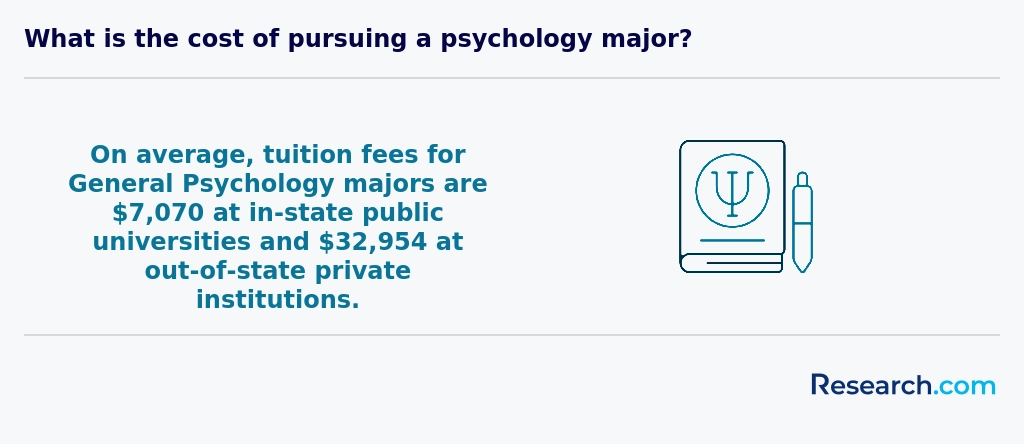
When evaluating affordable psychology degree programs, students in Logan, UT benefit from understanding how local costs compare with other regions. While Logan’s in-state tuition averages around $7,070 per year, prospective students might also explore programs in neighboring states-particularly Pennsylvania, where a diverse range of low-cost options exists. For a detailed look at comparable programs, see our Low Cost Psychology Degree Programs Ranking in Pennsylvania. In Pennsylvania, public institutions often offer in-state tuition between $8,000 and $12,000 annually, with private colleges averaging $20,000 to $25,000. These figures highlight that Logan’s public universities remain among the most budget-friendly choices in the nation. However, Pennsylvania’s strong financial aid packages and scholarship opportunities can offset higher sticker prices. By benchmarking Logan, UT against Pennsylvania, students gain a broader perspective on regional affordability. This comparison supports informed decision-making, ensuring that prospective psychology majors select a program that optimizes both cost savings and academic quality.
Diving into a psychology degree in Logan means gearing up with some essential academic tools. Graduates from Utah State University often recall how their solid high school foundation, including completing courses like Algebra II and Biology, was crucial to grasping the biological and statistical elements of psychology.
Many Logan institutions ask for a high school diploma or GED, setting the stage for your adventure into understanding the human mind. Some students share how submitting SAT or ACT scores felt like unlocking a new level, although test-optional policies at certain colleges can make this path feel more flexible and approachable.
Imagine writing your personal statement or gathering letters of recommendation as moments to truly reflect on your curiosity - those are powerful gateways to show admissions teams your passion for exploring psychology.
At Utah State University, there's an emphasis on building critical thinking and research skills early on. Graduates say this preparation felt like equipping themselves with a mental compass to navigate the fascinating, sometimes complex, world of psychology.
After earning a psychology degree in Logan, UT, many roles require state licensure and professional certification. To navigate this process, follow these key steps:
- Complete a regionally accredited bachelor’s or master’s program with the required credit hours.
- Accumulate supervised clinical experience (typically 2,000–4,000 hours) under a licensed psychologist or counselor.
- Pass the Examination for Professional Practice in Psychology (EPPP) and any Utah-specific jurisprudence exams.
- Submit a licensure application, official transcripts, verification of supervised hours, and exam scores to the Utah Division of Professional Licensing.
- Maintain active status by fulfilling continuing education requirements (often 20–40 hours every two years).
For those interested in counseling paths, consider exploring online degrees in counseling as a complementary option.
Diving into a psychology degree in Logan means immersing yourself in a thrilling journey of discovery. Students at popular institutions like Utah State University often start with foundational courses that introduce them to the fascinating worlds of cognitive, social, and developmental psychology. Imagine exploring how your memory works one week and then unraveling the mysteries of human growth across a lifetime the next.
Many graduates recall how courses in research methods and statistics initially seemed daunting but quickly became exciting tools for understanding human behavior through data. Designing experiments and analyzing results can transform abstract concepts into powerful insights, making every lecture feel like a hands-on adventure in science.
Specialized classes such as Biological Psychology take you deep inside the brain's connection to behavior, while Abnormal Psychology opens doors to understanding mental health struggles faced by people around you. Practical experiences-internships in community centers or campus labs-allow students to live the theory and feel the impact firsthand, creating memories that fuel passionate careers.

Diving into a psychology degree in Logan means exploring a spectrum of captivating specializations that shape your career path and passions. Graduates from popular universities like Utah State University often mention how clinical psychology feels especially rewarding, as it directly tackles mental health challenges-something deeply relevant locally. Counseling psychology offers a warm, supportive approach, helping people face life's hurdles, adding a personal touch many find fulfilling.
Imagine working with children or elders through developmental psychology, witnessing their growth and change-an experience cited by many students as eye-opening and hopeful. Meanwhile, industrial-organizational psychology appeals to those intrigued by workplace dynamics, improving environments and boosting employee well-being, perfectly aligning with Logan's business community.
Students are also drawn to emerging fields like forensic psychology, health psychology, and neuropsychology. Those curious about how the mind affects the body find inspiration exploring careers in health psychology, blending physical and mental health insights in exciting ways. Logan affordable psychology program options mean aspiring psychologists can embrace these opportunities close to home, enriching their journey with practical internships and community connections.
Choosing the best psychology degree in Logan is like embarking on a journey where each step reveals new opportunities. Graduates from Utah State University often speak about the value of attending a school accredited by the Northwest Commission on Colleges and Universities, which ensures that their education meets rigorous national standards. This accreditation not only boosts confidence in one's degree but also opens doors to graduate programs and licensing.
Exploring affordable psychology degree programs in Logan means considering tuition costs that tend to be friendlier here compared to national averages, yet without sacrificing quality. Imagine studying in a campus where small class sizes allow close interaction with professors actively involved in research-providing hands-on experiences that truly illuminate clinical or counseling psychology pathways.
For those curious about practical financial options, it's wise to check out scholarships, assistantships, and even the most affordable online MSW programs nearby. Many graduates highlight how these resources alleviate financial stress, letting them focus fully on their passions and career ambitions in the vibrant Logan community.

Graduates with a psychology degree in Logan often find themselves stepping into diverse career paths fueled by their passion for understanding human behavior. Many from Utah State University share stories of becoming licensed psychologists or counselors, diving into rewarding roles that require advanced education and licensure. The local demand for behavioral health technicians and social workers is on the rise, offering graduates hands-on experiences helping individuals with mental health challenges. Those intrigued by workplace dynamics discover opportunities in human resources or organizational psychology, applying their skills to boost employee morale and customer relations within Logan's growing businesses.
Exploring psychology degree career options in Logan reveals exciting prospects beyond traditional roles. Some recent graduates pursue social work degree california colleges to expand their credentials and impact. The local job market embraces these versatile professionals, encouraging adventurous learners to tailor their paths in social services, education, or business sectors with confidence and enthusiasm.
Exploring psychology degree job opportunities in Logan reveals a landscape full of promise and real-world impact. Graduates from popular institutions here often find themselves drawn to local mental health clinics or school counseling roles, where their work directly shapes individual lives in the community. Imagine stepping into a vibrant classroom or a supportive therapy session, where your knowledge helps build resilience and growth. Many who embark on this path appreciate the genuine connection between their studies and these meaningful roles.
Logan's educational institutions provide not only strong academic programs but also hands-on experiences that prepare students for the competitive market. For those curious about licensure and credentials beyond the degree, understanding rules like those resembling the arizona psychologist license application process is vital for clinical ambitions. The Logan psychology career prospects 2027 look encouraging, especially with demand growing in schools, social agencies, and healthcare settings. With a steady increase in local mental health initiatives, these opportunities feel both exciting and achievable.
2027 Most Affordable Psychology Degree Programs Ranking in Logan
Investing in your education is a significant decision that can shape your future, and the Research.com team understands the importance of making informed choices. To assist prospective students in Logan, we have meticulously crafted the "2027 Most Affordable Psychology Degree Programs Ranking in Logan." Our commitment to quality, credibility, and accuracy is reflected in the extensive research and analysis conducted to compile this ranking.
We utilized the following reputable data sources to ensure a comprehensive evaluation of psychology degree programs:
By exploring this ranking, readers will gain valuable insights into the most affordable and quality psychology degree programs available in Logan, helping them make well-informed decisions about their educational futures. For more details on our methodology, please visit our Research.com methodology page.

Frequently Asked Questions About psychology
Psychology degree students in Logan can maximize their learning experience by actively engaging in both coursework and practical opportunities. Enrolling in experiential learning such as internships or research projects offered by local universities like Utah State University is vital. According to the National Center for Education Statistics (NCES), hands-on experience improves retention and skills application in psychology fields.
Students should also join psychology clubs or organizations to network and enhance their understanding through peer discussions. Utilizing Logan's community resources for mental health volunteering further solidifies theoretical knowledge with real-world practice. Consistent use of campus academic support services, like tutoring, contributes to stronger performance in demanding courses.
Emerging niches within the psychology field reflect shifts in societal needs and advances in technology. In Logan, neuropsychology is gaining traction, focusing on brain-behavior relationships and assessment of neurological disorders. Another growing area is health psychology, which studies how lifestyle affects mental and physical well-being-important as Utah invests more in preventative care. Forensic psychology is also expanding, involving legal casework and criminal behavior analysis, supported by increased collaboration between local law enforcement and universities.
Environmental psychology, exploring human interactions with their surroundings, aligns with regional environmental initiatives. Additionally, digital mental health services, including teletherapy, represent a rapidly developing niche fueled by the pandemic and Logan's expanding tech infrastructure.
After earning a psychology degree in Logan, preparing for the job market involves strategic steps to improve employability. Graduates should seek internships or volunteer opportunities in local mental health clinics or research centers to gain practical experience. The U.S. Bureau of Labor Statistics highlights that psychology-related jobs are projected to grow 8% from 2021 to 2031, making relevant experience crucial.
Networking is another key aspect; joining professional organizations like the American Psychological Association can connect recent graduates with local Logan professionals. Developing strong skills in data analysis and familiarity with psychological assessment tools will also enhance your resume in this competitive field.
Employers in Logan seeking psychology degree graduates prioritize strong analytical and critical thinking skills. These abilities help graduates interpret data accurately and apply psychological theories effectively in real-world settings. Communication skills, both written and verbal, are equally vital as professionals must explain complex concepts clearly to clients and colleagues.
Moreover, proficiency in research methods and statistical software is highly valued, reflecting the growing emphasis on evidence-based practice. According to the Bureau of Labor Statistics, the demand for psychology-related roles in Utah, including Logan, is projected to grow by 8% through 2031, underscoring the need for graduates who can adapt and innovate.
Additionally, interpersonal skills such as empathy and teamwork are essential, enabling graduates to collaborate efficiently and support diverse populations. Local employers often highlight adaptability and ethical decision-making as key factors for success in the Logan job market.
Finding internships in Logan relevant to a psychology degree involves utilizing local university resources and community connections. Utah State University, the primary institution in Logan offering psychology programs, has a dedicated career services office that helps students secure placements in local clinics, research labs, and counseling centers. Students should start by consulting their academic advisors to identify internships aligned with their interests.
Additionally, many Logan-area health facilities, such as the Cache Valley Mental Health Clinic, periodically offer internship opportunities for psychology students seeking practical experience. The Utah Division of Substance Abuse and Mental Health also lists internship programs statewide, including Logan.
Online platforms like Handshake are widely used in Logan to match students with internships. Networking through psychology department events and professional associations in Utah can further increase chances of finding internships. Early application and maintaining a strong GPA improve prospects significantly, as competitive placements often require academic excellence.
A psychology degree in Logan significantly enhances career mobility and advancement opportunities. Graduates gain a strong foundation in human behavior, research methods, and clinical skills, which are highly valued across industries. According to the U.S. Bureau of Labor Statistics, employment of psychologists in Utah, including Logan, is projected to grow 9% from 2020 to 2030, faster than average for all occupations.
Logan's local economy supports roles in healthcare, education, and social services, sectors where psychology expertise is essential. Additionally, psychology graduates often pursue advanced degrees, which leads to higher earning potential and leadership positions.
Regional data from Utah's Department of Workforce Services highlights that professionals with psychology backgrounds in Logan report greater job flexibility and frequent promotion prospects compared to peers without such credentials.
Studying for a psychology degree in Logan equips students with skills that are highly valuable in interdisciplinary roles. Programs often emphasize research methods, critical thinking, and data analysis, which are applicable in fields like healthcare, education, and business. According to the U.S. Bureau of Labor Statistics, Logan's close proximity to diverse industries increases opportunities for internships blending psychology with technology or social services.
Local universities also encourage collaboration across departments. For example, students may engage in projects linking psychology with neuroscience, counseling, or public health, reflecting real-world professional environments. These experiences prepare graduates to work effectively in teams addressing complex problems from multiple perspectives.
Furthermore, Logan's psychology programs frequently include coursework on ethical decision-making and cultural competency, enabling graduates to adapt their psychological knowledge in varied settings. This broad approach is essential for roles in interdisciplinary teams found in community agencies, education systems, and healthcare organizations.
Choosing between a thesis and a non-thesis psychology degree program in Logan depends on your academic and career goals. Thesis programs typically involve conducting original research and writing a detailed report, ideal for students aiming for a PhD or research-oriented roles. Non-thesis programs focus more on coursework and practical applications, suiting those pursuing clinical practice or immediate employment.
In Logan, Utah State University offers both options, with about 40% of psychology graduates choosing thesis routes annually (USU Facts, 2023). Consider whether you prefer hands-on research or gaining applied skills. Financial aid and time commitment also differ, as thesis programs usually take longer to complete.
Students based in Logan interested in studying psychology abroad have a variety of options through established exchange programs and partnerships. Many Utah universities, including Utah State University located in Logan, offer study abroad opportunities in psychology with partner institutions in countries such as the United Kingdom, Australia, and Canada. These programs often allow students to earn credits toward their degree while experiencing different educational and cultural perspectives.
Participation usually requires meeting GPA criteria and completing prerequisite courses. According to the Institute of International Education, about 1.5% of American psychology undergraduates study abroad each year, highlighting a growing trend to combine global exposure with academic training.
Additionally, scholarships and financial aid specifically aimed at psychology majors can make these programs more accessible. Students should consult their academic advisors and study abroad offices to find tailored options that align with their career goals.
Students pursuing psychology degrees in Logan can benefit from several part-time job opportunities that enhance their academic knowledge and practical skills. Positions such as behavioral health technician or mental health aide are common, allowing students to work directly with clients under professional supervision. According to Utah Department of Workforce Services, these roles often pay between $12 and $16 per hour, providing valuable exposure to clinical environments.
Additionally, research assistant positions at local universities, including Utah State University, offer students hands-on experience with psychological studies and data analysis. These jobs support understanding of experimental methods and statistical software, complementing coursework.
Volunteer work in community mental health centers or crisis hotlines is another option, strengthening communication skills and ethical awareness important for psychology careers. Logan's growing healthcare sector increases demand for these roles, making part-time employment both relevant and accessible.
Psychology students in Logan have access to a variety of valuable networking opportunities that can enhance their academic and professional growth. Local institutions such as Utah State University offer psychology clubs and honor societies, which regularly host guest lectures, workshops, and social events. These gatherings connect students with faculty, alumni, and visiting professionals.
Additionally, students can participate in internships and research projects often promoted through university career centers. Logan's proximity to Salt Lake City also enables attendance at regional psychology conferences, providing wider exposure to industry experts and practitioners.
The Utah Psychological Association further supports networking by offering memberships for students and organizing events in the area. These resources collectively help students build connections essential for career advancement in psychology.
Alumni networks play a crucial role in supporting psychology degree students in Logan. These networks connect current students with graduates who have firsthand experience navigating careers in psychology, providing valuable mentorship and guidance.
Many Logan-area universities maintain active psychology alumni groups, facilitating networking events, internship opportunities, and workshops. According to the Utah System of Higher Education, over 60% of psychology graduates reported securing jobs through connections made via alumni networks.
Additionally, alumni often share job leads in local mental health clinics and research institutions, helping students gain practical work experience. Engaging with alumni enhances professional development and increases chances of employment in Logan's competitive psychology job market.
Customizing a psychology degree program in Logan allows students to align their education with specific career goals. Many institutions offer elective courses in areas such as clinical psychology, counseling, developmental psychology, or industrial-organizational psychology. Choosing relevant electives can build expertise tailored to fields like mental health, education, or human resources.
Internships and research opportunities available locally provide hands-on experience and networking within the Logan community. Additionally, some programs allow specialization through certificates or minors in related disciplines, enhancing job market readiness.
According to the U.S. Bureau of Labor Statistics, customizing your education with focused skills can improve employment prospects in psychology-related fields in Utah.
Psychology students in Logan often face significant challenges balancing rigorous academic demands with personal responsibilities. The demanding coursework requires strong time management skills, especially given the extensive reading, research projects, and lab work involved. According to Utah State University data, nearly 40% of psychology undergraduates report stress related to managing internships alongside classes.
Additionally, access to quality practicum placements in Logan can be competitive, which adds pressure for students seeking hands-on experience. Financial strain is another common issue; the average in-state tuition for psychology programs in Logan is about $8,000 per year, posing difficulties for some households. Mental health concerns among students are notable, with approximately 30% reporting anxiety symptoms during their studies, underscoring the need for strong support systems.
With a psychology degree in Logan, graduates have several options for professional certifications to enhance their career prospects. Common certifications include becoming a Licensed Professional Counselor (LPC) or Licensed Clinical Social Worker (LCSW), which require additional supervised experience following a master's degree. National certifications like Certified Addiction Counselor (CAC) are also popular and recognized across many states.
For those interested in school settings, becoming a National Certified School Psychologist (NCSP) is an option after completing a specialist or doctoral program. According to the Utah Division of Occupational and Professional Licensing, these certifications enable practice in diverse professional environments within the state.
Certification requirements vary but often include passing an exam and documented supervised hours. These credentials can significantly increase job opportunities and earning potential in Logan's competitive psychology job market.
When applying for a psychology program in Logan, a strong application starts with a well-crafted personal statement. Highlight your genuine interest in psychology, relevant experiences, and career goals. Research Utah State University, the primary institution offering psychology degrees in Logan, and tailor your statement to reflect how their program fits your ambitions.
Include a solid academic record, ideally with a GPA above 3.0, as competitive programs often require this. Letters of recommendation should come from faculty familiar with your academic or research skills.
Finally, prepare for potential interviews or additional assessments, demonstrating your communication skills and passion for psychology.
The global perspective on a psychology career emphasizes its growing importance across diverse cultures and sectors. In the United States, including Logan, the Bureau of Labor Statistics projects a 8% growth in psychologist employment from 2022 to 2032, faster than the average for all occupations. This reflects increasing demand in mental health services, education, and organizational settings. Psychology degrees from Logan institutions equip students with skills relevant worldwide, focusing on evidence-based practice and cultural competence.
Logan's proximity to both urban and rural communities allows emerging psychologists to understand various population needs, enhancing global employability. Graduates often pursue licensure to practice clinically or advance research that aligns with international standards, such as those from the American Psychological Association.
Gaining practical experience while studying for a psychology degree in Logan can significantly enhance your career prospects. Many local universities, such as Utah State University Eastern in Price and Utah Valley University nearby, encourage internships and volunteer opportunities. These placements often include work in clinical settings, schools, or community organizations.
Students can also engage in research projects, sometimes collaborating with faculty on ongoing studies. According to the American Psychological Association, hands-on experience helps students develop critical skills like assessment and intervention techniques.
Additionally, joining student psychology clubs and attending local workshops can expand your practical knowledge and professional network.
When choosing a concentration within a psychology degree program in Logan, it is important to consider your career goals and interests. Common concentrations include clinical psychology, counseling, industrial-organizational psychology, and developmental psychology. Each offers different paths: clinical psychology often leads to therapy or counseling roles, while industrial-organizational focuses on workplace behavior. According to the Bureau of Labor Statistics, psychologists in Utah, including Logan, earn a median annual wage of around $82,000, with growth expected at 10% through 2030.
Investigate whether local universities in Logan, such as Utah State University, offer specific concentrations and check their program requirements. Also, reflect on your preferred work settings, such as hospitals, schools, or businesses, as some concentrations align better with these environments. Talking with faculty advisors and current students can provide valuable insights tailored to Logan's educational landscape.
- 2027 Most Affordable Psychology Degree Programs Ranking in Boulder
- 2027 Most Affordable Psychology Degree Programs Ranking in Denver
- 2027 Most Affordable Psychology Degree Programs Ranking in Phoenix
- 2027 Most Affordable Psychology Degree Programs Ranking in Riverside
- 2027 Most Affordable Psychology Degree Programs Ranking in Claremont
- 2027 Most Affordable Psychology Degree Programs Ranking in San Francisco
- 2027 Most Affordable Psychology Degree Programs Ranking in Pasadena
- 2027 Most Affordable Psychology Degree Programs Ranking in Los Angeles
- 2027 Most Affordable Psychology Degree Programs Ranking in Irvine
- 2027 Most Affordable Psychology Degree Programs Ranking in Santa Barbara
See What Experts Have To Say About Studying Psychology
Read our interview with Psychology experts

Elizabeth L. Jeglic Ph.D.
Psychology Expert
Professor of Psychology
City University of New York

Catherine Caldwell-Harris, Ph.D.
Psychology Expert
Associate Professor of Psychology
Boston University

Joann Farrell Quinn, Ph.D., MBA
Psychology Expert
Director at the College of Medicine Department of Medical Education
Morsani College of Medicine

- Psychology - SWPS University https://english.swps.pl/academics/warsaw/ba-programs/psychology
- Alumni Perspectives - Meet Our FPN Alumni https://www.aanmelder.nl/alumni-perspectives-june-2023
- Study Psychology Abroad | Go Overseas https://www.gooverseas.com/study-abroad/psychology
- Why Get a Psychology Degree Online? | University of Bridgeport https://www.bridgeport.edu/news/reasons-to-get-your-psychology-degree-online/
- How To Find Psychology Internships https://www.psychology.org/resources/how-to-find-an-internship/
- Study Psychology Abroad https://astarfuture.co.uk/study_psychology_abroad.html
- Skills of a Psychology Major - Psychology Department https://wagner.edu/psychology/skills/
- Mental Health Challenges Faced by Psychology Students | The Healthcare Guys https://healthcareguys.com/2023/11/23/mental-health-challenges-faced-by-psychology-students/
- Alumni Network - https://efpsa.org/alumni-network/
- Know more about thesis vs non- thesis: what is the difference? https://studyfans.com/en/blogs/816


