
2027 Best Healthcare Degree Programs Ranking in Milwaukee

Co-Founder and Chief Data Scientist
Choosing the right healthcare degree program can feel overwhelming, especially with so many options in Milwaukee. This article presents the 2027 Best Healthcare Degree Programs Ranking in Milwaukee, created by the Research.com team of data scientists to guide you through this important decision.
By exploring this ranking, you'll gain clear insights into which programs offer quality education and promising career paths. Pursuing a healthcare degree opens doors to fulfilling work that makes a real difference in people's lives.
Read on to find the program that fits your goals and start your journey toward a rewarding future.
Key benefits of getting healthcare degree in Milwaukee
- Healthcare degree graduates in Milwaukee can expect competitive salaries, such as $60,790 annually for Patient Care Technicians and around $43,350 for Medical Assistants and Clinical Research Coordinators, providing strong financial stability.
- Graduates from popular local institutions like the University of Wisconsin-Milwaukee find diverse career paths ranging from clinical roles to health information management, offering flexibility and growth opportunities.
- Completing a healthcare degree online, as many from online programs at Marquette University report, allows for flexible schedules and balancing work-life commitments while earning the same respected credentials.
- Key benefits of getting healthcare degree in Milwaukee
- What can I expect from healthcare degree in Milwaukee?
- Where can I work with healthcare degree in Milwaukee?
- How much can I make with healthcare degree in Milwaukee?
- 2027 Best Healthcare Degree Programs Ranking in Milwaukee
- Key Findings
- How long does it take to complete healthcare degree in Milwaukee?
- Exploring Diverse Career Paths in Healthcare
- What's the difference between online and on-campus healthcare degree?
- Accreditation and Certification Requirements
- What is the average cost of healthcare degree in Milwaukee?
- How Long Does It Take to Complete a Healthcare Degree in Milwaukee, WI?
- What financial aid is available to healthcare degree students in Milwaukee?
- Accreditation and Licensure
- What are the prerequisites for enrolling in healthcare degree program in Milwaukee?
- Career Paths and Real-World Success Stories
- What courses are typically in healthcare degree programs in Milwaukee?
- What types of specializations are available in healthcare degree programs in Milwaukee?
- How do you choose the best healthcare degree in Milwaukee?
- What career paths are available for healthcare degree students in Milwaukee?
- What is the job market for healthcare degree in Milwaukee?
- Top Trending Healthcare Rankings
- See What Experts Have To Say About Studying Healthcare
What can I expect from healthcare degree in Milwaukee?
When it comes to the cost of a healthcare degree in Milwaukee, you'll find a range that can fit different budgets, especially if you're exploring local options like the University of Wisconsin-Milwaukee or Marquette University. Public institutions such as UW-Milwaukee usually offer more affordable tuition for in-state students, often making education financially accessible without sacrificing quality.
Graduates often recall balancing their studies with financial aid or scholarships tailored specifically for healthcare students, which can lighten the burden significantly. Imagine attending classes where every dollar saved feels like a step closer to your goal-whether it's mastering healthcare ethics or diving into electronic health records.
Private colleges may have higher tuition fees, but they often come with beneficial resources or small class sizes that attendees appreciate. The real-life experiences shared by alumni highlight how investment in education here can translate directly into career opportunities through partnerships with major healthcare providers like Aurora Health Care or Froedtert & the Medical College of Wisconsin.
Where can I work with healthcare degree in Milwaukee?
Graduates with a healthcare degree in Milwaukee find themselves stepping into vibrant, real-world roles that shape the community's wellness. Imagine walking the halls of Froedtert Hospital or Aurora St. Luke's Medical Center, where many local graduates turn their textbooks into lifesaving skills. These major hospitals hire a range of professionals-from registered nurses to healthcare administrators-offering dynamic, hands-on experiences that bring education to life.
Elsewhere, graduates explore the flexibility of outpatient clinics and urgent care centers, joining teams as physical therapists or physician assistants. Those from universities like Marquette or the University of Wisconsin-Milwaukee share stories of supporting patients in these fast-paced environments, enjoying the constant flow of new challenges.
The growing elder care sector also calls many graduates to roles in nursing homes or rehabilitation centers, where a deep sense of purpose accompanies every day. Meanwhile, the Medical College of Wisconsin opens doors to research and clinical trials, inviting healthcare students eager to push boundaries and innovate.
Each path pulses with opportunity, turning a healthcare degree in Milwaukee into a ticket for meaningful, adventurous careers.
How much can I make with healthcare degree in Milwaukee?
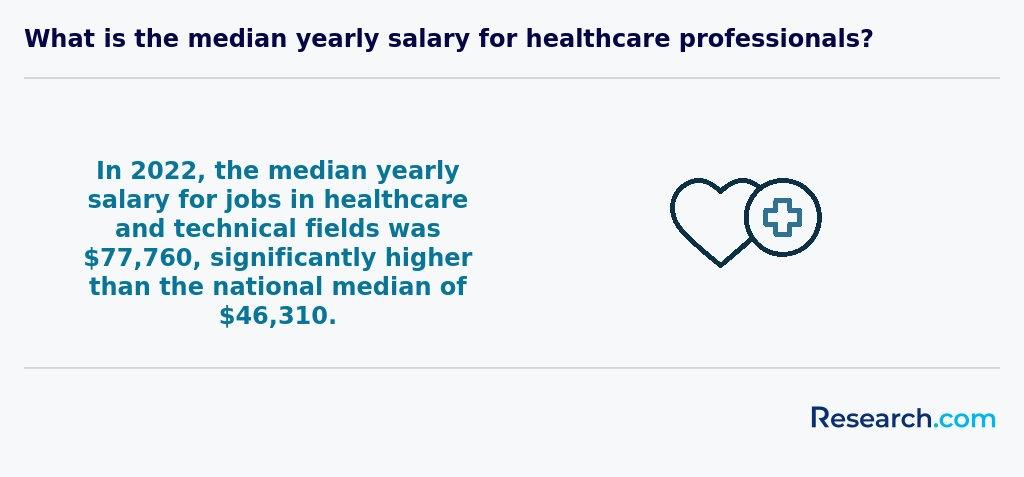
Graduates from Milwaukee's healthcare programs often step into careers where their earnings reflect both skill and dedication. For example, fresh graduates working as medical assistants or clinical research coordinators can expect an average annual salary of about $43,350. Imagine starting your career from a program at Milwaukee Area Technical College and seeing this steady income as you gain hands-on experience in bustling clinics.
Patient care technicians, who often hold associate degrees, enjoy higher pay around $60,790 annually, offering a great balance between education time and salary rewards. Those earning credentials as health information technicians typically gather roughly $43,380 per year, perfect for graduates fascinated by the blend of healthcare and technology.
For students who took the leap into leadership roles, such as quality improvement coordinators, Milwaukee's healthcare scene rewards them handsomely with average wages near $103,150. This kind of salary reflects the city's demand for skilled professionals ready to improve patient care quality.
Many local graduates from institutions like the University of Wisconsin-Milwaukee feel energized by these figures, fueling their passion to grow in a city where healthcare careers and competitive pay go hand in hand.
2027 Best Healthcare Degree Programs Ranking in Milwaukee
How do we rank schools?
Investing in your education is a significant decision that can shape your future, and the Research.com team understands the importance of making informed choices. To assist prospective students in Milwaukee, we have meticulously crafted the "2027 Best Healthcare Degree Programs Ranking in Milwaukee." Our commitment to quality, credibility, and accuracy is reflected in the extensive research and analysis conducted to compile this ranking.
We utilized the following reputable data sources to ensure a comprehensive evaluation of healthcare programs:
By exploring this ranking, readers will gain valuable insights into the best healthcare degree programs available in Milwaukee, helping them make well-informed decisions about their educational paths. For more details on our methodology, please visit our Research.com methodology page.


Key Findings
- Healthcare programs in Milwaukee are offered by institutions like the University of Wisconsin-Milwaukee and Marquette University, covering nursing, public health, and healthcare administration.
- Annual tuition for healthcare degrees ranges from $10,000 to $25,000 for in-state students, with private schools generally charging more than public ones.
- Starting salaries for healthcare graduates in Milwaukee are typically between $50,000 and $60,000 per year, depending on the field and degree.
- Mid-career salaries for registered nurses, healthcare managers, and public health specialists range from $80,000 to $95,000, reflecting steady salary growth.
- The healthcare job market is expected to grow by about 10% in the next decade, driven by local demand and an aging population.
- Milwaukee offers strong internship and clinical placement opportunities through local healthcare providers and research facilities.
How long does it take to complete healthcare degree in Milwaukee?
Embarking on a healthcare degree in Milwaukee offers a thrilling journey through time tailored to your goals. Imagine starting at Milwaukee Area Technical College, where eager learners dive into associate programs lasting about two years, blending hands-on experience with classroom learning to jumpstart their careers swiftly. Graduates often celebrate how quickly they were able to step into essential roles, energized by real-world skills.
For those craving a deeper dive, the University of Wisconsin-Milwaukee opens doors to vibrant four-year bachelor's programs. Many students recount balancing studies and life, discovering that the comprehensive BSN or health sciences tracks foster both confidence and competence by graduation.
Want to level up faster? Accelerated BSN pathways in Milwaukee transform prior degree holders into nurses in just 12 to 18 months-a whirlwind of challenge and reward that recent grads fondly describe as intense but incredibly fulfilling.
And for adventurous souls aiming higher, graduate degrees add 1.5 to 4 years, often part-time, letting students savor every milestone. Milwaukee's flexible programs mean you can shape your timeline while immersing yourself in impactful healthcare roles.
Exploring Diverse Career Paths in Healthcare
Healthcare graduates from Milwaukee have a wide range of career paths available, each offering unique challenges and opportunities for growth. Whether you aim to work in clinical settings, research institutions, or administrative roles, the dynamic nature of the healthcare industry allows for continuous professional development and specialization. Many alumni have transitioned from entry-level roles into leadership positions by pursuing additional certifications and degree programs, which further enhance their skill sets and increase their employment prospects. For example, graduates can start in roles such as medical assistants and eventually move into supervisory or managerial positions in hospitals and community health centers. Those looking to expand their expertise may consider exploring medical assistant programs online, which offer flexible, accelerated learning pathways tailored to today’s fast-paced industry. This blend of practical experience and continuous education not only boosts earning potential but also ensures a fulfilling career dedicated to improving community health and patient care outcomes.
What's the difference between online and on-campus healthcare degree?
Choosing between online and on-campus healthcare degrees in Milwaukee invites a journey into two distinct worlds. Imagine juggling your job and studies with online programs, which many local graduates find thrilling for its flexibility and freedom. You study whenever it fits your schedule, often asynchronously, turning busy evenings into productive learning moments.
Contrast this with the vibrant energy of on-campus life at places like the University of Wisconsin-Milwaukee or Marquette University, where students dive into hands-on labs and dynamic clinical experiences. Graduates there often cherish the immediate connection with professors and peers, sparking real-time discussions and creating lasting friendships.
For many Milwaukee learners, the clinical hours represent a bridge between theory and practice. On-campus students access them seamlessly while online students adventure through local arrangements, building independence alongside their credentials.
Both paths spark excitement, whether it's the self-directed rhythm of online study or the immersive, resource-rich atmosphere of a bustling campus. Your choice shapes not just how you learn, but how you live your healthcare journey.
Accreditation and Certification Requirements
One of the most critical considerations for any healthcare degree program in Milwaukee, WI, is ensuring that the institution holds proper accreditation and that graduates become eligible for relevant certification or licensure. Regional accreditation by bodies such as the Higher Learning Commission (HLC) is essential; it guarantees that credits transfer between institutions and that financial aid remains available. In addition, programmatic accreditation-such as from the Commission on Accreditation of Allied Health Education Programs (CAAHEP) for certain allied health fields or the Commission on Collegiate Nursing Education (CCNE) for nursing-provides industry recognition and ensures curricula meet national standards. Upon completion of an accredited program, graduates must often pass national or state certification exams. For example, nursing students are required to clear the NCLEX-RN exam to become registered nurses (RNs), while aspiring radiologic technologists sit for the American Registry of Radiologic Technologists (ARRT) certification. Physical therapist assistants must graduate from a CAPTE-accredited program and successfully pass the National Physical Therapy Exam (NPTE-PTA). To explore specific degree in physical therapy assistant requirements, including coursework and clinical hour prerequisites, prospective students can review detailed criteria and timelines. State licensure requirements in Wisconsin add another layer of compliance. Applicants typically submit proof of graduation, exam results, background checks, and immunization records to the Wisconsin Department of Safety and Professional Services. Many institutions in Milwaukee also assist graduates with licensure paperwork through dedicated career services offices, ensuring a smoother transition into professional practice. Continuous professional development is frequently mandated, such as completing a set number of continuing education units (CEUs) every two years to maintain active licensure. Choosing a fully accredited and properly certified program not only safeguards your eligibility for employment across the U.S., but also positions you for higher earning potential and better patient-care outcomes. Before applying, verify both regional and programmatic accreditation status on the institution’s website and the U.S. Department of Education’s database. This due diligence empowers you to embark on a trusted educational path and ultimately deliver high-quality care within Milwaukee’s dynamic healthcare landscape.
What is the average cost of healthcare degree in Milwaukee?
The average cost of a healthcare degree in Milwaukee can vary significantly depending on where you choose to study. For many, this is an exciting journey, filled with vivid moments of discovery and growth. Graduates from the University of Wisconsin-Milwaukee often share how their in-state tuition, typically around $35,420 for the entire degree, made pursuing healthcare more accessible while still offering a rich educational experience. This is a common scenario for students balancing ambition with budget, especially since the total median cost for healthcare degrees in Milwaukee hovers near $50,920 for out-of-state students.
For those drawn to private institutions, the financial investment is usually higher, but so are the specialized opportunities. Imagine nursing or medical students at colleges like the Medical College of Wisconsin, where tuition reflects the high-caliber training that shapes future healthcare professionals. Meanwhile, technical schools offer a more affordable pathway, with graduates praising the practical, hands-on training that prepares them efficiently for the workforce at a fraction of the cost.
Understanding the healthcare degree tuition and fees Milwaukee offers is key to planning your education. Many students recommend checking out financial aid options to soften the financial commitment. Exploring the most affordable online healthcare schools in Wisconsin can also open doors to quality programs that fit your lifestyle and budget, making the pursuit of a healthcare degree an adventurous but manageable step toward a rewarding career.
How Long Does It Take to Complete a Healthcare Degree in Milwaukee, WI?
Completion time for a healthcare degree in Milwaukee, WI, varies by credential level and learning format, with options designed to suit traditional and non-traditional students alike.
- Associate Degrees: Most associate-level programs-such as a Medical Assisting or Health Information Technician track-can be completed in approximately 18–24 months of full-time study. Part-time enrollment may extend this timeline to 30–36 months.
- Bachelor’s Degrees: Traditional on-campus bachelor’s programs in Nursing, Healthcare Management, or Health Sciences typically require four academic years (8 semesters). Accelerated paths, available at institutions like the University of Wisconsin–Milwaukee, allow highly motivated students to graduate in as little as three years by completing summer coursework.
- Master’s Degrees and Graduate Certificates: For students with a bachelor’s degree, a Master of Science in Nursing or Master of Healthcare Administration usually spans 18–24 months full time, while part-time or online formats can stretch to 30 months. Graduate certificates often take 6–12 months, depending on credit load.
- Online and Hybrid Formats: Flexibility in pacing is a hallmark of online and hybrid programs. Many learners leverage part-time schedules to balance work, family, and study, potentially extending standard timelines by a semester or two. For tailored online program lengths and cost-effective options, explore our Most Affordable Online Healthcare Degree Programs Ranking in Idaho. Ultimately, prospective students should evaluate program calendars, credit requirements, and personal commitments to select a timeline that aligns with their career goals and lifestyle.
What financial aid is available to healthcare degree students in Milwaukee?
Imagine stepping onto the campus of the University of Wisconsin-Milwaukee, buzzing with excitement but wondering how to manage the $10,000-plus tuition for a healthcare degree. Many Milwaukee students find that federal aid is their trusty companion on this journey. Grants like the Federal Pell Grant offer up to $7,395 without the burden of paying it back, making that first step a bit lighter. For those with exceptional financial need, the Federal Supplemental Educational Opportunity Grant can bring up to $4,000 closer to balancing the budget.
State support is another hidden gem. The Wisconsin Grant, widely used by those attending Milwaukee Area Technical College or UWM, can cover a large chunk of tuition costs, leaving students breathing easier as they focus on their studies. Scholarships from local health organizations add unexpected treasures; many healthcare graduates recall how these awards kept their dreams afloat.
Beyond grants and scholarships, some students dive into work-study programs at local hospitals, earning while gaining hands-on experience. And when loans come into play, they are often seen as an investment toward a future overflowing with opportunity in Milwaukee's vibrant healthcare community.
Accreditation and Licensure
Accredited programs ensure you meet state and industry standards, qualify for licensure exams and earn credentials employers trust.
- Confirm institutional accreditation by regional bodies such as the Higher Learning Commission (HLC).
- Check programmatic accreditation: CCNE or NLN CNEA for nursing; CAAHEP for allied health; CAHME for healthcare administration.
- Review state board approval and reported licensure pass rates-higher rates indicate strong program quality.
- Ensure clinical placements meet your licensure requirements and cover diverse patient populations.
- For focused training in health information management, explore a low cost medical coding and billing online program that aligns with national certification standards.
What are the prerequisites for enrolling in healthcare degree program in Milwaukee?
Ready to dive into a healthcare degree in Milwaukee? Most students share the same first steps-earning a high school diploma with strong skills in biology, chemistry, and algebra. Imagine a future nursing student at Marquette University recalling how conquering those science courses sparked their excitement for real-world medical challenges.
Many Milwaukee programs also ask for SAT or ACT scores, though some have embraced test-optional policies, adding flexibility for applicants. Graduate hopefuls, like those pursuing a Master of Science in Nursing or Physician Assistant studies at institutions such as the University of Wisconsin-Milwaukee, often bring a bachelor's degree plus hands-on experience as a CNA or EMT, making their application shine.
Beyond academics, healthcare hopefuls often clear background checks and share immunization records, steps that graduates say ultimately deepen their trust in the profession's responsibility. These prerequisites don't just unlock classrooms-they open doors to Milwaukee's thriving healthcare scene, where passion meets opportunity every day.

Career Paths and Real-World Success Stories
A healthcare degree opens a multitude of career avenues, empowering graduates to excel in roles ranging from direct patient care and clinical research to healthcare administration and telehealth services. Many alumni share inspiring accounts of their journeys-from starting as entry-level practitioners to thriving in leadership positions within well-respected institutions. Their success underscores the transformative impact of rigorous academic training combined with hands-on experience in real-world settings. Prospective students can draw valuable insights from these experiences, learning how specialized training in areas like health informatics, public health, and patient care can lead to rewarding career advancements. Additionally, those seeking cost-effective education options can benefit by considering opportunities at most affordable online healthcare schools in wisconsin, where flexible learning meets quality instruction. Exploring detailed career paths and success stories not only illuminates potential trajectories after graduation but also reinforces confidence in selecting a program that aligns with both aspirations and industry needs.
What courses are typically in healthcare degree programs in Milwaukee?
Diving into a healthcare degree in Milwaukee, you'll find yourself immersed in courses that blend science, hands-on practice, and leadership skills. Graduates from Milwaukee's well-known institutions often recall their first anatomy class, marveling at the human body's complexity as they dissected systems and functions that felt like unlocking hidden secrets.
Medical terminology courses quickly become essential as students learn the language of healthcare, making collaboration in clinics or hospitals, like those in the Aurora Health Care network, feel natural and exciting. Many students treasure their microbiology and pathology lessons, where understanding disease processes feels like stepping into the shoes of a detective solving medical mysteries.
Practical clinical skills courses offer adrenaline-filled days, whether practicing emergency care techniques or patient assessments during real-world rotations. Beyond science, healthcare management and public health classes equip students with leadership tools to navigate Milwaukee's bustling healthcare landscape, creating a sense of readiness and confidence for future challenges.
These courses don't just prepare you-they ignite curiosity and passion, turning classroom concepts into real-life impact on community health.
What types of specializations are available in healthcare degree programs in Milwaukee?
In Milwaukee, healthcare degree specializations open doors to exciting and diverse career paths, each shaped by the city's vibrant medical community. Graduates from popular universities feel energized by the variety of options, from Nursing programs that train future nurse practitioners and clinical nurse specialists, to Health Information Management, where students dive into the fast-paced world of healthcare technology and data. The hands-on experience at local colleges brings these roles to life, inspiring a sense of purpose and excitement.
Other specializations in Milwaukee's healthcare programs include Public Health, focused on tackling urban health issues head-on, and Physical or Occupational Therapy, where students gain the skills to transform patients' lives with rehabilitative care. Healthcare Administration also draws those intrigued by leadership roles in hospitals, perfectly suited for the city's growing medical sector.
Many students also explore medical assistant programs online, which offer flexible pathways into the field. This array of options illustrates how Milwaukee healthcare program specialization options truly cater to a wide spectrum of passions and career ambitions.
How do you choose the best healthcare degree in Milwaukee?
When choosing the best healthcare degree in Milwaukee, start by exploring what truly excites you within the vast healthcare world. Graduates from University of Wisconsin-Milwaukee often share how discovering a passion for hands-on patient care or health technology shaped their journey. Imagine balancing coursework with part-time jobs or family life; many students appreciate programs that offer flexible schedules, including evening or online classes available in Milwaukee institutions. This adaptability makes pursuing the best healthcare degree programs Milwaukee has to offer feel achievable and empowering.
Accreditation matters deeply here-graduates from Marquette University frequently highlight the confidence they gained knowing their programs were recognized by top certifying bodies like CCNE. Clinical experiences around Milwaukee's renowned hospitals create lively, real-world settings where students engage deeply with their studies and feel the thrill of making a difference. And if budget weighs on your mind, consider that affordable healthcare degrees in Milwaukee still open doors to careers with median salaries that make the upfront investment worthwhile.
Exploring specific fields? If you're curious about physical therapy, check out programs that detail the degree in physical therapy assistant requirements to ensure they match your career dreams. Milwaukee's vibrant healthcare education scene invites you to dive in and discover where your future begins.
What career paths are available for healthcare degree students in Milwaukee?
Exploring healthcare career opportunities in Milwaukee, graduates from local universities like the Medical College of Wisconsin often dive into roles as registered nurses, drawn by dynamic hospitals such as Froedtert and Aurora Health Care. Many share stories of hands-on experiences that make them feel like essential parts of vibrant medical teams, specializing in patient care while earning competitive wages around $70,000 annually.
Others with a knack for technology venture into clinical paths like medical technologist or radiologic technologist, where working amidst cutting-edge diagnostic tools sparks excitement. These roles offer steady demand and growth, making Milwaukee an ideal playground for passionate professionals seeking to impact community health.
Milwaukee healthcare degree job prospects also shine in healthcare administration and public health, with graduates embracing leadership and program development roles at local health departments or NGOs, tackling real-world challenges like urban health disparities.
Those curious about research find the Medical College of Wisconsin a hub for immersive biomedical projects, earning around $45,000 starting out. For students weighing their options, checking the Most Affordable Online Healthcare Degree Programs Ranking in Idaho can provide valuable financial insights.
What is the job market for healthcare degree in Milwaukee?
The healthcare job opportunities in Milwaukee are vibrant and promising, fueled by a growing network of hospitals and care facilities eager to hire recent graduates. Those earning healthcare degrees from local universities experience a dynamic job market supported by steady demand in nursing, allied health, and administration. Graduates often share how their studies at Milwaukee's respected colleges felt directly connected to real-world roles, especially in institutions such as Aurora Health Care or Froedtert Hospital, which constantly seek skilled professionals. Starting wages for nurses hover around $60,000 annually, encouraging many to pursue further specialization.
Exploring Milwaukee healthcare degree employment outlooks reveals a landscape shaped by an aging population and expanding telehealth services, offering diverse career paths. This upward trajectory gives graduates a reassuring safety net paired with exciting opportunities to innovate. For those mapping out their futures, the best college degree for future healthcare professionals in Milwaukee promises an adventurous journey into an industry that genuinely values their expertise and passion.
Frequently Asked Questions About healthcare
Healthcare degree students in Milwaukee can maximize their learning experience by engaging in hands-on clinical opportunities available through partnerships between local institutions and healthcare providers. Milwaukee's rich network of hospitals, such as Froedtert Hospital and Aurora St. Luke's Medical Center, offers valuable practical training environments. According to the Wisconsin Department of Health Services, applied experience improves job readiness for nearly 80% of healthcare students statewide.
Students should also take advantage of Milwaukee's educational resources, including workshops and seminars offered by universities like Marquette University and the University of Wisconsin-Milwaukee. These programs often emphasize emerging healthcare technologies and patient-centered care.
Participation in student organizations and professional associations linked to Milwaukee's healthcare sector further enhances networking and skills development, crucial for career growth in a competitive industry.
The healthcare field in Milwaukee is rapidly evolving, with emerging niches reflecting broader trends in medicine and technology. One significant area is health informatics, which combines healthcare and information technology to improve patient care. According to the Wisconsin Department of Health Services, demand for health informatics professionals is projected to grow by 20% from 2020 to 2030.
Another expanding niche is geriatric care, driven by Milwaukee's aging population; the U.S. Census Bureau notes that nearly 15% of Milwaukee's residents are aged 65 or older. Specialized training in elder care and chronic disease management is increasingly sought after.
Lastly, community health and telemedicine are gaining traction as Milwaukee healthcare systems expand access for underserved populations, reflecting national trends in remote healthcare delivery.
After completing a healthcare degree in Milwaukee, students should focus on gaining practical experience to improve job prospects. Engaging in internships or clinical rotations in local hospitals, such as Froedtert Hospital or Aurora St. Luke's Medical Center, can provide valuable hands-on skills. Networking with professionals through Milwaukee's healthcare associations and job fairs also helps build connections.
Milwaukee's healthcare sector is growing steadily, with the U.S. Bureau of Labor Statistics projecting a 12% increase in local healthcare jobs by 2030. Preparing with up-to-date certifications and attending workshops on patient care or healthcare technology will increase employability.
Utilizing resources at local workforce centers, including resume review and interview coaching, further supports job readiness.
Employers in Milwaukee's healthcare sector prioritize a blend of technical skills and interpersonal abilities in graduates. Proficiency in clinical procedures and understanding of patient care are essential, as highlighted by the Wisconsin Department of Health Services.
Communication skills are equally important, allowing healthcare workers to effectively interact with patients and multidisciplinary teams. Critical thinking and problem-solving abilities enable professionals to adapt to rapidly changing healthcare environments, a necessity emphasized by local healthcare providers.
Familiarity with electronic health record (EHR) systems is increasingly required, reflecting nationwide trends documented by the Office of the National Coordinator for Health Information Technology.
Additionally, cultural competence and empathy are valued to serve Milwaukee's diverse population effectively.
Finding internships in Milwaukee relevant to a healthcare degree involves a mix of research, networking, and utilizing available resources. Start by exploring partnerships between local colleges such as the University of Wisconsin-Milwaukee and healthcare institutions like Aurora Health Care and Froedtert Hospital. These organizations often offer structured internship programs tailored to healthcare students. According to the Milwaukee Health Department, the city has over 120 healthcare facilities, providing varied opportunities for hands-on experience.
Students should also connect with career services offices at their schools, which regularly post internship openings. Professional associations like the Milwaukee Area Technical College Healthcare Advisory Council provide guidance and access to internships. Additionally, Milwaukee's active healthcare job boards and local government resources can help students identify part-time positions to build practical skills while studying. Maintaining a strong academic record and volunteering at healthcare nonprofits in the area further enhance internship prospects.
Obtaining a healthcare degree in Milwaukee significantly enhances career mobility and advancement opportunities. The city's robust healthcare sector, including major employers like Aurora Health Care and Froedtert Health, creates demand for qualified professionals. According to the Wisconsin Department of Workforce Development, healthcare occupations in Milwaukee are projected to grow by nearly 15% through 2028, outpacing many other industries.
A degree not only qualifies graduates for entry-level roles but also positions them for leadership and specialized careers. For example, a bachelor's or higher degree is often required for advancement into management, clinical specialization, or healthcare administration.
Local healthcare employers frequently prioritize candidates with formal education due to increasing regulatory and technical demands, making degrees a key factor in career progression.
Studying for a healthcare degree in Milwaukee equips students with skills essential for interdisciplinary roles by emphasizing collaboration across various medical disciplines. Programs often integrate practical experience through partnerships with local hospitals like Froedtert Health and Aurora Health Care, fostering real-world teamwork.
Milwaukee's healthcare education includes curricula designed to build communication skills, critical thinking, and patient-centered care, preparing graduates to work alongside professionals from nursing, social work, and public health. According to the Wisconsin Department of Health Services, the demand for healthcare workers capable of multidisciplinary cooperation is growing, reflecting trends nationwide.
Students benefit from diverse clinical settings that expose them to different healthcare models and technologies, enhancing adaptability necessary in today's complex health systems.
Choosing between a thesis and a non-thesis healthcare degree program in Milwaukee depends largely on your career goals and learning preferences. Thesis programs typically emphasize research skills and require a formal research project, ideal for students considering doctoral studies or research-oriented roles.
Non-thesis programs often focus on practical skills and coursework, suiting those aiming for clinical positions or immediate workforce entry. According to the Milwaukee Health Care Partnership, the city has a growing demand for healthcare professionals with applied expertise, which non-thesis graduates often fulfill.
Consider also that thesis options may extend your study duration and require strong mentoring from faculty, often available at Milwaukee's research universities. Reviewing program curricula and speaking with advisors can clarify which path aligns with your aspirations.
Students based in Milwaukee who wish to study healthcare abroad have several pathways through U.S. higher education institutions. Many Milwaukee universities partner with foreign universities to offer exchange programs, allowing students to gain international healthcare experience. For example, the University of Wisconsin-Milwaukee occasionally facilitates study abroad opportunities in health sciences.
International programs often include clinical placements, internships, or research projects, providing practical experience. Milwaukee students must ensure that credits earned abroad are transferable and aligned with U.S. healthcare licensure requirements.
Research from the Institute of International Education shows a growing interest in global health studies, with approximately 13% of U.S. study abroad students focusing on health professions as of 2022.
Advising offices at Milwaukee colleges can help students find suitable programs and understand visa and accreditation matters.
Milwaukee offers various part-time job opportunities that effectively complement healthcare degree education. Positions such as medical scribe, pharmacy technician, and certified nursing assistant (CNA) provide practical experience while pursuing studies. These roles enhance clinical knowledge and patient interaction skills, crucial for future healthcare careers.
According to the Wisconsin Department of Health Services, Milwaukee's healthcare sector employs over 60,000 workers, fostering strong local demand for support roles. Many hospitals and clinics, including the Milwaukee County Medical Complex, frequently hire part-time staff, allowing students to balance work and study.
Furthermore, roles in administrative support within healthcare facilities help build familiarity with healthcare regulations and electronic health records systems, enhancing students' professional competencies.
Milwaukee offers numerous networking opportunities for healthcare students aiming to build professional connections. Local universities such as the University of Wisconsin-Milwaukee and Marquette University host healthcare-focused student organizations, providing regular events with guest speakers and industry professionals.
Additionally, Milwaukee is home to several major healthcare systems like Aurora Health Care and the Medical College of Wisconsin, which offer internships, co-op programs, and career fairs. These opportunities allow students to gain practical experience and directly connect with healthcare employers in the region.
The Milwaukee Health Care Partnership also facilitates collaboration among healthcare institutions, nonprofits, and students, creating events that promote networking and community involvement within the local health sector.
Alumni networks offer valuable support for healthcare degree students in Milwaukee by providing professional connections crucial for career development. Graduates of Milwaukee-area programs frequently join networks that connect them with local hospitals, clinics, and research facilities, boosting job placement rates.
According to the Metropolitan Milwaukee Association of Commerce, healthcare remains a top local industry, making these networks essential for accessing internships and employment opportunities.
Alumni often share insights about certifications, licensing, and continuing education, helping current students navigate the complex U.S. healthcare system.
Furthermore, Milwaukee's alumni groups frequently organize mentorship programs and workshops, which enhance practical skills and professional growth.
Customizing a healthcare degree program in Milwaukee involves selecting specialized courses and practical experiences that align with your career goals. Many local institutions offer concentrations in areas such as nursing, public health, health administration, or medical technology. Milwaukee's healthcare sector is growing, with over 100,000 healthcare-related jobs projected by 2030, according to the Wisconsin Department of Workforce Development.
Students can often choose electives, internships, and clinical placements affiliated with major Milwaukee health systems like Aurora Health Care or Froedtert Hospital. These opportunities provide hands-on experience tailored to interests in patient care, management, or research.
Additionally, online and evening classes give flexibility to working professionals seeking advancement. Wisconsin's policies encourage continued education by supporting certifications that complement degree programs, ensuring your education matches evolving healthcare demands.
Healthcare students in Milwaukee often face several notable challenges during their studies. One major difficulty is balancing rigorous coursework with clinical placements, which require significant time commitments. Many students report stress related to meeting both academic and practical requirements simultaneously.
Access to clinical sites in Milwaukee can be competitive due to the city's limited number of healthcare facilities offering student placements. According to the Wisconsin Department of Health Services, wait times and availability for clinical rotations have increased over recent years.
Financial strain also affects students, with high tuition fees and living costs in Milwaukee posing barriers. Additionally, the demanding nature of healthcare programs can impact students' mental health, with increased reports of anxiety and burnout within the local student population.
With a healthcare degree, graduates in Milwaukee can pursue various professional certifications to enhance their careers. Popular certifications include Registered Nurse (RN), Certified Medical Assistant (CMA), and Physical Therapy Assistant (PTA). Each certification requires passing a national or state exam and often mandates supervised clinical hours.
For example, Milwaukee's strong healthcare sector supports over 50,000 workers, with growing demand in nursing and allied health roles, according to the Wisconsin Department of Workforce Development. Certifications like Certified Professional in Healthcare Quality (CPHQ) or Health Information Technician (RHIT) offer opportunities beyond direct patient care.
These credentials can improve job prospects and potential earnings in the region's competitive healthcare environment.
To write a winning application for a healthcare program in Milwaukee, start by showcasing your academic strengths, particularly in biology, chemistry, and math. Milwaukee institutions such as Marquette University and the University of Wisconsin-Milwaukee emphasize strong foundational knowledge.
Highlight relevant volunteer or work experience in healthcare settings, as local programs value community involvement and practical skills. Tailoring your personal statement to address Milwaukee's growing healthcare needs, with projected regional job growth of around 13% through 2030 (Bureau of Labor Statistics), demonstrates your commitment.
Finally, secure strong letters of recommendation from educators or healthcare professionals familiar with your abilities and dedication to the field.
Globally, healthcare careers are recognized as vital and rapidly growing fields. In the United States, healthcare employment is projected to grow 13% from 2021 to 2031, much faster than the average for all occupations, according to the U.S. Bureau of Labor Statistics. Milwaukee reflects this trend, with its healthcare sector providing one of the largest employment opportunities in the region, encompassing hospitals, outpatient services, and long-term care facilities.
Internationally, demand for healthcare professionals is rising due to aging populations and advances in medical technology. For Milwaukee students, this means their degree can open doors worldwide or support the diverse needs of the local community.
Understanding healthcare from a global perspective helps students appreciate cultural competencies and adopt innovative practices, a growing emphasis in many Milwaukee programs to prepare graduates for global and local challenges.
Gaining practical experience is essential when studying for a healthcare degree in Milwaukee. Many local institutions partner with hospitals, clinics, and nursing homes to offer clinical internships as part of their programs. For example, students can find placements at Froedtert Hospital or Milwaukee Health Services, giving access to real-world patient care environments.
Milwaukee's healthcare education programs also encourage participation in simulation labs, which use advanced technology to mimic medical scenarios. This hands-on training is vital for developing skills without risk to patients.
Additionally, volunteering opportunities and part-time positions at local health agencies provide valuable exposure. The Wisconsin Department of Health Services reports that over 10,000 healthcare jobs are added annually in Milwaukee, highlighting demand for trained professionals with practical experience.
Choosing the right concentration within a healthcare degree program in Milwaukee involves aligning your interests with the local job market. Milwaukee's healthcare sector is growing, with the Wisconsin Department of Workforce Development projecting a 12% increase in healthcare occupations by 2030. Common concentrations include nursing, health informatics, and public health, each offering different career paths and demand.
Research specific programs' curriculum and clinical opportunities. For example, nursing programs with strong ties to local hospitals like Froedtert & the Medical College of Wisconsin may offer enhanced practical experience.
Consider your long-term goals and the local community health needs, such as geriatric care, which is significant given Milwaukee's aging population. Data from the Milwaukee Health Department highlights rising chronic disease rates, suggesting demand for specialized healthcare professionals.
Related Healthcare Rankings for Nearby Cities
- 2027 Best Healthcare Degree Programs Ranking in Toledo
- 2027 Best Healthcare Degree Programs Ranking in Minneapolis
- 2027 Best Healthcare Degree Programs Ranking in Cincinnati
- 2027 Best Healthcare Degree Programs Ranking in Saint Louis
- 2027 Best Healthcare Degree Programs Ranking in Columbus
- 2027 Best Healthcare Degree Programs Ranking in Cleveland
- 2027 Best Healthcare Degree Programs Ranking in Columbia
- 2027 Best Healthcare Degree Programs Ranking in Erie
- 2027 Best Healthcare Degree Programs Ranking in Omaha
- 2027 Best Healthcare Degree Programs Ranking in Pittsburgh
Top Trending Healthcare Rankings
See What Experts Have To Say About Studying Healthcare
Read our interview with Healthcare experts

References
- Explore Healthcare Admin Degree Concentrations https://www.baypath.edu/news/bay-path-university-blogs/post/explore-healthcare-admin-degree-concentrations/
- Trends and opportunities in healthcare across emerging markets - Inizio https://inizio.com/insights/trends-and-opportunities-in-healthcare-across-emerging-markets/
- Patient Care Certification Milwaukee Wisconsin - NPS https://npscerts.com/patient-care-certification-milwaukee-wisconsin/
- How to choose a bachelor's in healthcare administration | edX https://www.edx.org/resources/how-to-choose-a-bachelors-in-healthcare-administration
- Healthcare Careers & Accredited Degree Programs https://www.healthcaredegree.com/
- Tuition & Fees | MATC https://www.matc.edu/costs-scholarships-aid/tuition-fees.html
- The Role of Interdisciplinary Studies in Medical Career Training https://georgia-med.com/the-role-of-interdisciplinary-studies-in-medical-career-training.html
- Education requirements for the fastest-growing healthcare jobs https://www.corridorcareers.com/job-tips/blog-news-education-requirements-fastest-growing-healthcare-jobs
- MediWork$ https://www.employmilwaukee.org/Employ-Milwaukee/Adult--Programs/MediWorks.htm
- Healthcare Assistant Cover Letter Templates | myPerfectCV https://www.myperfectcv.co.uk/cover-letter/examples/healthcare-assistant-cover-letter


