2027 Accredited Online Religious and Christian Studies Bachelor's Degree Programs: How to Verify Quality

Co-Founder and Chief Data Scientist
Choosing an accredited online religious and Christian studies bachelor's degree program can be daunting-many students struggle to distinguish between reputable and dubious options. Nearly 35% of prospective students enrolled in online religious studies report concerns about program accreditation and degree recognition. Without proper verification, learners risk investing time and money in a program that lacks academic rigor or industry acceptance. This issue is particularly significant for those seeking flexible, credible qualifications to pivot careers or enhance ministry roles. This article will explore practical methods for verifying program quality and accreditation to guide readers toward well-regarded online religious and Christian studies bachelor's degree programs.
Key Benefits of Knowing How to Verify the Quality of Accredited Online Religious and Christian Studies Bachelor's Degree Programs
- Knowing how to verify accreditation helps students avoid diploma mills, which reportedly affect nearly 15% of unaccredited online programs, protecting investments in time and money.
- Identifying recognized credentials ensures transferability of credits and improves employer recognition, crucial for career advancement in religious and Christian studies fields.
- Avoiding poor-value or fraudulent programs-common in less regulated sectors-allows students to earn regionally accredited degrees that meet academic and licensure standards with confidence.
What Accreditation Bodies Are Authorized to Certify Online Religious and Christian Studies Bachelor's Degree Programs in the United States?
Accreditation confirms that an institution or program meets established educational standards of quality and rigor. Institutional accreditation assesses the college or university as a whole, while programmatic accreditation focuses on specific academic fields, such as religious and Christian studies bachelor's programs. Recognizing regional and national accreditation for online religious and Christian studies degrees ensures programs meet verified standards and are reputable.
- Regional Accreditation: Six major regional accreditors approved by the U.S. Department of Education oversee institutions offering online religious and Christian studies degrees. These include the Higher Learning Commission (HLC), Southern Association of Colleges and Schools Commission on Colleges (SACSCOC), New England Commission of Higher Education (NECHE), WASC Senior College and University Commission (WSCUC), Middle States Commission on Higher Education (MSCHE), and Northwest Commission on Colleges and Universities (NWCCU). Each ensures rigorous academic standards for both online and on-campus programs.
- Institutional Oversight: These accreditors conduct comprehensive evaluations of campuses-including governance, faculty credentials, resources, and student outcomes. Regional institutional accreditation for online religious and Christian studies bachelor's programs confirms that degrees are issued by legitimate institutions, affecting credit transferability and employer recognition.
- Programmatic Accreditation: Although less common, some religious and Christian studies programs may hold specialized accreditation from theological associations or bodies focused on ministry training. This programmatic accreditation reinforces adherence to faith-based training standards, which matters to students seeking ordination or denominational licensure.
- Importance to Employers and Licensing: Employers, graduate schools, and licensing boards often require degrees from regionally accredited institutions. Programmatic accreditation further attests to the depth of religious training. Without recognized accreditation, credentials risk lacking credibility, affecting job opportunities and eligibility for advanced education.
- Verification Resources: The U.S. Department of Education's Database of Accredited Postsecondary Institutions and Programs (DAPIP) is the authoritative source for confirming accreditation legitimacy. Prospective students exploring options-including FAFSA approved online colleges-should consult this database to verify institutional and programmatic accreditation before enrollment.
How Can Prospective Students Verify Whether an Online Religious and Christian Studies Bachelor's Program Holds Valid, Current Accreditation?
Prospective students looking to verify valid accreditation for online religious and Christian studies programs can follow these clear steps to confirm current accreditation status of Christian studies bachelor's degrees online.
- Start With Official Databases: Begin by consulting the U.S. Department of Education's Database of Accredited Postsecondary Institutions and Programs (DAPIP) and the Council for Higher Education Accreditation (CHEA) database. These trusted resources list accredited institutions and recognized agencies with quality oversight.
- Cross-Reference Accreditation Claims: Locate the claimed accrediting agency and visit its official website to find the published roster of accredited schools. Verify that the institution offering the religious and Christian studies degree appears on this list to confirm legitimacy.
- Check Accreditation Details: Review effective dates to ensure the accreditation is current. Confirm the scope covers the specific bachelor's program, and look for any sanctions or warnings against the university or college that might affect academic standing.
- Beware Of Unrecognized Agencies: Some schools claim accreditation from agencies not recognized by the U.S. Department of Education or CHEA. These "fake" accreditors lack legitimate oversight and should raise red flags. Ensure the accrediting body is reputable and officially recognized.
- Contact Accrediting Bodies Directly: If you find conflicting or unclear information, reach out to the accreditation organization by phone or email for clarification on the institution's status and any specific concerns.
- Understand Accreditation Types: Know the difference between regional and national accreditation - regional accreditation is often preferred and affects credit transfer and employer recognition, while national accreditation may apply more to faith-based institutions.
- Consider Programmatic Accreditation: Some religious and Christian studies programs have specialized accreditation or approval from professional religious associations, adding an extra layer of credibility and relevance to the degree.
Many students also explore affordable degree options such as a bachelor of psychology online, which may offer flexible paths alongside religious studies programs. Checking accreditation carefully protects your investment and ensures a meaningful credential as you build your career.
What Is the Difference Between Regional and National Accreditation for Online Religious and Christian Studies Bachelor's Programs, and Which Matters More?
The distinction between regional and national accreditation has long influenced perceptions of online religious and Christian studies bachelor's degrees. Historically, regional accreditation applied to institutions approved by agencies tied to specific geographic areas, while national accreditation typically involved schools with vocational or religious focuses. Though the Department of Education no longer categorizes accreditors this way, these classifications still matter when evaluating credit acceptance and degree recognition.
- Credit Transferability: Credits from regionally accredited programs are broadly accepted by other colleges, making transfer between schools smoother. Conversely, nationally accredited institutions often face reduced credit transfer opportunities, potentially limiting academic progression.
- Employer Recognition: Employers tend to value degrees from regionally accredited schools more, associating them with higher academic standards. National accreditation may be respected within certain religious or career-specific sectors but generally carries less weight in the broader job market.
- Graduate School Access: Advancement to many master's or doctoral programs typically requires a bachelor's degree from a regionally accredited institution. Degrees from nationally accredited schools might restrict eligibility for graduate studies or professional licensure.
- Institution Types: National accreditation is common among trade schools, religious colleges, and specialized online providers, focusing on career-driven or faith-based education. Regionally accredited schools tend to be traditional public or private nonprofit universities offering a wide array of academic fields and research options.
- Current Regulatory View: Although the Department of Education now assesses accreditors based on quality and scope rather than region or category, practical differences remain crucial for credit acceptance and recognition, especially within religious and Christian studies.
A professional who enrolled in an online religious and Christian studies bachelor's program shared how verifying accreditation was a vital step in his journey. He described feeling overwhelmed initially, noting, "Sorting through accreditors and understanding which ones mattered took longer than I expected." After using official databases and consulting with admissions advisors, he felt reassured that his chosen program's regional accreditation would support future credit transfers and job prospects. Reflecting on the process, he said, "I wanted a program that wouldn't just provide a degree but truly open doors. Knowing the accreditation gave me the confidence to commit and plan my career ahead."
Are There Programmatic Accreditation Standards Specific to Online Religious and Christian Studies Bachelor's Degrees That Students Should Look For?
- Regional vs. National Accreditation: Regional accreditation remains the most trusted indicator of academic rigor, crucial for credit transfer and federal aid. National accreditation often applies to faith-based institutions, but it lacks broad employer recognition and may not satisfy all programmatic accreditation standards for online Christian studies bachelor's programs.
- Programmatic Accreditation Bodies: The Association of Theological Schools (ATS) is a primary accreditor specializing in religious and Christian studies degrees. ATS accreditation confirms a curriculum focused on ministry preparation, theological scholarship, and qualified faculty with formal training in theology or divinity. Such programmatic accreditation enhances a degree's credibility within the field.
- Licensure and Certification Requirements: For careers like ordained ministry or chaplaincy, graduation from an ATS-accredited institution is often mandatory for eligibility to pursue certification or ordination. Other religious vocations may consider this accreditation optional but beneficial, especially when demonstrating professional competence.
- Employer and Licensing Board Preferences: Hiring organizations and licensing boards in religious fields typically prefer candidates from accredited programs. This preference stems from accreditation's assurance of curriculum quality and skill mastery, affecting career progression and acceptance within religious communities.
Advisory to Students: Prospective learners should engage with relevant religious associations and denominational leaders to determine which programmatic accreditation holds value for their target career trajectory and region. This step is vital for navigating quality standards in online Christian studies bachelor's programs and avoiding unrecognized credentials or diploma mills. For comparisons across affordable degree options, students may also explore game design degrees as examples of how accreditation impacts program quality and cost.
How Do Online Religious and Christian Studies Bachelor's Programs Demonstrate Curriculum Quality and Academic Rigor Comparable to On-Campus Peers?
- Learning Outcomes Assessment: Accrediting bodies evaluate curriculum quality by reviewing whether programs clearly define and achieve measurable learning outcomes that align with academic standards, ensuring online coursework matches the depth and rigor of on-campus studies.
- Faculty Qualification Reviews: Accreditation agencies scrutinize instructor credentials to confirm faculty members possess relevant advanced degrees and expertise in religious and christian studies, guaranteeing knowledgeable teaching and scholarly support for students.
- Instructional Design Standards: Effective online programs incorporate engaging, accessible course materials with clearly stated objectives, interactive elements, and regular assessments to foster student learning and replicate in-person academic rigor.
- Published Curriculum Transparency: Students can assess program rigor independently by examining available course catalogs, syllabi detailing assignments and evaluations, and faculty biographies that showcase academic and practical qualifications.
- Third-Party Quality Indicators: External data sources like IPEDS provide important benchmarks such as student-to-faculty ratios, which reflect personalized instruction, and graduation rates, signaling program effectiveness and student support.
- Direct Student Feedback: Prospective learners are encouraged to request sample syllabi or connect with current students to gain firsthand insights into course demands and academic workload before enrollment.
One professional who launched her career after completing an online Religious and Christian Studies bachelor's degree shared how navigating coursework required disciplined time management and critical thinking similar to traditional settings. She noted, "I often felt challenged by assignments that demanded deep reflection and engaging dialogue with classmates." She valued being able to review syllabi beforehand and appreciated faculty who were accessible and responsive despite the virtual format. Her experience confirmed that, with intentional design and qualified instructors, online study can maintain high academic standards and fully prepare students for their careers.
What Faculty Credentials and Qualifications Should an Accredited Online Religious and Christian Studies Bachelor's Program Require?
Regional accrediting bodies typically mandate that faculty teaching at the bachelor's level in religious and Christian studies programs hold at least a master's degree, with many institutions favoring terminal degrees like a PhD or Doctor of Ministry. Beyond formal education, practical experience in ministry or religious scholarship strengthens an instructor's ability to deliver both academic rigor and real-world insights.
Evaluating faculty qualifications involves reviewing detailed institutional biographies that highlight academic credentials, specialized knowledge areas, and professional backgrounds. Supplementing this with faculty LinkedIn profiles and reviewing published research or creative portfolios can provide a clearer picture of an instructor's ongoing involvement in scholarship and thought leadership within the field.
The proportion of full-time faculty compared to adjunct instructors is a vital indicator of program quality. A higher presence of full-time faculty members usually signals stronger student support services and more consistent mentoring opportunities-factors that contribute significantly to academic success and career development. Conversely, heavy reliance on adjunct faculty may lessen access to mentorship and suggest limited institutional investment in the program.
Prospective students should reach out directly to admissions staff to inquire about the percentage of courses taught by full-time, credentialed faculty within religious and Christian studies. Programs that are transparent about this data can help students make informed decisions about the reliability and academic stability of the program's teaching staff.
- Faculty Credentials: Instructors are generally required to hold at least a master's degree, with terminal degrees preferred for deeper academic expertise and credibility.
- Professional Experience: Ministry work or scholarly activity enhances teaching by combining theory with practical understanding.
- Faculty Evaluation: Review bios, LinkedIn, and scholarly publications to assess faculty qualifications and ongoing academic engagement.
- Full-Time Ratio: More full-time faculty usually means better student support and mentorship opportunities, improving learning outcomes.
- Direct Verification: Contact admissions to learn what portion of courses are taught by full-time, credentialed professors for program transparency.
How Are Student Learning Outcomes Measured and Reported in Accredited Online Religious and Christian Studies Bachelor's Programs?
Student learning outcomes (SLOs) specify the knowledge and skills students are expected to acquire by the end of an online religious and Christian studies bachelor's program. Accrediting bodies require these programs to clearly define, assess, and publicly report SLOs to maintain academic rigor and demonstrate that graduates are prepared for professional ministry or leadership roles. This transparency helps prevent diploma mills and ensures program credibility.
Common assessment methods include capstone projects that integrate theological concepts with practical ministry applications, standardized exams testing biblical and theological knowledge, internship evaluations assessing real-world skills, and tracking licensure exam pass rates for graduates pursuing religious leadership credentials. Together, these methods offer a comprehensive view of student achievement and program effectiveness.
Prospective students should consult institutional websites and accreditation self-study reports for published outcome data, while federal resources such as the U.S. Department of Education's IPEDS database provide graduation rates and completion information. High-performing programs generally report graduation rates above 50% with strong internship feedback and positive employer evaluations. Low graduation or licensure rates can indicate weak academic support or outdated curricula, signaling caution.
- Clear Outcome Definitions: Programs must articulate measurable competencies to satisfy accreditor standards and foster transparency.
- Multiple Assessment Methods: Utilizing projects, exams, internships, and licensure data paints a full picture of student progress and program quality.
- Public Reporting: Transparent publication of outcomes on program websites and accreditation documents empowers students to assess educational value independently.
- Graduation and Licensure Benchmarks: Completion and license pass rates are critical indicators of effective preparation and program credibility.
What Role Does the U.S. Department of Education Play in Overseeing the Accreditation of Online Religious and Christian Studies Bachelor's Programs?
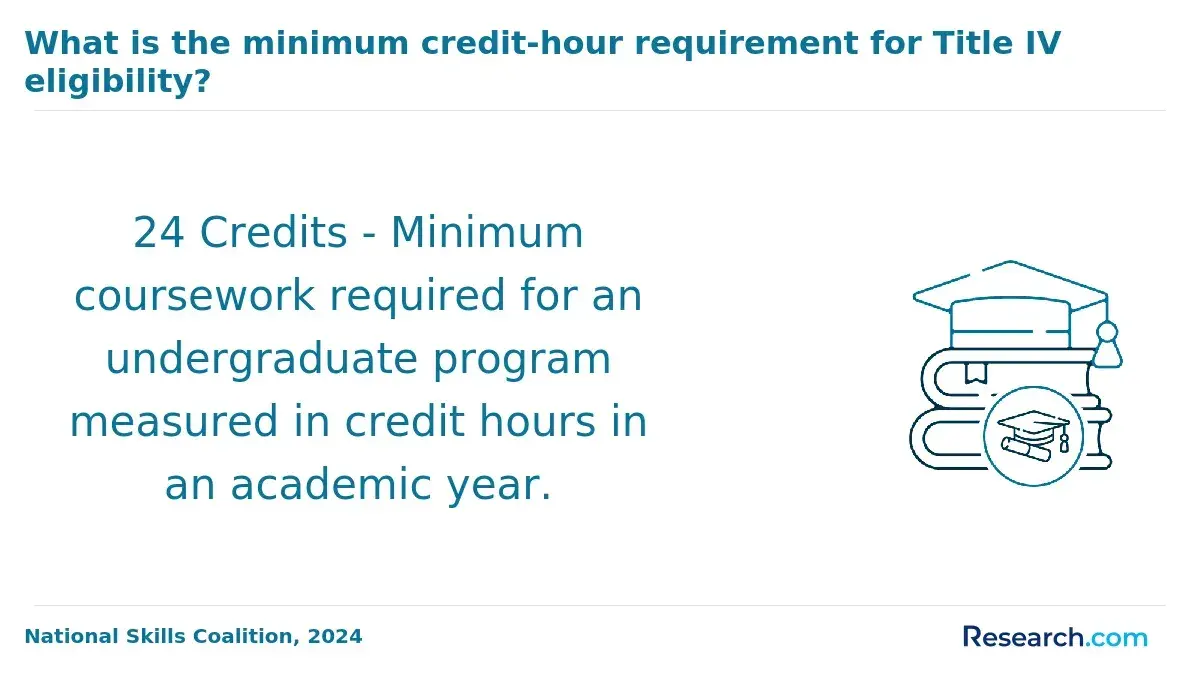
The U.S. Department of Education plays a key role in accrediting online religious and Christian studies bachelor's degree programs by officially recognizing accrediting agencies. This federal recognition confirms that agencies meet strict standards for academic rigor and institutional integrity, which directly impacts a program's eligibility for Title IV federal financial aid. Students in online religious and Christian studies programs need this aid, including grants and loans, to afford their education.
The connection between federal recognition and financial aid eligibility is critical. Federal oversight ensures that only programs accredited by approved agencies can offer Title IV aid, providing essential support for many first-generation college students, career changers, and working adults. The Department relies on the National Advisory Committee on Institutional Quality and Integrity (NACIQI) to evaluate accreditors' effectiveness, advising on grant or renewal of recognition. When an accreditor loses recognition, affiliated programs lose access to federal funding, often harming enrollment and program viability.
Recent policy updates bolster the oversight of distance education, including online religious and Christian studies degrees. These require stronger student identity verification and standards ensuring online instruction is comparable in quality to traditional formats. Such measures raise assurance against diploma mills and low-value programs, helping students navigate the complex accreditation landscape.
It is important for students to understand that federal oversight creates a baseline-a floor but not a ceiling-for program quality. Therefore, learners should research accreditation types, program reputation, and learning outcomes alongside verifying federal recognition. This approach complements tools like IPEDS, the College Scorecard, and the Council for Higher Education Accreditation in assessing quality and credit transferability.
- Federal Recognition: The Department grants official status to accreditors that meet quality and integrity standards, ensuring online religious and Christian studies programs satisfy minimum federal requirements.
- Title IV Eligibility: Only programs accredited by federally recognized agencies can access federal financial aid, a crucial factor for students relying on grants and loans.
- NACIQI's Role: The National Advisory Committee on Institutional Quality and Integrity evaluates accrediting agencies and advises the Department, maintaining accountability and protecting academic standards.
- Loss of Recognition Impact: Loss of federal recognition by an accreditor leads to programs losing federal aid eligibility, which often results in enrollment declines and questions about program legitimacy.
- Distance Education Oversight: Policy changes mandate stronger verification for online learners and equal quality standards between online and campus programs, enhancing protections for students.
- Baseline Quality Assurance: Federal oversight guards against diploma mills but should be one factor among many in evaluating accredited online religious and Christian studies bachelor's degree options.
For students exploring an affordable path into related fields, resources such as online real estate degree programs may also offer financial aid frameworks worth understanding alongside religious studies paths.
How Can Students Use the College Scorecard and IPEDS to Evaluate the Quality of Affordable Online Religious and Christian Studies Bachelor's Programs?
Students seeking affordable accredited online religious and Christian studies bachelor's programs can use two essential federal resources to evaluate academic quality and avoid diploma mills. The U.S. Department of Education's College Scorecard enables users to filter by field of study, providing completion rates, average student debt, median earnings after graduation, and loan repayment rates specifically for religious and Christian studies graduates rather than broad institution-wide figures. This helps prospective students understand the financial value and success outcomes of targeted programs.
The Integrated Postsecondary Education Data System (IPEDS) Data Center offers complementary insights into program quality through key metrics. Retention rates, graduation rates within 150% of normal program length, and Pell Grant recipient outcomes serve as strong predictors of a program's ability to support diverse student populations, especially those facing economic challenges. These indicators are crucial when comparing affordable accredited online religious and Christian studies bachelor's programs for academic rigor and equitable support.
By using these no-cost federal tools together, students can conduct side-by-side comparisons of multiple programs. This transparency reveals which schools combine affordability with strong student outcomes, assisting in making informed enrollment decisions.
- Field-Specific Outcomes: Filter College Scorecard data by religious and Christian studies to view program-specific graduation rates and earnings rather than general institutional averages.
- Retention and Graduation Rates: Examine IPEDS indicators to assess how well students persist and graduate within an expected timeframe, reflecting program stability and student support.
- Financial Value: Analyze average student debt alongside median post-graduation earnings to evaluate long-term return on investment.
- Pell Recipient Support: Review Pell Grant recipient success in IPEDS data to gauge a program's commitment to serving lower-income students.
- Program Comparisons: Utilize both data sources side by side to pinpoint accredited online programs offering the best balance of affordability and academic quality.
In addition, students exploring online degrees in religious studies may also find value in reviewing related pathways such as ASHA accredited SLP programs for broader educational planning.
What Are the Warning Signs That an Online Religious and Christian Studies Bachelor's Program May Be a Diploma Mill or Lack Legitimate Accreditation?
Diploma mills are entities falsely presenting degrees without proper academic requirements or credible accreditation. These schemes often target students seeking religious and Christian studies bachelor's degrees online by using fake or unrecognized accrediting bodies to appear legitimate. Such accreditation agencies are not listed by trusted sources like the Council for Higher Education Accreditation (CHEA) or the U.S. Department of Education's Database of Accredited Postsecondary Institutions and Programs (DAPIP), which are essential tools for confirming genuine accreditation.
Students should carefully identify warning signs of diploma mills, such as the offer of instant or guaranteed degrees without coursework, suspiciously low tuition fees combined with aggressive recruitment, and accreditation from unfamiliar or dubious organizations. Verifying any accrediting agency's status through CHEA's online database and the Department of Education's DAPIP before paying tuition prevents costly mistakes.
Degrees from unaccredited or diploma mill schools are often disregarded by employers, licensing agencies, and graduate programs, invalidating the time and money spent. Notably, Federal Trade Commission data from 2023 shows a 23% rise in diploma mill complaints over five years, underscoring the need for vigilance in evaluating academic programs.
- Instant Degrees Without Coursework: Beware of programs promising degrees in unrealistically short periods or without assessments, which legitimate religious and Christian studies programs require.
- Unrecognized Accreditation: Only trust accreditation verified by CHEA or the Department of Education; fake agencies create a misleading appearance of legitimacy.
- High-Pressure Recruitment: Aggressive marketing tactics demanding immediate enrollment often indicate diploma mills; genuine schools provide clear information and adequate decision time.
- Career and Educational Impact: Credentials from unaccredited programs rarely hold value for employment, licensing, or graduate studies within religious and Christian studies fields.
How Does Accreditation Status Affect Credit Transferability for Students in Online Religious and Christian Studies Bachelor's Programs?
Regionally accredited institutions require adherence to rigorous academic standards and generally accept transfer credits only from other regionally accredited schools. This ensures students maintain progress without losing time or financial investment. Conversely, credits from nationally accredited or unaccredited religious and Christian studies programs are often denied since these institutions may not meet comparable quality benchmarks, jeopardizing credit transfer and degree completion. For students starting at community colleges, it is vital to confirm that their credits will be accepted by four-year online religious and Christian studies programs before enrolling to prevent costly setbacks.
Tools such as the State Authorization Reciprocity Agreement (SARA) and articulation agreement databases provide valuable guidance by outlining recognized credit transfer pathways between institutions in this field. Enrolling even briefly at a non-accredited school can lead to long-term obstacles, both academically and financially, by limiting credit acceptance and degree progress. According to recent data from the National Student Clearinghouse Research Center, nearly 40% of transfer students lose credits during transition due to accreditation discrepancies, underscoring the importance of thorough accreditation verification.
- Regional Accreditation Reciprocity: Facilitates smooth credit transfers by enforcing uniform academic quality across participating institutions.
- National and Non-Accredited Risks: Credits from these programs often face rejection, causing delays and extra expenses.
- Community College Transfer Needs: Students must verify compatibility between starting and target schools to avoid lost credits.
- Verification Resources: Utilizing SARA and articulation agreements helps clarify accepted transfer routes in religious and Christian studies.
- Transfer Barriers: Even short stints at non-accredited schools can hinder degree completion and increase educational costs.
What Graduates Say About How to Verify the Quality of Accredited Online Religious and Christian Studies Bachelor's Degree Programs
- Jase: "Choosing an accreditation-verified online religious and christian studies program was crucial for me-it ensured my degree would be respected by employers and religious institutions alike. I appreciated that the tuition was affordable without sacrificing quality, making it easier to balance work and study. This program truly opened doors for me professionally and strengthened my confidence in pursuing leadership roles within my community."
- Kyro: "After extensive research, I prioritized accreditation to guarantee my investment was worthwhile, and I found the costs reasonable compared to traditional programs. The online format with weekly start dates gave me flexibility while maintaining rigorous standards. Earning this degree has profoundly impacted my career by enhancing both my knowledge and credibility in faith-based counseling."
- Aaron: "Verifying the accreditation before enrolling was a top concern since I wanted a program that held value throughout my career. The affordability of the online religious and christian studies bachelor's program made it accessible without financial strain. Completing this degree has significantly boosted my professional opportunities and has been a key factor in advancing within my church's administrative team."
Other Things You Should Know About Religious and Christian Studies Degrees
Prospective students should ask admissions advisors about the program's accreditation status, including which agency has accredited the school and the specific program. It is important to inquire about faculty qualifications, curriculum rigor, and opportunities for practical ministry or research experience. Questions about graduation rates, job placement, and how the program supports transfer credits can also help gauge quality.
State licensing boards and employers typically verify accreditation by checking with recognized agencies listed in the U.S. Department of Education's Database of Accredited Postsecondary Institutions and Programs (DAPIP). They ensure that the online degree comes from a regional or national accrediting body recognized by the Council for Higher Education Accreditation (CHEA). Degrees from unaccredited programs are often not accepted for professional licensure or employment.
Students should verify that the program is accredited by recognized agencies, such as the Council for Higher Education Accreditation (CHEA) or the Department of Education, to ensure quality and eligibility for financial aid.
Most accrediting agencies require program reviews every five to ten years to maintain accreditation status. If a religious and christian studies program fails to meet quality standards during these evaluations, it may be placed on probation or have its accreditation revoked. Losing accreditation can affect students' ability to transfer credits, access federal aid, and find employment in ministry or academic fields.
References
- Student Learning Outcomes https://calbaptist.edu/academics/programs/bachelor-of-arts-christian-studies/outcomes
- Accreditation of ETS Online Courses https://learn.etsonline.de/pages/accreditation
- How does accreditation work for Christian colleges and universities? https://christianconnector.com/Faqs/Accreditation_christian.cfm
- Accreditation & Distance Education https://bethanyseminary.edu/about/accreditation-and-distance-education/
- Are Christian Colleges Accredited? https://www.greatvaluecolleges.net/faq/are-christian-colleges-accredited/
- Which is Better, Regional or National Accreditation? https://www.dlsii.com/blog/which-is-better-regional-or-national-accreditation/1000/
- Open Christian University - Academic Accreditation https://www.openchristian.education/abouts/Accreditation
- List of Online Colleges with Programmatic Accreditation https://www.onlineu.com/resources/accreditation/programmatic-accreditation
- Features of High-Quality Online Courses in Higher Education: A Scoping Review https://olj.onlinelearningconsortium.org/index.php/olj/article/view/3411