
2027 Most Popular Psychology Degree Programs Ranking in Anchorage

Co-Founder and Chief Data Scientist
Choosing the right psychology degree program can be exciting but also overwhelming, especially in Anchorage. This article introduces the 2027 Most Popular Psychology Degree Programs Ranking in Anchorage, thoughtfully created by the Research.com team of data scientists to guide you in making an informed decision.
By reading this ranking, you'll discover the top programs that match your goals and interests, helping you confidently plan your future. Pursuing a psychology degree opens doors to meaningful careers and personal growth, making it a truly rewarding path to explore.
Key benefits of getting psychology degree in Anchorage
- Psychology degree graduates in Anchorage can expect competitive salaries, such as a Human Resources Specialist earning around $76,060 annually and a Marketing Research Analyst about $83,190 per year, reflecting strong earning potential.
- Career paths for psychology graduates include roles like Clinical Research Associate or Survey Researcher, offering diverse opportunities in health, business, and research fields within Anchorage's growing job markets.
- Getting a psychology degree online in Anchorage adds flexibility to balance studies with personal life, often allowing quicker entry into the workforce while gaining the same valuable knowledge as traditional programs.
- 2027 Most Popular Psychology Degree Programs Ranking in Anchorage
- What can I expect from psychology degree in Anchorage?
- Where can I work with psychology degree in Anchorage?
What can I expect from psychology degree in Anchorage?
The average cost of a psychology degree in Anchorage typically centers around the tuition fees at the University of Alaska Anchorage (UAA), the main provider of psychology programs in the area. Graduates from UAA report paying approximately $6,000 to $7,000 per year for in-state tuition for their undergraduate psychology degrees. This makes it a practical choice for local students aiming to manage expenses while receiving a quality education.
Many students find value in combining this tuition with on-campus resources and internship opportunities that complement classroom learning. For example, after completing coursework in abnormal psychology or research methods, they often secure practicum placements within Anchorage's health agencies, minimizing additional costs linked to travel or external training.
Graduate students pursuing a Master of Arts in Industrial/Organizational Psychology at UAA share that their investment feels worthwhile given the strong preparation for careers in human resources or counseling. Such programs balance affordable tuition with culturally relevant coursework that reflects Alaska's diverse communities, making the financial commitment more meaningful and motivating.
Where can I work with psychology degree in Anchorage?
Graduates with a psychology degree in Anchorage find ample opportunities across healthcare, education, government, and business sectors. Many start their careers at major local employers like Providence Alaska Medical Center or Alaska Psychiatric Institute, where clinical psychologist roles and behavioral health positions are in steady demand. Students from the University of Alaska Anchorage often share how hands-on internships at these facilities helped them prepare for licensure and clinical work.
Education is another viable path. Psychology graduates frequently work as school counselors or educational psychologists within the Anchorage School District. These roles may require extra certifications but allow graduates to make a tangible impact, supporting students facing learning challenges or emotional struggles. Alumni from local colleges have praised the meaningful relationships they build in these positions.
Government and non-profits also offer roles in social services, substance abuse programs, and victim advocacy via entities like the Alaska Department of Health and Social Services. Many grads appreciate working directly with vulnerable populations, finding this path rewarding and aligned with their passion for community impact.
For graduates interested in research or organizational psychology, Anchorage-based opportunities include projects focused on Alaska Native health or criminal justice reform, as well as HR roles in businesses addressing staff wellbeing and development.
Graduates with a psychology degree from Anchorage's well-regarded institutions often find themselves earning between $32,000 and $83,000 annually, depending on the role they pursue and their level of experience. For example, many jump into entry-level positions such as childcare workers, earning about $32,070 yearly, a practical starting point for those fresh out of college.
If you're aiming for research-focused roles, becoming a Clinical Research Associate or Survey Researcher can bring an annual wage of around $62,370. These jobs align well with the strong research programs at local universities, where hands-on experience prepares graduates for such positions.
For those who take additional steps, like specializing as a Human Resources Specialist, salaries comfortably rise to about $76,060. Similarly, Marketing Research Analysts, combining psychology with business insights, earn well-around $83,190 yearly-making this path a rewarding option, especially given Anchorage's growing market.
Anchorage graduates appreciate that these practical salary figures reflect the city's competitive cost of living, helping them confidently plan their futures in psychology-related careers.
- Psychology bachelor's degrees in Anchorage usually take around four years of full-time study to complete.
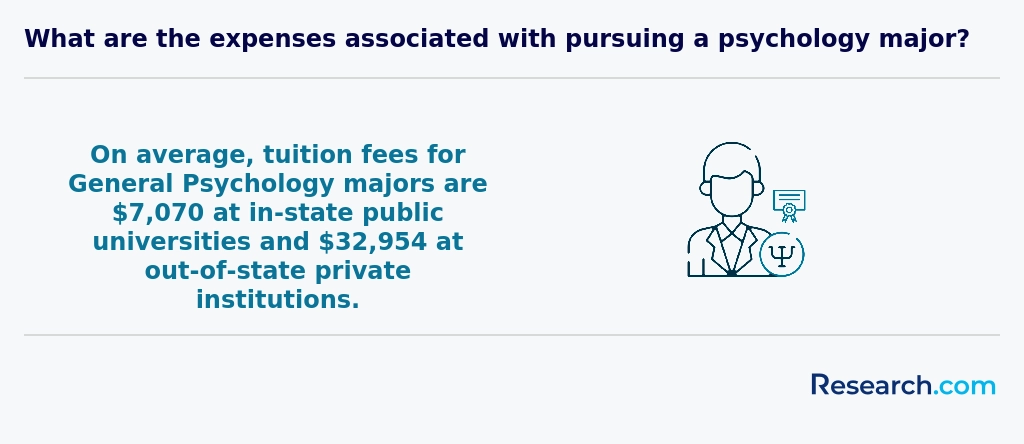
- Tuition for in-state students at public universities ranges from about $7,000 to $10,000 per year, while private schools may charge over $20,000 annually.
- Additional costs include textbooks, fees, and living expenses, which can significantly increase the total amount spent on education.
- Entry-level salaries for psychology graduates in Anchorage range from $45,000 to $55,000, with higher earnings of $70,000 to $90,000 for those holding advanced degrees.
- Licensure in Alaska requires passing specific exams and gaining supervised experience, which is essential for many psychology-related jobs.
Completing a psychology degree in Anchorage typically requires planning around established timelines tied to your chosen level of study. For example, associate degrees, available through community colleges or technical programs, usually take about two years. Graduates of these programs often find the foundational knowledge helpful but pursue higher degrees for more advanced roles.
Most students at the University of Alaska Anchorage, a popular choice locally, finish their bachelor's degree in approximately four years. This involves completing roughly 120 credit hours, blending core psychology classes with electives. Many graduates recount balancing part-time work and study, emphasizing the importance of staying on track but knowing some flexibility helps maintain motivation.
If you aim for a master's or doctoral degree in Anchorage, expect to add 2 to 3 years or 5 to 7 years after your bachelor's, respectively. Those pursuing doctoral degrees often describe the journey as challenging but rewarding, highlighted by enriching research and practical internships. Planning realistically for these timelines helps maintain enthusiasm and steady progress toward your psychology career goals.
Becoming a licensed psychologist in Alaska requires a combination of accredited education, supervised experience, and successful completion of state and national examinations. First, you must earn a doctoral degree in psychology from a regionally accredited institution that meets American Psychological Association (APA) standards. Many students seeking cost-effective doctoral options compare programs like those in our Low Cost Online Doctorate in Psychology Degree Programs Ranking in the South to balance quality and affordability. After graduation, Alaska requires at least 3,000 hours of supervised postdoctoral experience, typically completed over one to two years under a licensed psychologist. This supervised practice must adhere to the Alaska State Board of Psychologist and Psychological Associate Examiners guidelines, ensuring exposure to assessment, therapy, and professional ethics. Next, candidates must pass the Examination for Professional Practice in Psychology (EPPP), administered by the Association of State and Provincial Psychology Boards (ASPPB). Alaska also mandates a state jurisprudence exam to assess knowledge of local laws and ethical standards. Successful completion of both exams allows you to apply for full licensure, granting the legal authority to diagnose, treat mental health disorders, and consult in clinical, educational, or organizational settings. Once licensed, psychologists must fulfill continuing education requirements-24 hours biennially, including ethics and Alaska-specific practice standards-to maintain their credential. Staying informed about legislative updates, joining professional associations like the Alaska Psychological Association, and engaging in peer supervision will further strengthen your expertise and ensure compliance with evolving regulations.
If you're weighing an online versus on-campus psychology degree in Anchorage, start by considering how you learn best. Graduates from the University of Alaska Anchorage often highlight the value of face-to-face interactions with professors and peers, which helps deepen their understanding and build local networks. Being on campus means easy access to counseling centers and labs, adding real-world exposure through organized practicums.
On the flip side, graduates who chose online programs appreciate the flexibility to study around work or family commitments. They rely on recorded lectures and virtual office hours to keep pace. However, securing practicum placements often demands more personal initiative and local networking, since the university might not directly facilitate these connections.
Financially, both paths tend to cost a similar amount in tuition, roughly $8,000 to $12,000 annually for in-state students at public Anchorage universities, but on-campus students must budget extra for housing and commuting. Online study reduces those living expenses, offering a more flexible yet self-driven experience.
Graduates aiming to practice as psychologists in Anchorage, AK, must complete a series of steps to obtain licensure and ensure compliance with state regulations. First, candidates must earn a doctoral degree (Ph.D. or Psy.D.) from an APA-accredited program, which typically involves 5–7 years of graduate study and a supervised clinical internship. After graduation, applicants register as psychologists‐in‐training with the Alaska Board of Psychologist and Psychological Associate Examiners and accumulate a minimum of 3,000 hours of supervised experience, including at least 1,500 hours of direct client contact. Once clinical hours are met, candidates must pass the Examination for Professional Practice in Psychology (EPPP) and the Alaska jurisprudence exam. Key requirements include:
- Doctoral degree from an APA-accredited institution
- 3,000 hours of supervised postdoctoral experience (1,500 direct client contact)
- Passing scores on the EPPP and Alaska jurisprudence exam
- Submission of official transcripts, supervisor evaluations, and application fees Upon licensure, psychologists are required to complete 40 hours of continuing education every two years, covering ethics, cultural competency, and evidence-based practices. Professionals interested in developmental or childhood specialties can explore child therapy careers, which often require additional training in play therapy or behavioral interventions. Maintaining active membership in organizations such as the Alaska Psychological Association and attending local workshops helps practitioners stay current with evolving best practices and reinforces their commitment to quality care.
The average cost of a psychology degree in Anchorage varies depending on residency status and program level, but prospective students can expect a median total cost of about $41,110. For in-state students attending well-known institutions like the University of Alaska Anchorage, the median in-state total cost is significantly lower, around $14,249, which offers a compelling option for local students aiming to manage their educational expenses pragmatically.
Graduates often share how budgeting carefully for tuition and accompanying fees makes earning a psychology degree manageable. For example, an in-state psychology student at UAA might pay yearly tuition of around $3,793 for undergraduate studies, with additional costs such as books and living expenses bringing the total investment into clearer focus. These figures align with the total tuition and fees for psychology degrees Anchorage students should anticipate, reflecting a balanced approach to financing higher education.
It's useful to explore financial aid avenues early. Many psychology students leverage scholarships, grants, and federal aid to help offset costs, especially since expenses extend beyond tuition-covering practicum fees and licensing exam preparation. Considering the higher than average cost of living in Anchorage, planning ahead for housing and transportation expenses is equally critical.
Those interested in specialized tracks can also review in demand psychology programs in Anchorage to align their academic goals with practical financial planning.

For many students, earning a psychology degree marks just the beginning of a long, rewarding journey toward professional practice. Understanding the licensure and certification processes is crucial for those aiming to become practicing psychologists or move into specialized fields. In Anchorage, AK, graduates must navigate a series of steps after completing their degree. These include supervised clinical hours, passing state licensing exams, and often engaging in continuing education to keep abreast of the latest research and ethical practices. Obtaining licensure not only validates your academic accomplishments but also enhances your career prospects. For example, professionals who pursue additional certifications can expand their opportunities into areas like forensic psychology, where insights into both legal systems and behavior translate into roles such as criminal justice and psychology jobs. Many successful alumni recommend early planning-starting with knowledge of state-specific requirements, seeking internships that align with your intended licensure track, and networking with licensed professionals in the field. The pathway to licensure typically includes: • Completing a graduate-level program accredited by a recognized body. • Accumulating a required number of supervised practice hours under a licensed psychologist. • Successfully passing professional examinations such as the Examination for Professional Practice in Psychology (EPPP). • Participating in post-licensure continuing education to maintain credentials. Graduates who proactively plan for these steps not only enhance their competitive edge in the job market but also build a solid foundation for a lifelong career of ethical practice and professional growth.
Psychology students at Anchorage universities often start by applying for federal aid through the FAFSA, which opens access to Pell Grants and Federal Supplemental Educational Opportunity Grants (FSEOG). These grants don't need repayment, providing solid financial relief-like the psychology graduate who mentioned receiving $5,000 from Pell Grants to cover part of their tuition at the University of Alaska Anchorage.
State scholarships, such as the Alaska Performance Scholarship, are another vital resource if you qualify as an in-state resident. Many students studying psychology find these awards decisive when managing costs, especially at popular local colleges.
Campus-based work-study jobs offer a practical way to offset expenses while gaining relevant experience. One recent graduate recounted balancing a part-time job in the psychology department library, which not only helped financially but also enriched their academic journey.
Additionally, check for departmental scholarships and private awards from organizations like the American Psychological Association, which cater specifically to psychology students. Combining these with employment benefits or tuition reimbursement programs can create a manageable path through your degree in Anchorage.
Choosing an accredited psychology program and understanding Alaska’s licensure process ensures you can practice legally and confidently.
- Enroll in a program accredited by the American Psychological Association (APA) for doctoral degrees or regionally accredited by the Northwest Commission on Colleges and Universities (NWCCU).
- Complete required supervised practicum and internship hours (typically 1,500 pre-doctoral hours).
- Pass the Examination for Professional Practice in Psychology (EPPP), the national licensing exam.
- Fulfill post-doctoral supervised hours (usually 2,000 hours) under a licensed psychologist, as mandated by the Alaska Board of Psychology.
- Submit your licensure application, background check, and fees to the Alaska Board of Psychology to receive provisional or full licensure.
- If you’re interested in marriage and family therapy, consider accelerated online mft programs to streamline supervised training and exam eligibility.
To enroll in a psychology degree in Anchorage, the first step is securing a high school diploma or its equivalent, a fundamental requirement at institutions like the University of Alaska Anchorage (UAA). Graduates often recall how completing key courses-English, math, and science-helped them build confidence before applying.
Maintaining a competitive GPA between 2.5 and 3.0 is essential. Many students find that aiming higher boosts their chances at more selective programs, where admissions officers look for evidence of strong academic habits. Some schools may also request SAT or ACT scores, though several Anchorage colleges have adopted test-optional policies, easing this hurdle.
Successful applicants prepare thoughtful transcripts, letters of recommendation, and personal statements. A graduate from UAA described how sharing volunteer experience in local mental health services made their application stand out, showing genuine commitment to psychology.
- High school diploma or equivalent certification
- Competitive GPA (commonly around 2.5-3.0 minimum)
- Standardized test scores if required by the institution
- Transcripts from previous education
- Letters of recommendation and personal statements
When considering psychology programs, prospective students often face a daunting task due to the wide array of options available. To make an informed decision, it's essential to evaluate several factors, including in demand psychology programs, accreditation, curriculum, faculty expertise, and research opportunities. Each of these elements plays a crucial role in shaping the educational experience and future career prospects. By carefully assessing these aspects, students can identify a program that aligns with their academic goals, career aspirations, and personal preferences, ultimately leading to a fulfilling and successful journey in the field of psychology.
Psychology degree programs in Anchorage commonly include core courses that provide solid groundwork in understanding human behavior. Graduates from popular local institutions in Anchorage often emphasize the value of courses like Introduction to Psychology, which offers a clear overview of essential concepts and historical context, setting the stage for deeper study.
Developmental Psychology is another must-take course, helping students grasp the changes people experience from infancy through adulthood. Many find connecting these theories to real-life scenarios, such as observing family or community interactions in Anchorage, particularly rewarding and relatable.
Biopsychology or Neuroscience courses are practical for understanding how the brain influences behavior, a topic that students find both fascinating and useful for future clinical or research work.
In addition, courses like Cognitive Psychology and Social Psychology enable students to explore mental processes and social interactions-skills crucial for careers in counseling or community services common in Anchorage.
Finally, Research Methods and Statistics equip students with the tools needed to critically analyze data, a skill highlighted by Anchorage graduates who benefited from hands-on research and internships offered by local universities.
In Anchorage, psychology degree specializations reflect practical career paths tailored to local needs. Popular options include clinical psychology, where graduates focus on diagnosing and treating mental health issues-a field with growing demand in the region. Counseling psychology is another track, appealing to those who thrive on direct client interaction, often working in schools or community agencies.
Students drawn to scientific research often choose neuropsychology, benefiting from opportunities at the University of Alaska Anchorage to engage in hands-on brain-behavior studies. Industrial-organizational psychology attracts those interested in workplace dynamics, a growing area in Anchorage's business and government sectors. Others explore developmental, forensic, or health psychology, each connecting to real-world roles like education, legal systems, or integrated healthcare.
Graduates frequently share how these specializations prepare them for vibrant career tracks within Anchorage's unique environment. For example, some find that their knowledge complements local criminal justice and psychology jobs, combining psychology with public service effectively.
Start by checking whether the institution offering psychology degrees in Anchorage has regional accreditation-graduates from the University of Alaska Anchorage often emphasize how this ensures their credits transfer easily and that employers recognize their degrees. Since APA accreditation only applies to doctoral programs, focus on schools with strong regional standing when pursuing bachelor's or master's degrees. Next, narrow down your interests: many choose from general psychology or specializations like clinical or counseling psychology, which align well with Anchorage's mental health needs and internship opportunities.
Practical students appreciate programs with flexible schedules or online options, which work well given Anchorage's unique location. Cost matters too; graduates from popular Anchorage colleges note that affordable psychology degrees in Anchorage can make a big difference, especially with access to scholarships and in-state tuition. Seek programs offering supervised clinical training-this hands-on experience connects you to local mental health providers and builds vital skills. For those considering career paths like child therapy careers, local graduate outcomes data can help verify program effectiveness before you commit.

Graduates with a psychology degree in Anchorage often pursue practical careers as licensed counselors or therapists, offering mental health support for anxiety, depression, and addiction. Many find fulfilling roles in this field at local clinics or organizations, experiencing firsthand the rewarding impact of their work. For those exploring psychology career opportunities in Anchorage, becoming a school psychologist is another accessible path. These professionals are integral to Anchorage's schools, assisting students with emotional and academic challenges daily.
Jobs with a psychology degree Anchorage extend into research roles as well. Graduates often join universities or entities like the Alaska Mental Health Trust Authority, contributing to studies that address Alaska's specific psychological and community health needs. Industrial-organizational psychology is growing here, too, with alumni aiding businesses in employee development and workforce management, making practical contributions to local companies.
Furthermore, the cost of degrees in Anchorage can be managed sensibly by reviewing options through rankings like the Low Cost Online Doctorate in Psychology Degree Programs Ranking in the South. Overall, these varied career paths show the tangible benefits a psychology degree brings to those who want an impactful and stable career in Anchorage.
For those eyeing psychology degree job opportunities Anchorage offers steady roles in counseling, behavioral health, and case management, especially for graduates of the University of Alaska Anchorage and other local programs. Graduates often share how internships at community centers or hospitals translate into meaningful connections that open doors to employment. The city's strong public and private support for mental health boosts job prospects, particularly for behavioral health technicians, a rapidly growing profession. Bachelor's degree holders find entry-level roles but notice that pursuing a Master's or Doctorate dramatically improves advancement and salary potential.
Anchorage psychology career prospects shine brighter when students take advantage of affordable in-state tuition rates at UAA, paying about $250 per credit hour, making it feasible to continue education. Graduates appreciate how this balances cost with Anchorage's higher-than-average psychologist salaries, near $85,000 annually. Practical experience is crucial, and many students benefit from networking at local clinics. Those considering flexible options might explore the accelerated online associates degree to begin their path efficiently.
2027 Most Popular Psychology Degree Programs Ranking in Anchorage
Investing in your education is a significant decision that can shape your future, and the Research.com team appreciates the importance of making well-informed choices. To support prospective students in Anchorage, we have carefully developed the "2027 Most Popular Psychology Degree Programs Ranking in Anchorage." Our dedication to quality, credibility, and accuracy is evident through the detailed research and analysis behind this ranking.
We utilized the following reputable data sources to ensure a comprehensive evaluation of psychology degree programs:
By reviewing this ranking, readers will gain valuable insights into the most popular psychology programs in Anchorage, enabling them to make smarter educational decisions. For further information on how the ranking was created, please visit our Research.com methodology page.


Frequently Asked Questions About psychology
Psychology degree students in Anchorage can maximize their learning by engaging actively in both coursework and local research opportunities. The University of Alaska Anchorage (UAA) offers access to faculty-led research projects, which helps students gain practical experience alongside academic studies. Additionally, internships with local mental health organizations allow students to apply theory to real-world settings, a key factor for deeper understanding.
Anchorage's growing demand for mental health professionals means students can network through community events and professional associations such as the Alaska Psychological Association. According to the Bureau of Labor Statistics, psychology-related jobs in Alaska are projected to grow 8% by 2031, reinforcing the importance of practical skills alongside academic knowledge.
Utilizing campus resources like counseling centers and participating in student-led psychology clubs can also enhance learning. These activities encourage discussion, critical thinking, and exposure to diverse psychological perspectives relevant to Alaska's unique populations.
The psychology field is expanding into several emerging niches that offer exciting opportunities for students in Anchorage. One of the fastest-growing areas is neuropsychology, focusing on brain-behavior relationships and cognitive assessments. With Anchorage's aging population, demand for neuropsychological services is rising, supported by data from the Alaska Mental Health Trust Authority.
Another niche gaining prominence is forensic psychology, which integrates psychology with the legal system. The Alaska court system increasingly relies on experts for mental health evaluations, creating local job prospects.
Additionally, health psychology, addressing behavioral aspects of chronic illnesses, reflects broader national trends highlighted by the American Psychological Association. Anchorage's focus on Indigenous mental health also encourages culturally informed psychological practices.
Graduating with a psychology degree in Anchorage opens various career paths, but preparation is essential. Start by gaining practical experience through internships or volunteer positions in local clinics, schools, or social service agencies. This hands-on work enhances your resume and builds professional networks.
Licensure is crucial if you plan to become a clinical psychologist. In Alaska, you must complete supervised hours and pass the Examination for Professional Practice in Psychology. Knowing these steps early helps you plan graduate studies accordingly.
Anchorage's employment of psychologists grew by 4.3% from 2019 to 2022 (BLS), reflecting steady demand. Building skills in data analysis and counseling can increase job prospects. Joining professional organizations like the Alaska Psychological Association offers access to resources and job listings.
Employers in Anchorage seek psychology graduates with strong analytical skills to interpret research data effectively. Critical thinking is essential, as professionals must evaluate complex behavioral patterns and develop evidence-based solutions. Communication abilities are highly valued, including both written and verbal skills, to collaborate with clients and multidisciplinary teams.
Adaptability is another key skill, especially given Anchorage's diverse population and unique social challenges, such as those related to rural and indigenous communities, according to the Alaska Department of Labor and Workforce Development. Additionally, proficiency with psychological testing tools and familiarity with ethical standards in U.S. psychology practices are important.
Finding internships in Anchorage relevant to a psychology degree involves a multi-step approach focused on local resources and professional networks. Start by consulting the career services offices at institutions like the University of Alaska Anchorage, which maintains partnerships with local clinics and social service agencies. These internships often provide valuable hands-on experience in clinical, school, or counseling psychology settings.
The Alaska Psychological Association is another excellent resource, offering job boards and networking events where students can connect with professionals. Local healthcare facilities, such as the Alaska Mental Health Trust Authority, regularly seek interns interested in behavioral health. According to the U.S. Bureau of Labor Statistics, Alaska's demand for psychologists and counselors is growing, making internships increasingly competitive but more available.
Students should also explore volunteer opportunities and contact supervisors directly to inquire about internship openings. Early application and demonstrating a clear interest in Alaska's unique cultural and community mental health needs can improve chances.
A psychology degree in Anchorage can significantly enhance career mobility and advancement opportunities. Given Anchorage's growing demand for mental health professionals, graduates often find roles in various settings such as clinical practices, schools, and social services. According to the U.S. Bureau of Labor Statistics (2023), employment for psychologists in Alaska is projected to grow by 7%, slightly above the national average.
Higher education in psychology also opens pathways to specialized roles like licensed professional counselor or school psychologist, which require advanced degrees but offer higher salaries and leadership opportunities. Local employers value accredited degrees from recognized institutions for career progression.
In addition, networking opportunities through Anchorage's professional organizations can further enhance job prospects and upward mobility.
Studying for a psychology degree in Anchorage offers unique opportunities to prepare for interdisciplinary roles within healthcare, education, and social services. Programs often emphasize collaboration with fields like social work, counseling, and neuroscience, reflecting the integrated nature of mental health care in Alaska.
For example, the University of Alaska Anchorage incorporates community-based projects that require teamwork across disciplines, giving students practical experience. According to the Bureau of Labor Statistics, interdisciplinary skills improve employability in psychology-related roles, which in Anchorage's growing health sector is crucial.
Anchorage's diverse population also allows students to address psychological issues alongside cultural and public health perspectives, preparing graduates for varied professional environments.
Choosing between a thesis and a non-thesis psychology degree program in Anchorage depends on your academic and career goals. Thesis programs typically require original research and offer preparation for doctoral study or research-oriented careers. Non-thesis options focus more on coursework and practical skills, suitable for those pursuing professional roles in counseling or applied psychology.
In Anchorage, institutions like the University of Alaska Anchorage provide both paths, reflecting national trends. According to the American Psychological Association, over 40% of psychology master's students nationwide opt for thesis tracks when aiming for research careers.
Consider job requirements in Anchorage's mental health field, which favors hands-on experience or research capabilities depending on the role.
Students in Anchorage seeking to study psychology abroad have access to several pathways through U.S. institutions offering international exchange programs. Many Anchorage-based students attend the University of Alaska Anchorage (UAA), which partners with universities worldwide to provide study abroad opportunities in psychology. These programs allow students to earn credits transferable toward their degree.
Popular destinations for psychology studies include Canada, the United Kingdom, and Australia, where curricula often align with U.S. standards. According to UAA's 2023 international office report, approximately 15% of psychology students from Anchorage engaged in study abroad experiences, enhancing their cross-cultural understanding critical for psychology careers.
Federal aid and scholarships may also support these opportunities, but students should verify eligibility for study abroad funding. Advisors at Anchorage institutions recommend early planning due to application deadlines and visa requirements.
Students pursuing psychology degrees in Anchorage can benefit from various part-time job opportunities that enhance both experience and academic knowledge. Common roles include research assistant positions at institutions like the University of Alaska Anchorage, where students support ongoing psychological studies and gain valuable lab experience. Additionally, part-time work as a behavioral health technician or mental health aide in community clinics provides direct exposure to clinical psychology practices.
According to the Alaska Department of Labor, behavioral health support roles in Anchorage are expected to grow by 12% through 2028, signaling increasing opportunities. These jobs offer practical skills that align well with coursework in developmental and abnormal psychology. Volunteering in local nonprofit organizations focused on mental health is another way to complement education.
Psychology students in Anchorage have access to several valuable networking opportunities through local universities and professional organizations. The University of Alaska Anchorage (UAA) offers psychology clubs and student organizations that connect learners with peers and faculty. These groups often host guest speakers and workshops tailored to mental health and research topics.
Additionally, Anchorage hosts chapters of national groups such as the American Psychological Association (APA), providing students with local networking events and conferences. Collaborative research projects and internships with nearby healthcare facilities, like Providence Alaska Medical Center, allow students to build professional contacts.
These activities support career development and community engagement within Anchorage's psychology field.
Alumni networks play a crucial role for psychology degree students in Anchorage by providing valuable professional connections. Graduates often share job openings in local clinics, schools, and counseling centers, helping current students access internships and employment. According to the University of Alaska Anchorage, these networks increase job placement rates by up to 25% within six months of graduation.
The connections made through alumni can also offer mentorship opportunities, guiding students through licensure processes such as the Licensed Professional Counselor (LPC) credential required in Alaska. Additionally, alumni groups frequently organize workshops and networking events in Anchorage, promoting continued learning and collaboration.
Customizing a psychology degree program in Anchorage allows students to align their studies with specific career goals. Many local institutions offer elective courses and specialized tracks such as clinical psychology, counseling, or industrial-organizational psychology. Choosing relevant internships or research opportunities within Anchorage's healthcare facilities or community organizations can provide practical experience.
Students may also benefit from faculty mentorship and connections to Anchorage-based mental health services, supporting targeted career paths. According to the Alaska Commission on Postsecondary Education, over 60% of psychology students in the state select applied or counseling-related electives to meet workforce demands.
Flexible scheduling and online course options further help students tailor their education to fit personal and professional needs.
Psychology students in Anchorage face several unique challenges while pursuing their degrees. Access to diverse internship opportunities can be limited due to the smaller population and fewer large mental health facilities compared to bigger cities. According to the Alaska Commission on Postsecondary Education, many students report difficulties finding relevant field placements close to campus.
Balancing coursework with part-time jobs is also common, as many students need to support themselves financially in Anchorage's relatively high cost of living. The University of Alaska Anchorage notes that nearly 40% of psychology majors work while studying.
Additionally, staying updated with evolving licensing requirements in Alaska requires careful planning, which some students find overwhelming when combined with academic demands.
With a psychology degree in Anchorage, you can pursue several professional certifications that enhance your career prospects. Common certifications include becoming a Licensed Professional Counselor (LPC) or a Licensed Clinical Social Worker (LCSW), both requiring further supervised experience and exams regulated by Alaska's Division of Corporations, Business, and Professional Licensing.
You may also aim for the National Certified Counselor (NCC) credential offered by the National Board for Certified Counselors, which is recognized nationally and valuable in Alaska. Additionally, school psychology certification is available through the Alaska Department of Education for those interested in working within school systems.
These certifications often require graduate degrees, supervised hours, and passing specialized exams, all designed to ensure qualified practice within Alaska's mental health landscape.
When applying for a psychology program in Anchorage, it is essential to present a clear and focused application. Start by highlighting your academic achievements, particularly your GPA and coursework related to psychology, as admissions committees in Alaska often emphasize strong academic records. Include any relevant volunteer or work experience in mental health or social services to demonstrate your practical interest.
Personal statements should articulate your motivation and career goals clearly, connecting them to local community needs, which are significant in Anchorage given its diverse population. According to the Alaska Commission on Postsecondary Education, programs may look for applicants showing commitment to serving Alaska's unique cultural context.
Lastly, secure strong letters of recommendation from professors or supervisors familiar with your academic or professional strengths. These elements combined enhance the competitiveness of your application for psychology studies in Anchorage.
The field of psychology holds a growing global significance, impacting health, education, and business worldwide. In the United States, psychology careers are among the fastest-growing professions, with the Bureau of Labor Statistics projecting an 8% employment increase from 2021 to 2031. This demand is echoed in Anchorage, where local health agencies frequently recruit psychology graduates for roles in counseling and research. Globally, psychologists work in diverse settings including clinical environments, schools, and corporate offices, reflecting the field's adaptability. Understanding cultural differences and global mental health trends is increasingly essential, making a psychology degree from Anchorage a strong foundation for international collaboration and career mobility.
Gaining practical experience while studying psychology in Anchorage is essential for building your skills and enhancing employability. Many local institutions, such as the University of Alaska Anchorage, offer internship opportunities through partnerships with hospitals, mental health clinics, and social service agencies. These placements allow students to apply classroom theories in real-world settings.
Volunteering at organizations like Southcentral Foundation or Alaska Mental Health Trust can provide valuable exposure to diverse psychological services. Additionally, research assistant positions within university psychology departments give students hands-on experience in data collection and analysis, which is crucial for future graduate study or careers.
The Alaska Department of Labor reports that practical experience significantly improves job prospects in the state's growing mental health field, which is expected to increase by 10% over the next decade.
Choosing the right concentration within a psychology degree program in Anchorage depends on your career goals and interests. Popular specializations include clinical psychology, counseling, and industrial-organizational psychology. Anchorage offers access to real-world experience through local hospitals and community centers, which is key when deciding your focus.
It is useful to consider Anchorage's job market; for example, the Alaska Department of Labor reports a steady demand for mental health counselors, reflecting local needs. Research university programs' course offerings and faculty expertise to find alignment with your ambitions.
Internships and practicum opportunities in Anchorage also provide hands-on training in specific areas, helping you make informed decisions before graduation.
- 2027 Most Popular Psychology Degree Programs Ranking in Portland
- 2027 Most Popular Psychology Degree Programs Ranking in Eugene
- 2027 Most Popular Psychology Degree Programs Ranking in San Francisco
- 2027 Most Popular Psychology Degree Programs Ranking in Santa Barbara
- 2027 Most Popular Psychology Degree Programs Ranking in Pasadena
- 2027 Most Popular Psychology Degree Programs Ranking in Los Angeles
- 2027 Most Popular Psychology Degree Programs Ranking in Claremont
- 2027 Most Popular Psychology Degree Programs Ranking in Irvine
- 2027 Most Popular Psychology Degree Programs Ranking in Denver
- 2027 Most Popular Psychology Degree Programs Ranking in Riverside
See What Experts Have To Say About Studying Psychology
Read our interview with Psychology experts

Robin M. Kowalski. Ph.D.
Psychology Expert
Professor of Psychology
Clemson University

Catherine Caldwell-Harris, Ph.D.
Psychology Expert
Associate Professor of Psychology
Boston University

Joann Farrell Quinn, Ph.D., MBA
Psychology Expert
Director at the College of Medicine Department of Medical Education
Morsani College of Medicine

- Sample letters in psychology https://www.mystudies.com/en-in/human-and-social-sciences/psychology/letter-model/
- What Certifications Can I Get With A Bachelor's In Psychology? https://www.psychology.org/resources/certification-skills-for-psychology-major-resumes/
- How Long Does It Take to Get a Psychology Degree? | Psychology Degree Guide https://psychologydegreeguide.org/resources/psychology-degree-timeline/
- How to help students cope with mental health challenges https://www.eaie.org/resource/help-students-cope-mental-health-challenges.html
- University of Alaska-Anchorage Psychology Degrees and Programs https://www.psychologycareercenter.org/university-of-alaska-anchorage-psychology-schools.html
- Psychology Programs in Anchorage AK - EPPP 101 https://eppp101.com/psychology-programs-in-anchorage-ak/
- Study Psychology Abroad https://astarfuture.co.uk/study_psychology_abroad.html
- Alaska Psychology Degrees https://www.psychologydegrees.org/state/alaska
- Ontario Psychological Association - Networking and Community Resources https://www.psych.on.ca/become-a-member-(1)/member-services/networking-and-community-resources
- Why Get a Psychology Degree Online? | University of Bridgeport https://www.bridgeport.edu/news/reasons-to-get-your-psychology-degree-online/


