
2027 Best Psychology Degree Programs Ranking in Harrisonburg

Co-Founder and Chief Data Scientist
If you're considering pursuing a psychology degree in Harrisonburg, this article is crafted just for you. Our 2027 Best Psychology Degree Programs Ranking in Harrisonburg offers trustworthy insights backed by the Research.com team of data scientists.
Choosing the right program can shape your future career and personal growth. This ranking helps you discover quality programs worth considering, making your decision easier and more informed.
Explore options that align with your goals and embrace the rewarding journey of studying psychology in a supportive, inspiring community.
Key benefits of getting psychology degree in Harrisonburg
- Psychology degree graduates in Harrisonburg can earn competitive salaries, with roles like Marketing Research Analyst averaging $83,190 annually and Human Resources Specialists making around $76,060 per year, providing strong financial motivation.
- Graduates from local universities often explore diverse career paths such as Clinical Research Associate or Survey Researcher, benefiting from the region's emphasis on practical experience and community connections.
- Completing a psychology degree online in Harrisonburg offers flexibility and convenience, allowing many to balance work and study while gaining the same valuable knowledge as traditional students, which boosts confidence and motivation.
- 2027 Best Psychology Degree Programs Ranking in Harrisonburg
- What can I expect from psychology degree in Harrisonburg?
- Where can I work with psychology degree in Harrisonburg?
What can I expect from psychology degree in Harrisonburg?
The average cost of pursuing a psychology degree in Harrisonburg, particularly at institutions like James Madison University, tends to be quite reasonable compared to many other regions. Graduates often reflect on the balanced financial investment, noting that tuition, combined with the city's moderate cost of living, creates an environment where they could focus fully on their demanding coursework and experiential learning. Many students highlight how affordable housing and accessible campus resources alleviated financial stress, allowing them to engage deeply with research projects and internships.
For example, those enrolled at JMU have shared positive experiences about how the cost structure supports extended studies without overwhelming debt. The clarity of pricing, coupled with strong community partnerships offering hands-on practice, made their academic journey feel both valuable and achievable. As a result, students often find confidence in their education's return on investment, appreciating Harrisonburg as a place where meaningful psychology training aligns with sensible expenses.
Where can I work with psychology degree in Harrisonburg?
Graduates from psychology programs at James Madison University often find themselves stepping confidently into diverse roles across Harrisonburg's community. Many begin their careers in mental health facilities like Sentara Rockingham Memorial Hospital or Laurel Center, applying their knowledge as counselors or behavioral specialists, where they experience firsthand the rewarding impact of supporting mental wellness.
Others take paths into education, working as school psychologists or academic advisors within local schools. These roles allow graduates to directly influence student development and well-being, creating meaningful connections that reflect their deep understanding of human behavior.
For those drawn to social services, opportunities at government agencies such as Harrisonburg-Rockingham Social Services enable them to assist vulnerable groups, offering a sense of fulfillment from serving their community. Business-oriented graduates also find value in industrial-organizational psychology, where improving workplace culture and leadership is both challenging and gratifying.
These practical experiences, paired with strong academic foundations in Harrisonburg's universities, highlight that a psychology degree opens doors to careers rooted in empathy, impact, and personal growth, perfectly suited to those eager to make a difference locally.
Graduates from psychology programs in Harrisonburg, including those from James Madison University, often find their earnings reflecting a blend of local market nuances and the versatility of their degree. Entry-level roles related to psychology, such as human resources specialists, command a mean annual wage around $76,060, offering a stable start for many alumni.
Others who apply their psychology background to market research can anticipate higher earnings, with marketing research analysts earning approximately $83,190 annually according to national data. Such figures highlight the valuable skill set provided by psychology studies, opening doors beyond traditional clinical paths.
Students who have pursued more specialized roles related to psychology, like clinical research associates or survey researchers, typically see salaries near $62,370 per year. These positions provide an engaging blend of science and human insight, contributing to the graduates' sense of fulfillment and professional growth.
For many in Harrisonburg, balancing practical experience from internships with programs at local institutions enhances their confidence, knowing their earnings potential aligns well with their goals and the region's opportunities.
- James Madison University (JMU) offers comprehensive undergraduate and graduate psychology programs in Harrisonburg.
- In-state undergraduate tuition at JMU is about $9,800 per year, while out-of-state tuition is around $27,500 annually.
- Graduate psychology tuition ranges from $18,000 to $25,000 per year depending on the program and residency status.
- Entry-level psychology jobs in Harrisonburg typically pay starting salaries near $40,000 per year.
- Mid-career psychologists can earn between $55,000 and $75,000 annually in roles such as licensed therapists and counselors.
- JMU psychology programs are accredited and meet state licensure requirements including education, supervised experience, and exams.
Completing a psychology degree in Harrisonburg often aligns with the typical four-year timeline most students expect. Graduates from well-known institutions like James Madison University find this timeframe manageable when attending full-time, balancing core courses and electives with campus life.
However, this timeline is flexible. Many students recall choosing part-time enrollment due to work or family commitments, which extended their studies beyond four years. This adjustment, while sometimes challenging, offers the advantage of steady progress without overwhelming pressure.
For those pursuing advanced degrees at Harrisonburg's respected graduate programs, the journey deepens. Master's degrees generally take an additional two years, while doctoral paths can demand five to seven years filled with research, coursework, and practicum experiences that enrich practical understanding.
The shared sentiment among Harrisonburg psychology students is one of fulfillment, seeing their efforts culminate naturally alongside real-world learning, making each year a meaningful step toward a rewarding career.
When considering a psychology program in Harrisonburg, VA, one of the crucial factors to think about is the cost. Understanding that attending a psychology program can be a significant investment, it's essential to explore all available options, including the cheapest psychology programs in Virginia, to make an informed decision. The cost of a psychology degree can vary widely depending on the institution, with factors such as tuition fees, living expenses, and additional costs like textbooks and supplies all playing a part. Prospective students should also look into financial aid options, such as scholarships, grants, and federal loans, which can help make their program more affordable. By carefully considering these cost factors and exploring affordable options, students can find a psychology program in Harrisonburg, VA, that fits their budget and sets them up for success in their future careers.
Choosing between online and on-campus psychology degrees in Harrisonburg often comes down to how you envision your daily learning experience. Graduates from James Madison University frequently recall the vibrant energy of campus life-engaging directly with professors during heated classroom debates or gaining hands-on experience in local research labs. This immersive environment fosters a strong sense of community and immediate academic support, which many found integral to their growth.
In contrast, online students appreciate the freedom to balance studies with work or family commitments. Those enrolled in Harrisonburg's accredited online programs describe a flexible routine that lets them study from anywhere, though they underscore the need to arrange internships locally to fulfill practical requirements. The diversity of classmates from far-flung places also broadens perspectives, even if personal connections form more slowly.
Financially, while online programs might reduce expenses like housing and transport, the tuition cost isn't always less. Success in either path relies on self-motivation and choosing the setting that aligns best with your lifestyle and goals.
- James Madison University tops the 2026 Harrisonburg ranking with in-state tuition under $10,000 and robust research opportunities.
- Leading programs offer specializations in Clinical, Developmental, Industrial-Organizational, Cognitive, and Health Psychology.
- Graduates secure roles in mental health, education, and community services with starting salaries typically between $60,000 and $85,000.
- Financial aid, including scholarships and assistantships, can cover up to half of tuition costs.
- Flexible pathways include accredited online masters psychology options for working professionals.
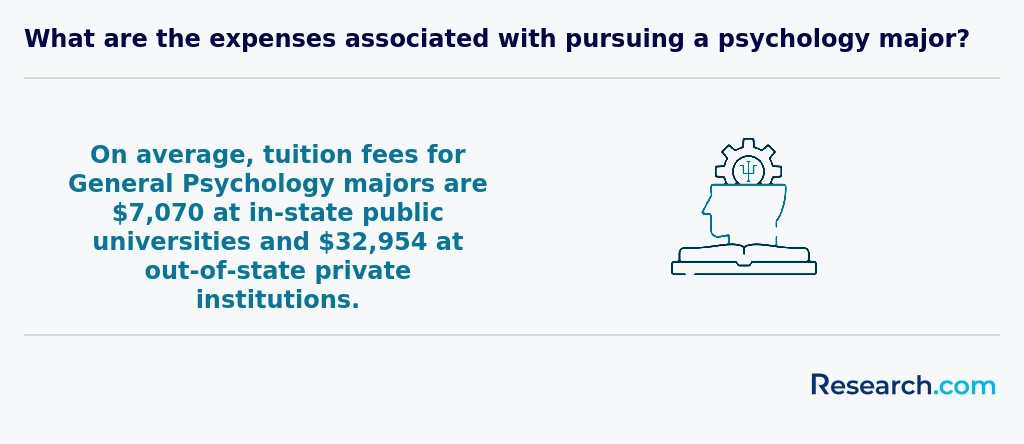
The average cost of a psychology degree in Harrisonburg reflects a balance between affordability and quality education, especially for those attending well-regarded institutions like James Madison University. Graduates often recall the manageable tuition as a key factor in their decision to pursue psychology locally. According to the latest figures, the median in-state total cost hovers around $14,250, making it an accessible choice for many Harrisonburg residents. This figure is significantly lower than the median total cost for out-of-state students, which reaches about $45,958, highlighting the financial advantage of local residency.
Students pursuing their psychology degree at JMU experience not just cost-effectiveness but also strong program support, which enriches their learning journey. Many graduates share that despite the investment, the comprehensive curriculum and focus on practical skills gained in Harrisonburg enhance their value far beyond tuition fees. When planning your education, it's important to factor in other expenses such as books, supplies, and living costs, which in Harrisonburg tend to be lower compared to major metropolitan areas.
For prospective students weighing financial commitments, exploring cheapest psychology programs in Virginia can be a helpful step toward making an informed choice. Overall, understanding the Harrisonburg psychology degree tuition and fees empowers students to navigate their educational path with clarity, ensuring they invest wisely in a field that offers both meaningful careers and personal growth.
Planning ahead is essential for securing a spot in a competitive psychology program in Harrisonburg, VA. Below is a streamlined timeline and checklist to guide prospective students through the application process: • 12–9 Months Before Enrollment: - Research program requirements and specializations. - Attend virtual or on-campus open houses and request information packets. - Begin drafting your personal statement and résumé. • 9–6 Months Before Enrollment: - Request official transcripts from all previous institutions. - Reach out to faculty or supervisors for recommendation letters. - Register for SAT/ACT if required (note: many local programs are now test-optional). • 6–3 Months Before Enrollment: - Finalize your personal statement, highlighting goals-whether you plan to pursue clinical practice, research, or even become a counselor. - Submit FAFSA by March 1 to maximize eligibility for federal and state aid. - Complete online applications: – James Madison University (Regular Decision): February 1 – Eastern Mennonite University (Priority Deadline): March 15 – Bridgewater College (Transfer and First-Year): April 1 – Blue Ridge Community College: Rolling admissions-apply at least two months before the semester start. • 3–0 Months Before Enrollment: - Check application portals weekly for missing documents or interview invitations. - Confirm financial aid award letters and housing arrangements. - Attend admitted-student orientation sessions and register for first-semester courses. By adhering to these deadlines and preparing each component early, you’ll enhance your chances of admission, financial aid approval, and a smooth transition into your psychology studies in Harrisonburg, VA.
For students pursuing a psychology degree in Harrisonburg, financial aid often feels like a vital companion on their academic journey. Many graduates recall how completing the FAFSA early unlocked access to federal Pell Grants, which can provide up to $7,500 annually, easing the burden of tuition costs at institutions like James Madison University. This first step offers a tangible sense of relief and a foundation of support.
State aid through Virginia's Student Financial Assistance program frequently plays a key role for local students. Scholarships aligned with psychology and behavioral sciences have helped peers reduce costs substantially, allowing them to focus more on their studies and research.
At James Madison University, both merit-based and need-based awards have been a source of encouragement and motivation, sometimes lifting 20% to 50% of tuition expenses. Psychology departments often extend work-study or paid internship opportunities, enabling students to earn while gaining hands-on experience, making each dollar feel fully earned and purposeful.
Professional organizations such as the APA also provide scholarships and research funding, fostering a strong connection to the field and reinforcing students' commitment to their future careers.
For students determined to elevate their career in psychology, pursuing an advanced degree such as a Doctor of Psychology (PsyD) can be a transformative next step. Advanced degree programs integrate intensive clinical training, research methodologies, and theoretical learning to equip graduates with the skills needed for both leadership roles and specialized practice. By choosing a PsyD program, students can benefit from hands-on internships, personalized mentorship, and opportunities to delve into niche areas like forensic, neuro, or health psychology. This advanced training not only enhances professional credibility and supports licensure requirements, but it also opens doors to high-impact roles within healthcare, academic institutions, and private practice. Additionally, as flexible learning options continue to evolve, aspiring psychologists can now explore alternative formats, such as psyd online programs, to accommodate work and life commitments without compromising quality education. Embracing an advanced degree in psychology positions graduates to become innovators and leaders in the field, ready to address complex mental health challenges and drive positive change in diverse communities.
Enrolling in a psychology degree program in Harrisonburg usually begins with meeting certain academic milestones that lay a solid foundation for success. Graduates from James Madison University often recall how completing key high school courses in English, math, and science helped them tackle the analytical and writing demands of their psychology classes with confidence.
For many undergraduates, simply holding a high school diploma or GED is sufficient, though a GPA around 2.5 to 3.0 is commonly expected. Some shared that submitting SAT or ACT scores, when required, felt like a manageable hurdle rather than a barrier, thanks to Harrisonburg schools offering test-optional paths as well.
Before diving into upper-level psychology courses, students typically complete prerequisites such as introductory psychology, biology, statistics, and research methods. These classes, often mentioned fondly by alumni, become essential tools for understanding the complexity of human behavior in later studies.
At the graduate level, expectations rise. Those pursuing a master's or doctoral degree remember the value of maintaining a strong undergraduate GPA-around 3.0 or higher-and providing letters of recommendation, personal statements, and research experience. Such prerequisites not only open doors but also build a sense of readiness and excitement for advanced study in Harrisonburg's supportive academic environment.

Navigating licensure is critical for clinical practice. In Virginia, psychologists must:
- Hold a doctoral degree (PhD or PsyD) from an APA-accredited program
- Complete at least 3,300 hours of supervised professional experience over two years
- Pass the national Examination for Professional Practice in Psychology (EPPP)
- Pass the Virginia Jurisprudence and Ethics examination
- Renew registration biennially with 40 hours of approved continuing education
Many candidates accelerate their journey through programs designed for working professionals, such as the fast track psychology degree online.
Psychology degree programs in Harrisonburg offer a thoughtfully crafted curriculum that balances core theories with hands-on experience, setting students on a confident path. At well-regarded institutions here, graduates often recall their early courses in general psychology as eye-opening, covering everything from cognitive processes to social behaviors. These foundational classes provide a broad understanding that resonates in practical, everyday situations-like recognizing how memory shapes decisions or how group dynamics influence behavior in campus organizations.
Advanced courses take this deeper, with subjects like biopsychology revealing how brain activity connects to emotions and actions, which many find fascinating when linked to real-world clinical cases. Exploring developmental psychology helps students appreciate the nuanced changes people experience throughout life, something graduates frequently reference when working in schools or community centers around Harrisonburg.
Many students cherish opportunities in practicum or internships, often facilitated by local partnerships, where they translate classroom theories into meaningful mental health service roles. This immersive experience nurtures both empathy and professional skills, leaving a lasting impact on their career journeys.
Students pursuing psychology degrees in Harrisonburg benefit from a broad range of specializations tailored to diverse career goals and interests. Graduates from well-regarded local institutions often share how focusing on clinical psychology allowed them to engage directly with mental health services, offering meaningful support through therapy and assessment. Others found counseling psychology rewarding, especially when working with individuals navigating career or personal challenges. This variety underlines the depth of Harrisonburg psychology programs with specializations suited to real-world impact.
Developmental psychology consistently appeals to those passionate about human growth, whether in schools or healthcare settings, while industrial-organizational psychology stands out for students eager to improve workplace environments. Reflecting on conversations with alumni, it's clear many value the practical skills gained by exploring forensic, neuropsychology, or social psychology options. The vibrant academic community in Harrisonburg fosters such exploration, allowing students to align their studies with evolving professional landscapes. For those interested in further advancement, considering options like psyd online can be a valuable step.
Choosing the best psychology degree in Harrisonburg means looking beyond just the program's name. Graduates from local institutions like James Madison University often reflect on how curriculum variety influenced their path-whether focusing on clinical psychology or applied research. Many emphasize the value of programs aligning with your personal interests and career goals, especially in a city where practical experience with local mental health organizations enriches learning.
Affordability is another key factor. Finding affordable psychology degrees Harrisonburg VA offers can ease financial stress, allowing students to focus fully on their studies. Many students who studied here appreciated how reasonable tuition combined with financial aid opportunities made pursuing psychology achievable without overwhelming debt.
Engaging faculty expertise and internship options also shape student experiences. Some graduates highlight how close faculty mentorship and meaningful internships helped them build confidence and job readiness. If you want to become a counselor or enter related fields, these connections can be invaluable for stepping into rewarding careers.
Psychology degree graduates in Harrisonburg find a variety of fulfilling career paths rooted in the city's strong academic and community resources. Many alumni from James Madison University pursue roles as licensed clinical psychologists or counselors, benefiting from local internships at community mental health centers. These roles not only offer personal satisfaction through helping others but also align with Virginia's growing emphasis on mental health services. Others have ventured into school psychology, supporting student well-being in Rockingham County schools, creating impactful change in educational settings.
Those exploring psychology career options in Harrisonburg also often transition into business-focused roles such as human resources specialists or market researchers, where their understanding of human behavior supports organizational success. Graduates express gratitude for the practical experiences gained locally, which prepare them well for these diverse paths. Additionally, research careers remain an option, with some graduates moving toward advanced degrees and opportunities in nearby hubs like Richmond.
For working adults considering these opportunities, the availability of accelerated online degree programs for working adults in the region adds flexibility to pursuing these fulfilling psychology career paths.
The job market for psychology degree graduates in Harrisonburg shows steady promise, particularly for those affiliated with institutions like James Madison University. Graduates often find meaningful roles as licensed counselors, school psychologists, or social service coordinators within the Shenandoah Valley community. These positions provide rewarding opportunities to directly impact lives in schools, clinics, and nonprofit agencies, reflecting a vibrant psychology degree job opportunities in Harrisonburg.
Many graduates share how pursuing advanced degrees and licensure transforms initial challenges into rewarding careers, earning respect and competitive salaries locally. For example, those who began as research assistants gained valuable skills that propelled them into counseling roles where they support vulnerable populations. The combination of academic preparation and local demand makes Harrisonburg a nurturing environment for psychology careers.
While entry-level jobs may be modest, the investment in education pays off. Students often ask about what's the easiest online degree to get? as a way to complement their studies. Understanding such options can help balance workload and financial considerations, helping them progress confidently in this rewarding field.
The Harrisonburg psychology career outlook 2027 remains positive, with increasing awareness of mental health needs in schools and community settings supporting sustained growth.
2027 Best Psychology Degree Programs Ranking in Harrisonburg
Investing in your education is a significant decision that can shape your future, and the Research.com team understands the importance of making informed choices. To assist prospective students in Harrisonburg, we have meticulously crafted the "2027 Best Psychology Degree Programs Ranking in Harrisonburg." Our commitment to quality, credibility, and accuracy is reflected in the extensive research and analysis conducted to compile this ranking.
We utilized the following reputable data sources to ensure a comprehensive evaluation of psychology programs:
By exploring this ranking, readers will gain valuable insights into the best psychology degree programs available in Harrisonburg, helping them make informed decisions about their educational paths. For more details on our methodology, please visit our Research.com methodology page.


Frequently Asked Questions About psychology
Psychology degree students in Harrisonburg can maximize their learning experience by actively engaging in both coursework and practical opportunities. Institutions like James Madison University offer a range of research labs and internship placements that provide hands-on experience, crucial for applying theoretical knowledge.
Participating in local community service projects or mental health organizations can further enhance students' understanding of psychology's real-world applications. Additionally, networking with faculty members and attending campus events helps build connections and access mentorship opportunities.
Utilizing Harrisonburg's academic resources such as tutoring centers and study groups improves comprehension and retention. According to the National Center for Education Statistics, students who combine classroom learning with experiential activities show higher graduation and employment rates.
Emerging niches within the psychology field reflect growing societal needs and technological advancements. In Harrisonburg, there is increasing interest in neuropsychology, which explores brain-behavior relationships and is crucial for understanding conditions such as traumatic brain injury. Another expanding area is health psychology, focusing on how mental and physical health interact, particularly relevant given the rise in chronic illnesses nationwide.
Industrial-organizational psychology is gaining traction locally as businesses seek experts to improve workplace productivity and employee well-being. Additionally, forensic psychology is an emerging field due to the demand for psychologists in legal and correctional systems. According to the Bureau of Labor Statistics, employment in these specialized areas is projected to grow faster than average through 2030.
Preparing for the job market after earning a psychology degree in Harrisonburg involves a combination of academic accomplishments and practical experience. Students should seek internships or practicum opportunities, often available through James Madison University and local clinics, to gain hands-on skills.
Networking is crucial; joining psychology-related professional organizations like the American Psychological Association's student chapter can connect graduates with local employers and mentors.
Additionally, pursuing relevant certifications or graduate study enhances employability. According to the Bureau of Labor Statistics, psychology jobs in Virginia are projected to grow about 9% through 2031, emphasizing the importance of specialization and applied experience.
Employers in Harrisonburg seek psychology graduates with strong analytical and critical thinking skills. These abilities enable graduates to evaluate research data and apply psychological theories effectively in various settings. Communication skills, both written and verbal, are highly valued for collaborating with clients, colleagues, and community organizations.
Practical experience is also important. Many local employers prefer candidates familiar with research methods and psychological assessment tools, reflecting the emphasis in Harrisonburg's academic programs. According to the Bureau of Labor Statistics, positions in psychology-related fields are expected to grow by 8% nationally through 2030, underscoring the demand for adaptable professionals.
Additionally, ethical decision-making and cultural competence are crucial due to the diverse populations in Harrisonburg. Graduates who demonstrate empathy and professionalism tend to excel in job placement and career advancement.
Finding internships in Harrisonburg relevant to psychology degrees involves connecting with local institutions and leveraging university resources. James Madison University (JMU), a major education center in Harrisonburg, offers psychology students structured internship programs that partner with community organizations.
The Harrisonburg Department of Social Services and local mental health clinics frequently accept interns interested in clinical and counseling psychology fields. According to JMU's Career and Academic Planning office, nearly 70% of psychology students secure internships within the city, benefiting from direct networking opportunities and campus job fairs.
Students should also explore opportunities with public schools and non-profits, which often provide roles in behavioral support and research assistance. Utilizing JMU's online internship portal and attending local professional psychology association meetings can enhance placement chances.
A psychology degree in Harrisonburg significantly enhances career mobility and advancement opportunities. Local employers in healthcare, education, and social services highly value candidates with psychology backgrounds, reflecting a 12% growth rate in related job openings by 2029, according to the U.S. Bureau of Labor Statistics.
The degree equips graduates with critical skills such as research analysis, communication, and understanding human behavior, which are transferable across various professions. Harrisonburg's proximity to several healthcare facilities and social programs offers multiple internship and networking options, fostering career growth.
Further, positions in counseling, human resources, and rehabilitation services often require at least a bachelor's in psychology, encouraging continued education and specialized certifications for advancement.
Studying for a psychology degree in Harrisonburg equips students with diverse skills applicable across multiple fields. Local universities emphasize interdisciplinary approaches, integrating psychology with education, health sciences, and social work. This prepares graduates for collaborative roles in mental health clinics, schools, and community programs.
Courses often include research methods, cognitive science, and behavioral studies, fostering critical thinking and data analysis skills. According to the U.S. Bureau of Labor Statistics, psychology-related jobs combining healthcare and social services are growing faster than average, highlighting the value of interdisciplinary training.
Harrisonburg's regional partnerships also offer students practical experience through internships, enhancing readiness for complex, cross-disciplinary work environments.
When choosing between a thesis and a non-thesis psychology degree program in Harrisonburg, students should consider their career goals and learning preferences. A thesis option typically involves conducting original research, making it ideal for those planning to pursue graduate studies or research careers. In contrast, non-thesis programs often focus on applied skills and coursework, suiting students aiming for professional practice.
The American Psychological Association notes that thesis programs usually require more time and effort but provide stronger preparation for doctoral programs. At James Madison University, one of Harrisonburg's leading institutions, about 40% of psychology master's students opt for the thesis track, reflecting interest in advanced research.
Additionally, students should evaluate faculty expertise and available resources for research projects, which can influence the quality of a thesis experience. Non-thesis students might benefit from internships or practical projects included in their curriculum, which Harrisonburg colleges often promote to enhance employability in local clinical or counseling settings.
Students based in Harrisonburg seeking to study psychology abroad have several pathways through U.S. higher education partnerships. James Madison University (JMU), the primary institution in Harrisonburg, offers study abroad programs integrating psychology coursework at universities in Europe, Asia, and Australia. These programs enable students to earn credit toward their degree while gaining international exposure.
Additionally, many U.S. universities participate in exchange programs, allowing psychology students from Harrisonburg to spend a semester or year abroad. The Council on International Educational Exchange (CIEE) and other organizations facilitate placements tailored to psychology fields.
According to JMU's Office of International Programs, about 8% of students engage in study abroad annually, with psychology among the popular disciplines for international study.
Students pursuing psychology degrees in Harrisonburg can find valuable part-time positions that enhance their academic experience and employability. Local healthcare facilities such as Sentara RMH Medical Center often offer roles like mental health technician or patient support assistant, providing hands-on experience with clinical populations.
On-campus jobs at James Madison University, including research assistantships in psychology labs, allow students to engage directly with ongoing studies, improving critical analysis and data collection skills. According to the university's career services, nearly 30% of psychology students secure these roles annually.
Additionally, community organizations and nonprofit centers in Harrisonburg seek part-time counselors or program aides, which help build interpersonal and counseling skills relevant to future careers in psychology.
Psychology students in Harrisonburg benefit from several valuable networking opportunities that support their academic and professional growth. James Madison University (JMU), the primary institution offering psychology degrees in the area, hosts regular events such as guest lectures and workshops, connecting students with local psychologists and researchers.
The university's Psychology Club actively collaborates with regional mental health organizations, providing internships and volunteer experiences for networking. Harrisonburg's proximity to the Shenandoah Valley also allows students to engage with community mental health services and counseling centers.
Additionally, JMU facilitates participation in the Virginia Psychological Association's regional conferences, where students can present research and connect with professionals statewide. These structured opportunities enhance Harrisonburg psychology students' access to mentors and potential employers.
Alumni networks offer valuable support for psychology degree students in Harrisonburg by connecting them to experienced professionals and job opportunities. According to the National Association of Colleges and Employers, 70% of job placements result from networking, highlighting alumni's role in career advancement.
Many Harrisonburg institutions maintain active alumni groups that host events, workshops, and mentorship programs specifically for psychology students. These connections can provide guidance on navigating local internship placements and licensure pathways.
This network also fosters knowledge exchange about emerging psychological research and community mental health needs in Harrisonburg. Such engagement enhances students' practical understanding beyond classroom learning.
Customizing a psychology degree program in Harrisonburg allows students to align their education with specific career goals. Many local institutions provide various electives and concentrations, such as clinical psychology, counseling, or industrial-organizational psychology. Students can also pursue internships within Harrisonburg's healthcare facilities or community organizations, offering practical experience that enhances job prospects.
Advising services at these schools help tailor course selections to fit individual ambitions. For example, James Madison University's psychology department supports personalized study plans and research projects.
According to the National Center for Education Statistics, specialized skills gained through customization can improve graduate employability within Virginia's growing mental health sector.
Psychology students in Harrisonburg often face the challenge of balancing rigorous coursework with practical experience requirements. Programs typically demand internships or research assistantships, which require significant time management skills. According to the National Center for Education Statistics, students nationwide spend an average of 34 hours weekly on academics; Harrisonburg students report similar commitments.
Additionally, access to research facilities and qualified supervisors can be limited in smaller cities like Harrisonburg, impacting students' opportunities to engage in advanced psychological research. Students also navigate the complexity of meeting licensure prerequisites, which vary by state.
Financial pressures remain significant, as tuition and living costs in Harrisonburg have risen steadily over recent years. Many students seek scholarships or part-time jobs to support their studies. Mental health concerns among psychology students themselves are also noted, reflecting the demanding nature of the field.
With a psychology degree in Harrisonburg, you can pursue several professional certifications to enhance your career prospects. Common certifications include becoming a Licensed Professional Counselor (LPC) or a Licensed Clinical Social Worker (LCSW), both requiring graduate education and supervised clinical hours. The Virginia Board of Counseling regulates these licenses in Harrisonburg and statewide.
Other certifications include Certified Alcohol and Drug Counselor (CADC) credentials, useful in substance abuse counseling roles. National certifications, such as the Board Certified Behavior Analyst (BCBA), are also valuable for those interested in behavior analysis.
These certifications often require passing exams and meeting supervised experience standards, which vary by credential. Interested students should consult Virginia's licensing boards for specific requirements.
To write a winning application for a psychology program in Harrisonburg, start by highlighting your academic achievements, especially in psychology-related courses. Many programs emphasize a strong GPA, typically above 3.0, to demonstrate academic readiness. Include relevant volunteer or work experience in mental health settings, which shows practical commitment to the field.
Personal statements should be clear and focused, explaining why you want to study psychology and how the program aligns with your career goals. Harrisonburg's programs often value candidates who discuss community involvement, reflecting local engagement.
Letters of recommendation should come from professors or supervisors familiar with your skills and dedication to psychology.
The global perspective on a psychology career highlights diverse opportunities and growing demand across many countries, including the United States. In the U.S., professionals with psychology degrees often find roles in clinical settings, research, education, and business, reflecting a wide range of applications.
For students in Harrisonburg, this means access to programs that align with international standards, enabling graduates to work both domestically and abroad. According to the U.S. Bureau of Labor Statistics, employment for psychologists is projected to grow 8% from 2022 to 2032, faster than the average for all occupations, demonstrating strong prospects.
Moreover, Harrisonburg's universities offer curricula incorporating global psychological theories and ethical practices, preparing students for an interconnected world. These programs often emphasize cultural competence, a key skill as psychology increasingly addresses diverse populations worldwide.
Understanding global trends helps aspiring psychologists in Harrisonburg anticipate future demands and opportunities in various fields such as health care, human resources, and mental health services.
Gaining practical experience while studying for a psychology degree in Harrisonburg is possible through several avenues. Many local colleges encourage students to participate in internships at mental health clinics, schools, or community organizations. James Madison University, for example, offers internship placement assistance in collaboration with Harrisonburg's healthcare providers.
Additionally, students can engage in undergraduate research opportunities, working alongside faculty on projects funded by grants. This hands-on experience builds critical skills for psychology professionals. Volunteer work at local nonprofits or counseling centers also provides valuable exposure to real-world psychological service delivery.
Harrisonburg's proximity to various healthcare and social services agencies supports diverse internship options, enhancing practical training alongside academic coursework. The National Association of Colleges and Employers (NACE) states that psychology graduates with internship experience are 20% more likely to secure employment within six months after graduation.
Choosing the right concentration within a psychology degree program in Harrisonburg begins with understanding your career goals. Psychology concentrations often include clinical, counseling, developmental, or industrial-organizational psychology. Research local job trends, as Harrisonburg's healthcare and education sectors value clinical and counseling psychologists due to regional demand for mental health services, according to the Virginia Employment Commission.
Consider the curriculum offered by Harrisonburg institutions, focusing on available electives and practicum opportunities. For example, James Madison University emphasizes practical experience for clinical concentrations. Align your choice with both your interests and potential internship or licensure pathways in Virginia.
Finally, consult academic advisors and current students to gain insight into program strengths and real-world applications specific to Harrisonburg's community and workforce needs.
- 2027 Best Psychology Degree Programs Ranking in Washington
- 2027 Best Psychology Degree Programs Ranking in Baltimore
- 2027 Best Psychology Degree Programs Ranking in New York
- 2027 Best Psychology Degree Programs Ranking in Detroit
- 2027 Best Psychology Degree Programs Ranking in New Haven
- 2027 Best Psychology Degree Programs Ranking in Louisville
- 2027 Best Psychology Degree Programs Ranking in Fort Wayne
- 2027 Best Psychology Degree Programs Ranking in Albany
- 2027 Best Psychology Degree Programs Ranking in Indianapolis
- 2027 Best Psychology Degree Programs Ranking in Springfield
See What Experts Have To Say About Studying Psychology
Read our interview with Psychology experts

Elizabeth L. Jeglic Ph.D.
Psychology Expert
Professor of Psychology
City University of New York

Catherine Caldwell-Harris, Ph.D.
Psychology Expert
Associate Professor of Psychology
Boston University

Robin M. Kowalski. Ph.D.
Psychology Expert
Professor of Psychology
Clemson University

- Study Psychology Abroad https://astarfuture.co.uk/study_psychology_abroad.html
- Alumni Perspectives - Meet Our FPN Alumni https://www.aanmelder.nl/alumni-perspectives-june-2023
- Ontario Psychological Association - Networking and Community Resources https://www.psych.on.ca/become-a-member-(1)/member-services/networking-and-community-resources
- Know more about thesis vs non- thesis: what is the difference? https://studyfans.com/en/blogs/816
- Sample letters in psychology https://www.mystudies.com/en-in/human-and-social-sciences/psychology/letter-model/
- How to help students cope with mental health challenges https://www.eaie.org/resource/help-students-cope-mental-health-challenges.html
- School Psychologists • Page - Harrisonburg City Public Schools https://www.harrisonburg.k12.va.us/District/Department/26-Student-Support/2113-Untitled.html
- Study Psychology Abroad | Go Overseas https://www.gooverseas.com/study-abroad/psychology
- Psychology https://emu.edu/psychology/
- 10 High-Paying Jobs with a BS in Psychology | University of Bridgeport https://www.bridgeport.edu/news/high-paying-jobs-with-a-bachelors-in-psychology-degree/


