2027 Easiest Online History Degree Programs Ranking in the USA

Co-Founder and Chief Data Scientist
Choosing the right online history degree can be overwhelming, but our carefully crafted 2027 Easiest Online History Degree Programs Ranking in the USA is here to help. Created by the Research.com team of data scientists, this ranking guides students toward programs that balance quality and accessibility.
Exploring history opens doors to understanding the world and developing critical thinking skills. This article offers clear insights to support your educational journey and help you find a program that fits your needs and goals.
Your path to a rewarding history degree starts here.
Key benefits of getting online history degree in America
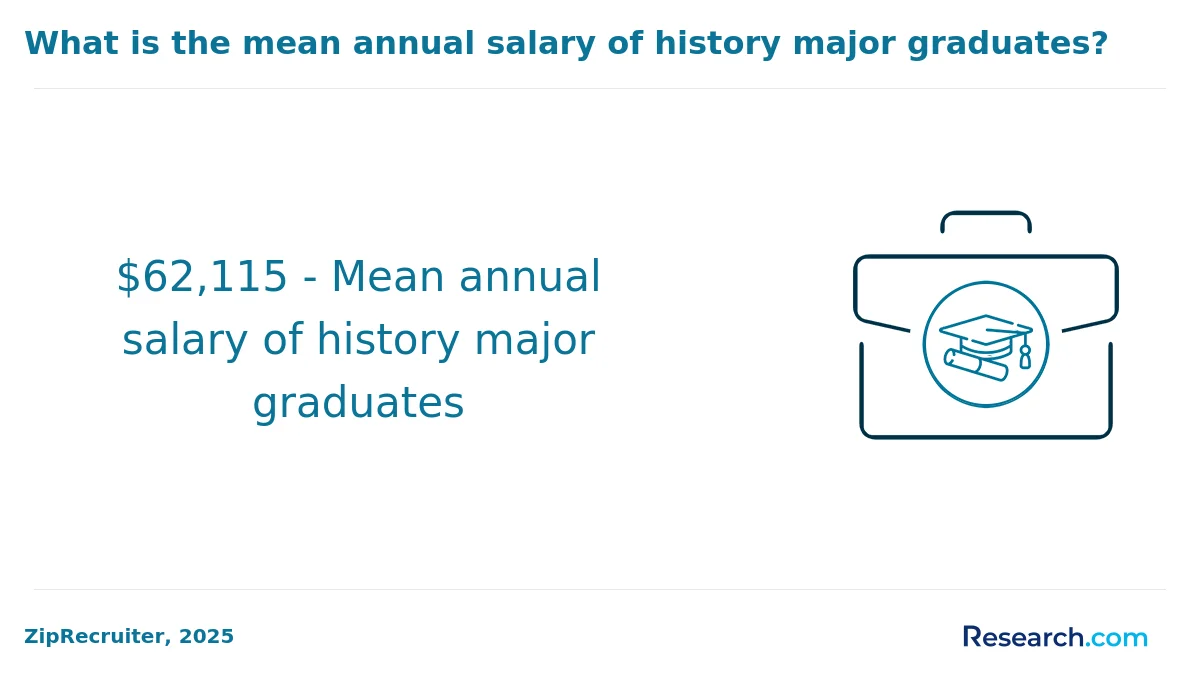
- History degree graduates in the US can pursue fulfilling careers like museum curators, archivists, or high school teachers, earning average salaries around $60,000 to $65,000 per year, providing financial stability.
- Graduates from popular universities, such as the University of Michigan, often explore diverse paths in education, research, and cultural preservation, opening doors to meaningful and varied work environments.
- Online history degrees from institutions like Arizona State University offer flexible scheduling and lower costs, allowing students to balance work and study while gaining valuable skills without relocating.
- Key benefits of getting online history degree in America
- What can I expect from online history degree in America?
- Where can I work with online history degree in America?
- How much can I make with online history degree in America?
- 2027 Easiest Online History Degree Programs Ranking in the USA
- Key Findings
- How long does it take to complete online history degree in America?
- What's the difference between online and on-campus history degree?
- What is the average cost of online history degree in America?
- What financial aid is available to online history degree students in America?
- What are the prerequisites for enrolling in online history degree program in America?
- What courses are typically in online history degree programs in America?
- What types of specializations are available in online history degree programs in America?
- How do you choose the best online history degree in America?
- What career paths are available for online history degree students in America?
- What is the job market for online history degree in America?
- Top Trending History Rankings
What can I expect from online history degree in America?
The average cost of an online history degree in America varies widely depending on the institution, but most students can expect to pay between $15,000 and $30,000 for a bachelor's degree from a reputable, regionally accredited university. For instance, graduates from popular universities known for their history programs report tuition rates aligning with this range, balancing affordability with academic quality. Some state universities offer lower in-state tuition rates, making online history degrees even more accessible for residents.
Students appreciate this cost framework as it allows them to pursue their passion for history without incurring excessive debt. Many graduates describe their experience as rewarding, noting that the investment in a flexible program-which includes comprehensive courses on American, European, and World history, plus research methods-was well worth the price. Programs integrating platforms like Canvas facilitate smooth learning experiences, making students feel supported throughout their studies.
Financial aid and scholarships also play a key role in reducing overall expenses, enhancing affordability. This is especially beneficial for students balancing work and family, who value the practical balance between cost and career advancement opportunities.
Where can I work with online history degree in America?
Graduates with an online history degree in America find diverse career paths across sectors such as museums, education, government, and non-profit organizations. Jobs in museums, historical societies, and cultural institutions involve curating collections or managing archives, with the U.S. Bureau of Labor Statistics projecting an 11% growth for curators and museum technicians through 2032. For example, graduates from universities like Arizona State University have reported fulfilling roles in local museums, engaging the public with interactive historical exhibits.
Many online history degree holders teach at community colleges or support educational programs, where the median wage for postsecondary history teachers is around $76,700 annually. Graduates from institutions such as Penn State World Campus often share rewarding experiences balancing teaching with research activities. Federal agencies, including the National Archives, hire historians skilled in research and digital document preservation, providing stable government careers.
Other employment includes publishing, law-related fields, and non-profit roles like grant writing and program coordination. The analytical and writing skills gained at schools like the University of Florida Online empower graduates to succeed in varied professional environments, often combining internships and practical experience.
How much can I make with online history degree in America?
Graduates with online history degrees in America can expect median annual salaries around $63,000, according to U.S. Bureau of Labor Statistics data from 2023. Entry-level roles like high school history teachers typically start near $45,000 but can rise with experience and advanced qualifications. For example, many alumni from prominent institutions such as the University of Florida or Arizona State University find rewarding teaching positions that align with these figures.
Those pursuing federal government roles, including positions at the National Archives or Defense Department, often earn between $60,000 and $90,000 annually. This sector offers attractive job security and benefits, enhancing overall compensation beyond just salary.
Graduates working in major metropolitan areas like New York or California can often command higher wages due to cost-of-living adjustments, while rural placements may offer lower pay but a more affordable lifestyle. History students bolstered by skills in foreign languages or digital archiving report improved salary prospects and greater job satisfaction after earning their degrees online.
2027 Easiest Online History Degree Programs Ranking in the USA
How do we rank schools?
Investing in your education is a significant decision that can shape your future, and the Research.com team understands the importance of making informed choices. To assist prospective students interested in history, we have meticulously crafted the "2027 Easiest Online History Degree Programs Ranking in the USA." Our commitment to quality, credibility, and accuracy is demonstrated through the extensive research and analysis conducted to compile this ranking.
We utilized the following reputable data sources to ensure a comprehensive evaluation of online history degree programs:
By exploring this ranking, readers will gain valuable insights into the most accessible and student-friendly online history programs, enabling them to make well-informed decisions about their academic futures. For more information on how this ranking was created, please visit our Research.com methodology page.
# 1 position
University of Maryland Global Campus
Bachelor of History




# 18 position
SUNY Empire State College
Bachelor of Historical Studies


Key Findings
- Online history degrees are offered at both bachelor's and master's levels, focusing on U.S. and world history, research methods, and historiography.
- Bachelor's tuition ranges between $15,000 and $45,000 depending on public or private institutions and residency status.
- The median annual wage for historians was about $63,100 in 2022, with entry-level jobs paying $40,000 to $50,000.
- Advanced degree holders with experience can earn between $60,000 and $90,000, especially in academia and federal roles.
- Typical completion time is four years for a bachelor's and two years for a master's, with part-time study options available.
- Accreditation from recognized U.S. agencies is essential for credit transfer and employer recognition.
How long does it take to complete online history degree in America?
The typical time to complete an online history degree in America is about four years for full-time students, mirroring traditional on-campus schedules. For example, students at popular institutions like Arizona State University and the University of Florida often finish their Bachelor of Arts in History by completing roughly 120 semester credit hours, averaging 12 to 15 credits per semester.
Graduates from these programs frequently share positive feedback about balancing their studies with work or family commitments, appreciating the flexibility to accelerate courses during summer or winter terms. Part-time students, however, may take five or more years to finish, a common scenario for those juggling jobs while earning their degrees.
At the graduate level, completing a Master of Arts in History online usually takes 1.5 to 2 years for full-time students, with programs at universities like the University of Illinois Urbana-Champaign offering this pace. Doctorates stretch from 3 to 7 years depending on research demands and occasional campus residencies.
What's the difference between online and on-campus history degree?
Online and on-campus history degrees in the U.S. differ primarily in delivery, cost, and student experience. On-campus programs at universities like the University of Virginia offer face-to-face lectures, seminars, and immediate access to libraries and archives, fostering real-time discussions and networking. Graduates often recall engaging directly with professors and peers, which enhances their academic and social growth. According to NCES, about 70% of history undergraduates still choose this traditional format.
Conversely, online history degrees provide flexibility, ideal for students juggling work or family, as seen in programs from Arizona State University. Coursework is frequently asynchronous, allowing learners to study anytime. Online students report satisfaction in balancing commitments while pursuing rigorous curricula, with institutions ensuring accreditation and recognized academic standards. The NCES highlights the steady rise in online enrollments, reflecting confidence in remote education's quality.
Cost is another factor: on-campus students generally face higher expenses including housing and transportation, while online learners save on these, making education more affordable. Despite concerns about missing experiential learning, many online programs incorporate virtual archives and digital forums to enrich understanding, mirroring the immersive experiences offered by campuses well-known for history studies.
What is the average cost of online history degree in America?
The average cost of an online history degree in America reflects a wide range of tuition rates influenced by residency status and institution type. Data shows that the median total cost for obtaining such a degree is approximately $42,000, with in-state students typically paying around $36,580 and out-of-state students facing about $54,600. Many graduates from popular universities and colleges find this investment rewarding, as these programs often blend affordability with a robust curriculum that prepares them well for careers.
Students enrolled in affordable online history degree programs 2027 benefit from cost structures aligned with credit hour pricing, which usually ranges from $300 to $800. For example, a 120-credit bachelor's degree-common for history programs-can vary widely but generally totals between $36,000 and $96,000. Many report feeling positive about balancing quality education and reasonable tuition, especially when attending state universities known for strong history departments.
Those who choose private institutions should anticipate higher tuition fees, which can surpass $36,000 annually, but often come with access to enhanced resources and financial aid opportunities. Graduates express satisfaction with the ability to manage expenses while still gaining a comprehensive understanding of historical contexts. Access to financial support mechanisms, scholarships, and employer tuition reimbursement further improves affordability for many students pursuing an online history degree.
Prospective students exploring the landscape of the average cost of online history degree USA find it useful to research tuition data closely and consider programs offered by state universities. Reliable data sources and personal stories highlight how many have navigated costs effectively while pursuing fulfilling careers. Those interested in the evolving job market may want to explore history degree jobs to understand the potential returns on their educational investment.
What financial aid is available to online history degree students in America?
Students pursuing online history degrees in America often rely on multiple financial aid sources to manage costs effectively. For example, graduates from well-known institutions like the University of Florida have reported that Pell Grants, which cover up to $7,395 annually without repayment, significantly eased their tuition burden.
Federal student loans also play a critical role by offering competitive interest rates and flexible repayment plans, which many students at schools such as Arizona State University have utilized to maintain financial stability while studying.
Institutional scholarships represent another valuable resource. These awards, often merit-based or designed for veterans and adult learners, are frequently highlighted on the financial aid websites of history programs at colleges like the University of North Carolina. Students have found these opportunities to provide both reassurance and motivation throughout their academic journey.
State scholarships and tuition assistance vary but can substantially benefit in-state candidates, as noted by learners at the University of Texas system. Additionally, private scholarships from historical societies or civic organizations add an extra layer of support, helping students feel more confident in financing their education without accumulating debt.
What are the prerequisites for enrolling in online history degree program in America?
Enrolling in an online history degree program in America typically requires a high school diploma or GED, which serves as proof of foundational education. Graduates from well-known universities often recall initial steps involving submission of transcripts and sometimes standardized test scores like the SAT or ACT, though many institutions have now adopted test-optional policies to ease access.
Applicants for bachelor's programs may also need to demonstrate completion of high school coursework in English and social studies, helping build skills essential for historical analysis. Letters of recommendation and personal statements describing a genuine passion for history are common, providing insight into applicants' motivation, as shared by graduates who found these pieces opened doors to programs at respected colleges.
For master's level history degrees, a bachelor's degree with a minimum GPA around 3.0 is usually mandatory. Some programs suggest prior history coursework and may require GRE scores, though many have dropped the GRE to emphasize academic and personal background over standardized testing.
Students frequently verify tuition costs, which average $10,560 in-state at public institutions and $38,070 at private ones, according to 2023 data from the National Center for Education Statistics. This financial awareness, combined with clear admissions criteria, helps prospective students navigate their next academic steps confidently.
What courses are typically in online history degree programs in America?
Online history degree programs in America commonly require about 120 credit hours, blending general education with focused historical study. Graduates from universities like Arizona State and University of Florida recall engaging in core courses covering major historical periods such as United States History from Colonial Times to Present, World History from Ancient to Modern eras, and European History including the Renaissance and Enlightenment. These foundational classes provide a broad but detailed overview.
Students further develop skills through classes on historiography and research methods, learning to critically evaluate primary and secondary sources. Practical historical writing and analysis courses help sharpen communication skills valued in careers like public policy or museum curation.
Electives often reflect personal interests; graduates highlight enriching options like the History of Indigenous Peoples in America or Women's History, promoting a deeper connection to diverse narratives. Interdisciplinary coursework in political science or sociology frequently complements their studies, enhancing critical perspectives essential for understanding complex historical contexts in today's society.
What types of specializations are available in online history degree programs in America?
Online history degree specializations USA typically include American History, European History, World History, Military History, Public History and Museum Studies, and Historical Research and Methodology. These options allow students to focus on areas like U.S. political developments or global historical trends, reflecting diverse academic interests.
Graduates from popular universities such as Arizona State University or the University of Florida often share how specializing in Public History and Museum Studies equipped them with practical skills used in real-world settings like museums or archives, creating fulfilling career paths. Others emphasize the value of Military History specialization when transitioning into government or analytical roles. These focused programs align academic study with meaningful career outcomes.
Students exploring history degree concentration options in America also note that understanding methodology enhances their research capabilities, critical for further graduate study or scholarly work. Tuition costs remain comparable across these specializations, making tailored education accessible. For insights into careers, many consult data on the highest-paying jobs with a history degree to align specialization with future goals.
How do you choose the best online history degree in America?
Choosing the best online history degree in America starts with verifying accreditation, as regionally accredited programs guarantee higher quality and recognition by employers and graduate schools. Graduates from universities known for strong history departments often praise the varied curricula, which include U.S. history, world history, and specialized topics such as cultural or military history, allowing students to focus on their personal interests. These best online history degree programs USA also offer flexibility, essential for balancing studies with work or family life.
Cost considerations are crucial. Public institutions offering affordable accredited online history degrees America typically charge between $7,000 and $15,000 annually, but private schools may cost more. Many students appreciate universities that extend in-state tuition rates nationwide, substantially lowering overall expenses. Alumni report that faculty expertise and accessible technical support greatly enhance their learning experience, reflecting on the value of programs that invest in student services. For insight into career paths, exploring history masters degree jobs reveals promising options aligned with history degrees.
Finally, reviewing graduation rates and alumni outcomes via tools like the U.S. Department of Education's College Scorecard helps identify programs with strong student support and positive career placement, ensuring your investment leads to rewarding opportunities.
What career paths are available for online history degree students in America?
Graduates holding an online history degree in America frequently pursue careers in education, especially as high school teachers or postsecondary instructors. The U.S. Bureau of Labor Statistics forecasts an 8% growth for high school teaching positions between 2021 and 2031, matching the average for all jobs, which encourages practical optimism among students from universities known for strong history programs like the University of Florida or Arizona State University. These roles leverage skills in critical thinking and communication, highly valued in the classroom and beyond, aligning with the common interests of those researching online history degree careers USA.
Museum work and public history represent another dynamic sector. Graduates often become curators, archivists, or museum technicians, positions that allow hands-on engagement with cultural artifacts and exhibits. Median salaries hover near $54,000 annually, reflecting modest but steady demand, particularly in states with rich historical sites. Many graduates from well-regarded schools such as the University of North Carolina Chapel Hill share positive experiences transitioning into these roles.
Additionally, history majors find opportunities in government roles centered on historical preservation, policy analysis, and cultural resource management. Federal and state agencies frequently seek knowledgeable individuals to support critical research and education initiatives. Outside of traditional fields, law and journalism attract many history graduates, with approximately 12% advancing into law studies, underscoring versatile job opportunities with online history degree America.
Students weighing options can explore affordable online degree programs history to balance cost with career potential, especially as tuition ranges vary significantly. Graduates consistently highlight the rewarding challenge of applying historical insight in sectors like business, law, and government, making an online history degree a practical investment linked with median salaries from $50,000 to $80,000.
What is the job market for online history degree in America?
The job market for an online history degree in America presents a blend of traditional roles and expanding career paths. Graduates from respected institutions such as the University of Texas or the University of Michigan often find opportunities in education, museums, government agencies, and nonprofit organizations. The employment outlook for related fields like archivists, curators, and historians is expected to grow by 6% from 2021 to 2031, aligning with average occupational growth rates, making the career landscape steady for those with these skills.
While competition for academic positions remains intense, many history graduates leverage their degree to enter dynamic roles involving research, digital literacy, and communication. Students pursuing an online history degree job outlook USA benefit by complementing their education with internships or minors, increasing their versatility. Prospective students can explore programs including a masters in history online to enhance their qualifications and improve career options.
Median annual wages for historians were about $63,100 as of 2021, though entry-level salaries may start lower, especially in public sectors. The versatility of a history degree supports employment in fields such as publishing, law, and journalism, offering diverse career opportunities for history graduates America.
Frequently Asked Questions About history
Students pursuing online history degrees in America can enhance their learning by actively engaging with course materials and participating in virtual discussions. Research from the American Historical Association shows that students who collaborate frequently with peers tend to retain information better.
Utilizing digital archives and databases such as the Library of Congress or JSTOR can deepen understanding of historical topics and improve research skills. Many universities also provide access to these resources for online learners.
Scheduling regular study times and setting goals helps maintain discipline, a key factor since 40% of online students report time management as their biggest challenge (NCES, 2023).
Finally, seeking mentorship through online office hours or academic advisors offers personalized guidance that supports academic success.
Emerging niches in the history field reflect evolving interests and societal needs within American higher education. Digital history has grown rapidly, with over 40% of history programs incorporating digital tools like GIS mapping and data visualization, according to the American Historical Association (AHA). Environmental history also gains prominence, linking ecological changes to human events, supported by funding from agencies like the National Endowment for the Humanities. Public history, focusing on community engagement and museum work, remains strong, with job growth projected at 13% through 2029 from the U.S. Bureau of Labor Statistics. These niches offer distinct paths for online history degree students.
After completing an online history degree in America, preparing for the job market requires a strategic approach. Graduates should focus on building relevant skills such as critical thinking, research, and writing, which are highly valued in diverse fields like education, archives, and public history. According to the US Bureau of Labor Statistics, employment for historians is projected to grow by 6% from 2021 to 2031, highlighting the need for specialization. Internships or volunteer opportunities with museums, historical societies, or government agencies can provide practical experience and networking connections, crucial for job placement. Additionally, mastering digital tools for historical analysis and communication enhances employability.
Employers in America highly value history degree graduates for their strong analytical and research skills. Graduates are expected to critically evaluate sources, synthesize information, and present coherent arguments. According to the American Historical Association, 85% of employers emphasize the importance of written communication, highlighting clarity and precision.
Additionally, problem-solving abilities are crucial. History graduates learn to view events from multiple perspectives, making them adept at identifying patterns and understanding complex contexts. This skill applies across industries such as education, law, and public policy.
Data from the U.S. Bureau of Labor Statistics shows that 70% of history-related roles require teamwork skills, underpinning the importance of collaboration and adaptability in professional settings.
Finding internships relevant to a history degree in America involves exploring opportunities in museums, archives, historical societies, and government agencies. Many universities offer career services that connect online history students with local and national internships. According to the National Council on Public History, internships help students gain practical experience and often lead to job placements.
Students should also search platforms like the American Historical Association's job board and USAJobs.gov, which list internships in federal institutions such as the National Archives. Networking through academic conferences and local historical organizations further enhances chances of securing an internship.
Applying early, tailoring resumes to history-related skills, and seeking faculty recommendations improve success rates. Internships typically last from a few weeks to a semester, providing valuable hands-on experience in the field.
An online history degree in America can significantly enhance career mobility and advancement for graduates. According to the Bureau of Labor Statistics (BLS), professions related to history, such as archivists, museum curators, and historians, are expected to grow by 5% through 2031, aligning with average job growth rates. An online degree provides flexibility, allowing working adults to gain credentials without pausing their careers.
Employers often value a history degree for its emphasis on research, critical thinking, and communication skills. These abilities are transferable across sectors including education, government, and business.
Furthermore, online programs accredited by recognized bodies ensure academic standards, improving graduates' competitiveness in the job market.
Studying for an online history degree in America equips students with critical thinking, research, and communication skills essential for interdisciplinary roles. History programs emphasize analyzing diverse sources and understanding social, political, and cultural contexts over time. This approach enables graduates to collaborate across fields like law, education, public policy, and museum studies.
Many US universities incorporate coursework in economics, sociology, and anthropology within history degrees to broaden perspectives. According to the American Historical Association, nearly 60% of history graduates enter careers requiring interdisciplinary knowledge.
Such training prepares students to adapt to roles that demand complex problem-solving and multi-faceted analysis.
Choosing between a thesis and a non-thesis online history degree in America depends on your academic goals and career plans. Thesis programs typically require original research and a written dissertation, which can be ideal for students interested in pursuing doctoral studies or careers in research and academia. According to the Council of Graduate Schools, about 60% of history master's programs in the U.S. offer a thesis option.
Non-thesis programs focus more on coursework and may include comprehensive exams, which appeal to those aiming for public history, teaching, or jobs in government and museums. The National Center for Education Statistics notes that non-thesis formats often take less time to complete, usually around 1.5 to 2 years.
Consider your interest in conducting in-depth research, your timeline, and your career aspirations when deciding between the two paths.
Students in America interested in studying history abroad through online programs have several options. Many U.S. universities offer online history degrees with opportunities for international study components or exchange programs. These allow students to earn credits abroad while enrolled in a U.S. institution. Some colleges partner with foreign universities to provide virtual study abroad experiences focused on regional history.
According to the Institute of International Education, over 40,000 American students engage in study abroad annually, and online history programs increasingly include global modules to enrich cultural perspectives. This hybrid approach is ideal for those unable to relocate but eager to explore history from international viewpoints.
Students should also consider fully online history degrees accredited within the U.S. that incorporate research on global historical events to gain a broader perspective without leaving their home country.
Students pursuing an online history degree in America can benefit from several part-time job opportunities that complement their education. Working as a research assistant at universities or museums allows hands-on experience with historical documents and artifacts. According to the American Historical Association, such roles help build critical research and analytical skills.
Positions in archives or libraries provide insights into managing historical records and improving organizational skills. Additionally, many graduates find roles as tour guides at historical sites or cultural centers, where communication abilities are enhanced.
These jobs not only support academic growth but also strengthen resumes for future careers in education, public history, or government.
Online history students in America have growing networking opportunities despite studying remotely. Many programs offer virtual networking events such as webinars, guest lectures, and alumni meetups. These events connect students with professors, historians, and professionals from museums or archives nationwide.
Professional organizations like the American Historical Association provide online memberships, discussion forums, and conferences accessible to virtual students. According to the AHA, participating in such groups significantly enhances career prospects by linking students to internships and job openings.
Additionally, many universities encourage students to join local historical societies or public history projects near their residence, combining online study with community engagement.
Alumni networks play a crucial role in supporting online history degree students in America by providing valuable professional connections. Graduates often gain access to exclusive job listings and internships specifically related to history fields such as museums, archives, and education. According to the National Association of Colleges and Employers (NACE), 85% of jobs are filled through networking, highlighting the importance of alumni connections.
These networks also facilitate mentorship opportunities, allowing current students to seek guidance from experienced professionals who understand the specific challenges of history careers. Social events and webinars organized by alumni groups help maintain engagement and knowledge sharing.
Moreover, alumni networks often foster lifelong learning by promoting conferences and workshops relevant to American history, enriching students' academic and career development beyond graduation.
Customizing an online history degree in America allows students to align their studies with specific career goals. Many accredited universities offer flexible curricula where students can choose electives focusing on areas such as American history, world history, or public history. This enables specialization for careers in education, archival work, or museum curation.
Students may also tailor their programs by selecting research projects or internships related to their interests. According to the National Center for Education Statistics, nearly 60% of online history students choose programs offering hands-on opportunities, which enhance practical skills.
Moreover, some schools provide options to combine history with minors or certificates such as genealogy or digital humanities, broadening career pathways in this field.
Online history students in America often face the challenge of maintaining motivation and time management. According to the National Center for Education Statistics, nearly 40% of online college students report difficulties balancing coursework with personal and professional responsibilities. History courses require critical reading and extensive research, which can be harder to engage with remotely.
Another common issue is limited access to primary sources and archives, crucial for in-depth historical study. While some universities provide digital collections, others do not, potentially hindering research quality.
Additionally, students may experience less direct interaction with professors and peers, which can impact understanding and academic networking opportunities.
An online history degree in America opens pathways to several professional certifications. Graduates can pursue archival certifications such as the Certified Archivist credential offered by the Academy of Certified Archivists, which validates expertise in managing historical records. Another common certification is the Museum Studies Certification from the American Alliance of Museums, ideal for those aiming to work in curation or museum education.
Additionally, teaching certification is available for history graduates who want to become educators in public schools. Requirements vary by state but generally demand passing standardized exams and completing pedagogical training.
These certifications enhance job prospects in sectors that value historical knowledge and research skills.
Applying for an online history degree program in America requires a clear and well-organized application. Start by highlighting your passion for history and any related academic achievements. According to the National Center for Education Statistics, over 30,000 students enroll annually in history programs, so standing out is crucial.
Provide strong letters of recommendation from teachers or professionals familiar with your skills and dedication. Include any relevant writing samples, as history programs emphasize critical thinking and research abilities.
Be sure to explain why you choose an online format and how you plan to manage self-discipline. Schools value applicants who demonstrate motivation and readiness for remote learning.
Lastly, carefully follow application instructions and meet all deadlines to strengthen your chances of acceptance.
Global perspectives on a history career highlight the value of understanding diverse cultures and international events. In the United States, obtaining an online history degree opens opportunities to work in museums, archives, education, or international organizations. According to the U.S. Bureau of Labor Statistics, historian employment is expected to grow 6% from 2021 to 2031, reflecting steady demand.
American history graduates often engage with global issues such as diplomacy, human rights, and cultural preservation. The Council on Undergraduate Research emphasizes that employers appreciate history graduates for their strong research and critical thinking skills, useful in worldwide contexts.
Studying history online in the U.S. allows students to explore global narratives alongside American history, preparing them for careers that connect local and international perspectives.
Gaining practical experience while studying for an online history degree in America is essential for applying academic knowledge. Many programs encourage internships with local museums, historical societies, or archives. These opportunities help students build valuable skills in research, preservation, and public history.
Additionally, students can participate in virtual internships offered by institutions such as the National Archives or the Smithsonian. According to the American Historical Association, these internships provide critical hands-on experience while accommodating remote learning schedules.
Engaging in research projects under faculty supervision is another practical avenue. Online learners often contribute to digital history initiatives or publish in student journals, enhancing both expertise and resumes.
Choosing the right concentration within an online history degree program in America involves considering your interests and career goals. Popular concentrations include American history, world history, military history, and public history. According to the American Historical Association, American history remains the most pursued concentration due to its relevance in education and government roles.
Research the curriculum to ensure it offers specialized courses aligned with your passion. For example, programs focused on public history often incorporate museum studies and archival work, appealing to those interested in preservation careers. Also, check if the program provides access to digital archives and interactive tools, which enhance online learning.
Finally, review the faculty's expertise and external partnerships, as these factors strengthen academic support and career opportunities in the competitive American job market.
Top Trending History Rankings
References
- Join the Alumni Network - National History Day https://nhd.org/en/get-involved/join-the-alumni-network/
- Undergraduate Student Opportunities https://warwick.ac.uk/fac/arts/history/students/studentopportunities/
- History Online https://www.nsu.edu/History-and-Interdisciplinary-Studies/History-Online
- After the Degree: Finding work with a History degree https://www.graduate-jobs.com/news/13219/After_the_Degree__Finding_work_with_a_History_degree
- History https://www.careerpilot.org.uk/job-sectors/subject/history
- What Can You Do With a History Degree? https://willamette.edu/academics/college/history/career-options
- 5 Challenges of Teaching History in International Classrooms (and How https://millerskills.co.uk/blogs/teaching-overseas/5-challenges-of-teaching-history-in-international-classrooms-and-how-to-overcome-them
- My Top 3 Recommendations on Networking in the History World | An Historian About Town https://anhistorianabouttown.com/recommendations-on-networking-in-the-history-world/
- Finding Networking Opportunities as a Student | National Society of High School Scholars https://www.nshss.org/resources/blog/blog-posts/how-to-find-networking-opportunities-as-a-student/
- 4 Steps to Find History Research Opportunities as an Undergraduate https://www.coltie.com/post/4-steps-to-find-history-research-opportunities-as-an-undergraduate