
2027 Most Valuable Counseling Degree Programs Ranking in New Mexico

Co-Founder and Chief Data Scientist
Choosing the right counseling degree program in New Mexico can shape your future career and personal growth. To support your decision, this article presents the 2027 Most Valuable Counseling Degree Programs Ranking in New Mexico, crafted by the Research.com team of data scientists.
By exploring this ranking, you'll gain insights into programs that offer strong value and opportunities, helping you find a path that aligns with your goals. Pursuing a counseling degree opens doors to meaningful work and lasting positive impact in your community.
Let this guide inspire your next step toward a rewarding career.
Key benefits of getting counseling degree in New Mexico
- Counseling degree graduates in New Mexico can expect competitive salaries, such as Addiction Counselors earning around $60,080 annually and Community Outreach Coordinators making about $54,020 per year, offering financial stability and rewarding work.
- Graduates from universities like the University of New Mexico pursue diverse careers including Rehabilitation Specialist and Family Support Worker, providing meaningful options to help various communities and make a real impact.
- Completing a counseling degree online, as seen with graduates from New Mexico State University, allows flexible scheduling and often lower costs, making it easier to balance studies with personal and professional commitments.
- Key benefits of getting counseling degree in New Mexico
- What can I expect from counseling degree in New Mexico?
- Where can I work with counseling degree in New Mexico?
- How much can I make with counseling degree in New Mexico?
- 2027 Most Valuable Counseling Degree Programs Ranking in New Mexico
- Key Findings
- How long does it take to complete counseling degree in New Mexico?
- What's the difference between online and on-campus counseling degree?
- What is the average cost of counseling degree in New Mexico?
- What financial aid is available to counseling degree students in New Mexico?
- What are the prerequisites for enrolling in counseling degree program in New Mexico?
- What courses are typically in counseling degree programs in New Mexico?
- What types of specializations are available in counseling degree programs in New Mexico?
- How do you choose the best counseling degree in New Mexico?
- What career paths are available for counseling degree students in New Mexico?
- What is the job market for counseling degree in New Mexico?
- Related Counseling Rankings for Nearby States
- Top Trending Counseling Rankings
- See What Experts Have To Say About Studying Counseling
What can I expect from counseling degree in New Mexico?
When exploring counseling degrees in New Mexico, one of the first surprises for many students is the balance between quality education and affordability. At institutions like New Mexico State University and the University of New Mexico, in-state tuition offers a welcoming price point compared to private colleges, making the dream of becoming a counselor more accessible. Graduates often recall how affordable tuition allowed them to focus deeply on their clinical practicum without the heavy weight of overwhelming debt.
Imagine spending your days in hands-on internships across diverse community settings-schools, mental health clinics, or rural rehabilitation centers-knowing your education was both practical and financially manageable. Many students find that this balance sparks a sense of excitement and confidence as they build skills relevant to New Mexico's unique cultural landscape.
While prices vary, public universities generally provide an average in-state tuition that feels supportive to aspiring counselors. The option for online programs also opens doors for those balancing work and study in remote parts of the state, extending affordable education beyond the traditional campus experience.
Where can I work with counseling degree in New Mexico?
With a counseling degree in New Mexico, your career path unfolds like an adventurous map with diverse destinations. Graduates from local institutions like New Mexico State University often find themselves thriving in community mental health centers, where they provide crucial support to individuals and families navigating life's challenges. Imagine stepping into a center in a rural town, offering therapy and crisis aid where help is scarce-this is where your impact truly shines.
Many alumni also embrace roles in school systems across cities like Albuquerque and Santa Fe, guiding students through academic and emotional hurdles. Picture yourself as a trusted school counselor, helping teenagers discover their potential and navigate complex social dynamics.
Hospitals and healthcare facilities across New Mexico beckon counselors trained in clinical mental health or substance abuse, opening doors to work with patients managing trauma or addiction. Others launch private practices or join nonprofits dedicated to causes like domestic violence support, where every session feels deeply rewarding.
These experiences highlight a vibrant career landscape-full of connection, growth, and meaningful change right here in New Mexico.
How much can I make with counseling degree in New Mexico?
Graduates from counseling programs at popular New Mexico institutions often find themselves stepping eagerly into diverse roles with promising salary potential. For example, those who become Intervention Specialists can anticipate a mean annual wage of about $76,000, a rewarding figure reflecting their specialized skills.
Others working as Addiction Counselors generally earn around $60,080 yearly, a salary that acknowledges the vital impact of their work in supporting individuals through recovery. Meanwhile, Rehabilitation Specialists usually see wages near $48,430 per year, with an hourly rate of $23.28, highlighting steady demand in healthcare and social services across the state.
Community Outreach Coordinators and Family Support Workers each draw average salaries close to $54,020 annually, which can provide a strong foundation as they engage with community programs and foster meaningful connections. Graduates from counseling programs at New Mexico universities often share how rewarding it is to make a difference while earning a solid income in cities like Albuquerque or Santa Fe.
These earnings reflect a blend of state-specific opportunities and the real-life excitement of turning passion into a viable career within New Mexico's supportive, evolving mental health landscape.
2027 Most Valuable Counseling Degree Programs Ranking in New Mexico
How do we rank schools?
Investing in your education is a significant decision that can shape your future, and the Research.com team understands the importance of making informed choices. To assist prospective students in New Mexico, we have meticulously crafted the "2027 Most Valuable Counseling Degree Programs Ranking in New Mexico." Our commitment to quality, credibility, and accuracy is reflected in the extensive research and analysis conducted to compile this ranking.
We utilized the following reputable data sources to ensure a comprehensive evaluation of counseling programs:
By exploring this ranking, readers will gain valuable insights into the best counseling degree programs available in New Mexico, helping them make informed decisions about their educational paths. For more details on our methodology, please visit our Research.com methodology page.
# 1 position
New Mexico Highlands University
Master of Education in School Counseling


# 3 position
New Mexico Highlands University
Bachelor of Science in Counseling
# 4 position
University of the Southwest
Master of Science in , Clinical Mental Health Counseling

# 5 position
Southwestern College
M.A. in Counseling



Key Findings
- Tuition for graduate counseling degrees in New Mexico ranges from $8,000 to $15,000 per year at public universities, while private schools may charge over $20,000 annually.
- The job market for licensed professional counselors in New Mexico is growing faster than average, driven by increasing mental health awareness and expanded healthcare services.
- Starting salaries for new counselors typically range from $40,000 to $45,000 per year, with experienced counselors earning up to $70,000 depending on specialization and location.
- Licensure requires a master's degree in counseling and about 3,000 supervised clinical hours, as regulated by the New Mexico Counseling and Therapy Practice Board.
- Students can choose from various counseling fields such as school counseling, mental health counseling, and marriage and family therapy, with opportunities for internships near healthcare centers.
How long does it take to complete counseling degree in New Mexico?
For the curious minds veering toward doctoral studies, an additional four to seven years unfold - a time of deep dive research and specialized growth. Throughout these paths, graduates appreciate choosing CACREP-accredited programs in New Mexico, which smooth the way to licensure. Completing 3,000 hours of supervised experience after graduation immerses students further, turning knowledge into real-world healing skills. Each step in New Mexico's counseling education journey pulses with discovery and hope for future counselors.
What's the difference between online and on-campus counseling degree?
Imagine juggling work, family, and studies in New Mexico-online counseling degrees become a beacon of flexibility. Graduates from New Mexico State University often share how the fully online or hybrid programs allowed them to attend lectures and complete assignments from home, managing their busy lives without sacrificing progress. The freedom to log in anytime was a game-changer for many, especially those living in rural areas where campus trips are long.
On the flip side, students attending University of New Mexico's on-campus programs describe the energy of face-to-face interactions with professors and peers as inspiring. Participating in hands-on practicums nearby boosted their confidence, equipping them with practical skills crucial for licensure through the New Mexico Counseling and Therapy Practice Board.
Both paths delve deeply into ethics, theories, and clinical hours, but while online demands strong self-discipline and reliable tech, campus-based students enjoy structured schedules and direct mentorship. Some even pick hybrid options to explore the best of both worlds, sparking an adventurous and personalized learning journey.
What is the average cost of counseling degree in New Mexico?
When exploring the average cost of counseling degree in New Mexico, students often find that the total expense for in-state graduate programs is surprisingly manageable. Many graduates from institutions like the University of New Mexico recall budgeting around $7,868 in tuition fees for their entire counseling degree, which spans two to three years. This focused investment opens doors to rich learning experiences and clinical practice opportunities that shape compassionate, skilled counselors.
New Mexico counseling degree tuition and fees may feel daunting at first glance, but students quickly discover strategies to ease the financial journey. For example, those attending private colleges encounter higher costs, yet many appreciate the smaller classes and personalized mentorship that make these programs feel worth every dollar. Alongside tuition, you'll encounter costs for books, supplies, and clinical internships that add flavor to your hands-on education.
Picture yourself, like many alumni, navigating the blend of academic rigor and practical training while balancing expenses. Scholarships and grants often light the path, making the financial effort feel like a rewarding adventure rather than a burden. For those eager to accelerate their studies and minimize cost, considering fast track online degrees can be an exciting and efficient alternative.
What financial aid is available to counseling degree students in New Mexico?
Pursuing a counseling degree in New Mexico opens the door to a vibrant mix of financial aid options that many students find both exciting and empowering. At the University of New Mexico, for instance, graduates often share how federal student aid, including Direct Unsubsidized Loans and Grad PLUS loans, eased their journey through graduate school-allowing them to focus on what truly mattered: their passion for helping others.
Imagine securing a teaching assistantship that not only waives tuition but also provides a stipend-a reality many counseling students at New Mexico State University have celebrated. It's like being supported while you learn.
State programs like the New Mexico Legislative Lottery Scholarship, although primarily for undergraduates, occasionally surprise graduate counseling students who apply based on need, bringing unexpected relief. And then there are the specialized scholarships from groups such as the New Mexico Counseling Association, which recognize the dedication of graduate students working toward licensure.
Discovering these layered aid opportunities sparks a sense of adventure, blending federal, state, institutional, and private support to make the dream of a counseling degree in New Mexico truly accessible.
What are the prerequisites for enrolling in counseling degree program in New Mexico?
Embarking on a counseling degree journey in New Mexico means preparing to meet prerequisites that feel like stepping stones toward a meaningful career. For undergraduates aiming to dive into counseling at schools like the University of New Mexico or New Mexico State University, having a high school diploma is just the first checkpoint. Many graduates recall how their solid foundation in psychology and social sciences made the admission process smoother, coupled with SAT or ACT scores that showcased their readiness.
Graduate hopefuls, ready to deepen their expertise, often share that holding a bachelor's degree-preferably related to psychology or social work-is vital for programs across the state. Application seasons come alive with required transcripts, heartfelt letters of recommendation, and personal statements fueled by passion and previous community work. Imagine taking foundational courses in human development or abnormal psychology early on, unlocking new perspectives that cement your commitment to counseling.
At popular New Mexico institutions, students appreciate the blend of academic rigor and hands-on experiences. Some programs may ask for background checks to ensure safety during field internships, a step graduates describe as empowering, affirming their readiness to support others.
What courses are typically in counseling degree programs in New Mexico?
Imagine stepping into a counseling classroom at a New Mexico university, like the University of New Mexico or Eastern New Mexico University, where courses spark curiosity and real-world readiness. You'd dive into Introduction to Counseling Theories and Techniques, exploring practical methods that graduates recall as eye-opening when connecting with diverse clients.
Courses like Human Growth and Development bring to life the emotional journeys people undergo, helping you understand clients from toddlers to seniors. Many graduates fondly remember the buzz of classroom discussions on Multicultural Counseling, a vital course given New Mexico's rich cultural mosaic, fostering openness and empathy.
Picture yourself applying skills from the Assessment and Testing in Counseling course during internships, confidently using tools to evaluate client needs. Then there's the essential Counseling Ethics and Professional Issues, grounding you in values that protect both client and counselor.
Hands-on courses like Group Counseling and Addiction and Substance Abuse Counseling often bring out a sense of accomplishment in students, as they practice facilitating sessions and addressing urgent community challenges. To round it off, Research Methods in Counseling empowers you to critically assess what really works, a favorite for those excited by evidence-based care.
What types of specializations are available in counseling degree programs in New Mexico?
Exploring counseling degree specializations in New Mexico reveals exciting paths tailored to unique passions and community needs. Graduates from popular universities like New Mexico State University often share how Clinical Mental Health Counseling prepared them to engage deeply with individuals overcoming emotional struggles and substance abuse, fostering a strong sense of fulfillment in helping others heal.
Others choose School Counseling, honing skills to support students throughout their K-12 journey. Many grads express joy in guiding young minds and witnessing their growth firsthand, reflecting the true heart of New Mexico counseling program concentration options. Marriage and Family Therapy also stands out, with enthusiastic students valuing the chance to strengthen relationships and bring harmony to families through hands-on, supervised experiences.
Some adventurous students dive into Substance Abuse or Rehabilitation Counseling, inspired by the meaningful impact these fields have on individuals reclaiming independence. Whether studying on campus or through flexible paths, many find delight discovering tailored programs and can even expand their horizons with college courses for seniors online to deepen their expertise.
How do you choose the best counseling degree in New Mexico?
Choosing the best counseling degree programs in New Mexico often means embarking on a personal journey through vibrant campuses like New Mexico State University, where graduates treasure the hands-on clinical experience that seamlessly blends with classroom learning. Imagine walking through corridors buzzing with passionate peers, all eager to dive into mental health, school counseling, or family therapy specializations. This connection between program and real-world practice is essential, especially in a state that values diverse community services.
Affordable counseling degrees New Mexico offers can turn your dream into reality when you discover in-state tuition rates that make even graduate studies manageable. Many graduates recall the relief of financial aid and assistantships easing their paths, allowing them to focus on their passion for helping others. Balancing flexible online or hybrid formats with demanding work schedules adds another layer of freedom, turning education into an exciting adventure rather than a burden.
For those curious about the career outlook, it's wise to explore how programs prepare you for licensure with practical clinical hours and strong local partnerships. Alumni often reflect proudly on their smooth transition into counseling roles, supported by courses aligned with New Mexico's rigorous licensing rules. If you're wondering what masters degree pays the most, counseling in New Mexico may pleasantly surprise you with both meaningful work and stability.
What career paths are available for counseling degree students in New Mexico?
Graduates of counseling programs in New Mexico discover a world of opportunities that extend beyond the classroom. Many find themselves thriving as School Counselors, where they support students' emotional and academic growth in vibrant K-12 settings, such as those connected to the University of New Mexico. Others embrace the rewarding role of Mental Health Counselors, working one-on-one to help individuals navigate mental health challenges and create hopeful futures.
Substance Abuse Counseling is another meaningful path for those ready to guide clients through recovery journeys, especially in communities near New Mexico State University. Rehabilitation Counselors use their skills to empower clients with disabilities in reclaiming independence, a deeply fulfilling career celebrated by graduates. Career Counselors help others explore job possibilities, crafting new professional chapters full of promise, reflecting the diverse job opportunities for counseling graduates New Mexico offers.
Exploring these career paths uncovers exciting roles for students willing to dive into counseling careers in New Mexico, with real-life experiences enriched by practical training and community engagement. For those curious about different professional personalities, graduates often recommend checking out top introvert jobs that align well with counseling careers.
What is the job market for counseling degree in New Mexico?
The counseling degree job outlook New Mexico reveals vibrant pathways for graduates eager to make a difference. Imagine a recent graduate from New Mexico State University stepping into a community mental health center in Albuquerque, quickly finding their skills in demand as rural and urban areas seek compassionate mental health professionals. Employment opportunities for counselors in New Mexico span various settings, from hospitals and schools to nonprofits focused on trauma and addiction, providing rich avenues to explore diverse career roles.
Graduates often share excitement about the state's strong focus on behavioral health, fueled by initiatives that channel federal funding directly into underserved regions. This creates more openings for licensed counselors, boosting incomes potentially up to $60,000. The financial aspect is encouraging too, with tuition costs at public universities like New Mexico State University keeping education accessible. By engaging with local programs, counseling students discover not just a job but a rewarding journey helping communities grow healthier and more resilient.
Frequently Asked Questions About counseling
Counseling degree students in New Mexico can maximize their learning experience by combining academic knowledge with practical exposure. Engaging actively in internships or practicum opportunities approved by the New Mexico Board of Licensed Professional Counselors gives students valuable hands-on skills. Participating in community counseling centers or local mental health organizations enhances real-world understanding.
Students should also take advantage of on-campus resources such as counseling labs, workshops, and professional development seminars that focus on culturally responsive counseling practices. According to the U.S. Bureau of Labor Statistics, New Mexico has a growing demand for mental health counselors, making practical experience crucial for future employment.
Networking with licensed professionals and joining student chapters of organizations like the American Counseling Association can provide mentorship and career guidance. Pursuing coursework that aligns with New Mexico's licensure requirements ensures students meet state standards efficiently.
Emerging niches within the counseling field in New Mexico reflect broader national trends, accentuated by regional needs. One growing area is trauma-informed counseling, addressing the mental health impact of past abuse and adverse experiences, which is particularly relevant given New Mexico's diverse and at-risk populations. Additionally, substance abuse counseling continues to expand, with New Mexico ranking above the national average for opioid overdose rates, highlighting the demand for specialized counselors.
Another niche gaining importance is rural mental health counseling, as many communities lack adequate access to services. Telehealth counseling has also risen sharply, offering new opportunities for licensed professionals. Finally, multicultural counseling focused on indigenous and Hispanic communities is critical, given New Mexico's demographic composition, making culturally competent care a priority.
After earning a counseling degree in New Mexico, preparing for the job market involves several key steps. First, graduates must obtain state licensure, such as the Licensed Professional Counselor (LPC) credential, which requires passing the National Counselor Examination and completing supervised clinical hours. The New Mexico Regulation and Licensing Department provides detailed requirements and processes.
Networking through local counseling associations, like the New Mexico Counseling Association, can connect graduates with employers and professional development opportunities.
Additionally, gaining specialized certifications in areas like substance abuse or school counseling can improve employability. According to the U.S. Bureau of Labor Statistics, counselors in New Mexico earn a median annual wage of approximately $46,000, with job growth slightly above the national average, indicating solid prospects for qualified professionals.
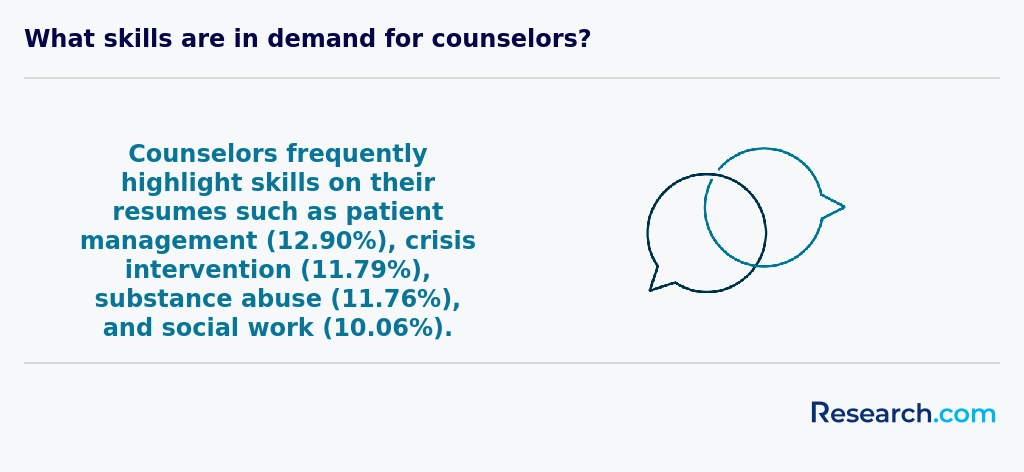
Employers in New Mexico highly value counseling degree graduates who demonstrate strong communication and interpersonal skills. Being able to actively listen and empathize with clients is essential for effective therapy and support. According to the New Mexico Counseling and Therapy Association, cultural competence is also critical due to the state's diverse population, including significant Hispanic and Native American communities.
Graduates should possess solid knowledge of evidence-based treatment methods and ethical standards set by the American Counseling Association. Employers often seek candidates with skills in crisis intervention and case management to address complex client needs efficiently.
Finally, proficiency in documentation and familiarity with state mental health regulations are important to ensure compliance and quality care delivery in New Mexico's healthcare system.
Finding internships in New Mexico for counseling students involves leveraging local resources and professional networks. Many state universities like the University of New Mexico and New Mexico State University have partnerships with community mental health centers and hospitals, offering on-site internship opportunities for counseling students.
Students should also explore organizations such as the New Mexico Counseling Association (NMCA), which provides listings and networking connections specifically for counseling internships. According to the New Mexico Board of Licensed Professional Counselors, completing supervised internship hours is essential for licensure.
Utilizing state health departments and nonprofit agencies that serve diverse populations can lead to valuable placements. Early application and active communication with potential supervisors improve chances of securing internships aligned with counseling degree requirements.
Obtaining a counseling degree in New Mexico significantly enhances career mobility and advancement opportunities within the state's growing behavioral health sector. Licensed Professional Counselors (LPCs) are in demand, with New Mexico's Department of Workforce Solutions projecting a 14% growth in counseling jobs through 2030, faster than the national average. A counseling degree is essential for licensure, which allows professionals to work independently in clinical settings, schools, and community organizations.
Higher degree levels, such as a master's or doctoral degree in counseling, open doors to supervisory roles and specialized fields like substance abuse or marriage and family therapy. This educational foundation also provides access to better salaries, with New Mexico LPCs earning a median of around $50,000 annually as of recent labor statistics. Additionally, accredited counseling programs support preparation for state licensing exams, a critical step for career progression.
Studying for a counseling degree in New Mexico equips students with skills essential for interdisciplinary collaboration. Programs often emphasize integrating knowledge from psychology, social work, and healthcare, reflecting the state's diverse community needs. According to the New Mexico Higher Education Department, many counseling curricula include training in teamwork, communication, and culturally competent care, preparing graduates to work alongside medical professionals, educators, and social service providers.
Additionally, supervised clinical experiences in varied settings help students apply counseling theories in real-world interdisciplinary teams. This hands-on approach ensures that graduates can navigate complex cases involving mental health, substance abuse, and family dynamics, common in New Mexico's communities. The state's licensing requirements also encourage counselors to understand legal and ethical issues across professions, reinforcing interdisciplinary readiness.
Choosing between a thesis and a non-thesis counseling degree program in New Mexico depends on your career goals and learning preferences. Thesis programs often suit students interested in research or pursuing a doctorate, as they require original research and a formal written thesis.
Non-thesis programs typically focus more on practical counseling skills and coursework, which can be completed faster. According to the New Mexico Higher Education Department, many counseling students prefer non-thesis options to meet licensure requirements established by the New Mexico Counseling and Therapy Practice Board.
Consider your future plans, available time, and interest in research when deciding. Both paths offer accredited options that comply with state standards for Licensed Professional Counselors (LPC).
Students based in New Mexico who want to study counseling abroad have several paths to consider within the U.S. higher education framework. Many universities in New Mexico partner with international institutions, offering exchange programs or dual-degree options that allow students to gain global experience while earning credits applicable to their counseling degrees.
Since New Mexico's counseling licensure requires specific education aligned with national standards, it is important that any international program be accredited or recognized by U.S. bodies such as CACREP (Council for Accreditation of Counseling and Related Educational Programs).
Students should also explore online counseling programs affiliated with foreign universities that comply with U.S. licensure requirements. The New Mexico Higher Education Department recommends checking the program's curriculum carefully to ensure it covers required competencies for New Mexico's Licensed Professional Clinical Counselor (LPCC) credential.
The options for New Mexico students are expanding, driven by increased cross-border collaborations and the demand for culturally competent counselors familiar with diverse populations.
Part-time job opportunities in New Mexico can strongly complement counseling degree education by providing practical experience and skill development. Roles such as behavioral health technician, case manager assistant, or crisis hotline worker offer hands-on exposure to counseling environments. These positions enable students to apply classroom knowledge in real-world settings, building communication and crisis intervention skills.
According to the New Mexico Department of Workforce Solutions, behavioral health jobs are projected to grow significantly over the next decade, highlighting demand for trained professionals. Working part-time in social services or mental health clinics also helps students network and understand local community needs. This practical experience is valuable for licensure requirements and future employment.
Additionally, tutoring or mentoring roles focused on youth or at-risk populations provide insight into developmental and counseling theories. Combining work with studies enhances one's resume and can lead to career advancement in New Mexico's expanding mental health sector.
Counseling students in New Mexico have access to multiple networking opportunities that enhance their educational and professional growth. Local chapters of national organizations, such as the New Mexico Counseling Association (NMCA), actively host events, workshops, and conferences designed specifically for students. These gatherings provide students with chances to connect with licensed counselors and potential employers.
Many universities also promote networking through internship placements with regional health centers and social service agencies. According to the New Mexico Regulation and Licensing Department, counseling internships significantly increase job placement rates by offering practical experience and professional connections.
Additionally, state-wide job fairs and virtual meetups supported by New Mexico's higher education institutions help students build their professional networks early in their careers.
Alumni networks offer significant advantages to counseling degree students in New Mexico. These networks connect current students with graduates who are working professionals in various counseling fields, providing valuable mentorship and guidance. According to the New Mexico Counseling Association, such connections often lead to internship opportunities and job placements through referrals.
Additionally, alumni networks facilitate access to continuing education resources and workshops, which are essential for maintaining licensure in the state. Networking events organized by universities and local chapters enable students to build relationships with experienced counselors statewide.
This ongoing support system improves career readiness and professional growth in New Mexico's counseling community.
Customizing a counseling degree program in New Mexico allows students to align their education with specific career goals. Many universities offer concentrations such as clinical mental health counseling, school counseling, or marriage and family therapy. These specializations help tailor coursework and practicum experiences to the intended professional path.
Students can also choose electives focusing on areas like substance abuse, trauma, or multicultural counseling. This flexibility improves readiness for New Mexico's diverse population.
Additionally, field placements in various settings-from community agencies to schools-offer practical experience reflecting students' interests. The New Mexico Counseling and Therapy Practice Board provides detailed licensing requirements, guiding students in selecting relevant tracks.
Counseling students in New Mexico often face several key challenges during their education. One significant obstacle is limited access to diverse clinical practicum sites, which can slow experience accumulation. Rural areas, common in New Mexico, have fewer counseling facilities, making it difficult to fulfill required hours. According to the New Mexico Counseling and Therapy Practice Board, securing supervised clinical hours remains a hurdle for many students.
Financial strain is another issue, as counseling programs frequently require additional costs for certifications and licensure preparation exams. Balancing coursework with work or family commitments also creates stress, impacting student retention rates.
Finally, navigating state-specific licensure requirements requires careful planning, as New Mexico has distinct regulations compared to other states.
With a counseling degree in New Mexico, graduates can pursue several professional certifications that enhance career opportunities. The most common credential is the Licensed Professional Clinical Counselor (LPCC), which allows for independent practice in mental health counseling. To obtain the LPCC, candidates must complete a master's degree in counseling, fulfill supervised clinical hours, and pass a state-recognized exam. According to the New Mexico Regulation and Licensing Department, as of 2023, there are over 1,200 licensed professional counselors in the state.
Other certifications include the Licensed Alcohol and Drug Counselor (LADC), which focuses on substance abuse treatment, and the National Certified Counselor (NCC), a nationally recognized credential offered by the National Board for Certified Counselors. These certifications require specific training, exams, and continuing education to maintain licensure.
To write a winning application for a counseling program in New Mexico, start by researching programs accredited by the Council for Accreditation of Counseling and Related Educational Programs (CACREP). Highlight your passion for helping communities, especially given New Mexico's unique cultural and socio-economic landscape. Make sure to clearly describe relevant experience, such as volunteer work or internships in mental health settings.
Include a strong personal statement that reflects your understanding of counseling ethics and multicultural competence, which are essential in New Mexico's diverse population. Pay attention to GPA requirements-typically a minimum of 3.0-and submit all transcripts promptly.
Request professional recommendation letters that attest to your interpersonal skills and academic readiness. Lastly, tailor your application to each program's specific focus, whether clinical mental health, school, or addiction counseling, referencing New Mexico's credentialing pathways detailed by the New Mexico Counseling & Therapy Practice Board.
The global perspectives on a counseling career emphasize its growing importance due to increasing mental health awareness worldwide. In the United States, including New Mexico, demand for qualified counselors is rising rapidly. According to the U.S. Bureau of Labor Statistics, employment for mental health counselors is projected to grow 23% from 2021 to 2031, much faster than average.
New Mexico reflects this trend, with community health services expanding to meet local needs. Counselors trained in cultural competence and diverse therapeutic methods are especially valued, given the state's multicultural population. Nationally, professional organizations encourage ethical practice and ongoing education to align with global mental health standards.
Gaining practical experience is essential when pursuing a counseling degree in New Mexico. Many accredited programs require students to complete supervised internships or practicum hours. These placements are typically arranged through the university and involve working directly with clients under professional supervision. The New Mexico Counseling and Therapy Practice Board mandates a minimum of 3,000 hours of supervised experience for licensure, emphasizing early hands-on opportunities. Students can also seek volunteer positions at community mental health centers or nonprofit organizations. Additionally, some universities partner with local clinics, providing valuable exposure to diverse client populations during training.
Choosing the right concentration within a counseling degree program in New Mexico depends on your career goals and local demand. Common options include clinical mental health, school counseling, and marriage and family therapy. New Mexico's licensing board requires specific coursework and supervised experience tailored to these paths, so understand these requirements early. According to the New Mexico Counseling & Therapy Practice Board, clinical mental health counselors have growing job prospects due to increasing mental health needs statewide. Research local job markets and speak with professionals to find a concentration that aligns with your interests and meets state licensure standards.
Related Counseling Rankings for Nearby States
- 2027 Most Valuable Counseling Degree Programs Ranking in Arizona
- 2027 Most Valuable Counseling Degree Programs Ranking in Texas
- 2027 Most Valuable Counseling Degree Programs Ranking in Oklahoma
- 2027 Most Valuable Counseling Degree Programs Ranking in California
- 2027 Most Valuable Counseling Degree Programs Ranking in Missouri
- 2027 Most Valuable Counseling Degree Programs Ranking in Minnesota
- 2027 Most Valuable Counseling Degree Programs Ranking in Illinois
- 2027 Most Valuable Counseling Degree Programs Ranking in Alabama
- 2027 Most Valuable Counseling Degree Programs Ranking in Indiana
- 2027 Most Valuable Counseling Degree Programs Ranking in Michigan
Top Trending Counseling Rankings
See What Experts Have To Say About Studying Counseling
Read our interview with Counseling experts

Charles Figley
Counseling Expert
Kurzweg Distinguished Chair in Disaster Mental Health
Tulane University

References
- 6 Therapy Niches to Consider for Your Practice - Talkspace https://www.talkspace.com/blog/therapy-niches/
- Internship Opportunities | PCS https://pacounseling.com/internships/
- Mental Health, Counseling & Therapy Internships https://www.counselingschools.com/blog/preparing-for-a-mental-health-internship
- How to Write a School Counselor Cover Letter | VocoVision https://www.vocovision.com/resources/uncategorized/how-to-write-a-strong-school-counselor-cover-letter/
- Becoming An International School Counselor https://iscainfo.com/becoming-an-international-school-counselor/
- Therapy Group of Charlotte How Career Counseling Boosts Professional Growth - Therapy Group of Charlotte https://therapistsincharlotte.com/therapists-charlotte-blog/how-career-counseling-boosts-professional-growth/
- How to Become a Counselor (LMHC & LPCC) in New Mexico https://onlinecounselingprograms.com/become-a-counselor/counseling-licensure/how-to-become-a-counselor-in-new-mexico/
- Where therapists work and what they do https://www.bacp.co.uk/careers/counselling-and-therapy-as-a-career/where-therapists-work-and-what-they-do/
- Alternative Careers for Counselors Who Are Burnt Out [2025 Update] - The Bad Therapist https://www.thebadtherapist.coach/blog/alternative-careers-for-counselors
- Know more about thesis vs non- thesis: what is the difference? https://studyfans.com/en/blogs/816





