2027 Best Accelerated MBA Degree Programs

Co-Founder and Chief Data Scientist
A master of business administration (MBA) program is a popular degree program, with over 600 academic institutions offering it in 2021 globally and 206,279 students enrolled into the programs (Association to Advance Collegiate Schools of Business, 2021). In the same year, 88,740 MBAs were awarded. With all these programs, it can be difficult to decide on the most suitable one for you.
As a career-planning expert with more than a decade of professional experience, I have made it my mission to provide you with essential up-to-date information on the best degree programs from accredited academic institutions. In this in-depth guide to the fastest MBA programs, I discuss program curricula, available specializations, tuition, career paths, and employment outlook for business professionals.
What are the benefits of getting an MBA degree?
- With an MBA, you can land a senior-level role in companies from different industries. These positions include financial manager, marketing manager, operations manager, human resources (HR) director, and business or management consultant.
- In 2022, financial managers in the United States (US) had a median annual wage of $139,790; advertising and promotions managers had $127,830; marketing managers had $140,040; and management analysts had $95,290 [US Bureau of Labor Statistics (BLS), 2023].
- The fastest MBA programs provide you with the advantage of a shorter completion time, allowing individuals to acquire advanced business knowledge and skills more quickly. This enables faster entry into the job market, the potential for quicker career advancement, and a more efficient return on investment compared to traditional MBA programs.
What can I expect from an accelerated MBA program?
An accelerated MBA program is a specialized and intensive educational track that allows students to earn their MBA degrees in a significantly shorter time compared to the program lengths of traditional MBAs. These programs are designed for individuals who seek a fast-paced, rigorous, and immersive learning experience to quickly acquire essential business skills and advance their careers. Unlike the standard 2-year format of most MBA programs, the fastest MBA programs can typically be completed within 10 to 18 months, depending on the specific program and academic institution. These programs often employ an intensive curriculum that covers the fundamental aspects of business management, such as finance, marketing, operations, strategy, and leadership.
Where can I work with an accelerated MBA program?
Professionals with an MBA degree enjoy diverse career opportunities across various industries and work environments. In the dynamic world of business, MBA graduates can find roles in finance, consulting, healthcare, technology, and consumer goods.
- In the finance sector, companies like JPMorgan Chase and Goldman Sachs offer challenging roles in investment banking and financial management.
- Consulting firms such as McKinsey & Company and Boston Consulting Group provide opportunities for strategic problem-solving and organizational improvement.
- Healthcare management roles are available at institutions like Mayo Clinic and Kaiser Permanente, allowing MBAs to contribute to efficient healthcare delivery.
- In the technology industry, MBA holders can thrive at companies like Google and Microsoft, influencing business strategy and innovation.
- Consumer goods giants Procter & Gamble and Unilever are examples of where marketing and brand management expertise can be applied.
The breadth of industries ensures that MBA professionals can find stimulating work environments aligned with their interests and skills, fostering career growth and impact.
How much can I make with an accelerated MBA program?
On average, MBA graduates tend to command higher salaries than those with only a bachelor’s degree. Salaries can range widely, from mid-level management positions earning around $80,000 to executive roles with six-figure or even seven-figure annual incomes. Industries such as finance, consulting, and technology are known for offering competitive compensation. Additionally, the leadership and strategic skills acquired during an MBA program can contribute to long-term career advancement, further boosting earning potential throughout a business professional’s career.
The median annual salaries for the most common job roles for MBA graduates are as follows, according to the latest data from US BLS:
- Financial managers $139,790
- Advertising and promotions managers $127,830
- Marketing managers $140,040
- Management analysts -$95,290
- 2027 List of Accelerated MBA Degree Programs Program List
- How long does it take to complete Accelerated MBA Degree Programs? How long does it take to complete Accelerated MBA Degree Programs?
- How do Accelerated MBA Degree Programs compare to an on-campus program? How do Accelerated MBA Degree Programs compare to an on-campus program?
- What is the average cost of Accelerated MBA Degree Programs? Program Cost
- What are the financial aid options for students enrolling in Accelerated MBA Degree Programs? Financial Aid
- What are the prerequisites for enrolling in Accelerated MBA Degree Programs? Program Requirements
- What types of specializations are available in Accelerated MBA Degree Programs? What types of specializations are available in Accelerated MBA Degree Programs?
- How to choose the best Accelerated MBA Degree Programs? How to choose the best Accelerated MBA Degree Programs?
- Are dual-degree programs a good alternative to an accelerated MBA? Are dual-degree programs a good alternative to an accelerated MBA?
- What challenges should I be prepared for when enrolling in an accelerated MBA program? What challenges should I be prepared for when enrolling in an accelerated MBA program?
- Which accelerated MBA specializations yield higher salary growth? Program ROI
- What future trends are shaping accelerated MBA programs? What future trends are shaping accelerated MBA programs?
- What is the return on investment for an accelerated MBA degree? What is the return on investment for an accelerated MBA degree?
- How do employers perceive accelerated MBA programs? How do employers perceive accelerated MBA programs?
2027 Accelerated MBA Degree Programs: Fastest Accredited Options and How to Choose
An accelerated MBA can be a smart option if you want the career value of a graduate business degree without spending two full years away from work. The trade-off is intensity: most accelerated MBA programs compress core business training, electives, leadership development, and networking into a much shorter schedule. That makes program choice especially important.
This guide is designed for working professionals, recent business graduates, career switchers, and prospective MBA applicants comparing fast MBA formats. You will learn how accelerated MBA programs work, how they compare with online and traditional MBA options, what they typically cost, what admissions committees look for, and which questions to ask before enrolling.
How do we rank schools?
Research.com evaluates accelerated MBA programs using a structured research methodology built around institutional data, program characteristics, accreditation, and student-relevant decision factors. The data sources reviewed include the IPEDS database, Peterson’s database, the College Scorecard database, and the National Center for Education Statistics.
The programs below are not presented as a guarantee of career outcomes. Instead, they give prospective students a practical starting point for comparing accredited accelerated MBA options by completion time, credits, cost per credit, specialization choices, and business school accreditation.
Quick Answer: What Is an Accelerated MBA?
An accelerated MBA is a Master of Business Administration program designed to be completed faster than a traditional two-year MBA. Many programs take 12 to 18 months and use condensed terms, fewer academic breaks, intensive coursework, and prior business preparation to shorten the timeline. These programs are best suited for students who can manage a demanding schedule and already have clear career goals.
| Best fit | Why it may work | Potential drawback |
| Professionals who want a faster return to the workforce | Shorter enrollment can reduce time away from full-time earnings | The pace leaves little room for academic recovery or extended internships |
| Students with prior business coursework or graduate business training | Some programs let qualified students move quickly into electives and advanced topics | Applicants without business foundations may find the workload harder |
| Career advancers with a defined target role | A focused MBA can support faster movement into management, finance, consulting, analytics, marketing, or entrepreneurship | Students still exploring career direction may benefit from a longer program |
Featured Accelerated MBA Degree Programs
1. Cornell University
Cornell University offers the Johnson Cornell Tech MBA, a 12-month program built for professionals preparing for leadership roles in technology-driven business environments. Students begin with a summer term in Ithaca and complete two semesters at the New York City campus, where the curriculum emphasizes cross-disciplinary collaboration, digital business strategy, analytics, product thinking, and interaction with entrepreneurs and business leaders.
The program is STEM-designated and is awarded through the Samuel Curtis Johnson Graduate School of Management. It is a strong fit for applicants who want a highly compressed MBA experience connected to technology, innovation, and startup ecosystems.
- Program Length: 12 months
- Tracks/concentrations:
- Financial Technology
- Culture and Media Technology
- Cost per Credit: $2,498.44
- Required Credits to Graduate: 50
- Accreditation: Association to Advance Collegiate Schools of Business (AACSB)
2. Duke University
Duke University provides an Accelerated Daytime MBA for students who have already completed graduate-level business study or a similar academic background. The format allows qualified students to bypass some foundational business requirements and focus more heavily on electives, experiential learning, leadership development, and career-relevant customization.
Students can select from over 100 electives and pursue concentrations or certificates aligned with their professional goals. The STEM-designated curriculum may also be relevant for international students seeking U.S. work experience after graduation.
- Program Length: 15 months
- Tracks/concentrations:
- Decision Sciences
- Diversity, Equity, and Inclusion
- Energy and Environment
- Energy Finance
- Entrepreneurship and Innovation
- Finance
- Financial Analysis / Accounting
- Financial Technology
- Leadership and Ethics
- Management
- Marketing
- Operations Management
- Social Entrepreneurship
- Strategy
- Cost per Credit: $1,211.39
- Required Credits to Graduate: 79
- Accreditation: Association to Advance Collegiate Schools of Business (AACSB)
3. University of Notre Dame
The University of Notre Dame offers a one-year MBA for professionals who want a faster graduate business pathway grounded in leadership, strategic decision-making, and ethical business practice. The program includes personalized leadership development, experiential learning, five STEM-designated majors, and four career pathways.
Notre Dame reports that 96% of graduates accepted job offers within three months of graduation, which can be an important outcome metric for applicants evaluating career support and post-MBA momentum.
- Program Length: 12 months
- Tracks/concentrations:
- Finance
- Consulting
- Technology
- Marketing
- Cost per Credit: $1,986.48
- Required Credits to Graduate: 46
- Accreditation: Association to Advance Collegiate Schools of Business (AACSB)
4. University of Southern California Marshall
The University of Southern California Marshall offers a one-year, full-time MBA designed for professionals seeking an immersive business education in a compressed schedule. The curriculum combines core business training, electives, experiential learning, and career services support.
The program is designed for professionals with at least three years of work experience and is best suited for applicants who can commit to a full-time, high-intensity MBA experience.
- Program Length: 12 months
- Tracks/concentrations: STEM Track
- Cost per Credit: $2,283.43
- Required Credits to Graduate: 56
- Accreditation: Association to Advance Collegiate Schools of Business (AACSB)
5. Northwestern University
Northwestern University offers a one-year MBA through the Kellogg School of Management for experienced professionals who want to accelerate career growth while gaining access to a broad alumni network, leadership resources, and customizable electives.
The program includes business fundamentals and a wide elective portfolio, giving students room to shape the degree around areas such as finance, marketing, strategy, operations, and organizational management.
- Program Length: 12 months
- Tracks/concentrations:
- Accounting
- Economics
- Finance
- Marketing
- Operations
- Strategy
- Managing Organizations
- Management Science
- Cost per Credit: $7,872
- Required Credits to Graduate: 15.5
- Accreditation: Association to Advance Collegiate Schools of Business (AACSB)
Accelerated MBA Program Comparison
| School | Program length | Credits required | Cost per credit | Accreditation |
| Cornell University | 12 months | 50 | $2,498.44 | AACSB |
| Duke University | 15 months | 79 | $1,211.39 | AACSB |
| University of Notre Dame | 12 months | 46 | $1,986.48 | AACSB |
| University of Southern California Marshall | 12 months | 56 | $2,283.43 | AACSB |
| Northwestern University | 12 months | 15.5 | $7,872 | AACSB |
What Graduates Say About Accelerated MBA Programs
- Ellie: "The accelerated MBA changed the direction of my career. Finishing quickly helped me avoid losing extra time, and the program pushed me through practical business problems at a pace that felt close to real executive work. The combination of demanding classes and strong networking helped me move into a leadership position where I use strategic thinking every day."
- Cooper: "Choosing the accelerated route felt like a serious investment in my long-term career. The compressed schedule forced me to make decisions quickly, manage pressure, and adapt to new information. Those habits now help me lead teams and respond to market changes with more confidence."
- Violet: "The one-year MBA format gave me a faster path without making the learning feel superficial. Collaborative projects, case work, and constant deadlines improved my adaptability and helped me pursue a stronger role earlier than I expected."
Key Findings
- Accelerated MBA programs commonly run 12 to 18 months, making them faster than traditional two-year MBA formats.
- The most important program quality factor is accreditation, especially AACSB accreditation for business schools.
- Accelerated formats are best for students who can handle intensive coursework, limited breaks, and a fast networking timeline.
- Costs vary widely. Tuition can range anywhere from $20,000 to over $100,000 for the whole program.
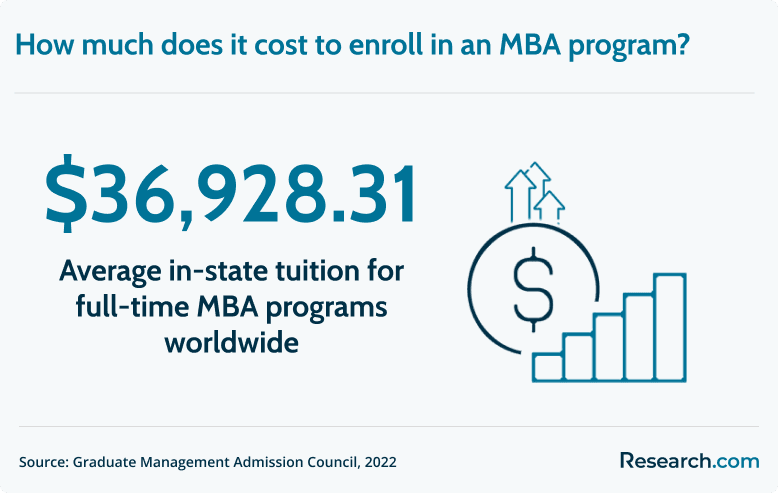
- In 2021, the average resident tuition for full-time MBA programs globally was $36,928.31 [Graduate Management Admission Council (GMAC), 2022].
- Career outcomes depend on prior experience, specialization, school network, location, industry demand, and how actively students use career services.
How Long Does It Take to Complete an Accelerated MBA Degree Program?
Accelerated MBA programs typically take 12 to 18 months. Schools shorten the timeline by using compressed academic terms, heavier course loads, fewer breaks, and highly structured learning sequences. Some programs also assume that students already have business coursework, professional experience, or a prior graduate business credential.
The shorter timeline can reduce opportunity cost because students may return to full-time work sooner. However, speed should not be the only priority. A 12-month MBA that does not fit your work schedule, career goals, or learning style can be more difficult than a slightly longer program with stronger support and better flexibility.
| Program pace | Typical student profile | Best reason to choose it | Main risk |
| 12-month MBA | Experienced professionals or students with strong business foundations | Fastest route back to the workforce | Very limited time for internships, exploration, or academic recovery |
| 15-month MBA | Students who want speed but need slightly more room for electives and career planning | More time to build relationships and refine career direction | Still demanding and may require full-time study |
| 18-month MBA | Working professionals or career switchers needing more flexibility | Better balance between acceleration and manageability | Longer opportunity cost than the fastest programs |
Online vs. On-Campus Accelerated MBA: Which Format Is Better?
The best format depends on your schedule, learning style, networking goals, and career plan. Fast MBA programs online can be ideal for professionals who need flexibility, while on-campus accelerated MBAs may be better for students who want immersive networking, in-person recruiting, and a full-time academic experience.
| Factor | Online accelerated MBA | On-campus accelerated MBA |
| Flexibility | Usually better for students balancing work, family, or travel obligations | Best for students who can attend classes in person on a fixed schedule |
| Networking | Often uses virtual cohorts, online events, discussion groups, and remote alumni access | Offers more frequent face-to-face contact with classmates, faculty, recruiters, and alumni |
| Learning environment | Requires strong self-management and comfort with digital learning tools | Provides classroom interaction, campus events, and physical access to school resources |
| Work-life balance | Can allow students to apply MBA concepts immediately in their current jobs | May require reducing work hours or stepping away from employment temporarily |
| Program structure | May offer part-time or asynchronous elements depending on the school | Often follows a more fixed, cohort-based schedule |
How Much Does an Accelerated MBA Cost?
Accelerated MBA tuition can range anywhere from $20,000 to over $100,000 for the whole program. In 2021, the average resident tuition for full-time MBA programs globally was $36,928.31 [Graduate Management Admission Council (GMAC), 2022]. Actual costs vary by institution, credit requirements, residency status, program format, fees, travel, books, housing, and whether you reduce your work hours while enrolled.
When comparing MBA costs, do not focus only on tuition. Many business degrees involve additional expenses such as technology fees, residency sessions, global immersion costs, health insurance, commuting, and lost wages. A lower tuition program may still be expensive if it requires travel or unpaid time away from work.
| Cost factor | Why it matters | Question to ask the school |
| Tuition and fees | Advertised tuition may not include all mandatory charges | What is the total estimated cost of attendance for the full program? |
| Credit requirements | Cost per credit can be misleading if programs require different credit totals | How many credits are required to graduate? |
| Lost income | Full-time programs may reduce your ability to work | Can students realistically work while enrolled? |
| Travel or residency costs | Online and hybrid programs may still require campus visits | Are there required in-person sessions, and what costs are not included in tuition? |
| Career services value | Strong employer connections can affect the practical value of the degree | What recruiting, coaching, internship, and alumni resources are available to accelerated students? |
Financial Aid Options for Accelerated MBA Students
Accelerated MBA students may be able to use several forms of financial support. Availability varies by school, enrollment status, citizenship, employer policy, and financial need, so applicants should confirm eligibility directly with the program and financial aid office.
- Scholarships. Business schools may award scholarships based on academic performance, leadership, professional background, diversity goals, or specific career interests. The Forté Fellowship, offered by the Forté Foundation, provides scholarships to women pursuing an MBA.
- Grants. Grants are need-based funds that do not require repayment. The federal Pell Grant is more commonly tied to undergraduate education, but eligible graduate students with exceptional financial need should ask the financial aid office what grant options may apply.
- Student loans. Federal Direct Unsubsidized Loans and Graduate PLUS Loans may be available to graduate students and include fixed interest rates and repayment options. Private loans can also be considered, but borrowers should compare interest rates, repayment terms, deferment rules, and total borrowing cost.
- Employer Tuition Assistance. Some employers support MBA study through reimbursement, sponsorship, or tuition assistance. Companies like Google and IBM are known for providing such benefits.
- Work-study Program. Federal Work-Study may provide part-time employment for graduate students with financial need, helping them earn money while gaining work experience.
Admissions Requirements for Accelerated MBA Programs
Accelerated MBA programs often move quickly because they admit students who can handle advanced business coursework from the start. Requirements differ by school, but applicants should be prepared to document academic readiness, leadership potential, professional experience, and fit with the program’s pace.
- Bachelor’s Degree. Applicants generally need a bachelor’s degree from an accredited college or university. Some online MBA programs accept students from many academic backgrounds, while others prefer prior business coursework.
- Work Experience. Some accelerated programs require professional experience, while others admit strong applicants earlier in their careers. Applicants should check whether the program expects leadership, management, or industry-specific experience.
- Resume. A detailed resume is usually required and should highlight professional progression, leadership roles, measurable achievements, technical skills, and community or extracurricular involvement.
- Transcripts of Records. Schools typically require transcripts from all colleges or universities attended. These records help admissions teams assess academic performance and prerequisite preparation.
- Letters of Recommendation. Many programs ask for two to three recommendations from professional or academic references who can speak to the applicant’s readiness for graduate business study.
- Standardized Test Scores. Some programs require or consider GMAT or GRE scores, while others use test-optional policies. If you have strong scores, submitting them may still strengthen your application where permitted.
Typical Courses in an Accelerated MBA Curriculum
Accelerated MBA curricula are compact but still cover the core areas employers expect from graduate business education. Students comparing regional options, including online MBA programs in North Carolina, should review the actual course sequence rather than assuming every fast MBA covers the same material in the same depth.
| Course area | What students usually study | How it supports career goals |
| Financial Management | Financial statement analysis, budgeting, risk management, capital budgeting, and investment decisions | Useful for finance, corporate strategy, entrepreneurship, and executive decision-making |
| Marketing Strategy | Consumer behavior, market analysis, branding, segmentation, positioning, and digital marketing methods | Relevant for marketing leadership, product management, consulting, and growth roles |
| Operations Management | Supply chains, logistics, process improvement, inventory control, quality, and resource allocation | Supports operations, consulting, manufacturing, technology, and service management careers |
| Strategic Management | Competitive analysis, industry trends, case studies, long-term planning, and strategy execution | Prepares students for leadership, consulting, general management, and entrepreneurship |
| Leadership and Organizational Behavior | Team dynamics, motivation, organizational culture, conflict resolution, and change management | Builds people-management skills needed for supervisory and executive roles |
Common Accelerated MBA Specializations
Specializations help students connect a fast MBA to a specific career direction. The best concentration is not simply the one that sounds most prestigious; it should match your experience, target industry, and the skills employers in your market actually request.
- Strategic Management. This concentration develops skills in planning, organizational leadership, competitive analysis, and high-level decision-making. Students interested in execution-heavy leadership roles may also compare an online MBA project management program.
- Data Analytics and Business Intelligence. This pathway focuses on using data to support business decisions, including analysis, visualization, reporting, and interpretation of complex information.
- Entrepreneurship. Entrepreneurship concentrations are designed for students who want to launch ventures, lead innovation teams, evaluate startup opportunities, or manage growth in early-stage companies.
- Supply Chain Management. This specialization covers the movement of goods and services, procurement, logistics, process optimization, and global supply chain planning.
- Healthcare Management. Healthcare management connects business training with healthcare operations, finance, policy, quality improvement, and organizational leadership.
How to Choose the Best Accelerated MBA Program
The best accelerated MBA is the one that fits your career target, budget, schedule, and academic readiness. A high-profile school may be valuable, but it is not automatically the best choice if the format, cost, location, or recruiting network does not match your goals.
- Confirm accreditation first. Look for recognized institutional accreditation and business school accreditation such as AACSB. Accreditation affects quality assurance, employer confidence, transferability, and sometimes financial aid eligibility.
- Compare total cost, not just tuition. Include fees, travel, housing, books, technology, lost income, and loan interest.
- Match the curriculum to your next role. If you want finance, analytics, consulting, healthcare, technology, or marketing roles, review whether the program offers relevant electives, projects, and employer connections.
- Assess whether the pace is realistic. A 12-month MBA may be efficient, but only if you can manage the workload without sacrificing performance, health, or job responsibilities.
- Review experiential learning. Look for consulting projects, internships, capstones, simulations, startup labs, corporate partnerships, or field-based assignments.
- Evaluate career services. Strong support can matter if you are changing industries or aiming for a competitive role. If you are asking whether finance is a good career path, for example, career advisors should be able to explain placement patterns and recruiting relationships.
- Ask about class size and access to faculty. Smaller cohorts may provide more direct interaction, while larger programs may offer broader networks.
Applicants should also consider completion risk. Intensive programs require sustained performance, and student persistence can be affected by workload, finances, support systems, and fit. Research on student enrollment and attrition rates highlights why prospective students should examine academic fit before enrolling. Demand also varies by format; 52% of full-time one-year MBA programs reported growth in applications (GMAC, 2021).
The chart below summarizes application rate data for different MBA program types based on Graduate Management Admission Council surveys.
Are Dual-Degree Programs a Good Alternative to an Accelerated MBA?
Dual-degree programs can be a strong alternative if your career goal requires both business leadership and advanced expertise in another field. For example, an MSN/MBA can prepare nurses and healthcare professionals for roles that combine clinical knowledge, operations, finance, and executive leadership.
The main advantage is credential breadth. Instead of earning only a general business degree, students graduate with training that may apply to hospital administration, healthcare consulting, pharmaceutical organizations, health technology ventures, or senior management roles in care delivery systems.
The trade-off is workload. Dual-degree programs often require more credits and broader academic preparation than a standard accelerated MBA. Students comparing options should review flexible formats, including some of the best MSN/MBA programs, and determine whether the second degree directly supports their target role.
Challenges to Expect in an Accelerated MBA Program
Accelerated MBA programs are efficient, but they are not easy. The same features that make them attractive—speed, focus, and intensity—can create pressure for students who underestimate the workload.
| Challenge | Why it happens | How to prepare |
| Heavy weekly workload | Courses move quickly and assignments may overlap | Block study time before the program begins and reduce nonessential commitments |
| Less time for networking | The calendar is compressed | Schedule informational interviews, alumni outreach, and employer events early |
| Work-life strain | Students may be balancing employment, family, and graduate study | Discuss expectations with employers and family before classes start |
| Limited flexibility | Accelerated cohorts often follow a tight sequence | Ask about leave policies, course retakes, and academic support before enrolling |
| Higher stress | Fast deadlines and limited breaks can compound pressure | Use advising, peer groups, wellness resources, and realistic time management strategies |
How Do Accelerated MBA Programs Support Networking?
Strong accelerated MBA programs build networking into the curriculum because students have less time to develop relationships organically. Common networking tools include cohort-based projects, executive speaker events, alumni mentoring, career workshops, employer panels, and consulting assignments.
Students should not assume that a short program automatically weakens networking. Some one year MBA programs use highly structured cohorts and intensive career events to help students connect quickly. The key is to ask how often students interact with alumni, recruiters, faculty, and industry partners before enrollment.
How Can You Verify Accreditation and Program Quality?
Accreditation is one of the clearest quality checks for an MBA program. Prospective students should verify both the institution’s accreditation and the business school’s specialized accreditation. AACSB accreditation is widely recognized in business education and indicates that a school has met specific standards for curriculum, faculty, assessment, and continuous improvement.
Quality also depends on outcomes and support. Ask for information on graduation rates, employment outcomes, alumni networks, employer partnerships, faculty qualifications, and student services. If cost is a major factor, compare accredited options such as the cheapest AACSB online MBA programs while still reviewing fit and career support.
Is an Accelerated MBA Worth It?
An accelerated MBA can be worth it if the shorter timeline helps you reach a clearly defined career goal and the program’s cost is reasonable relative to your expected benefits. It is most valuable for students who already know why they need the MBA, can manage the workload, and will actively use career services, alumni networks, and employer connections.
It may not be worth it if you are unsure about your career direction, need extensive internship time to switch fields, or would need to borrow heavily without a realistic repayment plan. Before committing, review career pathways, compare alternatives, and explore What can you do with an MBA? to understand how the degree can translate into specific roles.
Which Accelerated MBA Specializations Can Support Stronger Salary Growth?
Salary growth after an MBA depends on industry, location, prior experience, school reputation, employer demand, and the role you pursue. Specializations tied to finance, technology, analytics, and strategy may support access to higher-paying roles, but no concentration guarantees a specific salary.
The practical approach is to compare your target specialization with current job postings and employer requirements. If compensation is a major factor in your decision, review Research.com’s guide to the highest paying MBA specialization and use it alongside school-specific employment reports.
How Can You Balance Work and an Accelerated MBA?
Balancing employment with an accelerated MBA is possible, but it requires a realistic schedule and a program format built for working adults. A flexible option, such as an affordable online MBA in data analytics, may be easier to manage than a full-time campus program if you need to stay employed.
- Create a weekly schedule before classes begin. Reserve time for lectures, readings, group projects, assignments, career events, and rest.
- Use online flexibility strategically. Online access helps only if you keep up with deadlines and avoid postponing coursework.
- Break assignments into smaller milestones. Accelerated courses leave little room for last-minute work.
- Talk with your employer early. Ask about flexible hours, tuition support, reduced travel, or temporary workload adjustments.
- Use academic resources quickly. If you fall behind, contact faculty, tutors, advisors, or peer groups immediately rather than waiting until exams or final projects.
Career Paths for Accelerated MBA Graduates
Accelerated MBA graduates can pursue many of the same roles as traditional MBA graduates. The best-fit role depends on specialization, prior experience, internships or projects, school network, and local labor market demand.
| Career path | What the role typically involves | Helpful MBA focus areas |
| Financial Manager | Overseeing budgets, financial reporting, investment decisions, and organizational financial health | Finance, accounting, analytics, strategy |
| Marketing Manager | Developing marketing plans, analyzing customer behavior, managing campaigns, and positioning products or services | Marketing, analytics, digital strategy, consumer behavior |
| Advertising Manager | Leading advertising campaigns, coordinating creative teams, evaluating campaign performance, and building brand awareness | Marketing, communications, analytics, brand management |
| Management Consultant | Advising organizations on strategy, operations, organizational change, and performance improvement | Strategy, operations, finance, analytics |
| Entrepreneur | Launching a business, evaluating markets, raising capital, building teams, and managing growth | Entrepreneurship, finance, strategy, product management |
Job Market Outlook for Accelerated MBA Graduates
MBA graduates enter a job market that values leadership, analytical thinking, financial literacy, strategic planning, and the ability to manage change. Accelerated MBA graduates may be especially attractive to employers when they can show that they completed a rigorous program while building practical skills and measurable business results.
Finance employers may seek graduates who can manage budgets, evaluate risk, and guide investment decisions. Marketing organizations often need leaders who understand customer behavior, digital channels, analytics, and brand strategy. Consulting firms look for problem-solvers who can structure ambiguous problems, communicate recommendations, and work across industries.
However, the MBA alone is not enough. Applicants still need relevant experience, a strong resume, interview preparation, networking, and evidence that they can apply business concepts in real settings. The most successful students treat the MBA as a platform, not a guarantee.
Best Options for Accelerated MBA Programs Online
Online accelerated MBA programs can be useful for students who need speed and flexibility at the same time. When comparing options, look beyond completion time. Review accreditation, course delivery format, synchronous meeting requirements, faculty access, career services, cohort structure, and whether the program offers concentrations aligned with your goals.
Prospective students looking specifically for fast online formats can review accelerated MBA programs online to compare options designed for shorter completion timelines.
Benefits of Pursuing an Online MBA Program
An online MBA can be especially useful for experienced professionals who cannot relocate or pause their careers. An online executive MBA may be a better match for midcareer and senior professionals who want leadership training without leaving the workforce.
- Flexibility to balance work and school. Online formats often allow students to complete coursework from home, while traveling, or outside standard business hours.
- Immediate workplace application. Students can apply finance, strategy, leadership, and analytics concepts directly to their current roles.
- Broader peer access. Online programs can connect students across regions and industries, although students must be intentional about building relationships.
- Potential cost control. Online study may reduce relocation, commuting, or housing expenses, though total cost still depends on tuition and fees.
Trends Shaping Accelerated MBA Programs
Accelerated MBA programs are changing as business schools respond to technology, employer expectations, and student demand for flexible learning. Many programs now place greater emphasis on analytics, digital transformation, artificial intelligence, remote collaboration, and industry-specific management skills.
Hybrid and online formats are also becoming more important for working professionals who need flexibility without giving up academic rigor. Specialized pathways in healthcare, sustainability, digital marketing, and technology management can help students target specific industries. For example, students interested in healthcare leadership may compare low cost online MBA healthcare management options while checking accreditation and employer relevance.
How to Evaluate the ROI of an Accelerated MBA
The return on investment for an accelerated MBA depends on more than future salary. A useful ROI calculation should include total cost, time away from work, loan repayment, probability of completing the program, career services quality, employer demand, and how much the MBA improves your access to target roles.
Compare the MBA with alternatives. If your goal is project leadership, for example, a cheap degree in project management online or a targeted certification may be more efficient. If your goal is senior leadership, career switching, consulting, finance, or executive advancement, an MBA may offer broader value.
| ROI question | Why it matters |
| What is the full cost of attendance? | Tuition alone may understate the real price of the degree |
| Will I keep working while enrolled? | Lost income can be one of the largest hidden costs |
| What roles do graduates actually enter? | Employment reports are more useful than general salary claims |
| Does the program recruit in my target industry? | A strong network in the wrong industry may not help your goals |
| What is my repayment plan? | Borrowing can reduce ROI if monthly payments are not realistic |
How Do Employers View Accelerated MBA Programs?
Employers may view accelerated MBA graduates positively when the program is accredited, rigorous, and connected to relevant business outcomes. Completing a fast MBA can signal time management, resilience, discipline, and the ability to learn under pressure.
That said, employer perception depends heavily on the school, the candidate’s experience, and the role. Recruiters will still evaluate your work history, technical skills, leadership examples, communication ability, and fit. Students considering shorter formats can compare one year MBA programs online to understand how different schools structure accelerated learning and career support.
Frequently Asked Questions About Accelerated MBA Degree Programs
Can you do a one-year MBA?
Yes. Many business schools offer one-year MBA formats that compress graduate business education into an intensive schedule. These programs are usually best for students with strong preparation, relevant experience, and a clear post-MBA plan.
What is the difference between an accelerated MBA and a traditional MBA?
The main difference is the timeline. An accelerated MBA usually takes 12 to 18 months, while a traditional full-time MBA often takes longer. Both can award the same MBA degree, but accelerated programs move faster, include fewer breaks, and may offer less time for internships or career exploration.
Is an MBA a master’s degree?
Yes. An MBA, or Master of Business Administration, is a master’s degree focused on business, management, leadership, strategy, finance, marketing, operations, and related disciplines.
Do accelerated MBA programs require internships or practical experience?
Requirements vary by school. Some accelerated MBA programs include required internships, consulting projects, capstones, simulations, or field-based learning. Others make internships optional because the condensed schedule leaves less time for traditional summer placements.
What are the biggest rewards and trade-offs of an accelerated MBA?
- Intensity: Students complete demanding graduate business coursework in a shorter period.
- Time Commitment: Many programs require full-time attention and limited breaks.
- Learning Pace: Students must absorb concepts quickly and apply them immediately.
- Networking Opportunities: Networking still exists, but students must be more intentional because the timeline is shorter.
- Career Acceleration: Graduates may return to the workforce sooner with advanced business training.
- Flexibility: Some online and hybrid programs make it easier to balance school with work or family responsibilities.
- Admissions Criteria: Some accelerated programs are selective and may favor applicants with strong academic records or meaningful professional experience.
- Program Cost: Tuition may be substantial, but a shorter timeline can reduce opportunity cost for some students.
What advantages do accelerated MBA programs offer?
Accelerated MBA programs can shorten the time needed to earn a graduate business degree, reduce time away from employment, and deliver a focused curriculum for students who already know their career direction. They may also create a highly collaborative cohort environment because students move through an intensive schedule together.
How can students manage the fast workload?
Students can manage the workload by planning their schedule before enrollment, reducing outside commitments, communicating with employers and family, using academic support early, and treating networking and career planning as weekly responsibilities rather than end-of-program tasks.
Common Mistakes to Avoid When Choosing an Accelerated MBA
- Choosing speed over fit. The fastest MBA is not always the best MBA if it lacks your desired specialization, career support, or flexibility.
- Ignoring accreditation. Always verify institutional and business school accreditation before applying.
- Comparing only tuition. Include fees, travel, housing, lost income, books, technology, and loan interest.
- Assuming online means easy. Online accelerated programs can be just as demanding as campus programs and require strong self-discipline.
- Overlooking employer perception. Ask whether target employers recruit from the program and how alumni perform in your industry.
- Waiting too long to network. In a 12-month program, career planning should begin before or immediately after enrollment.
- Assuming salary growth is guaranteed. Outcomes depend on your experience, industry, location, role, school network, and job search strategy.
References:
- Association to Advance Collegiate Schools of Business. (2021). Business school data guide. https://www.aacsb.edu/-/media/publications/research-reports/2021-business-school-data-guide-october-release.pdf?rev=9f0506585b4d4dde9808e9ec4a19fd97&hash=34E7F0BE92B1074F04FCC67C008FA095
- Graduate Management Admission Council. (2022). Application trends survey: 2022 summary report. https://www.gmac.com/-/media/files/gmac/research/admissions-and-application-trends/application_trends_survey_-_2022_summary_report.pdf
- US Bureau of Labor Statistics. (2023, September 6). Advertising, Promotions, and Marketing Managers. Occupational Outlook Handbook. https://www.bls.gov/ooh/management/advertising-promotions-and-marketing-managers.htm
- US Bureau of Labor Statistics. (2023, September 6). Financial Managers. Occupational Outlook Handbook. https://bls.gov/ooh/management/financial-managers.htm
- US Bureau of Labor Statistics. (2023, September 6). Management Analysts. Occupational Outlook Handbook. https://www.bls.gov/ooh/business-and-financial/management-analysts.htm
Key Insights
- An accelerated MBA is best for students who want a faster path to graduate business training and can handle a concentrated 12 to 18 month schedule.
- Accreditation should be your first filter. AACSB-accredited programs provide an added quality signal for business education.
- Do not choose solely by completion time. Compare curriculum, employer connections, career services, total cost, flexibility, and specialization fit.
- Online accelerated MBAs can work well for employed professionals, while campus programs may offer stronger in-person networking and recruiting access.
- ROI depends on your target role, current experience, borrowing level, lost income, and how effectively you use the MBA network.
- If you need broad leadership preparation, an accelerated MBA may be valuable. If you need a narrow technical credential, a specialized master’s degree or certificate may be more efficient.
Other Things You Should Know About Accelerated MBA Degree Programs
Yes. Some accelerated MBA programs require a capstone, consulting project, or thesis, with the final project often worth 3 to 6 credits. Many one-year formats replace the thesis with an applied business project approved by the school’s graduate business faculty.
In 2027, accelerated MBA programs typically compress standard coursework into 12-18 months, offering intensive modules. They usually require 45-54 credit hours, emphasizing core business disciplines like finance, marketing, and strategy, often culminating in a capstone project for hands-on experience.
Most accelerated MBA programs in 2027 require applicants to have 2 to 5 years of professional work experience. This prerequisite ensures students have practical knowledge, which enhances the learning experience and contributes to the classroom discussions.