2027 Fastest Online Certifications

Co-Founder and Chief Data Scientist
Choosing a fast online credential is difficult because "certificate" can mean a short course, a college program, or preparation for a separate certification exam. The right option depends on the job, not just the advertised timeline. U.S. Bureau of Labor Statistics projections for 2023-2033 show healthcare support occupations growing faster than the average for all occupations, making targeted training especially relevant.
This guide compares quick credentials, realistic job outcomes, costs, recognition, and licensing so you can avoid paying for training that does not fit your goal.
Key Things You Should Know
- The fastest credible options can take hours or days, such as CPR/AED or OSHA 10 training, while job-focused certificates commonly take several weeks to 12 months; a fast timeline does not replace experience, an exam, or a state license.
- A certificate is education completed through a school or provider; a certification is a professional credential awarded by a certifying body, often after an exam. Employers may value them differently.
- For higher-paying technical roles, industry certifications can be efficient, but the U.S. Bureau of Labor Statistics reported a 2024 median annual wage of $124,910 for software developers - an occupation that typically requires more than a short credential alone.
Top 10 Fastest Online Certifications
Popular Trade School Programs
Fast online trade programs usually cover theory; hands-on trades still require labs, apprenticeships, or supervised field practice. HVAC certificates can take about 6-12 months and may prepare students for EPA Section 608 testing. Electrical, welding, plumbing, and automotive programs often lead to a certificate or associate degree but require in-person skill development. Choose online training for code, safety, estimating, or exam preparation - not as a substitute for required practical hours. Verify whether local employers, unions, or licensing boards recognize the provider before enrolling.
Healthcare Programs
Medical billing and coding, pharmacy technician, medical assistant, sterile processing, and health information certificates are common online options. Many take several months, but clinical programs may require externships arranged locally. A certificate can prepare a learner for an industry exam; it does not automatically confer certification or state authorization. CNA, phlebotomy, medical assisting, and pharmacy technician rules vary by state and employer. For speed, confirm clinical-hour placement before paying, because an otherwise online program can be delayed when a site is unavailable. Healthcare learners should also budget for background checks, immunizations, uniforms, and exams.
Criminal Justice / Law Programs
Online certificates in criminal justice, legal studies, paralegal studies, cybersecurity fundamentals, and victim advocacy can strengthen entry-level applications or support advancement. Short programs often take one semester to a year; associate degrees generally take longer. Paralegal certificates are most useful when the curriculum aligns with employer expectations, but they do not authorize someone to practice law or provide legal advice. Police officer, corrections, private security, and investigative roles may require academy training, background screening, firearms qualifications, or state licensing. Check the target employer's minimum requirements before selecting a program.
Arts & Design Programs
Graphic design, UX design, digital marketing design, photography, video editing, and web design certificates can be completed online in weeks or months. These programs work best for learners building a portfolio, because employers commonly evaluate finished work alongside credentials. A short certificate may teach software workflows and design fundamentals, while an associate degree offers broader critique, studio practice, and general education. Before enrolling, review whether you will own portfolio projects and whether software subscriptions are included. For freelance work, prioritize client-ready samples, contracts knowledge, and practical feedback over an impressive-sounding credential name.
Which online certifications lead to jobs fastest?
The quickest route to work is usually a credential tied to a specific employer requirement, a standardized safety rule, or an immediate support role - not a broad academic certificate. Examples include CPR/AED, OSHA safety training, food-handler credentials, entry-level IT support preparation, and medical billing training. Hiring still depends on local demand, background requirements, and skills testing.
This comparison separates rapid completion from realistic readiness for paid work.
| Path | Typical fast timeline | Best use | Important limitation |
| CPR/AED or first aid certification | Hours to one day | Required add-on for childcare, fitness, and care roles | Rarely qualifies a person for a job by itself |
| OSHA 10 training | Two days of instruction | Construction and general-industry safety readiness | It is training, not a professional license |
| IT support certificate or certification preparation | Weeks to several months | Help desk and desktop support applicants | Employers may require troubleshooting experience |
| Billing and coding certificate | Several months | Revenue-cycle support roles | Certification exams and experience may improve competitiveness |
For people rebuilding employment history, the credential should match both the job posting and any occupational restrictions. Review these degrees felons can get if a longer, more flexible education path would better support your options.
What are the easiest online certifications to complete?
The easiest online certifications to finish are usually narrow, self-paced, and designed to verify a defined skill or compliance topic. "Easy" should mean the material matches your existing knowledge and available study time - not that the credential has no value. Introductory software, customer service, workplace safety, first aid, and digital productivity credentials are common examples.
A low-barrier credential makes sense when you need a quick résumé signal. It is a weaker choice when a job posting requires supervised clinical training, a license, a degree, or verified experience. Check whether the final assessment is proctored, whether the credential expires, and whether the employer actually names it in job advertisements.
Which online certifications pay the most?
The online certifications with the strongest earning potential tend to be advanced industry credentials in cloud computing, cybersecurity, project management, data, and enterprise software. They are not necessarily the fastest or easiest because many require prior knowledge, work experience, or a difficult exam. Salary reflects the occupation, location, experience, and employer - not the credential alone.
For context, the Bureau of Labor Statistics reported a 2024 median annual wage of $124,910 for software developers. A short cloud or coding credential can help demonstrate skills, but it does not by itself establish eligibility for that occupation. Experienced professionals seeking a larger academic step may compare the easiest masters degrees with targeted professional certifications.
Choose an advanced certification only after reviewing its prerequisites, renewal rules, exam fees, and the roles that employers actually associate with it. Entry-level learners often get better value from foundational training plus a portfolio, lab work, or help-desk experience.
How long do online certifications take?
Online certification timelines range from a few hours to more than a year. Self-paced professional certificates can move quickly if you already know the material, while credit-bearing college certificates follow academic terms and may take two to four semesters. Programs with externships, labs, clinical practice, background checks, or licensing requirements take longer than online coursework alone.
Use the provider's total required time, not its marketing phrase "finish in as little as." The comparison below shows why advertised duration is only one part of the decision.
| Credential format | Common completion range | What can extend the timeline |
| Compliance or safety certification | Hours to days | Scheduling a required exam or practical assessment |
| Self-paced professional certificate | Weeks to several months | Study pace, projects, and exam retakes |
| College certificate | About 6-12 months | Term schedules, prerequisite courses, and course availability |
| Clinical or skilled-trade certificate | Several months to more than a year | Externships, labs, practical hours, and licensing steps |
If your goal is a credential with a compressed academic calendar rather than a short nondegree program, compare fast track degree programs. An accelerated degree may take longer than a certificate but can provide broader qualifications.
What do online certification programs cost?
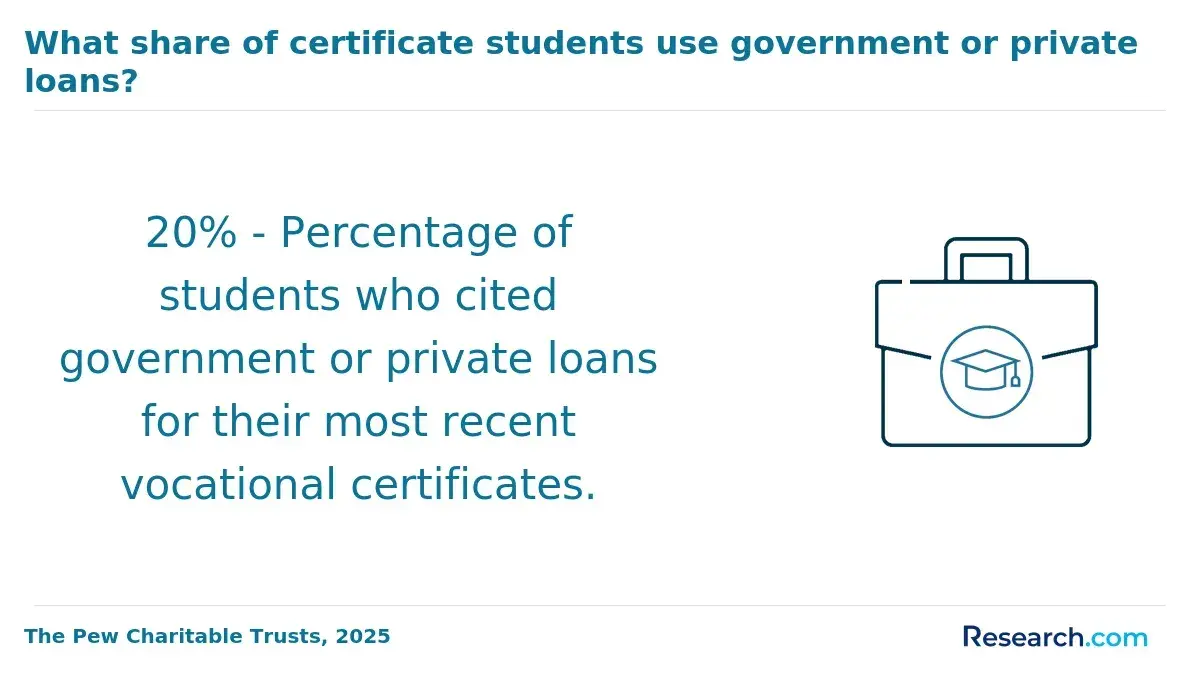
Costs vary more by provider and required extras than by the word "online." A short vendor course may cost little or be included with a subscription, while a college certificate can charge per credit. Total cost can also include exam vouchers, retakes, textbooks, software, tools, proctoring, background checks, clinical supplies, and license applications.
Compare the full out-of-pocket amount and the credential's job relevance, not tuition alone. These are the main cost categories to request in writing.
- Provider tuition or monthly subscription charges
- Certification examination, renewal, and retake fees
- Required equipment, software, textbooks, uniforms, or tools
- Externship, lab, proctoring, background-check, and licensing costs
Credit-bearing certificates at eligible institutions may have federal aid options, but noncredit courses and third-party certifications often do not. Ask about employer tuition assistance and payment plans before borrowing. If a degree would produce better long-term value, compare an affordable online bachelor's degree rather than stacking unrelated short courses.
Are online certifications accredited and recognized by employers?
Some online credentials are well recognized; others have little labor-market value. Recognition depends on who issued the credential, whether the curriculum meets an employer or regulatory standard, and whether the learner can demonstrate the underlying skill.
For a college certificate, check institutional accreditation through the U.S. Department of Education or Council for Higher Education Accreditation databases and determine whether the certificate is credit-bearing. For a professional certification, verify the certifying organization's eligibility rules, exam security, renewal policy, and employer recognition.
Programmatic accreditation matters in certain healthcare and technical fields, especially when it affects eligibility for certification exams or state licensing. Do not assume an online format is the problem; the decisive issue is whether the exact program meets the requirement for your intended role and state.
What jobs can you get with online certifications?
Online certifications can support jobs such as help-desk technician, customer support specialist, bookkeeping assistant, medical billing specialist, pharmacy technician trainee, digital marketing assistant, junior designer, project coordinator, and construction safety worker. Exact titles differ by employer, and many roles use certifications as a preferred qualification rather than a universal requirement.
The best job match depends on whether the role is skills-based, regulated, or degree-oriented.
| Career area | Useful short credential | What employers may also seek |
| IT support | Entry-level IT certificate or certification | Hands-on troubleshooting and customer service |
| Healthcare administration | Billing, coding, or electronic health records certificate | Software familiarity and employer-specific training |
| Design and marketing | Digital design or analytics certificate | A portfolio and current software skills |
| Construction support | Safety training certificate | Site experience and, for some roles, apprenticeship training |
Read recent local postings before enrolling. If most postings require a license, an associate degree, or prior experience, a quick certificate should be treated as a first step rather than a complete qualification.
Do online certifications need state licensing?
Online certifications do not automatically require state licensing, but the occupation you want may. Licensing is common where work affects public safety, health, legal rights, or regulated financial activity. A provider's completion certificate is not the same as a government-issued license.
Before enrolling in healthcare, skilled trades, cosmetology, security, education, or legal-support training, contact the relevant state board. Ask whether online coursework is accepted, whether practical hours must be completed in person, whether the program must hold specific approval, and whether completion makes you eligible for an exam.
Moving states can also change requirements. A program that is useful for general knowledge may still be insufficient for licensure, so get the answer from the regulator rather than relying only on marketing materials.
How do you choose a reputable online certification?
A reputable fast online certification has a clear issuer, transparent total price, defined learning outcomes, and a direct connection to the job you want. The fastest option is worthwhile only if it satisfies an employer, certification body, or licensing-board requirement.
Use this process before paying a deposit or starting a subscription.
- Find 10 recent job postings for your target role and record the credentials, skills, experience, and licenses they request.
- Confirm whether you need a school certificate, an industry certification exam, a state license, or a combination of these items.
- Compare total cost, required equipment, exam fees, completion rules, instructor support, and refund terms across at least two providers.
- Verify accreditation, regulatory approval, or employer recognition directly with the relevant organization when it affects eligibility.
- Ask whether clinical placement, labs, portfolio review, career support, or exam preparation is included and obtain the answer in writing.
Red flags include vague claims about guaranteed jobs or salaries, pressure to enroll immediately, missing instructor information, undisclosed exam fees, and statements that a program "meets licensing requirements" without naming the state board. A legitimate provider should explain what its credential does - and does not - qualify you to do.
Other Things You Should Know About
Yes, some safety, software, compliance, and introductory professional credentials can be completed within a week. However, credentials for clinical healthcare, skilled trades, and licensed occupations usually require more time because they involve practical training, exams, or supervised hours.
It depends on the issuer and assessment. A course-completion credential is generally a certificate. A credential earned by meeting eligibility standards and passing an independent exam is generally a certification. Read the issuer's rules rather than relying on the label alone.
It can help you show foundational knowledge, especially for entry-level roles, but it rarely replaces experience. Strengthen the credential with projects, volunteer work, internships, simulations, a portfolio, or customer-service experience relevant to the role.
Choose a short certificate when you need a focused skill quickly and job postings accept it. Choose an associate degree when your target field commonly requires broader coursework, clinical or technical practice, transferable credits, or a foundation for further education.
References
- The Ultimate Guide to Online Certification Programs [UPDATED] https://www.msicertified.com/blog/the-ultimate-guide-to-online-certification-programs/
- 9 Best Online Certificate Programs that Lead to Higher Pay https://blackstone.edu/9-best-online-programs-for-higher-pay/
- 12 Best Online Learning Platforms for Business in 2025 | Mindmesh Academy https://www.mindmeshacademy.com/blog/articles/online-learning-platforms-for-business
- Online Certificates for Job-Ready Skills | Grow with Google https://grow.google/certificates
- What certifications can help boost your career prospects? - MSU Denver https://www.msudenver.edu/innovative-lifelong-learning/blog/what-certifications-can-help-boost-your-career-prospects/
- Best Online Certificate Programs | Enhance Your Skills https://bootcampgis.com/best-certificate-programs-online/
- Online Certificate Programs | Certifications Programs https://www.uscareerinstitute.edu/online-certificate-programs
- LMS for selling certification courses online https://www.cypherlearning.com/blog/business/best-lms-for-selling-certification-courses-why-cypher-learning-is-the-top-choice
- Best Entry-Level IT Certifications for Beginners - ONLC https://www.onlc.com/blog/best-beginners-entry-level-it-certifications/
- What are the Fastest Online Classes? Your 2026 Guide | Straighterline https://www.straighterline.com/blog/fast-online-classes