2027 Best Microcredentials for Students With Some College Credit

Co-Founder and Chief Data Scientist
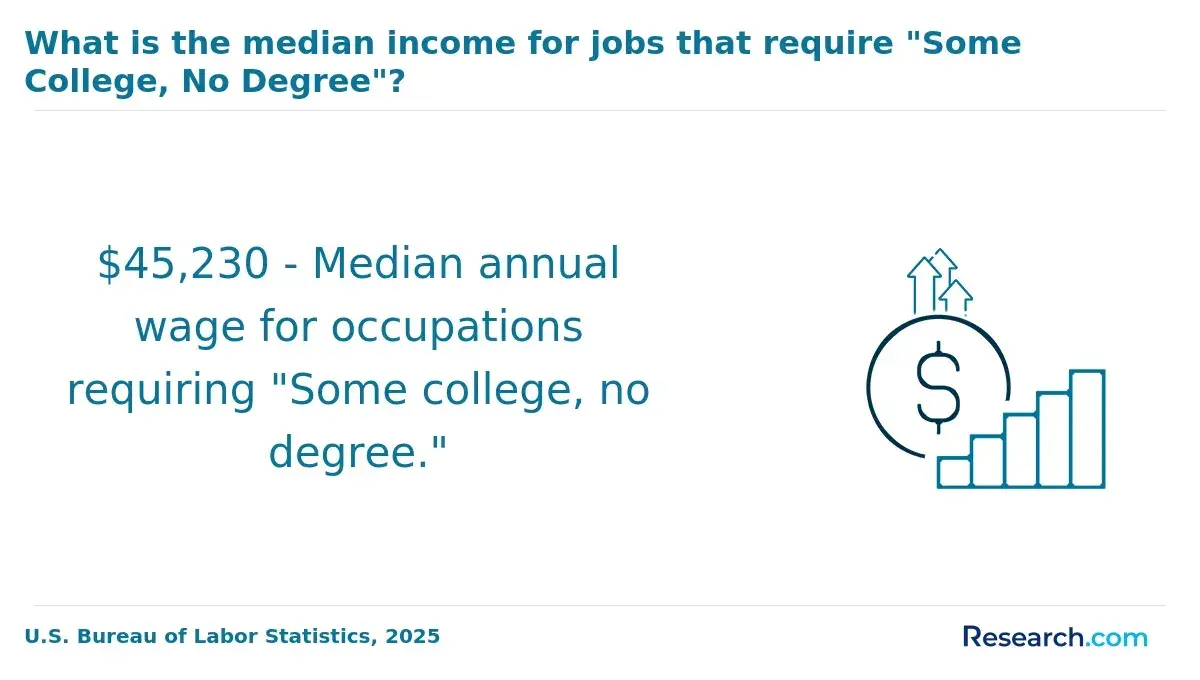
Students with unfinished college credits face a costly choice: return for a degree, gain a job-ready skill first, or do both through a stackable microcredential. The Bureau of Labor Statistics reported that workers with some college or an associate degree had median weekly earnings of $1,005 in 2024, compared with $930 for high school graduates.
This guide helps near-completers compare credit-bearing certificates, professional credentials, and short workforce programs; verify whether prior credits apply; and choose an option that supports a realistic next step rather than another dead end.
Key Things You Should Know
- For students with prior credits, the best microcredentials are usually credit-bearing, stackable certificates in fields such as business, IT, healthcare support, and skilled trades because they can build toward an associate or bachelor's degree.
- Check whether a credential carries academic credit before enrolling: noncredit microcredentials may build skills quickly, but they often do not accept transfer credit or count toward degree completion.
- Use career demand as a filter: BLS projects employment for healthcare occupations to grow faster than the average for all occupations from 2023 to 2033, while many licensed roles require approved training and exams beyond a microcredential.
Top 10 Best Microcredentials for Students With Some College Credit
Popular Trade School Programs
Trade-focused certificates and associate degrees can suit learners who want hands-on work and a clear training sequence. Common choices include welding, HVAC, electrical technology, automotive service, construction management, and industrial maintenance. A short certificate may prepare students for entry-level helper or technician work, while an associate degree can add general education and broader advancement options.
Before enrolling, confirm required shop hours, tools, safety training, apprenticeship pathways, and whether the program prepares learners for a recognized exam or state license. Online theory alone is rarely sufficient for hands-on trades.
Healthcare Programs
Healthcare microcredentials often work best as a bridge into a larger credential. Examples include medical billing and coding, pharmacy technician, phlebotomy, medical assisting, sterile processing, and community health worker certificates. Clinical programs may require immunizations, background checks, drug screening, CPR training, and in-person placements.
A school certificate is not automatically a professional certification or license; employers and states may require a separate exam, supervised hours, or board approval. Students with prior anatomy, terminology, or general education credits should ask whether those courses shorten a credit-bearing certificate or associate pathway.
Criminal Justice / Law Programs
Criminal justice and legal studies certificates can build targeted skills in corrections, policing support, legal research, victim advocacy, cybersecurity, or paralegal studies. They are often useful for current public-safety employees or students testing a related associate degree.
However, a microcredential generally does not qualify someone to become a police officer, attorney, or licensed private investigator; agencies and states set separate hiring, academy, examination, and background requirements. For paralegal work, compare programs carefully because employer preferences and voluntary professional standards can differ by region and legal specialty.
Arts & Design Programs
Arts and design microcredentials commonly focus on practical portfolio skills: graphic design software, UX design, digital marketing content, web design, photography, animation, or video production. They can be a lower-risk way to update technical skills or turn previous art, communications, or business credits into a focused credential.
The strongest programs require projects, critique, and a portfolio rather than only software tutorials. Learners should compare the instructor's industry experience, access to current tools, copyright guidance, and whether the credential is academic credit or a provider-issued digital badge.
What are microcredentials and how do they differ from certificates or degrees?
A microcredential is a focused, short-form credential that documents learning in a defined skill area. It may be offered by a college, employer, professional association, training company, or online platform. Its value depends on who issued it, what was assessed, and whether employers or schools recognize it.
The terms below are related but not interchangeable. This comparison matters most for students trying to turn existing credits into a completed credential.
| Credential type | What it usually represents | Best use for students with some college |
| College microcredential | A small set of courses or competency modules; may be credit-bearing | Build a stackable path when the college confirms degree applicability |
| Academic certificate | A college-awarded program, often several courses long | Add an employable concentration or complete a milestone before a degree |
| Professional certificate | Training completion from a school, company, or platform | Learn a specific workplace skill; verify employer recognition |
| Professional certification | A credential awarded by a certifying body, often after an exam | Meet an employer preference or industry standard when eligibility is met |
| Associate or bachelor's degree | A broader academic credential with general education and major requirements | Best when the target occupation requires a degree or long-term advancement |
A microcredential is worth considering when it fills a specific skills gap, leads to an industry-recognized certification, or applies toward a larger academic award. It is a weaker choice when the target job explicitly requires a degree, license, clinical training, or substantial supervised experience.
Which microcredentials best help students with some college finish a degree?
The best degree-completion microcredentials are not necessarily the shortest. They are the ones documented on a college transcript, built from courses that fit your remaining degree requirements, and available before you commit to a full program. Certificates in business fundamentals, data analytics, IT support, project management, early childhood education, and healthcare administration can be useful when they overlap with an associate or bachelor's curriculum.
Begin with a transfer-credit evaluation, not a new application. Ask the registrar or academic advisor to identify courses that satisfy general education, major prerequisites, electives, and residency rules. Then compare your remaining credits with a certificate map. Students who want a faster route after confirming what remains can also compare fast degree programs.
Prioritize these features when a microcredential is intended to help you finish later.
- Credit-bearing coursework recorded on an official transcript, rather than a completion badge alone
- A published pathway showing exactly how certificate courses apply to a named associate or bachelor's degree
- Clear limits on transfer age, grade minimums, residency credits, and maximum transferable credits
- Advising that produces a written completion plan before you pay for new courses
- Courses aligned with a career goal, so the credential has value even if degree completion is delayed
Avoid enrolling based on a verbal promise that credits are "transferable." A school may accept credits for admission but apply few of them to the specific degree you want. Get the evaluation and program-of-study details in writing.
How can students with prior college credit choose reputable, accredited microcredential programs?
For college-issued, credit-bearing microcredentials, institutional accreditation is the first quality check. Use the U.S. Department of Education or Council for Higher Education Accreditation listings to verify the institution, then confirm that the particular credential is offered by that institution and appears on an official transcript.
Programmatic approval can matter more than institutional accreditation for regulated fields such as nursing, medical assisting, and certain technical occupations.
For noncredit and industry credentials, accreditation may not apply. Instead, assess the provider's employer recognition, curriculum, instructor qualifications, assessment method, refund policy, and whether the credential prepares for a named certification exam. A digital badge without graded work, identity verification, or an employer-recognized issuer may have limited signaling value.
Use this short review process before committing.
- Identify the exact job, degree, certification, or skill outcome you want within the next one to three years.
- Verify whether the program is credit-bearing, noncredit, or preparation for a separate certification or license.
- Request the total-cost estimate, including fees, software, exams, equipment, clinical requirements, and travel.
- Ask whether prior coursework will be evaluated before enrollment and whether new credits apply to a specific degree.
- Compare the curriculum against job postings and the requirements of any licensing board or certifying organization.
Red flags include vague statements about accreditation, no written transfer policy, pressure to enroll immediately, unverified job-placement claims, and claims that a short program alone guarantees licensing or employment.
What admission requirements apply to microcredentials for learners with some college experience?
Admission requirements vary sharply by provider. A college microcredential may require admission as a nondegree or degree-seeking student, placement assessment, prerequisite courses, or a minimum grade in prior coursework. A noncredit professional certificate may only require registration and payment. Industry certification exams can have their own education, training, or work-experience rules that are separate from the training provider's entry requirements.
Students with some college should prepare an unofficial transcript before speaking with admissions. It helps the school identify prerequisites, potential transfer credit, and whether you are closer to a certificate, associate degree, or bachelor's completion than you think. GPA may matter for competitive healthcare or limited-enrollment programs, but it is not a universal microcredential requirement.
Ask these questions early because they can change both cost and timeline.
- Will my prior credits be formally evaluated before I register?
- Which courses must be taken at your institution to earn this credential?
- Do I need placement testing, prerequisites, background checks, or proof of immunization?
- Does completion qualify me to take a certification exam, and what additional eligibility rules apply?
How do online, hybrid, and campus-based microcredential formats compare for flexibility and quality?
Online delivery can make a microcredential practical for working adults, caregivers, and learners returning after a stop-out, but flexibility is not the same as quality. For lecture-based subjects such as business, IT, billing and coding, and digital design, well-designed online programs can provide structured assessments, instructor feedback, and virtual support.
Hybrid or campus formats are usually better when skill mastery requires labs, equipment, clinical practice, studio critique, or direct observation.
The format comparison below helps match learning logistics to credential requirements rather than choosing solely on convenience.
| Format | Best fit | Main trade-off |
| Fully online | Software, business, administrative, and theory-heavy learning | Requires self-management; may not meet hands-on or clinical requirements |
| Hybrid | Programs combining online theory with scheduled labs or simulations | Less schedule freedom and possible travel costs |
| Campus-based | Trades, clinical programs, studios, and equipment-intensive training | Fixed attendance, commuting, and limited section availability |
| Self-paced provider program | Focused skill refreshers and some vendor-aligned preparation | Often noncredit and may offer less advising or transfer value |
Older learners returning to education may also benefit from comparing support services, accessibility, and pacing options in online degrees for seniors. Regardless of format, confirm proctoring, lab access, internship placement, instructor availability, and whether the credential is identical to the campus version.
What coursework and skills do leading microcredentials for near-completers typically cover?
Leading microcredentials for near-completers tend to focus on skills that are both teachable in a short sequence and useful across multiple jobs. The most durable options combine a technical skill with communication, documentation, data interpretation, or project coordination rather than teaching one software tool in isolation.
This overview shows what students commonly study and what evidence of learning to seek from a program.
| Area | Typical coursework and skills | Useful evidence of competency |
| Business and project support | Spreadsheets, budgeting basics, process mapping, communication, project tools | Completed reports, schedules, dashboards, and case assignments |
| IT and data | Technical support, networking basics, cybersecurity awareness, databases, analytics | Labs, troubleshooting records, portfolios, or vendor exam preparation |
| Healthcare administration | Medical terminology, coding concepts, privacy, scheduling, revenue-cycle basics | Accurate coding exercises and compliance-focused assessments |
| Skilled trades | Safety, blueprint reading, measurement, electrical or mechanical fundamentals | Instructor-observed lab work and documented practical assessments |
| Digital design | Design principles, content creation, user research, prototyping, presentation | A curated portfolio with feedback and revision history |
AI tools are changing routine work in business, technology, and design, so favor programs that teach judgment, verification, privacy, and responsible use of automated tools. A credential that includes applied projects is generally easier to explain to employers than one based only on watching videos.
What are typical program lengths and total costs for these microcredentials?
Program length and cost depend more on credit status, equipment, clinical requirements, and provider type than on the word "microcredential." A short noncredit course may take weeks, while a college certificate that meaningfully stacks into a degree may require several semesters. The right comparison is total cost per useful outcome: transferable credits, a completed certificate, eligibility for a separate exam, or a documented portfolio.
The ranges below are planning estimates, not price guarantees. Confirm current tuition, residency status, required fees, and aid eligibility directly with each provider.
| Program type | Typical length | Common total-cost factors | Transfer potential |
| Short noncredit microcredential | Days to a few months | Tuition, platform fees, optional exam fees | Usually limited; verify before enrolling |
| College credit microcredential | One to three courses | Per-credit tuition, institutional fees, books or software | Potentially strong within the issuing college |
| Academic certificate | Several months to about one year | Tuition, fees, supplies, labs, and possible practicum costs | Often stackable when published in the catalog |
| Clinical or trade certificate | Several months to over one year | Equipment, uniforms, tools, background checks, testing, travel, and insurance | Varies; licensing requirements may limit portability |
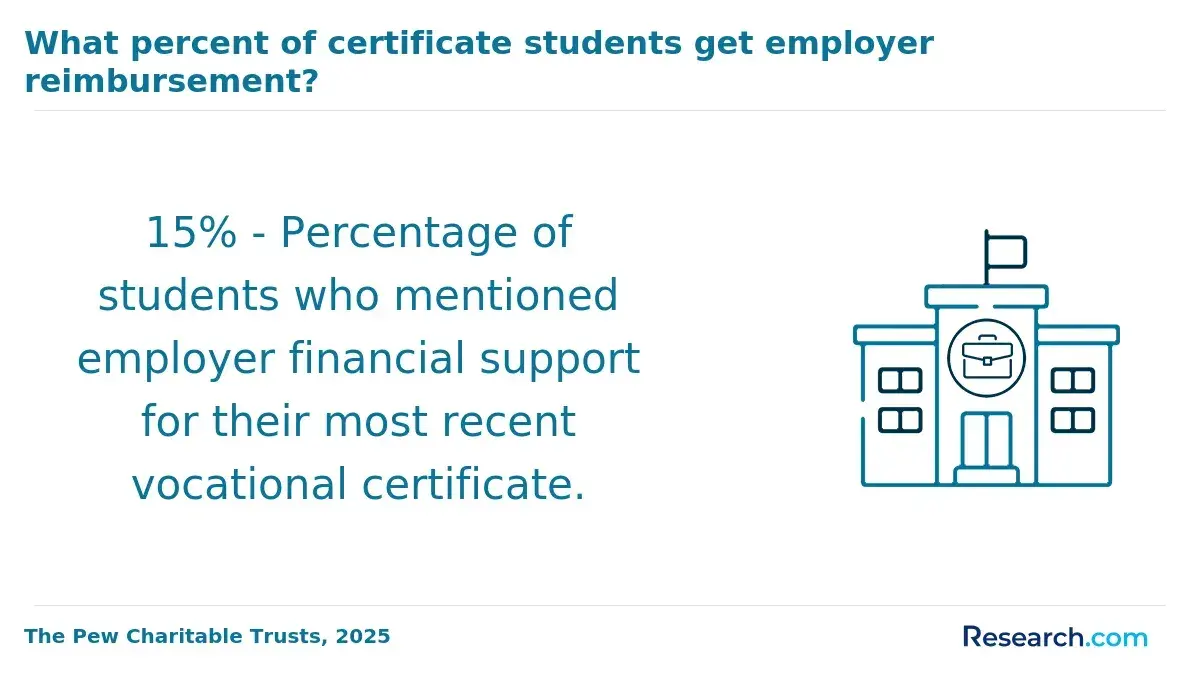
Credit-bearing programs may qualify for federal aid only when the institution and program meet applicable eligibility rules; many short or noncredit offerings do not. Ask about employer tuition assistance, workforce grants, payment plans, veterans' benefits where applicable, and whether paying slightly more for transferable credits prevents repeating coursework later.
Students comparing speed against long-term degree value can review certificate programs that pay well, while still checking whether the credential meets their actual hiring target.
What careers, job roles, and salary ranges do these microcredentials support?
Microcredentials can support entry-level work, advancement in a current role, or preparation for a broader degree; they do not create the same eligibility for every occupation. The Bureau of Labor Statistics reports occupational wages, not the earnings of microcredential completers. Use salary data as context for the field and compare it with the education, experience, certification, and licensure requirements in local job postings.
These examples illustrate realistic connections between credential areas and job pathways.
| Credential focus | Possible job roles | Important limitation |
| IT support or cybersecurity basics | Help desk technician, user support specialist, junior IT support | Employers may also expect hands-on experience or vendor certification |
| Business analytics or project support | Administrative coordinator, operations assistant, project coordinator | Advanced analyst and manager roles commonly require experience or a degree |
| Medical billing and coding | Billing specialist, coding support, patient-account representative | Some employers prefer recognized coding certification and prior experience |
| Trade technology | Apprentice, installer helper, maintenance technician trainee | Independent work may require apprenticeship progression or state licensure |
| Digital design | Content production assistant, junior designer, freelance project work | A portfolio often carries more weight than the credential title alone |
For a broader comparison of occupations and education choices, explore degrees that make the most money. Choose a microcredential when it creates a credible first step, but choose a degree pathway when postings consistently require one for advancement.
How do industry demand, job outlook, and licensing or certification needs affect microcredential choice?
Industry demand should influence microcredential choice, but it should not be the only criterion. Healthcare occupations are projected by BLS to grow faster than the average for all occupations from 2023 to 2033, reflecting continued demand for care and administrative support. That does not mean every healthcare certificate leads directly to a clinical role: many positions have state-specific licensing, approved-program, examination, or supervised-practice requirements.
Technology credentials require similar caution. Employers increasingly value demonstrable skills, but entry-level competition can be substantial and tools change quickly. Choose a program that teaches transferable fundamentals, includes assessed projects, and names the specific certification or job outcome it supports. Avoid training marketed around a single trend with no clear employer demand.
Before selecting a field, compare local job postings with the credential's curriculum and ask whether employers request a degree, certification, license, portfolio, apprenticeship, or experience. If a target role requires all of these, a microcredential may still help, but it should be treated as one stage of a longer plan rather than a complete substitute.
Other Things You Should Know About
Yes, if it is credit-bearing and the issuing college confirms that the courses apply to your intended degree. Obtain a formal transfer evaluation and written degree plan before enrolling, because a credential can be accepted by a school without reducing your remaining degree requirements.
They can be, especially when issued by an accredited college, recognized professional organization, or well-known industry provider. Employer value depends on the skill taught, assessment quality, portfolio or project evidence, and relevance to the job - not simply whether the program was online.
Choose a certificate when you need a focused skill, a short-term career step, or a stackable milestone. Choose an associate degree when your target role commonly requires broader education, general education coursework, or a credential that supports transfer to a bachelor's program.
It depends on the institution and program. Some eligible credit-bearing certificate programs may support federal, state, military, or employer funding, while short noncredit programs often do not. Ask the financial-aid office about the specific program rather than assuming all college-affiliated offerings qualify.
References
- Microcredentials and Higher Education: Your Questions, Answered | Blog https://www.ellucian.com/blog/microcredentials-and-higher-education-your-questions-answered
- Microcredentials: Empowering Modern Learners & Employers https://evolllution.com/microcredentials-empowering-modern-learners-employers
- Micro-Credentials - Genesee Community College https://www.genesee.edu/academics/microcredentials/
- Micro-Credentials | NEA https://www.nea.org/professional-excellence/professional-learning/micro-credentials
- Microcredential Programs https://flcc.edu/academics/micro/
- Microcredentials https://sunyjefferson.edu/academics/microcredential-faq.php
- Building Microcredentials with Short Courses: Pathways to Lifelong Learning | Boundless Learning https://www.boundlesslearning.com/news/building-microcredentials-with-short-courses
- Microcredentials Impact Report 2025: Insights from Students and Employers https://www.luminafoundation.org/resource/microcredentials-impact-report-2025-insights-from-students-and-employers/
- From Degrees to Microcredentials: Higher Education Must Evolve to Embrace the Modern Economy - UPCEA https://upcea.edu/from-degrees-to-microcredentials-higher-education-must-evolve-to-embrace-the-modern-economy/
- Microcredentials in Higher Education: Why They're Reshaping Learning Paths https://moderncampus.com/blog/what-do-microcredentials-mean-for-the-modern-higher-education-institution.html