2027 Best Non-Degree Programs With Part-Time Study Options

Co-Founder and Chief Data Scientist
Choosing training while keeping a job means weighing schedule flexibility against hands-on practice, employer recognition, cost, and career relevance. Non-degree programs can include college certificates, workforce training, bootcamps, apprenticeships, and industry-focused courses.
U.S. Bureau of Labor Statistics 2024 wage data places the median annual wage for all occupations at $49,500, making it important to select training tied to a realistic target role rather than a vague credential. This guide compares part-time options, explains quality checks, and helps you decide which path fits your time, budget, and career goal.
Key Things You Should Know
- Part-time non-degree programs are best when they teach a clearly defined, job-relevant skill - such as welding, medical billing, paralegal support, or UX design - and fit around work through evening, weekend, hybrid, or asynchronous courses.
- A certificate is an education award from a school or provider; a certification is a professional credential usually earned through an independent exam or standards process. Some programs prepare students for certification or licensure exams but do not award the credential themselves.
- Compare total cost, supervised clinical or lab requirements, employer recognition, and state licensing rules before enrolling; low tuition is not a bargain if required equipment, exam fees, travel, or unpaid practicum hours are excluded.
Top 10 Best Non-Degree Programs With Part-Time Study Options
Popular Trade School Programs
Part-time trade programs commonly include HVAC, electrical, welding, plumbing, automotive technology, commercial driving, and industrial maintenance. Community colleges and technical schools may offer credit-bearing certificates, while private schools may provide noncredit career training. Evening labs are useful for working adults, but hands-on fields cannot usually be completed fully online.
Apprenticeships can be a stronger alternative when available because they combine paid work with instruction. Check whether training meets your state's licensing, apprenticeship, or employer requirements; a short certificate alone may not qualify someone to work independently as an electrician, plumber, or contractor.
Healthcare Programs
Flexible healthcare options include medical billing and coding, pharmacy technician, medical assisting, dental assisting, phlebotomy, sterile processing, and practical nursing prerequisites. Many programs blend online lectures with required campus labs, clinical rotations, or externships. Completion certificates may prepare students for an external certification exam, but eligibility rules vary by certifying body and employer.
Licensure-dependent careers, including practical nursing and many allied-health roles, require state-approved education and examinations. Working adults should confirm clinical hours before enrolling because daytime placements can limit the practical flexibility of an otherwise part-time program.
Criminal Justice / Law Programs
Part-time legal and public-safety training can include paralegal studies, legal secretary training, court reporting, corrections, emergency management, and criminal justice certificates. Paralegal certificates may suit people who already hold a degree or have office experience, while entry-level legal support programs often teach research, writing, document management, and legal ethics.
A program does not make a graduate an attorney or authorize independent legal practice. For law-enforcement, corrections, and security roles, agencies may impose separate background checks, physical standards, academy training, or state requirements. Verify local employer expectations before choosing an online-only option.
Arts & Design Programs
Part-time arts and design programs may cover graphic design, UX/UI design, photography, animation, digital marketing content, interior design fundamentals, or web production. Portfolio quality often matters more than the certificate title, so choose programs with project feedback, current software instruction, and opportunities to build publishable work.
Online programs can work well for software-based skills, while studio, fabrication, and photography courses may require campus access. A short program can help career changers develop samples for junior roles or freelance work, but it may not replace a degree when employers require one for specialized design positions.
What types of non-degree programs offer flexible part-time study for working adults?
The most flexible options are usually short, skills-focused programs with predictable weekly workloads. They may be offered by community colleges, universities, trade schools, employers, unions, professional associations, or third-party training providers. Their value depends on whether the provider's credential is recognized for the role you want.
Working adults generally have four practical choices:
- Credit-bearing college certificates, which can sometimes stack into an associate or bachelor's degree and may have term-based evening or online classes.
- Noncredit workforce certificates, which focus on employable skills and may offer shorter enrollment cycles but usually do not transfer for academic credit.
- Bootcamps and professional certificate programs, which often emphasize a portfolio, software skills, or job-ready projects rather than college credit.
- Registered apprenticeships and employer training, which can combine paid employment with structured instruction in skilled trades and technical fields.
Choose a credit-bearing certificate if you may pursue a degree later. Choose a noncredit program or bootcamp when speed and a narrowly defined skill matter more than transferability. Readers still deciding between shorter training and longer academic pathways can compare college majors before committing to either route.
Part-time does not always mean low intensity. A program may meet only two nights weekly but require independent reading, assignments, practice, or clinical preparation outside class. Ask for the expected hours per week, not just the class meeting schedule.
How do online and campus-based part-time non-degree programs compare for flexibility and support?
Online study usually offers the greatest control over when learners complete lectures and assignments. Campus and hybrid programs generally provide stronger access to equipment, instructors, labs, peer practice, and supervised experiences. The best fit depends on whether the occupation requires practical performance, regulated clinical training, or a portfolio that benefits from direct feedback.
This comparison highlights the trade-offs that matter most for a working learner.
| Format | Best for | Main advantage | Important limitation |
| Fully online | Business, coding, billing, design software, and theory-based learning | Asynchronous coursework can fit rotating schedules | May provide limited hands-on practice and networking |
| Hybrid | Healthcare support, technical fields, and applied certificates | Combines online convenience with required labs or simulations | Fixed campus sessions still require schedule planning |
| Campus evening or weekend | Trades, studio work, and equipment-heavy training | Direct access to instructors, tools, and peer practice | Commute and set meeting times reduce flexibility |
For learners who need more frequent enrollment opportunities rather than a traditional semester calendar, compare online colleges with flexible start dates. Regardless of format, confirm how quickly instructors respond, whether tutoring is available after work hours, and how practical assessments are completed.
What accreditation and quality standards should non-degree programs with part-time options meet?
Quality review depends on the provider and career field. A credit-bearing college certificate should generally come from an institution accredited by an accreditor recognized by the U.S. Department of Education or the Council for Higher Education Accreditation. That institutional status can matter for transfer credit and federal student aid eligibility, although not every short program participates in aid programs.
For noncredit and industry training, employer recognition and transparent outcomes can be more meaningful than institutional accreditation. Regulated programs need an additional check: nursing, practical nursing, radiologic technology, cosmetology, and some other fields may require approval by a state board before graduates can seek licensure.
Before paying a deposit, verify these quality signals:
- The credential title, awarding organization, instructional hours, and whether the program is credit-bearing or noncredit are stated in writing.
- The curriculum matches the eligibility requirements for any certification exam, apprenticeship, or state license you plan to pursue.
- Instructors have relevant current experience, and required labs, clinical placements, software licenses, or equipment are included or clearly priced.
- The provider can explain completion policies, refund terms, career support, and whether it tracks job-placement outcomes using a defined methodology.
A major red flag is a school that promises eligibility for a license or guaranteed employment without naming the applicable state board, exam, employer, or requirement. Verify those claims independently with the relevant licensing authority or prospective employers.
How long do part-time non-degree programs typically take and what do they cost?
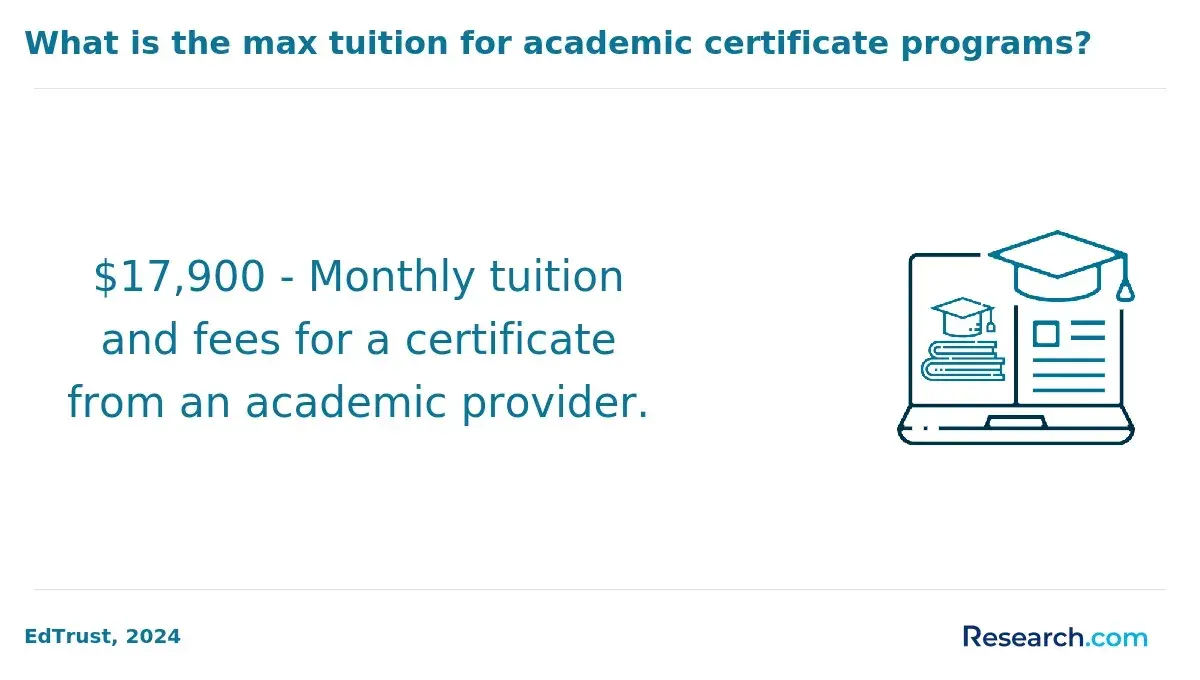
Part-time timelines range from a few weeks for a focused online course to roughly one or two years for a college certificate with sequential labs or clinical requirements. Cost varies more by field, provider type, equipment, and required supervised practice than by the word "certificate" in the program name.
The ranges below are planning estimates, not standardized tuition schedules. Request a written total-cost worksheet from each provider because local tuition and required fees differ substantially.
| Program type | Typical part-time timeline | Common cost factors | Transferability |
| Short online professional course | 4 weeks to 6 months | Tuition, platform access, optional exam fees | Usually noncredit |
| Career bootcamp | 3 to 12 months | Tuition, software, portfolio tools, financing charges | Usually noncredit |
| Community college certificate | 6 months to 2 years | Per-credit tuition, fees, books, labs, tools | May apply toward a degree |
| Clinical or trade training | 6 months to 2 years | Tuition, uniforms, supplies, insurance, exams, travel | Varies by school and licensing pathway |
A low advertised tuition price can exclude the expenses that make a program workable, including tools, background checks, drug screening, certification exams, liability insurance, transportation, or missed work during clinical placement. If you want a short-format option, review 6-week online courses with certificates, then confirm whether the shorter format teaches enough for your intended role.
Federal Pell Grants and federal student loans may be available only for eligible programs at eligible schools; many noncredit certificates and bootcamps do not qualify. Ask about employer tuition assistance, workforce agency funding, veterans' education benefits where applicable, payment plans, and scholarship terms before using high-cost private financing.
What admission requirements and prior experience are needed for part-time non-degree programs?
Requirements are program-specific. Many introductory noncredit programs use open enrollment and ask only for identity verification, payment, and basic computer access. College-based certificates may require an application, placement assessment, high school completion documentation, or prerequisites in math, English, science, or technology.
Healthcare and public-safety programs often have the most additional screening because students may work with patients, sensitive information, or clinical partners. Requirements can include immunizations, CPR training, background checks, drug screening, physical ability documentation, and proof of health insurance. These requirements are not universal, so applicants should obtain the current checklist directly from the program.
Prior experience is most useful for advanced certificates, cybersecurity, project management, data analytics, and specialized trade training. Beginners should look for a program that explicitly teaches fundamentals rather than assuming familiarity with software, anatomy, tools, or industry terminology. Do not pay for an advanced professional certificate merely because its marketing uses "career-ready" language.
What curriculum and skills do leading part-time certificate and bootcamp programs provide?
Leading programs connect instruction to observable skills: a completed lab task, a supervised procedure, a code project, a legal document draft, a design portfolio piece, or a customer-service workflow. The credential is more useful when the school can explain how learning is assessed rather than simply listing course titles.
Strong part-time curricula usually combine technical instruction with workplace skills that employers can observe:
- Technical foundations, such as safety procedures, industry software, coding languages, medical terminology, electrical systems, or legal research methods.
- Applied practice through labs, simulations, case studies, supervised clinical work, projects, or portfolio assignments.
- Documentation and communication skills, including client interaction, reporting, digital records, teamwork, and professional writing.
- Career preparation, such as résumé support, interview practice, employer projects, certification-exam preparation, or job-search coaching.
Artificial intelligence tools are changing routine work in fields from design to administration, so favor programs that teach judgment, verification, privacy, and responsible use of current tools - not just button-clicking. Ask whether the curriculum is reviewed regularly with employers or industry advisors and whether students retain access to their projects after completing the program.
What careers, job roles, and industries can part-time non-degree programs prepare you for?
Non-degree training can support entry-level work, advancement in a current role, or a transition into a skills-based field. It is most effective when the program maps directly to a job title and the employer does not require a degree, a license, or prior experience beyond what the training provides.
The table separates roles where short training may be relevant from roles that usually need additional licensing, education, or employer-based training.
| Field | Potential entry or support roles | Typical additional requirement to check |
| Skilled trades | Apprentice, helper, technician trainee, welder trainee | Apprenticeship, state licensing progression, employer safety training |
| Healthcare support | Medical assistant, pharmacy technician, billing specialist, phlebotomy technician | Clinical eligibility, employer preference for certification, state rules |
| Legal support | Legal assistant, document specialist, intake coordinator, paralegal assistant | Employer experience expectations; no independent legal practice |
| Technology and business | Help desk technician, junior web developer, data support specialist, project coordinator | Portfolio, technical assessment, vendor certification, prior experience |
| Creative work | Production assistant, junior designer, content coordinator, freelance creative support | Portfolio quality, software skills, client or agency experience |
For careers where a bachelor's degree remains a common entry expectation, a non-degree program can still build skills but may be better used as a supplement rather than a substitute. Compare possible long-term earnings and degree-dependent occupations through this guide to most lucrative college majors.
Talk with three local employers or review several current job postings before enrolling. Look for repeated requirements - specific software, certification names, shifts, background eligibility, or a degree - and select training that closes the most important gap.
What salary ranges and advancement opportunities follow completion of part-time non-degree programs?
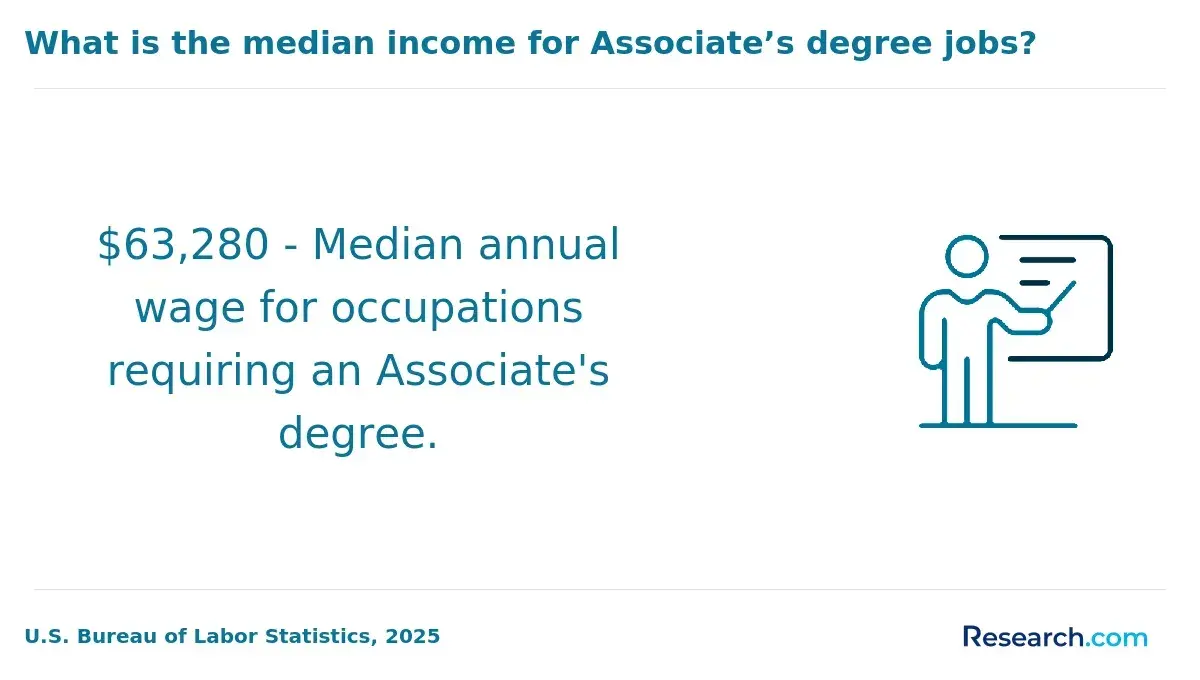
Salary depends on occupation, location, experience, shift differentials, union coverage, licensing, and employer - not solely on the program completed. The U.S. Bureau of Labor Statistics reported a $49,500 median annual wage across all U.S. occupations in its 2024 occupational employment data. Use that figure only as a broad benchmark; it does not represent the earnings of certificate completers or any individual field.
Advancement is strongest when a short program fits into a recognized progression. Examples include an HVAC helper moving into an apprenticeship, a medical billing specialist adding coding expertise, a help desk worker earning vendor certifications, or a design learner building a stronger portfolio and client record. In contrast, programs aimed at unregulated titles with vague outcomes may offer less predictable return on investment.
Ask schools for role-specific outcome information and ask employers what distinguishes entry-level candidates from promotable employees. Consider the likely first job, not only the advertised future title, and compare its local pay with tuition, required unpaid hours, commuting costs, and the income you may forgo while studying.
How can students choose a reputable part-time non-degree program aligned with their goals?
Start with the job or advancement goal, then work backward to the minimum credible training path. This prevents a common mistake: enrolling in a broadly marketed certificate before confirming that employers recognize it or that it meets state requirements.
Use this process to compare programs consistently:
- Name the target role, preferred work setting, location, and timeline, then review local job postings for repeated qualifications.
- Determine whether the role requires a degree, state license, apprenticeship, clinical approval, external certification, portfolio, or employer training.
- Compare the curriculum, required attendance times, weekly workload, completion timeline, and availability of evening, weekend, or asynchronous study.
- Request the complete price, including books, tools, uniforms, software, examination fees, transportation, and any costs connected with clinical or lab work.
- Verify institutional accreditation when academic credit, transferability, federal aid, or licensure eligibility is relevant; verify employer and licensing-board recognition for noncredit training.
- Read the refund policy and ask how the school supports students who miss time because of work, caregiving, illness, or a changing shift schedule.
Be cautious about pressure to enroll immediately, unclear refund terms, unverified job-placement claims, or promises that a certificate automatically leads to licensure or a specific salary. A reputable provider should answer direct questions about credential type, costs, practical requirements, and limitations without evasive sales language.
Other Things You Should Know About
Often, yes, especially in asynchronous online programs. However, healthcare clinicals, trade labs, externships, and some exams may occur at fixed times. Confirm the expected weekly workload and all required in-person sessions before enrolling.
Some credit-bearing certificates at eligible institutions may qualify for federal aid, but many noncredit programs and bootcamps do not. Ask the provider's financial aid office about eligibility, and compare employer assistance, workforce grants, scholarships, and payment plans.
Only some college certificates are designed to transfer or stack into a degree. Noncredit certificates usually do not carry academic credit. Obtain written confirmation from the receiving college before relying on transferability.
Employers typically care more about the provider's reputation, relevant skills, portfolio or practical experience, and any required certification or license than delivery format alone. For hands-on or regulated careers, ensure online coursework includes the required labs, clinicals, or supervised assessment.
References
- High-Paying, Fast-Growing Jobs Without a Degree https://www.rockwellinstitute.com/blog/jobs-dont-require-degree/
- Best Paying Jobs Without a Degree: 24 High-Income Careers for 2026 - tripleten.com/blog https://tripleten.com/blog/posts/best-paying-jobs-without-a-degree
- Financial Aid Options for Part-Time Students - ELFI https://www.elfi.com/financial-aid-for-part-time-students/
- Non-Degree Seeking Student | Western Colorado University https://western.edu/newsroom/non-degree-seeking-student-courses/
- Making the Most of Limited Time: How to Improve Persistence Rates of Part-Time Students https://evolllution.com/attracting-students/customer_service/making-the-most-of-limited-time-how-to-improve-persistence-rates-of-part-time-students
- Beyond Degrees: Exploring Non-College Postsecondary Education https://www.onegoal.org/about/blog/beyond-degrees-exploring-non-college-postsecondary-education/
- Exploring Non-College Career Pathways https://www.uprootedacademy.org/post/non-college-career-pathways
- Programs for Non-Degree Seeking Students | University of Phoenix https://www.phoenix.edu/blog/non-degree-seeking-student.html
- Boost Income with Flexible Online Degrees https://www.marian.edu/blog/2026/02/how-flexible-online-degrees-help-you-boost-income-on-a-budget.php
- 60+ Part-Time Job Ideas for High School and College Students https://www.citizensbank.com/student/articles/part-time-jobs-for-high-school-college-students.aspx