2027 Best Online Professional Certificates for Career Changers

Co-Founder and Chief Data Scientist
Changing careers is expensive when you choose the wrong training path. Online professional certificates can build targeted, job-relevant skills faster than a degree, but they vary widely in employer recognition, cost, and licensing value. The U.S. Bureau of Labor Statistics projects about 19 million job openings per year from 2024 to 2034, largely from replacement needs. This guide helps career changers compare certificate types, identify credible providers, estimate realistic outcomes, and choose training that fits a specific job goal rather than a vague interest.
Key Things You Should Know
- Choose a certificate only after identifying the exact job target: industry certificates work well for fields such as IT, project management, and data analytics, while licensed healthcare and skilled-trade roles often require state-approved training, clinical hours, or an exam.
- Time and cost vary sharply: self-paced noncredit professional certificates may take a few months, while credit-bearing college certificates and career-training programs can take one year or longer and may include equipment, examination, or practicum costs.
- Labor-market demand matters more than a provider's marketing claims: BLS projects 29% employment growth for information security analysts and 23% growth for medical and health services managers from 2024 to 2034, although a certificate alone may not meet every employer's education requirements.
Top 10 Best Online Professional Certificates for Career Changers
Popular Trade School Programs
Online trade certificates are usually best for the classroom portion of training, not hands-on licensing requirements. Common options include HVAC/R fundamentals, electrical technology, welding theory, construction management, automotive service, and industrial maintenance. An online certificate can help career changers learn codes, safety, estimating, or equipment concepts, but electricians, welders, and HVAC technicians commonly need supervised field training, apprenticeships, or state-specific credentials. Choose a hybrid program when lab practice is essential; choose fully online study for estimating, dispatch, project coordination, or construction technology roles.
Healthcare Programs
Healthcare certificates can lead toward medical billing and coding, pharmacy technician, medical assisting, health information, sterile processing, or community health roles. Programs differ substantially: billing and coding may be fully online, while medical assisting and nursing-related certificates require in-person clinical practice. A school certificate is not the same as national certification from an organization that may require an exam. Before enrolling, verify whether employers in your area require certification, whether clinical placements are arranged, and whether the program meets state rules for the role you want.
Criminal Justice / Law Programs
Career changers can pursue online certificates in paralegal studies, legal studies, criminal justice, cybersecurity investigations, or court administration. These programs can build legal vocabulary, research, writing, and case-management skills for support roles. They do not qualify someone to practice law or become a licensed attorney. Paralegal candidates should confirm whether local employers prefer an American Bar Association-approved program, an associate degree, a bachelor's degree, or prior legal-office experience. A certificate is most useful when it includes practical legal research, document drafting, and software exposure.
Arts & Design Programs
Online arts and design certificates commonly cover graphic design, UX/UI design, digital marketing design, web design, photography, animation, and content creation. For these careers, a portfolio often carries as much weight as the certificate itself. Strong programs provide project briefs, instructor feedback, accessibility principles, copyright basics, and portfolio reviews. Career changers should avoid programs that teach only software tutorials without requiring original work. A certificate can demonstrate structured learning, but employers may still expect proficiency with current tools and evidence that you can solve real client or user problems.
What are online professional certificates and how do they support career change?
An online professional certificate is a focused educational credential showing that a learner completed structured training in a defined skill area, such as data analytics, cloud computing, digital marketing, bookkeeping, project management, or UX design. It may be offered by a university, community college, employer, professional association, or learning platform. It is not automatically a professional certification, which is typically awarded by an independent certifying body after a qualifying examination and, in some cases, documented work experience.
For career changers, the strongest certificate is usually one that closes a visible skills gap and produces evidence of capability: projects, a portfolio, an exam-preparation pathway, or supervised experience. The comparison below shows why provider type matters.
| Credential route | Best fit | Typical recognition | Key limitation |
| University or community-college certificate | Career changers needing structured coursework | Institutional credential; may be credit-bearing | Transferability and aid vary by program |
| Industry professional certificate | Entry-level digital, business, or technology skills | Provider and employer recognition vary | Usually noncredit and not a license |
| Professional certification | Workers meeting an industry standard | Credential from a certifying organization | May require an exam, fees, and experience |
| Bootcamp or career-training program | Fast, project-heavy career pivots | Depends on employer reputation and portfolio quality | Outcomes and support vary widely |
Credit-bearing certificates can sometimes stack into an associate or bachelor's degree; noncredit certificates usually do not. Ask for that answer in writing before paying, especially if you may later need a degree.
How do online professional certificates compare with degrees for career changers?
For a career changer, a certificate is usually the better first move when the target role values a specific, demonstrable skill and does not legally require a degree. A degree is more appropriate when the occupation has broad academic requirements, employer screening norms, licensure rules, or advancement paths that consistently require one. A certificate can be a lower-risk test of a field; it should not be treated as a shortcut around required education.
This comparison highlights the central trade-off: speed and specialization versus breadth and long-term academic signaling.
| Factor | Online professional certificate | Associate or bachelor's degree |
| Focus | Narrow, job-specific skills | Broader academic and professional foundation |
| Timeline | Often weeks to about one year | Usually about two or four years full time |
| Admissions | May have open enrollment or basic prerequisites | Typically formal institutional admission |
| Academic credit | May be credit or noncredit | Credit-bearing degree program |
| Best use | Targeted pivot, upskilling, portfolio building | Careers needing extensive education or broader mobility |
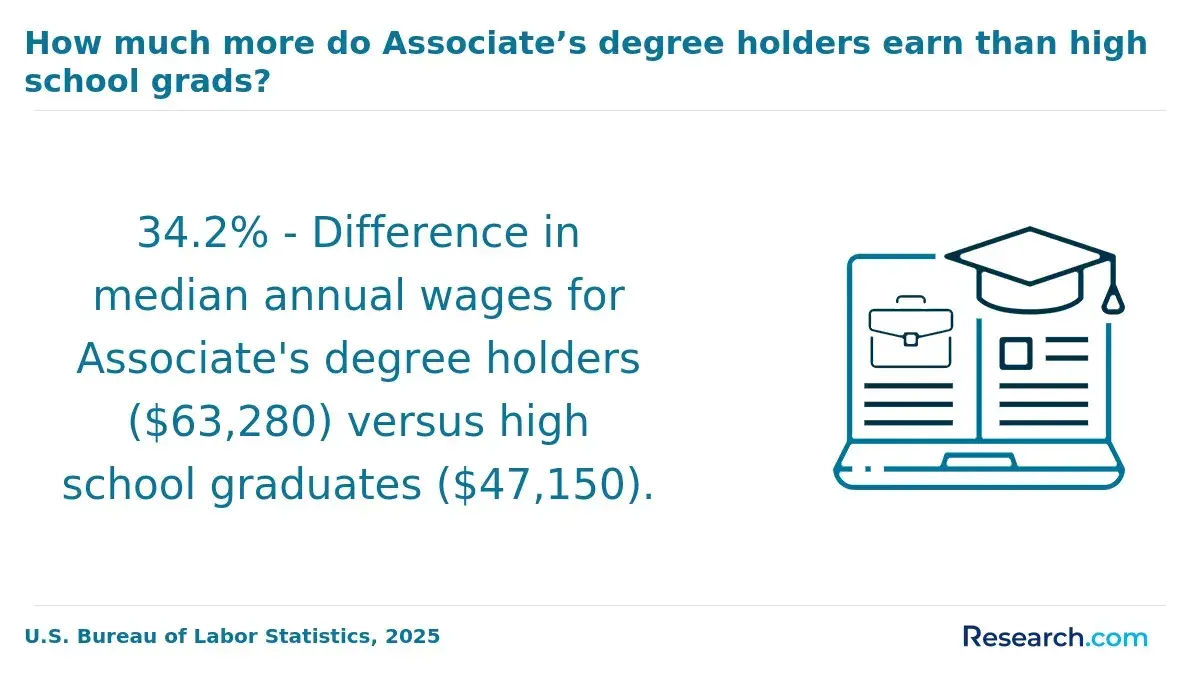
If you need a broader credential but want a shorter starting point, compare certificate credits with 2 year degrees before committing. An associate degree may offer more general education, financial-aid eligibility, and transfer options, but it also requires more time and coursework.
How can career changers choose an accredited, reputable online certificate program?
Reputation is not a logo, a celebrity instructor, or a promised salary. For college-issued certificates, confirm the institution's recognized accreditation and determine whether the specific program is credit-bearing. For industry certificates, look for current employer demand, transparent curriculum details, qualified instructors, verifiable completion records, and alignment with known professional standards. Licensing fields require an additional check: approval by the relevant state board or eligibility for the required examination.
Before enrolling, use this screening sequence to reduce the risk of paying for a credential that does not support your goal.
- Find 10 to 20 job postings for your target role and note the repeated skills, degree expectations, software, and certifications.
- Match the program curriculum to those requirements, including projects, labs, clinicals, or exam preparation where relevant.
- Confirm whether the credential is credit-bearing, whether credits transfer, and whether completion records can be independently verified.
- Ask for total cost, refund rules, required technology, examination fees, practicum costs, and career-service details in writing.
- For regulated roles, verify state eligibility directly with the licensing board rather than relying on a school representative.
Applicants considering college-based options can also review no application fee online colleges to reduce the cost of exploring accredited pathways. No application fee does not establish program quality, so continue with the same curriculum and licensure checks.
What admission requirements and prior experience do online certificate programs expect?
Admissions requirements depend on the provider and credential type. Many noncredit professional certificates have no GPA, transcript, or standardized-test requirement; learners generally need a computer, internet access, payment method, and enough time to complete coursework. University certificates may require a high school diploma, prior college coursework, a bachelor's degree for graduate certificates, or subject prerequisites. Advanced IT, analytics, and healthcare programs may expect algebra, writing, anatomy, or prior technical knowledge.
Do not assume "beginner-friendly" means "job-ready without preparation." Entry-level learners should review the syllabus for foundational modules and confirm whether the program includes support for unfamiliar tools. A program requiring a portfolio, coding assessment, criminal-background check, immunizations, clinical clearance, or internship may be realistic only if you can meet those conditions on schedule.
Prior experience can help but is not always mandatory. Transfer credit is relevant mainly to credit-bearing college certificates; it is rarely available for platform-based professional certificates. Ask whether prior learning, military training, or industry certifications can satisfy prerequisites, but obtain the decision from the provider before enrollment.
How long do online professional certificate programs take and what do they cost?
Completion time ranges from several weeks for a focused self-paced certificate to roughly one year or more for a college certificate with multiple courses, labs, or clinical requirements. The practical timeline is driven by weekly workload, required live sessions, course sequencing, and whether fieldwork must be completed locally. A "six-month" program can take longer when studied part time around a full-time job.
Total cost is more useful than advertised tuition. Include subscription charges or tuition, textbooks, software, exam vouchers, proctoring, equipment, portfolio materials, background checks, travel, and any required clinical or lab expenses. Credit-bearing programs may have institutional aid options, while noncredit certificates often rely on employer tuition assistance, workforce grants, payment plans, or personal savings.
Use this cost lens when comparing options with different price structures.
| Cost question | Why it changes the decision |
| Is pricing monthly, per course, or a fixed total? | Self-paced subscriptions can cost more if completion takes longer than planned. |
| Are exam attempts included? | Certification exams and retakes can materially change the total investment. |
| Are tools and equipment supplied? | Technology, lab kits, and software may be necessary to complete projects. |
| Does the program offer credit? | Credit may have future degree value, but it can also raise cost and duration. |
If your target role ultimately requires a bachelor's degree, comparing a certificate's cost against a cheap bachelor degree online option can prevent paying twice for overlapping coursework.
What online certificate fields offer the strongest job prospects for career changers?
The strongest certificate fields combine a clear skill standard, accessible entry route, and sustained employer need. Technology, healthcare administration, project coordination, accounting support, logistics, skilled trades, and cybersecurity can all be sensible choices, but local job postings should be the final test. AI adoption is increasing demand for workers who can use data, automate routine workflows, protect systems, and apply sound judgment; it also raises the value of practical projects over generic course-completion badges.
BLS projections can help identify fields worth deeper investigation, but they describe occupations rather than guaranteed outcomes for certificate holders.
| Field | BLS projected growth, 2024-2034 | Certificate fit for career changers |
| Information security analysis | 29% | Useful for foundational skills; many roles also prefer experience or a degree. |
| Medical and health services management | 23% | Helpful for administrative pathways; management roles often require experience. |
| Data science | 34% | Good for testing interest; advanced roles commonly require strong math and education. |
| Wind turbine service | 50% | High-growth trade path, but hands-on technical training is essential. |
For readers deciding between a short credential and a broader academic path, best college majors for the future can help compare fields where a degree may offer stronger long-term access.
What salaries and earning potential can career changers expect after certificates?
A certificate does not create a fixed salary outcome. Pay depends on occupation, location, industry, prior experience, employer, schedule, credentials, and the level of responsibility. Use occupational wage data as a market reference, then compare it with entry-level postings in your region and with your likely starting responsibilities.
The following BLS May 2024 median annual wage figures illustrate the range across certificate-adjacent fields. They are not salaries earned because someone completed a certificate.
| Occupation | Median annual wage | Important context |
| Information security analysts | $124,910 | Many employers seek related experience and often a bachelor's degree. |
| Project management specialists | $100,750 | Certificates can support entry, but responsibility and experience strongly affect pay. |
| Web developers and digital designers | $95,380 | Portfolios and technical skills may matter more than the certificate name. |
| Medical records specialists | $50,250 | Employer preferences for coding certification vary by role. |
Calculate return on investment conservatively: compare the full training cost and income you may forgo while studying against realistic entry-level pay, not the highest median wage for a broad occupation. If job postings routinely require experience you do not have, plan for an entry role, internship, contract work, or adjacent position first.
How do online professional certificates prepare students for licensing or certification exams?
Some certificates prepare learners for a separate certification or licensing exam, but preparation is not the same as eligibility. In healthcare, trades, accounting, IT, and legal support, the examination sponsor or state board sets the actual requirements. These may include approved education, clinical or supervised hours, identity checks, background screening, work experience, continuing education, or an application fee.
Before choosing an exam-prep certificate, confirm four details: the exam's current eligibility rules, whether the curriculum maps to the tested domains, whether practice assessments are included, and whether the total price includes an exam voucher. Ask whether the provider reports pass rates and how those rates are calculated. A program that makes vague claims about "certification readiness" but cannot name the exam or eligibility standard is a red flag.
For state-licensed work, verify requirements directly with the state board because online coursework accepted in one state may not satisfy another state's clinical, lab, or supervised-practice rules.
How should career changers plan next steps after completing an online certificate?
Completing a certificate is the beginning of the transition, not the finish line. Convert coursework into employer-facing proof quickly while the tools and concepts are fresh. For project-based fields, publish a polished portfolio that explains the problem, your process, the tools used, and the outcome. For regulated fields, schedule the next required exam or application step before momentum fades.
A practical post-certificate plan should connect training to a specific hiring strategy.
- Update your résumé and professional profile with the certificate, relevant projects, software, and measurable skills rather than listing course titles alone.
- Create two to four work samples that mirror tasks in current job postings, while removing confidential information from any real projects.
- Apply first to realistic entry points, including coordinator, technician, support, trainee, or assistant roles that build required experience.
- Use informational interviews, alumni groups, professional associations, and local employers to test whether your credential is recognized in the target market.
- Review results after 30 to 60 applications and address repeated gaps with a targeted project, certification exam, or additional coursework.
Common mistakes include buying a certificate before reading job descriptions, overlooking required in-person training, assuming a completion badge transfers for college credit, and using median occupational wages as a personal salary forecast. Avoid these errors by validating the path against local employers and the applicable licensing or certification authority before paying.
Other Things You Should Know About
They can be worthwhile when they teach skills repeatedly requested in your target job postings and provide credible evidence of those skills. They are less useful when the target occupation requires a license, extensive experience, or a degree that the certificate does not replace.
A professional certificate is usually awarded after completing an educational program. A certification is typically awarded by a professional organization after meeting its standards, which may include an exam, work experience, or continuing education.
It depends on the field, local employers, your prior transferable skills, and the quality of your portfolio or exam credential. Certificates can support entry-level roles, but many occupations still require experience, a degree, supervised practice, or state approval.
Verify the provider, review the full curriculum and total cost, check whether it is credit-bearing or noncredit, confirm any licensing or exam claims with the relevant authority, and compare its skills with real job postings. Avoid providers that guarantee employment or make unclear claims about accreditation.
References
- The Value of Certificates vs. Degrees: What's Right for You? https://www.calmu.edu/the-value-of-certificates-vs.-degrees-whats-right-for-you
- 7 in-demand certifications in 2025 | edX https://www.edx.org/resources/in-demand-professional-certifications
- What is Accreditation? https://www.credentialingexcellence.org/Accreditation
- CourseCareers https://coursecareers.com/blog-posts/college-vs-online-career-training
- Accredited Online Courses: How to Pick Programs That Actually Count https://www.upskillist.com/blog/accredited-online-courses-how-to-pick-programs-that-actually-count/
- Best Online Courses to Take to Get a Job https://quickcv.io/blog/best-online-courses-to-get-a-job
- The Top 5 Certificate Programs for Jobs With Growth Potential | CourseStorm https://www.coursestorm.com/blog/top-certificate-programs-for-jobs
- The Ultimate Guide to Online Certification Programs [UPDATED] https://www.msicertified.com/blog/the-ultimate-guide-to-online-certification-programs/
- 4 Industries Where Certifications Can Help to Boost Careers https://www.professionalacademy.com/blogs/4-industries-where-certifications-can-help-you-advance-your-career/
- Certificate Programs: Programs, Costs, Duration & Are They Worth It? - University of the Potomac https://potomac.edu/certificates-programs-costs-duration-are-they-worth-it/