2027 Best Professional Certificates for Job Security

Co-Founder and Chief Data Scientist
Choosing a certificate is risky when providers promise fast career results without explaining employer recognition, licensing rules, or local demand. The strongest options build skills for regulated, hands-on, or shortage-sensitive work. U.S. Bureau of Labor Statistics projections show total employment is expected to add 5.2 million jobs from 2024 to 2034. This guide helps career changers, recent graduates, and working adults compare academic certificates, industry certifications, and career-training programs by job security, cost, format, requirements, and realistic next steps.
Key Things You Should Know
- For the best job-security fit, prioritize certificates tied to licensing, clinical practice, infrastructure maintenance, cybersecurity, or employer-recognized exams rather than broad, unverified completion badges.
- Completion time ranges from a few weeks for many noncredit professional certificates to 12-24 months for clinical or trade certificates; associate degrees often take about two years and may be necessary for advancement.
- Job outlook matters more than a provider's marketing: BLS projects 2024-2034 growth of 12% for medical assistants, 9% for electricians, and 29% for information security analysts, though entry requirements differ substantially.
Top 10 Best Professional Certificates for Job Security
Popular Trade School Programs
Trade certificates usually combine classroom safety instruction with shop or field practice. Electrician apprenticeships, HVAC/R certificates, welding certificates, industrial maintenance programs, and commercial driver training can lead to entry-level work, but state licensing and employer requirements vary. An electrician certificate alone generally does not replace an apprenticeship or license. HVAC students should confirm preparation for EPA Section 608 certification. These programs suit people who want hands-on work and local employment; compare required tools, clinical/shop fees, placement support, and whether paid apprenticeship hours are available.
Healthcare Programs
Healthcare certificates can offer durable demand, but most are regulated pathways rather than quick general credentials. Common options include medical assistant, practical nursing, pharmacy technician, dental assisting, sterile processing, and phlebotomy certificates. Verify that the curriculum meets state eligibility rules and prepares students for the relevant certification or licensure examination. Clinical placements are essential and may be difficult to complete fully online. Medical assistant employment is projected to grow 12% from 2024 to 2034, according to BLS, but employers may prefer nationally certified applicants and experience.
Criminal Justice / Law Programs
Paralegal studies, legal assistant, court reporting, corrections, cybersecurity investigation, and public-safety certificates can develop focused workplace skills. A paralegal certificate is an educational program, not a law license, and it does not authorize independent legal practice. Programs are most useful when they teach legal research, writing, e-discovery, case-management software, and ethics. Applicants should check local employer expectations: some firms prefer a bachelor's degree plus a post-baccalaureate paralegal certificate, while entry-level support roles may accept an associate degree or certificate.
Arts & Design Programs
Graphic design, UX/UI design, digital marketing, web production, animation, and video-editing certificates can strengthen a portfolio, but job security depends heavily on demonstrable work and technical specialization. Choose programs with current software instruction, portfolio reviews, accessible projects, and clear ownership of your work. A certificate may help career changers build evidence of skill, while a degree can be more useful for roles requiring broad design theory or advancement. BLS projects 2% growth for graphic designers from 2024 to 2034, so avoid programs that promise guaranteed placement.
What makes a professional certificate valuable for long-term job security?
A valuable professional certificate is a focused educational credential that documents completion of a defined curriculum. It differs from a professional certification, which is usually awarded by an industry body after an examination, verified experience, continuing education, or a combination of these requirements. For job security, the strongest programs connect directly to work employers must keep staffed, systems that require maintenance, or rules that require qualified personnel.
Evaluate value through evidence rather than the program name. A worthwhile certificate has a current curriculum, instructors with relevant experience, hands-on assessment, transparent total costs, and a recognizable provider. In regulated fields, it should clearly state whether it meets eligibility requirements for a separate license or certification exam.
These features generally signal a stronger long-term investment:
- A direct connection to a local occupation, apprenticeship, license, or employer-recognized certification.
- Skills that can be demonstrated through clinical work, a portfolio, a lab, supervised practice, or a proctored assessment.
- A realistic progression path, such as certificate to associate degree, entry-level role to specialized certification, or apprenticeship to licensure.
- Published policies on refunds, required equipment, exam fees, clinical placements, and career services.
Be cautious with programs that use vague job titles, omit instructor qualifications, treat a completion certificate as a license, or refuse to identify the credential issuer. A short noncredit program can be useful for skill building, but it may not carry college credit or transfer to a degree.
Which fields offer the strongest job security for certificate holders?
Healthcare, skilled trades, information security, logistics, and certain technical support roles generally offer stronger certificate-level security than fields where applicants compete mainly on portfolios or broad general knowledge. Security is not the same as guaranteed hiring: regional demand, licensing, schedule flexibility, and prior experience still affect outcomes.
The comparison below distinguishes occupations with certificate-relevant entry routes from occupations that commonly require more education or experience. BLS outlook figures are national projections for 2024-2034, not placement rates for certificate completers.
| Field | Certificate-related route | 2024-2034 outlook | Key limitation |
| Medical assisting | Accredited clinical certificate and optional or preferred certification | 12% growth | Clinical placement and employer preferences matter. |
| Electrical work | Pre-apprenticeship or trade certificate | 9% growth | Licensure typically requires supervised apprenticeship hours. |
| HVAC/R | Technical certificate plus EPA Section 608 preparation | 8% growth | Work can be seasonal and physically demanding. |
| Information security | IT certificate plus industry certification pathway | 29% growth | Many analyst jobs require prior IT experience or a degree. |
For immediate entry-level employment, healthcare support and trades often have clearer routes than cybersecurity. For people already working in IT, an industry-recognized security certification paired with hands-on experience can be more practical than starting a second degree.
How do online professional certificate programs compare to campus-based options?
Online professional certificate programs are usually best for theory-heavy subjects such as project management, data analytics, IT support, bookkeeping, digital marketing, and software tools. Campus-based or hybrid delivery is usually better when employers or regulators expect supervised labs, equipment practice, clinical rotations, shop time, or live performance assessment.
Use format as a quality test, not just a convenience feature. An online program should explain how it verifies identity, assesses practical skills, provides instructor feedback, and supports required field experiences. A fully online healthcare or trade certificate may cover prerequisite coursework, but it cannot eliminate legally or educationally required in-person training.
Online study can work well for working adults when deadlines and support match their schedule. Learners who need a faster route to a degree after completing a credit-bearing certificate can also compare accelerated degree programs to see whether a broader credential better fits their advancement goal.
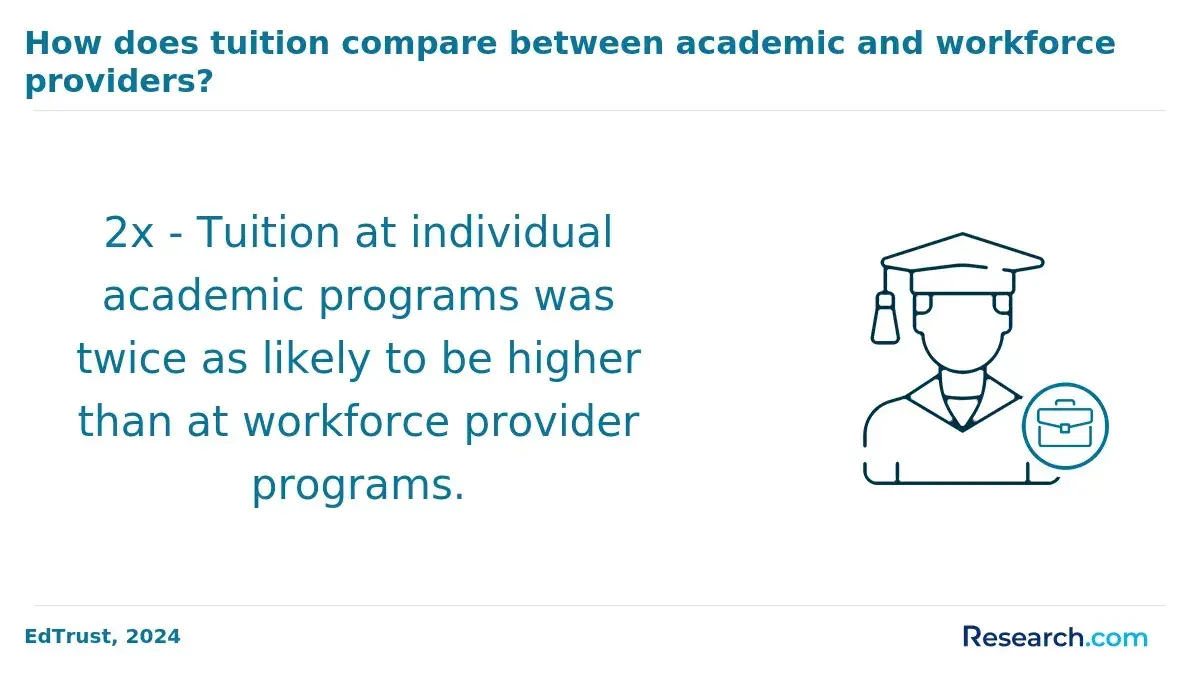
Before enrolling, ask whether tuition includes software, remote-proctoring, lab kits, exam vouchers, career coaching, and access to instructors. Low advertised tuition can become less competitive once these required expenses are added.
What accreditation and industry-recognition should professional certificate programs have?
Recognition should match the credential type. College-based credit certificates should be offered by an institution accredited by an agency recognized by the U.S. Department of Education or the Council for Higher Education Accreditation. Programmatic accreditation is especially important when it affects eligibility for licensing examinations, clinical placements, or employer acceptance.
For industry certificates, focus on the organization that designed the assessment and the employers that recognize it. Examples include technology certifications with proctored exams, trade credentials connected to safety or equipment standards, and healthcare programs that prepare learners for recognized national examinations. A provider's own "certified" label is not the same as independent certification.
Confirm these points in writing before paying a deposit:
- Whether the award is college credit, continuing education, a noncredit certificate, or preparation for a separate certification exam.
- Whether the program meets requirements in the state where you intend to work.
- Whether clinical, practicum, apprenticeship, or externship placements are guaranteed, arranged, or entirely the student's responsibility.
- Which external examination, license, or industry credential graduates may be eligible to pursue after completion.
Do not rely on a school's accreditation claim alone. Check the accreditor, the program's approval status where applicable, and the relevant state licensing board for regulated occupations.
What admission requirements and prerequisites do top certificate programs expect?
Requirements depend on whether the program is an academic certificate, a noncredit training course, or preparation for an external certification. Many introductory online certificates require only an account and payment. Community-college certificates commonly require a high school diploma or equivalent, placement steps, and prerequisite courses. Selective clinical programs may also require background checks, immunizations, drug screening, CPR training, entrance testing, and minimum grades in science courses.
Advanced professional certificates may expect prior education or work experience. For example, an information-security certification can require documented professional experience even when a preparatory course has open enrollment. Similarly, a post-baccalaureate paralegal certificate may require a completed bachelor's degree.
Applicants can prevent costly delays by completing this sequence:
- Identify the exact job title and state where you want to work.
- Read the employer, licensing board, or certification-body requirements before comparing schools.
- List prerequisites, required documents, fieldwork conditions, and the next available start date.
- Ask the provider which requirements are admissions rules and which are external licensing or exam rules.
A GPA requirement, standardized test, and transfer-credit policy are relevant only for credit-bearing academic programs. Do not assume they apply to a short noncredit certificate.
How long do professional certificate programs take, and what do they cost?
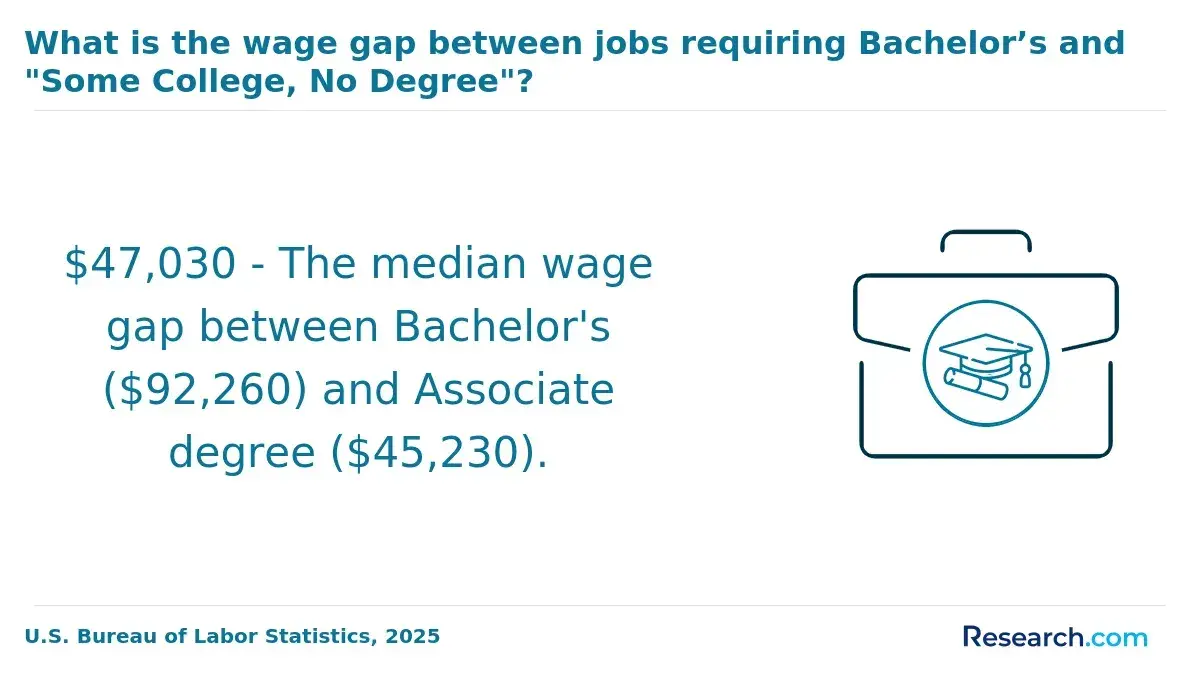
Professional certificates range from short self-paced courses to multi-semester academic programs. A noncredit certificate may take weeks or a few months; a credit-bearing college certificate often takes two or three semesters; and clinical or technical programs can run 12-24 months because of labs, externships, or required practice hours. Associate degrees generally take about two years of full-time study and may provide a stronger foundation where employers prefer broader education.
Costs vary more by provider, delivery, and required equipment than by the word "certificate." Compare the full budget below rather than relying on headline tuition.
| Program type | Typical time pattern | Common cost factors | Best use |
| Self-paced noncredit professional certificate | Weeks to months | Subscription or course fee, exam voucher, software | Targeted upskilling and portfolio development |
| Community-college credit certificate | About 6-18 months | Per-credit tuition, books, lab fees, transportation | Entry-level career preparation and possible stackability |
| Clinical or trade certificate | About 9-24 months | Tools, uniforms, background checks, exams, clinical or shop fees | Hands-on roles with defined training standards |
| Industry certification preparation | Days to months | Training, practice materials, proctored examination, renewal | Validating existing skills or advancing in a field |
Federal aid may be available for eligible programs at participating institutions, but many short noncredit programs do not qualify. Ask about employer tuition assistance, workforce grants, payment plans, and refund policies. If your goal requires a bachelor's degree rather than a standalone certificate, compare a cheap bachelor degree online option against the combined cost of separate credentials.
What careers and job roles can you pursue with professional certificates?
A professional certificate can support entry-level work, career switching, or specialization, but its usefulness depends on the job's formal requirements. Certificates are most direct for roles such as medical assistant, pharmacy technician, HVAC technician, welding technician, help desk technician, bookkeeping clerk, project coordinator, and junior digital-marketing specialist. Some roles also require an external certification, supervised experience, or state license.
Use job postings in your target area to compare the credential with actual hiring language. The following career patterns show when a certificate may be enough and when additional education is commonly needed.
| Career goal | Certificate's likely role | Possible next step |
| Medical assistant | Primary educational pathway when it includes clinical training | National certification where preferred by employers |
| Electrician | Foundation for entry into apprenticeship | Supervised hours, examination, and state licensure |
| IT support specialist | Skill validation for entry-level support | Hands-on experience and vendor-neutral or vendor credentials |
| Paralegal | Career preparation or specialization | Degree, legal experience, or advanced certificate depending on employer |
| UX/UI designer | Portfolio-building and tool-specific training | Stronger portfolio, internships, or degree-level study |
People seeking leadership, research, teaching, or advanced professional practice should map the entire education ladder before enrolling. For example, a certificate is not a substitute for graduate education in careers that require it; readers considering that route can review cheapest online PhD programs in USA options separately.
What salary ranges and earning potential are realistic with professional certificates?
Salary data describes occupations, not the earnings of every certificate holder. Pay varies by state, experience, shift, union coverage, industry, and whether a worker has completed licensing or gained specialized skills. A certificate can help qualify someone for consideration, but it does not independently establish a salary level.
May 2024 BLS median annual wage data provides useful national context for several certificate-adjacent occupations:
- Medical assistants: $44,200.
- Heating, air conditioning, and refrigeration mechanics and installers: $59,810.
- Electricians: $62,350.
- Paralegals and legal assistants: $61,010.
- Graphic designers: $61,300.
- Dental hygienists, an occupation that typically requires an associate degree and license rather than a short certificate: $94,260.
Compare expected local entry pay with total training costs, lost work time, commuting, tools, licensing fees, and the time required to reach full qualification. The dental hygiene example illustrates why the highest occupational wage is not automatically the best certificate choice: its educational and licensing pathway is materially longer than many certificate programs.
How can you evaluate and choose a reputable professional certificate program?
Choose a program by starting with the job requirement, not the provider's advertising. Review several current job postings, identify the credentials and practical skills employers request, then find programs that explicitly teach and assess those requirements. This approach is especially important as AI automates some routine digital tasks: certificates that document applied technical, clinical, repair, security, or interpersonal service skills tend to be easier to connect to a specific role than generic completion badges.
Use this practical screening process before applying:
- Confirm the credential type and whether it is credit-bearing, noncredit, industry-issued, or exam preparation.
- Verify accreditation, state approval, or industry recognition when your target role requires it.
- Calculate total cost, including equipment, tests, travel, required software, and renewal fees.
- Ask how practical training, externships, clinical rotations, or portfolio reviews are delivered and evaluated.
- Compare completion schedules, withdrawal policies, career services, and local employer relationships.
- Request outcome information with definitions and dates, then treat it as context rather than a promise of employment.
Military families may need portable online options, transfer-friendly policies, and flexible attendance rules; compare online schools for military spouses when those factors are central. Avoid enrolling solely because a program is short, cheap, or labeled "accredited" without identifying the accreditor and the career outcome it supports.
Other Things You Should Know About
They can be worthwhile when they lead to a recognized skill, required credential, apprenticeship, or regulated career pathway. They are less reliable when the provider cannot show how the curriculum connects to employer requirements or an external credential.
A certificate usually confirms completion of an educational program. A certification is generally awarded by an independent professional organization after a person meets standards, often including an examination and sometimes work experience or renewal requirements.
Possibly, especially in IT, business operations, and digital skills. For clinical, trade, and licensed occupations, online coursework usually must be paired with in-person labs, supervised practice, or an approved clinical placement.
Choose a certificate when you need a focused, faster entry route and the target job accepts it. Choose an associate degree when the role requires it, when you want broader advancement options, or when the certificate can stack into the degree without repeating coursework.
References
- CSP Certification: Career Guide, Salary Impact, and Job Opportunities https://ehscareers.com/employer-blog/csp-certification-career-guide-salary-job-opportunities/
- Top Emerging Careers of the Future https://www.savvas.com/resource-center/blogs-and-podcasts/college-and-career-readiness/career-paths/top-emerging-careers-of-the-future
- What certifications can help boost your career prospects? - MSU Denver https://www.msudenver.edu/innovative-lifelong-learning/blog/what-certifications-can-help-boost-your-career-prospects/
- 44 Certifications in Demand in the 2024 Job Market | International Association of Career Coaches | IACC https://www.iacareercoaches.org/post/certifications-in-demand
- Top 10 Benefits of Professional Certification - Identity Management Institute® https://identitymanagementinstitute.org/top-10-benefits-of-professional-certification/
- The Top 5 Certificate Programs for Jobs With Growth Potential | CourseStorm https://www.coursestorm.com/blog/top-certificate-programs-for-jobs
- What Employers Say a Certification Adds to Resumes https://www.nrep.org/blog/what-employers-say-about-certifications
- Future-Proof Careers 2026: High-Growth Paths & Skills https://www.lockedinai.com/blog/emerging-career-paths-2026-future-proof
- Degree vs Certifications: What Employers Value Most in 2026 https://cccareersolutions.com/degree-vs-certifications-what-employers-value-most-2026/
- Professional Certifications for Career Growth: What Students and Young Professionals Need to Know https://www.academikamerica.com/blog/professional-certifications-for-career-growth-what-students-and-young-professionals-need-to-know