2027 Best Online Non-Degree Programs With Job Placement Support

Co-Founder and Chief Data Scientist
Choosing online career training is difficult when schools make similar promises about flexibility and employment help. The key question is whether a program teaches skills employers need and provides meaningful support beyond a job board. U.S. Bureau of Labor Statistics projections for 2024-34 identify healthcare occupations as a major source of job openings, while employers increasingly evaluate demonstrable skills and credentials.
This guide helps career changers, recent graduates, and working adults compare non-degree options, verify placement services, understand licensing limits, and choose training that fits a specific job target.
Key Things You Should Know
- Job placement support is not a job guarantee: prioritize programs that offer career coaching, resume review, employer relationships, interview practice, and published outcomes definitions.
- Choose the credential for the occupation, not the marketing label. A certificate documents completed training, while a certification or license may require a separate exam, supervised experience, or state approval.
- Use current labor-market evidence: BLS projects about 1.9 million openings per year in healthcare occupations from 2024-34, but many hands-on roles still require clinical training, exams, or state authorization.
Top 10 Best Online Non-Degree Programs With Job Placement Support
Popular Trade School Programs
Online trade programs commonly cover electrical theory, HVAC fundamentals, construction estimating, welding concepts, plumbing basics, and industrial safety. A noncredit career-training certificate can build entry-level knowledge, while a credit-bearing certificate or associate degree may better support later transfer. Hands-on trades still require lab work, an apprenticeship, or supervised field experience; fully online training alone rarely qualifies someone for independent licensure. For context, BLS reported a $62,350 median annual wage for electricians in May 2024. Compare programs by required practical hours, local employer partners, and preparation for apprenticeship entry rather than wage claims.
Healthcare Programs
Common online or hybrid options include medical billing and coding, pharmacy technician, medical assistant, health information technology, and patient care certificates. Coding and administrative programs may be mostly online, but medical assisting and patient-care pathways generally require in-person clinical externships. A school certificate is not the same as national professional certification, and state rules can affect pharmacy, nursing-related, and patient-facing roles. BLS reported a May 2024 median annual wage of $44,200 for medical assistants. Confirm that an externship is arranged or clearly the student's responsibility before enrolling.
Criminal Justice / Law Programs
Online non-degree choices include legal studies certificates, paralegal certificates, court-reporting preparation, cybersecurity foundations, and corrections or public-safety training. These programs can strengthen legal research, documentation, terminology, and procedural knowledge, but they do not make a learner an attorney or automatically meet employer requirements for paralegal work. An associate degree may be more appropriate for learners seeking broader general education and transfer options. BLS reported a $61,010 median annual wage for paralegals and legal assistants in May 2024. Ask whether the curriculum aligns with local courts, law firms, or public agencies.
Arts & Design Programs
Graphic design, UX/UI design, digital marketing, web production, photography, animation, and drafting certificates are common online choices. These programs are strongest when they produce a portfolio with feedback, current software practice, and client-style projects. An associate degree can provide broader design foundations and more time to develop a portfolio, while a short professional certificate suits learners who already have related experience. BLS reported a $61,300 median annual wage for graphic designers in May 2024. Because hiring is portfolio-driven, placement support should include portfolio reviews and introductions to real project opportunities.
What Are Online Non-Degree Programs?
Online non-degree programs are organized learning experiences that do not culminate in an associate, bachelor's, or graduate degree. They include academic certificates from colleges, noncredit workforce certificates, bootcamps, provider-issued professional certificates, and short career-training programs. Delivery may be fully online, live online, hybrid, or online with required local labs, externships, or testing.
The credential matters because it determines what the training can realistically do. A college certificate may carry academic credit and sometimes stack into a degree. A noncredit certificate usually demonstrates course completion but may not transfer. A professional certification is different: it is issued by a certifying body after candidates meet its standards, often including an exam. For licensed occupations, state board eligibility - not simply online completion - controls whether a learner can work.
Non-degree training is often a good fit for adults changing fields, employees adding a targeted skill, and learners who need a faster entry point. It is a weaker fit for careers requiring a degree, extensive clinical preparation, or a license that the program cannot support.
Which Online Programs Offer Job Placement Support?
The best programs with job placement support make their services concrete and measurable. "Career services available" may mean little more than access to general webinars, whereas structured support includes individual coaching and employer-facing activity. Ask for written answers before paying a deposit.
This comparison shows what meaningful support usually looks like and what evidence to request.
| Support feature | What it should include | What to verify |
| Career coaching | Career goal setting, resume feedback, interview practice | Appointment availability and whether support continues after completion |
| Employer connections | Hiring events, referrals, externships, or employer projects | Names or types of participating employers and local relevance |
| Job-search assistance | Targeted leads, application strategy, portfolio or LinkedIn review | Whether staff actively assist or merely provide a job board |
| Outcomes reporting | Completion, employment, and methodology disclosures | Time period, job definition, sample size, and whether results are audited |
Fast completion can be useful when the curriculum maps directly to a job target, but speed should not replace practical preparation. Readers considering fast online degrees should separately confirm whether a shorter non-degree option meets the employer, certification, or licensing requirement for their intended role.
Be cautious with "guaranteed placement" language. Read the conditions: some offers require a minimum number of applications, attendance at coaching sessions, geographic flexibility, or acceptance of any qualifying job. A refund policy is not the same as evidence of strong hiring outcomes.
Are Online Non-Degree Programs Accredited and Recognized?
Recognition depends on the provider and the target occupation. Institutional accreditation is most relevant when a college awards academic credit, participates in federal aid programs, or offers a program that may transfer. A noncredit provider may not be institutionally accredited, yet its training can still be useful if employers recognize its curriculum, projects, and industry alignment.
Programmatic accreditation and state approval matter most in regulated fields. Healthcare programs may need specialized approval for clinical placement, certification eligibility, or licensure; rules vary by role and state. For technology, design, and many business fields, an employer may care more about a current portfolio, skills assessment, and recognized certification than academic accreditation.
Before enrolling, verify the exact credential awarded, whether it is credit-bearing, its transfer policy, and the organization that recognizes it. Do not assume a school's institutional status automatically makes every short program eligible for a certification exam or professional license.
How Do Online and Campus Programs Compare?
Online learning can be the better choice for theory-heavy training, working adults, and learners who can manage deadlines independently. Campus or hybrid formats are usually stronger when equipment practice, direct observation, clinical work, or local networking is central to the occupation. The right format is the one that meets required practical training while fitting the learner's schedule and learning needs.
The comparison below separates convenience from career-readiness factors that can affect job placement.
| Factor | Online program | Campus or hybrid program |
| Scheduling | Often asynchronous and flexible | Usually fixed meeting, lab, or clinical times |
| Hands-on practice | May require a local partner, kit, or externship | Typically built into labs and supervised sessions |
| Networking | Depends on virtual events and provider partnerships | May offer easier access to faculty, peers, and local employers |
| Best fit | Digital, administrative, and theory-based skills | Licensed, clinical, equipment-based, or studio-intensive training |
Remote-compatible careers can make online training especially practical, but learners should assess the job itself rather than assume every digital credential leads to remote work. Explore work from home degrees if a long-term remote career is the priority and a degree pathway may offer broader options.
What Careers Can These Programs Lead To?
These programs can lead to entry-level roles, advancement within a current field, or preparation for a separate industry exam. Career outcomes depend on local hiring, prior experience, portfolio quality, licensure, and the employer's requirements - not completion alone. A short program is most credible when its curriculum, practical experiences, and credential clearly match a specific job posting.
This overview helps distinguish roles that may be accessible after focused training from paths that usually require further education.
| Training focus | Potential entry-level direction | Important limitation |
| IT support or cybersecurity fundamentals | Help desk, technical support, junior security support | Employers may expect certifications, projects, or prior technical experience |
| Medical billing and coding | Billing, claims, coding support, records roles | Some employers prefer a recognized coding certification |
| Digital design or marketing | Production designer, content assistant, marketing coordinator | A portfolio and software proficiency are often decisive |
| Skilled-trade theory | Apprentice or helper pathways | Field hours and licensing steps remain necessary |
| Legal studies | Legal administrative support or paralegal-track roles | Hiring standards vary substantially by employer and jurisdiction |
When your target role consistently requires a bachelor's degree, use short training as a stepping stone rather than a substitute. Comparing most lucrative college degrees can help clarify when a longer academic investment may be more aligned with the career ceiling you want.
How Long Do These Programs Take and Cost?
Completion time ranges from a few weeks for self-paced professional certificates to roughly one academic year for many college certificate programs. Associate degrees commonly take about two years of full-time study, though transfer credit, part-time enrollment, and prerequisites can change the timeline. Clinical, apprenticeship, and externship requirements can extend a program beyond its online coursework.
Price comparisons need to include more than advertised tuition. As a public benchmark, College Board reported average published tuition and fees of $4,050 for in-district students at public two-year colleges in 2024-25. A short online program may cost less upfront, but a higher price can be reasonable only when it includes required labs, exam preparation, equipment, supervised experience, or documented career services.
Review these total-cost items before comparing programs.
- Tuition, enrollment fees, and payment-plan charges
- Books, software subscriptions, tools, uniforms, and required equipment
- Certification exams, background checks, drug screening, and licensure applications when applicable
- Travel, insurance, and unpaid time associated with labs or clinical placements
- Retake fees and the cost of extending access to self-paced coursework
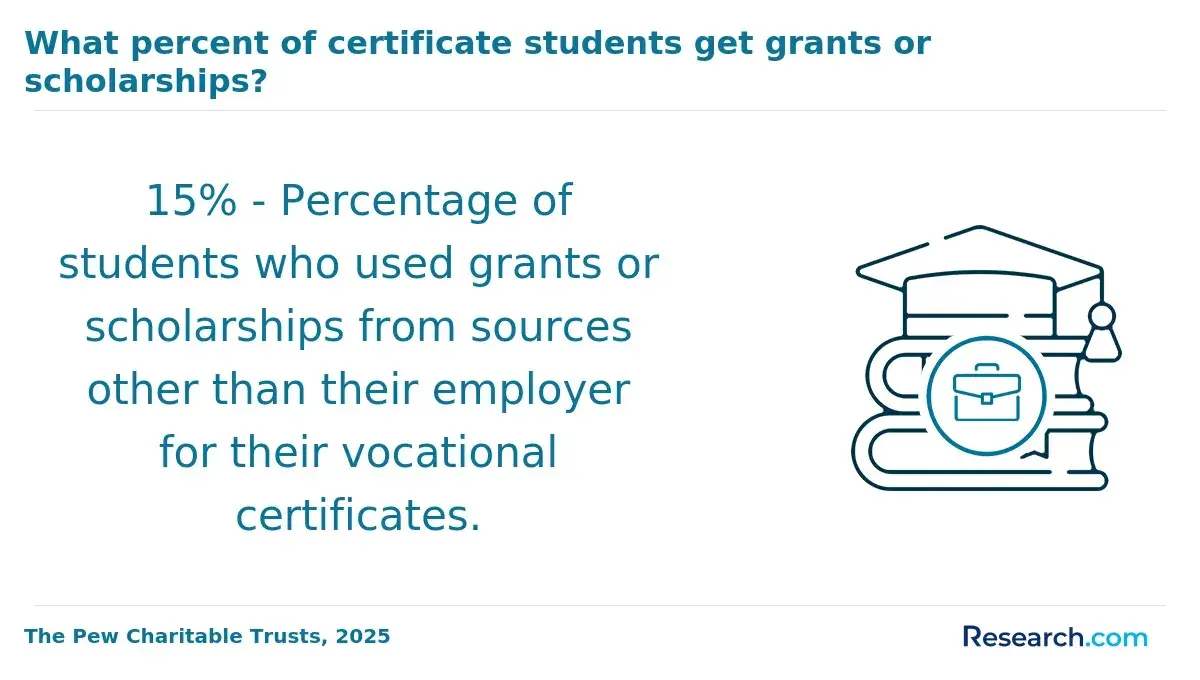
Federal aid availability depends on the institution and program's eligibility; many noncredit courses do not qualify. Ask about employer tuition assistance, workforce grants, scholarships, and whether a credit-bearing certificate can apply toward a later degree. For learners who may eventually need advanced preparation, reviewing most valuable masters degrees can help place a short credential within a longer career plan.
What Are the Admission Requirements?
Admission requirements should match the type of provider. A college-based certificate may require an application, identity documentation, placement assessment, prerequisite courses, and proof of high school completion or its equivalent. Some workforce programs use open enrollment and ask only for payment and basic eligibility information. Industry certification courses may require prior work experience, technical knowledge, or an existing credential.
Do not assume GPA, standardized tests, or transfer credit apply to every non-degree program. They may matter for credit-bearing college certificates and associate degrees, but are less common in short noncredit training. Healthcare and public-safety programs can add immunization records, background checks, drug screening, physical-capacity documentation, or CPR training because of clinical or field-placement rules.
Before applying, identify whether the program has prerequisites that delay the advertised start date. If a provider says "no requirements," ask whether that refers only to enrollment rather than eligibility for an externship, certification exam, or license.
Which Certifications or Licenses May Be Required?
Many online non-degree programs prepare learners for a separate credential but do not award it automatically. Certification is typically voluntary or employer-preferred, while licensure is a legal authorization regulated by a state board. Requirements can change by state, occupation, and work setting.
This distinction helps prevent a costly mismatch between training and the credential required for employment.
| Career area | Possible next credential | What to confirm |
| Healthcare administration | Professional coding or billing certification | Exam eligibility, coding-system coverage, and employer preferences |
| Pharmacy support | Technician certification or state registration | State board rules, training approval, and supervised-practice requirements |
| Skilled trades | Apprenticeship milestones and state or local license | Required work hours, examinations, and jurisdictional rules |
| IT and cybersecurity | Vendor-neutral or vendor-specific certification | Exam cost, renewal requirements, and prerequisite experience |
Request written confirmation that the curriculum meets any stated exam-preparation standard. For licensure, verify requirements directly with the relevant state board rather than relying solely on a recruiter or promotional page.
How Do You Choose a Reputable Program?
A reputable program makes its credential, costs, practical requirements, and career support easy to verify. Start with the occupation you want, collect several current job postings in your location, and compare each program against the actual requirements employers list. This prevents enrolling in a broad program that does not solve the hiring barrier you face.
Use this process to narrow options before signing an enrollment agreement.
- Define one target job and identify its typical education, certification, software, and experience requirements.
- Confirm the credential type, whether it carries academic credit, and whether it can transfer or stack into a later program.
- Check practical components, including labs, externships, equipment, clinical placement responsibility, and any travel requirements.
- Request a complete cost breakdown and compare it with exam fees, supplies, and financing terms.
- Ask for written details on placement support, outcomes methodology, employer partners, and post-completion access.
- Verify accreditation, state approval, certification-exam eligibility, or licensing alignment when the target career requires them.
Common red flags include pressure to enroll immediately, vague claims about "industry recognition," placement statistics without a definition of employment, and statements that a fully online program qualifies graduates for hands-on licensed work. Also avoid choosing on tuition alone: a lower-cost program may shift clinical placement, tools, exam preparation, or career-search work to the student. The best value is the option that credibly meets the requirements of your intended role at a manageable total cost.
Other Things You Should Know About
No. Legitimate programs can provide coaching, employer introductions, job leads, and interview preparation, but hiring depends on the employer, your qualifications, local demand, and any licensing or certification requirements. Treat "guaranteed job" claims carefully and read all conditions.
They can be worthwhile when they teach a specific in-demand skill, are recognized by relevant employers, include needed practical training, and cost less than the value they add to your career plan. They are less useful when a target role requires a degree, license, or experience the program cannot provide.
Ask whether you receive individual coaching, resume and interview feedback, employer events, referrals, and assistance after graduation. Request the program's written definition of "job placement," the reporting period, and whether jobs must be related to the field of study.
Sometimes. Credit-bearing certificates from colleges may apply toward an associate or bachelor's degree, subject to the receiving institution's rules. Noncredit certificates and third-party professional certificates usually do not automatically transfer, so obtain the policy in writing before enrolling.
References
- Career Planning https://ous.howard.edu/career-resources/career-planning
- What Non-Completers Want From Higher Ed https://www.wgulabs.org/posts/bridging-the-gap-what-non-completers-need-from-higher-ed
- Online Courses That Help You Get a Job Not Just Certificates https://scale.jobs/blog/online-courses-help-you-get-job-not-just-certificates
- Best Career Services Software (2026) | Prentus https://prentus.com/blog/best-career-services-software-for-colleges-and-universities
- Measuring - and Proving - the Effectiveness Of Non-Degree Programs https://www.calbright.edu/newsroom/blog/measuring-and-proving-the-effectiveness-of-non-degree-programs/
- Best Online Colleges with Job Placement Programs for Career Success https://lakewood.edu/best-online-colleges-with-job-placement-programs-for-career-success/
- High-Paying, Fast-Growing Jobs Without a Degree https://www.rockwellinstitute.com/blog/jobs-dont-require-degree/
- How Job Placement Services Really Work (And How They Can Help You Land Faster) - Turbo Transitions https://www.turbotransitions.com/outplacement-resources/how-job-placement-services-really-work-and-how-they-can-help-you-land-faster
- Best Online Colleges for Working Adults [2026] https://www.straighterline.com/blog/degree-completion-best-online-colleges-for-working-adults
- Explore Your Bright Horizons Benefits https://www.brighthorizons.com/article/education/navigating-non-degree-landscape