2027 Best Online Certificate Programs With Academic Advising

Co-Founder and Chief Data Scientist
Choosing an online certificate is harder when a program looks convenient but offers little help with course planning, transfer decisions, or career next steps. Online certificates are short academic or career-training programs; they are not the same as professional certifications earned through an exam or credentialing body. The Bureau of Labor Statistics projects healthcare support occupations to grow faster than average through 2033, making careful program selection especially important.
This guide helps prospective students compare programs that include academic advising. That support matters when choosing credit-bearing versus noncredit study, meeting licensure rules, and building toward a degree.
Key Things You Should Know
- Choose a credit-bearing certificate when you may later pursue an associate or bachelor's degree; confirm in writing which courses transfer and whether the credential stacks into a degree.
- Academic advising should include a named advisor, course sequencing, progress reviews, transfer guidance, and referral to career or accessibility services - not merely technical support.
- For regulated fields, verify state approval and clinical or practicum placement before paying tuition; an online certificate alone may not meet licensing eligibility requirements.
Top 10 Best Online Certificate Programs With Academic Advising
Popular Trade School Programs
Online trade certificates commonly cover construction management, HVAC fundamentals, electrical theory, welding safety, industrial maintenance, and logistics. They suit learners seeking foundational knowledge or advancement in a related job. Hands-on trades usually require campus labs, employer training, apprenticeships, or supervised fieldwork, so fully online study rarely replaces practical training.
Advising is valuable for mapping required lab hours and local apprenticeship steps. Select a certificate only after confirming whether it is credit-bearing and whether it prepares you for a separate state, union, or industry requirement.
Healthcare Programs
Common online or hybrid healthcare certificates include medical billing and coding, pharmacy technician preparation, health information technology, medical assisting theory, and nursing prerequisites. These options fit career changers and healthcare employees, but clinical roles often require in-person labs, background checks, immunizations, and supervised placement.
A certificate of completion does not automatically grant certification or a state license. Advising should clarify clinical-site responsibility, exam preparation, and whether the curriculum meets employer or credentialing expectations. Students seeking registered-nurse practice need an approved nursing degree pathway, not a short online certificate alone.
Criminal Justice / Law Programs
Online certificates in criminal justice, legal studies, paralegal studies, cybersecurity law, and homeland security can build knowledge for administrative, compliance, or public-safety support work. They are best for people exploring the field, supplementing prior education, or adding specialized coursework.
A certificate does not qualify someone to practice law, become a police officer, or meet every paralegal employer's preferences. Advising can help students understand background-check expectations, local hiring standards, and degree pathways. For paralegal preparation, investigate whether employers in your area prefer American Bar Association-approved education.
Arts & Design Programs
Online arts and design certificates may focus on graphic design, user experience fundamentals, digital photography, animation, web design, or portfolio development. They can work well for learners who need structured projects, software practice, and feedback while employed. A strong advisor helps align electives and portfolio work with a target role.
Compare faculty critique, software costs, portfolio ownership, and whether projects reflect current employer tools. Certificates can demonstrate focused training, but hiring in creative fields often depends more on a credible portfolio and practical skills than on the credential title alone.
What makes an online certificate program with academic advising reputable and high-quality?
A reputable online certificate has a clearly identified provider, transparent outcomes, qualified instructors, a published curriculum, accessible student services, and advising that extends beyond enrollment. For academic certificates offered by colleges, institutional accreditation is a central quality signal. For noncredit career training, employer recognition, instructor expertise, and alignment with a known certification exam may matter more than academic credit.
Before enrolling, compare the signals below. A program can be legitimate without offering every feature, but missing information is a reason to pause and ask questions.
| Quality signal | What to verify | Why it matters |
| Advising access | Named advisor, appointment process, response expectations | Helps prevent incorrect course choices and missed milestones |
| Credential clarity | Certificate type, credits, transcript status, completion requirements | Shows whether the award may transfer or support a degree plan |
| Career relevance | Employer input, current tools, practicum or portfolio expectations | Connects coursework to realistic entry points |
| Cost disclosure | Tuition, fees, books, software, exams, labs, travel | Prevents misleading comparisons based on tuition alone |
Red flags include vague claims of "accreditation" without naming an accreditor, guaranteed employment language, pressure to enroll immediately, and no written explanation of refund, transfer, or licensure policies. Ask to see the catalog page and speak with an advisor before committing.
How do online certificate programs with advising compare to campus-based options?
Online and campus certificates can cover the same learning outcomes, but they do not offer the same experience. Online study is usually best for self-directed students who need schedule flexibility and can obtain required field experiences locally. Campus or hybrid study can be the stronger choice when labs, equipment access, live critique, or clinical supervision are central to the skill.
This comparison highlights the practical trade-off: convenience is valuable only if the format still supports the requirements of the occupation or next credential.
| Factor | Online with advising | Campus-based or hybrid |
| Scheduling | Often asynchronous with scheduled advising | Fixed meeting times are more common |
| Hands-on learning | May require local placement, intensives, or separate labs | Usually easier access to facilities and supervised practice |
| Peer interaction | Discussion boards, video meetings, and virtual projects | More spontaneous in-person contact |
| Support needs | Requires proactive use of advisor and online services | May offer easier face-to-face access |
| Best fit | Working adults and geographically distant learners | Students needing structured practice and regular on-site support |
Students who want maximum pacing control can also compare a best self-paced online college option, but self-paced delivery is not ideal when a certificate has cohort deadlines, clinical rotations, or tightly sequenced courses.
What accreditation and licensing standards should these certificate programs meet?
Accreditation requirements depend on the provider and field. Institutional accreditation is most relevant for credit-bearing certificates from colleges and universities because it supports academic quality review and may affect transfer or federal aid eligibility. Programmatic accreditation is more important in certain regulated fields, such as nursing and allied health. A school's institutional status does not automatically mean every program meets professional licensing standards.
For a license-oriented certificate, confirm these points directly with the school and the state board before enrollment.
- Whether the exact online or hybrid program is approved for your state, including residents completing clinical work outside the school's state.
- Whether completion makes you eligible to apply for a licensing or certification examination, rather than merely providing exam preparation.
- Whether required practicum, laboratory, background-check, and supervised-hour standards are included in the published program plan.
- Whether the credentialing organization or licensing board has additional education, examination, ethics, or work-experience requirements.
In unregulated areas such as many business, technology, or design specialties, prioritize employer recognition, curriculum currency, and demonstrated work products rather than assuming a licensing standard exists.
What admission requirements and prior education are needed for these online certificates?
Admission standards vary sharply by credential type. College-based undergraduate certificates commonly require a high school diploma, GED, or equivalent; some ask for placement testing or prerequisite courses. Graduate certificates generally require a bachelor's degree, and may require prior coursework or professional experience. Noncredit professional certificates may use open enrollment and require only basic technology access.
Academic advising should begin before registration. An advisor can determine whether previous college credit satisfies prerequisites, whether a certificate is appropriate for a beginner, and whether a degree path would better serve a long-term goal. Do not assume transfer credit applies: policies can limit the age, grade, source, or number of credits accepted.
Applicants to healthcare, public safety, and placement-based programs may also face requirements that are not traditional admissions criteria, including immunizations, drug screening, criminal-background review, CPR training, or proof of insurance. These requirements can affect both cost and eligibility.
How long do online certificate programs with academic advising take and what do they cost?
Completion time ranges from a few months for a focused noncredit certificate to roughly one year for many credit-bearing undergraduate certificates, depending on credit load, prerequisites, and required fieldwork. A part-time format can be more manageable for working adults but usually extends the calendar time. Accelerated schedules reduce time, not necessarily workload.
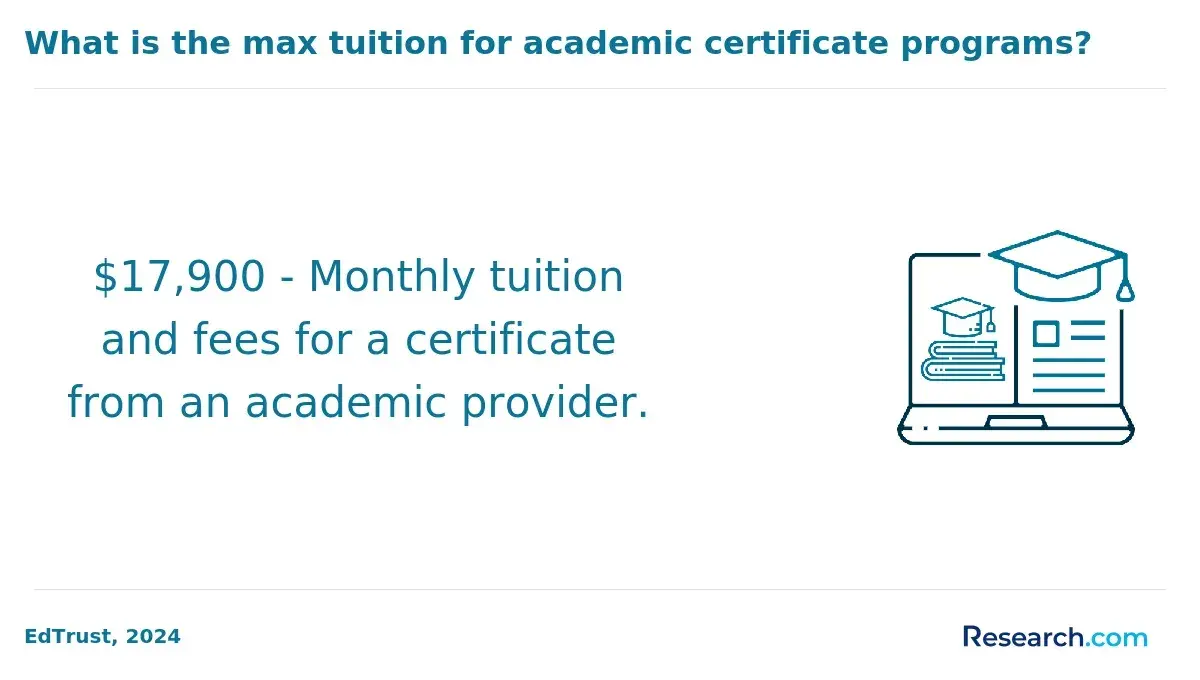
Cost comparisons should include the entire required expense, not just a per-credit figure. College Board's 2024 Trends in College Pricing reported average published tuition and fees of $4,050 for public two-year in-district students in the 2024-25 academic year. That benchmark is useful for context, but individual online certificate prices vary substantially by residency, credits, institution, and required materials.
The cost categories below help identify the true budget before you compare providers.
| Cost category | Often included in advertised tuition? | Potential impact |
| Tuition and mandatory fees | Usually | Primary direct program cost |
| Books, software, and equipment | Not always | Can be significant in design and technical programs |
| Exams, background checks, and licensure applications | Often not | Common in healthcare and regulated fields |
| Travel for labs or clinicals | Often not | May affect online and hybrid learners |
| Lost work time | No | Important when placements have daytime hours |
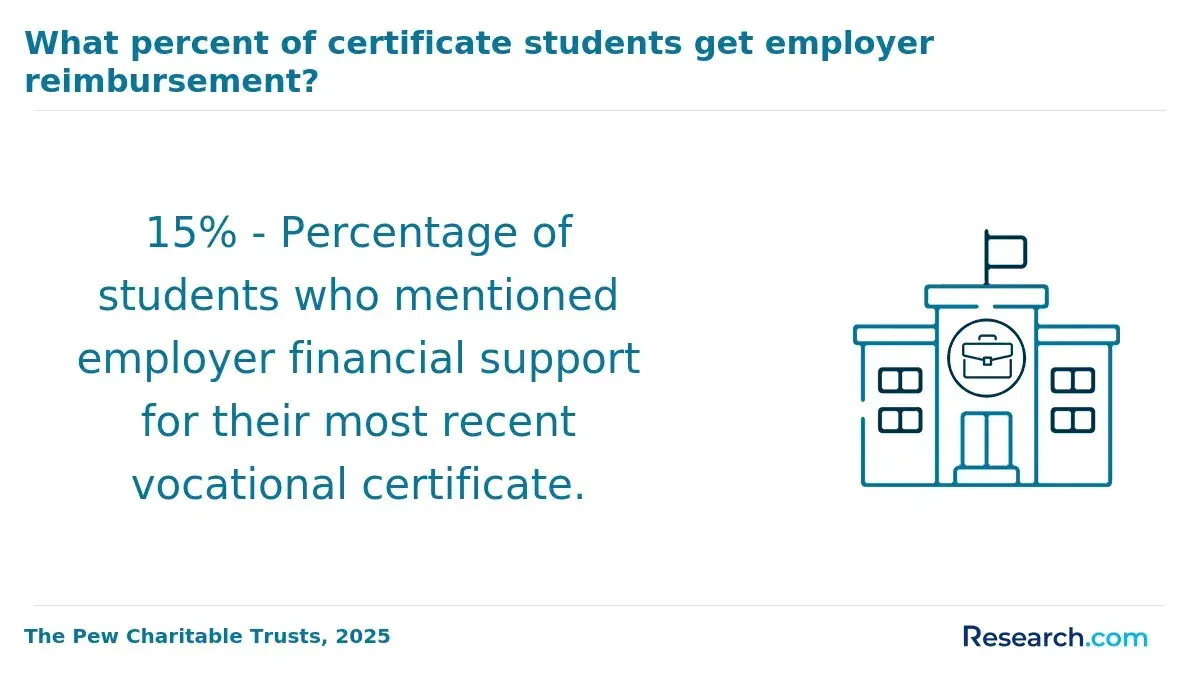
Ask about institutional aid, employer tuition assistance, payment plans, and workforce grants where applicable. Working learners who may instead need a full degree can compare most affordable online colleges for working adults before paying separately for credits that may not transfer.
What typical curriculum and advising services do these certificate programs provide?
A well-designed certificate curriculum focuses on a coherent skill set rather than a random collection of courses. Academic certificates may include general education or prerequisite coursework and appear on an academic transcript. Noncredit career certificates usually focus more narrowly on job skills and may provide a completion record rather than academic credits.
Advising services should be specific enough to influence your decisions. Look for support with the following issues, especially if you are balancing work, family, or a future degree plan.
- Program mapping that shows prerequisite order, expected weekly workload, and deadlines for registration or field experiences.
- Credit and transfer review for learners who have prior college coursework or plan to continue into an associate or bachelor's degree.
- Academic monitoring and referrals for tutoring, disability accommodations, financial-aid questions, and technology support.
- Career planning that distinguishes educational certificates from external certification examinations, portfolios, internships, or licensing steps.
Ask whether advising is proactive or only available when requested. A welcome email is not equivalent to recurring, individualized academic planning.
Which careers and job roles can these certificates help you qualify for?
Certificates can help learners enter support roles, build specialized skills for a current job, or meet prerequisites for further education. Their value is strongest when the curriculum matches a clearly defined job target and local employers recognize the training. They are less suitable when the target occupation legally requires a degree, license, apprenticeship, or substantial supervised experience.
The following examples show realistic role connections, not automatic employment outcomes.
| Certificate focus | Possible entry or adjacent roles | Important limitation |
| Medical billing and coding | Medical records or billing support | Employers may prefer certification or experience |
| IT support | Help desk or user-support roles | Technical portfolios and certifications may strengthen candidacy |
| Paralegal studies | Legal assistant or paralegal support | Hiring standards vary by employer and location |
| Graphic design | Production artist or junior design support | Portfolio quality is usually essential |
| Construction management | Project coordination or estimating support | Field experience often remains important |
If your goal is rapid preparation for a separate industry exam, review easy licenses and certifications to get online and distinguish carefully between an education provider's certificate and a certification awarded by a professional body.
What salary ranges and earning potential are realistic after completing these certificates?
Earning potential depends on occupation, location, experience, employer, hours worked, and any required license or degree; it should not be treated as the salary of certificate completers. The U.S. Bureau of Labor Statistics reported a 2024 median annual wage of $48,790 for medical records specialists, an occupation often related to health-information training. That figure is an occupational median across workers, not a promise that a short certificate leads to that pay.
Use occupational pay information to test whether the likely role can support your total education cost and time commitment.
| Career path | How a certificate may help | What may raise earnings over time |
| Healthcare administration support | Builds coding, records, and billing knowledge | Experience, recognized certification, and advanced health-information education |
| IT support | Demonstrates foundational troubleshooting skills | Technical certifications, project experience, and specialization |
| Design support | Creates structured portfolio opportunities | Portfolio depth, client work, and advanced software skills |
| Legal support | Introduces legal research and document processes | Experience, employer requirements, and additional education |
For careers that eventually require advanced graduate study, compare the long-term expense of cheapest online PhD programs separately from the value of a short certificate; these are different investments with different admissions and career purposes.
How is the job outlook and industry demand for fields served by these certificates?
Demand is strongest where certificates complement a shortage-sensitive or technology-changing field, but local hiring conditions still matter. The Bureau of Labor Statistics projects employment of medical records specialists to grow 9% through 2033, faster than the average for all occupations. That outlook supports interest in health-information skills, yet employers may still require specific software knowledge, certification, or experience.
AI and automation are changing administrative, design, legal-support, and technology work. Programs are more credible when they teach learners how to use current tools responsibly, validate outputs, protect confidential information, and document their own work. Choose a certificate that teaches durable fundamentals alongside current software rather than one built around a single platform.
Before enrolling, review local job postings for your target role. Note recurring requirements, identify which are truly entry-level, and ask an advisor whether the certificate directly addresses those requirements or is only an introductory step.
Other Things You Should Know About
Some do, but services vary. Confirm whether you receive access to a named academic advisor, how often appointments are available, and whether advising includes transfer, course sequencing, and career planning rather than enrollment assistance alone.
It can if the certificate is credit-bearing and the receiving institution accepts the courses. Transfer is never automatic. Request written confirmation of transferability and ask whether the certificate is formally stackable into a specific degree.
Eligibility depends on the institution, program length, credit status, and student circumstances. Some eligible college certificates may qualify for federal or institutional aid, while many noncredit certificates do not. Ask the financial-aid office, not only admissions.
Usually not by itself. A certificate shows completion of education or training. Professional certification and state licensure may require an exam, supervised experience, background review, additional education, or all of these. Verify requirements with the relevant credentialing organization or licensing board.
References
- Best Academic Advising Software for Colleges (2026) https://prentus.com/blog/best-student-advising-software-for-colleges-and-universities
- Certificate Programs - National Association for College Admission Counseling (NACAC) https://www.nacacnet.org/education/certificate-programs/
- Academic Advisor Skills: What Makes a Good Academic Advisor? https://www.ivywise.com/blog/academic-advisor-skills-what-makes-a-good-academic-advisor/
- Academic Advisor Training & Certificate | DC Education Group https://www.dceducationgroup.com/retention-advisor-certificate
- 2025's Best Online Graduate Certificate Programs in the U.S. https://www.onlinemastersdegrees.org/graduate-certificate-programs/
- How to Become an Academic Advisor - Graduate Programs for Educators https://www.graduateprogram.org/blog/how-to-become-an-academic-advisor/
- The Benefits of Certificate Programs in Higher Education https://moderncampus.com/blog/benefits-of-certificate-programs.html
- Academic Advising in Higher Education Graduate Certificate https://www.ucmo.edu/academics/programs/graduate-certificates/coe/career-technical-and-special-education/career-and-tech-ed/academic-advising-in-higher-education-graduate-certificate/