2027 Best Online Non-Degree Programs for Students With Some College Credit

Co-Founder and Chief Data Scientist
You have college credits but may not need - or be ready to finish - a full degree. Online non-degree programs can build targeted skills faster, but their value depends on whether the credential matches a real job requirement.
College Board reported average in-district tuition and fees of $4,150 at public two-year colleges for 2024-25, making short, credit-bearing options worth comparing carefully. This guide explains program types, transfer-credit limits, costs, career paths, and the questions to ask before enrolling.
Key Things You Should Know
- Online non-degree programs range from credit-bearing college certificates to noncredit career training; only some accept prior credits, transfer to degrees, or qualify for federal financial aid.
- For hands-on fields, online coursework commonly covers theory, while clinicals, labs, internships, apprenticeships, or licensing requirements must be completed in person and may vary by state.
- Compare total cost, institutional accreditation, employer recognition, required exams, and stackability before enrolling; low tuition has limited value if the credential does not meet your intended employer's or licensing board's standards.
Top 10 Best Online Non-Degree Programs for Students With Some College Credit
Popular Trade School Programs
Online trade programs work best for the classroom portion of careers that still require supervised practical training. Common choices include HVAC certificates, electrical technology certificates, construction management certificates, welding theory programs, and industrial maintenance certificates. An associate degree may provide broader technical coursework and general education credits, while a short certificate can support entry-level knowledge or apprenticeship preparation. Choose hybrid training when employers or state rules require shop hours. Avoid programs that suggest online coursework alone qualifies you to work independently in a licensed trade.
Healthcare Programs
Healthcare options include medical billing and coding certificates, health information technology certificates, medical assistant certificates, pharmacy technician training, and associate degrees in health-related fields. Billing, coding, and administrative coursework can often be completed online, although employers may prefer candidates who also hold a recognized professional certification. Clinical roles usually require in-person labs and supervised clinical experiences. Before enrolling, confirm whether the program prepares you for a required certification exam and whether your state or prospective employer has additional rules for practice, background checks, immunizations, or externships.
Criminal Justice / Law Programs
Online criminal justice certificates, legal studies certificates, paralegal certificates, and associate degrees can strengthen knowledge of courts, policing, corrections, legal research, and procedure. A certificate can be a practical choice for administrative, records, compliance, or legal-support work, especially if it builds on prior college coursework. It does not automatically qualify a learner as an attorney, police officer, or licensed investigator. Prospective paralegals should review local employer expectations and consider whether a program's curriculum, internship opportunities, and institutional standing align with the work they want to pursue.
Arts & Design Programs
Online certificates in graphic design, digital media, UX design, web design, photography, and animation typically emphasize software, portfolio development, and project-based feedback. These programs can help students turn prior general education credits into a focused creative pathway, but a portfolio often matters more to employers than the certificate title alone. An associate degree may be better for students who need broader foundations, structured critique, and more transferable credits. Review instructor backgrounds, software costs, ownership of completed work, and whether the program includes portfolio reviews tied to current job expectations.
What are online non-degree programs for students with prior college credit?
Online non-degree programs are organized learning experiences that do not result in an associate, bachelor's, or graduate degree. They may lead to a college-issued certificate, a career-training completion credential, a professional certificate, a microcredential, or individual academic credits.
For students with some college, the central question is whether prior coursework has a useful role. Credit-bearing certificates at colleges may accept applicable transfer credits and may later stack into an associate or bachelor's degree. Noncredit programs generally do not evaluate or award transfer credit, even when the subject resembles a college course. A professional certification is different: it is usually awarded by an external certifying organization after an exam or other requirements, not simply after completing classes.
This comparison shows why the credential label matters before you pay.
| Program type | Typical provider | Prior-credit value | Best use |
| Credit-bearing certificate | Community college or university | May transfer in or stack toward a degree | Career skills plus a possible degree pathway |
| Noncredit career program | College continuing education unit or training provider | Usually none | Focused job skills and short completion time |
| Professional certificate | University, platform, or employer partner | Usually nontransferable | Skill building or portfolio evidence |
| Industry certification preparation | College or training provider | Varies | Preparation for a separate certification examination |
Students seeking a future degree should generally prioritize a regionally or institutionally accredited college certificate with written stacking and transfer policies. Students who need one defined software, administrative, or technical skill may find a noncredit option more efficient, provided local employers recognize it.
How do online non-degree programs compare to campus-based options for flexibility and quality?
Online non-degree programs can offer meaningful scheduling flexibility, particularly for lecture-based subjects such as coding, business software, legal research, health information, and digital design. Asynchronous courses let learners work around jobs or caregiving, while live online sessions provide more structure. Quality depends less on the delivery label than on curriculum, instructor access, assessment, career support, and whether the program can deliver required hands-on practice.
The best format is the one that can verify the skills your target role requires. Use this comparison to match delivery mode to the work you expect to do.
| Format | Primary advantage | Main limitation | Usually strongest for |
| Fully online, asynchronous | Maximum scheduling control | Requires self-management | Business, IT foundations, coding, design, administration |
| Online with scheduled meetings | Regular instructor and peer contact | Fixed attendance times | Programs needing feedback and accountability |
| Hybrid | Online theory plus in-person practice | Travel and schedule coordination | Healthcare, trades, labs, and technical equipment training |
| Campus-based | Direct access to facilities and local networks | Least flexible schedule | Programs with extensive clinical, shop, or studio work |
Do not assume online means easier. A compressed eight-week course can demand the same total work as a longer term, only in less time. Ask how students receive feedback, complete practical assessments, access tutoring, and obtain help when technology fails.
How can students verify accreditation and institutional quality for online non-degree programs?
Institutional quality is especially important when you want academic credit, financial aid eligibility, a path into a degree, or employer confidence in your education. Start by confirming that the college itself holds recognized institutional accreditation, then verify any specialized approval needed for the field. A directory of accredited online degree programs can be a useful starting point when you are comparing institutions rather than standalone training vendors.
Accreditation is not a universal quality seal for every short program. Noncredit providers may not be institutionally accredited, and some legitimate industry training is delivered outside colleges. In those cases, evaluate employer recognition, instructor qualifications, current curriculum, refund terms, and independent evidence that the training prepares students for the stated exam or skill outcome.
Before applying, verify these points directly with the institution or relevant regulator.
- Confirm the institution's accreditation through the U.S. Department of Education or Council for Higher Education Accreditation directories.
- Check whether the program has specialized approval when a profession requires it, such as nursing, allied health, or certain technical occupations.
- Ask whether the exact online format is included in the approval and whether required clinical or practicum placements are available near you.
- Request written confirmation of transferability, certification-exam preparation, and any state-specific eligibility limits.
Red flags include vague accreditation claims, pressure to enroll immediately, promises of licensure without naming the licensing authority, and a refusal to provide total costs or outcomes information in writing.
What admission requirements and transfer-credit policies do online non-degree programs typically have?
Admission policies depend on the credential. Credit-bearing undergraduate certificates commonly require an application, proof of high school completion or equivalent, and official transcripts if you want prior coursework evaluated. Many open-admission community colleges do not use standardized test scores for admission, though placement assessment may affect course selection. Noncredit programs may require only registration and payment, while advanced professional certificates can require prior coursework or work experience.
Transfer credit is not automatic. Schools typically review course equivalencies, grades, course age, program fit, and residency requirements - the number of credits you must complete at that institution. A certificate that requires only a few courses may leave little room for transferred credit, even if you have many prior credits.
Use these questions to avoid paying for duplicated coursework.
- Will you conduct an official transcript evaluation before I enroll or pay a deposit?
- Which of my courses apply specifically to this certificate, not merely as elective credit?
- What minimum grade and maximum course age apply to transfer work?
- Can this certificate stack into an associate or bachelor's degree, and which credits are guaranteed to count?
- Are prior learning, military training, industry certifications, or portfolio review eligible for credit?
If application costs are a concern, compare no application fee colleges after confirming they offer your exact certificate and delivery format. A waived fee is helpful, but it should not outweigh transfer policies, required in-person components, or program quality.
How long do online non-degree programs take, and what do they cost?
Completion time ranges from a few weeks for a narrowly focused noncredit course to roughly one year for many college certificates; associate degrees commonly take longer because they include broader general education requirements. Prior credit can shorten a credit-bearing pathway only when the receiving institution accepts it toward the specific credential. Accelerated study may reduce elapsed time but can make it harder to work full time or retain complex material.
Cost is more than tuition. College Board reported $4,150 in average published in-district tuition and fees at public two-year institutions in 2024-25; individual online certificates can cost substantially less or more depending on credits, residency, and program resources. Compare the full amount rather than a per-course headline price.
This cost checklist helps reveal the price you will actually pay.
- Tuition or noncredit program fee, including different in-district, out-of-district, and online rates where applicable
- Required textbooks, online access codes, software subscriptions, tools, uniforms, supplies, and examination fees
- Clinical, lab, background-check, drug-screening, immunization, travel, or proctoring expenses for regulated programs
- Technology costs, including a reliable computer, internet access, and required software or equipment
- Lost work hours or childcare costs if required sessions, labs, or externships occur during business hours
Federal aid is generally tied to eligible, credit-bearing programs at participating institutions; many short noncredit offerings do not qualify. Ask the financial aid office about eligibility before assuming grants or loans apply. Students exploring institutions with unusual affordability models can also review online colleges that pay you to attend, while recognizing that availability and net price depend on individual aid eligibility.
What curriculum and learning formats do online certificate and non-degree programs offer?
Curriculum should mirror the actual tasks of the job or the next academic step. A strong college certificate usually has defined learning outcomes, sequenced courses, graded assessments, and transcripted credit. A noncredit career program may focus on practical projects, software practice, simulations, exam preparation, and employer-relevant tools. Neither format is automatically better; the right choice depends on whether you need transferable education, immediate skill practice, or preparation for a separate credential.
Look for an appropriate mix of learning methods rather than judging a program by video lectures alone.
| Learning feature | What it can demonstrate | Questions to ask |
| Instructor-led coursework | Structured knowledge and feedback | How quickly do instructors respond, and what are their field qualifications? |
| Projects or portfolio work | Applied skills for employers | Will I leave with work I can show, and who reviews it? |
| Virtual labs or simulations | Practice in controlled scenarios | Do simulations supplement or replace required hands-on training? |
| Externship, practicum, or clinical | Supervised real-world experience | Who secures the placement, and are sites available where I live? |
| Certification-exam preparation | Coverage of tested competencies | Is the exam separate, and do I meet all eligibility requirements? |
AI tools are increasingly used in office, design, technology, and customer-support work. Programs should teach responsible use, verification, privacy, and workflow judgment - not simply promise that an AI tool will replace foundational skills. For design and writing-related fields, confirm the program addresses authorship, portfolio ethics, and employer expectations.
What careers can online non-degree programs help support for students with some college?
Students with some college can use a non-degree program in three ways: enter a support role, add a specialized skill to existing experience, or create a bridge back to a degree. The strongest career fit occurs when the program teaches skills named in local job postings and produces evidence of competence, such as a portfolio, practicum, transcript, or qualifying exam preparation.
The following examples describe possible role directions, not guaranteed employment outcomes.
| Program focus | Potential role direction | Important limitation |
| Medical billing and coding | Billing specialist, coding support, patient-account representative | Employers may prefer an industry certification or experience. |
| IT support or cybersecurity foundations | Help desk, user support, junior technical support | Hands-on troubleshooting and certifications may affect hiring. |
| Paralegal or legal studies | Legal assistant, records specialist, litigation support | Role expectations vary by employer and jurisdiction. |
| Digital design | Production artist, content designer, junior graphic design support | A credible portfolio is often essential. |
| HVAC or electrical fundamentals | Apprentice or technician-support pathway | Licensing and supervised field training rules apply. |
A certificate is less suitable when your target job explicitly requires a degree, a state license, substantial supervised practice, or a graduate credential. In that situation, choose a stackable college certificate or an associate-degree route that preserves your prior credit and leads toward the required qualification.
What salary potential and job outlook are associated with careers from non-degree programs?
Salary and outlook data describe occupations, not what every certificate holder earns. Pay varies by location, experience, employer, schedule, licensure, and education level. Use federal labor-market data to test whether a target occupation has enough opportunity to justify the program cost, then check local listings for the credentials employers actually request.
According to U.S. Bureau of Labor Statistics May 2024 wage data, medical assistants had a median annual wage of $44,200, HVAC mechanics and installers had a median of $59,810, paralegals and legal assistants had a median of $61,010, and graphic designers had a median of $61,300. These figures are occupational medians across workers with varying education and experience; they are not starting salaries or certificate-graduate outcomes.
BLS employment projections for 2024-34 also illustrate why role-specific research matters. Medical assistants are projected to grow 12%, while graphic designers are projected to grow 2% and paralegals and legal assistants are projected to decline 1%. A positive outlook can support demand, but it does not remove the need for local experience, a portfolio, certification, or licensure where employers require them.
Compare the program against entry-level job postings in your area. Record the recurring requirements, estimate your total education cost, and identify the experience gap you must close through projects, internships, volunteer work, or apprenticeship hours.
How can students choose a reputable online non-degree program aligned with their career goals?
Choose a reputable online non-degree program by working backward from a specific outcome: the job, certification exam, promotion, or future degree you want. Do not begin with the shortest program or the most persuasive advertisement. First identify the minimum credential employers or regulators require, then select the least expensive credible path that meets that requirement.
A practical decision process can keep prior college credit from being wasted.
- Collect several current job postings for your target role and note required education, software, certifications, licensure, and experience.
- Decide whether you need transferable academic credit, a portfolio, exam preparation, supervised practice, or a combination of these outcomes.
- Request a written transfer-credit evaluation and a complete cost estimate from each credit-bearing college.
- Verify institutional accreditation, specialized approval, and state eligibility before paying tuition for regulated careers.
- Compare schedules, required in-person sessions, learner support, withdrawal policies, and the program's ability to arrange clinicals or externships.
- Ask whether the credential stacks into a higher award if your career goal later requires a degree.
Common mistakes include confusing a completion certificate with an industry certification, assuming all credits will transfer, overlooking unpaid practical hours, and treating occupational wage data as a personal salary promise. If your long-term plan requires graduate study, evaluate your undergraduate pathway first; a guide to the cheapest masters degree options can help frame that later decision without substituting for prerequisite planning.
Other Things You Should Know About
Possibly. Credit-bearing colleges may review prior transcripts, but acceptance depends on course equivalencies, grades, course age, and whether the credits fit the certificate requirements. Obtain a written evaluation before enrolling.
Some credit-bearing certificate programs at eligible institutions may qualify for federal aid, but many noncredit and short career-training programs do not. Confirm eligibility directly with the school's financial aid office.
It can support a job search when it teaches skills employers request and gives you evidence of competence, such as projects, a portfolio, an externship, or preparation for a recognized certification. It does not guarantee employment.
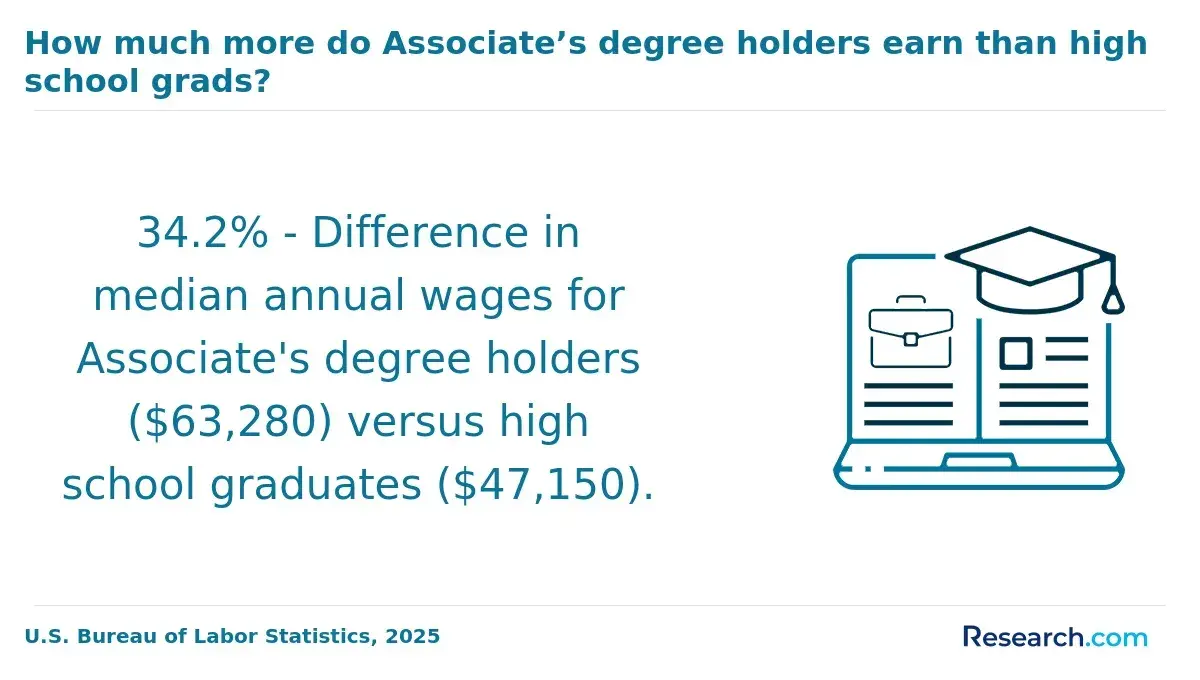
A certificate may be better when you need focused skills quickly. An associate degree may be better when your target role requires broader education, you want more transferability, or you are close to completing enough credits for a degree.
References
- Top Online Schools That Accept Transfer Credits https://www.edvisorly.com/student-guides/online-schools-that-accept-transfer-credits
- Beyond Financial Aid - Finaid https://finaid.org/beyond/
- Importance of Accredited Online Degree Programs | TUW https://www.tuw.edu/school-news/importance-of-accredited-online-degree-programs/
- What Non-Completers Want From Higher Ed https://www.wgulabs.org/posts/bridging-the-gap-what-non-completers-need-from-higher-ed
- Best Online Schools for Transferring Credits [2026 Guide] https://www.straighterline.com/blog/transfer-best-online-schools-for-transferring-credits
- Financial Aid For Online College Students | LearnHowToBecome.org https://www.learnhowtobecome.org/career-resource-center/financial-aid-for-online-colleges/
- New Research Shows Community Colleges are a Great Way To Boost Career Prospects - Without Getting a Degree https://www.calbright.edu/newsroom/blog/new-research-shows-community-colleges-are-a-great-way-to-boost-career-prospects-without-getting-a-degree/
- Why Take Single College Courses Online? | University of Phoenix https://www.phoenix.edu/articles/online-college/why-take-single-college-courses-online.html
- Who Should Take Online Courses: How Sophia Learning Can Help https://www.sophia.org/blog/sophia-experience/who-should-take-online-courses/
- Getting a job without a 4-year degree. Prospects increase with a certificate. https://www.luminafoundation.org/resource/non-degree-credentials-provide-value-for-adults-in-the-labor-market/