2027 Best Online Non-Degree Programs With Transparent Tuition

Co-Founder and Chief Data Scientist
Choosing a short online program is difficult when the advertised price excludes exams, software, clinical requirements, or subscription fees. Online non-degree programs can provide focused training without committing to a degree, but they vary widely in recognition and career value. The U.S. Bureau of Labor Statistics projects healthcare support occupations to grow faster than average from 2023 to 2033, making targeted training especially relevant for career changers. This guide explains how to compare transparent tuition, credential types, quality signals, costs, timelines, and realistic career pathways before you pay.
Key Things You Should Know
- Transparent tuition means the provider clearly states the full required program price, payment schedule, refund policy, and foreseeable add-on costs; a low headline price alone is not enough.
- Non-degree programs range from noncredit career training to credit-bearing college certificates; completion certificates are not the same as professional certifications or state licenses.
- Use occupational data carefully: BLS reported a 2023 median annual wage of $48,780 for all U.S. occupations, but a short program does not by itself guarantee entry into a particular role or salary.
Top 10 Best Online Non-Degree Programs With Transparent Tuition
Popular Trade School Programs
Online trade-focused options often include HVAC theory, electrical fundamentals, welding safety, construction estimating, CAD drafting, and automotive service preparation. They suit learners seeking introductory knowledge or exam preparation, but hands-on trades usually require lab practice, an apprenticeship, employer training, or supervised fieldwork.
A completion certificate may support an application; it does not replace a state-required license. Ask whether tools, kits, proctored exams, in-person intensives, and certification exam fees are included. Choose hybrid training when the occupation requires demonstrable physical skills.
Healthcare Programs
Common online healthcare non-degree programs include medical billing and coding, pharmacy technician preparation, medical assisting coursework, health information support, and patient-care fundamentals. Billing and coding can be largely online, while medical assisting, phlebotomy, nursing aide, and similar patient-facing paths generally require clinical practice.
Verify that the curriculum meets the eligibility rules for any intended certification examination and check state-specific licensing or registration rules. Transparent pricing should identify textbooks, background checks, immunizations, drug screening, liability coverage, clinical-placement charges, and exam vouchers.
Criminal Justice / Law Programs
Online non-degree options in this area include paralegal studies certificates, legal research, victim advocacy, criminal justice foundations, cybersecurity law, and court reporting preparation. A program certificate can build practical knowledge, but it is not a law degree and does not authorize legal practice.
Paralegal employers may prefer education approved by the American Bar Association or relevant experience, depending on the role. Learners should confirm whether software access, legal database training, internships, background checks, and local court or agency requirements affect the total commitment.
Arts & Design Programs
Online arts and design programs commonly cover graphic design, UX design, digital illustration, photography, video editing, animation, and portfolio development. These are often noncredit professional certificates or short career-training programs rather than academic degrees. Their value depends heavily on current software skills and a polished portfolio, not the certificate title alone.
Compare included software licenses, instructor feedback, portfolio reviews, live critique sessions, and ownership of completed work. A degree may be the stronger option for roles requiring broad design education, while a short program can help professionals update a targeted skill.
How do online non-degree programs with transparent tuition compare to campus options?
Online non-degree programs are usually more flexible than campus options, but their suitability depends on whether the target skill can be assessed remotely. Asynchronous programs work well for software, business operations, coding theory, billing, design tools, and legal research. Campus or hybrid formats are often stronger for equipment-intensive, clinical, studio, or lab-based learning because they provide supervised practice.
The comparison below separates convenience from the evidence employers, licensing boards, or certification organizations may expect. Learners considering a longer academic route can also compare best degrees to get when their intended occupation typically requires a degree.
| Decision factor | Online non-degree program | Campus or hybrid option |
| Schedule | Often self-paced or evening-friendly | Usually fixed meeting times |
| Hands-on learning | May require learners to arrange local practice | More direct access to labs, equipment, and supervision |
| Cost visibility | Can be clear, but verify third-party exam and software fees | May include campus, lab, parking, and materials charges |
| Best fit | Knowledge-based skills and working adults | Clinical, technical, and performance-based skills |
Online delivery is not automatically cheaper. Compare total required spending and the quality of feedback, practice, and career support rather than selecting solely on convenience.
What accreditation and quality standards should online non-degree programs meet?
Quality standards depend on who issues the credential. A college's credit-bearing certificate should be offered by an institution accredited by a recognized institutional accreditor. Noncredit training providers may not have institutional accreditation, so evaluate their curriculum, instructors, assessment methods, refund terms, and alignment with an employer-recognized certification instead.
For regulated fields, the decisive standard may be programmatic approval, state authorization, or eligibility for an external exam - not general accreditation.
For example, a healthcare training program may need clinical arrangements and curriculum features required by a certifying body. Do not infer eligibility from phrases such as "certification prep" or "career-ready."
Before enrolling, use these checks to distinguish a credible program from a polished marketing page:
- Identify the exact credential awarded: Academic certificate, continuing-education certificate, course completion record, or exam-preparation program.
- Confirm whether it is credit-bearing and obtain the written policy on transfer or stackability before payment.
- Read the external certification or state-board eligibility requirements independently, especially for healthcare and skilled trades.
- Request the complete curriculum, instructor qualifications, required technology, assessment format, and refund policy.
A quality program describes what it teaches and what it does not qualify a graduate to do. Vague claims of "accreditation" without naming the accreditor, approval, or scope are a meaningful red flag.
How much do online non-degree programs cost and what fees are transparent?
Transparent tuition is a decision standard, not simply a posted number. A provider should disclose whether tuition is charged per course, per term, per month, or as a single package; whether payment plans add charges; and which expenses are mandatory.
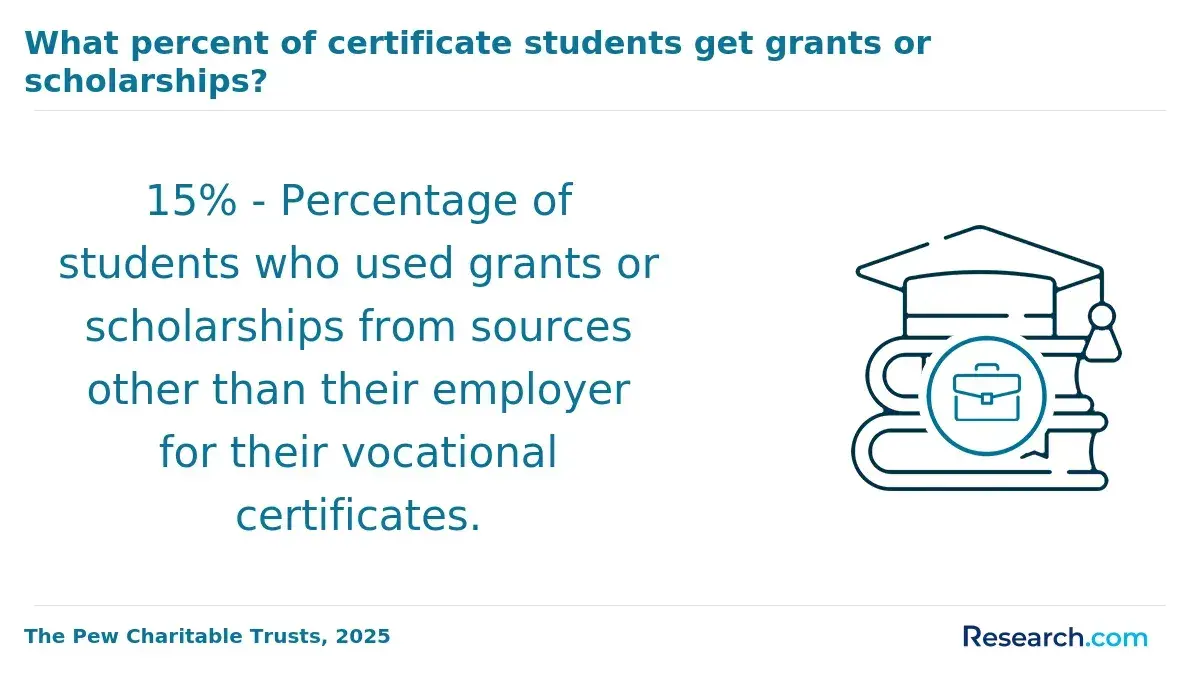
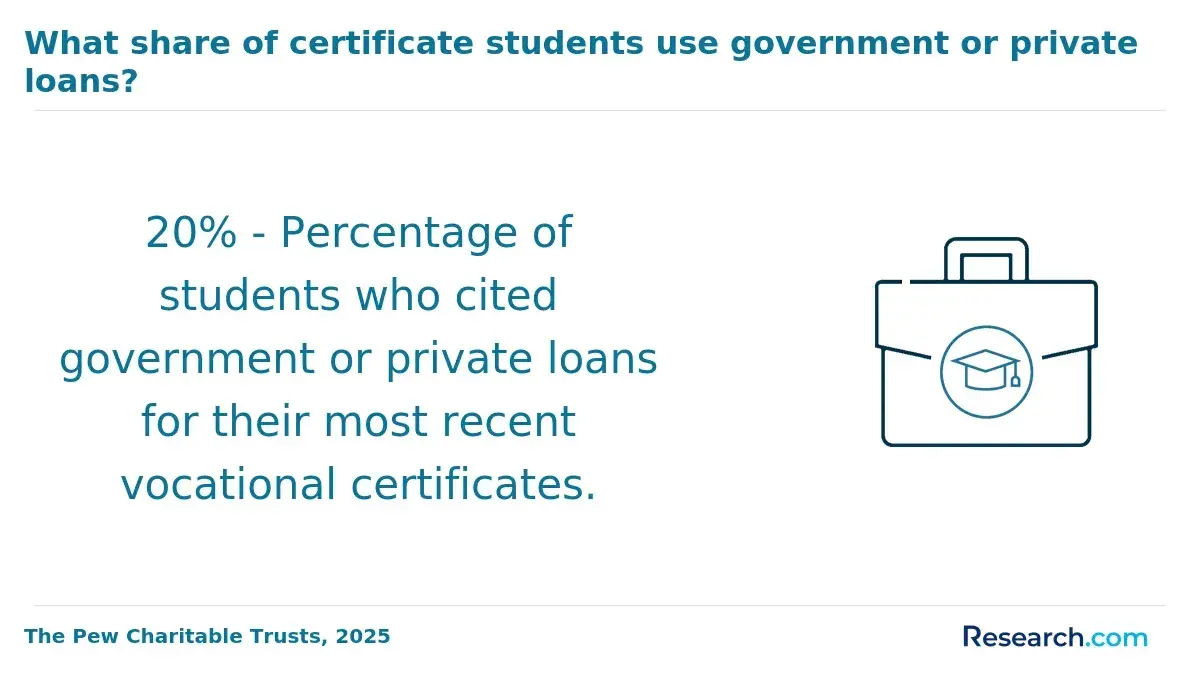
Federal student aid is generally available only for eligible programs at participating institutions, so many short, noncredit programs require cash payment, employer support, private financing, or a provider payment plan.
The National Center for Education Statistics reported that average tuition and required fees at U.S. public two-year institutions were $3,990 for the 2022-23 academic year. That benchmark is useful for comparing a credit-bearing community-college option, but it does not represent the cost of a particular online certificate or include living expenses and materials.
Use this cost checklist to turn an advertised tuition figure into a realistic budget. For learners weighing degree-level affordability, majors that make money and are fun can provide useful context about longer-term education choices.
| Cost item | What transparent disclosure should show | Why it matters |
| Tuition | Total required amount and payment timing | Reveals whether a monthly price continues beyond the expected timeline |
| Technology | Computer specifications, software, platform, and proctoring costs | Required tools can materially change the budget |
| Materials | Books, kits, uniforms, tools, or supplies | Hands-on fields often have unavoidable purchases |
| External requirements | Exam, background-check, clinical, licensing, or travel charges | These may be necessary for the intended next step |
| Withdrawal terms | Refund deadlines and cancellation process | Protects learners if the format or content is unsuitable |
Be wary of "all-inclusive" language that does not define included items, tuition pages that omit the number of required courses, and financing offers that obscure the total repayment amount. Ask for the complete cost in writing before you enroll.
What admissions requirements and prerequisites do online non-degree programs typically have?
Admissions rules vary by credential type. Many noncredit programs use a straightforward registration process and may require only identification, payment, basic technology, and, for some career tracks, a high school diploma or equivalent.
Credit-bearing college certificates can require an application, placement steps, transcripts, prerequisite courses, or residency documentation. Advanced professional certificates may expect prior work experience or a related degree.
Healthcare and public-safety pathways can add practical screening requirements. A clinical site, employer, or licensing authority may require immunizations, CPR training, a background check, drug screening, or an ability-to-perform assessment. Meeting a school's admission rules does not ensure placement at a clinical site or eligibility for a license.
Ask the provider to distinguish clearly between admission requirements, program-completion requirements, and external examination requirements. This prevents a costly mistake: enrolling in an accessible online course that does not meet the prerequisites for the credential or role you actually want.
How long do online non-degree certificate programs take to complete?
Online non-degree certificate timelines range from a few weeks for a narrowly focused course sequence to roughly a year or more for a credit-bearing college certificate.
Self-paced programs can be faster for learners with substantial weekly availability, but "self-paced" may still have deadlines, instructor response windows, subscription expiration dates, or proctored assessments. Hybrid healthcare and trade programs can take longer because clinical, lab, or externship scheduling is limited by local capacity.
Compare the stated duration with the required workload, not marketing labels such as accelerated. A 12-week program requiring 15 hours each week demands about 180 hours of study and practice. That calculation helps working adults determine whether rapid completion is realistic without sacrificing portfolio quality, exam readiness, or job-search time.
Choose a shorter program when you need a defined skill quickly and already meet prerequisites. Choose a longer, credit-bearing or hybrid option when you need documented hands-on practice, a broader foundation, or a credential that can stack into further education.
What curriculum and learning outcomes do top online non-degree programs offer?
Top online non-degree programs make learning outcomes concrete: learners should know which tasks they will be able to perform, how instructors assess those tasks, and what evidence they can show employers.
A sound curriculum generally combines foundational concepts, current tools, applied assignments, feedback, and an assessment aligned with the intended role or external certification exam.
The most useful learning model depends on the field. Design learners need portfolio artifacts and critique; coding learners need projects and code review; healthcare administration learners need realistic workflow practice; skilled-trades learners need supervised physical practice beyond online theory.
AI tools are increasingly part of workplace workflows, so programs should teach responsible use, verification, privacy, and original problem-solving rather than treating automated output as proof of competence.
Before paying, request a module list and sample assignment. Look for measurable outcomes such as creating a portfolio piece, interpreting a medical claim, producing a CAD drawing, or completing a legal research memo - not only broad promises to "master" a field.
What careers and job roles can online non-degree certificates support?
Non-degree certificates can support entry-level applications, career pivots, internal advancement, or preparation for a separate certification exam. Their strongest fit is usually a role where employers value a defined technical skill, a current toolset, documented project work, or industry examination eligibility.
They are less suitable when an occupation legally requires a degree, license, apprenticeship, or extensive supervised experience.
BLS projects computer and information technology occupations to grow much faster than average from 2023 to 2033, partly because of continued demand for software, cybersecurity, data, and AI-related capabilities.
A short program can help build relevant skills, but hiring remains competitive and employers may expect work samples, prior experience, or recognized certifications.
Possible outcomes should be evaluated by job requirements rather than program labels:
| Program focus | Potential supporting roles | Important limitation |
| Medical billing and coding | Billing support, claims processing, coding support | Employer preferences and external certification expectations vary |
| UX or graphic design | Junior designer, production artist, freelance project support | Portfolio quality commonly outweighs completion alone |
| IT support or cybersecurity foundations | Help desk, technical support, junior IT pathways | Certifications and practical troubleshooting may be expected |
| Paralegal studies | Legal assistant or paralegal support roles | Requirements differ by employer and jurisdiction |
For a lower-commitment way to compare exam-based pathways, review easy licenses and certifications to get online. Remember that an industry certification, when earned, is separate from a school-issued certificate of completion.
What salary ranges and earning potential are linked to non-degree certificates?
Salary information should be used as labor-market context, not as a promised return on a short program. Pay varies by location, experience, employer, schedule, education level, licensure, and the responsibilities actually assigned.
The BLS reported a 2023 median annual wage of $59,810 for computer user support specialists and $47,460 for medical records specialists; those figures describe workers in the occupations, not earnings automatically produced by a certificate.
Compare the program's full cost with a conservative outcome: whether it helps you qualify for a credible next step, produce work samples, pass a relevant exam, or move into a role with enough openings in your area.
Ask the provider whether it publishes audited or clearly defined completion, employment, and earnings data. If it does, check the reporting period, sample size, job-definition rules, and whether outcomes include part-time or unrelated work.
A certificate is often most defensible financially when it fills a specific skills gap at a modest, fully disclosed cost. It is riskier when the provider uses high salary claims but cannot explain the occupations, geographic area, or evidence behind them.
How can students choose reputable online non-degree programs with clear tuition policies?
Start with the job or skill target, then work backward to the minimum credible training route. Compare at least two providers using written disclosures rather than sales calls. If remote work is your goal, assess whether the curriculum produces demonstrable digital work and whether target roles are actually remote-friendly; this guide to best degrees for remote work can help frame the broader education decision.
A practical comparison process keeps transparent tuition at the center:
- Find several current job postings for the role you want and note required skills, licenses, degrees, and certifications.
- Match each program's published outcomes and curriculum to those requirements, identifying any gaps you must cover elsewhere.
- Get a written itemization of tuition, materials, exam fees, subscriptions, travel, clinical costs, and financing terms.
- Verify institutional accreditation, program approval, or certification-exam eligibility with the relevant independent organization.
- Review withdrawal, refund, extension, and career-services policies before making a deposit.
Common mistakes include confusing a course certificate with a professional certification, assuming online theory satisfies hands-on licensing requirements, and financing a program before confirming total cost.
The better alternative is to document the required next step - job application, external exam, apprenticeship, or college credit - and choose only a program that demonstrably supports it.
Other Things You Should Know About
It means the provider clearly discloses required tuition, payment timing, mandatory fees, materials, technology, refund terms, and foreseeable costs such as exams or clinical requirements. Request this information in writing.
They can be worthwhile when they teach a specific employer-relevant skill at a reasonable total cost and fit the requirements of your target role. They are less useful when a job requires licensure, a degree, supervised training, or a certification the program does not qualify you to pursue.
Possibly, but eligibility depends on the institution and program. Many short noncredit programs are not eligible for federal aid. Ask the school's financial-aid office whether the exact program qualifies, and compare employer tuition assistance and payment plans carefully.
No. A certificate usually documents completion of education or training from a school or provider. A professional certification is generally awarded by a certifying organization after a person meets its standards, which may include an exam, work experience, continuing education, or renewal.
References
- The Most Popular Accredited Online Colleges https://www.onlineu.com/online-schools/most-popular
- What Are the Benefits of Online Education for Adult Learners? https://www.straighterline.com/blog/self-paced-what-are-the-benefits-of-online-education-for-adult-learners
- Aid for Non-Traditional Students - Finaid https://finaid.org/otheraid/nontraditional/
- Best Tuition Free Colleges - OnlineDegree.com https://www.onlinedegree.com/article/best-free-tuition-colleges/
- Education Department's Proposed Higher Ed Rule Includes Key Transparency Provisions for Students https://www.ihep.org/education-departments-proposed-higher-ed-rule-includes-key-transparency-provisions-for-students/
- New Research Shows Community Colleges are a Great Way To Boost Career Prospects - Without Getting a Degree https://www.calbright.edu/newsroom/blog/new-research-shows-community-colleges-are-a-great-way-to-boost-career-prospects-without-getting-a-degree/
- Top 50 Scholarships for Non-Traditional Students to Apply for in July 2026 https://bold.org/scholarships/by-type/non-traditional-scholarships/
- Explore Your Bright Horizons Benefits https://www.brighthorizons.com/article/education/navigating-non-degree-landscape
- Short-term programs bring lasting benefits - when student centered https://www.luminafoundation.org/focus-magazine/spring-2023/short-term-programs-bring-long-lasting-benefits-when-designed-with-students-in-mind/
- Nondegree providers face high costs, challenges standing out in a crowded space, report finds https://www.highereddive.com/news/non-degree-programs-high-costs-crowded-market/644054/