2027 Best Online Non-Degree Programs With Student Success Coaching

Co-Founder and Chief Data Scientist
Choosing a short online program is difficult when providers promise fast career results but offer very different levels of coaching, recognition, and hands-on preparation. Online non-degree programs can provide focused training without a full degree, while success coaches add planning and accountability.
The U.S. Bureau of Labor Statistics projects healthcare support occupations to grow faster than average from 2024 to 2034, making targeted training worth evaluating carefully. This guide helps working adults compare program types, costs, support quality, and realistic next steps.
Key Things You Should Know
- Choose a program based on the job's actual entry requirements. A short certificate may build skills, but regulated healthcare and legal roles can require state approval, clinical hours, an exam, or a separate license.
- Student success coaching should be measurable: look for scheduled check-ins, progress planning, academic or technical support, career guidance, and clear escalation when you fall behind.
- Use occupation-level data cautiously. For example, BLS reports a $48,780 median annual wage for medical assistants in May 2024, but completing an online certificate alone does not guarantee that wage or employment.
Top 10 Best Online Non-Degree Programs With Student Success Coaching
Popular Trade School Programs
Online trade training commonly covers HVAC fundamentals, electrical theory, welding safety, construction estimating, automotive systems, and logistics. These programs suit learners seeking foundational knowledge or exam preparation, but fully online study cannot replace required shop practice, apprenticeships, or state-mandated supervised hours.
HVAC and electrical learners should verify whether local employers accept the credential and whether in-person labs are included. A certificate can be useful for entry-level support roles; apprenticeships are often the stronger route for skilled-trade licensure.
Healthcare Programs
Common options include medical billing and coding, pharmacy technician preparation, medical assisting, health information, and patient care training. Billing, coding, and administrative programs can be delivered largely online, while clinical programs need approved labs, externships, background checks, immunizations, and skill assessments.
A school certificate is not the same as a professional certification such as an exam-based coding credential. Before enrolling, confirm employer expectations, certification-exam eligibility, and whether the school arranges a local clinical placement.
Criminal Justice / Law Programs
Non-degree options may cover paralegal studies, legal research, court reporting foundations, cybersecurity, corrections, or private-security training. They can help learners understand procedures and build job-relevant skills, but requirements vary substantially by role and state.
Paralegal employers may prefer formal education or supervised experience, and private-security work can require state licensing. For legal support careers, prioritize programs that teach research, writing, ethics, document management, and practical software rather than making broad promises about legal employment.
Arts & Design Programs
Online non-degree programs in graphic design, UX design, digital photography, animation, web design, and video editing usually emphasize portfolio development. They can work well for career changers who need structured projects and feedback, particularly when coaching includes portfolio reviews and job-search support.
Employers often evaluate demonstrable work more closely than course titles. Confirm which software is required, the cost of subscriptions and equipment, instructor feedback frequency, and whether the program teaches current workflows rather than only introductory tools.
What are online non-degree programs with student success coaching and how do they work?
Online non-degree programs are organized learning experiences that do not culminate in an associate's, bachelor's, or graduate degree.
They may award a school certificate, completion badge, professional certificate, microcredential, or no formal credential beyond a transcript or record of completion. Providers include colleges, universities, workforce organizations, employers, and private training companies.
Student success coaching is structured learner support rather than subject instruction. A coach may help a student set weekly goals, navigate the learning platform, identify barriers, use tutoring, prepare for an externship, and stay on track. The strongest models specify how often coaching occurs and what happens if a learner misses milestones.
These programs fit adults who need a targeted skill, career exploration, or preparation for a separate industry exam. They are a weaker fit when the target occupation requires a degree, extensive supervised practice, or a license that the program cannot support.
How do online non-degree programs compare to campus-based options for working adults?
For working adults, online delivery can reduce commuting and permit asynchronous study, but flexibility does not mean self-paced or easier. Campus programs may offer more immediate access to equipment, labs, clinical partners, and peer networks. The right choice depends on whether practical training is central to the intended role.
The comparison below separates convenience from the resources that may affect employability and completion.
| Decision factor | Online non-degree program | Campus-based option |
| Schedule | Often asynchronous with fixed assignment deadlines | Scheduled meetings and travel requirements |
| Hands-on learning | May require local labs, kits, or externships | Usually easier access to facilities and instructors |
| Coaching need | Especially valuable for accountability and navigation | May be supplemented by face-to-face support |
| Best fit | Knowledge-based, administrative, digital, or exam-prep training | Programs requiring frequent supervised practice |
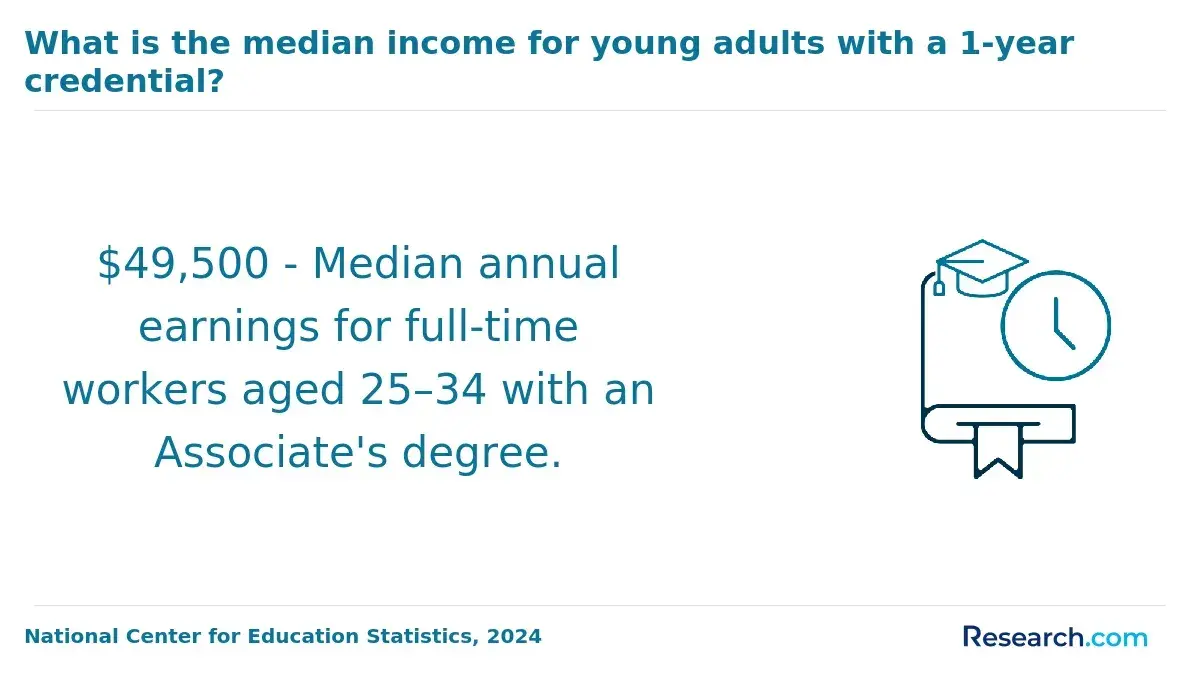
Adults seeking a faster route to a full undergraduate credential should also compare 2 year accelerated bachelor degrees; a non-degree program is usually shorter, but it does not provide the breadth or degree status of a bachelor's program.
What accreditation and quality standards should these non-degree programs meet?
Quality review starts with the provider, then moves to the credential's relevance. For a credit-bearing certificate at a college, verify that the institution holds recognized institutional accreditation and that the certificate appears in its official catalog.
For noncredit career training, examine instructor qualifications, curriculum transparency, employer partnerships, assessment methods, refund policies, and documented outcomes.
Programmatic approval matters most in regulated fields. Nursing, allied health, cosmetology, commercial driving, and many security-related pathways can have state-specific rules. A general institutional accreditation claim does not prove a program meets licensing-board requirements.
Ask for written answers to these checks before paying a deposit.
- Is the credential credit-bearing, noncredit, or preparation for a separate certification examination?
- Does the program meet requirements in the state where the learner plans to work?
- Who provides coaching, how frequently are meetings offered, and what support is included in tuition?
- Can the provider document required clinical, lab, practicum, or externship arrangements?
What admission requirements and prior education are needed for these certificate programs?
Admission rules depend on the provider and credential type. Many noncredit programs require only an application, identity verification, payment arrangement, and basic technology access.
College-based undergraduate certificates may require a high school diploma or equivalent, placement review, and sometimes prerequisite coursework. Advanced professional certificates may require prior college study or industry experience.
Do not assume a GPA, standardized test, or transfer-credit policy applies to every program. Ask whether prior learning can waive a course, whether credits can later apply to a degree, and whether a background check or health documentation is required.
Learners whose long-term goal is graduate study should understand that a non-degree credential rarely substitutes for undergraduate degree admission requirements. Review options such as online graduate programs that accept 2.0 GPA only when a completed bachelor's degree and graduate admission are the actual goals.
How long do online non-degree programs take and what do they typically cost?
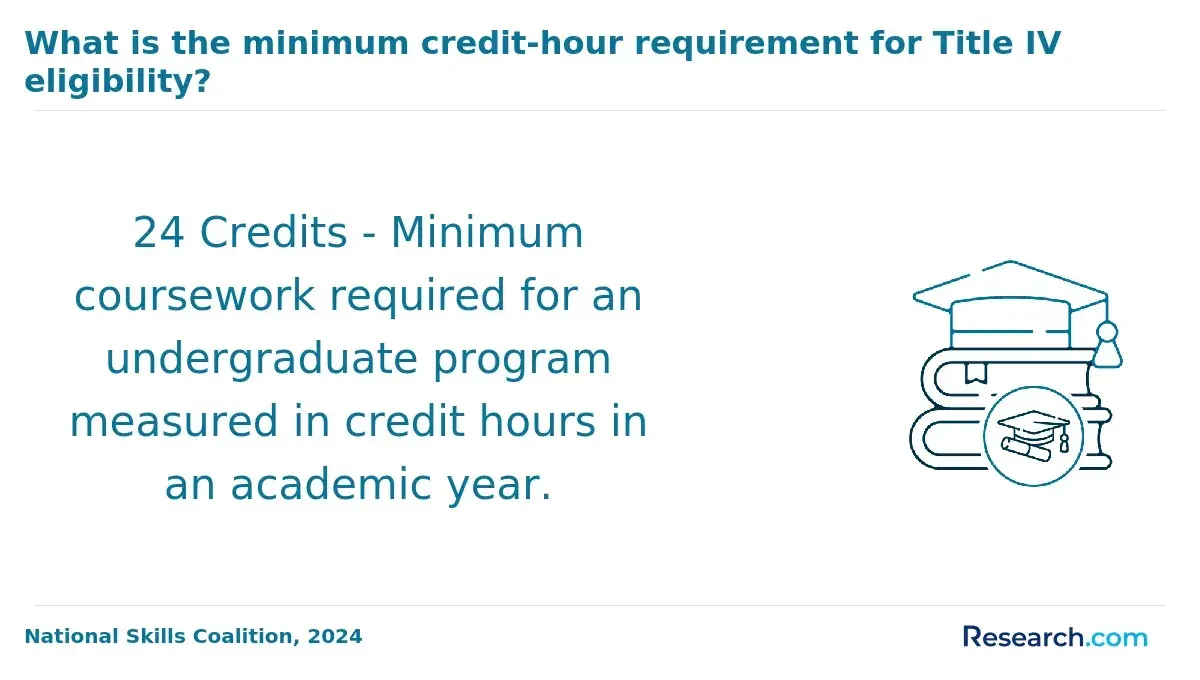
Completion can range from a few weeks for a focused software or exam-prep course to roughly one year for a college certificate with multiple courses and practical requirements. Part-time pacing makes a program more manageable for workers but extends the calendar time. Clinical placements, certification-exam scheduling, and missed courses can add time.
Cost is more than advertised tuition. Compare the full out-of-pocket amount and the value of the credential, especially because noncredit programs may have limited federal aid eligibility.
| Cost component | Why it matters | Question to ask |
| Tuition and fees | May be charged per course, term, or bundle | What is the total required price through completion? |
| Equipment and software | Design, technical, and clinical programs may require paid tools | Which items are mandatory and what do they cost? |
| Exam and licensing fees | Often separate from school tuition | Is the examination included, and is it optional or required? |
| Travel and placement costs | Labs, proctoring, and clinical work may be local | Who pays for travel, background checks, and uniforms? |
Compare the program with easy degrees to get online that pay well when a short credential does not meet the education level employers request. A degree costs more time and money, but may be a better investment for roles that consistently require one.
What curriculum and coaching services do student success coaches provide in these programs?
A credible curriculum maps lessons to a defined outcome: workplace skills, a portfolio, an industry examination, or preparation for the next academic step.
It should identify required projects, assessments, software, live sessions, and any in-person component. Coaching should complement instruction, not replace qualified faculty or technical feedback.
Look for services that make support concrete rather than promotional.
- Initial goal-setting that connects the program to a realistic role, certification exam, or education pathway
- Regular progress reviews with documented milestones and outreach after missed work
- Referrals to tutoring, accessibility services, technology help, financial-support resources, or mental-health services when available
- Career support such as resume feedback, portfolio review, interview practice, and transparent limits on placement assistance
Coaching is particularly valuable in online programs because it can identify scheduling or technology problems early. It cannot compensate for a curriculum that lacks required hands-on practice, current tools, or recognition from relevant employers.
What career paths and job roles can these non-degree credentials support?
Non-degree credentials can support entry-level or adjacent roles when employers value the underlying skill. Examples include billing support, coding support, IT help desk work, digital-content production, administrative coordination, customer operations, logistics support, and junior design work.
In trades and healthcare, the credential may instead be one step toward an apprenticeship, exam, externship, or license.
Match the credential to the role's real threshold before enrollment.
| Program focus | Potential role direction | Important limitation |
| Medical billing and coding | Billing, claims, or coding-support work | Employers may prefer an industry certification or experience |
| IT support | Help desk or technical-support roles | Skills testing and vendor certifications can matter |
| Digital design | Production design or content-support work | A portfolio is commonly more persuasive than completion alone |
| HVAC or electrical foundations | Helper, trainee, or apprenticeship pathway | Hands-on training and licensing rules remain separate |
Older adults changing careers may benefit from programs with deliberate technology onboarding and coaching. Degrees for seniors may be a better comparison when the desired transition requires a broader academic credential.
What salary ranges and advancement opportunities are common after completing these programs?
Salary depends on occupation, location, experience, employer, shift, licensure, and performance, not merely on completing a non-degree program. Use occupational data to estimate the labor-market context, then confirm local job postings and required credentials.
The BLS reported a May 2024 median annual wage of $48,780 for medical assistants; this is an occupation-wide figure and medical assistant eligibility rules vary by employer and state.
Advancement is more likely when a short credential forms part of a documented pathway. A learner might begin in support work, gain supervised experience, earn a separate professional certification, or stack credit-bearing courses into an associate or bachelor's degree. Ask whether the provider can show that pathway in writing.
Be cautious of programs that cite high occupational wages without stating whether graduates qualify for the role, whether local openings exist, or whether additional credentials are needed.
How can students choose a reputable online non-degree program with effective success coaching?
A reputable program makes its credential, learning format, costs, instructor qualifications, and coaching model easy to verify. The most common mistake is choosing by a low monthly payment or short completion claim while overlooking externships, exam eligibility, software, and local licensing rules.
Use this process to make a defensible comparison before enrolling.
- Identify three local job postings for the role you want and list their required education, experience, licenses, and certifications.
- Request the complete curriculum, total-cost disclosure, refund policy, coaching schedule, and any placement or outcome definitions in writing.
- Confirm whether the credential is credit-bearing, transferable, industry-recognized, or simply a certificate of completion.
- For regulated work, contact the appropriate state board or licensing authority before relying on a provider's marketing claim.
- Test the learning platform, calculate weekly study time, and verify that coaching hours fit your work schedule.
Red flags include guaranteed jobs or salaries, vague claims of "accreditation," undisclosed third-party exam fees, pressure to enroll immediately, and promises of clinical placement without a written process. A good provider welcomes comparison questions and clearly explains what its program does and does not qualify a learner to do.
Other Things You Should Know About the Best Online Non-Degree Programs
They can be legitimate, but legitimacy and value depend on the provider, curriculum, credential type, and career goal. Verify the institution or provider, total cost, instructor expertise, coaching details, and whether employers or licensing bodies recognize the training.
A student success coach typically helps with goals, schedules, progress tracking, resource referrals, and problem solving. Coaches are not always subject-matter instructors, so ask separately about tutoring, faculty access, and technical support.
It depends on the program. Some eligible college certificate programs may qualify for federal or institutional aid, while many noncredit and private-provider programs do not. Check the program's aid eligibility and compare employer tuition assistance, scholarships, and payment plans before borrowing.
Sometimes, but not automatically. A school certificate shows program completion; a professional certification usually requires an exam or other standards, and licensure is issued by a government authority. Confirm the exact eligibility rules for your occupation and state.
References
- Study Shows Coaching Boosts College Enrollment and Graduation Rates https://collegepossible.org/news/new-study-shows-coaching-significantly-boosts-college-enrollment-and-graduation-rates/
- "Student Success Coaching: Holistic Support Model for At-Risk Student Retention" https://resources.rework.com/libraries/higher-education-growth/student-success-coaching
- Student Success Case Study Compendium | EAB https://eab.com/why-eab/partner-stories/student-success-compendium/
- Online Schools with Success Coaches: Finding the Right Support for Adult Learners https://lakewood.edu/online-schools-with-success-coaches-finding-the-right-support-for-adult-learners/
- Student Success Coach https://www.nunez.edu/human-resources/unclassified-employment-opportunities/student-success-coach
- Student Success Coaching Certificate | DC Education Group https://www.dceducationgroup.com/success-coach-certificate
- Putting Evidence into Action to Support Student Success https://www.partnershipstudentsuccess.org/
- Online | Coastline College https://www.coastline.edu/locations/online.php
- Which College Students Could Benefit Most from Success Coaching? - TimelyCare https://timelycare.com/blog/which-college-students-could-benefit-most-from-success-coaching/