2027 Best Short Certificate Programs for Military Spouses

Co-Founder and Chief Data Scientist
Frequent moves can make it difficult to invest in education that leads to portable work. Short certificate programs can help military spouses build job-ready skills without committing immediately to a two- or four-year degree. The U.S. Bureau of Labor Statistics projects medical assistant employment to grow 15% from 2023 to 2033, faster than average for all occupations. This guide compares practical certificate paths, explains licensing and transferability risks, and helps spouses choose training that fits a PCS timeline, budget, and career goal.
Key Things You Should Know
- Choose a certificate that is portable: online coursework may travel well, but healthcare, trades, and legal-support roles can have state-specific clinical, licensing, or employer requirements.
- MYCAA may provide eligible military spouses with up to $4,000 for approved education and training, but confirm program eligibility and all non-tuition costs before enrolling.
- For faster entry, medical assisting, bookkeeping, IT support, HVAC, and dental assisting can be practical options; BLS projects medical assistant employment growth of 15% from 2023 to 2033.
Top 10 Best Short Certificate Programs for Military Spouses
Popular Trade School Programs
Trade certificates can suit spouses who want hands-on, local employment or a skill that supports self-employment. Common short options include HVAC technician, electrical technician, welding, automotive service, CDL training, bookkeeping, and IT support. Programs may take weeks to about a year, but state rules matter: electricians and HVAC technicians may need supervised experience, contractor licensing, or EPA Section 608 certification. Choose a program with flexible labs or a campus network near likely duty stations. A certificate is useful preparation, not automatic authority to work independently in a regulated trade.
Healthcare Programs
Healthcare certificates often offer clear entry points but are among the least portable when state rules, clinical placements, or employer policies differ. Medical assisting, pharmacy technician, dental assisting, medical billing and coding, patient care technician, and phlebotomy are common choices. Medical billing may be fully online, while patient-facing programs require approved in-person labs and clinical experiences. Confirm whether the curriculum prepares graduates for a separate certification examination and whether the destination state recognizes that pathway. Nursing assistant and practical nursing requirements especially vary by state and should be checked before a PCS move.
Criminal Justice / Law Programs
Paralegal studies, legal studies, court reporting support, victim advocacy, and legal office administration certificates can build skills in research, records, document preparation, and case management. A paralegal certificate does not authorize someone to practice law or provide legal advice independently. Spouses seeking federal, contractor, or remote legal-support work should prioritize writing, legal technology, confidentiality, and jurisdiction-neutral administrative skills. Programs from community colleges may offer academic credit and possible transfer value; noncredit career programs can be faster but may not transfer. Ask local employers which credential they recognize.
Arts & Design Programs
Graphic design, web design, UX fundamentals, digital marketing, photography, and video-editing certificates can work well for spouses seeking remote, freelance, or portfolio-based work. Employers commonly evaluate a portfolio alongside the credential, so select programs with projects using current software and opportunities to receive feedback. A short certificate can establish foundational skills, but advanced UX, brand design, and creative-direction roles usually require stronger portfolios and experience. Check software, hardware, subscription, and portfolio-hosting costs; these expenses can materially change the program's real price.
What makes a short certificate program a strong fit for military spouses?
A strong fit is a focused educational program that can be completed quickly, produces evidence of a usable skill, and remains useful after relocation. "Short" commonly means a few weeks to roughly 12 months, although clinical and trade requirements can extend the timeline. The best option is not necessarily the fastest one; it is the one that matches the job you can realistically pursue at your next location.
Prioritize a certificate when it has a defined occupational target, transparent total cost, flexible scheduling, and an employer-recognized outcome. Credit-bearing certificates from accredited colleges can be a better fit for spouses who may later pursue an associate or bachelor's degree. Noncredit programs may be appropriate for software, bookkeeping, or portfolio skills, but their transfer value is often limited.
Consider a longer degree path when the target occupation routinely requires one. For example, readers comparing longer-term career options can review top 10 best majors for the future before paying for a short program that may only lead to a narrow entry-level role.
How do online and campus certificate options compare for military spouses?
Online programs can reduce disruption during a move, but convenience should not be confused with universal portability. Fully online instruction works best for fields such as bookkeeping, coding, digital marketing, project coordination, and some legal or business support roles. Campus or hybrid formats are often necessary for labs, equipment practice, clinical rotations, and employer-required supervised hours.
This comparison highlights the practical trade-off spouses should evaluate before applying.
| Format | Best suited to | Main advantage | Key limitation |
| Fully online | Business, technology, design, administrative support | Can continue through many relocations | May not meet hands-on or clinical requirements |
| Hybrid | Healthcare, some trades, applied technology | Balances flexibility with required practice | Labs may be difficult to schedule during a PCS |
| Campus-based | Welding, HVAC, dental assisting, clinical care | Direct access to equipment and instructors | Less portable if relocation occurs mid-program |
Before choosing an online provider, verify where labs, externships, and proctored exams occur. If you may later want a degree, compare accredited online degrees as an alternative to a standalone certificate.
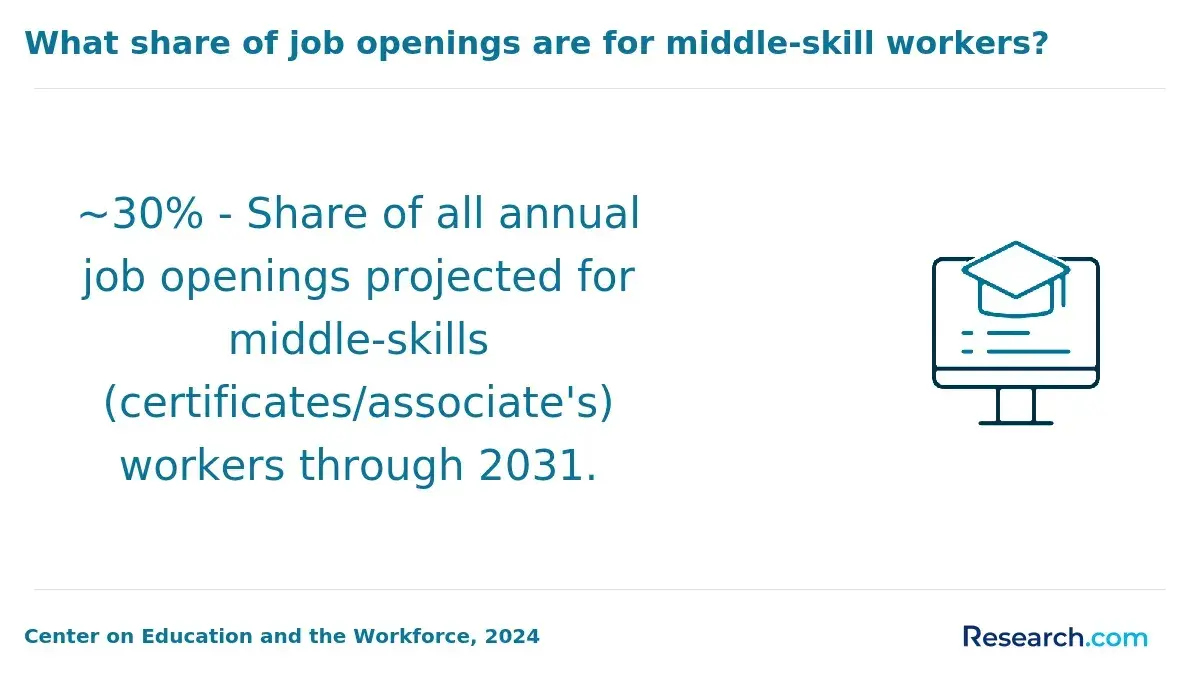
What accreditation and state licensing requirements apply to these certificate programs?
Accreditation, certification, and licensure answer different questions. Institutional accreditation evaluates a college or school. Programmatic accreditation may evaluate a specific professional program. Professional certification is usually awarded by an independent organization after an exam or other requirements. A state license is legal permission to practice a regulated occupation in that state.
For clinical, trade, or regulated programs, confirm the requirements with the destination-state licensing board before enrollment. Do not rely solely on an admissions representative's statement that a program is "approved." Ask for the exact credential, the approving body, the state coverage, and written confirmation of whether graduates are eligible for any required examination.
These checks are especially important when considering high-cost career changes. A certificate may build employable skills, while a degree can be necessary for advancement in some fields; compare that distinction with high paying degrees when your intended role has a bachelor's-level entry requirement.
How long do these certificate programs take and what do they typically cost?
Completion time and price vary more by delivery model, required equipment, and clinical or lab obligations than by the word "certificate" in a program title. A short noncredit course can take weeks, while a college certificate with clinical requirements may take two or more terms. Compare total educational cost rather than tuition alone.
The categories below show the cost factors that matter when estimating a realistic budget.
| Program type | Typical timeline | Cost factors to verify | Portability consideration |
| Online professional certificate | Weeks to months | Tuition, exam fee, software subscriptions | Usually strong if the skill is employer-recognized |
| College credit certificate | One to three terms | Per-credit tuition, fees, textbooks | May be stackable into a degree |
| Clinical certificate | Several months to about one year | Tuition, uniforms, immunizations, background check, clinical travel | State rules and placements can limit mobility |
| Trade certificate | Weeks to about one year | Tools, safety gear, lab fees, testing | Licensing and apprenticeship rules may vary |
Eligible spouses should ask whether the school participates in My Career Advancement Account Scholarship (MYCAA) funding and whether every required fee is covered. If an application fee is a barrier, options for a free online college application may help when comparing credit-bearing programs.
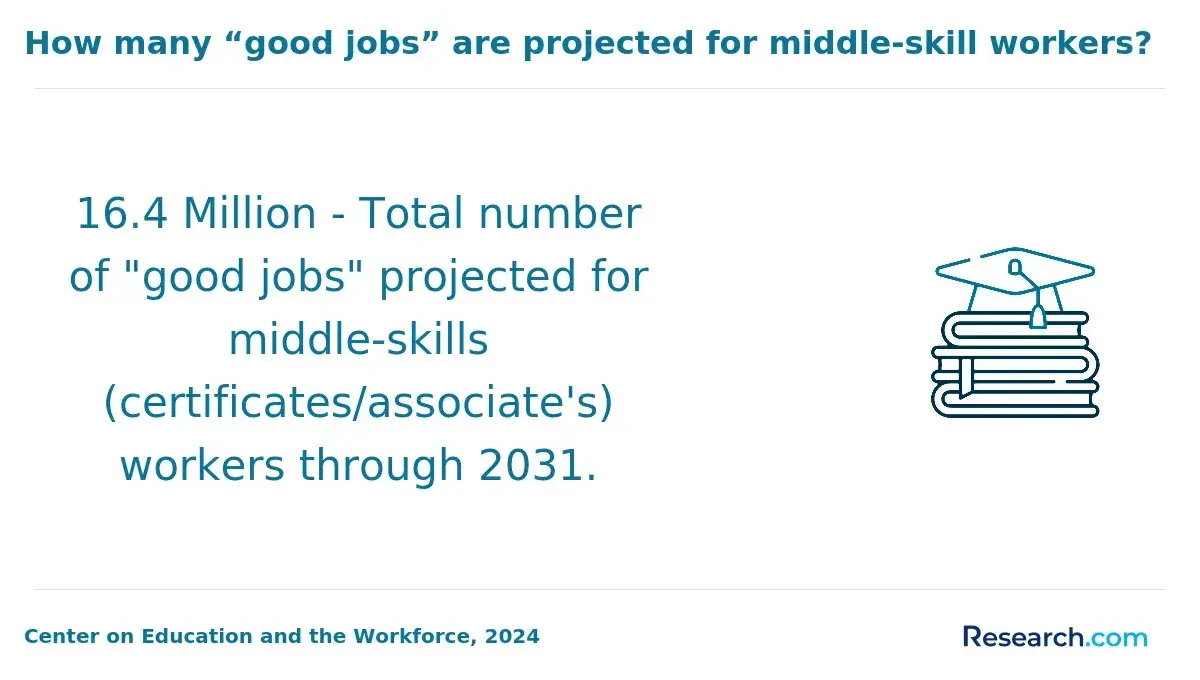
What are the admission requirements and application steps for military spouse programs?
Requirements depend on the credential. A community-college certificate may require a high school diploma or equivalent, placement steps, and prerequisites. A noncredit professional certificate may only require registration and payment. Clinical programs commonly add health records, immunizations, CPR training, drug screening, background checks, and placement requirements.
Use this sequence to avoid paying for a program that cannot serve your career goal.
- Identify the exact entry-level job, required license or certification, and likely employment location.
- Check whether the program is credit-bearing, accredited when relevant, and accepted by the state board or target employers.
- Request a written total-cost estimate including books, equipment, exams, travel, and repeat-course fees.
- Confirm online, lab, clinical, attendance, and completion requirements against your PCS and family schedule.
- Apply for eligible military-spouse education benefits before signing a financing agreement.
A common mistake is treating military affiliation as automatic admission or funding eligibility. Benefit rules, sponsor status, rank-related criteria, school participation, and available funding can change, so verify details through the official program channel and the school's military-affiliated student office.
What career paths and entry-level roles do these certificates prepare you for?
A certificate usually prepares learners for a narrow entry point rather than a complete career ladder. Match the curriculum to real job postings near your current or anticipated duty station. Look for postings that name the software, clinical tasks, equipment, or certification employers actually request.
The following roles illustrate the difference between direct preparation and roles that commonly need further qualifications.
| Certificate focus | Potential entry-level roles | Important limitation |
| Medical assisting | Medical assistant, clinical support staff | Employer and state requirements can differ; certification may be preferred |
| Billing and coding | Medical billing specialist, coding support | Some coding roles prefer experience or a separate certification |
| IT support | Help desk technician, technical support specialist | Employers may also request vendor certifications or practical experience |
| Paralegal studies | Legal assistant, paralegal support | Does not permit independent legal practice |
| Digital design | Production artist, junior designer, freelance support | Portfolio quality strongly affects hiring |
Certificates are often most valuable when paired with a portfolio, supervised experience, a targeted professional certification, or prior work history. They may be less suitable for occupations that legally require a degree, license, apprenticeship, or extensive clinical education.
What salary ranges and long-term earning potential can graduates expect?
Salary depends on occupation, location, experience, employer, hours worked, and any required license or certification. It should not be presented as a return guaranteed by a short certificate. Use occupational wage data as a benchmark for the role, then compare it with local postings and the program's full cost.
For context, the BLS reported a national median annual wage of $42,000 for medical assistants in May 2023. That figure describes the occupation, not the earnings of every certificate graduate, and local pay can differ substantially. A spouse should also consider whether part-time, remote, or portable work is more valuable to the household than the highest possible starting wage.
Long-term earnings tend to improve when a short certificate is stackable into an associate or bachelor's degree, builds documented experience, or supports a recognized certification. Be cautious of schools that advertise a salary figure without identifying the occupation, geographic area, sample size, timeframe, and whether graduates were employed in the field.
How do job outlook and labor market demand affect program selection for spouses?
Labor demand should guide program selection, but national growth does not guarantee openings at every duty station. The BLS projects medical assistant employment to grow 15% from 2023 to 2033, which indicates broad demand for clinical support work. It does not eliminate local hiring competition, state credential rules, or employer preferences for experience.
Choose a program after reviewing jobs in at least two likely locations and searching for remote opportunities when appropriate. Favor skills that appear repeatedly across postings, such as electronic health records, customer support systems, bookkeeping software, project coordination tools, or design platforms. AI and automation are also increasing the value of workers who can verify outputs, communicate with clients, protect confidential data, and manage exceptions rather than perform only repetitive tasks.
A common mistake is choosing solely by national growth rate. A better approach is to balance local demand, portability, schedule fit, credential requirements, and the realistic availability of entry-level openings.
How can military spouses evaluate and choose reputable, portable certificate programs?
Start with the career destination, not a school advertisement. A reputable program can explain what credential you earn, what jobs it supports, what it does not qualify you to do, and every cost required to finish. For regulated careers, written state-board confirmation is more useful than broad marketing claims about "national acceptance."
Use these questions when comparing final options.
- Is the credential a college certificate, a noncredit training certificate, or preparation for a separate professional certification or license?
- Will the program remain usable after a move, and where are required labs, externships, or clinical placements completed?
- What is the full cost, including supplies, testing, background checks, software, travel, and retake fees?
- Does the school provide completion, certification-exam, and job-placement information with clear definitions and dates?
- Can credits transfer or stack into a degree, and is that benefit important for your long-term plan?
Red flags include pressure to enroll immediately, vague statements about accreditation, guaranteed-job language, unexplained financing, and refusal to provide written policies. Compare at least two programs, speak with employers or alumni when possible, and keep copies of licensing and funding confirmations.
Other Things You Should Know About
Eligible spouses may use MYCAA funding for approved education and training programs, subject to program rules and funding limits. Confirm both your eligibility and the school's participation before enrolling, because not every certificate or expense is covered.
They can be, especially in technology, business support, and design. Employer acceptance depends more on the provider's reputation, the skills taught, project work, and any recognized certification than on online delivery alone.
Programs tied to broadly used software or remote-friendly work, such as bookkeeping, IT support, digital marketing, project coordination, and graphic design, are often more portable than programs requiring state licensure or local clinical placements.
A certificate is often better when you need a quicker, lower-commitment route into a specific entry-level role. An associate degree may be better when your field requires broader education, you want transfer credit, or you expect to pursue advancement that needs a degree.
References
- Must Know Scholarship Programs for Military Spouses https://www.militaryfamily.org/must-know-scholarship-programs-for-military-spouses/
- Supporting Military Spouses in their IT Education Journey https://www.quickstart.com/blog/military/supporting-military-spouse-in-IT-education/
- Child Care in Your Home (CCYH) https://public.militarychildcare.csd.disa.mil/mcc-central/mcchome/child-care-in-your-home
- Military Spouse Scholarships | Hope For the Warriors https://www.hopeforthewarriors.org/programs-and-services/scholarships/
- Top Scholarships for Military Spouses and Children https://www.aafmaa.com/resource-center/top-scholarships-for-military-spouses-and-children
- Military Spouses: April Job Market Surge | Operation Family Fund https://www.operationfamilyfund.org/april-job-market-trends-for-transitioning-military-spouses/
- Military Spouse Employment Partnership | U.S. Department of the Interior https://www.doi.gov/veterans/msep
- Free Certifications - MSOP https://joinmsop.org/certifications
- Targeted Training Helps Military Spouses Find Sustainable Employment https://www.hiringourheroes.org/stories/targeted-training-helps-military-spouses-find-sustainable-employment/
- Job Training Programs for Veterans - Hire Heroes USA https://www.hireheroesusa.org/training-partners/