2027 Best Certificate Programs With High Acceptance Rates

Co-Founder and Chief Data Scientist
Choosing a short program is difficult when "easy admission" can mean either accessible opportunity or weak career value. High-acceptance certificate programs are usually open-enrollment or minimally selective programs, not guaranteed pathways to employment.
The U.S. Bureau of Labor Statistics projects about 7.4 million job openings per year from 2024 to 2034, largely from replacement needs. This guide helps career changers, recent graduates, and working adults compare reputable certificates, identify required licenses, estimate costs, and avoid enrolling in training that does not match their goal.
Key Things You Should Know
- High acceptance usually means open enrollment, a high school diploma or equivalent, and basic placement requirements - not automatic admission into limited clinical, licensing, or apprenticeship slots.
- For occupational programs, verify the credential's approval before enrolling: a school certificate is different from an industry certification, and neither automatically creates a professional license.
- Public two-year colleges reported average published tuition and fees of $4,150 for in-district students in 2024-25; compare total costs, equipment, exams, and required clinical or lab fees.
Top 10 Best Certificate Programs With High Acceptance Rates
Popular Trade School Programs
High-acceptance trade certificates commonly include welding, HVAC, electrical technology, plumbing, industrial maintenance, commercial driving, and automotive service. Many begin with open enrollment, but apprenticeships and employer-sponsored placements can be competitive. Choose a credit-bearing community-college certificate when you may later pursue an associate degree; choose a short noncredit program when a local employer recognizes its training.
Welding and HVAC students should budget for tools, safety gear, and certification testing. Students seeking broader long-term earnings options can also compare a highest paying degree before limiting themselves to a short program.
Healthcare Programs
Accessible healthcare certificates include medical assisting, pharmacy technician, nursing assistant, phlebotomy, medical billing and coding, and practical nursing in some schools. Admission to the school may be straightforward, while clinical placement often requires immunizations, background checks, drug screening, CPR training, and minimum course grades.
Confirm whether the program meets state rules and prepares graduates for an external exam, such as a pharmacy technician or medical assistant certification exam. A certificate can be a useful entry point; learners targeting leadership or advanced clinical roles may eventually consider master's degrees online.
Criminal Justice / Law Programs
Criminal justice, legal studies, paralegal support, court reporting support, security, and corrections certificates often have broad entry requirements. They can build knowledge of legal procedure, report writing, ethics, records, and public safety systems, but they do not independently qualify a student to practice law or become a sworn officer.
Police academies, agencies, and states set separate fitness, background, age, and training standards. For people who prefer concentrated research, documentation, or records work, these programs may overlap with some introvert jobs that pay well.
Arts & Design Programs
Graphic design, digital media, web design, photography, animation, interior design support, and UX-focused certificates may admit students with a diploma, portfolio, or basic computer skills rather than a high GPA. Outcomes depend heavily on portfolio quality, software fluency, client communication, and local demand. Ask whether software licenses, printing, cameras, or portfolio-review costs are included.
A credit-bearing certificate can support later study, while a noncredit portfolio program may be faster. Learners considering advanced specialization should assess which graduate degrees that are worth it align with their intended creative role.
What makes a certificate program have a high acceptance rate yet strong outcomes?
A program can be broadly accessible and still produce credible outcomes when it removes unnecessary academic barriers while retaining job-relevant standards. "High acceptance rate" is often not a published statistic for certificate programs: open-admission community colleges may admit eligible applicants, while selective clinical cohorts admit only a limited number after prerequisites.
The most credible options combine accessible entry with measurable safeguards. Look for institutional oversight, instructors with current field experience, required hands-on practice where the occupation demands it, transparent completion and placement definitions, and preparation for a recognized exam or license when applicable.
Use this comparison to distinguish a practical entry pathway from a weakly supported program.
| Program signal | Why it supports outcomes | Question to ask |
| Open or low-barrier admission | Allows qualified beginners to start without competitive college-style selection | Are later clinical, lab, or advanced-course seats limited? |
| Credit-bearing curriculum | May support progression to an associate degree, subject to school policy | Which courses transfer, and how long do credits remain valid? |
| Approved exam preparation | Connects coursework to an employer-recognized certification or state requirement | Which exam or board requirements does the curriculum meet? |
| Documented practical training | Helps learners demonstrate job-ready skills beyond attendance | How many supervised practice, lab, or clinical hours are included? |
Be cautious if a provider advertises "guaranteed jobs," avoids naming its accreditor or approving agency, or reports placement without defining whether jobs were full-time, field-related, and sustained.
How do online and campus certificate programs compare for flexibility and quality?
Online certificates are often the best fit for learners who need asynchronous lectures, lower commuting costs, or part-time pacing. Campus and hybrid programs are usually stronger when the field requires equipment, supervised labs, clinical practice, studio critique, or employer-facing networking. Quality depends less on delivery mode than on whether the format can verify skills and meet occupational rules.
This comparison shows where flexibility helps and where physical attendance may be necessary.
| Format | Best fit | Quality check | Main limitation |
| Fully online | Billing, coding, legal studies, business software, and some design coursework | Confirm live support, assessment integrity, and employer recognition | May not fulfill hands-on or state-required training |
| Hybrid | Working adults needing online theory and scheduled labs | Review the campus attendance calendar before enrolling | Travel remains necessary |
| Campus-based | Trades, clinical healthcare, and equipment-intensive instruction | Inspect labs, instructor credentials, and equipment access | Less scheduling flexibility |
| Employer or apprenticeship training | People seeking paid work-based learning in a specific trade | Check wage progression, mentor supervision, and credential recognition | Openings can be selective despite accessible school programs |
Do not assume an online program is portable across state lines. Nursing assistant, practical nursing, pharmacy, cosmetology, electrical, and other regulated pathways can have state-specific education or supervised-hour rules.
What admission requirements do high-acceptance certificate programs typically have?
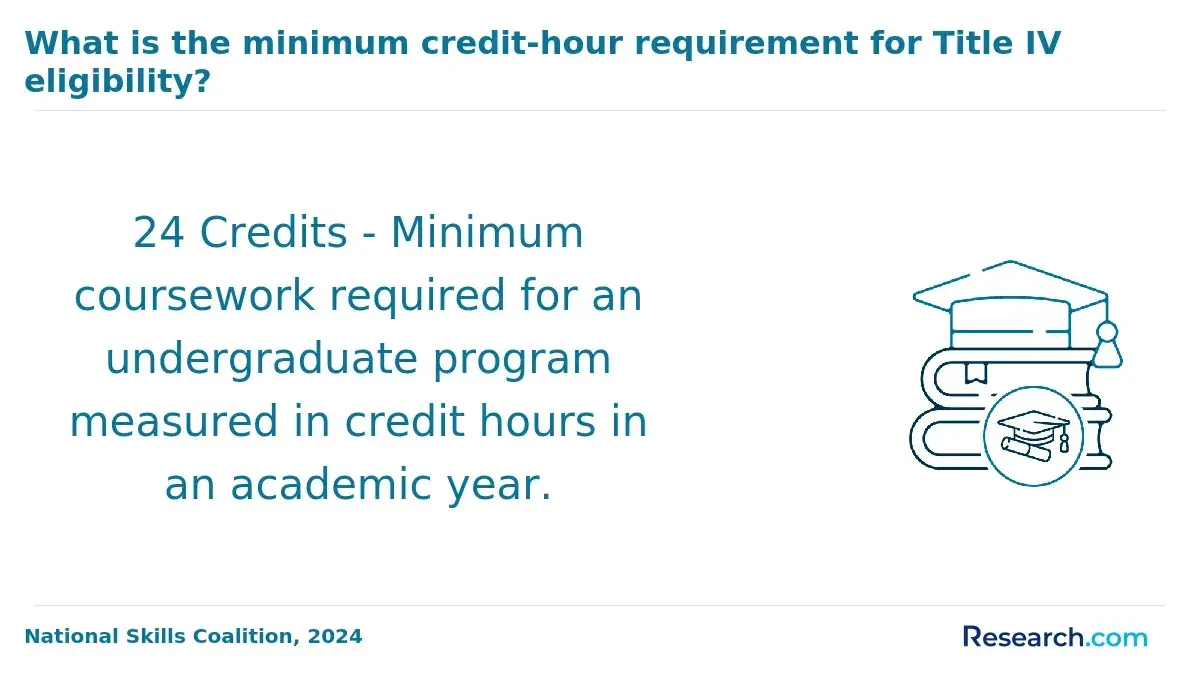
Most high-acceptance academic certificate programs require a high school diploma, GED, or equivalent and a completed application. Open-admission colleges may not require SAT or ACT scores, but they can use placement measures to determine whether students need developmental math, reading, or English support. Noncredit career-training providers may require only identity verification and payment, which makes careful quality screening especially important.
Programs with safety, patient-contact, or limited-capacity components frequently add requirements after general admission. Applicants should expect some combination of the following:
- Minimum age, diploma, GED, or equivalent educational documentation.
- Placement testing or prerequisite coursework for math, science, writing, or computer skills.
- Criminal background checks, drug screening, vaccinations, physical examinations, or CPR certification for clinical placements.
- Driver's-license, medical-card, or physical-capacity requirements for commercial driving and certain trade pathways.
- Portfolio, software-skills review, or equipment requirements for design-focused programs.
A common mistake is treating school admission as admission to every course sequence. Ask whether the certificate has a separate application, waitlist, cohort cap, or clinical-placement limit before paying a deposit.
Which accredited schools offer reputable certificate programs with high acceptance rates?
Reputable high-access options are commonly found at public community colleges, technical colleges, adult career centers, union apprenticeship sponsors, and established nonprofit or employer training partners. Rather than relying on a marketing claim about acceptance, verify the organization responsible for the credential and the authority that recognizes it.
Use the checks below before comparing tuition. They matter because the correct approval depends on the kind of program, not simply on whether the provider has an attractive website.
- For a college certificate, confirm institutional accreditation through the U.S. Department of Education or Council for Higher Education Accreditation directories and verify that the certificate appears in the college catalog.
- For career-school training, check the state postsecondary licensing agency and review complaint, refund, and disclosure information where available.
- For regulated healthcare, cosmetology, driving, electrical, or similar programs, verify approval directly with the relevant state licensing board or regulator.
- For an industry certification pathway, identify the certifying body, eligibility rules, exam cost, renewal requirements, and whether the school is merely a training provider.
- Ask for written information on completion, licensure-exam participation where applicable, employment definitions, and the date those outcomes were measured.
Institutional accreditation can matter for federal student aid and credit transfer, but it does not by itself prove that a program meets a particular licensing rule. Conversely, a valid noncredit workforce course may have no transferable college credit but still be useful if local employers recognize it.
How long do these certificate programs take and what do they cost?
Completion time ranges from a few weeks for focused noncredit training to about one year for many college certificates; practical nursing, extensive trade, and clinical programs can take longer because of required hours. Accelerated schedules reduce calendar time but can be difficult for people balancing full-time work, caregiving, or travel to labs.
Published tuition is only one cost. College Board reported average 2024-25 tuition and fees of $4,150 for in-district students at public two-year colleges, but a particular certificate may cost substantially less or more depending on residency, credits, and equipment-heavy instruction.
When requesting a written estimate, separate direct charges from expenses that the school may not include:
- Tuition and mandatory institutional fees.
- Books, software subscriptions, uniforms, tools, supplies, and protective equipment.
- Testing, licensing, background-check, immunization, drug-screening, and certification-exam fees.
- Transportation, parking, childcare, and unpaid time required for clinicals, labs, or internships.
- Interest and origination costs if borrowing is necessary.
Credit-bearing certificates at eligible institutions may qualify for federal, state, or institutional aid when the program meets applicable rules; short noncredit programs often do not. Ask the financial-aid office, not a recruiter, whether aid applies to the exact program and enrollment level. Employer tuition assistance, workforce grants, union support, and payment plans can reduce upfront cost, but compare repayment obligations and withdrawal policies.
What coursework and skills do students gain in high-acceptance certificate programs?
High-acceptance programs generally build a narrow, employable skill set rather than broad academic specialization. The best curriculum starts with foundational knowledge, then requires learners to demonstrate tasks using the tools, documents, systems, or safety procedures common in entry-level work.
The skills below are useful comparison points because they reveal whether a certificate is training for actual work rather than offering only general exposure.
| Program area | Common coursework | Practical skills students may develop |
| Skilled trades | Safety, blueprint reading, electrical basics, refrigeration, welding, or engine systems | Measurement, tool use, diagnostics, code awareness, and safe work practices |
| Healthcare support | Anatomy, terminology, patient care, pharmacology basics, billing, or coding | Documentation, infection control, patient communication, and supervised technical procedures |
| Legal and criminal justice | Legal terminology, procedure, ethics, report writing, and records management | Research, documentation, evidence handling awareness, and professional communication |
| Arts and design | Design principles, typography, digital imaging, web tools, or portfolio development | Software workflow, visual communication, revisions, and presentation of completed work |
For AI-affected fields such as design, administrative support, and coding, prioritize programs that teach judgment, verification, privacy, workflow management, and portfolio-quality work alongside software use. A certificate that names current tools but provides no projects, lab time, or feedback may be less useful to employers.
What careers and entry-level roles can these certificate programs lead to?
A certificate can help applicants qualify for entry-level roles, but the job target must match the program's scope. Employers may still require experience, a background review, an external certification, a state license, or additional education. Use job postings in your intended area to confirm that the certificate appears in employer requirements or preferred qualifications.
This overview connects common certificates to realistic starting points rather than implying that every graduate will enter a single occupation.
| Certificate focus | Possible entry-level roles | Important qualification caveat |
| HVAC, welding, electrical, or maintenance | Helper, trainee, installer assistant, maintenance technician trainee, or apprentice | Independent work and licensing may require apprenticeship hours, exams, or state approval |
| Medical assisting or nursing assistant | Medical assistant, nursing assistant, patient care technician, or clinic support worker | State rules and employer requirements vary; clinical eligibility is not automatic |
| Pharmacy technician or billing and coding | Pharmacy technician, billing specialist, coding support, or revenue-cycle assistant | Employers may prefer national certification; pharmacy rules vary by state |
| Legal studies or paralegal support | Legal assistant, records clerk, intake specialist, or administrative support worker | A certificate does not authorize legal practice or guarantee paralegal hiring |
| Graphic or digital design | Production artist, junior designer, content-production assistant, or freelance support worker | Portfolio quality and demonstrated software skills often outweigh the credential alone |
If your goal is registered nursing, licensed independent trade work, attorney practice, advanced cybersecurity, or management, a short certificate may be only the first step. Compare the full sequence of education, supervised experience, exams, and licensure before choosing the fastest option.
What salary ranges and advancement opportunities follow completion of these certificates?
Salary information should be used as labor-market context, not as a promise tied to a certificate. The U.S. Bureau of Labor Statistics reported a 2024 median annual wage of $62,350 for heating, air conditioning, and refrigeration mechanics and installers, while medical assistants had a 2024 median annual wage of $44,200. These occupation-wide figures include workers with different experience levels, locations, credentials, and employment arrangements.
Advancement is most likely when a certificate fits into a documented pathway. Trade workers may progress through apprenticeship levels, specialized manufacturer training, or licensing.
Healthcare support workers may add recognized certifications or move into credit-bearing nursing and allied-health programs. Legal support workers can build experience in a practice area, while designers typically advance through stronger portfolios, specialized software capabilities, and client or project responsibility.
Before using salary data to judge return on investment, compare local entry-level postings, expected starting schedules, union or employer wage scales where available, and the cost of required upgrades. A lower-cost certificate can be a better investment than a longer program when it satisfies a specific employer requirement; it is a weaker choice when it leaves out the license, experience, or degree the role actually requires.
How can students verify licensing, certification, and industry recognition for a program?
Verify recognition before paying tuition, especially in regulated occupations. A school-issued certificate confirms completion of that school's curriculum. A professional certification is awarded by an independent certifying organization after meeting its standards, which may include an examination, education, or work experience. Licensure is legal permission from a government authority to practice a regulated occupation.
Follow this sequence to avoid confusing these three credentials:
- Name the exact job title and state where you intend to work.
- Check the state licensing board, agency, or regulator for required education, supervised hours, examinations, background checks, and application steps.
- Ask the school for the program approval number or written confirmation that its curriculum meets the relevant requirement.
- Identify any separate certification examination, confirm eligibility directly with the certifying organization, and calculate its additional cost.
- Save written answers about transferability, clinical placement, refund terms, and whether completion alone qualifies you to apply for a license or exam.
Red flags include claims that a program is "nationally accredited" without naming an accreditor, vague statements that graduates are "certified," pressure to enroll before reviewing policies, and refusal to identify the licensing board or exam. If a school cannot document recognition in writing, choose a provider that can.
Other Things You Should Know About
Admission may be easier because many programs use open enrollment or basic eligibility requirements. Coursework can still be demanding, especially in clinical healthcare, technical trades, and programs with licensing exams.
Many do not require a competitive GPA, particularly noncredit workforce programs and open-admission colleges. However, selective cohorts may require prerequisite grades, placement results, or minimum scores after general admission.
Some credit-bearing certificates at eligible institutions can qualify for aid, while many short noncredit programs cannot. Confirm eligibility for the exact certificate with the school's financial-aid office before enrolling.
It can be, particularly when the provider is reputable and the program includes recognized curriculum, assessments, projects, or required practical training. For licensed and hands-on careers, verify that online delivery meets state and employer requirements.
References
- Improving community college completion rates by addressing structural and motivational barriers | Brookings https://www.brookings.edu/articles/community-college-completion-rates-structural-and-motivational-barriers/
- Comparing Outcomes Across Credentials | HESA https://higheredstrategy.com/comparing-outcomes-across-credentials/
- Best Certificate Programs in Los Angeles | CourseHorse https://coursehorse.com/blog/best-certificate-programs-in-los-angeles
- 2025's Best Online Graduate Certificate Programs in the U.S. https://www.onlinemastersdegrees.org/graduate-certificate-programs/
- Undergraduate Admissions | Monroe University Catalog https://catalog.monroeu.edu/catalog/admissions/undergraduate-admissions/
- Explore Top IT Certificate Programs | CyberDegrees.org https://www.cyberdegrees.org/listings/best-it-certificate/
- Completions and Outcomes https://www.txhighereddata.org/completions-and-outcomes/
- 7 in-demand certifications in 2025 | edX https://www.edx.org/resources/in-demand-professional-certifications
- The Top 5 Certificate Programs for Jobs With Growth Potential | CourseStorm https://www.coursestorm.com/blog/top-certificate-programs-for-jobs
- Certificate Programs: Programs, Costs, Duration & Are They Worth It? - University of the Potomac https://potomac.edu/certificates-programs-costs-duration-are-they-worth-it/