2027 Best Non-Degree Programs With Multiple Start Dates

Co-Founder and Chief Data Scientist
Choosing training should not require waiting for one fall semester or committing to a full degree. Non-degree programs with multiple start dates can help career changers, working adults, and military families begin sooner, but quality and job relevance vary sharply.
The U.S. Bureau of Labor Statistics projects healthcare support occupations to grow faster than average from 2023 to 2033, underscoring demand for practical training. This guide explains program types, schedules, costs, licensing considerations, and realistic career paths so you can compare options before enrolling.
Key Things You Should Know
- Multiple start dates can shorten the time before enrollment, but they do not automatically make a program self-paced; confirm term length, attendance rules, clinical scheduling, and the next available cohort.
- For regulated careers, program approval matters more than convenience: a certificate may provide education, while a separate state license or industry certification exam may still be required.
- Career outcomes differ by field. BLS projects healthcare support occupations to grow 15% from 2023 to 2033, while hands-on trades, legal support, and design roles have different local demand and entry requirements.
Top 10 Best Non-Degree Programs With Multiple Start Dates
Popular Trade School Programs
Trade schools commonly offer certificates in welding, HVAC/R, electrical technology, plumbing, automotive service, diesel technology, and commercial driving. Many run monthly, quarterly, or rolling cohorts because labs and employer partnerships can support smaller groups. Programs often take weeks to about a year; apprenticeships may take longer but combine paid work with training.
Choose campus or hybrid delivery for occupations requiring supervised shop practice. A school certificate is not the same as a journeyman license, EPA credential, or commercial driver license. Verify required exams, hours, and state approval before paying a deposit.
Healthcare Programs
Common healthcare non-degree options include medical assisting, pharmacy technician, dental assisting, practical nursing, nursing assistant, phlebotomy, medical billing and coding, and sterile processing. Frequent starts are useful, but clinical placements, background checks, immunizations, and state rules can delay a student's actual start.
Fully online study may fit billing and coding coursework, while patient-care training requires in-person skills practice and often clinical hours. Confirm whether the program is institutionally accredited, programmatically approved where required, and eligible for the certification or licensure pathway you want. A short certificate alone does not authorize practice in every state.
Criminal Justice / Law Programs
Legal studies, paralegal, legal assistant, court reporting, security, corrections, and criminal justice certificates may have several annual starts. Paralegal certificates can suit people who already hold a degree or have office experience, while entry-level criminal justice certificates may introduce law, procedure, report writing, and ethics.
No program can guarantee law-enforcement employment, which may involve agency testing, fitness standards, background review, and academy training. For paralegal work, ask whether the curriculum aligns with local employer expectations and whether graduates are prepared for voluntary certification rather than assuming a certificate creates a legal license.
Arts & Design Programs
Graphic design, digital media, UX/UI fundamentals, photography, animation, interior decorating, fashion, and web design certificates often use short terms and frequent online starts. These programs can be practical for building a portfolio quickly, especially when courses include critique, client briefs, and current software.
They are less suitable when an occupation requires a degree, extensive studio development, or a regulated credential; interior design requirements vary by state. Compare the portfolio support, software costs, instructor feedback, and ownership of student work. For creative hiring, demonstrated work and relevant technical skills can matter as much as the certificate title.
What are non-degree programs with multiple start dates and who are they best for?
A non-degree program is organized education that leads to a certificate of completion, academic certificate, career-training credential, or other short-form award rather than an associate, bachelor's, or graduate degree.
"Multiple start dates" means the provider admits new groups several times a year, such as monthly, every eight weeks, or each term. It does not necessarily mean open enrollment or immediate access to every course.
These programs are often best for adults who need a targeted skill, want to test a field before pursuing a degree, need to meet a training prerequisite, or must fit study around work and family. They can also suit mobile learners; a military spouse online college option may be worth comparing when relocations make campus attendance difficult.
A non-degree route is usually a weaker fit if your target role requires a degree, extensive clinical education, a state-approved program, or a long apprenticeship. The comparison below distinguishes common paths.
| Path | Typical purpose | Best fit | Key limitation |
| Academic certificate | College coursework in a focused subject | Students seeking credit or stackable study | Credits may not transfer automatically |
| Career-training certificate | Job-focused skills and lab practice | Entry-level trade or support roles | Recognition depends on employer and regulator |
| Professional certification | Independent validation against an industry standard | Workers meeting exam or experience rules | Usually requires a separate exam or eligibility review |
| Associate degree | Broader general education and technical study | Roles needing deeper preparation | Longer and often costlier commitment |
How do online and campus-based non-degree programs compare for flexibility and outcomes?
Online programs usually offer the most frequent starts, asynchronous lectures, and lower commuting burden. Campus-based options generally provide better access to labs, equipment, supervised practice, and local employer relationships. Neither format is inherently better: the right choice depends on whether the occupation requires observable skills, clinical hours, or approved facilities.
This comparison helps separate schedule convenience from the evidence employers and licensing bodies may expect.
| Factor | Online or hybrid | Campus-based |
| Start-date flexibility | Often high, with frequent short terms | Usually tied to lab and cohort capacity |
| Hands-on training | May require local externships or scheduled residencies | Usually integrated into labs and simulation spaces |
| Best for | Administrative, technology, business, and theory-heavy content | Skilled trades and direct patient-care training |
| Outcome check | Confirm placement support and required in-person components | Confirm equipment access, clinical partners, and class scheduling |
Online learning is not automatically less rigorous, but students should verify instructor access, proctoring, technical support, and whether an externship is arranged or left to the learner. People seeking broader credentials can also compare fast online degrees that pay well when a short certificate would not meet employer requirements.
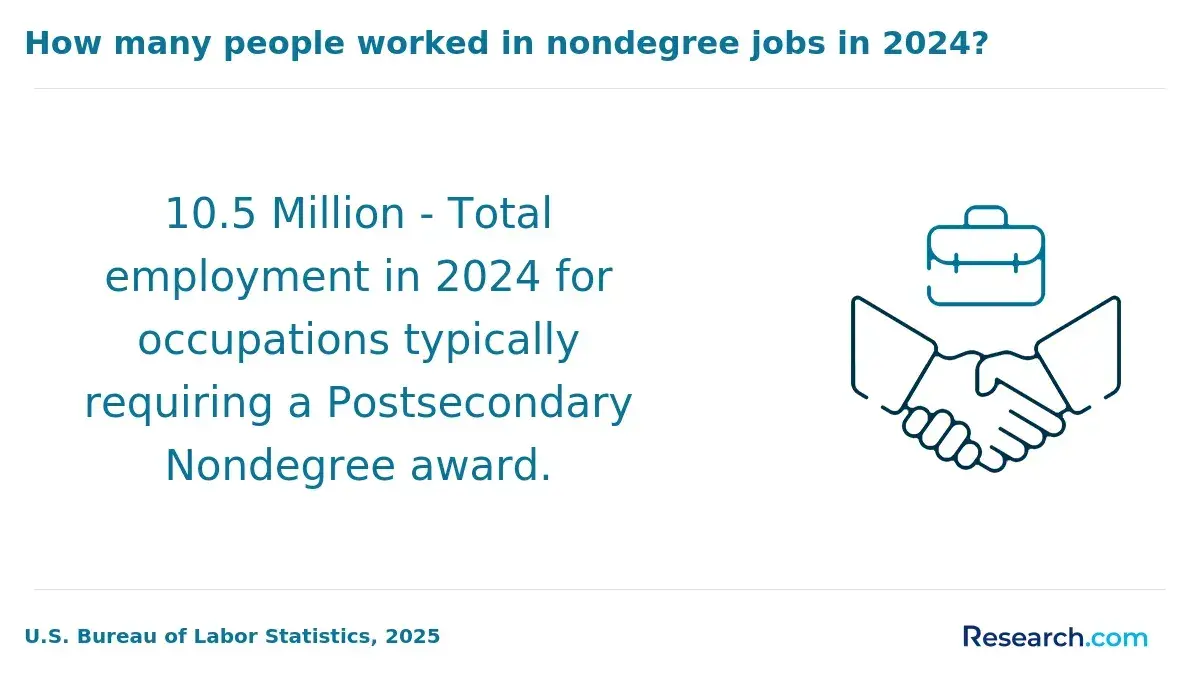
How can students verify accreditation and licensing alignment for non-degree certificates?
Accreditation evaluates an institution or program; licensing authorizes practice under state law; certification is typically an industry credential awarded by a certifying body. A reputable school should clearly explain which of these applies rather than using the terms interchangeably.
Before enrollment, take these steps for any regulated or employer-sensitive field:
- Identify the exact job title and the state where you expect to work.
- Check the relevant state licensing board or agency for required education, clinical hours, examinations, and background standards.
- Ask the school whether the specific program, not merely the institution, meets those requirements.
- Request written confirmation of eligibility for any named certification examination and ask about first-time exam outcomes where available.
- Verify whether online coursework, transfer credit, externships, and out-of-state clinical sites are accepted by the regulator.
Institutional accreditation can matter for federal aid eligibility and credit transfer, but it does not replace specialized approval for nursing, allied health, or other regulated programs.
Conversely, many short noncredit programs do not carry academic credit and may not need institutional accreditation to be useful. Their value depends on transparent curriculum, qualified instructors, employer recognition, and accurate career claims.
What admission requirements and academic background are needed for these non-degree programs?
Requirements vary more by provider and occupation than by program length. Many entry-level career-training certificates require a high school diploma, GED, or ability-to-benefit documentation where permitted. Some open-enrollment noncredit courses require only identity and payment information.
College credit certificates may request transcripts, placement measures, or prerequisites; advanced professional certificates may require prior coursework, a degree, or relevant work experience.
Healthcare and public-safety programs can add requirements because students work with patients, vulnerable populations, or secure facilities. Common examples include:
- Criminal background check, drug screening, and health or immunization documentation for clinical placements.
- CPR certification or prerequisite science coursework for selected patient-care pathways.
- Physical-capacity standards for some trade, driving, and public-safety programs.
- Computer, internet, and software requirements for online design, coding, and administrative programs.
Do not assume a low GPA prevents admission, or that no stated GPA means no screening. Ask whether acceptance guarantees a clinical seat, whether prerequisites must be completed before the next start date, and what happens if an externship site declines a student.
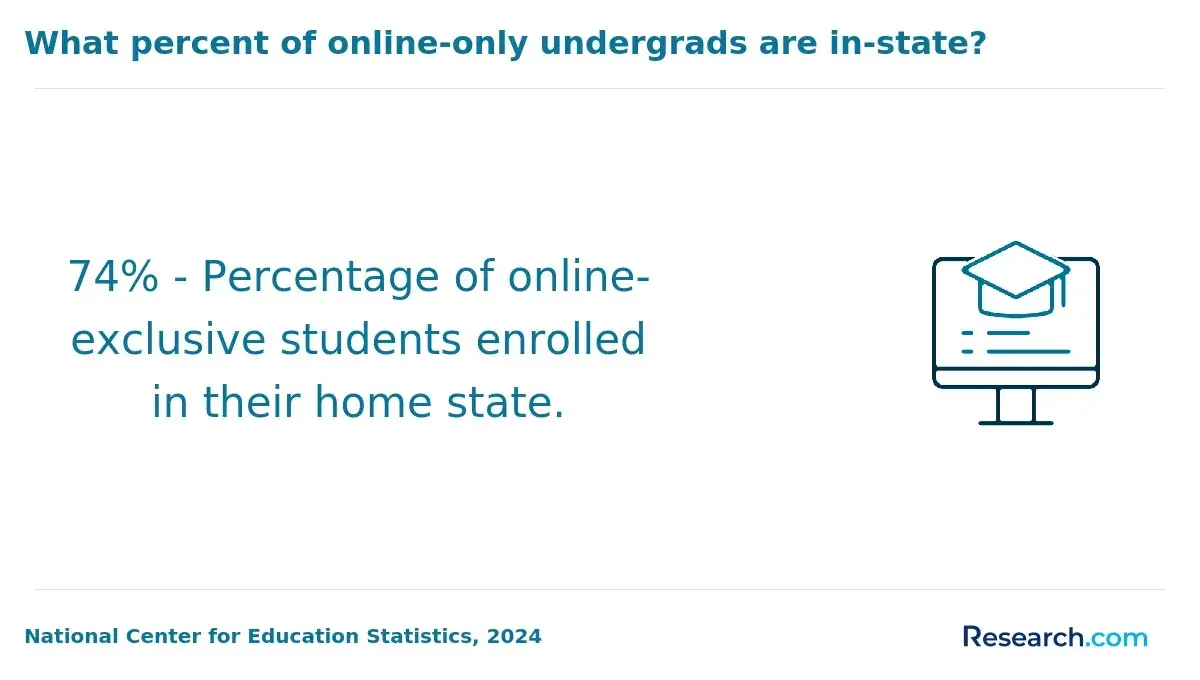
How long do non-degree certificate programs take and what do they typically cost?
Completion time ranges from a few weeks for a focused workforce course to roughly 6-18 months for certificates with extensive labs, clinicals, or sequenced technical classes.
A frequent-start program can reduce waiting time, but it cannot safely compress required contact hours or clinical experiences. Full-time schedules finish sooner; part-time enrollment often better protects work income.
Costs are best compared as a total, not an advertised tuition figure. The major cost categories are summarized below:
| Cost category | Why it changes the comparison |
| Tuition and mandatory fees | May be charged per clock hour, course, term, or program |
| Books, tools, software, and uniforms | Can be substantial in trades, healthcare, and design |
| Testing, licensing, and background checks | Often paid separately from tuition |
| Travel and unpaid clinical time | Can affect the real cost of campus, lab, or externship requirements |
| Lost work hours | Accelerated schedules may increase this indirect expense |
Ask for a written estimate that includes every required item and refund terms for withdrawal. Federal student aid eligibility depends on the school and program, while employer tuition assistance, workforce grants, veterans' benefits, and payment plans vary.
If your long-term goal requires a graduate credential, compare the different financing and admissions expectations of affordable online masters programs rather than treating a short certificate as an equivalent substitute.
What curriculum and skills do top non-degree programs with multiple start dates usually cover?
Top programs focus on skills that can be practiced, assessed, and explained to employers. The strongest curricula connect classroom learning to job tasks, use current tools, and state what the certificate does and does not qualify a student to do.
In fields affected by automation and AI, learners should prioritize programs that teach verification, ethics, documentation, communication, and tool-specific workflows rather than promising that software alone will create employability.
The following skill patterns can help you judge whether course titles match the work you expect to pursue:
| Program area | Typical curriculum | Evidence of useful training |
| Trades | Safety, measurements, equipment, codes, troubleshooting | Documented lab hours and supervised practical assessments |
| Healthcare | Anatomy, privacy, patient workflow, documentation, clinical skills | Skills checkoffs and compliant clinical or externship experience |
| Legal support | Legal research, writing, procedure, records, ethics | Drafting samples and training on current legal technology |
| Arts and design | Design principles, software, accessibility, portfolio development | Reviewed portfolio projects with feedback and revisions |
Review the course sequence, instructor qualifications, equipment list, and sample assignments. A curriculum that relies only on passive videos may be enough for introductory knowledge but may not build job-ready performance in a hands-on occupation.
Which careers and job roles do these non-degree programs most commonly prepare students for?
These programs most often prepare learners for entry-level or support roles, not immediate advancement to every job in a field. Employers may also require experience, a license, a certification examination, a portfolio, a driving record, or an apprenticeship. Treat a certificate as one component of a hiring plan.
Typical role connections include:
- HVAC, welding, electrical, and automotive certificates can support technician-helper, trainee, or apprentice applications.
- Medical assisting, phlebotomy, billing, coding, and pharmacy training can support healthcare support or administrative applications when state and employer requirements are met.
- Paralegal and legal studies certificates can support legal assistant, litigation support, records, or compliance-support roles.
- Design and digital-media certificates can support junior production, content, web, or freelance portfolio-based work.
Use local job postings to validate the path before enrolling. Count how often employers request the exact credential, a license, a named software platform, or prior experience. This reveals whether the program is a sensible entry point, a supplement to existing experience, or insufficient on its own.
What salary ranges and job outlook can graduates of non-degree certificates expect?
Occupational wage data describes workers in an occupation, not the earnings of certificate completers. Pay varies by location, employer, shifts, experience, licensure, and whether a worker is an apprentice or fully qualified. Still, federal data can help you test whether a target occupation is large enough and growing enough to justify further investigation.
The BLS Occupational Outlook Handbook projects healthcare support occupations to grow 15% from 2023 to 2033, much faster than the average for all occupations.
That broad category supports the case for examining approved healthcare pathways, but it does not establish that every healthcare certificate leads to a job or that every role has the same wage. Skilled-trade demand is likewise local and can depend on construction activity, weather, regulation, and apprenticeship availability.
For a realistic earnings estimate, compare BLS wage data for your precise occupation and metropolitan area with entry-level job advertisements. Ask each school for its methodology, reporting period, number of graduates included, and whether reported pay includes only employed respondents. Avoid providers that imply a certificate guarantees placement, a license, or a particular income.
How should prospective students choose a reputable non-degree program with frequent start dates?
The best program is not simply the one with the next start date. It is the one whose schedule, approval status, curriculum, total cost, and career target align.
Nonprofit institutions can be one option for learners who value a mission-driven governance model, though nonprofit status alone is not a quality guarantee; compare non profit online colleges alongside community colleges, public technical schools, and specialized training providers.
Use this short evaluation process before signing an enrollment agreement:
- Start with one target job and identify the required license, certification, degree, or apprenticeship in your state.
- Compare at least three providers using the same total-cost list, required attendance hours, next available start, and completion timeline.
- Confirm whether the credential is credit-bearing, noncredit, stackable, or transferable in writing.
- Ask who arranges clinicals, externships, labs, and job-search support, and what happens if placement is delayed.
- Read refund, leave-of-absence, equipment, and withdrawal policies before paying.
Red flags include vague claims about "accreditation," pressure to enroll before reviewing documents, unclear extra fees, promises of guaranteed jobs, and a curriculum that does not name the relevant licensing or certification pathway. A later start date is usually preferable to enrolling in a program that cannot support your intended career.
Other Things You Should Know About
Start schedules vary by school and program. Some online programs begin monthly or every eight weeks, while lab, clinical, and cohort-based programs may start only a few times yearly. Ask for the next available date for your specific track, not the school's general calendar.
Possibly. Eligibility depends on the institution, program length, credential type, and federal or state rules. Some short noncredit programs are not eligible for federal aid. Ask the financial-aid office about grants, loans, workforce funding, veterans' benefits, employer assistance, and payment plans.
Employers typically care more about whether the training covers relevant skills and whether you hold any required license, certification, portfolio, or experience. For regulated fields, confirm that online coursework and any in-person requirements meet state rules before enrolling.
Sometimes, particularly when a college awards academic credit and publishes a stackable pathway. Noncredit career-training certificates may not transfer. Obtain written confirmation from the receiving institution before assuming courses will count toward an associate or bachelor's degree.
References
- A Road Map for Dual Enrollment Work-Based Courses https://www.jff.org/idea/a-road-map-for-dual-enrollment-work-based-courses/
- Best Online Colleges for Working Adults [2026] https://www.straighterline.com/blog/degree-completion-best-online-colleges-for-working-adults
- 2025 Most Affordable Online Master's Programs https://www.onlineu.com/most-affordable-colleges/masters-degrees
- Explore Your Bright Horizons Benefits https://www.brighthorizons.com/article/education/navigating-non-degree-landscape
- High-Paying, Fast-Growing Jobs Without a Degree https://www.rockwellinstitute.com/blog/jobs-dont-require-degree/
- Exploring Non-College Career Pathways https://www.uprootedacademy.org/post/non-college-career-pathways
- How does a college degree improve graduates' employment and earnings potential? - APLU https://www.aplu.org/our-work/publicuvalues/employment-earnings/
- Non-Degree Pathways a Viable Postsecondary Option for All Ages https://moderncampus.com/blog/non-degree-options-for-all-ages.html
- CourseCareers https://coursecareers.com/blog-posts/15-careers-you-can-start-with-no-experience-or-degree
- Nondegree providers face high costs, challenges standing out in a crowded space, report finds https://www.highereddive.com/news/non-degree-programs-high-costs-crowded-market/644054/