2027 Best Non-Degree Programs With Career Services

Co-Founder and Chief Data Scientist
Choosing short-term training is risky when "career services" can mean anything from a resume template to direct employer introductions. Non-degree programs can build job-ready skills faster than traditional degrees, but outcomes depend on licensure rules, hands-on training, and the quality of placement support.
The U.S. Bureau of Labor Statistics projects healthcare occupations to grow 8.4% from 2024 to 2034, faster than the average for all occupations. This guide helps career changers, recent graduates, and working adults compare programs, costs, credentials, and realistic employment paths before enrolling.
Key Things You Should Know
- Career services should be evaluated by measurable support: named employer partners, internship or externship access, interview coaching, alumni contacts, and written job-placement methodology - not a general promise of "career help."
- Short programs work best when training matches a specific entry-level role or required exam; regulated healthcare and skilled-trade careers may require state approval, supervised hours, an apprenticeship, or licensure beyond a school certificate.
- BLS projects healthcare occupations to grow 8.4% from 2024 to 2034, but demand does not erase local hiring standards; compare total cost, required tools or exam fees, completion rates, and outcomes for the exact campus or online program.
Top 10 Best Non-Degree Programs With Career Services
Popular Trade School Programs
Trade certificates commonly prepare students for HVAC, electrical, welding, plumbing, automotive technology, diesel repair, and industrial maintenance. Programs usually combine classroom safety instruction with shop practice; apprenticeships add paid, supervised work and may be essential for electrician or plumber licensing. A certificate can be a fast entry point, while an associate degree may add general education and broader technical coursework. Choose campus-based training when equipment practice matters most. Ask whether career staff connect students to union halls, contractors, apprenticeships, or local employers rather than merely posting job boards.
Healthcare Programs
Common non-degree healthcare options include medical assisting, dental assisting, pharmacy technician, practical nursing, phlebotomy, medical billing and coding, sterile processing, and patient care technician certificates. Clinical programs often require immunizations, background checks, CPR training, drug screening, and supervised externships. A school certificate is not automatically a professional certification or a license: practical nurses, for example, must meet state eligibility rules and pass the NCLEX-PN. Favor programs with documented clinical sites and exam preparation. Fully online training is usually unsuitable when a role requires laboratory competencies or patient-contact hours.
Criminal Justice / Law Programs
Paralegal studies, legal assisting, court reporting support, security, corrections, emergency dispatch, and forensic technology certificates are common choices. Paralegals generally work under attorney supervision and cannot provide legal advice or represent clients. Employers may value software proficiency, legal research, writing, records management, and internships as much as the certificate itself. Some security and public-safety roles require state-specific licensing, firearms training, background checks, or agency hiring exams. Career services are strongest when they arrange courthouse, law-firm, government, or corporate legal-department networking rather than promising entry into sworn law-enforcement roles.
Arts & Design Programs
Graphic design, UX design, digital marketing design, photography, animation, web production, fashion design, and interior design certificates emphasize a portfolio rather than a standardized license. The best programs provide iterative critique, current software access, client-style projects, and portfolio reviews with hiring professionals. A certificate may help an applicant demonstrate focused skills, but it does not replace a strong body of work or experience. Ask career staff how many students receive portfolio feedback, internships, freelance-business guidance, or introductions to agencies and studios. Verify software, equipment, printing, and portfolio-hosting costs before comparing tuition.
What are non-degree programs with career services, and who are they best for?
Non-degree programs with career services are focused educational or workforce-training offerings that award a certificate, diploma, badge, or completion credential rather than an associate or bachelor's degree. They may be offered by community colleges, technical schools, universities, unions, employers, nonprofits, or private training providers. Career services can include career advising, resume review, employer events, internships, externships, interview practice, job leads, and alumni networking.
They are best for people who have a defined occupational target and need practical training quickly: an aspiring medical assistant, HVAC technician, paralegal, or junior designer, for example. They are less suitable for someone seeking a career that legally requires a degree, a long clinical pathway, or broad academic preparation. If a role benefits from general education and wider transfer options, compare the program with an associate degree before deciding.
This comparison clarifies the main credential choices and their typical use.
| Option | What it usually awards | Best use | Important limitation |
| Academic certificate | College certificate; sometimes credit-bearing | Focused college coursework and possible stacking | Transferability depends on the receiving institution |
| Career-training diploma | School diploma or certificate of completion | Hands-on preparation for a defined entry-level role | May not carry academic credit |
| Professional certification | Credential from a certifying body | Demonstrating tested industry competence | Often requires an exam, renewal, or experience |
| Apprenticeship | Completion credential plus work experience | Skilled trades requiring supervised learning | Openings and requirements vary by sponsor and state |
Do not confuse a school certificate with a professional certification. A certificate shows that a learner completed a course of study; a certification usually shows that an independent organization has verified standards through an exam, experience, or both.
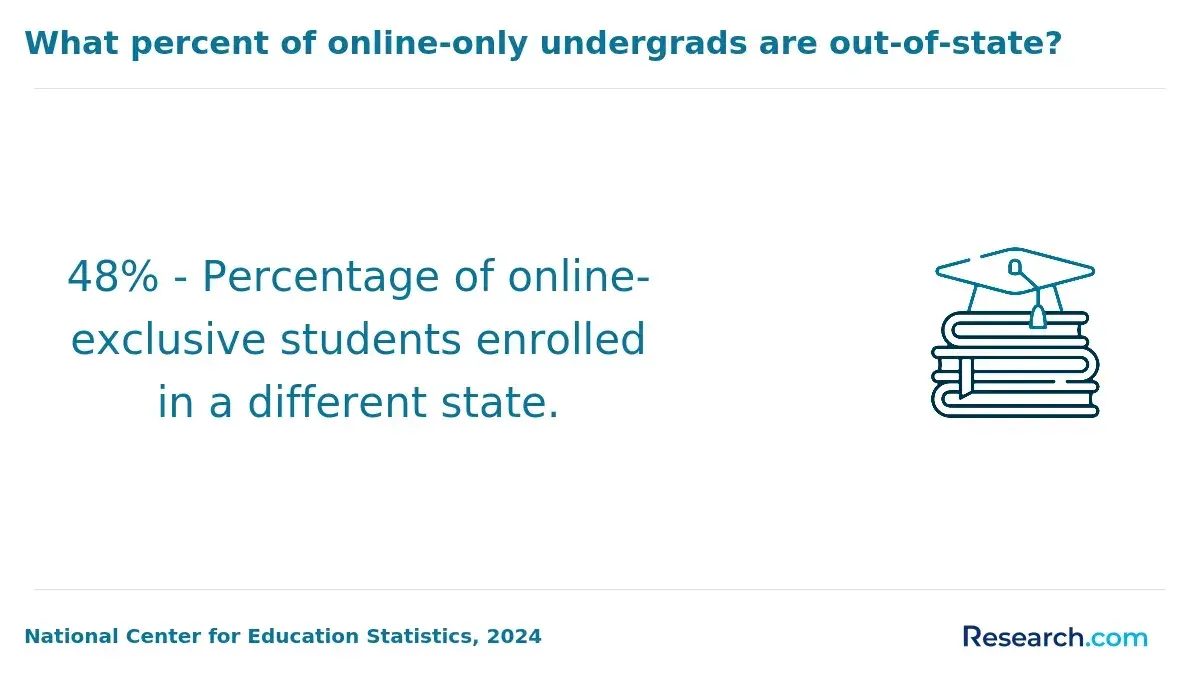
How do online and campus-based non-degree programs compare for career support?
Online non-degree programs can be a practical option for learners balancing work or caregiving, especially in billing and coding, IT support, project coordination, legal research, and digital design. Campus or hybrid study is usually more credible for equipment-intensive trades and patient-facing healthcare roles because it provides supervised practice. The right format depends on whether employers or licensing authorities expect demonstrable lab, clinical, or shop competencies.
Use this comparison to match delivery mode to the type of career support you need.
| Factor | Online program | Campus or hybrid program |
| Schedule | Often asynchronous and flexible | Usually fixed lab, clinic, or class times |
| Hands-on training | May require local practicum arrangements | More direct access to labs, equipment, and instructors |
| Career support | Virtual coaching, employer events, and digital portfolios | Local employer visits, recruiting, and in-person networking |
| Best fit | Knowledge-based roles and self-directed learners | Clinical, shop-based, and equipment-dependent roles |
For flexible study, compare program pacing, instructor access, and employer relevance - not just convenience. A cheapest self-paced online college option can reduce scheduling pressure, but self-paced delivery is a poor substitute for required clinical or laboratory supervision.
Before enrolling online, confirm who secures the practicum, whether it is available in your state, and whether career staff serve remote students with the same level of support as local learners.
What accreditation and industry recognition should non-degree career programs have?
Recognition should match the occupation. For a credit-bearing program at a college, institutional accreditation can matter for transfer credit and federal student aid eligibility. For career schools, state authorization and approval to operate are baseline checks. In regulated fields, the more important question is often whether the specific program is approved by the relevant state board or meets eligibility requirements for a licensure examination.
Industry recognition matters when an employer, certifying body, union, or licensing board identifies a preferred curriculum, credential, or training pathway. Medical assisting, pharmacy technician, welding, IT, and project-management training may prepare learners for separate certification exams, but preparation is not the same as certification eligibility or passage.
Check these items directly before paying a deposit:
- Whether the institution is authorized to operate in your state and, when relevant, institutionally accredited.
- Whether the exact program meets state board, clinical-site, or licensing examination requirements for your intended location.
- Whether the provider states the name of the certifying organization and any exam, experience, renewal, or background-check requirements.
- Whether employers in your target area recognize the credential and hire program completers for the role you want.
A major red flag is vague language such as "nationally recognized" without naming the approving agency, certification organization, or employer partner. Ask for names and verify them independently with the applicable regulator or credentialing body.
What admission requirements and prior experience do these programs typically expect?
Admission requirements vary more by provider and occupation than by program length. Many entry-level workforce certificates require a high school diploma, GED, or equivalent, while some open-enrollment online courses require only payment and basic computer access. College-based certificates may require an application, placement assessment, or prerequisite course; standardized test scores are uncommon for short career programs.
Healthcare and public-safety programs may impose additional screening because students work with patients, vulnerable populations, or secure information. Prior experience is often unnecessary for entry-level certificates, but advanced IT, design, or management programs may expect a portfolio, prior coursework, or documented work experience.
Applicants should confirm requirements early because these items can affect both timing and eligibility:
- Academic prerequisites, placement requirements, and minimum age rules.
- Background checks, fingerprinting, drug screening, immunizations, physical examinations, or CPR certification for clinical and public-safety placements.
- Technology, transportation, scheduling, and childcare needs for required labs, externships, or evening shifts.
- State residency or location rules for online programs with licensure-related components.
Do not assume a past conviction automatically disqualifies you, but do ask the licensing board and potential clinical-placement provider about eligibility before investing in a regulated program.
How long do non-degree career programs take, and what do they cost?
Non-degree career programs range from a few weeks for a narrowly scoped course to roughly one year for many certificates and diplomas. Apprenticeships and programs with required clinical hours can take longer. Time to completion is not the same as time to employment: graduates may still need to take an exam, obtain a license, complete an apprenticeship step, or conduct a job search.
Total cost includes more than advertised tuition. This breakdown helps compare an inexpensive program with one that includes required resources and stronger placement infrastructure.
| Cost category | Why it matters | What to ask |
| Tuition and mandatory fees | Determines the billed program price | Is the published figure the full required charge? |
| Tools, uniforms, software, and books | Can be substantial in trades, healthcare, and design | Which items are included and which are student-purchased? |
| Exams, licenses, and background checks | May be required after or during training | Which fees are mandatory for the intended role? |
| Lost work time and transportation | Changes the real affordability of fixed schedules | Are evening, weekend, or online options available? |
Federal aid availability depends on the institution and program's eligibility; many short, noncredit, and private-provider programs do not qualify. Ask about employer tuition assistance, Workforce Innovation and Opportunity Act funding through a local workforce agency, scholarships, payment plans, and veterans' education benefits where applicable. When comparing online certificate programs that pay well, prioritize transparent total cost and job relevance over the shortest advertised timeline.
What curriculum, skills, and hands-on training do leading non-degree programs offer?
Leading career programs teach a defined combination of technical skills, workplace behaviors, and job-search evidence. The strongest curricula connect every major learning activity to a task students will perform in an entry-level role. In trades, that may mean diagnosing a system and following safety procedures; in healthcare, documenting care and practicing infection control; in design, producing a portfolio-ready project.
Hands-on training is especially important when employers need proof of performance, not merely course completion. Look for supervised labs, simulations, externships, internships, apprenticeships, client projects, capstones, and portfolio reviews. Ask how many hours are supervised, who evaluates the work, and whether the training uses current tools, software, equipment, or documentation standards.
AI is also changing entry-level expectations. Programs should teach responsible use of AI-enabled tools alongside verification, privacy, copyright, communication, and problem-solving. A course that teaches only software clicks without judgment, documentation, or real-work feedback may age quickly.
Career services should begin before graduation. Effective support includes a role-specific resume, mock interview, portfolio or skills demonstration, job-search plan, and guidance on how to explain the credential to employers.
What career outcomes, job roles, and placement rates can students realistically expect?
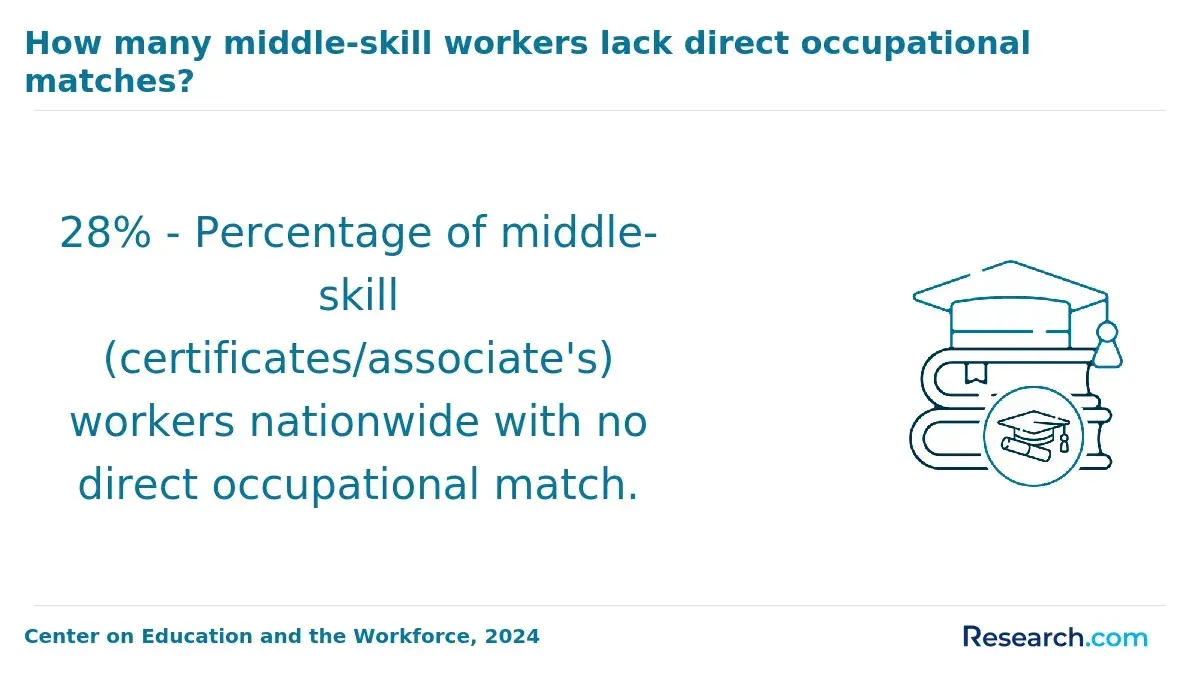
Realistic outcomes depend on the occupation, local labor market, prior experience, licensing eligibility, and the program's connections to employers. A short credential can help a learner qualify for interviews or meet a hiring preference, but it rarely substitutes for a required license, apprenticeship, degree, security clearance, or professional experience.
Ask a school for outcomes for the exact program, delivery format, and campus - not an institution-wide claim. The following measures reveal whether "placement" has practical meaning.
| Outcome measure | Useful question | How to interpret it |
| Completion rate | How many students finish within the published timeframe? | Low completion can signal scheduling, cost, or support barriers |
| Job-placement rate | What counts as placement, and when is it measured? | Confirm whether temporary, part-time, unrelated, and self-reported jobs count |
| Licensure or certification exam results | How many eligible graduates take and pass? | Relevant only when the exam is required or valued for the role |
| Employer relationships | Which employers hired recent completers? | Named, local partners are more informative than logo lists |
The BLS Occupational Outlook Handbook can help validate whether a target occupation typically requires postsecondary training, a license, experience, or a degree. Use it to test a school's marketing claim, not to predict an individual job offer. Be cautious when a provider will not define its placement calculation or will not share recent program-level results.
What salaries and earning potential are common for careers from these programs?
Earning potential is tied to the occupation, geography, shift schedule, experience, union coverage, licensure, and employer - not automatically to a non-degree credential. The BLS reports occupational wages as medians across workers in an occupation, often including people with varying education and experience levels. Those figures are useful for market context but should not be presented as expected pay for a new program completer.
For example, technical and clinical roles can offer clearer wage progression when a credential leads to a regulated scope of practice, recognized certification, or apprenticeship advancement. Administrative, design, and entry-level technology roles may have wider pay ranges because portfolios, prior work, specialization, and local competition strongly affect offers.
Compare the entry-level jobs a program actually supports with local postings. Record the posted pay range, required credentials, schedule, experience expectations, and whether the employer reimburses exams or training. Readers exploring exam-based credentials can also compare certifications that pay well, while remembering that certification requirements may include more than completing a course.
A sensible return-on-investment estimate uses conservative assumptions: total out-of-pocket cost, time away from work, likely local entry pay, and the probability that additional licensing or experience will be required. Avoid programs that make salary promises without explaining the occupation, location, sample size, or graduate experience level behind the claim.
How can students evaluate and choose reputable non-degree programs with strong career services?
The best non-degree program is not necessarily the fastest or cheapest one. It is the option that qualifies you for a specific next step - an entry-level job, apprenticeship, clinical placement, portfolio, or examination - and provides evidence that its career services can help you reach it.
Use the following sequence to compare providers consistently before signing an enrollment agreement:
- Choose a target job title and review local job postings for required skills, licenses, schedules, and experience.
- Verify that the program's credential, clinical hours, labs, or curriculum meet the target role's employer and state requirements.
- Request a written total-cost estimate covering tuition, fees, supplies, exams, uniforms, software, transportation, and financing terms.
- Ask for program-level completion, placement, and exam-outcome definitions, reporting periods, and employer names.
- Speak with recent students or alumni about instructor access, externships, job-search support, and whether the role matched the marketing.
- Read cancellation, refund, withdrawal, leave-of-absence, and complaint procedures before paying.
Common mistakes include selecting an online program before confirming local clinical placement, assuming a certificate grants a license, financing tuition without calculating required extras, and trusting broad employment claims. Treat pressure to enroll immediately, unclear refund terms, unnamed accreditors, or refusal to provide program-level outcomes as red flags. A reputable provider will explain its limits as clearly as its benefits.
Other Things You Should Know About
They can be worthwhile when they prepare you for a clearly defined role, required examination, apprenticeship, or demonstrable skill. Their value is weaker when the target occupation requires a degree, license, or experience that the program does not provide.
No. Career services can improve preparation and access to employers, but hiring decisions depend on the labor market, qualifications, interviews, licensing eligibility, and employer needs. Ask how the provider defines and measures placement.
Sometimes. Eligibility depends on the institution, program length, and federal or state rules. Some learners use employer assistance, workforce-agency funding, veterans' benefits, scholarships, or payment plans instead of federal student aid.
Choose a certificate when you need structured education and practical training. Choose or pursue a professional certification when employers or a professional field value a standardized credential, usually earned through an exam and sometimes experience requirements. Many learners complete a certificate program to prepare for a separate certification.
References
- New Research Shows Community Colleges are a Great Way To Boost Career Prospects - Without Getting a Degree https://www.calbright.edu/newsroom/blog/new-research-shows-community-colleges-are-a-great-way-to-boost-career-prospects-without-getting-a-degree/
- CAEL | Our Work | Industry Partnerships & Education & Career Pathways https://www.cael.org/our-work/industry-level-partnerships-education-and-career-pathways
- The Non-Degree Market: Oasis or Mirage? https://www.encoura.org/resources/wake-up-call/the-non-degree-market-oasis-or-mirage/
- Colleges With the Best Career Service Resources https://www.collegexpress.com/lists/list/colleges-and-universities-with-the-most-helpful-career-service-resources/3444/
- How to Build Strong Employer Partnerships to Support Student Success - UPCEA https://upcea.edu/how-to-build-strong-employer-partnerships-student-success/
- What Non-Completers Want From Higher Ed https://www.wgulabs.org/posts/bridging-the-gap-what-non-completers-need-from-higher-ed
- 80 Highest Paying Jobs without a Degree (Over $50k) - USCI https://www.uscareerinstitute.edu/blog/80-Jobs-that-pay-over-50k-without-a-degree
- Finding a Job or Getting Trained https://connect.alleghenycounty.us/employment-training/finding-a-job-or-getting-trained/
- Blog https://www.ngpf.org/blog/question-of-the-day/qod-what-percent-of-college-graduates-end-up-working-in-the-field-of-their-major/
- Career Services - NECC https://necc.edu/workforce/career-services/