2027 Master's in Data Science vs. Master's in Marketing Analytics: Choosing Your Graduate Path

Co-Founder and Chief Data Scientist
A master's in data science and a master's in marketing analytics can both lead to work with data, but they prepare you to solve different problems. Data science generally offers broader technical training; marketing analytics concentrates on customers, campaigns, and commercial decisions.
If you are choosing between the two, the most useful question is not which title sounds stronger. It is whether you want to build analytical methods across domains or apply them deeply to marketing - and whether a program's coursework, projects, and cost support that goal.
Key Things You Should Know
- Choose data science if you want substantial programming, statistical modeling, and machine learning preparation for roles across industries.
- Choose marketing analytics if you want to use experimentation, customer data, and measurement to improve marketing decisions; inspect the curriculum because technical depth varies by program.
- Do not choose on salary alone. The U.S. Bureau of Labor Statistics (BLS) reports a $120,230 median annual wage for data scientists in May 2025, but that occupation-wide figure is not a graduate salary or a direct comparison with marketing analytics degree holders.
What Is the Difference Between a Master's in Data Science and Marketing Analytics?
The central difference is scope versus domain focus. A data science master's typically emphasizes methods for collecting, preparing, modeling, and interpreting data in many settings. A marketing analytics master's applies quantitative methods to questions such as which customers to reach, whether a campaign worked, and how to allocate spending.
This comparison describes common emphases, not requirements shared by every school. Use it to decide which program's actual course list deserves closer attention.
| Decision criterion | Master's in data science | Master's in marketing analytics |
| Primary question | How can data and models solve a range of problems? | How can evidence improve marketing decisions? |
| Typical technical emphasis | Programming, statistics, machine learning, and data systems | Customer analysis, experiments, measurement, and business interpretation |
| Typical project audience | Technical teams and stakeholders across functions | Marketing, growth, product, and commercial teams |
| Main trade-off | Broader methods may leave less room for marketing specialization | Stronger marketing context may come with less advanced computing depth |
A marketing analytics degree is not necessarily less rigorous: a program with substantial statistics, coding, and causal inference may be more technical than a lightly quantitative data science program. Compare required work, not labels.
Which Degree Has Better Career Opportunities and Job Outlook?
Neither degree has a universal job-market advantage. Data science can support applications across more industries, while marketing analytics may make a clearer case for roles centered on customers, advertising, and growth. Your experience and project evidence will also affect which openings are realistic.
The BLS projects 35% employment growth for data scientists from 2025 to 2035. That signals demand for the occupation, not a prediction that data science master's graduates will secure jobs at that rate. Marketing analytics does not map neatly to one occupation: relevant jobs may be classified under market research, business analysis, or other titles. Comparing a data scientist projection with one narrowly chosen marketing title would therefore misrepresent the choice.
AI tools also make it important to examine what a program teaches beyond producing routine reports. Look for practice defining problems, checking data quality, evaluating models or experiments, and explaining limitations - work that remains relevant whichever degree you pursue.
How Do Data Science and Marketing Analytics Salaries Compare?
The BLS reports a $120,230 median annual wage for data scientists in May 2025. This is pay across workers in that occupation, including people with different education and experience levels. It is neither a starting salary nor the amount a master's degree causes someone to earn.
There is no equally precise occupation-wide figure for "marketing analytics master's graduates." Marketing analytics alumni may hold different titles, and compensation can change substantially with responsibility, industry, location, and prior experience.
Rather than comparing the data scientist median with a school's selected alumni figure, compare pay ranges for the specific jobs and locations you would pursue. If a school publishes outcomes, check the graduating class, response rate, prior experience, and whether it reports salary levels or actual increases.
What Courses Do Data Science and Marketing Analytics Master's Programs Include?
Both paths may teach statistics, SQL, visualization, and Python or R. The distinction usually emerges in required advanced courses and the problems students must solve. The table shows what to look for in catalogs, rather than a guaranteed curriculum.
| Area | Data science emphasis | Marketing analytics emphasis |
| Core methods | Statistical learning, machine learning, and model evaluation | Customer analysis, forecasting, and experimental measurement |
| Data work | Data pipelines, databases, and potentially larger-scale computing | Joining customer, transaction, web, and campaign data |
| Decision context | Applications that may span several industries | Segmentation, attribution, pricing, retention, or media decisions |
| Project evidence | A reproducible model or end-to-end analytical system | An analysis connecting measurement to a defensible marketing recommendation |
Check how far courses go: a passing introduction to machine learning is different from building and validating models in several courses. Likewise, a marketing project should address uncertainty and business constraints, not merely display campaign metrics. If you want to engineer models for many uses, prioritize technical depth; if you want to decide what a marketing team should do next, prioritize experimentation and decision-making practice.
What Are the Admission Requirements for Each Master's Degree?
Requirements vary by institution and program. Data science applicants may be asked to demonstrate calculus, linear algebra, statistics, and programming preparation; marketing analytics programs may place greater weight on quantitative reasoning and business experience. Do not assume that a marketing background excludes you from data science - or that professional marketing experience substitutes for a stated mathematics prerequisite.
Before applying, match your transcript and work samples against each school's published requirements. If you have a gap, ask whether an accredited course, a noncredit bridge course, or documented professional work would satisfy the formal prerequisite; preparation that helps you succeed is not automatically accepted for admission.
Also check testing, recommendations, essays, and deadlines directly. Applicants comparing essay requirements across related technical degrees can consult no-essay admissions for online machine learning master's programs, but must verify the policy for each program and application cycle.
How Long Do These Master's Programs Take and What Do They Cost?
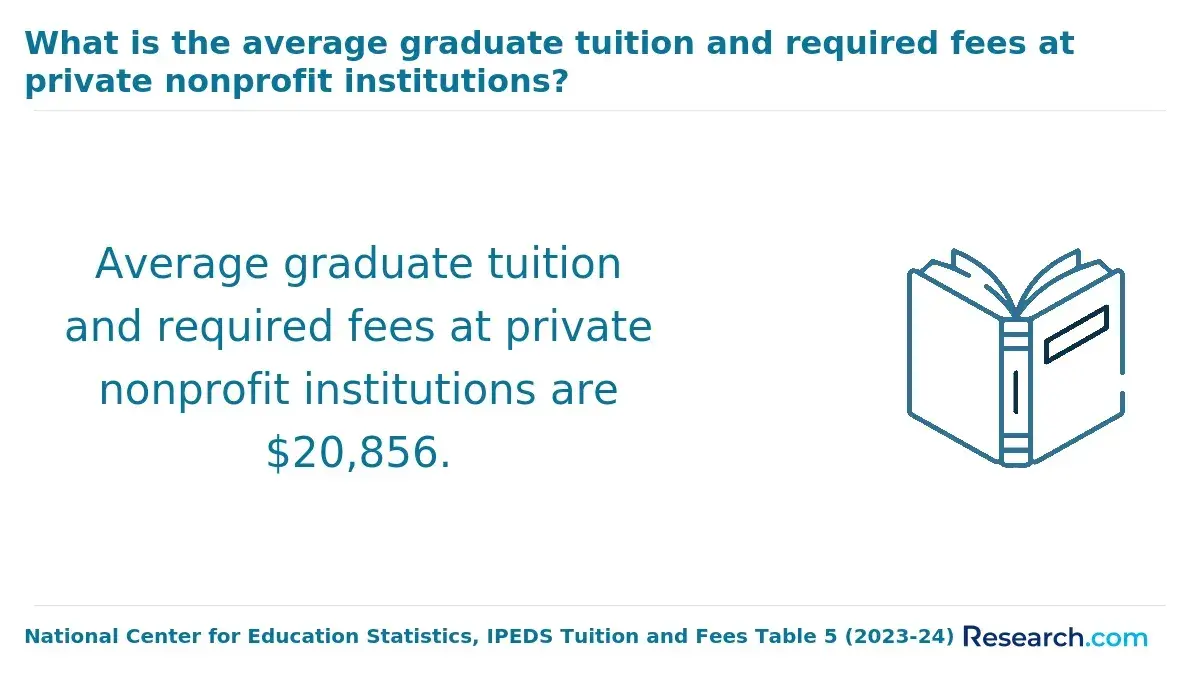
Neither degree title determines its duration or price. Completion time depends on required credits, course availability, and whether you study full-time or part-time. Compare the published total cost to finish, not just a per-credit tuition figure: required fees, prerequisite courses, materials, campus visits, and extra terms can change the amount you pay.
For each offer, request a degree plan and current tuition schedule, then calculate the cost under the pace you can sustain. Check whether tuition is fixed or can rise, which fees apply to online students, and whether employer assistance or scholarships reduce your own cost.
If affordability is a deciding constraint, data science master's programs for smaller budgets can provide a starting shortlist; confirm current charges with each school before treating any ranking or advertised price as your final cost. A higher expected salary should not be assumed to repay a higher tuition bill.
Should You Choose an Online or Campus-Based Graduate Program?
Choose the format that lets you complete the coursework and projects you need. Online study may reduce commuting and preserve access to your current job. Campus study may make in-person collaboration, recruiting events, or local employer projects easier. Neither format, by itself, establishes academic quality or career outcomes.
This matters particularly if you plan to keep working: ask about live attendance, time zones, group meetings, exam scheduling, internship or campus requirements, and access to instructors and career services. Compare those answers with your work schedule before enrolling. For a shortlist focused on that constraint, see online data science degrees at master's level for professionals. Confirm that any online program accepts students in your state and that its advertised services are available to remote learners.
What Jobs Can You Get With Each Master's Degree?
A data science degree is most directly aligned with roles involving modeling and technical analysis, such as data scientist or machine learning analyst. Marketing analytics may align with marketing analyst, customer insights analyst, growth analyst, or marketing measurement roles. Either degree can be relevant to some product or business analytics positions; job descriptions and your existing experience matter more than a fixed degree-to-title mapping.
Read several target postings and identify whether they prioritize production-oriented coding, experimental design, customer research, or communication with marketing stakeholders. Then check whether the program requires a project that would demonstrate those skills. If your real goal is developing AI for clinical or healthcare technology settings rather than analyzing customers, AI master's programs for healthcare technology careers may be a more relevant alternative to investigate. A degree alone does not qualify you for every listed role.
Do You Need Certifications or Licensure for These Careers?
Data scientist and marketing analyst roles generally do not have a single profession-wide license comparable to those in regulated clinical fields. Employers may value particular software certifications, but these are usually supplements to demonstrable analytical work, not substitutes for statistics, coding, and sound judgment. Requirements can still vary by employer and by the work performed, especially when a role touches a regulated industry.
Before paying for a certification, check target job postings to see whether it is required, preferred, or absent. If it is absent, a well-documented project showing how you handled data, tested an approach, and communicated a decision may be more useful evidence.
How Can You Choose an Accredited and Reputable Program?
First verify the institution's recognized accreditation through the U.S. Department of Education or the Council for Higher Education Accreditation. Then evaluate the specific degree: institutional accreditation does not tell you whether its courses fit your intended job, and an appealing program name does not establish technical depth.
Use the same questions for every finalist so the comparison stays fair:
- Which courses are required, and what programming, statistics, experimentation, and domain work do they actually assess?
- Can students complete a relevant capstone or applied project, and how are projects supervised?
- What is the current total cost and feasible completion schedule for my circumstances?
- What career support and employer access are available in my study format, and how are any published outcomes measured?
A common mistake is choosing by ranking or degree title while ignoring the required curriculum. Another is treating an alumni network as proof of placement. If AI-focused study is also on your shortlist, AI master's degree options with alumni career networks can help frame that support question; ask each school what access students actually receive. Choose data science when its broader technical training matches your target work. Choose marketing analytics when its customer-focused methods and projects better match the decisions you want to own.
Other Things You Should Know About Data Science
Not necessarily. An MBA usually centers broader management study, while a specialized master's may devote more coursework to analytics. Compare required quantitative courses and projects if analytical depth is your priority.
Only if you have permission and can meet applicable privacy and contractual requirements. Public or properly authorized data can demonstrate the same analytical reasoning without exposing customers or an employer's confidential information.
Yes. Analyze a customer-retention problem twice: first as a modeling task with careful validation, then as a marketing decision with an experiment or intervention plan. Notice which work you want to keep doing.
Try a substantial introductory project in each area and speak with people in your target roles. Compare the work you enjoy with actual job descriptions; that is more informative than choosing by the degree title alone.
References
- Courses | Master of Science in Data Science | University of Connecticut https://masters.datascience.uconn.edu/courses/
- A Guide to Choosing Between Data Science vs. Data Analytics | UCLA MSOL Data Science https://www.msol.ucla.edu/data-science-engineering/articles/demystifying-data-guide-choosing-between-data-science-vs-data-analytics/
- Master's in Marketing Analytics: Program Types Explained | Master of Management, Marketing Analytics https://ma.poole.ncsu.edu/blog/2026/06/24/masters-in-marketing-analytics-program-types-explained/
- Profiling data scientists in the digital labour market | sciencedirect.com https://www.sciencedirect.com/science/article/pii/S0263237322000810
- What You Can Do with a Master's in Data Science and Artificial Intelligence | Harvard Extension School https://extension.harvard.edu/blog/what-you-can-do-with-a-masters-in-data-science-and-artificial-intelligence/
- Admissions Prerequisite | University of Houston https://www.uh.edu/nsm/computer-science/graduate/admissions/prerequisites/
- MS Data Science | Marketing Concentration https://www.depaul.edu/academics/programs/ms-in-data-science/requirements-ms-in-data-science-marketing
- Data Science & Analytics, M.S.A. | Robinson College of Business | Georgia State University https://www.gsu.edu/program/data-science-analytics-msa/