2027 Best Online Microcredentials for Veterans

Co-Founder and Chief Data Scientist
Veterans choosing short online training need to know whether a credential will translate military experience into a civilian job - not simply whether it is quick. The Bureau of Labor Statistics projects 29% growth for information security analysts from 2024 to 2034, illustrating why targeted technology credentials can be compelling. This guide explains which online microcredentials fit common veteran career goals, how to assess recognition and costs, and when a degree, license, or industry certification is the better investment.
Key Things You Should Know
- Online microcredentials can build job-ready skills in weeks or months, but a completion certificate is not automatically an industry certification, academic credit, professional license, or job guarantee.
- Cybersecurity is a strong option for qualified veterans: BLS projects 29% employment growth for information security analysts from 2024 to 2034, though many analyst roles still require experience or a degree.
- Before using GI Bill benefits or paying out of pocket, verify the provider, total charges, exam costs, employer recognition, and whether the exact program is VA-approved.
Top 10 Best Online Microcredentials for Veterans
Popular Trade School Programs
Online trade microcredentials work best for theory, safety, estimating, codes, and customer-service skills; hands-on trades still require labs, supervised practice, apprenticeships, or employer training. Veterans may consider construction project management certificates, HVAC fundamentals, electrical estimating, OSHA-focused safety training, supply-chain logistics, or commercial driver compliance courses. Choose a credit-bearing community-college certificate when you may later pursue an associate degree. Choose a manufacturer or industry course when an employer specifically recognizes it. Do not assume online HVAC or electrical coursework alone meets state licensing or apprenticeship requirements.
Healthcare Programs
Useful online healthcare microcredentials include medical billing and coding, health information technology foundations, pharmacy technician exam preparation, telehealth coordination, and healthcare data analytics. They suit veterans with administrative, clinical-support, logistics, or records-management experience. Programs may issue a school certificate, while national certifications such as coding credentials require a separate exam and may prefer experience. Clinical occupations - including nursing, medical assisting, and many technician roles - typically require approved practical training and state-specific rules. Confirm whether externships, background checks, immunizations, exam fees, and clinical placement are included before enrolling.
Criminal Justice / Law Programs
Online options include legal research, paralegal studies, cybersecurity law, homeland security, emergency management, intelligence analysis, and public administration certificates. These can help veterans describe transferable skills in investigations, reporting, chain of command, and risk management. A short certificate may strengthen an application for support roles, but it does not qualify someone to practice law or guarantee law-enforcement eligibility. Paralegal employers may prefer an associate or bachelor's degree, and some programs offer stronger value when they are credit-bearing and aligned with recognized paralegal education standards.
Arts & Design Programs
Veterans exploring creative work can pursue online microcredentials in UX design, digital marketing, graphic design software, video editing, instructional design, photography, or game-art fundamentals. Portfolio quality matters more than a completion badge in many design hiring decisions. Select a program that produces reviewed projects, teaches accessible design practices, and clearly states software costs. Short courses are useful for testing career fit or updating tools; an associate or bachelor's degree may be more appropriate for people seeking structured studio feedback, broad foundations, and internship access.
What Are Online Microcredentials for Veterans?
An online microcredential is a focused, short-form learning experience that documents completion of a defined skill set. It may be offered by a college, university, employer, professional association, technology vendor, or training company. Depending on the provider, the result may be a digital badge, noncredit certificate, for-credit certificate, or professional certificate.
For veterans, the practical value is often speed and relevance: a microcredential can help translate military occupational experience into civilian language, refresh technical knowledge, or prepare for a separate certification exam. It is not the same as a professional certification. For example, a cybersecurity course may award a completion certificate, while an industry organization awards certification only after its own examination and other eligibility requirements.
This comparison shows why the credential label matters before you spend benefits or time.
| Option | What the learner earns | Best use | Key limitation |
| Noncredit microcredential | Badge or completion certificate | Rapid skill building and career exploration | Usually does not transfer for college credit |
| Credit-bearing certificate | College certificate and transcripted credits | Stacking toward an associate or bachelor's degree | Often takes longer and may have admissions rules |
| Industry certification preparation | Training completion; certification is separate | Preparing for a recognized exam | Passing the course does not confer certification |
| Bootcamp or career training | Provider credential and projects | Career change with structured coaching | Employer recognition and quality vary widely |
Microcredentials are usually a strong fit when you already have related experience and need an employer-recognized skill signal. They are a weaker fit when a target occupation legally requires a degree, supervised clinical hours, apprenticeship, security clearance, or state license.
Which Online Microcredentials Lead to Veteran Careers?
The best online microcredential is tied to a specific target role, not a broad interest area. Veterans often have an advantage in operations, IT, logistics, project coordination, intelligence analysis, healthcare administration, and protective services because those fields can value documented technical ability, leadership, and procedural discipline.
The following roles illustrate where short, focused training can complement prior experience. Occupational pay is BLS median annual wage data for the occupation, not an expected salary after completing a microcredential.
| Career direction | Helpful microcredential focus | 2024 median annual wage | Decision note |
| Cybersecurity support or analyst pathway | Network security, cloud fundamentals, security operations | $124,910 for information security analysts | Entry roles may require IT experience; advanced analyst jobs commonly need more than a short course. |
| Medical records and coding | Medical terminology, coding systems, revenue cycle | $50,250 for medical records specialists | Check whether the program prepares for a named certification examination. |
| Logistics coordination | Supply-chain operations, inventory systems, procurement | Varies substantially by occupation and experience | Military logistics experience can be especially relevant when paired with civilian software skills. |
| Project coordination | Agile methods, scheduling, budgeting, stakeholder communication | Varies by industry and role | Choose portfolio-based training and pursue experience before expecting project-manager roles. |
Technology credentials should be matched to the level of work you can realistically pursue. A veteran with network administration experience may benefit from a cloud or security specialization, while someone new to IT may first need foundational computer, networking, and troubleshooting practice.
Veterans who are balancing caregiving or parenting responsibilities may also compare flexible career pathways with best degrees for single moms. A degree can be the better long-term route when the intended employer consistently screens for one.
How Do Veterans Choose Accredited Online Programs?
Accreditation matters most for credit-bearing college certificates, degree pathways, and programs connected to regulated occupations. Institutional accreditation evaluates a college as a whole; it does not mean every short course has employer value. For noncredit vendor courses, look instead for transparent curriculum, recognized assessment, instructor expertise, and evidence that employers use the skill or certification.
Use these checks before applying or releasing VA education benefits:
- Start with a target job posting and identify the exact tools, certifications, degree level, or license employers request.
- Ask whether the program is credit-bearing, whether credits are transcripted, and whether they can apply to a future certificate or degree.
- Verify institutional accreditation through the college and recognized accrediting information, and verify programmatic approval when the field requires it.
- Get a written estimate covering tuition, technology fees, books, proctoring, software, labs, exam vouchers, and required travel.
- Confirm whether the specific enrollment format is approved for the VA benefit you plan to use; school-wide approval alone may not answer that question.
A school that accepts federal aid is not automatically the least expensive choice after all charges are counted. Veterans considering longer, credit-bearing routes can compare best online colleges that accept FAFSA alongside VA funding rules and their own degree plan.
Red flags include vague claims that a course is "accredited" without naming the accreditor, pressure to enroll immediately, unverified job-placement claims, and no explanation of what credential is issued. Ask for the catalog description and refund policy in writing.
What Benefits Help Veterans Pay for Microcredentials?
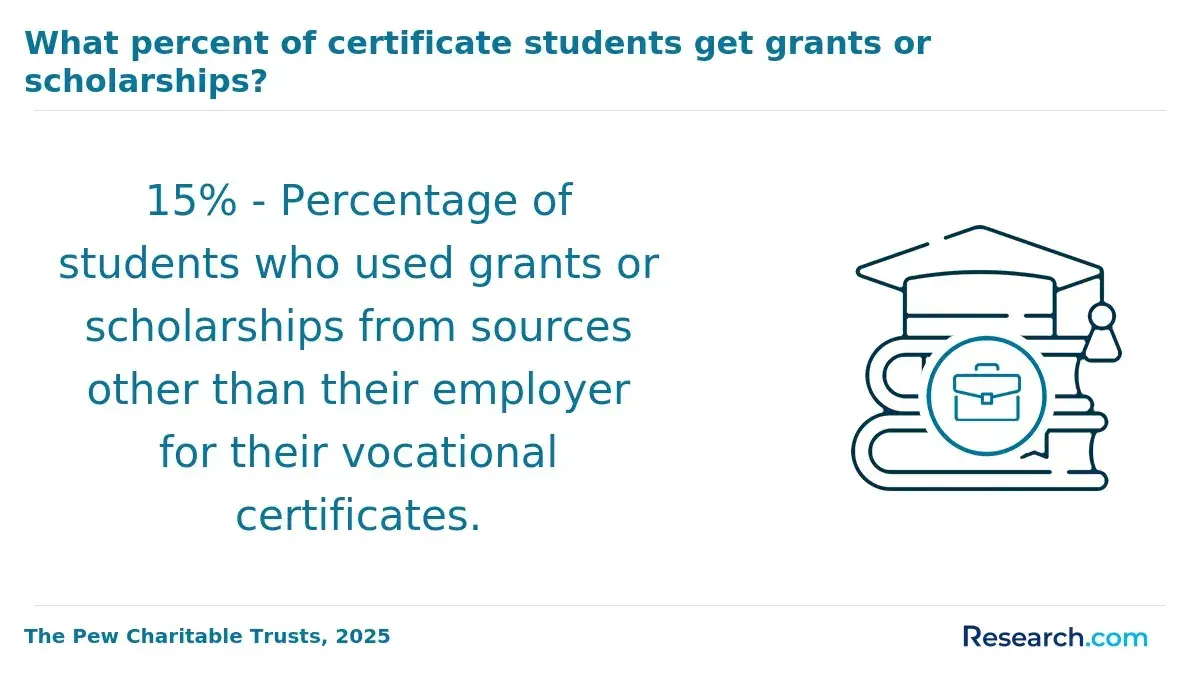
Funding depends on the program type, its approval status, your service history, and the benefit you are using. A VA education benefit may help with an approved program, but many standalone noncredit badges, subscription platforms, and vendor courses are not covered. Never assume that a provider's general VA language applies to a particular microcredential.
Potential payment paths include:
- Post-9/11 GI Bill benefits for eligible, approved education or training programs, subject to VA rules and remaining entitlement.
- Veteran Readiness and Employment services for eligible veterans whose employment barrier and rehabilitation plan support the training goal.
- Military Tuition Assistance or service credentialing programs for eligible current service members, subject to branch policies.
- Employer tuition assistance, workforce grants, scholarships, payment plans, or exam-voucher programs offered by a school or credential provider.
For credit-bearing programs, FAFSA may also be relevant, although eligibility depends on the institution, program, enrollment status, and student circumstances. Ask the school's veterans certifying official and financial-aid office separate questions: one handles VA enrollment certification, while the other explains federal aid and institutional charges.
The cost comparison should focus on total out-of-pocket exposure, not advertised tuition. A low-cost course can become expensive if it requires multiple certification attempts, proprietary software, equipment, travel, or unpaid clinical or field hours.
How Long Do Online Microcredentials Take to Finish?
Many online microcredentials take from several weeks to several months, but the advertised calendar length can hide a substantial weekly workload. Self-paced courses may let experienced learners finish faster, while cohort programs provide deadlines, instructor feedback, and peer accountability. Exam preparation, portfolio creation, background checks, and required labs can add time beyond coursework.
This timeline can help veterans choose a format that fits their career deadline and availability.
| Format | Typical pace | Best for | Trade-off |
| Self-paced noncredit course | Weeks to a few months | Independent learners refreshing a defined skill | Less accountability and may offer limited instructor support |
| Instructor-led microcredential | Often one academic term or several months | Learners who need feedback and scheduled milestones | Fixed deadlines may be harder during deployment, work, or family changes |
| Credit-bearing certificate | Several months to about a year, depending on course load | Veterans planning to stack credits toward a degree | More structured admissions and academic requirements |
| Certification pathway | Training time plus exam preparation | People pursuing a named industry credential | Exam eligibility and retake costs may apply |
Choose self-paced study only if you can reserve regular study time and verify that access will last long enough. Veterans comparing flexible formats can review self paced college courses, especially when a stackable college credential is preferable to a standalone badge.
What Admission Requirements Do Veterans Need?
Requirements range from none for open-enrollment online courses to formal college admission for credit-bearing certificates. A beginner noncredit microcredential may only require an account and payment. Technical or advanced programs can require prior coursework, work experience, a placement assessment, prerequisite certification, equipment, or a background check.
Before applying, confirm the requirements that apply to your exact pathway:
- Whether the credential is open enrollment, requires college admission, or requires admission to a restricted program.
- Whether military transcripts, prior learning assessments, transfer credits, or industry certifications can satisfy prerequisites.
- Whether the program needs reliable broadband, a current computer, specialized software, webcam proctoring, or live online attendance.
- Whether healthcare, public-safety, or field-placement components require screenings, vaccinations, drug tests, or other documentation.
- Whether an intended certification exam has separate education, experience, identification, or continuing-education requirements.
A short credential may be preferable to an associate degree when you need a narrowly defined skill quickly. If your target role requires broader general education or a degree credential, compare it with an easiest online associates degree option rather than repeatedly collecting unrelated badges.
Which Jobs Pay Most After Microcredentials?
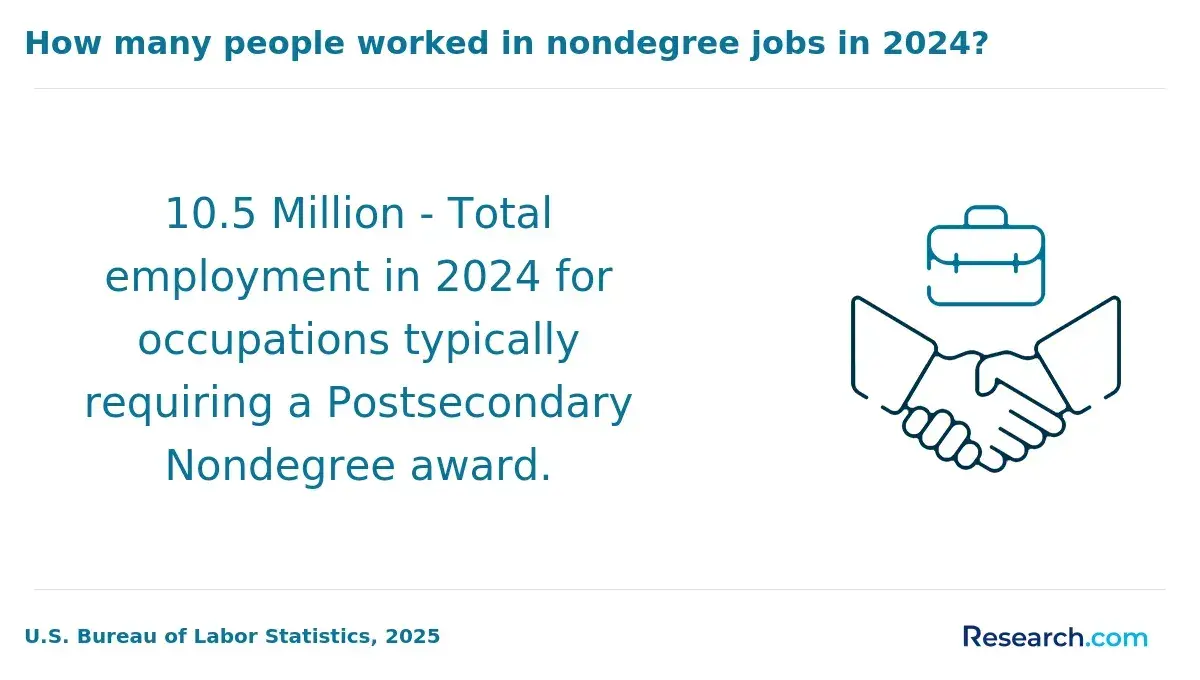
Higher-paying occupations generally require a combination of experience, technical depth, security eligibility, a degree, licensure, or advanced certification; a microcredential can be one component of that pathway. It is most useful when it closes a specific skills gap that an employer recognizes.
Information security analysts had a 2024 median annual wage of $124,910, according to BLS. That figure reflects the occupation as a whole, including workers with varied education and experience, and should not be treated as the likely pay from a beginner cybersecurity badge. The BLS also projects 29% employment growth for the occupation from 2024 to 2034, supporting careful investment in security skills where they build on real IT capability.
Other comparatively strong pathways can include cloud operations, data analytics, software support, project management, and specialized logistics. The sensible next step is to review local and remote job descriptions, identify repeated requirements, and choose training that produces evidence of those requirements: a recognized certification, documented project work, or supervised experience.
Be cautious of providers that connect a short course to a six-figure occupational median without explaining the usual experience level. Career changers should seek entry-level titles first and budget for a staged path.
Do Microcredentials Count for Licensure or Certification?
Sometimes, but only when the relevant licensing board, certifying organization, or employer explicitly accepts the training. Completing a microcredential usually proves course completion. It does not by itself create a state license, professional certification, clearance, or legal authority to perform regulated work.
Use the credential language precisely. A college certificate may award academic credit. A professional certificate commonly documents completion of career-focused instruction. An industry certification is awarded by a certifying body after its separate standards are met, often through an exam. Licensure is granted by a government authority and is governed by state law.
For regulated fields, ask the provider whether the program is designed to meet a named requirement, then independently verify that claim with the applicable state board or certifying organization. This is especially important for nursing, counseling, teaching, electrical work, HVAC work, and other occupations requiring practical hours or supervised experience.
A worthwhile exam-preparation course should name the exact exam, explain eligibility rules, distinguish its completion badge from the certification, and disclose whether an exam voucher is included. If it does not, treat it as general training rather than a direct credential pathway.
How Should Veterans Compare Online Program Quality?
Compare programs against the civilian role you want, not against the number of badges they promise. Quality is demonstrated by a transparent curriculum, credible assessment, realistic career claims, accessible support, and a credential that employers or institutions can understand.
These questions separate a useful program from a weak one:
- What exact skills, tools, projects, and assessments will appear on my record or portfolio?
- Who issues the credential, and do target employers, colleges, or certification bodies recognize that issuer?
- Is the program credit-bearing, stackable, or transferable, and where is that policy published?
- What is the full cost through completion, including tests, materials, subscriptions, equipment, and retakes?
- What live support, disability accommodations, tutoring, career coaching, and veteran-services access are available online?
- What evidence supports any employment claim, and does it distinguish graduates, completers, and job seekers?
Also evaluate the delivery format. Fully asynchronous learning can suit veterans working irregular shifts, but live labs, mentor feedback, and team projects may better prepare learners for technical or portfolio-based roles. Choose the least expensive option only after confirming it includes the practice and recognition your goal requires.
Other Things You Should Know About
Possibly, but only if the specific program and enrollment arrangement meet VA approval requirements. Many noncredit courses and platform subscriptions are not covered. Confirm eligibility with the school's veterans certifying official before enrolling.
They can be worthwhile when they address a clear hiring requirement, prepare you for a recognized certification, or build on military experience. They are less worthwhile when they offer only a vague badge with no employer, college, or licensing relevance.
Sometimes. Credit-bearing colleges may evaluate military transcripts, prior learning, and qualifying certifications. Noncredit providers may allow you to move faster if courses are self-paced, but they usually do not award formal transfer credit.
Choose a microcredential for a focused skill, career exploration, or a quick update. Choose a degree when target jobs routinely require one, when you need broad foundational learning, or when stackable college credit will improve your long-term options.
References
- The Value of a Degree vs. Micro-credentials in Higher Education | Elmhurst University https://www.elmhurst.edu/blog/the-value-of-a-degree-vs-micro-credentials-in-higher-education/
- Cybersecurity Scholarships for Military and Veterans https://www.cyberdegrees.org/resources/scholarships-military-veterans/
- The Top Three Military Spouse Training Programs to Know https://instantteams.com/blog/the-top-3-military-spouse-training-programs/
- Top Scholarships for Military Spouses and Children https://www.aafmaa.com/resource-center/top-scholarships-for-military-spouses-and-children
- Financial Aid for Military & Veterans - OnlineMBA.com https://www.onlinemba.com/resources/financial-aid-and-military-veterans/
- Professional Development Series - Student Veterans of America® https://studentveterans.org/success-hub/career-center/professional-development-series/
- Serco NA: Veterans Find Meaningful Careers https://careers.serco-na.com/us/en/helping-transitioning-veterans-find-meaningful-careers
- 10 Veteran Service Organizations Dedicated to Career Transition https://missionrollcall.org/veteran-voices/articles/10-veteran-service-organizations-dedicated-to-career-transition/
- Education Options for VeteransU.S. Veterans Magazine https://usveteransmagazine.com/usvm/education-options-for-veterans-beyond-the-bachelors-degree/
- Military Transition Programs For Veterans | VTS Nonprofit https://veteranstransitionsupport.org/no-cost-coursera/