2027 Best Online Career Training Programs for Low Student Debt

Co-Founder and Chief Data Scientist
Choosing online career training is less about finding the shortest program than avoiding debt for training that employers or licensing boards will not recognize. The U.S. Bureau of Labor Statistics projects healthcare support occupations to grow faster than average from 2023 to 2033, while many skilled-trade and technology roles also need job-ready workers. This guide helps career changers, recent graduates, and working adults compare affordable certificates, certifications, and associate degrees, estimate total costs, verify quality, and select training that fits a realistic job target.
Key Things You Should Know
- Prioritize programs with a clear job target, transparent total price, recognized credential, and required hands-on or clinical placement; low tuition is not a bargain if the program cannot meet employer or state requirements.
- Certificates are education credentials issued by schools or training providers, while certifications are professional credentials typically awarded by an industry body after an exam or eligibility review; many careers require one, the other, or both.
- For occupational context, BLS reports a 2024 median annual wage of $61,900 for dental hygienists and $47,300 for medical assistants; occupation-level pay is not a promise that completing a short online program alone qualifies a learner for either role.
Top 10 Best Online Career Training Programs for Low Student Debt
Popular Trade School Programs
Online trade training commonly covers electrical theory, HVAC fundamentals, plumbing, welding safety, construction estimating, CAD, and industrial maintenance. A noncredit certificate can build entry-level knowledge, but hands-on trades usually require lab work, supervised field experience, an apprenticeship, or employer training.
Choose a credit-bearing community-college certificate or associate degree when you may later pursue an apprenticeship, transfer coursework, or meet employer education preferences. Avoid programs that imply online lessons alone qualify you for a journeyman license; licensing rules are set by states and local jurisdictions.
Healthcare Programs
Online healthcare options include medical billing and coding, pharmacy technician preparation, medical assisting coursework, health information technology, and healthcare administration certificates. Programs with patient-care duties may be hybrid because skills labs and clinical externships cannot usually be completed entirely online.
Medical coding is often nonclinical and can suit remote learners, although employers may prefer certification or experience. Before paying, confirm whether the program is credit-bearing, whether it prepares you for an external certification exam, and whether it arranges required clinical placement rather than leaving you to locate one independently.
Criminal Justice / Law Programs
Online certificates and associate degrees in criminal justice, paralegal studies, legal studies, corrections, and public safety can support administrative, compliance, court-support, or entry-level public-service paths. A paralegal certificate may be useful for people who already hold a degree, while an associate degree can provide broader general education and possible transfer credit.
Neither credential makes someone an attorney, and law-enforcement hiring commonly adds agency-specific fitness, background, and academy requirements. Compare local employer expectations before enrolling, particularly for roles involving public records, investigations, or legal-document preparation.
Arts & Design Programs
Online arts and design training includes graphic design, digital illustration, UX design fundamentals, web design, video editing, photography, and animation. These programs work best when they produce a portfolio with finished work, critiques, and software practice rather than only completion certificates.
A short certificate can help a learner test a specialty or update skills; an associate degree may make more sense for learners needing broad foundations and structured portfolio development. Because creative hiring is portfolio-driven, ask to see student work, instructor feedback practices, software costs, and career-support limits before enrolling.
What are the cheapest online career training options?
The cheapest legitimate online career training option depends on whether you need academic credit, supervised practice, or only a job-relevant skill. Free or low-cost courses can be excellent for exploration, but they rarely substitute for regulated training, an accredited college certificate, or a recognized certification exam.
Use this comparison to separate low upfront price from low total cost.
| Training option | Typical cost pattern | Best use | Important limitation |
| Employer-sponsored training | Often low or no tuition to the employee | Current workers pursuing a role change or advancement | May require continued employment or cover only approved programs |
| Community-college certificate | Per-credit tuition plus fees, books, supplies, and labs | Credit-bearing training with possible transfer value | Completion may take longer than a noncredit course |
| Workforce or adult-education program | Often subsidized locally | Entry-level digital, office, or trade preparation | Credential recognition varies by employer |
| Industry certification preparation | Course and exam fees may be separate | Technology, project, or administrative skills with a defined exam | Preparation course does not itself award certification |
Start by asking a local workforce agency, public community college, union apprenticeship sponsor, or employer about grants and tuition assistance. Learners seeking self-paced degree options can also compare best competency-based colleges, but should confirm the program's full tuition model, pacing rules, and transfer policy before assuming it is the lowest-debt route.
To reduce borrowing, calculate the complete bill before accepting loans: tuition, mandatory fees, examination fees, equipment, software, travel for labs or clinicals, background checks, and lost work hours.
Federal aid may be available for eligible programs at participating institutions, but many short noncredit courses do not qualify. Private loans should generally be a last resort because repayment protections can be weaker.
Which online career training programs lead to good jobs?
Programs lead to better job prospects when the credential matches a specific employer need, not simply when the subject is popular. BLS projects wind turbine service technicians to be among the fastest-growing occupations from 2023 to 2033, but that work requires substantial hands-on training and is not an online-only outcome.
Similarly, health information, IT support, bookkeeping, and skilled trades can offer entry points, yet local hiring standards determine whether a certificate is enough. The following comparison helps match training depth to the kind of work a learner wants.
| Career direction | Useful training route | Why it can fit | When to choose more education |
| IT support | Entry-level certificate plus industry certification preparation | Can demonstrate foundational troubleshooting and networking skills | Choose an associate or bachelor's degree for broader technical roles or advancement plans |
| Medical billing and coding | Certificate with coding practice and exam preparation | Targets administrative healthcare workflows | Choose a longer health information program for broader records-management roles |
| HVAC or electrical work | Technical certificate followed by apprenticeship or supervised work | Builds foundational theory and safety knowledge | Choose a program with labs when employers or licensing paths require practical competencies |
| Business administration | Office software, bookkeeping, or project-support certificate | Can support entry-level administrative work | Choose a degree for careers with employer degree requirements |
Before enrolling, search current local job postings for the exact role title and record the recurring requirements: software, certification, degree level, schedule, experience, and license. If your target job regularly requests a bachelor's degree, compare the certificate route with the best 4 year degrees rather than financing a short program that does not meet the hiring threshold.
How do you check if an online program is accredited?
Accreditation is a quality-review process for institutions or programs, but the relevant type depends on the credential and occupation. Institutional accreditation matters most for federal aid eligibility, credit transfer, and academic certificates or degrees.
Programmatic accreditation can matter more in regulated fields such as nursing, medical assisting, dental hygiene, or certain allied-health programs. Industry certifications are different: they are usually issued by professional organizations rather than accredited colleges.
Check a program in this order:
- Identify whether you need institutional accreditation, programmatic accreditation, state approval, an industry certification, or a professional license for your intended job.
- Verify the school's status in the U.S. Department of Education's Database of Accredited Postsecondary Institutions and Programs or with the named accreditor.
- For regulated careers, confirm requirements directly with the licensing board in the state where you plan to work.
- Ask the school for written confirmation of its accreditation, approval, clinical-placement policy, and certification-exam eligibility claims.
A major red flag is vague language such as "internationally recognized" without naming the accreditor, licensing board, or certifying organization. Another is a school that advertises eligibility for a license but will not identify the state rule supporting that claim.
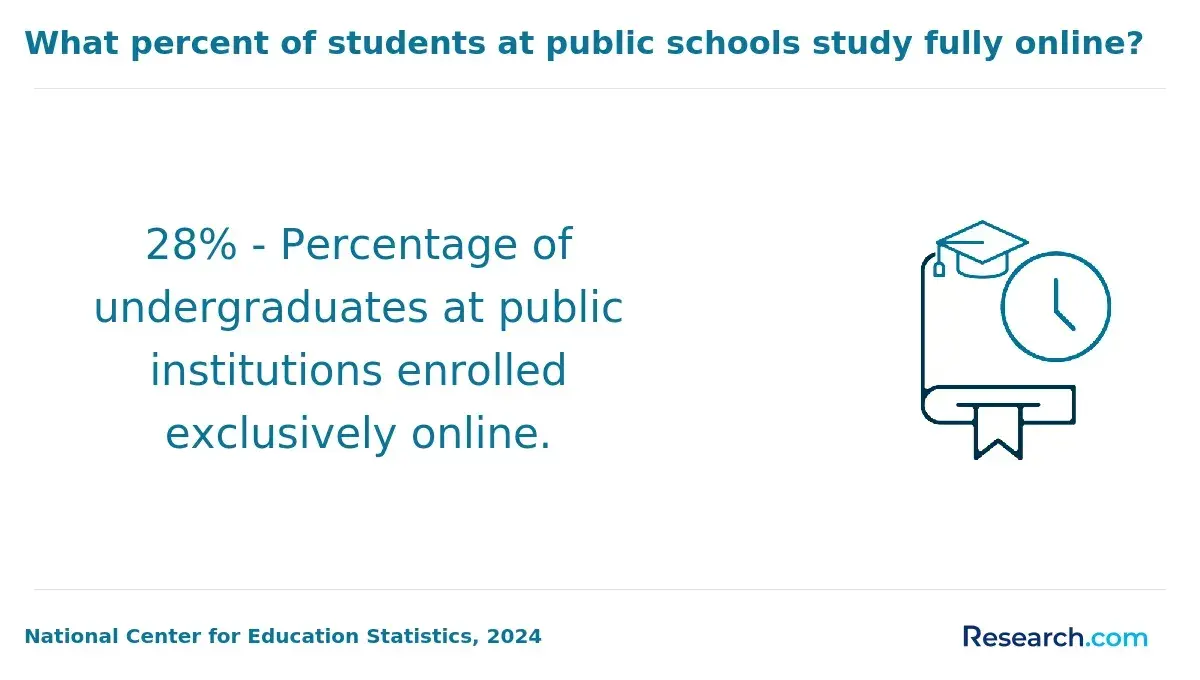
Are online career training programs better than campus programs?
Online career training is better than campus study when the occupation can be learned primarily through digital instruction, simulations, projects, and remote collaboration - and when the program has credible instructor access and employer relevance. Campus or hybrid study is usually safer for training requiring equipment, patient contact, safety demonstrations, studio critique, or mandated clinical hours.
This comparison highlights the trade-off that matters most for keeping debt low: flexibility should not remove required practical training.
| Factor | Online program | Campus or hybrid program |
| Schedule | Often flexible, especially asynchronous courses | Usually fixed meeting or lab times |
| Commuting cost | Usually lower | May include travel, parking, or housing costs |
| Hands-on learning | Limited unless labs, kits, externships, or simulations are included | Typically easier to deliver with equipment and supervision |
| Networking | Requires deliberate use of virtual events and career services | Often more immediate through peers, faculty, and local employers |
| Licensure preparation | Must be checked carefully by state | May simplify clinical and lab logistics, but still requires verification |
Online learning can be especially practical for caregivers who need schedule control. Explore online courses for stay at home moms when flexibility is a central requirement, then verify weekly workload and any required in-person components before registering.
What certificate programs have the best salary potential?
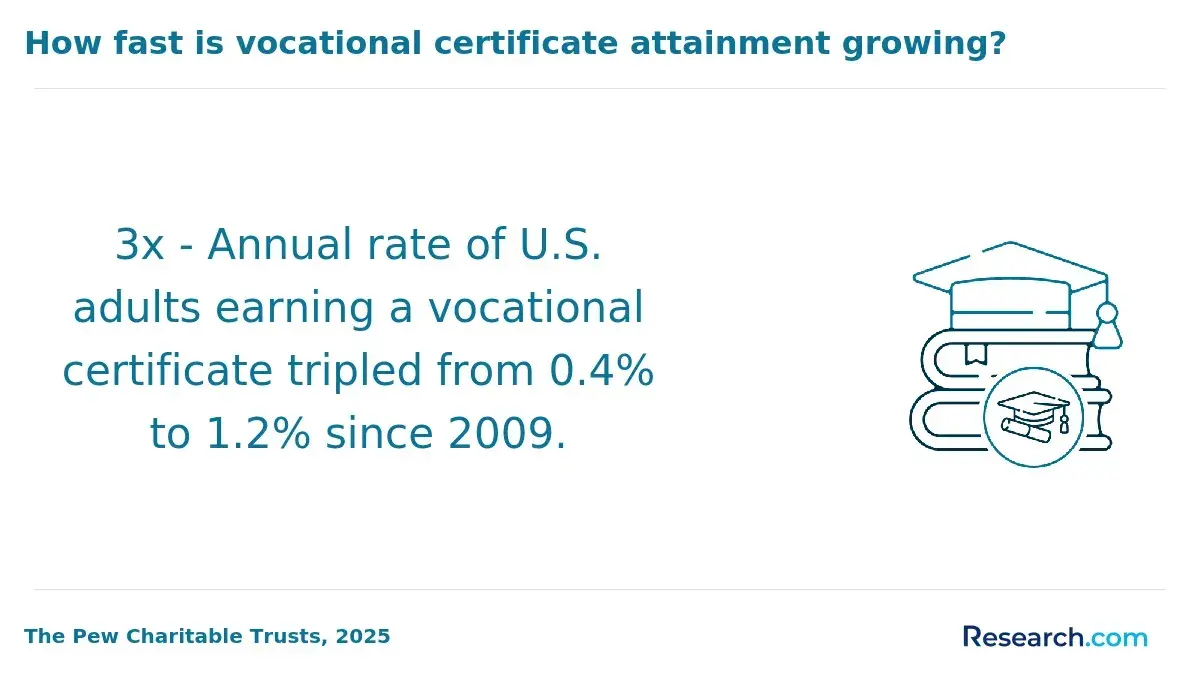
Certificate programs with stronger salary potential tend to support technical, regulated, or specialized work, but the credential alone is not the source of the wage. BLS reports that diagnostic medical sonographers had a 2024 median annual wage of $89,340, while completing an appropriate accredited program, clinical training, and employer requirements may be necessary for entry.
Many higher-paying healthcare and technical occupations require an associate degree or more, not a brief online certificate. Higher-potential certificate paths usually share these characteristics:
- They map to a specific occupation with documented local demand and a clear required credential.
- They include practical assessment, supervised experience, or a recognized external certification pathway when the field requires it.
- They have transparent prerequisites, so learners do not discover late that anatomy, math, prior experience, or a degree is required.
- They can stack into an associate or bachelor's degree if career advancement later requires more education.
Be cautious with salary advertising that does not name the occupation, location, experience level, or source. Compare program cost against entry-level job postings and likely financing terms, not against a national median wage that may reflect experienced workers.
How long do online career training programs take?
Online career training can take from a few weeks to about two years, depending on credential type, prerequisites, pace, and required practical experiences. A self-paced software certificate may be completed quickly, while a credit-bearing certificate often takes two or three academic terms.
Associate degrees commonly require about two years of full-time study, though transfer credit and part-time attendance change the timeline.
Completion-time claims deserve careful scrutiny. "Finish in weeks" may describe access to course content rather than the time needed to learn the material, complete projects, schedule an exam, obtain an externship, or satisfy licensing requirements.
Ask whether the published timeline assumes full-time study, whether extensions cost extra, and whether live sessions or clinical rotations have fixed dates.
What are the admission requirements for online certificate programs?
Admission requirements vary sharply by provider. Noncredit career courses may require only payment, a minimum age, basic computer access, or a placement assessment. Credit-bearing certificates and associate degrees commonly require a high school diploma, GED, or equivalent, plus an application and placement steps.
Healthcare, legal, and advanced technical programs may add prerequisite courses, immunizations, background checks, drug screening, or technical standards.
Before applying, request a written checklist and distinguish between admission to the school and admission to the specific program. A learner may be accepted by a college but still need to meet separate requirements for a selective clinical program.
Do not assume standardized tests, GPA minimums, transfer credit, or financial aid apply unless the provider states they do.
Do these programs require licensing or certification?
Some programs require no license or external certification; others prepare students for an exam or meet part of a state licensing pathway. The distinction is essential. Completing a school certificate in IT, billing, or design may demonstrate training, while earning an industry certification usually requires passing an exam administered or authorized by a certifying body.
Licensing is legal permission from a state or local authority to practice a regulated occupation. Confirm these details before enrollment:
- Whether your target occupation is licensed in the state where you intend to work.
- Whether the program is approved, accredited, or otherwise accepted by the relevant board.
- Whether tuition includes examination preparation, examination fees, clinical hours, background checks, or required equipment.
- Whether you must complete additional supervised experience after graduation.
Never rely on a general statement that a program is "license-ready." State rules can change, and a program acceptable in one state may not satisfy another state's education requirements.
How do you choose a reputable online training program?
A reputable online training provider is transparent about what learners receive, what the credential means, and what it does not guarantee. The best low-debt choice is usually the least expensive program that genuinely meets your job, certification, or licensing requirement - not necessarily the program with the loudest employment claim.
Use these steps before signing an enrollment agreement:
- Choose one target job title and review several recent local job postings before comparing programs.
- Request the total cost in writing, including tuition, fees, supplies, exams, travel, and any recurring subscription charges.
- Verify accreditation, program approval, and certification or licensing eligibility with the appropriate independent authority.
- Ask how instructors provide feedback, how practical skills are assessed, and who arranges required externships or clinical placements.
- Read withdrawal, refund, loan, and job-placement disclosures; treat vague placement statistics or high-pressure enrollment deadlines as warning signs.
- Compare a short credential with longer pathways if your target role consistently requires a degree; for advanced academic goals, review most affordable online doctoral programs only when a doctorate is genuinely relevant to your long-term career plan.
Programs are a poor fit when they hide costs, cannot name credentialing partners, promise employment, discourage questions about licensure, or award a "certificate" that employers confuse with a required professional certification. Keep copies of all representations made before enrollment.
Other Things You Should Know About
Possibly, if the certificate teaches skills employers request and the occupation does not require a degree, license, or extensive experience. Review local job postings first and treat the credential as one part of your application alongside projects, experience, and any required certification.
Some credit-bearing programs at eligible institutions may qualify for federal aid, but many short noncredit programs do not. Ask the school's financial-aid office about the exact program, not just the institution, and compare grants, employer aid, payment plans, and borrowing costs.
A certificate is usually awarded after completing an educational program. A certification is typically awarded by a professional organization after meeting defined standards, often including an examination. A school certificate may prepare you for a separate certification exam.
Choose a certificate for a focused, lower-cost entry point when employers accept it and you need a faster path. Choose an associate degree when the role requires broader education, clinical preparation, stronger transfer options, or a foundation for later advancement.
References
- CourseCareers https://coursecareers.com/blog-posts/7-best-online-career-training-programs-for-beginners
- Types of student financial aid | USAGov https://www.usa.gov/student-aid
- Finacial Aid | Payment Plans, Ignite ISA, Grants, GI Bill https://digitalworkshopcenter.com/about/financial-aid/
- Career Training Programs - NHTI https://www.nhti.edu/workforce/career-training-programs/
- Career Training and Trade School Loans https://www.salliemae.com/student-loans/career-training-loan/
- Top Online Trade Schools for 2024 | Start Your Career Path https://www.educationconnection.com/online-trade-schools/
- Best Online Degrees for Working Adults in 2026 https://www.straighterline.com/blog/degreecompletion-best-online-degrees-for-working-adults-in-2026
- Types of Financial Aid: Loans, Grants, and Work-Study Programs https://angelo.campusesp.com/posts/1141
- Financial Aid Guide for Students at Online Colleges - OnlineColleges.net https://www.onlinecolleges.net/for-students/financial-aid-online-students/
- Positive Outcomes from Short Term Training Programs https://www.womenintrucking.org/blog/positive-outcomes-from-short-term-training-programs