2027 Best Stackable Credentials for Career Changers

Co-Founder and Chief Data Scientist
Changing careers quickly is difficult when employers want proof of skills but a full degree feels too expensive or slow. Stackable credentials let you earn a short certificate, enter a field, and apply that learning toward a larger credential later.
This matters because the U.S. Bureau of Labor Statistics projects healthcare support occupations to grow 15% from 2024 to 2034. This guide compares practical pathways, explains licensing limits, and helps you choose a credential sequence that matches your time, budget, and target job.
Key Things You Should Know
- Choose a stackable pathway only when each certificate has clear labor-market value on its own and applies toward a larger certificate, associate degree, license pathway, or industry certification.
- Fast transitions often come from healthcare support, skilled trades, IT support, and commercial driving, but regulated roles may require state approval, clinical hours, examinations, or background checks beyond coursework.
- Occupational pay varies substantially: BLS reported May 2024 median annual wages of $62,350 for electricians, $59,810 for HVAC technicians, and $44,200 for medical assistants; a credential does not guarantee entry into these occupations.
Top 10 Best Stackable Credentials for Career Changers
Popular Trade School Programs
Trade pathways commonly stack a pre-apprenticeship certificate into paid apprenticeship training, specialized certificates, and eventually a journeyman license where required. HVAC certificates can lead to EPA Section 608 exam preparation; electrical programs may support apprenticeship entry; welding certificates build process-specific skills; and industrial maintenance programs combine mechanical, electrical, and programmable-logic-controller training.
These options fit career changers who prefer hands-on work and can attend labs. Confirm that local employers recognize the program and that required shop time, tools, exam fees, and licensing steps are included in the total cost.
Healthcare Programs
Healthcare credentials can stack from nursing assistant or medical billing training into medical assisting, practical nursing, registered nursing, or health information pathways, depending on the school. Medical assisting certificates usually combine coursework with supervised clinical experience and may prepare graduates for a voluntary certification exam.
Nursing programs are more regulated: an approved practical-nursing or registered-nursing program and a licensing examination are generally required. Choose healthcare training only after verifying state eligibility, clinical placement arrangements, immunization requirements, background-check policies, and whether credits apply to the next credential.
Criminal Justice / Law Programs
Career changers can begin with certificates in legal studies, paralegal studies, court reporting support, cybersecurity, or corrections. A paralegal certificate may be useful for people who already have a bachelor's degree or relevant office experience, while an associate degree can provide a broader foundation for entry-level legal support work.
Requirements vary by employer and state; paralegals generally cannot give legal advice or practice law. Look for programs with legal research, writing, ethics, and software training, plus clear information about internship opportunities and any transfer-credit agreement.
Arts & Design Programs
Design credentials can stack from short courses in Adobe software, UX fundamentals, or digital marketing into certificates and associate degrees in graphic design, web design, or media production. A portfolio usually matters more than the credential title alone, so programs should include reviewed projects that demonstrate real client-style work.
These pathways suit career changers who can dedicate time to portfolio building and freelance practice. Avoid programs that promise design jobs without showing graduate portfolios, software access, instructor experience, or a realistic explanation of how AI tools are changing routine production work.
What are stackable credentials for career changers?
Stackable credentials are intentionally connected education milestones. You complete one credential with standalone value, then use its credits, competencies, or documented training toward a more advanced credential. A community college may stack a credit-bearing certificate into an associate degree; an employer or industry provider may stack course badges toward a professional certificate. The key distinction is documented progression, not simply taking several unrelated courses.
For career changers, the best stack is usually a sequence that lowers risk: test the occupation with an entry credential, gain experience, then decide whether the next credential has enough payoff. A standalone noncredit certificate can be quick, but it may not transfer into college credit. Ask the provider to identify, in writing, exactly what transfers, what expires, and what credential comes next.
The comparison below separates common stack designs so you can avoid paying twice for overlapping instruction.
| Stack design | Typical provider | Best use | Main limitation |
| Credit certificate to associate degree | Community college | Career changers who may want a degree later | Usually follows academic terms and prerequisite sequences |
| Training certificate to industry certification | College, training school, or employer partner | Fields with a recognized examination or license pathway | Course completion alone may not earn certification |
| Microcredentials to professional certificate | University or third-party provider | Building a targeted skill portfolio | Recognition and credit transfer can vary widely |
| Apprenticeship to license or advanced credential | Union, employer, or trade school | Paid work-based skilled-trade training | Openings, state rules, and duration vary |
Do not confuse an academic certificate with a professional certification. A certificate shows that you completed a course of study. A certification is usually awarded by an independent professional organization after meeting its rules, which may include an exam, work experience, or continuing education.
Which stackable credentials lead to the fastest job changes?
The fastest job changes tend to come from credentials tied to a defined entry-level task: patient support, bookkeeping, IT help desk work, commercial driving, pharmacy support, HVAC maintenance, or welding. Speed should not be the only criterion. A short program is valuable when employers in your area hire for that credential and when its required exam, background check, clinical work, or driving record review will not delay you afterward.
Programs marketed as accelerated deserve careful comparison. A fast-track program can reduce calendar time, but compressed courses demand steady weekly availability and may leave less room to work or repeat a difficult class.
Use this sequence to identify a genuinely fast, workable transition.
- Search local job postings for the exact entry credential, license, or software skill requested.
- Confirm the full timeline, including prerequisites, clinical placement, examination dates, and state processing.
- Compare total costs, including equipment, uniforms, tests, fingerprints, transportation, and missed work time.
- Choose the first credential that qualifies you for a realistic job while preserving a documented next step.
Short training is less suitable when the target role requires a bachelor's degree, graduate degree, extensive supervised practice, or a license that cannot be earned through a brief program. In those cases, a stack may still be useful as an exploratory first step rather than a shortcut to professional practice.
How do online and campus stackable programs compare?
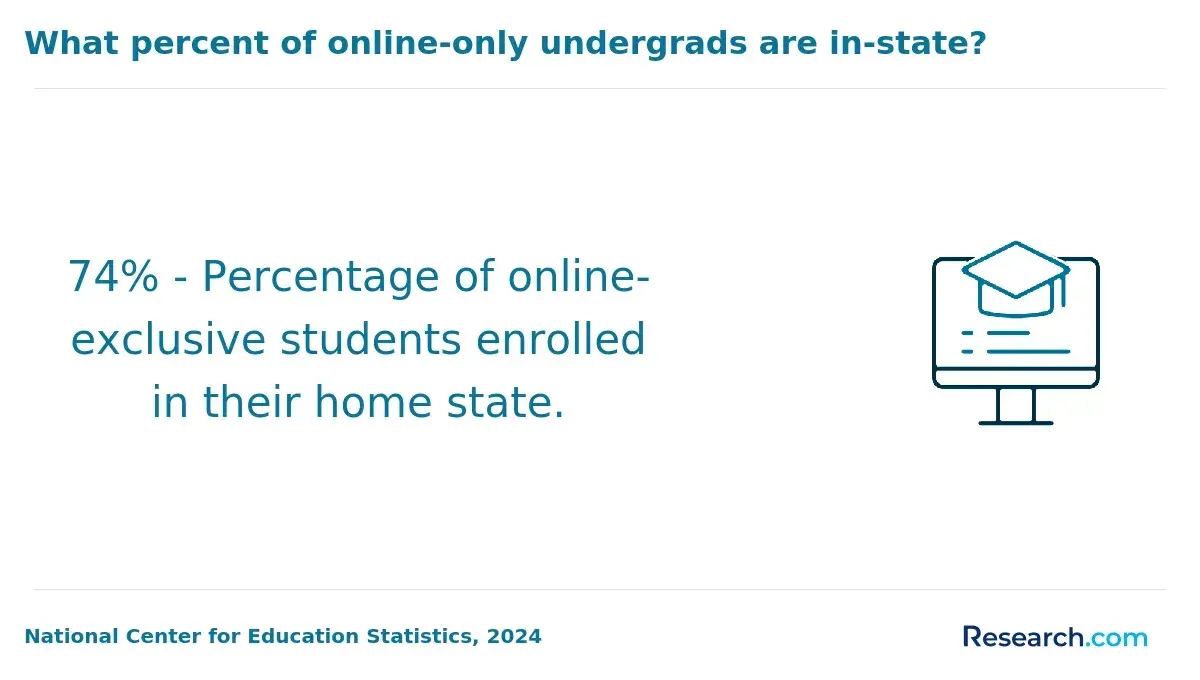
Online stackable programs work well for theory-heavy subjects such as medical billing, bookkeeping, IT support, project coordination, legal research, and digital design. Campus or hybrid delivery is usually stronger for welding, electrical work, HVAC, nursing, dental assisting, and other programs requiring equipment, lab practice, or supervised clinical experience.
An online format does not automatically make a credential more flexible. Scheduled virtual labs, proctored exams, in-person clinical rotations, and group projects can still create fixed commitments. Learners with strong self-direction may benefit from self-paced options, while people changing careers around a job may need predictable evening or hybrid schedules.
This comparison shows the practical trade-off beyond convenience.
| Factor | Online or mostly online | Campus or hybrid |
| Best fit | Knowledge-based, software, administrative, and business skills | Hands-on, clinical, technical, and equipment-based learning |
| Schedule | May offer asynchronous coursework | Often has fixed labs, shops, or clinical blocks |
| Networking | Requires deliberate virtual outreach | Can provide direct instructor and employer contact |
| Licensure preparation | Must be verified state by state | May simplify required in-person training, but still requires verification |
| Cost considerations | May reduce commuting costs | May include facility, equipment, and transportation costs |
For experienced professionals moving into management or a more advanced specialty, competency-based master's options may be worth comparing with certificate stacks. They are generally a different investment: learners demonstrate mastery at an advanced degree level rather than accumulating short entry-level credentials.
Which stackable credentials need accreditation or licensure?
Accreditation, approval, and licensure are not interchangeable. Institutional accreditation evaluates a college or school. Programmatic accreditation evaluates certain professional programs. State approval may determine whether graduates can sit for a licensing examination. An industry certification provider sets separate eligibility and exam rules.
Verification is essential in regulated fields. Nursing, practical nursing, dental hygiene, radiologic technology, cosmetology, commercial driving, electrical work, and many allied-health occupations can have state-specific requirements. A program may be legitimate but still not meet the rules for your intended state. For medical assisting, certification is often voluntary but may be preferred by employers; for nursing, licensure is generally mandatory to practice.
Before enrollment, obtain answers to these questions from the school and the relevant regulator.
- Is the institution accredited when institutional accreditation is relevant to transfer, aid, or employer requirements?
- Is the specific program approved or accredited for my intended license or certification pathway?
- Does the curriculum meet requirements in the state where I plan to work, not merely where the school operates?
- What additional steps remain after graduation, including examinations, supervised hours, fees, and background checks?
A major red flag is language implying that a certificate "makes you licensed" without identifying the licensing board, examination, and state rules. Another is an online clinical program that cannot explain where and how students complete required placements.
What jobs can you get with stackable credentials?
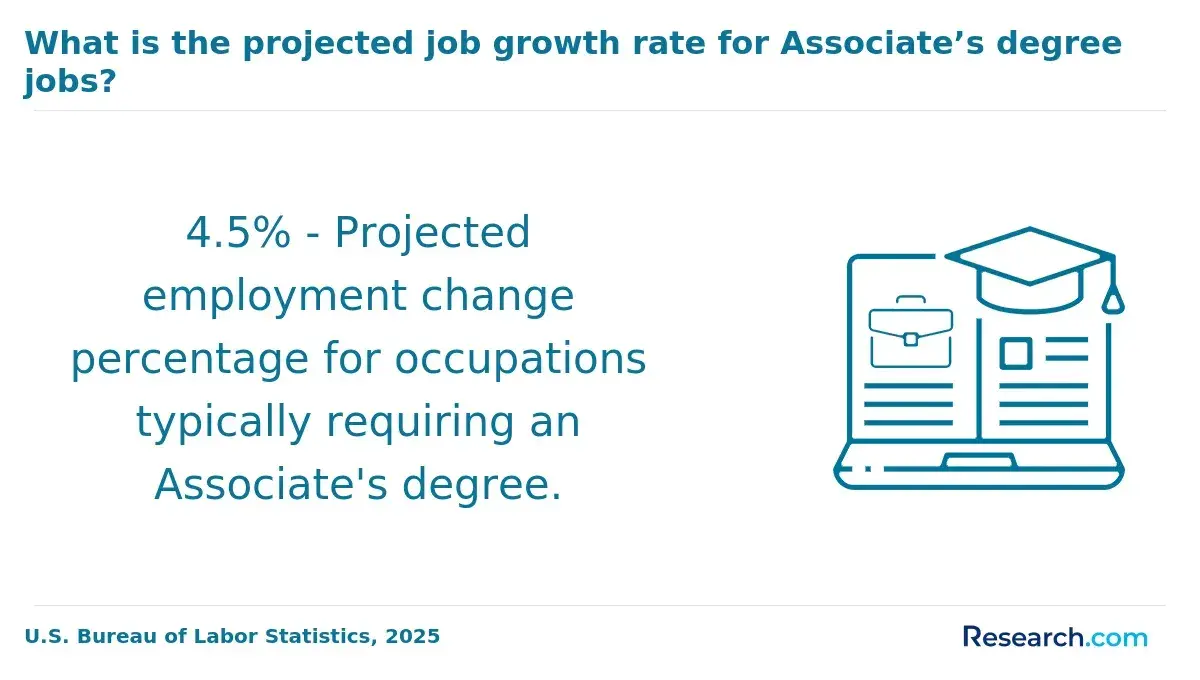
Stackable credentials can support entry-level work, advancement in a current field, or a structured route toward an associate or bachelor's degree. The first credential usually opens a narrower role; later credentials expand responsibility, specialization, or eligibility for a higher credential. Employers may still require experience, a portfolio, an interview, a background check, or an external certification.
The table connects common stacks to realistic job targets rather than implying that every completion leads to a specific role.
| Starting credential | Possible next stack | Potential entry-level job area | Important condition |
| HVAC certificate | Apprenticeship, EPA exam preparation, advanced service training | HVAC helper or service technician trainee | Employer and local licensing rules apply |
| Medical assisting certificate | Specialty training or health administration coursework | Medical assistant | Clinical training and employer preferences vary |
| IT support certificate | Network, cloud, cybersecurity, or associate degree coursework | Help desk or desktop support | Demonstrated technical skills remain important |
| Paralegal studies certificate | Associate or bachelor's coursework, legal specialty training | Legal assistant or paralegal support | Education expectations vary by employer |
| Digital design certificate | UX, web development, marketing, or associate degree coursework | Junior production or design support work | Portfolio quality is central |
Career changers should favor roles with visible hiring pathways, such as employer partnerships, apprenticeships, internships, or clinical affiliations. A school's job-placement claim is not enough; ask how it defines placement, which employers hire locally, and whether the reported jobs are related to the training.
How much do stackable credential careers pay?
Pay should be evaluated at the occupation level, not presented as a return promised by a certificate. The U.S. Bureau of Labor Statistics reported a May 2024 median annual wage of $62,350 for electricians, $59,810 for heating, air conditioning, and refrigeration mechanics and installers, $61,010 for paralegals and legal assistants, and $61,300 for graphic designers. These figures include workers with different education levels, locations, and experience, so they are useful benchmarks rather than expected starting pay.
Job outlook matters alongside wages. BLS projects employment of medical assistants to grow 12% from 2024 to 2034, faster than the average for all occupations. That can make a medical-assisting pathway worth examining, but local demand, clinical availability, and pay rates still determine the individual decision.
Use a simple return-on-investment check: compare total out-of-pocket cost and forgone earnings with likely local entry pay, then consider whether the credential creates a durable next step. If your target occupation usually requires a degree, compare the stack against most lucrative college majors rather than assuming a short credential is always the stronger financial choice.
How long do stackable credential programs take?
Completion time ranges from a few weeks for a focused noncredit course to roughly one or two academic years for a certificate or associate-degree sequence. The calendar length depends on prerequisites, whether classes run by term, required lab or clinical hours, full-time versus part-time enrollment, and the timing of required exams. Apprenticeships can take longer but may provide paid work while training.
A stack is most efficient when earlier coursework is formally embedded in the next credential. Get the catalog year, course list, credit count, grade minimum, and transfer deadline in writing. Credits may have residency rules or time limits, and noncredit badges may not convert to academic credit.
For career changers already holding a bachelor's degree who need advanced rather than entry-level preparation, a 1-year master's program may be a more appropriate comparison. It is not a substitute for a license-required pathway, but it can make sense when the desired role expects graduate-level education.
What should you look for in a reputable program?
A reputable stackable program clearly identifies the credential awarded, the provider, required attendance format, total estimated cost, and the next credential it supports. For credit-bearing programs, examine the school's accreditation status and published transfer rules. For industry-oriented training, look for alignment with a recognized employer, apprenticeship sponsor, licensing board, or certification body rather than relying on vague claims of "industry approval."
Compare programs using evidence that affects your ability to finish and use the credential.
- Request a written program map showing which completed courses, credits, or competencies apply to each later credential.
- Review the full cost of tuition, fees, books, software, equipment, exams, uniforms, insurance, and travel.
- Ask whether required internships, clinical placements, labs, or apprenticeships are guaranteed, competitive, or self-arranged.
- Confirm instructor qualifications, student support, tutoring, technical support, and schedule options for working adults.
- Ask for transparent completion, job-placement, and licensure-exam information, including how each outcome is defined.
Red flags include pressure to enroll immediately, unclear refund policies, unverified licensing statements, and a refusal to provide a course-to-credential map. The cheapest option can be costly if it does not transfer, lacks required hands-on practice, or leaves you ineligible for the next step.
What are the admission requirements for stackable programs?
Admission requirements depend on the provider and level of credential. A short noncredit course may require only registration and payment. Credit-bearing college certificates commonly require an application and proof of prior education, while selective health programs may also require prerequisite courses, placement testing, immunizations, background checks, drug screening, or minimum grades. Apprenticeships may screen for age, physical capacity, aptitude, driver's-license status, or eligibility to work.
Do not assume a GPA, standardized test, or transfer-credit policy applies to every stack. Instead, identify the requirements at every stage before starting the first stage. A sequence is only truly stackable for you if you can meet the entry requirements for the next credential when the time comes.
Before applying, collect transcripts, confirm any prerequisite timeline, ask whether prior learning or military training can be evaluated, and determine whether employer tuition assistance or federal aid applies. Eligibility for financial aid is program-specific; many short noncredit credentials do not qualify even when they are offered by a college.
Other Things You Should Know About
They can be worthwhile when the first credential has hiring value and clearly applies to a larger goal. They are less useful when each course is nontransferable, employer recognition is weak, or the target occupation requires a degree or license that the stack cannot provide.
Some can, especially credit-bearing certificates at community colleges. Transfer is never automatic across all institutions. Confirm the specific courses, grades, residency requirements, expiration rules, and receiving program before enrolling.
A stackable certificate is an educational award that may lead to a larger academic or training credential. A certification is a professional designation issued by a certifying organization, often after an exam or other eligibility requirements. A certificate program may prepare you for certification, but it does not automatically award it.
Often yes for online, evening, or part-time programs, but clinical rotations, labs, apprenticeships, and exam schedules may require daytime availability. Review the required weekly schedule and any in-person components before relying on a program's flexibility claim.
References
- Stackable Credentials: How Do You Stack Up? https://www.1stsource.com/advice/stackable-credentials-how-do-you-stack-up/
- Customize Your Career Path with Stacked Credentials https://americanmedtech.org/blog/blog-post/customize-your-career-path-with-stacked-credentials-3
- Stackable Credentials Explained https://diplomasafe.com/stackable-credentials/
- What Are Stackable Credentials and Why Do They Matter? https://www.pltw.org/blog/what-are-stackable-credentials
- Building Stackable Credentials That Truly Deliver Value and Economic Mobility: 7 Steps for Success https://mcacs.talentfirst.net/building-stackable-credentials-that-truly-deliver-value/
- Stackable Credentials: Living Links Between Learning and Work https://www.cael.org/resouces/pathways-blog/stackable-credentials-living-links-between-learning-and-work
- What are Stackable Credentials? https://assess.com/stackable-credentials/
- A Research-Based Look at Stackable Credentials https://www.parchment.eu/blog/podcast-episode-9-a-research-based-look-at-stackable-credentials/
- Stackable credentials can open doors to new career opportunities | Brookings https://www.brookings.edu/articles/stackable-credentials-can-open-doors-to-new-career-opportunities/
- Rethinking Credentialing in Higher Education for the 21st Century https://moderncampus.com/blog/rethinking-credentialing-for-the-21st-century.html