2027 Best Online Stackable Credentials for Students With Low GPA

Co-Founder and Chief Data Scientist
A low GPA can make traditional admission feel out of reach, but it does not eliminate career-focused education. The U.S. Bureau of Labor Statistics projects an average of 7.4 million job openings per year from 2024 to 2034, creating demand for workers who can show relevant skills and training.
Online stackable credentials let students begin with a smaller certificate or microcredential, demonstrate academic readiness, and potentially apply earned credits toward a larger program. This guide compares practical options, admission realities, costs, and career trade-offs.
Key Things You Should Know
- Students with a low GPA may find more accessible entry through open-admission community colleges, noncredit workforce programs, or schools using holistic review; a credential's admission policy matters more than its name.
- The strongest stackable option is usually a credit-bearing certificate with a written pathway into an associate degree, not a standalone badge with unclear transfer value.
- For career context, BLS projects 7.4 million average annual U.S. job openings from 2024 to 2034, but a short credential alone does not automatically meet every employer, certification, or state-licensure requirement.
Top 10 Best Online Stackable Credentials for Students With Low GPA
Popular Trade School Programs
Online trade credentials work best for theory, safety, estimating, codes, and customer-service coursework; hands-on labs and supervised field hours usually remain in person. Common stackable paths include electrical technology certificates leading to an associate degree, HVAC/R certificates, construction management certificates, welding theory credentials, and industrial maintenance programs.
Choose a program only after confirming required lab access, apprenticeship alignment, and state rules. Electrician and HVAC careers commonly require supervised work experience and, in many locations, licensing; an online certificate can support entry but rarely replaces those requirements.
Healthcare Programs
Healthcare stackable credentials can begin with medical billing and coding, pharmacy technician preparation, medical assisting coursework, health information technology, or practical nursing prerequisites. Fully online study is most realistic for administrative and information-focused programs; clinical credentials require approved placements, skills labs, background checks, immunizations, and sometimes entrance testing.
A credit-bearing certificate may feed into an associate degree in health information technology or nursing, but transfer rules vary. Before enrolling, verify whether the curriculum prepares students for a recognized certification examination and whether any clinical component is available in your state.
Criminal Justice / Law Programs
Students can stack introductory criminal justice, legal studies, homeland security, corrections, or paralegal studies certificates into an associate degree at some colleges. These programs are often compatible with online learning because readings, legal research, report writing, and ethics can be taught remotely.
However, a certificate does not make someone a lawyer, police officer, or licensed investigator. Paralegal employers may prefer an associate or bachelor's degree, and some roles require local background screening or agency-specific training. Review course transfer agreements and local employer requirements before choosing a concentration.
Arts & Design Programs
Online stackable options in graphic design, digital media, UX design, photography, animation, and web content production can help students build targeted skills while assembling a portfolio. A short certificate is most useful when it includes project feedback, current software training, and portfolio-ready work. It may stack into an associate degree in design or digital media, but employers often evaluate work samples more closely than GPA.
Students seeking freelance work should also budget for software, equipment, and portfolio hosting. Avoid programs that promise employment without showing what projects students will complete.
What Are Stackable Credentials?
Stackable credentials are smaller learning awards designed to build on one another. A student might complete an introductory certificate, apply those courses toward an advanced certificate, and then use eligible credits toward an associate degree. The key word is designed: credits do not automatically stack simply because two programs cover similar subjects.
A stack may include credit-bearing college certificates, industry-recognized certifications, professional certificates, digital badges, or short workforce courses. These are not interchangeable. A college certificate documents completion of an educational program; a certification is usually awarded by a professional body after an exam or other standards are met. Noncredit credentials can build skills quickly but may not transfer into a degree.
The comparison below shows the practical differences readers should confirm before enrolling.
| Credential type | Usually awards academic credit? | Best use | Main caution |
Credit-bearing certificate | Often | Starting a degree pathway or building academic momentum | Credits may apply only at the issuing institution |
Noncredit workforce certificate | Usually no | Fast skill development and employer-focused training | May not qualify for federal aid or transfer |
Industry certification | No | Showing verified competence in a specific tool or occupation | May require a separate exam, renewal, or work experience |
Associate degree pathway | Yes | Broader education and a formal academic credential | Requires general education courses and more time |
Can You Get In With a Low GPA?
Yes, but "low GPA acceptance" is not a universal program feature. Open-admission colleges commonly admit applicants who meet basic placement, age, or high-school-completion requirements, while selective certificate programs may set a minimum GPA, require placement tests, or review prior coursework. Private training providers may not ask for a GPA at all, but their credentials may be noncredit.
Students with a GPA near 2.0 should compare colleges that accept 2.0 GPA applicants and then confirm the requirements for the exact certificate, not just the institution. Health programs, nursing tracks, and limited-enrollment technical cohorts often have additional standards even when the college has broad admission.
A stronger application can show that earlier grades do not reflect current readiness. Take these steps before applying:
- Request the program's written admission, placement, and progression requirements.
- Ask whether developmental courses, recent coursework, work experience, or a personal statement can support admission.
- Start with an entry certificate only if its courses are explicitly eligible for the next credential.
- Plan for tutoring and a manageable first-term course load to establish a stronger college record.
Be cautious of providers advertising "no GPA required" without explaining recognition, credit status, completion expectations, or job preparation. Easy entry is valuable only when the credential supports a realistic next step.
Which Accreditations Matter Most?
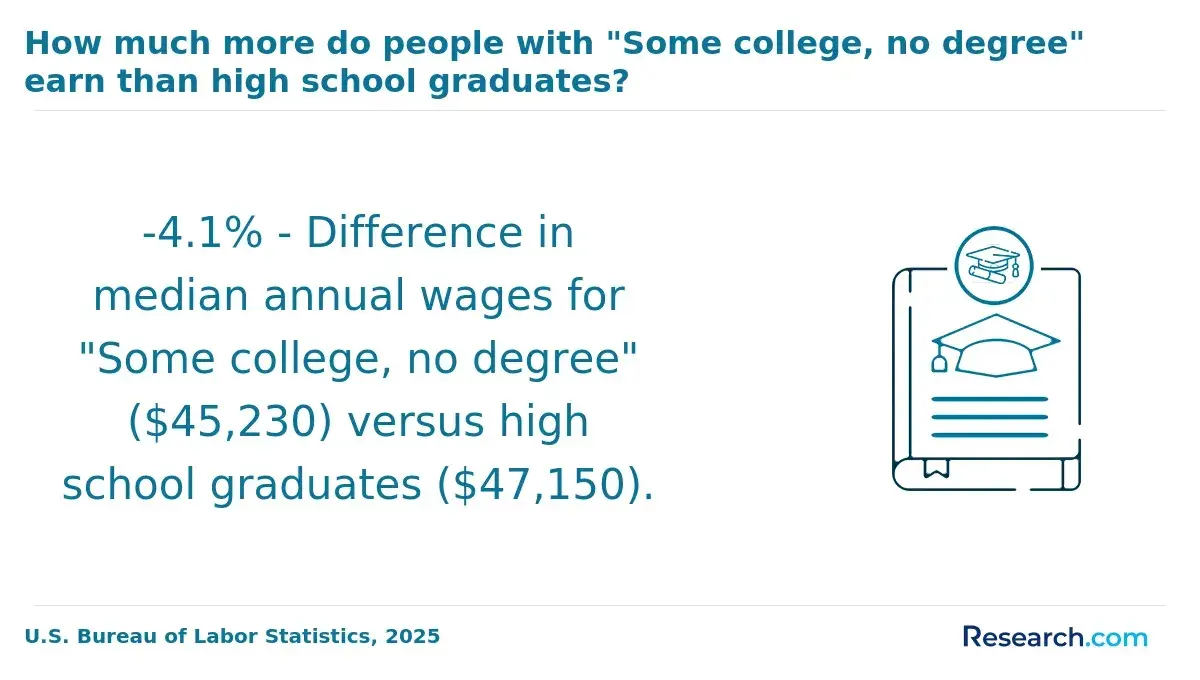
For a credit-bearing online certificate or associate pathway, institutional accreditation is the first checkpoint. It indicates that the college meets recognized quality standards and affects whether federal student aid and institutional credit transfer may be available. Regional institutional accreditors are now generally described as institutional accreditors, but the practical question remains whether the U.S. Department of Education and the Council for Higher Education Accreditation recognize the accreditor.
Programmatic accreditation matters most in fields where employers, certification bodies, or state boards expect it. Examples include nursing, medical assisting, health information, and certain technical programs. A school can be institutionally accredited while a specific career program lacks the specialized approval needed for a licensure or certification route.
Before paying a deposit, ask the school to answer these questions in writing:
- Is the institution accredited, and by which recognized accreditor?
- Is this exact program approved or accredited for my intended certification or licensure pathway?
- Are the courses credit-bearing, and which later credential accepts them?
- Will required labs, clinicals, internships, or proctored exams be available where I live?
Do not confuse accreditation with industry certification. Accreditation evaluates an institution or educational program; certification typically validates an individual professional's knowledge or competence.
How Do Online and Campus Programs Compare?
Online programs can reduce commuting and make part-time study easier, but they are not automatically faster or easier. They are strongest for subjects that rely on readings, software, research, communication, and projects. Campus or hybrid delivery is often the safer choice when the credential requires equipment, patient contact, shop practice, clinical supervision, or state-mandated hours.
This comparison helps match the delivery format to the training outcome rather than choosing solely for convenience.
| Factor | Online format | Campus or hybrid format |
Best fit | Business, IT, legal studies, design, and administrative healthcare coursework | Trades, clinical healthcare, lab science, and equipment-intensive training |
Schedule | May offer asynchronous coursework, with fixed deadlines | Usually includes scheduled labs, meetings, or placements |
Support needed | Reliable technology, time management, and remote advising | Transportation, attendance flexibility, and access to facilities |
Career evidence | Projects, assessments, and possible virtual simulations | Projects plus direct practice and instructor observation |
Students seeking work that can be performed away from a fixed location can also compare best degrees for remote work, but should distinguish remote-friendly occupations from programs that can be completed fully online.
What Can You Study?
The best subject is one that aligns with a job target and has a documented next credential. Students who need to rebuild academic confidence often benefit from a structured, entry-level certificate with clear assessments and support, rather than an advanced specialization that assumes prior college success.
Common study areas include information technology support, cybersecurity fundamentals, business administration, bookkeeping, project coordination, medical billing and coding, health information, criminal justice, legal studies, digital design, web development, HVAC/R, electrical technology, and construction management. Programs in these areas vary widely in whether they are credit-bearing and whether a separate industry certification is expected.
If your long-term goal is broader college study, compare stackable pathways with associate degrees that may offer accessible admission and general-education coursework. An associate degree can make sense when employers prefer a two-year credential or when you want more transfer options; a focused certificate can make more sense when you need a faster, lower-commitment starting point.
Avoid choosing solely by a popular label such as "cybersecurity" or "healthcare." Read the course list, identify the entry-level tasks it teaches, and check whether local employers hire beginners for those tasks.
How Long Do Programs Take?
Completion time depends on the credential's scope, credit load, prerequisites, and whether required field experiences are available. A short noncredit course may take weeks, while a college certificate commonly takes several months to about a year of part-time or full-time study. An associate degree normally requires about two years of full-time study, although prior credits and course availability can change that timeline.
Accelerated formats can be useful for motivated students, but they compress reading, assignments, and exams into shorter terms. Students recovering from weak prior grades may be better served by a standard pace that allows time for tutoring, feedback, and consistent study habits.
Ask whether courses are offered every term, whether prerequisites create waiting periods, and whether clinicals or labs are scheduled promptly. A program advertised as short can take much longer when a required placement has limited seats.
How Much Do They Cost?
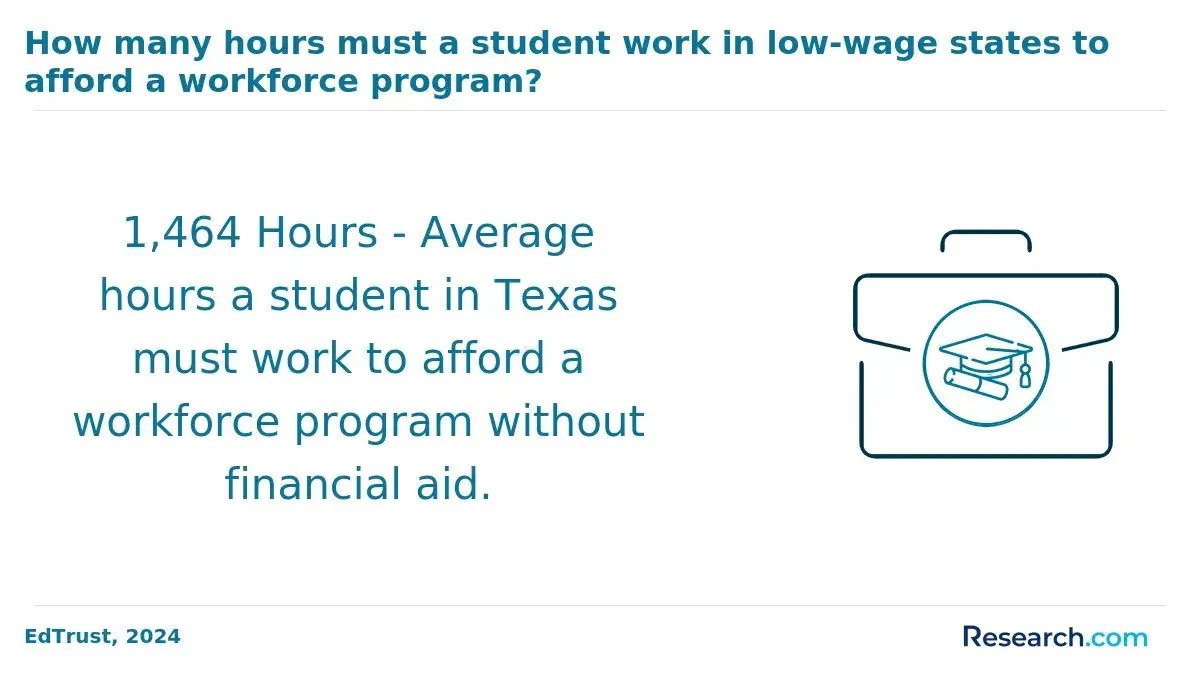
Cost is more than tuition. In the 2025-26 academic year, average published tuition and fees for in-district students at public two-year colleges were $4,150, according to College Board. That is a useful benchmark for comparing credit-bearing pathways, but actual certificate costs vary by state, residency, course load, and institutional fees.
Readers should calculate the total price rather than relying on a monthly-payment advertisement. Important costs include:
- Tuition and mandatory institutional or technology fees
- Books, software subscriptions, tools, uniforms, and examination fees
- Background checks, immunizations, travel, and insurance for clinical or field requirements
- Retake fees, certification-exam fees, and renewal costs when applicable
- Lost work time or childcare costs for required scheduled labs or placements
Credit-bearing programs at eligible institutions may offer federal aid to qualified students, while noncredit programs often use employer tuition assistance, state workforce funding, scholarships, or payment plans instead. Do not assume aid applies; ask the financial-aid office about the exact program's eligibility. Students who ultimately need doctoral study should evaluate the full academic ladder and compare affordable online PhD programs only after confirming that earlier credits and degrees support their intended field.
What Jobs Can They Lead To?
Stackable credentials can lead to entry-level work, support a career change, or strengthen an application for a larger program. The result depends on the occupation, the quality of practical training, local hiring conditions, and whether employers require an additional certification, license, degree, or experience.
The table identifies realistic examples of how a first credential may fit into a longer pathway.
| Starting credential area | Potential entry-level work | Possible next step | Important limitation |
IT support | Help desk or technical support trainee roles | Networking, cybersecurity, or associate degree coursework | Employers may expect demonstrated troubleshooting skills or an industry certification |
Medical billing and coding | Billing, records, or claims-support roles | Health information certificate or associate degree | Some employers prefer coding certification or prior healthcare-office experience |
HVAC/R technology | Installer helper or maintenance trainee roles | Apprenticeship, field experience, and licensing progression | Hands-on competency and local licensing rules remain essential |
Legal studies | Legal office assistant or records-support roles | Paralegal certificate or associate degree | A certificate does not authorize legal practice |
Digital design | Production artist, content assistant, or freelance project work | Portfolio development and advanced design coursework | Portfolio quality and software skills can matter more than the credential title |
A common mistake is treating the first credential as the final career requirement. Instead, map the first job you could pursue, the evidence employers request, and the next credential you may need after gaining experience.
What Salaries and Job Outlook Apply?
Occupational wage data describes workers in an occupation, not what every certificate holder earns. Education, location, experience, industry, licensure, and job duties all affect pay. The U.S. Bureau of Labor Statistics' May 2024 wage data and 2024-34 projections provide useful context for comparing fields, not a guarantee of outcomes.
The figures below show national median annual pay and projected employment change for selected occupations that may relate to these pathways.
| Occupation | Median annual pay, May 2024 | Projected employment change, 2024-34 | Credential context |
Electricians | $62,350 | 9% | Typically requires apprenticeship training and licensing in addition to classroom study |
Heating, air conditioning, and refrigeration mechanics and installers | $59,810 | 8% | Technical training may support entry, but field experience is central |
Medical assistants | $44,200 | 12% | Employer and state requirements vary; accredited training may matter |
Paralegals and legal assistants | $61,010 | -1% | Employers may prefer a degree, specialized coursework, or relevant experience |
Graphic designers | $61,300 | 2% | Portfolio strength and technical skills are significant hiring factors |
Use wage and outlook data to compare risk, not to select a program by salary alone. A growing occupation can still have competitive local hiring, and a higher-paying role may require years of supervised experience or a degree beyond the first stackable credential.
Other Things You Should Know About
Some do, particularly open-admission college certificates and noncredit workforce programs. However, selective healthcare, technical, and limited-enrollment programs may still require a minimum GPA, placement testing, prerequisites, or separate admission.
They can only transfer when the institution has formally mapped the certificate courses into the degree. Ask for the current curriculum and written confirmation of how many credits apply before enrolling.
No. A certificate is typically awarded after completing education or training. Professional certification is usually awarded by an industry organization after meeting eligibility requirements, often including an examination and ongoing renewal.
They can cover theory and some administrative skills, but clinical practice, labs, equipment training, and supervised hours commonly require in-person or hybrid participation. Confirm those requirements before paying tuition.
References
- Stackable Credentials: Living Links Between Learning and Work https://www.cael.org/resouces/pathways-blog/stackable-credentials-living-links-between-learning-and-work
- Six Types of Credentials Non-Traditional Students Want https://laurelridgeworkforce.com/six-types-of-credentials-non-traditional-students-want/
- How to Create Stackable Credentials That Will Draw Learners to Your School https://jenzabar.com/blog/how-to-create-stackable-credentials-that-will-draw-learners-to-your-school
- How Stackable Courses and Micro-credentials Are Evolving Educator Professional Development | ACE Blog https://ace.edu/blog/how-stackable-courses-and-micro-credentials-are-evolving-educator-professional-development/
- Stackable Credentials Backgrounder - Today's Students Coalition https://todaysstudents.org/resource/stackable-credentials-backgrounder/
- What Are Stackable Credentials, and How Can You Build Programs Around Them? https://www.jenzabar.com/blog/what-are-stackable-credentials-and-how-can-you-build-programs-around-them
- What are Stackable Credentials? https://assess.com/stackable-credentials/
- USHE initiative helps students earn meaningful credentials on their way to a degree - Utah System of Higher Education https://ushe.edu/stackable-credentials-help-students-earn-credentials-on-their-way-to-a-degree/
- Building Stackable Credentials That Truly Deliver Value and Economic Mobility: 7 Steps for Success https://mcacs.talentfirst.net/building-stackable-credentials-that-truly-deliver-value/