2027 Best Online Professional Certificates for Transfer Students

Co-Founder and Chief Data Scientist
Transfer students often need a faster, lower-risk way to build job-ready skills without losing the college credits they have already earned. Online professional certificates can help, but their value depends on whether they carry academic credit, align with employer needs, and fit a longer degree plan.
College Board reported average published tuition and fees of $4,050 at public two-year colleges for 2024-25, making short, targeted credentials worth comparing carefully. This guide explains certificate types, transfer considerations, costs, career paths, and how to identify reputable online options.
Key Things You Should Know
- For transfer students, the best online professional certificate is usually credit-bearing or stackable toward a degree; noncredit certificates may build skills but generally do not transfer as college credit.
- Completion time commonly ranges from a few months to about one year, while cost varies widely by provider, required software, lab work, exam fees, and whether the program charges undergraduate tuition.
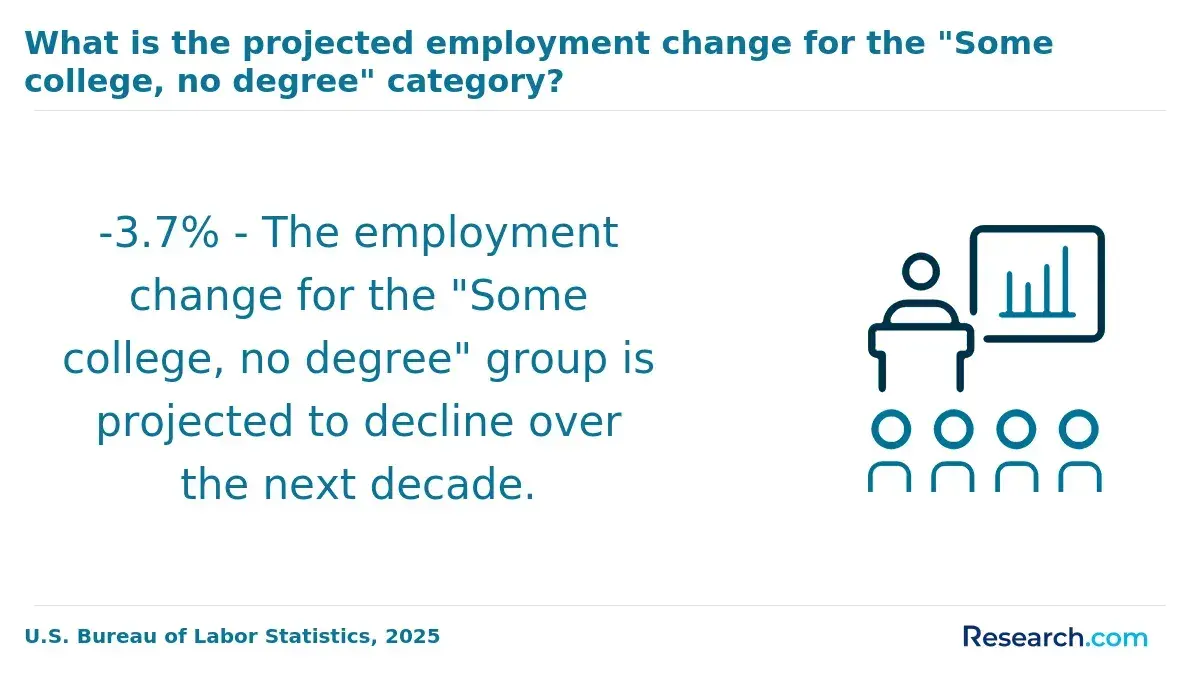
- BLS projections published in 2024 show varied demand by field: healthcare support, skilled trades, and selected technology roles may offer stronger opportunities than programs chosen only for speed or low tuition.
Top 10 Best Online Professional Certificates for Transfer Students
Popular Trade School Programs
Transfer students seeking hands-on careers can consider online or hybrid certificates in HVAC fundamentals, electrical technology, construction management, welding theory, automotive service, and industrial maintenance. Fully online study works best for theory, safety, codes, estimating, and diagnostics; most trade programs still require campus labs, supervised practice, apprenticeships, or employer-based training. A short certificate can support entry-level work, but electrician and HVAC careers often require state-specific licensing, documented hours, or apprenticeships. Choose a credit-bearing option if you may later pursue an associate degree in applied science.
Healthcare Programs
Online healthcare certificates commonly cover medical billing and coding, health information technology, medical office administration, pharmacy technician preparation, patient care coordination, and healthcare management. Transfer students should distinguish administrative or information-focused certificates from clinical programs. Clinical roles such as nursing, medical assisting, sonography, and radiologic technology usually require in-person labs and clinical placements and may lead to state licensure requirements. For coding or billing, confirm whether coursework prepares students for a separate industry certification examination; completing a school certificate does not automatically grant professional certification.
Criminal Justice / Law Programs
Online options include certificates in criminal justice, homeland security, corrections, legal studies, paralegal studies, cybersecurity foundations, and public administration. These programs can help transfer students explore legal-support or public-service pathways while completing general education requirements elsewhere. Paralegal certificates may be useful for students who already hold an associate or bachelor's degree, but employers can set their own hiring standards. Law enforcement eligibility, academy attendance, background checks, and state peace-officer requirements are separate from an academic certificate and cannot usually be completed entirely online.
Arts & Design Programs
Online arts and design certificates may focus on graphic design, digital illustration, UX design, web design, animation, photography, or video production. They are most valuable when they produce portfolio-ready work using current software and structured feedback. Transfer students with completed general education credits may prefer a certificate that stacks into an associate or bachelor's program in design, media, or communications. A certificate alone does not ensure a design role; employers commonly assess portfolios, technical capability, communication, and relevant project experience alongside formal education.
What are online professional certificates for transfer students and how do they work?
An online professional certificate is a focused educational credential awarded after completing a defined sequence of courses. It is not automatically the same as a professional certification, which is typically awarded by an independent organization after an examination and, in some fields, verified experience.
For transfer students, the key question is whether the certificate is credit-bearing. A college-issued undergraduate certificate may award semester credits that can apply toward a related degree under the institution's policies. A noncredit certificate from a university extension unit, technology company, or training provider can still demonstrate skills, but it generally does not create transferable academic credit.
These options serve different goals, so compare the credential before enrolling.
| Credential type | Best use for transfer students | Transfer and stackability |
| Credit-bearing college certificate | Building toward a degree while gaining a focused credential | May apply to a degree at the issuing school; outside transfer is never automatic |
| Noncredit professional certificate | Rapid skill development or portfolio building | Usually not academic credit, though some providers offer articulation options |
| Industry certification | Validating a defined technical or professional competency | Not college credit by default; may require an exam, renewal, or experience |
| Associate degree pathway | Broad career preparation and a recognized academic credential | Often includes general education and may transfer into a bachelor's program |
Students who want a broader academic credential should compare a certificate with an associates degree. An associate program generally takes longer, but it can offer more transferable coursework and may better fit occupations requiring substantial technical training.
How do online certificate programs compare with campus options for transfer students?
Online and campus certificates can cover the same learning outcomes, but the better format depends on the field, the student's prior credits, and whether supervised practice is required. Online delivery can reduce commuting and make part-time enrollment easier; it does not remove requirements for labs, clinical placements, proctored exams, or internships.
This comparison highlights the trade-offs transfer students should weigh before choosing a format.
| Factor | Online certificate | Campus or hybrid certificate |
| Schedule | Often asynchronous for lecture-based courses; deadlines still apply | Fixed meeting times are common, especially for labs |
| Best-fit fields | Business, IT, coding, legal studies, health administration, design | Trades, clinical healthcare, equipment-intensive programs |
| Transfer planning | Requires confirmation of course equivalencies and residency rules | May make advising and articulation discussions easier |
| Networking | May require deliberate use of virtual office hours and internships | Can provide direct access to labs, instructors, and local employers |
| Hidden requirements | May include remote proctoring, software, equipment, or local placement | May include transportation, parking, uniforms, and lab supplies |
Choose online study when the curriculum is primarily knowledge- or software-based and you can manage independent deadlines. Prefer hybrid or campus learning when skill assessment requires equipment, direct observation, or regulated clinical instruction.
What accreditation and quality standards should online professional certificates meet?
Quality review should match the provider and credential type. For a credit-bearing college certificate, verify that the institution holds recognized institutional accreditation and that the academic department can document course outcomes, faculty qualifications, and transfer policies. For a noncredit provider, institutional accreditation may not apply in the same way; look instead for transparent curriculum details, qualified instructors, employer relevance, and a clear explanation of what the credential represents.
Programs connected to regulated occupations need an additional check. Nursing, allied health, teacher preparation, and many trades may require programmatic approval, clinical eligibility, or board-approved training in the state where you intend to work. Do not assume a program advertised as "online" meets your state's requirements.
Use this quality screen before paying an enrollment deposit.
- Confirm the school's institutional status and ask whether the specific certificate is credit-bearing, noncredit, or designed for a separate certification exam.
- Request the course list, learning outcomes, total required credits or clock hours, and written policy for applying certificate coursework to a degree.
- For regulated careers, verify requirements directly with the relevant state licensing board or certification body before enrolling.
When comparing institution-level options, lists of nationally accredited online colleges can be a starting point, but the final decision should rest on the specific program's recognition, outcomes, and transfer fit.
What are typical admission requirements for online professional certificate programs?
Admission requirements vary substantially. Credit-bearing undergraduate certificates commonly request an application, official transcripts, proof of high school completion or equivalent, and placement information when needed. Transfer students may also need to submit prior college transcripts for evaluation. Many short noncredit professional certificates use simple registration instead of selective admission and may only require payment, basic technology, or prerequisite knowledge.
Standardized test scores are often unnecessary for certificate study, but prerequisites can matter more than GPA. For example, an advanced data analytics certificate may expect college algebra or prior programming, while a healthcare certificate may require immunizations, background checks, or clinical eligibility.
Before applying, take these steps to prevent a transfer delay or an avoidable course repeat.
- Ask for a written transfer-credit evaluation or an estimate of which previous courses meet certificate prerequisites.
- Confirm whether credits earned in the certificate can be applied to your intended degree and whether a residency-credit minimum applies.
- Check application deadlines, technology standards, placement obligations, and any background-check or health documentation requirements.
- Compare total enrollment charges before submitting a nonrefundable deposit or accepting private financing.
Students applying to several institutions can also compare online colleges no application fee to reduce the cost of exploring eligible programs.
How long do online professional certificates take and what do they cost?
Many online professional certificates take roughly three months to one year, depending on the number of courses, prerequisites, pace, and whether practical requirements must be completed. Accelerated options can work for students with time to study consistently, while part-time formats are often safer for learners balancing work or family responsibilities. A certificate that fits a degree plan may take longer than a standalone course series, but it can reduce duplicated coursework later.
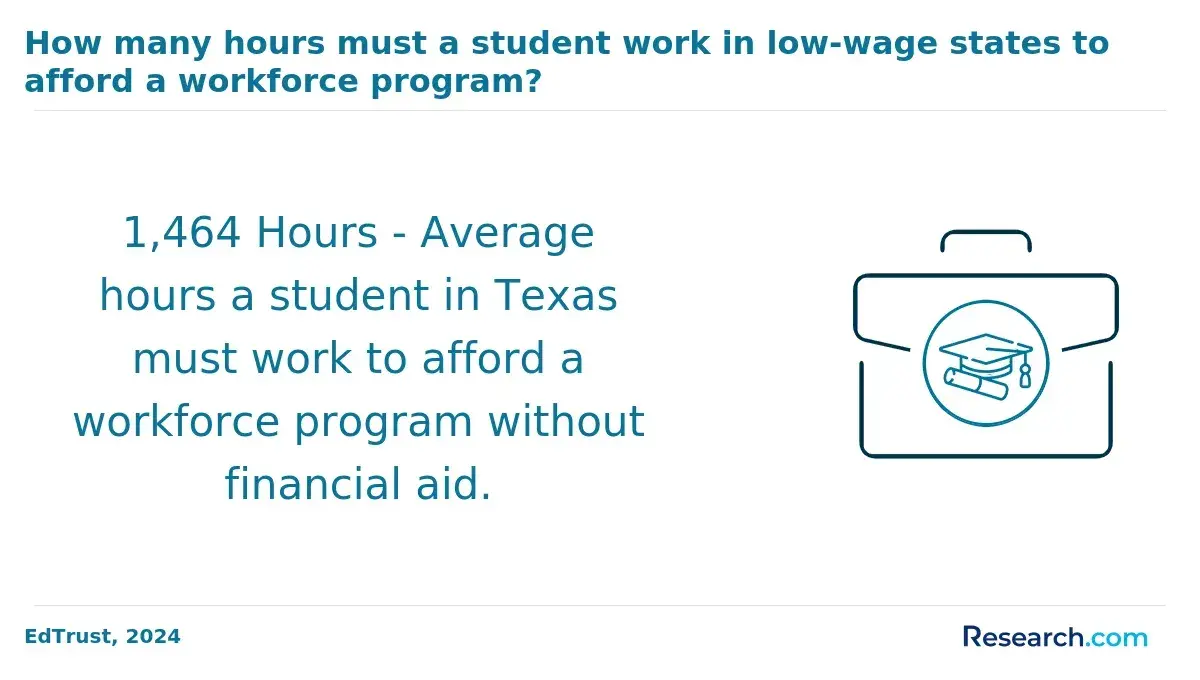
Costs do not follow one standard. College Board reported average published tuition and fees of $4,050 for public two-year colleges in 2024-25; that figure is a broad institutional benchmark, not the price of a particular online certificate. Certificate students should calculate the actual required credits and fees rather than relying on a school-wide average.
A realistic budget should include more than listed tuition.
- Tuition or course fees, including different rates for residents, nonresidents, and online students where applicable.
- Required textbooks, digital courseware, software subscriptions, tools, uniforms, and equipment.
- Exam, background-check, fingerprinting, immunization, lab, practicum, or professional-liability charges when relevant.
- Lost work time, commuting to required labs or placements, and costs of retaking a course or certification examination.
Federal aid eligibility depends on the institution, enrollment level, and whether the program meets federal requirements. Ask the financial aid office whether the specific certificate is eligible; noncredit programs frequently have different funding rules. Employer tuition assistance, workforce grants, and payment plans may be alternatives, but compare repayment terms before borrowing.
What coursework and skills do top online professional certificates usually include?
Strong programs teach a focused set of skills that can be demonstrated through assessments, projects, simulations, or supervised practice. Transfer students should look for curriculum that adds a clear specialization rather than repeating introductory courses already completed in a prior major or associate pathway.
The skills below are common examples; exact coursework should align with the target occupation and the credential level.
| Program area | Common coursework | Evidence of learning to seek |
| Information technology | Networking, cloud tools, cybersecurity basics, scripting, troubleshooting | Labs, configuration projects, documented troubleshooting work |
| Healthcare administration | Medical terminology, coding systems, records, privacy, reimbursement | Coding exercises, compliance scenarios, workflow projects |
| Business and project work | Spreadsheets, accounting basics, project management, communication | Budgets, dashboards, project plans, presentations |
| Design and digital media | Design principles, UX research, visual tools, web production | Portfolio pieces, critiques, client-style briefs |
| Skilled trades | Safety, codes, blueprint reading, systems theory, diagnostics | Practical evaluations, lab records, employer or apprenticeship experience |
AI tools are increasingly present in office, technology, and design workflows. The best programs teach students to use such tools responsibly while still developing foundational judgment, data privacy awareness, writing, communication, and the ability to verify outputs.
What careers can online professional certificates help transfer students pursue?
Professional certificates can help transfer students move toward entry-level roles, strengthen a degree concentration, or document a career change. They are most effective when the target role accepts certificate-level preparation or when the student already has relevant education or experience. A certificate is less suitable when an occupation requires a specific degree, apprenticeship, license, or extensive supervised training.
Potential paths differ by program emphasis and local employer requirements.
- IT certificates may support help desk, technical support, junior systems support, or cybersecurity support pathways, often alongside a degree or industry certification.
- Healthcare administration certificates may support medical records, billing, coding, scheduling, or patient-access work; clinical jobs require additional approved training.
- Business certificates may support administrative coordination, bookkeeping support, project coordination, sales operations, or customer-success roles.
- Design certificates may support junior production, web-content, digital-media, or freelance portfolio work, where demonstrated projects are especially important.
- Trade certificates may support pre-apprenticeship or helper roles, but licensure-track jobs commonly require supervised work hours.
Match the credential to a growing field and a realistic entry point. Reviewing top degrees in demand for the future can help students decide whether a short certificate should stand alone or serve as the first step toward a larger academic pathway.
What salary ranges and job outlook are linked to professional certificate holders?
Occupational wage and outlook data describe jobs, not the earnings of certificate holders. Pay varies by location, experience, employer, degree level, licensing status, and work schedule. The U.S. Bureau of Labor Statistics' 2023-33 projections, published in 2024, are useful for judging broad demand but cannot predict an individual outcome.
This snapshot compares occupations commonly related to certificate pathways. Median pay is BLS May 2023 national data, and projected growth covers 2023-33.
| Occupation | Median annual pay | Projected growth | Certificate-alone limitation |
| Medical records specialists | $48,780 | 9% | Employers may prefer coding certification or experience |
| HVAC mechanics and installers | $57,300 | 9% | Licensing and supervised training can be required by state or locality |
| Electricians | $61,590 | 6% | Typically enter through apprenticeship and licensing progression |
| Paralegals and legal assistants | $60,970 | 0% | Hiring expectations vary; some roles prefer a degree or prior legal experience |
| Web developers and digital designers | $92,750 | 8% | Portfolio, technical ability, and experience can be decisive |
Use this information to compare career direction, not to assume that a brief program produces the occupation's median wage. Ask each provider what roles its curriculum directly prepares students to pursue and what additional credentials employers commonly request.
How can transfer students evaluate and choose reputable online certificate programs?
Transfer students should choose a certificate by working backward from a specific job target or degree goal. Start with job postings in the location where you expect to work, then compare their education, license, software, and experience requirements with the program curriculum. A low-cost course that does not meet those requirements is not a bargain.
Evaluate finalists using a consistent decision process.
- Define the target role, required license or certification, and whether a certificate alone is sufficient for entry-level eligibility.
- Verify whether the program is credit-bearing and obtain written confirmation of how prior credits and certificate credits apply to your next degree.
- Compare total cost, completion pace, required in-person work, student support, and refund rules rather than tuition alone.
- Review instructor credentials, curriculum currency, practical assessments, career services, and local placement support where relevant.
- Ask for outcomes information with clear definitions, including the reporting period and whether outcomes separate certificate completers from all students.
Common red flags include vague claims about "job-ready" status, no published curriculum, pressure to borrow quickly, unclear recurring subscription charges, promises of licensing eligibility without state-specific details, and statements that credits are "transferable" without naming receiving institutions. The safer choice is a provider that answers questions in writing and clearly distinguishes its certificate from an external certification or license.
Other Things You Should Know About
Sometimes. Credit-bearing college certificates may accept applicable transfer courses, especially for general education or prerequisites. The receiving institution decides equivalency, grade requirements, and residency-credit rules, so request a written evaluation before enrolling.
They can be worthwhile when they fill a documented skill gap, meet employer expectations, or stack into a degree you intend to finish. They are less valuable when they duplicate completed coursework or do not qualify you for the next required credential, license, or job level.
Not automatically. Individual courses may transfer when they are credit-bearing and considered equivalent by the receiving school. Noncredit professional certificates usually do not transfer as academic credit, although they may still be useful on a résumé or portfolio.
It may prepare you for an external certification exam or meet part of a licensing pathway, but completion alone does not automatically award certification or a license. Confirm exam eligibility and state-specific requirements directly with the certifying organization or licensing board.
References
- Does College Pay Off? A Comprehensive Return On Investment Analysis - FREOPP https://freopp.org/whitepapers/does-college-pay-off-a-comprehensive-return-on-investment-analysis/
- Student Right to Know | ACE https://ace.edu/about/student-right-to-know/
- Course Completion Rate Benchmarks: Improve Yours (2026) | Ruzuku https://www.ruzuku.com/learn/articles/course-completion-rates
- How Online Courses Can Help You Achieve the Biggest College ROI https://www.sophia.org/blog/student-success/how-online-courses-help-achieve-the-biggest-college-roi/
- Transfer of Credit Policy https://www.theamericancollege.edu/about-the-college/the-college-at-a-glance/transfer-of-credit-policy
- FLEX Online - Southeastern Community College https://sccnc.edu/flex/
- Transferology https://www.transferology.com/
- Which Online Certification Programs Are Recognized by Employers in the U.S.? https://fellow.msicertified.com/blog/which-online-certification-programs-are-recognized-by-employers-in-the-u-s
- Top Online Schools That Accept Transfer Credits https://www.edvisorly.com/student-guides/online-schools-that-accept-transfer-credits
- 2025's Best Online Graduate Certificate Programs in the U.S. https://www.onlinemastersdegrees.org/graduate-certificate-programs/