2027 Best Online Short Certificate Programs for Students With Low GPA

Co-Founder and Chief Data Scientist
A low GPA can limit admission to selective degree programs, but it does not eliminate career-training options. Online short certificate programs can offer focused, lower-barrier preparation in fields such as healthcare support, skilled trades, legal services, and design.
For context, the U.S. Bureau of Labor Statistics reports that medical assistants had a 2024 median annual wage of $44,200, while employment is projected to grow 12% from 2024 to 2034. This guide helps you compare programs realistically, verify quality, understand costs, and choose training that matches your career goal.
Key Things You Should Know
- Many short online certificates use open enrollment, minimum high-school completion requirements, or holistic review instead of a fixed college GPA cutoff; healthcare and licensure-track programs may still require prerequisite courses, background checks, or placement testing.
- A certificate is education completed through a school or provider, while a certification is a professional credential usually earned through an exam or competency process; confirm which one employers actually request before paying tuition.
- Short programs can take weeks to about one year, but time and cost are only useful measures when the credential leads to a recognized skill, required exam eligibility, transferable credit, or an entry-level role with a realistic local hiring market.
Top 10 Best Online Short Certificate Programs for Students With Low GPA
Popular Trade School Programs
Online trade certificates commonly cover construction estimating, HVAC theory, electrical fundamentals, welding safety, logistics, bookkeeping, and computer-aided design. They work best when the online curriculum is paired with local hands-on labs, supervised clinical-style practice, an apprenticeship, or employer training. HVAC, electrical, plumbing, welding, and automotive work usually cannot be learned fully online because employers and licensing authorities may require practical competencies. Choose a short certificate for foundational knowledge or exam preparation; choose an associate degree, apprenticeship, or hybrid program when your target occupation requires extensive shop hours or state-regulated licensing.
Healthcare Programs
Common short options include medical billing and coding, pharmacy technician preparation, medical assisting theory, dental-office administration, EKG technician training, and healthcare information management. Low-GPA applicants may find noncredit programs more accessible, but clinical roles often have stricter requirements than administrative programs. Schools may require immunizations, criminal-background checks, drug screening, CPR certification, prerequisite science courses, and in-person clinical placements. A fully online program may prepare learners for an industry exam, but it may not meet state eligibility rules for a license or provide required clinical hours. Verify requirements with the relevant state board before enrolling.
Criminal Justice / Law Programs
Short online certificates in legal studies, paralegal support, court reporting fundamentals, victim advocacy, cybersecurity, and criminal justice administration can build introductory knowledge. They may suit learners seeking office, records, compliance-support, or public-service-adjacent roles. However, a certificate alone does not make someone a lawyer, police officer, licensed investigator, or certified paralegal. Hiring agencies can apply fitness standards, background reviews, physical requirements, academy training, or degree preferences. For paralegal work, compare programs carefully: employers may prefer education approved by the American Bar Association, though ABA approval is not required for every legal-support position.
Arts & Design Programs
Online certificates in graphic design, UX design, digital marketing design, animation, photography, web design, and video editing usually emphasize software, project workflows, and portfolio development. These programs can be a practical low-GPA option because admissions may focus more on basic technology access and readiness than academic records. The strongest programs produce several polished, original work samples and teach how to explain design decisions. A certificate is less useful if it teaches only isolated software features without portfolio feedback. Students aiming for competitive creative roles should plan to build a portfolio, complete client-style projects, and continue developing current tools after graduation.
What qualifies as an online short certificate program for students with a low GPA?
An online short certificate program is a focused course sequence designed to teach a specific occupational skill, academic subject, or work-related competency in less time than a degree. For students with low GPAs, the key qualifier is not simply that a program is short; it is that the provider uses admissions criteria you can meet.
Programs generally fall into two categories. Credit-bearing undergraduate certificates are offered by colleges and may require transcripts, minimum grades in prerequisites, or a GPA review. Noncredit career-training certificates are often offered by colleges, workforce providers, or private training companies and may use open enrollment. Neither format automatically has better job value; the relevant question is whether employers, certifying bodies, or licensing boards recognize the training.
Readers comparing short certificate programs should separate quick enrollment from meaningful preparation. A shorter, noncredit course can be appropriate for software, office, or entry-level support skills. A regulated occupation may instead require approved coursework, clinical practice, supervised hours, an examination, or an associate degree.
The comparison below shows why the same word, "certificate," can mean very different things.
| Program type | Typical provider | GPA relevance | Best use | Main limitation |
| Credit-bearing college certificate | Community college or university | May review transcripts and prerequisites | Academic progression or structured career preparation | Admission and transfer policies vary |
| Noncredit workforce certificate | College continuing education unit or training provider | Often no college GPA requirement | Rapid job-skill development | Usually does not transfer for college credit |
| Professional certificate | University extension or industry-focused provider | Often based on readiness or prior experience | Career upskilling and portfolio building | Employer recognition differs by field |
| Certification-prep course | School or private provider | Usually no GPA threshold | Preparing for a separate certification exam | Completion does not itself award certification |
A short certificate is a sensible choice when you need a defined skill quickly, can verify its employer value, and do not need a degree for your immediate goal. Consider an associate degree, apprenticeship, or longer program if your intended role requires licensing, broad general education, substantial hands-on practice, or advancement into management.
How do admissions requirements work for online short certificate programs with flexible GPA standards?
Flexible GPA standards do not mean "no requirements." Admissions rules depend on the credential, the provider, and whether students will enter a regulated field. A college may admit students to continuing education without evaluating GPA but require a higher grade in anatomy before allowing clinical placement. A private training provider may accept nearly all applicants but leave students responsible for meeting an external exam's eligibility rules.
Low-GPA applicants should ask admissions staff for requirements in writing and distinguish admission to the school, admission to the certificate, and eligibility for a practicum or certification exam. The following sequence prevents a common and expensive mistake: enrolling before discovering a requirement that applies later.
- Identify the exact job, certification, or next academic step you want after completing the program.
- Request the published admission criteria, including transcript review, placement testing, prerequisite grades, technology requirements, and deadlines.
- Ask whether the program uses open enrollment, conditional admission, holistic review, or probationary admission.
- Confirm whether clinical placement, internships, background screening, or licensure eligibility has additional standards.
- Develop an alternative plan, such as completing a prerequisite, submitting a personal statement, or beginning with a noncredit foundational course.
A personal statement can help only when a provider actually uses holistic review. Keep it specific: explain any academic disruption briefly, identify the actions you have taken since then, and connect the program to a realistic goal. Do not assume that work experience overrides required science grades, clinical compliance rules, or state licensing conditions.
Standardized tests are uncommon for many short certificates, but placement assessments can still affect course access. If a school offers developmental coursework or prerequisite refreshers, that path may be more credible than choosing a program with weak entry standards and little student support.
How can students with low GPAs find accredited and reputable online certificate programs?
Accreditation and reputation should be checked differently depending on provider type. For a credit-bearing college certificate, institutional accreditation is important because it affects academic quality oversight, credit transfer possibilities, and federal aid eligibility where applicable. For a noncredit or private career program, employer recognition, instructor qualifications, curriculum alignment, completion support, and any relevant programmatic approval may matter more than institutional accreditation alone.
A useful starting point is comparing accredited schools, including non profit universities in USA, when you want a credit-bearing credential or a pathway into later college study. Nonprofit status alone does not prove that a particular certificate is affordable, transferable, or licensure-qualifying, so review the program itself.
Use these checks before applying. They are especially important for low-GPA students, who may be targeted by providers that advertise easy admission while providing unclear employment value.
- Verify the institution through the U.S. Department of Education database or the accreditor named on the school's website, rather than relying on a logo or marketing claim.
- Check whether the certificate is credit-bearing, how many credits it carries, and whether a receiving college has stated that it will accept those credits.
- For regulated healthcare or trade paths, ask the state licensing board or relevant certifying organization whether the curriculum meets education or exam-eligibility rules.
- Review instructor biographies, required software or equipment, live-support availability, clinical or lab arrangements, and the total cost before signing an enrollment agreement.
- Ask for outcome definitions: whether reported placement figures count temporary work, unrelated jobs, or students who were already employed.
Red flags include vague claims that a program is "nationally recognized" without naming the recognition, pressure to enroll immediately, refusal to disclose total fees, promises of guaranteed jobs, and statements that online coursework automatically meets every state's licensing rules. Reputable providers explain limitations clearly.
What program lengths, formats, and schedules are common in online short certificate options?
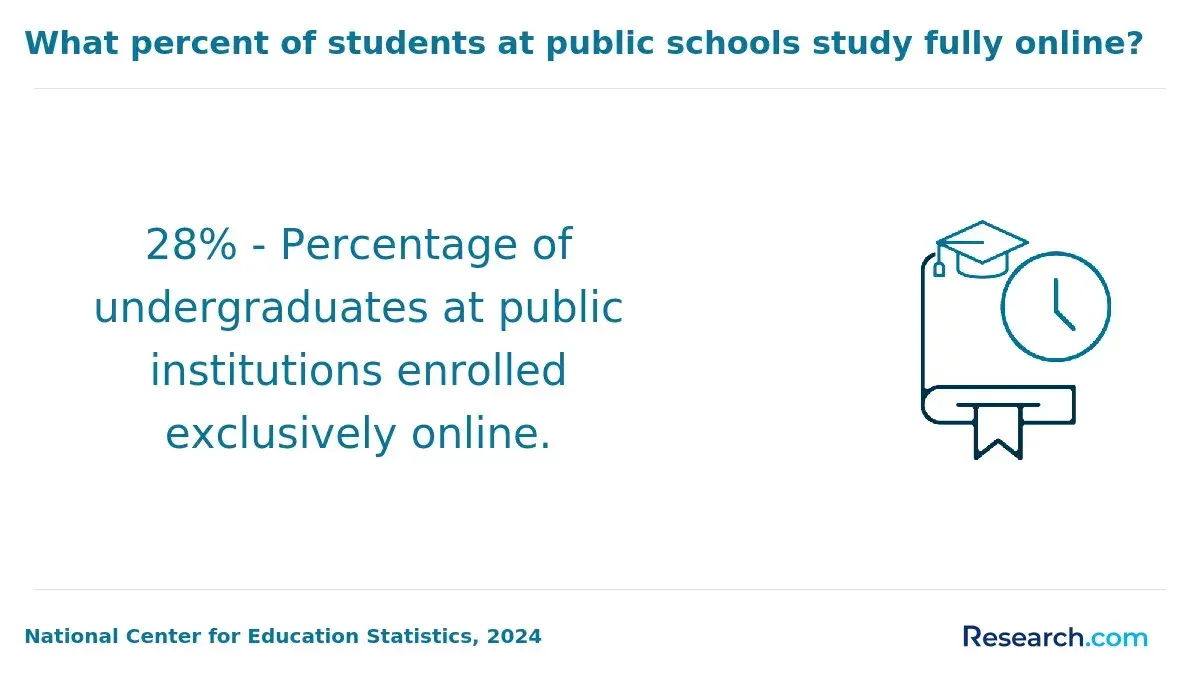
Most online short certificates range from a few weeks to roughly 12 months, but the calendar length can hide major differences in workload. Self-paced courses may let students start quickly, while cohort programs use fixed terms, live meetings, instructor deadlines, and group projects. Hybrid programs add campus labs, externships, or clinical rotations.
Choose format based on the kind of evidence an employer needs. A self-paced certificate can be efficient for software, spreadsheets, project tools, and foundational business skills. A cohort or hybrid program is often better when you need feedback, a portfolio, supervised practice, or a documented placement experience.
Students who want a longer credential with broader general education and potentially more transfer options can compare an associate degree online. Despite some accelerated marketing, an associate degree generally requires far more coursework than a short certificate and may not be realistic in six months without substantial transfer credit or prior learning.
This format comparison helps match a schedule to a career goal rather than selecting solely on advertised speed.
| Format | Schedule pattern | Usually best for | Watch for |
| Self-paced online | Flexible start and completion window | Independent learners building discrete skills | Limited feedback, proctoring, or hands-on practice |
| Instructor-led online | Weekly deadlines and online meetings | Students needing structure and interaction | Fixed attendance times and faster pacing |
| Hybrid | Online theory plus required in-person sessions | Technical or clinical fields | Travel, scheduling, lab, and placement costs |
| Externship-supported | Coursework followed by local placement | Fields where supervised experience matters | Whether placement is guaranteed or merely assisted |
Before enrollment, calculate weekly study time from the syllabus rather than relying on total program months. Also confirm whether exams must be proctored, whether clinical hours occur during business hours, and whether the provider can support students in your state.
What tuition costs, financial aid, and funding options exist for short online certificates?
Tuition is only one part of the cost. Short online certificates may also require application fees, textbooks, software subscriptions, exam vouchers, lab kits, uniforms, background checks, immunizations, travel, and state licensing fees. A lower advertised price can become the more expensive option if essential items are excluded.
Federal student aid is not automatic for every certificate. Eligibility depends on the institution, the program's aid status, enrollment level, and individual student eligibility. Many noncredit programs do not qualify for federal aid even when they are delivered by a college. Ask the financial-aid office whether the exact certificate has a federal school code and qualifies for aid; do not assume aid for a degree program applies to its continuing-education certificate.
When researching faster pathways, compare them against best degrees to get online only after accounting for total credits, aid eligibility, and the job level each credential supports. A certificate may cost less and get you job-ready sooner, while a degree may provide broader advancement options and access to roles with degree requirements.
Use a full-cost checklist before deciding between programs.
- Request a written estimate of tuition, mandatory fees, books, technology, lab supplies, and exam preparation materials.
- Ask whether an industry certification exam voucher, retake, externship, or clinical placement is included, optional, or paid separately.
- Explore employer tuition assistance, workforce-development grants, state vocational-rehabilitation support when applicable, scholarships, and payment plans before borrowing.
- Compare the program's total cost with local entry-level job postings and the wage range for the occupation, not with broad salary promises.
- Read refund, withdrawal, and cancellation policies before providing payment information.
Borrowing can be reasonable when a credential has a clear, verifiable labor-market use, but avoid financing vague training through high-cost private loans. If you cannot identify the specific job target, employer demand, and total expense, pause enrollment and gather more information.
What typical curriculum and coursework do short online certificates include in major career fields?
Short certificates concentrate on job-relevant coursework rather than the broader general-education curriculum of an associate or bachelor's degree. The strongest curriculum includes a clear skills sequence, current tools, practice assignments, assessments, and a connection to the standard used in the workplace or a separate credentialing exam.
The table summarizes typical content, not universal requirements. Course names, software, and practical-hour expectations vary by provider and state.
| Career field | Typical short-certificate coursework | Practical component to confirm | Possible next step |
| Healthcare administration | Medical terminology, coding systems, billing, privacy, electronic records | Practice software, coding exercises, exam preparation | Industry certification or medical-office support role |
| Skilled trades | Safety, measurements, blueprint reading, basic systems theory | Lab hours, tools, supervised practice, apprenticeship connection | Apprenticeship or entry-level helper role |
| Legal support | Legal research, writing, civil procedure, document management, ethics | Drafting feedback and jurisdiction-specific content | Legal assistant role or further paralegal education |
| Digital design | Design principles, software workflows, typography, UX basics, portfolio work | Portfolio review and current software access | Freelance projects, junior creative support, advanced study |
| Information technology | Hardware, networking basics, operating systems, troubleshooting, security fundamentals | Hands-on labs and certification-aligned practice | Entry-level support role or certification exam |
AI tools are changing how routine writing, design, coding, and administrative tasks are performed. That makes foundational judgment, communication, verification, data privacy, and portfolio-quality work more valuable - not less. Prefer a program that teaches learners how to use current tools responsibly and evaluate their output, rather than one that promises an outdated software skill will be enough on its own.
What entry-level and mid-level career paths can short online certificates support?
A short certificate can support entry-level work when it teaches a skill employers can observe, test, or verify. It is less likely to substitute for a degree in fields with formal degree requirements or for mid-level jobs that depend on years of supervised experience, leadership responsibility, or licensing.
Potential pathways differ substantially by credential and local hiring practices.
| Certificate focus | Potential entry-level path | What usually supports advancement | When a certificate may be insufficient |
| Medical billing and coding | Billing, records, claims, or patient-access support | Experience, specialty knowledge, and applicable certification | Roles requiring clinical credentials or advanced health-information education |
| IT support | Help desk, desktop support, or technical-support trainee | Documented troubleshooting skills, certifications, and experience | Advanced cybersecurity, engineering, or management roles |
| Design | Production artist, marketing assistant, freelance project support | Strong portfolio, client experience, and current technical skills | Senior creative strategy or specialized design leadership |
| Trade fundamentals | Helper, installer trainee, warehouse, or operations support | Apprenticeship hours, licenses, and supervised field work | Independent licensed trade work |
| Legal studies | Legal assistant, records clerk, intake, or administrative support | Work experience and further paralegal education where preferred | Attorney, court-reporting, or law-enforcement roles with separate requirements |
For a practical decision, search local job descriptions before enrolling. Record the minimum education, required software, preferred credentials, schedule, and experience language from at least several postings. Then select a program that directly addresses repeated requirements. This job-first approach is more reliable than choosing a certificate solely because it has flexible admission.
Students who already have work experience may use a certificate to move laterally into a more specialized task area. Students changing careers entirely may need a program with career coaching, a portfolio, an externship, or an employer partnership in addition to coursework.
What salaries and earning potential are realistic after completing an online short certificate?
Earning potential depends primarily on the occupation, location, employer, work schedule, experience, and any required license - not simply on possessing a certificate. Occupational wage figures are useful benchmarks, but they do not show what every certificate graduate earns or prove that a particular program leads to a specific job.
Recent U.S. Bureau of Labor Statistics data based on 2024 wages offers context for several occupations related to common certificate pathways.
| Occupation | 2024 median annual wage | 2024-2034 projected employment change | Certificate-alone caution |
| Medical assistants | $44,200 | 12% | Requirements vary; employers may prefer certification, and some duties are state-regulated. |
| Heating, air conditioning, and refrigeration mechanics and installers | $59,810 | 8% | Typically need hands-on training; licensing and EPA requirements can apply. |
| Paralegals and legal assistants | $61,010 | -1% | Employers may prefer an associate degree, bachelor's degree, or relevant experience. |
| Graphic designers | $61,300 | 2% | A portfolio and experience are central; a certificate is not a guaranteed entry route. |
The BLS projections above describe national occupational trends, not local openings or individual outcomes. For example, projected growth for medical assistants suggests demand may be comparatively strong, but local employers can still require clinical training, certification, or prior experience. Conversely, slower-growth fields may offer openings when you have specialized skills and a strong portfolio.
To judge return on investment, compare total education cost with realistic entry-level pay in your area, the time needed to gain experience, and whether the credential can lead to a higher-level next step. Be skeptical of any provider that presents a national median wage as though it were a guaranteed starting salary.
How do industry certifications, licensing, and stackable credentials build on short certificates?
Certificates, certifications, licenses, and degrees can work together, but they serve different purposes. A school certificate documents completion of instruction. A professional certification typically demonstrates that a person met an outside organization's standards, often through an exam. A license is government authorization to practice a regulated occupation. A stackable credential is designed to build toward a larger award, such as a longer certificate or degree.
Before choosing a program, identify which credential carries the most weight for your target role. In IT, employers may value a vendor-neutral or vendor-specific certification alongside demonstrable skills. In healthcare administration, coding certification may be valued, but exam eligibility and employer preferences vary. In trades, licenses and apprenticeships commonly matter more than an online theory certificate. In design, portfolios may matter more than either a certificate or certification.
A sensible stackable plan follows a verified sequence.
- Start with foundational training only if it meets an identified skill gap or prerequisite.
- Complete hands-on practice, projects, clinical requirements, or supervised hours required for the next credential.
- Take an external certification exam only when the certifying body confirms eligibility and the credential appears in relevant job postings.
- Document projects, exam results, and work experience in a portfolio or resume.
- Move into a credit-bearing certificate, apprenticeship, associate degree, or advanced certification when it unlocks a specific next-level role.
Do not assume credits will stack merely because programs use similar names. Obtain written confirmation of transfer or articulation rules, grade requirements, expiration dates, residency requirements, and whether noncredit coursework can be converted into academic credit. This matters especially for students using a short certificate as a low-risk first step after a weak academic record.
Other Things You Should Know About
Often, yes. Many noncredit and continuing-education certificates use open enrollment or evaluate readiness rather than college GPA. Credit-bearing, clinical, and licensure-related programs may still require transcripts, minimum prerequisite grades, placement testing, or other screening.
They can be when the provider is reputable and the program teaches skills employers need. Employer value is strongest when the certificate includes recognized software, hands-on work, a portfolio, exam preparation, or a clear connection to a required credential. Check local job postings first.
Sometimes, but completing the course is not the same as becoming certified or licensed. Confirm directly with the certifying organization or state licensing board whether the program meets education, clinical-hour, examination, and residency requirements.
Ask whether the school offers conditional admission, prerequisite courses, placement testing, an appeal process, or a noncredit pathway. Strengthen your application with recent coursework, relevant work experience, and a clear goal, but do not bypass requirements that protect clinical, academic, or licensing standards.
References
- Online Training (Non-Credit) https://tcatelizabethton.edu/business-industry/online-training-non-credit
- How Can Institutions Best Support Their Online Learners? https://www.higheredtoday.org/2025/04/21/how-can-institutions-best-support-their-online-learners/
- Improving College Access and Success through Dual Enrollment - Public Policy Institute of California https://www.ppic.org/publication/improving-college-access-and-success-through-dual-enrollment/
- Online Certificate Programs, Online Certificate Courses https://www.onlinedegrees.com/best-online-certificate-programs/
- Putting Evidence into Action to Support Student Success https://www.partnershipstudentsuccess.org/
- Best Colleges for Student Support for Mental Health & Academics https://www.collegexpress.com/lists/list/the-best-colleges-and-universities-for-access-to-student-support-services/3124/
- High Acceptance Rate Online Colleges https://www.affordablecollegesonline.org/college-resource-center/high-acceptance-online-colleges/
- 9-12 month study https://www.ucsc-extension.edu/international/9-12-month-study
- Certificate Programs: Programs, Costs, Duration & Are They Worth It? - University of the Potomac https://potomac.edu/certificates-programs-costs-duration-are-they-worth-it/
- What You Should Know About Short-Term Certification Programs https://www.learnhowtobecome.org/career-resource-center/short-term-certifications/