2027 Best Professional Certificates for Career Growth

Co-Founder and Chief Data Scientist
Choosing a professional certificate can be difficult when providers promise career-ready skills but offer very different recognition, costs, and outcomes. The U.S. Bureau of Labor Statistics projects about 6.7 million occupational openings per year from 2023 to 2033, making targeted upskilling valuable for career changers and advancing workers. This guide explains how professional certificates work, which fields offer practical options, what to verify before paying, and when a degree, license, or industry certification may be the better investment.
Key Things You Should Know
- Professional certificates are short, focused educational credentials; they are not automatically the same as an industry certification, occupational license, or college degree.
- The strongest option matches a specific job target, shows employer-recognized skills, fits your schedule and budget, and clearly states whether it carries academic credit or prepares you for an external exam.
- BLS projects roughly 6.7 million U.S. occupational openings annually from 2023 to 2033, but a certificate alone may not meet degree, experience, certification, or state-licensing requirements for every role.
Top 10 Best Professional Certificates for Career Growth
Popular Trade School Programs
Trade certificates and associate degrees emphasize hands-on technical work. Common choices include HVAC, welding, electrical technology, automotive service, plumbing, industrial maintenance, and commercial driver training. A certificate may be best for entry-level skills or employer-required preparation; an associate degree can add general education and broader advancement options. Check whether the program includes lab hours, tools, safety training, apprenticeship connections, and preparation for any required state or industry exam. Licensing rules for electricians, plumbers, and similar trades vary by state and often require supervised work experience beyond school.
Healthcare Programs
Healthcare certificates can lead to support roles such as medical assistant, pharmacy technician, medical billing and coding specialist, dental assistant, sterile processing technician, or practical nursing preparation. Associate degrees are more common for roles such as registered nursing and diagnostic imaging. Programmatic approval, clinical placement availability, background-check requirements, and state rules matter more here than convenience alone. Verify whether completion qualifies you to take a certification or licensure exam; it may not. Online coursework can work for administrative subjects, but clinical and laboratory competencies generally require supervised in-person training.
Criminal Justice / Law Programs
Certificates and associate degrees in criminal justice, legal studies, paralegal studies, corrections, and homeland security can build foundational knowledge in legal procedure, report writing, ethics, and public safety. They can suit administrative, records, compliance-support, or entry-level justice-system roles. They do not automatically qualify a learner to become a police officer, attorney, investigator, or licensed legal professional. For paralegal goals, compare programs for employer recognition, practical legal-research training, internship opportunities, and whether the school meets expectations commonly used by law firms in your local market.
Arts & Design Programs
Arts and design certificates commonly focus on graphic design, digital media, UX design, web design, photography, animation, interior design, or video production. Associate degrees may provide more studio time, portfolio development, and general education. In these fields, a demonstrable portfolio often matters as much as the credential. Choose programs that teach current software, critique work, and require completed projects rather than only recorded lectures. Before enrolling, review graduate portfolios and ask whether tuition includes software, equipment, studio access, portfolio reviews, and career feedback.
What are professional certificates and how do they support long-term career growth?
A professional certificate is an educational credential awarded after a learner completes a defined curriculum in a career-focused subject, such as project management, cybersecurity, data analytics, bookkeeping, digital marketing, or healthcare administration. It may be offered by a college, university, employer, professional association, or private learning platform. Some are credit-bearing academic certificates; many are noncredit continuing-education programs.
A certification is different. Certifications are typically awarded by an independent professional or industry body after candidates meet eligibility requirements and often pass an examination. For example, a certificate program may teach cybersecurity concepts, while a separate certification exam may validate a person's knowledge for employers.
Professional certificates are most useful when they close a clearly defined skills gap, help a worker move into an adjacent role, or provide structured preparation for a recognized certification. They are less suitable when a target occupation legally requires a degree, clinical training, apprenticeship hours, or state licensure.
The comparison below helps separate common credential choices before you invest time or tuition.
| Option | What it demonstrates | Best fit | Key limitation |
| Professional certificate | Completion of focused education or training | Skill building, career transitions, employer upskilling | Recognition varies by provider and field |
| Industry certification | Competence against an external standard, often through an exam | Fields with recognized vendor or professional credentials | May require experience, renewal, or continuing education |
| College certificate | Completion of a credit-bearing or noncredit academic program | Structured learning and possible degree pathway | Credits may not transfer automatically |
| Associate or bachelor's degree | Broader academic and professional preparation | Roles requiring a degree or long-term advancement | Usually requires more time and total cost |
How do I choose a reputable, accredited professional certificate program in the U.S.?
A reputable program makes its credential, provider, curriculum, instructors, total price, and career relevance easy to verify. For a college-based certificate, confirm that the institution is accredited by an agency recognized by the U.S. Department of Education or the Council for Higher Education Accreditation. For noncredit and third-party programs, institutional accreditation may not apply; evaluate industry recognition, instructor expertise, assessment quality, and employer relevance instead.
If you are considering a fully online school, compare its recognition, student services, and academic policies with other most popular online colleges before assuming all online credentials carry equal weight.
Use these checks before enrollment because marketing language such as "accredited," "certified," or "career-ready" can describe different things.
- Identify the exact role you want and review current job postings for required degrees, software, licenses, and certifications.
- Confirm who issues the credential and whether employers in that field recognize the provider or its curriculum.
- Request the complete curriculum, instructor qualifications, assessment method, and expected weekly workload.
- Ask whether the certificate is credit-bearing, stackable into a degree, transferable, or solely a noncredit credential.
- For regulated careers, verify requirements directly with the relevant state licensing board before enrolling.
Red flags include vague job-placement claims, pressure to enroll immediately, missing total-cost information, no published instructor information, and claims that a short program "qualifies" students for a license without naming the responsible licensing authority.
What admission requirements and prior experience do professional certificate programs typically expect?
Requirements depend on the credential level and provider. Entry-level noncredit professional certificates commonly require only a high school diploma or equivalent, basic computer access, and comfort with the subject's foundational skills. Some open-enrollment programs have no formal admissions process at all. College credit certificates may require an application, placement steps, prerequisite coursework, or proof of prior education.
Advanced certificates are different: graduate certificates often require a bachelor's degree, while technical or clinical programs may require prerequisite science courses, immunizations, background checks, drug screening, or current professional licensure. Industry certification preparation courses may be open to beginners even when the eventual certification exam requires work experience.
Ask the provider to distinguish "admission to the course" from "eligibility for the certification exam or license." This prevents a costly mismatch between what you can enroll in and what you can actually use afterward.
How do online professional certificates compare with campus-based options for flexibility and outcomes?
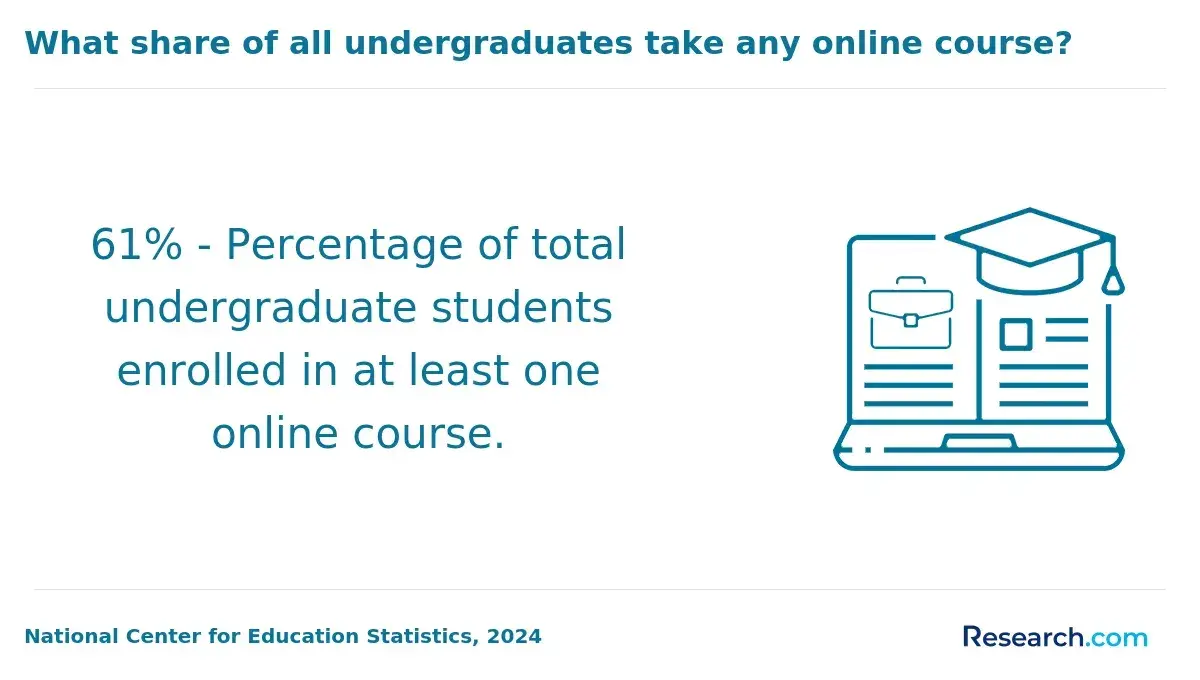
Online professional certificates usually offer the greatest scheduling flexibility, especially for learners balancing work or caregiving. They can be effective for software, analytics, business operations, design theory, and administrative healthcare skills when the program includes instructor access, projects, feedback, and credible assessments. Campus or hybrid formats are often stronger when learners need laboratories, equipment, clinical practice, studio critique, or in-person employer networking.
Working adults who need compressed terms or asynchronous access should compare online degree programs for working adults when a certificate may be only the first step toward a degree-required career.
This comparison highlights the practical trade-off: flexibility is valuable, but it should not replace required hands-on learning.
| Factor | Online | Campus or hybrid |
| Schedule | Often asynchronous and easier to fit around work | Usually fixed meeting, lab, or clinical times |
| Hands-on practice | Limited unless local practicum arrangements are included | Better access to equipment, labs, and supervised practice |
| Networking | May rely on virtual events and self-directed outreach | Often includes local peers, faculty, and employer contact |
| Best use case | Knowledge-based skills and self-directed learners | Licensed, technical, clinical, or equipment-intensive pathways |
What program length, schedule, and time commitment should I expect for professional certificates?
Professional certificate length ranges from a few weeks for a narrow, noncredit online program to roughly one year or more for a college certificate with multiple courses and required labs. An associate degree generally takes longer because it includes general education and more extensive program requirements. Time to completion depends on prerequisites, course sequencing, clinical placements, and whether you study full time or part time.
Before committing, ask for a term-by-term plan rather than relying on an advertised "finish in" timeline. A realistic plan should show required course order, live-session times, exam windows, internship or practicum hours, and the consequences of failing or postponing one course.
Part-time study is often the right choice for employed learners, but accelerated formats can create a heavy weekly workload. Choose speed only when you can consistently complete projects and retain the material; a rushed credential with no portfolio or exam readiness may have limited career value.
How much do professional certificate programs cost and what financial aid is available?
Certificate costs vary sharply by provider, field, duration, included services, and whether the program awards college credit. Total cost can include tuition, application fees, textbooks, software subscriptions, exam vouchers, tools, uniforms, lab fees, background checks, travel, and certification renewal. Compare the all-in price, not just the monthly payment or advertised tuition.
Federal student aid is generally more available for eligible students in approved, credit-bearing programs at participating institutions. Many short noncredit certificates do not qualify for federal aid, although employer tuition assistance, workforce grants, state aid, payment plans, military education benefits, and provider scholarships may be available. Eligibility is program-specific.
Use the following cost questions to compare programs on equal terms.
- What is the full tuition and fee total through completion?
- Are required exam attempts, software, supplies, labs, and clinical-placement costs included?
- Is the credential credit-bearing, and does that affect aid eligibility or future transfer options?
- What refund, withdrawal, and payment-plan policies apply if your work schedule changes?
A lower-priced program is not automatically the better value if it omits required exam preparation, practical projects, or the supervised training needed for your target role.
What curriculum and skills do top professional certificate programs usually focus on?
Top professional certificate programs focus on applied, verifiable skills rather than broad survey content alone. The exact curriculum should map to the work products, tools, regulations, and communication demands of the target role. A data analytics certificate, for example, may cover spreadsheets, SQL, visualization, statistics, and project storytelling; a healthcare administration certificate may focus on medical terminology, privacy rules, scheduling, billing, and records workflows.
Look for programs that assess learning through projects, simulations, case studies, supervised practice, or proctored examinations. These assessments give you evidence of competence beyond a completion badge. Strong programs also explain which skills are foundational, which are tool-specific, and which must be refreshed as technology changes.
AI tools are increasingly part of workplace workflows, but a useful curriculum teaches responsible use: validating output, protecting confidential data, documenting decisions, and understanding when human judgment or regulated procedures control the work.
What careers, roles, and industries can professional certificates help me qualify for?
Professional certificates can help candidates pursue entry-level, support, or career-transition roles when employers value demonstrated skills. Common pathways include IT support, help desk operations, junior data analysis, project coordination, bookkeeping, digital marketing support, medical office administration, pharmacy support, paralegal support, and skilled-trade apprenticeships. The credential is strongest when paired with a portfolio, relevant experience, an internship, or an employer-recognized certification where applicable.
Use job postings to determine whether a certificate is enough for your intended role or whether a degree is a recurring requirement. For roles where a bachelor's degree remains common, reviewing the bachelor's degrees job outlook can help you compare a short-term certificate with a longer academic path.
A certificate may be a poor standalone choice for occupations requiring a professional license, extensive clinical training, an engineering degree, or substantial supervised experience. In those cases, it can still be valuable as a stepping stone, but it should not be treated as a substitute for the required pathway.
What salary growth and job outlook are associated with in-demand professional certificates?
Job outlook varies by occupation, not by certificate completion alone. BLS employment projections for 2023 to 2033 show particularly strong growth in several certificate-adjacent fields, including data scientists at 36%, information security analysts at 33%, and medical assistants at 15%. These figures indicate potential demand in the occupations, but employers may still require degrees, experience, certifications, or licenses depending on the job.
Salary information should be used the same way: it describes the occupation, location, experience level, and employer market - not a guaranteed result of earning a certificate. Compare local openings, entry-level requirements, and progression paths before estimating return on investment.
If your goal eventually requires doctoral study, explore cheap online PhD programs separately rather than assuming a short professional certificate will transfer into a doctoral pathway. Most noncredit certificates do not carry academic credit.
A sensible ROI decision weighs total cost and lost work time against realistic access to interviews, practical skill gains, and a credible next step. Choose a certificate with a defined employer use case, not one based solely on national salary headlines.
Other Things You Should Know About
They can be worthwhile when they teach skills requested in your target jobs and come from a recognized provider. They are less worthwhile when the target role requires a degree, license, or experience the certificate does not provide.
It can strengthen an application, especially when it includes projects or practical assessments. However, internships, volunteer work, portfolios, apprenticeships, and entry-level experience often remain important for hiring.
Some do, particularly when the provider, skills, and assessment are relevant to the role. Employers generally care more about what you can demonstrate than whether coursework was online, but regulated or hands-on fields may require in-person training.
Choose a certificate for faster, narrower skill development. Choose an associate degree when you need broader preparation, want transferable college credit, or expect to advance into roles that value a two-year degree.
References
- Why Choosing the Right Certifications Can Help Your Career https://www.managementconcepts.com/resource/why-choosing-the-right-certifications-can-define-and-accelerate-your-career/
- HR Certification Salary Impact (Real Data) https://hrcertification.com/blog/hr-certification-salary-impact-biid1000213
- Top 10 Benefits of Professional Certification - Identity Management Institute® https://identitymanagementinstitute.org/top-10-benefits-of-professional-certification/
- 7 in-demand certifications in 2025 | edX https://www.edx.org/resources/in-demand-professional-certifications
- CourseCareers https://coursecareers.com/blog-posts/best-certifications-start-a-career
- How Do Certifications Influence Salary Increases? https://certiprof.com/blogs/news/how-do-certifications-influence-salary-increases
- The Certification Advantage: How Credentials Drive Career Growth https://courses.msicertified.com/blog/the-certification-advantage-how-credentials-drive-career-growth
- Professional Business Certifications to Boost Your Career in 2025 https://www.business.com/articles/best-business-certifications/
- 44 Certifications in Demand in the 2024 Job Market | International Association of Career Coaches | IACC https://www.iacareercoaches.org/post/certifications-in-demand
- Professional Certifications and Credentials |Dale Carnegie Blog https://www.dalecarnegie.com/blog/professional-certifications-and-credentials-how-they-impact-credibility-in-various-fields/