2027 Best Online Short Certificate Programs for Adults Returning to College

Co-Founder and Chief Data Scientist
Choosing a fast online credential is difficult when programs vary widely in recognition, cost, and career value. U.S. Bureau of Labor Statistics projections show employment is expected to add about 5.2 million jobs from 2024 to 2034, but growth differs sharply by occupation. This guide helps adults compare short online certificate options, understand what they can realistically lead to, and avoid enrolling in training that does not match a job, licensing, or degree goal.
Key Things You Should Know
- Short online certificates can take weeks to about one year, but the best choice depends on whether you need job skills, academic credit, a license pathway, or preparation for an industry certification exam.
- Check whether a program is credit-bearing, institutionally accredited when applicable, and accepted by the employer, certifying body, or state board connected to your target role.
- BLS projects overall U.S. employment growth of 3.1% from 2024 to 2034; prioritize certificates tied to occupations with local demand rather than assuming every short credential improves earnings.
Top 10 Best Online Short Certificate Programs for Adults Returning to College
Popular Trade School Programs
Online trade certificates work best for theory-heavy coursework paired with required local labs, apprenticeships, or supervised practice. Common options include construction management, HVAC fundamentals, electrical technology, welding technology, industrial maintenance, automotive service, and safety certificates. Fully online study rarely replaces hands-on hours needed for skilled-trade employment or licensure. Adults seeking rapid entry should compare hybrid programs with employer-sponsored apprenticeships; those aiming for supervisory roles may prefer a credit-bearing certificate that can stack into an associate degree.
Healthcare Programs
Short online healthcare certificates may cover medical billing and coding, pharmacy technician preparation, medical assisting coursework, health information support, phlebotomy theory, or patient-care foundations. Clinical occupations usually require in-person labs and clinical placements, and state rules can limit online eligibility. Billing, coding, and health information programs are more compatible with fully online delivery, though employers may prefer candidates with recognized industry certifications. Verify whether the curriculum prepares you for a specific exam and whether clinical placement support is available before paying a deposit.
Criminal Justice / Law Programs
Online certificates in criminal justice, legal studies, paralegal studies, homeland security, cybercrime, and court administration can help adults build foundational knowledge or move into support roles. A certificate alone does not make someone a lawyer, police officer, or licensed private investigator. Paralegal training is most useful when it includes legal research, writing, ethics, and practical software skills; some employers prefer programs approved by the American Bar Association, although approval is not universally required. Check local employer expectations before choosing a noncredit legal training provider.
Arts & Design Programs
Online short certificates in graphic design, UX design, digital marketing design, photography, animation, web design, and Adobe software can help adults create a portfolio quickly. These programs are often portfolio-driven rather than license-driven, so curriculum quality, instructor feedback, and project depth matter more than program length alone. A noncredit certificate may be enough for skill-building, while a credit-bearing certificate can make more sense for learners planning to continue into an associate or bachelor's degree. Review graduate portfolios before enrolling.
What are online short certificate programs and how do they differ from degrees?
An online short certificate is an educational credential awarded for completing a focused course sequence. It may be offered by a college, university, community college, trade school, employer, or private training provider. It is not automatically the same as a professional certification, which is typically issued by an independent organization after an exam or other requirements.
This comparison shows why adults should identify the credential type before applying.
| Option | Typical purpose | Academic credit | Best fit |
| College certificate | Focused academic or workforce training | May be credit-bearing | Adults who may continue into a degree |
| Professional certificate | Provider-based career skill training | Usually noncredit | Adults changing skills quickly |
| Industry certification | Validates professional competency | Not college credit | Workers meeting exam or experience requirements |
| Associate degree | Broader general education and career preparation | Credit-bearing degree | Adults needing a longer credential or transfer pathway |
A short certificate is usually a better investment when a target employer recognizes it, it teaches a clearly defined skill, and its total cost is proportionate to the opportunity. If your goal requires broad education, clinical training, or a formal credential, consider associates degree online options instead.
How can adults choose an accredited and reputable online certificate program?
For credit-bearing college certificates, verify the institution's accreditation through the U.S. Department of Education or the Council for Higher Education Accreditation directories. For noncredit training, evaluate the provider's employer partnerships, instructor qualifications, curriculum transparency, refund policy, and whether the credential is recognized in job postings. Programmatic approval can matter in regulated fields, but it is not relevant to every certificate.
Use these checks before comparing tuition because a low price has little value if the credential is not usable for your goal.
- Write down the exact job title, certification exam, or degree pathway you want.
- Confirm that the program's courses, labs, and practicum meet that goal's requirements.
- Ask whether credits transfer or stack into a longer credential, and get the answer in writing.
- Check total charges, required software, equipment, exams, background checks, and travel costs.
- Review completion, placement, and licensure disclosures when the school publishes them.
Red flags include vague claims of "accreditation" without naming an accreditor, guaranteed-job language, pressure to enroll immediately, and programs that cannot explain whether their certificate prepares learners for a particular exam or license.
What admission requirements do adults face when applying to online certificate programs?
Admissions requirements depend on the provider and credential type. Many noncredit online certificates use simple registration and may not require transcripts, GPA review, or standardized tests. Credit-bearing undergraduate certificates commonly require a high school diploma or equivalent, an application, and sometimes placement testing or prior coursework. Graduate certificates generally require a bachelor's degree and may require prerequisites.
Adults returning after a long break should ask admissions staff which requirements apply to their specific format and program, rather than assuming a college certificate has the same entry rules as a degree.
- Request an official list of prerequisites, including math, writing, software, health, or technical requirements.
- Ask whether prior college credit, military learning, industry training, or work experience can satisfy prerequisites.
- For healthcare and public-safety programs, confirm background-check, immunization, drug-screening, and physical-capacity requirements early.
- For graduate-level certificates, verify whether prior coursework must be recent or completed with a minimum grade.
Application-fee policies also vary. Adults applying to several colleges may want to compare online colleges with no application fee while still confirming that each institution offers the needed certificate.
How long do online short certificate programs take and what do they typically cost?
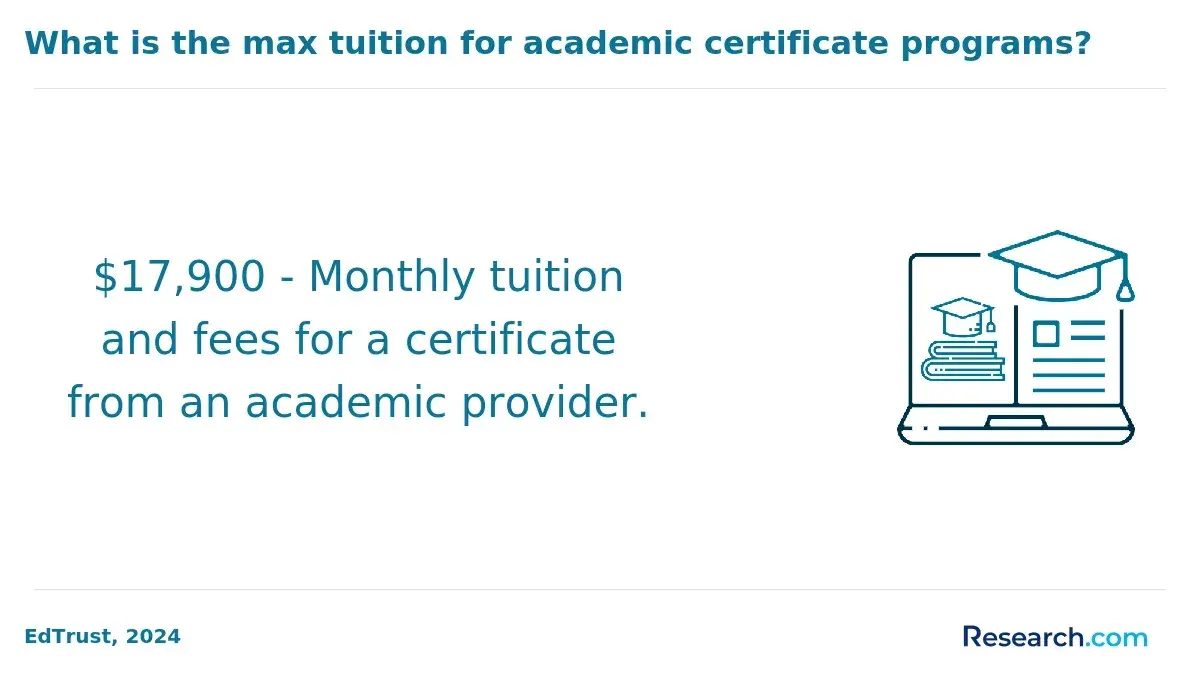
Most short certificates take from several weeks to roughly 12 months, depending on the number of courses, prerequisite knowledge, and whether hands-on training is required. Self-paced noncredit programs can be faster, while college certificates often follow academic terms. Program tuition is only one part of the cost: learners may also pay for books, software, examination fees, supplies, proctoring, clinical requirements, and travel.
The following comparison helps adults weigh speed against recognition and total investment.
| Program type | Typical timeline | Cost pattern | Key trade-off |
| Self-paced noncredit certificate | Weeks to months | Usually one published program fee | Fast, but transferability may be limited |
| Community college certificate | One to three terms | Per-credit tuition plus fees | May offer transferable or stackable credit |
| University certificate | Several months to one year | Often higher per-credit cost | May offer specialized curriculum and support |
| Hybrid clinical or trade certificate | Months to one year or more | Tuition plus lab, equipment, or placement costs | Hands-on requirements limit full online flexibility |
Federal student aid may be available for eligible students in eligible credit-bearing programs at eligible institutions, but many short noncredit certificates do not qualify. Compare employer tuition assistance, workforce grants, payment plans, and institutional aid before borrowing. For cost-conscious learners, most affordable online colleges for working adults can be a useful starting point for comparing broader institutional options.
What program formats and course structures do online short certificates offer working adults?
Working adults should choose a format based on actual weekly availability, not just the word "online." Asynchronous courses let learners complete work on their own schedule within weekly deadlines. Synchronous courses meet live at set times. Hybrid programs combine online instruction with required labs, residencies, clinical experiences, or exams.
A manageable program clearly states the expected workload, assignment deadlines, proctoring rules, technology needs, and any in-person obligations before enrollment. Ask whether lectures are recorded, whether courses run one at a time or concurrently, and whether students can pause or reduce their course load. Accelerated formats can shorten the calendar but may require more study hours each week.
Adults who need predictable pacing should favor term-based programs with academic advising and tutoring. Learners with a stable schedule and prior subject knowledge may prefer self-paced training. Avoid selecting a fully online format for a role that requires hands-on competency unless the provider has arranged compliant local practice experiences.
What careers and job roles can online short certificate programs prepare adults for?
The strongest career outcome comes from matching the certificate to a defined entry point. Short programs can support roles such as medical billing specialist, pharmacy technician trainee, IT support specialist, bookkeeping clerk, legal assistant, construction coordinator, CAD technician, digital marketing assistant, and junior graphic design candidate. Requirements vary by employer and state.
This table distinguishes realistic certificate-supported paths from roles that commonly require more education, licensure, or experience.
| Career area | Potential entry role | What a short certificate can do | Important limitation |
| Healthcare administration | Billing or coding support | Build vocabulary, systems, and workflow knowledge | Employers may prefer an industry certification |
| Information technology | Help desk or support trainee | Develop foundational technical skills | Hands-on practice and certifications may be expected |
| Legal support | Legal assistant | Teach research, documents, and legal terminology | Does not qualify a person to practice law |
| Skilled trades | Apprentice or helper | Provide foundational safety and theory training | Licensure often requires supervised work hours |
| Design | Production or junior design support | Help create a portfolio | Portfolio quality often outweighs the certificate title |
A certificate is less likely to be sufficient for registered nursing, counseling, engineering, teaching, law practice, or other regulated professions. Those goals generally require a degree, supervised experience, examination, and/or state approval.
What salary ranges and earning potential are realistic after completing a short certificate?
Earning potential depends on occupation, region, experience, employer, schedule, and additional credentials - not simply on finishing a short certificate. Use occupational wage information as a benchmark for the role you seek, then investigate whether local employers hire certificate holders into that role.
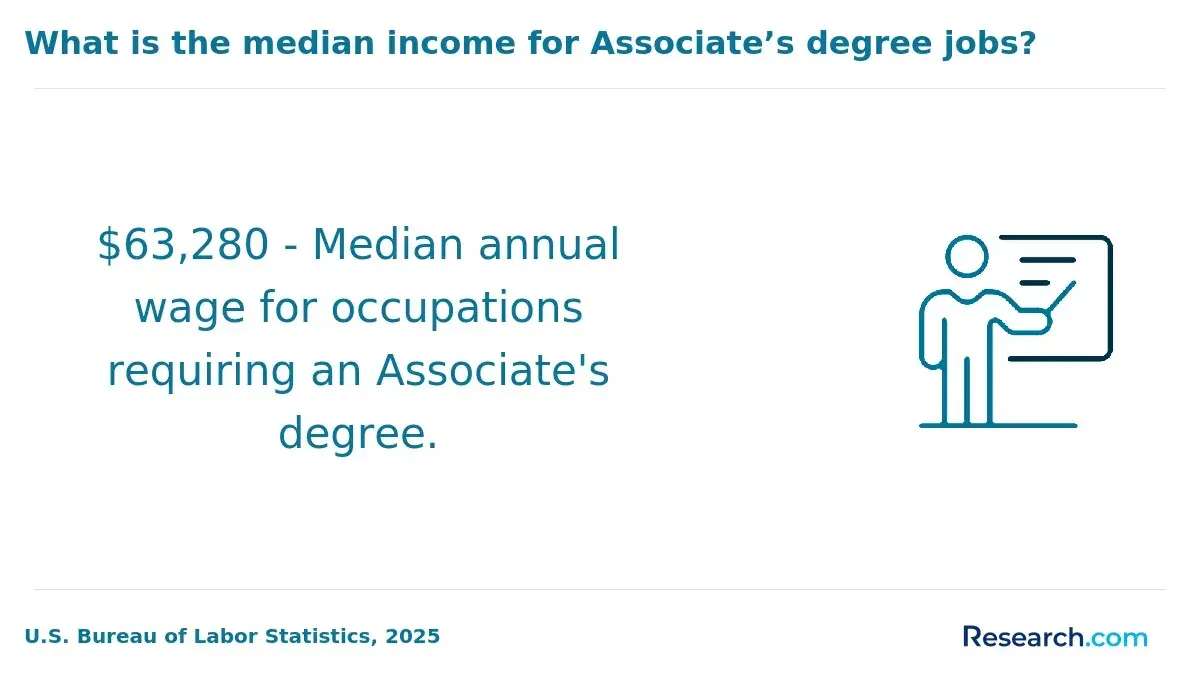
For example, BLS May 2024 data reported a national median annual wage of $44,200 for medical assistants and $61,010 for paralegals and legal assistants. These figures describe workers in those occupations, not the expected earnings of every certificate completer. Medical assistants may need approved training or employer-required credentials, while paralegal employers can vary substantially in their education preferences.
Estimate return on investment by comparing the full program cost and time away from work with realistic entry-level openings in your area. A lower-cost certificate that leads to interviews or stacks into a degree may offer better value than an expensive program with broad but unverified career claims. Adults seeking advancement beyond an entry-level credential can also evaluate a cheapest easiest master's degree only after confirming that a bachelor's degree and the target occupation make graduate study worthwhile.
How do online short certificates support licensing, professional certification, or exam eligibility?
Some certificates prepare learners for an independent certification exam; others only provide education. Read the provider's language carefully. "Prepares for" an exam does not mean the school awards the certification, guarantees eligibility, or guarantees a passing score.
Before enrolling in a certificate connected to licensure or certification, take these steps.
- Identify the exact state license or industry certification required for your target role.
- Review the licensing board's or certifying organization's education, examination, and experience rules.
- Confirm in writing whether the online program meets the educational requirement in your state.
- Calculate added costs for exams, study materials, fingerprints, background checks, renewals, and continuing education.
- Ask whether the program includes clinical placement, supervised hours, or only classroom preparation.
This distinction is especially important in healthcare, education, skilled trades, and public safety. State rules can change, and a school's general approval may not establish eligibility in every state.
How does the job market outlook affect the value of online short certificate programs?
The job market affects certificate value because employers hire for demonstrable skills, required credentials, and local staffing needs - not course completion alone. BLS employment projections for 2024 to 2034 show that growth varies by field, making occupation-specific research more useful than broad claims that all short programs are "in demand."
Automation and artificial intelligence are also changing entry-level work. Routine administrative, content-production, and basic technology tasks may be redesigned, while employers increasingly value workers who can use software responsibly, communicate with clients, solve exceptions, and document work accurately. Choose a program that includes current tools, applied projects, and human skills rather than one focused only on memorizing software menus.
To test market fit, review several local job postings before enrolling. Look for repeated requirements, such as a named certification, specific software, a portfolio, evening availability, or prior experience. If postings consistently require a degree, license, or apprenticeship, a short certificate may be a first step rather than the complete pathway.
Other Things You Should Know About
They can be worthwhile when they address a specific job requirement, prepare you for a recognized exam, or provide credit that applies to a longer credential. They are less useful when the provider cannot show what skills are taught or how the certificate connects to an actual role.
Some employers hire for entry-level support, administrative, technology, design, and trade-helper roles based on skills and relevant credentials. However, many regulated or advanced occupations require a degree, license, supervised experience, or employer-specific training.
Employers may accept online certificates when the provider is reputable and the curriculum matches the job. For hands-on, clinical, or licensed work, employers may also expect in-person labs, clinical hours, apprenticeships, or recognized certification.
Start with a target job title, review local postings, identify required education or certifications, and then compare programs for total cost, schedule, recognition, and required in-person components. Do not choose based on completion time alone.
References
- EdAssist | Choosing continued education programs and degrees that further your career https://www.brighthorizons.com/resources/blog/edassist/choosing-continued-education-programs-and-degrees-that-further-your-career
- The Best Online Learning Strategies for Adult Learners https://www.straighterline.com/blog/degreecompletion-the-best-online-learning-strategies-for-adult-learners
- Best Online Degree Programs for Working Adults https://www.scholaro.com/db/News/best-online-degree-programs-256
- Short-term credentials and the labor market: Who stands to benefit? https://fedcommunities.org/short-term-credentials-labor-market-who-stands-benefit/
- Financial Aid Guide for Students at Online Colleges - OnlineColleges.net https://www.onlinecolleges.net/for-students/financial-aid-online-students/
- 5 career services to support your professional and adult learners | EAB https://eab.com/resources/blog/adult-education-blog/5-career-services-to-support-your-professional-and-adult-learners/
- Course Completion Rate Benchmarks: Improve Yours (2026) | Ruzuku https://www.ruzuku.com/learn/articles/course-completion-rates
- Adult Learner Resources https://applymontana.mus.edu/resources/for-adult-learners/index.html
- Supporting Adult Learners in Higher Education: Strategies for Non-Traditional Student Success https://moderncampus.com/blog/why-and-how-you-should-serve-non-traditional-students.html
- Online Certificate Programs | Certifications Programs https://www.uscareerinstitute.edu/online-certificate-programs