2027 Best Online Certificate Programs for Career Changers

Co-Founder and Chief Data Scientist
Changing careers is risky when you cannot tell whether a short online program leads to usable skills, an industry-recognized credential, or neither. Online certificates can be a practical bridge into fields such as technology, healthcare support, skilled trades, legal services, and design - but they vary sharply in cost, credit value, and licensing relevance.
The U.S. Bureau of Labor Statistics projects healthcare occupations to grow much faster than average from 2023 to 2033. This guide helps career changers compare formats, verify quality, estimate return on investment, and choose training that fits the job they actually want.
Key Things You Should Know
- Choose a certificate only after matching it to a target job: academic certificates may earn college credit, while professional certificates usually demonstrate job-focused training but may not transfer.
- Check whether your target role requires a license, certification exam, supervised clinical hours, apprenticeship, or degree; an online certificate alone may not meet those requirements.
- Compare total cost, schedule, employer recognition, and outcomes - not just advertised tuition. BLS projects employment in healthcare occupations to grow much faster than average from 2023 to 2033, but demand differs substantially by role and state.
Top 10 Best Online Certificate Programs for Career Changers
Popular Trade School Programs
Online trade certificates work best for the theory portion of hands-on careers. Common options include HVAC fundamentals, electrical technology, welding theory, construction management, plumbing basics, automotive service, and industrial maintenance. Many programs are noncredit career training; community-college certificates may be credit-bearing and stack into an associate degree. Career changers should confirm where they will complete labs, shop practice, apprenticeships, and licensing-required hours. A fully online program is rarely sufficient for a licensed electrician, plumber, welder, or HVAC technician without supervised practical training.
Healthcare Programs
Healthcare certificates include medical billing and coding, pharmacy technician, medical assisting, dental assisting, sterile processing, health information technology, and community health work. Online delivery can suit administrative or didactic coursework, but patient-facing programs commonly require in-person labs and clinical placements. Verify that clinical sites are available near you before enrolling. For regulated roles, confirm that the program meets your state's rules and prepares students for any required certification examination. Medical billing certificates can be fully online more often than nursing, sonography, radiologic technology, or surgical technology programs.
Criminal Justice / Law Programs
Career changers can find online certificates in paralegal studies, legal research, compliance, cybersecurity law, criminal justice, and victim advocacy. A paralegal certificate may be useful for people who already hold a bachelor's degree, while entry-level legal support roles may have different employer expectations. These programs do not authorize graduates to practice law or represent clients. Check whether a paralegal program has institutional quality indicators, practical legal-technology training, and coursework aligned with local employers. Government, law-enforcement, and court positions may also require background checks, civil-service processes, or agency-specific training.
Arts & Design Programs
Online arts and design certificates commonly cover graphic design, UX/UI design, digital marketing design, photography, animation, web design, and interior design fundamentals. Portfolio quality usually matters more to employers than the certificate title alone. Choose programs that produce reviewed, job-relevant projects and teach current tools, accessibility, client communication, and copyright basics. A certificate can help a beginner build evidence of skill, but it does not automatically meet state requirements for regulated interior design titles. Prospective students should review graduate portfolios and confirm software, hardware, and subscription costs.
What are online certificate programs and how do they work for career changers?
An online certificate program is a structured course of study that awards an educational credential after completion. It is not automatically the same as a professional certification, which is typically awarded by an independent certifying body after an exam, documented experience, or both. For career changers, certificates can provide focused preparation without committing immediately to a full degree.
Providers include accredited colleges, community colleges, universities, professional associations, employers, and third-party learning platforms. The provider affects what the credential means. A college-issued certificate may carry academic credit and potentially stack into a degree; a noncredit professional certificate may be faster and more skills-focused but have limited transfer value.
The best fit depends on the gap between your current experience and your target role. Use this comparison to identify the credential category that matches your goal.
| Credential type | Typical provider | Best use for a career changer | Key limitation |
| Academic certificate | College or university | Career entry or degree exploration with possible academic credit | May take longer and have formal admission requirements |
| Professional certificate | University, employer, or training provider | Building targeted, portfolio-ready or technical skills | Usually does not confer college credit or a license |
| Industry certification | Certifying organization | Proving competence in a recognized occupation or technology | May require an exam, renewal, or prior experience |
| Career-training program | School or private provider | Rapid preparation for a defined entry-level role | Quality and employer recognition vary widely |
Before selecting a short program, decide whether employers in your intended field value a portfolio, a vendor certification, a license, college credit, or a degree. If your long-term destination is graduate education rather than a quick skills pivot, compare 1 year PhD programs online free carefully; "free" claims and accelerated timelines require close review of eligibility, residency, and total-fee details.
How do online certificate programs compare to campus-based options for adults?
Online programs can reduce commuting and allow asynchronous study, which is valuable for adults balancing work or caregiving. Campus-based and hybrid options generally provide easier access to equipment, instructors, peers, labs, and clinical or shop supervision. The right choice depends less on convenience alone than on whether the occupation requires hands-on assessment.
This comparison shows the practical trade-offs career changers should weigh before choosing a delivery format.
| Factor | Fully online | Hybrid or campus-based |
| Schedule | Often more flexible, especially when asynchronous | Fixed meetings, labs, or clinical shifts are common |
| Hands-on learning | Best for digital, administrative, and theory-based skills | Usually better for equipment, patient care, and skilled trades |
| Networking | Requires deliberate participation in virtual events and projects | More informal contact with faculty, classmates, and local employers |
| Location | May be accessible from anywhere, subject to state authorization | Usually limited by commuting distance |
| Career fit | Strong for IT, project management, coding, bookkeeping, and design | Often necessary for clinical, laboratory, and shop-based pathways |
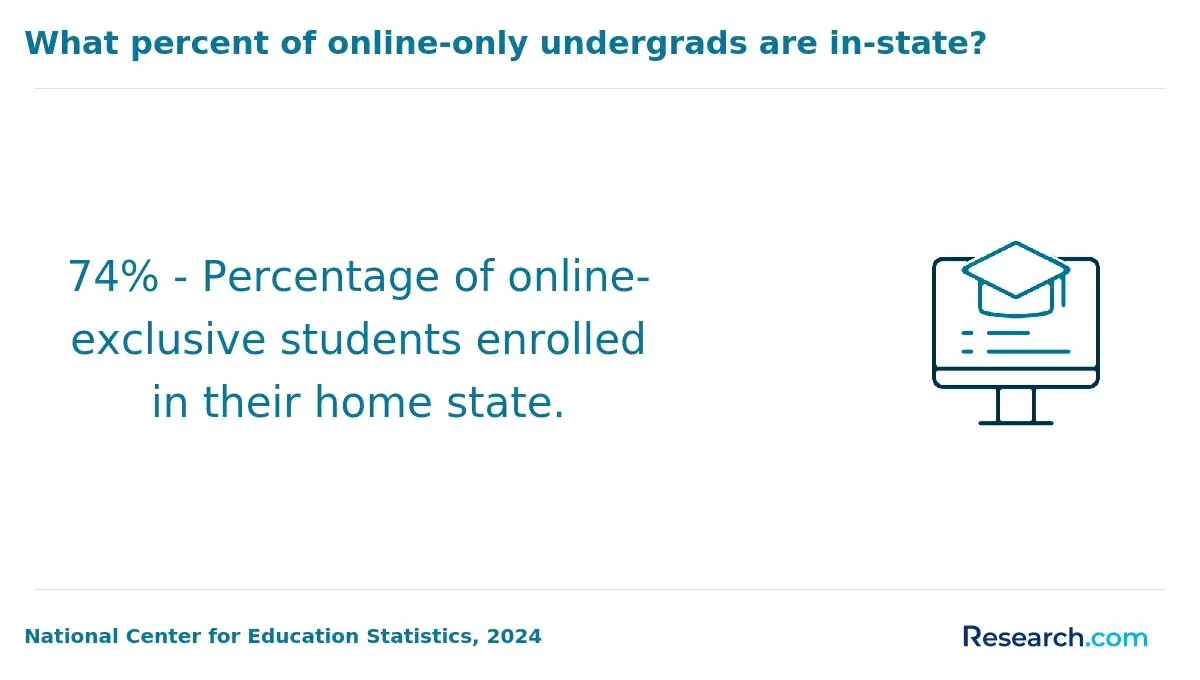
Ask whether classes are live, whether attendance is required, and how instructors give feedback. Also verify state authorization if you live outside the school's home state. Adults considering a longer credential can compare the cheapest online master's degree option, but should not assume a master's degree is a better investment than a focused certificate for an entry-level transition.
How can I tell if an online certificate program is properly accredited?
Accreditation matters most when a program awards college credit, accepts federal student aid, leads toward a degree, or prepares learners for regulated work. Institutional accreditation evaluates the college or university as a whole. Programmatic accreditation evaluates a specific discipline and may be essential for certain healthcare, counseling, engineering, or legal-education pathways.
A third-party provider may offer valuable training without institutional accreditation. In that case, evaluate employer recognition, curriculum quality, instructor expertise, assessment methods, and whether the credential prepares you for a recognized external exam. Do not assume that a provider's use of words such as "licensed," "approved," or "accredited" means it meets your state's occupational requirements.
Use the following checks before paying a deposit. They help distinguish a legitimate education provider from a program with unclear value.
- Search the school and accreditor in the U.S. Department of Education's accreditation database or the Council for Higher Education Accreditation directory.
- For a regulated career, ask the relevant state licensing board whether the exact online or hybrid program meets education requirements.
- Request the curriculum, faculty qualifications, clinical or lab arrangements, refund policy, and total-cost disclosure in writing.
- Ask local employers whether they recognize the certificate and which credentials they prefer for entry-level hiring.
A common mistake is verifying the institution but not the specific pathway. For example, an accredited college can still offer a certificate that does not satisfy a particular licensing board's course, clinical-hour, or exam-eligibility rules.
What admission requirements and prior experience do online certificate programs expect?
Requirements depend on credential type. College certificates may require a high school diploma or GED, an application, placement testing, prerequisite courses, or a minimum GPA. Graduate certificates generally require a bachelor's degree and may expect prior coursework. Noncredit professional certificates often use open enrollment, although technical programs can still expect basic computer literacy, math readiness, or relevant work experience.
Open enrollment is not the same as automatic career readiness. A beginner entering data analytics, cybersecurity, accounting, or design should look for foundational modules, tutoring, career coaching, and projects that demonstrate competence. An experienced professional may get more value from an advanced certificate or industry certification that validates existing skills.
Before applying, assemble evidence that can speed up evaluation and clarify your starting point.
- Official or unofficial transcripts when the provider uses prerequisites or offers transfer-credit review
- A current résumé and portfolio for design, technology, management, or advanced professional programs
- Documentation of licenses, certifications, apprenticeships, or prior training relevant to the field
- A realistic weekly schedule for lectures, assignments, exams, labs, and any required fieldwork
Do not pay for introductory material you have already mastered without first asking about placement, prior-learning assessment, challenge exams, or stackable-credit policies. If application costs are a barrier, explore online college no application fee options while still checking program fit and accreditation.
How long do online certificate programs take and what do they cost?
Completion time ranges from a few weeks for a narrowly focused noncredit program to roughly one year or longer for many college certificates. The pace depends on credit load, prerequisite coursework, live sessions, clinical requirements, and whether the program is self-paced. Advertised completion time is usually a best-case schedule, not a guarantee for someone working full time.
Total cost is more useful than tuition alone. This overview identifies expenses that can change the real price of a career transition.
| Cost factor | Why it matters | What to verify |
| Tuition or subscription fee | May be charged per credit, course, term, or month | Total required courses and maximum time allowed |
| Technology | Some programs require a capable computer, software, or proctoring equipment | Hardware specifications, software licenses, and internet needs |
| Required experiences | Labs, clinicals, externships, and travel can add substantial costs | Site location, transportation, uniforms, supplies, and insurance |
| Exams and licensing | Professional exams may be separate from program tuition | Exam, background-check, fingerprinting, and renewal fees |
| Opportunity cost | Reduced work hours can outweigh listed tuition | Weekly workload and required daytime commitments |
Credit-bearing certificates at eligible institutions may qualify for federal aid when students meet enrollment and program requirements; many short nondegree programs do not. Employer tuition assistance, workforce grants, payment plans, and state workforce agencies can also reduce out-of-pocket costs. Compare these routes with masters degrees that are worth it if your target occupation truly requires graduate-level preparation.
What coursework and skills do top online certificate programs typically include?
Strong career-change certificates teach both technical capability and evidence that you can use it. In digital fields, that may mean projects, case studies, code repositories, dashboards, or design portfolios. In healthcare and trades, it may mean supervised competency checks, simulations, documentation practice, and safety training.
Look for a curriculum that aligns assignments with actual entry-level work rather than relying only on recorded lectures and multiple-choice quizzes. Programs are generally stronger when they include instructor feedback, current tools, accessible learning support, ethical use of AI, and a clear explanation of how students are assessed.
The most transferable skills are commonly embedded alongside occupation-specific training.
- Written communication, customer interaction, documentation, and professional judgment
- Digital fluency, data privacy, cybersecurity awareness, and responsible AI use
- Problem solving through realistic scenarios, projects, or supervised practice
- Career preparation such as résumé feedback, interview practice, portfolio review, and employer-facing projects
AI is changing task design across many occupations, but it does not eliminate the need for domain knowledge. Favor programs that teach you to verify outputs, protect confidential information, explain decisions, and use tools within workplace rules rather than programs that promise automation will replace foundational skill.
What careers can online certificate programs help me transition into?
Online certificates can support transitions into roles where employers value demonstrated skills, a recognized industry credential, or focused postsecondary training. Examples include IT support, help-desk work, junior data support, bookkeeping, payroll support, project coordination, medical billing and coding, pharmacy support, digital marketing, graphic design, paralegal support, and skilled-trade apprenticeships.
They are less likely to be sufficient by themselves for occupations requiring a bachelor's degree, graduate degree, extensive supervised practice, or state licensure. Registered nursing, mental health counseling, architecture, teaching, and most independent clinical roles are examples where a short online certificate is generally not a substitute for the required education and approval pathway.
Start with job postings in your intended location. Identify recurring requirements, then choose the shortest credible program that closes a real gap. This approach prevents a frequent mistake: enrolling in a broad certificate because it sounds employable while local employers request a different software tool, certification, portfolio, clearance, or degree.
What salaries and job outlook can I expect after completing an online certificate?
A certificate does not create a standard salary outcome. Pay varies by occupation, location, employer, experience, shift, licensure, and whether you can demonstrate job-ready skills. The most reliable salary and outlook figures come from occupational data, not a provider's general marketing claims.
The following U.S. Bureau of Labor Statistics figures describe selected occupations that career changers may explore; they are not salaries guaranteed to certificate completers. BLS reports median annual pay for computer user support specialists of $60,810 in 2024 and projects employment to decline 3% from 2023 to 2033, illustrating why a credential should be paired with hands-on skills and awareness of local demand.
| Career consideration | How to interpret it |
| Occupation median pay | A broad benchmark across workers, not a starting-pay promise or certificate-graduate outcome |
| Projected employment change | A national trend that may differ from openings in your city or state |
| Entry requirements | May include a degree, license, exam, portfolio, security clearance, or prior experience beyond a certificate |
| Local job postings | Best indicator of current employer preferences, software requirements, and schedule expectations |
For a realistic return-on-investment estimate, compare the program's full cost and time commitment with entry-level local postings, not with senior-role pay. Ask the provider whether its outcome data identifies the job title, reporting period, number of respondents, and whether employment was verified.
How do licensing and professional certification work after an online certificate program?
Licensure is government authorization to practice a regulated occupation. Professional certification is a credential awarded by a private or nonprofit certifying organization. An educational certificate is evidence that you completed a course of study. These three terms can overlap in a career pathway, but they are not interchangeable.
For example, an online medical billing certificate may help a learner prepare for an optional professional certification exam, while a nursing or allied-health pathway may require board-approved education, clinical hours, an examination, and a state license. In skilled trades, classroom instruction may count toward apprenticeship-related education but usually does not replace required work hours.
Before enrolling in any program connected to a regulated job, complete these checks in order.
- Identify the state or national authority that governs the occupation where you intend to work.
- Confirm the exact education, clinical, fieldwork, examination, background-check, and renewal requirements.
- Ask the school in writing whether its online format meets those requirements in your state and whether it arranges placements.
- Budget separately for examinations, applications, fingerprints, insurance, continuing education, and credential renewal when applicable.
The clearest red flag is a provider that promises qualification for licensure without naming the relevant state board or explaining practical-training requirements. When answers are vague, contact the licensing board directly before committing money or time.
Other Things You Should Know About
They can be worth it when they address a specific employer requirement or skill gap at a reasonable total cost. They are less useful when the target occupation requires a degree, license, substantial hands-on training, or experience that the program cannot provide.
Possibly, especially in entry-level support, administrative, technology, and portfolio-based roles. Improve your chances with projects, internships, volunteer work, apprenticeships, networking, and any recognized exam or credential requested in local job postings.
Employers generally focus on the provider's reputation, the relevance of the skills, assessment quality, portfolio or work samples, and any recognized industry certification. A certificate from an unknown provider with no projects or external validation may carry less weight.
Some credit-bearing certificates from colleges can stack into associate or bachelor's programs, but transfer is never automatic. Confirm the number of credits, receiving-school policy, grade requirements, and expiration rules before enrolling.
References
- CourseCareers https://coursecareers.com/blog-posts/best-online-courses-land-remote-job
- The Top 5 Certificate Programs for Jobs With Growth Potential | CourseStorm https://www.coursestorm.com/blog/top-certificate-programs-for-jobs
- Career Trends: Job Roles and Industries on the Rise | gpac https://gogpac.com/knowledge-center/career-trends
- Financial Aid For Online College Students | LearnHowToBecome.org https://www.learnhowtobecome.org/career-resource-center/financial-aid-for-online-colleges/
- Online Certificates for Job-Ready Skills | Grow with Google https://grow.google/certificates
- Best Student Loans for Certificate Programs - Credible https://www.credible.com/student-loans/student-loans-for-certificate-programs
- Best Online Courses to Take to Get a Job https://quickcv.io/blog/best-online-courses-to-get-a-job
- What Are the Benefits of Online Education for Adult Learners? https://www.straighterline.com/blog/self-paced-what-are-the-benefits-of-online-education-for-adult-learners
- How Long Do eLearning Courses Take to Complete? https://www.elearningcollege.com/elearning-blog/how-long-do-elearning-courses-take-to-complete
- Tech Training Programs for Career Transition - Merit America https://meritamerica.org/career-track/