2027 Best Online Microcredentials for Career Advancement

Co-Founder and Chief Data Scientist
Choosing an online microcredential can be difficult because short programs vary widely in employer recognition, academic credit, and career value. These credentials can help professionals document focused skills in areas such as data analytics, project management, cybersecurity, and AI. The U.S. Bureau of Labor Statistics projects employment of data scientists to grow 36% from 2023 to 2033, illustrating why targeted technical upskilling matters.
This guide helps career changers, working professionals, and students compare credible microcredentials, estimate their real value, and avoid paying for training that does not support their goal.
Key Things You Should Know
- The best online microcredential matches a specific job skill, names the issuing provider, includes assessable work, and can be explained clearly to an employer; a completion badge alone is not the same as a professional certification.
- For fast-growing fields, prioritize job-relevant skills: BLS projects 36% growth for data scientists and 33% growth for information security analysts from 2023 to 2033, but entry-level roles may still require a degree, portfolio, or prior experience.
- Compare total cost, weekly workload, credit status, assessment method, and employer recognition before enrolling; a low-cost noncredit course can be useful for upskilling but may not transfer into a college degree or meet licensure requirements.
Top 10 Best Online Microcredentials for Career Advancement
Popular Trade School Programs
Trade credentials usually require hands-on practice that a fully online microcredential cannot replace. Useful online options include construction estimating, OSHA safety training, CAD drafting, HVAC fundamentals, electrical theory, and supply-chain logistics certificates. These can help learners build foundational knowledge or prepare for classroom and lab training. Apprenticeships, state licensing rules, supervised field hours, and employer requirements remain central for electricians, plumbers, welders, and HVAC technicians. Choose online study when it supplements practical training; choose a hybrid trade program when the occupation requires equipment practice or a license.
Healthcare Programs
Healthcare microcredentials can cover medical terminology, health informatics, medical billing and coding, patient privacy, care coordination, and digital-health workflows. They may suit administrative workers or experienced clinicians adding a focused skill. They generally do not qualify a learner for licensed clinical practice. Nursing, radiologic technology, dental hygiene, and similar roles require approved education and state-specific licensing processes. Before paying, verify whether the program prepares students for a separate industry certification exam, whether employers recognize it, and whether clinical experience is required for the intended position.
Criminal Justice / Law Programs
Online microcredentials in criminal justice and law commonly address legal research, cybersecurity law, compliance, conflict resolution, digital forensics awareness, and public safety administration. They can strengthen knowledge for support, compliance, or administrative work, particularly for people already employed in government or business. A short credential does not make someone an attorney, paralegal, police officer, or investigator. Those paths may require a degree, employer academy training, background screening, supervised experience, or state-specific standards. Review job postings in your area before choosing a legal or justice-focused credential.
Arts & Design Programs
Arts and design microcredentials often focus on UX design, graphic design software, digital marketing content, animation, web design, photography, and portfolio development. Their value depends heavily on demonstrable work rather than the badge alone. Choose programs that require projects, feedback, and a finished portfolio you can show prospective clients or employers. A short course can help a working creative learn a new tool quickly, while career changers may need broader training, consistent practice, and client-facing experience. Check software costs and whether the program provides portfolio rights for completed work.
What Are Online Microcredentials?
Online microcredentials are short, focused learning credentials that verify completion of a defined skill area, assessment, or sequence of courses. Colleges, universities, professional associations, technology companies, and online learning platforms may issue them. Names vary: digital badge, microcredential, microcertificate, professional certificate, or skills certificate. The name alone does not establish quality.
Most microcredentials are designed for targeted upskilling rather than broad academic preparation. They are often asynchronous, can fit around work, and may take weeks or a few months. Some are credit-bearing and stack into a certificate or degree; many are noncredit and intended primarily for professional development.
The comparison below shows which format generally fits common career goals. Confirm each provider's current requirements rather than assuming every program operates the same way.
| Credential type | Best for | Typical evidence of learning | Important limitation |
| University microcredential | Academic or employer-recognized skill development | Coursework, projects, graded assessment | May or may not carry academic credit |
| Professional certificate | Structured career preparation in a specific field | Modules, portfolio work, capstone | Does not automatically equal professional certification |
| Industry certification | Validating competence against an external standard | Usually a proctored exam; experience may be required | May require renewal and separate exam fees |
| Digital badge | Displaying a narrow skill or completed activity | Provider-defined criteria | Recognition varies substantially by issuer |
Are Online Microcredentials Accredited?
An online microcredential itself is usually not "accredited" in the same way a college or university is accredited. In the United States, institutional accreditation generally applies to an institution, while programmatic accreditation applies to certain professional programs. A credential from an accredited college may have stronger academic standing, but that does not mean every short course awards transferable credit.
For industry-issued credentials, the more useful question is whether employers recognize the provider and whether the assessment is meaningful. Review the issuer, curriculum, instructor expertise, assessment rules, and any published employer partnerships. For regulated occupations, confirm requirements directly with the relevant state licensing board; an online microcredential rarely substitutes for approved professional education, clinical training, or supervised hours.
A common mistake is treating a school's institutional accreditation as proof that a particular badge transfers or meets a licensing rule. Ask for the credential's credit designation, transcript policy, and written statement of what it does and does not qualify graduates to do.
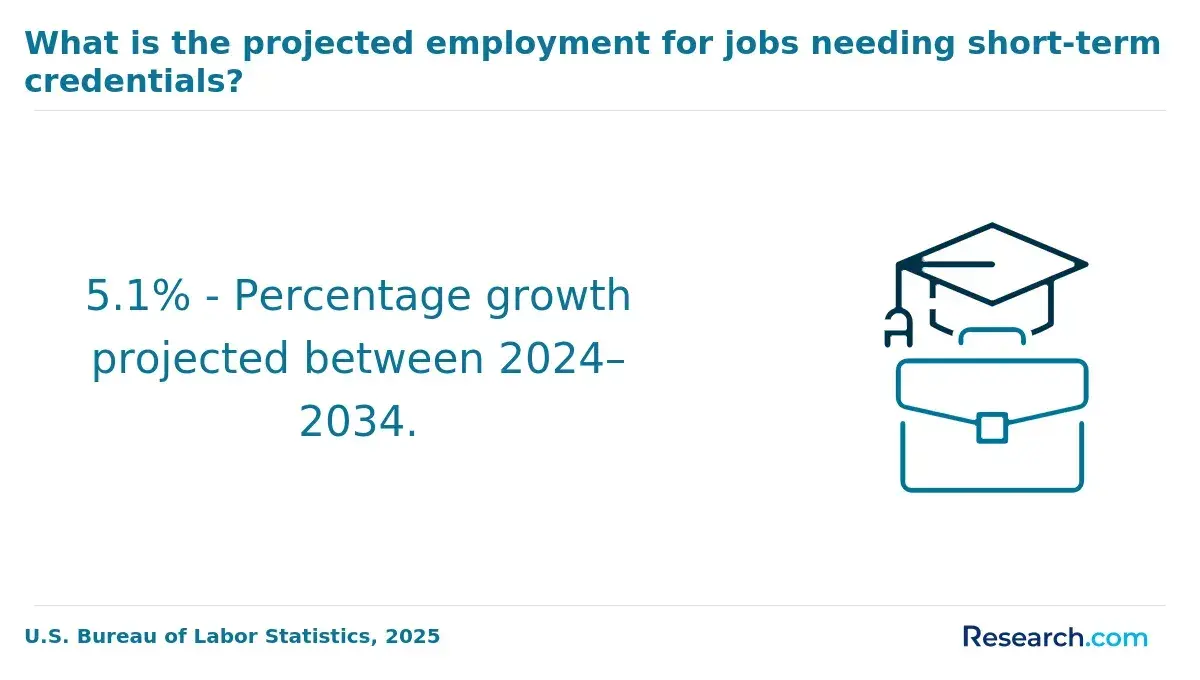
How Do Online Microcredentials Compare With Certificates?
A microcredential is usually shorter and narrower than a certificate program. A certificate is an educational award for completing an organized course of study; it may be credit-bearing or noncredit. A certification is different: it is generally awarded by a professional body after a person meets standards, often through an examination and sometimes work experience.
Choose a microcredential when you need one marketable skill quickly, such as SQL, generative-AI workflow design, agile methods, or cloud fundamentals. Choose a longer certificate when you need a more coherent body of knowledge, academic credit, or preparation for a new occupational area. Learners seeking a larger academic transition can compare online classes that lead toward an associate degree rather than collecting unrelated badges.
This comparison highlights the practical trade-off between speed and depth.
| Feature | Microcredential | Certificate program |
| Scope | One focused competency or short skill set | Broader sequence within a subject or career area |
| Time commitment | Often weeks to a few months | Often several months to a year or more |
| Academic credit | May be credit or noncredit | More likely to have defined credit status, but not always |
| Best use | Skill refresh, portfolio addition, targeted advancement | Career preparation or stackable academic progress |
| Recognition | Depends heavily on issuer and assessment | Depends on institution, curriculum, and field |
What Jobs Can Online Microcredentials Help You Get?
Microcredentials can strengthen an application for jobs where employers value current, demonstrable skills. They are most useful when paired with relevant experience, work samples, a portfolio, or a certification that employers already request. They can also help an incumbent employee move into a new project area.
Potentially relevant roles depend on the credential and the applicant's background. For example, a data analytics microcredential may support applications for junior analyst, reporting, operations, or business-intelligence support roles; it does not automatically qualify someone for a data scientist position. BLS reported a $112,590 median annual wage for data scientists in May 2024, but that figure describes the occupation as a whole, not the earnings of microcredential completers.
Use job postings as a reality check. Look for repeated skills, tools, credentials, degree expectations, and experience requirements in the exact jobs you want. If postings consistently require a bachelor's degree, a microcredential may still improve your profile, but it is better viewed as a supplement than a substitute.
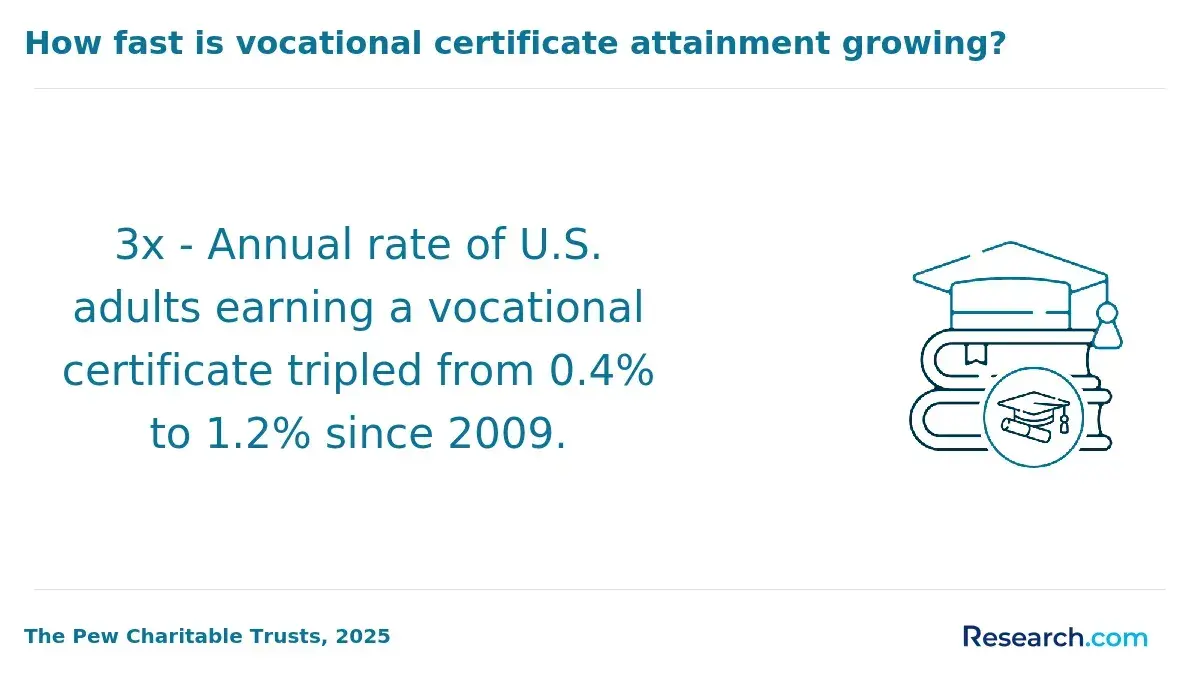
How Much Do Online Microcredentials Cost?
Microcredential pricing ranges from free introductory learning to substantial tuition for university-backed, credit-bearing programs. The total is more than the advertised enrollment price: learners may also pay for examination attempts, proctoring, required software, subscriptions, textbooks, lab kits, or renewal fees for an associated certification.
Before enrolling, compare the cost categories below in writing. This prevents a low advertised price from obscuring recurring or required expenses.
| Cost factor | Why it matters | What to verify |
| Tuition or subscription | Some providers charge by course, month, or term | Expected total based on your realistic completion pace |
| Assessment fees | Certification exams and proctoring may be separate | Number of included attempts and retake price |
| Tools and materials | Creative and technical programs may require paid software | Student licenses, device requirements, and expiration dates |
| Opportunity cost | Study time can affect work and family schedules | Weekly workload and live-session attendance expectations |
| Funding | Eligibility differs by provider and credential type | Employer reimbursement, scholarships, payment plans, and federal-aid eligibility |
Federal student aid is generally tied to eligible programs and institutions, not every short noncredit offering. Ask the provider whether the credential is eligible for any aid before treating financial assistance as part of your budget.
How Long Do Online Microcredentials Take?
Many online microcredentials can be completed in weeks or a few months, but the advertised duration usually assumes a particular weekly pace. A self-paced program may be faster for an experienced learner, while a cohort program can take longer but provide deadlines, instructor feedback, and peer interaction.
Match the schedule to the complexity of the skill. Introductory tool training may fit into a short format; job-ready competence in cybersecurity, analytics, software development, or design usually requires repeated practice beyond course completion. If speed is your top priority, compare the workload and support in accelerated degrees as well, because a longer credential may provide more structured career preparation.
Do not confuse rapid completion with rapid employability. Build time for projects, an updated résumé, networking, and - where relevant - preparation for a separate certification exam.
What Are the Admission Requirements?
Admission requirements for online microcredentials vary by provider. Many noncredit programs have open enrollment and require only an account and payment. University programs may require proof of prior education, prerequisite coursework, professional experience, English-language proficiency, or approval for advanced content. Credit-bearing graduate-level microcredentials can require a bachelor's degree or enrollment in a related program.
Before applying, verify the actual eligibility standard rather than assuming a GPA, standardized test score, or transfer-credit review is involved. These questions help identify whether the program fits your starting point.
- Is this credential open enrollment, or are there academic or professional prerequisites?
- Are prior skills in math, coding, writing, software, or a regulated profession expected?
- Will the provider place the credential on an academic transcript, issue a digital badge, or both?
- Does completion require a graded project, an exam, live attendance, or identity verification?
A program that is too advanced can lead to an expensive, frustrating experience; one that is too basic may add little to an established professional profile.
Which Fields Offer the Best Microcredentials?
The strongest fields for online microcredentials are those with clearly defined tools, rapidly changing practices, and ways to demonstrate skill through projects or assessments. Data analytics, cybersecurity, cloud computing, project management, digital marketing, UX design, AI literacy, and business operations commonly fit this model.
Demand alone should not determine your choice. BLS projects information security analyst employment to grow 33% from 2023 to 2033, but many roles still expect a bachelor's degree and related IT experience. Use a cybersecurity microcredential to build foundational evidence, then plan for hands-on labs, entry-level support experience, or a recognized certification if postings require them.
A microcredential may be a poor fit when a profession is tightly regulated, requires extensive supervised practice, or expects broad academic preparation. For professionals whose goal requires graduate education, reviewing the easiest masters degree to get options can clarify whether a full degree is a more appropriate long-term investment.
How Do You Choose a Reputable Program?
A reputable program makes clear claims about what learners study, how they are assessed, what credential they receive, and what the credential does not guarantee. The best option is not necessarily the most famous provider; it is the one that closes a verified skill gap for your target role at a reasonable total cost.
Use the following process before paying. It focuses on evidence that matters more than marketing language or badge design.
- Collect several recent job postings for your target role and identify the skills, tools, degrees, certifications, and experience that recur.
- Choose a credential with a curriculum that maps directly to those repeated requirements and includes practice you can show.
- Confirm the issuing organization, instructor qualifications, assessment format, credit status, completion record, and total required cost.
- Ask whether the credential stacks into a larger program, transfers anywhere, prepares for a separate exam, or has any renewal requirement.
- Review refund terms, time limits, learner support, accessibility, and technical requirements before enrolling.
Red flags include vague outcomes, pressure to enroll immediately, claims of guaranteed employment or salary, unverified employer partnerships, and no explanation of assessment. If your ambitions extend beyond short-form training into research or advanced academic work, compare programs such as a PhD no dissertation pathway separately; it serves a fundamentally different purpose from a microcredential.
Other Things You Should Know About
They can be worthwhile when they teach a skill requested in your target job postings and give you credible evidence of learning, such as a project, assessment, or recognized provider record. They are less useful when chosen without a career goal or when employers in the field require a degree, license, or established certification.
It can help you test a field, learn foundational tools, and create portfolio material. A full career change may also require work experience, networking, a longer certificate or degree, an apprenticeship, or a professional certification, depending on the occupation.
Recognition depends on the employer, field, issuer, and rigor of the credential. Employers are more likely to value a credential that names specific skills, includes assessed work, and comes from a known college, professional association, or industry provider.
Yes, if it is relevant to the job and you can state the skills or projects it represents. Place it in a certifications, professional development, or education section, identify the issuer and completion date, and be prepared to discuss what you learned.
References
- Best Micro-Credentials Examples: Top University Programs https://certifier.io/blog/micro-credentials-examples
- Employer Demand Shaping the Future of Microcredential Market: Insights from a National Survey | UNBOUND https://unbound.upcea.edu/innovation/alternative-credentialing/microdegrees/national-survey-suggests-that-employers-will-lead-way-on-digital-badging/
- What Are Micro-Credentials And Why Are So Many Universities Talking About Them? https://www.suitable.co/knowledge-center/blog/what-are-micro-credentials
- Micro-Credentials | NEA https://www.nea.org/professional-excellence/professional-learning/micro-credentials
- 4 Strategies to Develop Successful Micro-Credential Programs | Research Brief https://www.wgulabs.org/posts/4-strategies-to-develop-successful-micro-credential-programs
- How can micro-credentials help employee development? https://employmenthero.com/blog/micro-credentials-employee-development/
- Explore Microcredentials for Career Growth | HirePaths https://hirepaths.com/blog/2024/09/02/explore-microcredentials-career-growth
- Microcredentials: Empowering Modern Learners & Employers https://evolllution.com/microcredentials-empowering-modern-learners-employers
- How Microcredentials Are Revolutionizing the Higher-Education Business Model https://manhattan.institute/article/how-microcredentials-are-revolutionizing-the-higher-education-business-model
- 7 Best Micro-Credentials for TEFL to Advance Your Career https://teflinstitute.com/blog/best-micro-credentials-for-tefl/