2027 Best Online Short Certificate Programs for Work-Life Balance

Co-Founder and Chief Data Scientist
Choosing a short online certificate means weighing speed against real career value, not simply picking the fastest course. The U.S. Bureau of Labor Statistics projects healthcare occupations to grow much faster than average through 2033, while employers also continue to value job-ready digital and technical skills.
This guide helps working adults compare certificate types, schedules, costs, recognition, and realistic outcomes so they can select training that fits work, family, and long-term goals.
Key Things You Should Know
- The best work-life-balance option is usually an asynchronous, part-time certificate with clear weekly workload estimates, recorded instruction, and deadlines that do not require daytime attendance.
- Short certificates commonly take weeks to about one year; they can build targeted skills, but regulated healthcare, legal, and trade roles may still require clinical hours, exams, supervised practice, or state approval.
- Use occupation data carefully: the Bureau of Labor Statistics projects 16% growth for healthcare occupations through 2033, but a certificate alone does not automatically qualify a learner for every healthcare job.
Top 10 Best Online Short Certificate Programs for Work-Life Balance
Popular Trade School Programs
Online trade certificates work best for theory-heavy training paired with local hands-on practice. Common options include HVAC fundamentals, electrical theory, construction management, welding safety, automotive service fundamentals, and industrial maintenance. Many take several months, while an associate degree may be a better fit for learners needing broader technical coursework or employer-preferred credentials.
Before enrolling, confirm whether labs, tool purchases, apprenticeships, or supervised hours are required. Fully online training rarely substitutes for the field experience needed for licensed electrical, plumbing, welding, or HVAC work.
Healthcare Programs
Healthcare certificates may cover medical billing and coding, pharmacy technician preparation, medical assisting theory, health information, patient care support, or community health. Programs can be useful for career changers, but clinical occupations often require in-person practicum hours and state-specific eligibility rules.
Medical coding courses may prepare learners for an optional industry certification exam; completing a course is not the same as earning certification. Compare exam preparation, clinical placement support, employer recognition, and whether the curriculum meets the requirements of the state where you intend to work.
Criminal Justice / Law Programs
Short online programs in criminal justice, legal studies, paralegal support, cybersecurity law, and victim advocacy can strengthen administrative, compliance, or public-service skills. A paralegal certificate may suit someone who already has a degree and wants focused legal training, while an associate degree can provide a broader entry route.
These programs do not qualify graduates to practice law or become attorneys. Prospective students should verify whether employers prefer an American Bar Association-approved paralegal program, whether internships are available, and whether background checks affect target roles.
Arts & Design Programs
Online certificates in graphic design, UX design, digital marketing design, photography, animation, and web content creation can work well for adults because much coursework is project based. Portfolio quality usually matters more than seat time.
Choose a program with instructor feedback, current software instruction, accessible project briefs, and a portfolio review. A short certificate can help a learner test a creative field or update skills, but it does not guarantee freelance income or a design role. Confirm software subscriptions, hardware needs, and rights to use completed work in a portfolio.
How do online short certificate programs support work-life balance for busy adults?
Online short certificate programs support work-life balance when their design gives learners control over when and where they complete coursework. A short certificate is an educational credential awarded for finishing a focused program; it differs from a professional certification, which is usually awarded by an independent certifying body after an exam and sometimes experience requirements.
For busy adults, the strongest formats are asynchronous or mostly asynchronous: lectures are recorded, assignments have weekly windows, and discussion participation does not depend on a fixed daytime meeting. Synchronous sessions can still be worthwhile when they occur predictably in evenings or weekends and are recorded.
Use this comparison to match delivery design with your actual schedule rather than an ideal schedule.
| Format | Work-life balance advantage | Primary trade-off |
| Asynchronous online | Complete most work around shifts and family responsibilities | Requires self-direction and careful deadline tracking |
| Live online | Offers real-time instructor contact without commuting | Class times may conflict with work or caregiving |
| Hybrid | Combines flexible theory with needed labs or practice | Requires travel and fixed in-person attendance |
| Competency-based | May allow faster progress through familiar material | Can be demanding for learners with limited uninterrupted study time |
Before enrolling, ask for a sample weekly calendar, the number of required live sessions, assignment due-day policy, attendance rules, make-up policy, and expected response time from instructors. Avoid programs marketed as "self-paced" if they do not explain deadlines, support access, or the maximum time allowed for completion.
What admission requirements and prerequisites do online short certificate programs typically have?
Admission requirements depend on the provider and credential type. A noncredit career-training certificate may require only a registration form and payment. A credit-bearing college certificate often requires an application, identity or residency information, and placement or prerequisite coursework. Selective or advanced certificates may require prior college coursework, a degree, professional experience, a portfolio, immunization records, or background checks.
Applicants should separate academic admission from eligibility for a profession. For example, admission to a medical billing course may be open, but an employer could prefer a recognized certification or prior healthcare experience. Likewise, a program may admit students to an online clinical course while requiring them to arrange approved in-person practice.
These questions identify requirements that can affect both completion time and career usefulness.
- Is the program credit-bearing, noncredit, undergraduate, graduate, or workforce training?
- Are there required prerequisites in math, writing, anatomy, technology, or prior work experience?
- Does admission require a minimum GPA, placement test, portfolio, interview, background check, drug screen, or immunization documentation?
- Can prior learning, military training, or transfer credit reduce coursework, and is that decision guaranteed in writing?
- Will students need to secure their own practicum, internship, lab site, or proctor?
Military-connected learners may also benefit from comparing colleges for military spouses when frequent moves, transfer policies, and portable learning options are central concerns.
How can students compare accredited online certificate programs and avoid diploma mills?
Accreditation is most important when a certificate is credit-bearing, connected to federal student aid, intended for transfer, or designed to meet licensure or professional eligibility standards. Institutional accreditation evaluates a college as a whole; programmatic accreditation evaluates specific disciplines. Neither is automatically necessary for every noncredit skills course, but the provider's reputation and employer recognition still matter.
Start with the institution's accreditor, then verify any field-specific approval directly with the relevant accreditor, licensing board, or certification organization. Do not rely only on a school logo, a testimonial, or a statement that a program is "internationally accredited."
The following comparison highlights signs of a credible program and warning signs that merit more investigation.
| Check | More credible indicator | Red flag |
| Institutional status | Accreditor and official institution name are clearly identified | Vague claims without naming a recognized accreditor |
| Curriculum | Lists courses, outcomes, faculty, workload, and required equipment | Promises a credential with little description of learning |
| Career claims | Uses measured, qualified outcomes and explains limitations | Guarantees a job, license, income, or rapid promotion |
| Pricing | Shows tuition, fees, refund policy, and extra expenses before payment | Pressures immediate payment or hides total charges |
| Credential value | Explains whether credits transfer or whether an exam is separate | Uses "certificate" and "certification" as if they mean the same thing |
For a broader institutional search, compare popular online colleges, then confirm that the specific certificate - not merely the school - matches your occupational goal. If a provider will not provide written answers about accreditation, refunds, transferability, or licensing alignment, consider another option.
What is the typical length, schedule, and time commitment of online short certificates?
Most short online certificates range from a few weeks to roughly 12 months. The practical time commitment matters more than the advertised duration: a six-month program with 12 hours of weekly work can be less compatible with a demanding job than a nine-month program requiring five hours weekly.
Credit-bearing certificates often follow academic terms, while noncredit professional certificates may use rolling starts or self-paced modules. Programs tied to clinical practice, laboratories, internships, or exams may have less scheduling flexibility even when lectures are online.
Review these workload patterns before deciding whether an accelerated option is sustainable.
| Program pattern | Typical schedule | Best fit |
| Accelerated cohort | Short terms with frequent deadlines and fixed sequence | Learners with predictable schedules and prior subject familiarity |
| Part-time term-based | One or two courses at a time over multiple terms | Workers balancing family, variable shifts, or caregiving |
| Self-paced noncredit | Flexible progress within an enrollment window | Independent learners who can set consistent study blocks |
| Hybrid clinical or lab program | Online theory plus scheduled site-based requirements | Learners able to reserve travel and daytime practice time |
Build a realistic plan by reserving study time before registration, adding a buffer for exams and project weeks, and confirming whether employer overtime, school breaks, or caregiving responsibilities could interrupt required attendance. Faster is only better when the pace does not cause withdrawal or poor performance.
How do costs, financial aid, and employer tuition benefits work for online certificates?
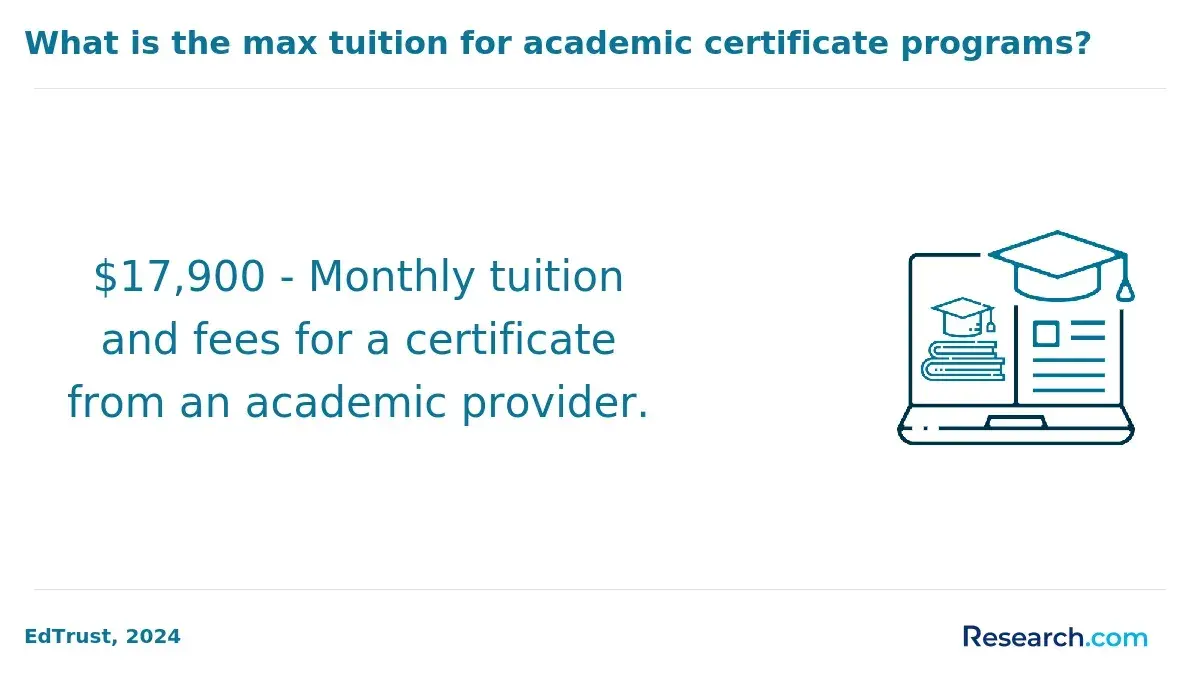
Total certificate cost includes more than tuition. Learners may pay application fees, technology fees, digital course materials, exam vouchers, proctoring, software, supplies, uniforms, background checks, liability insurance, travel for labs, and retake fees. Ask for a written estimate of all required costs before comparing programs.
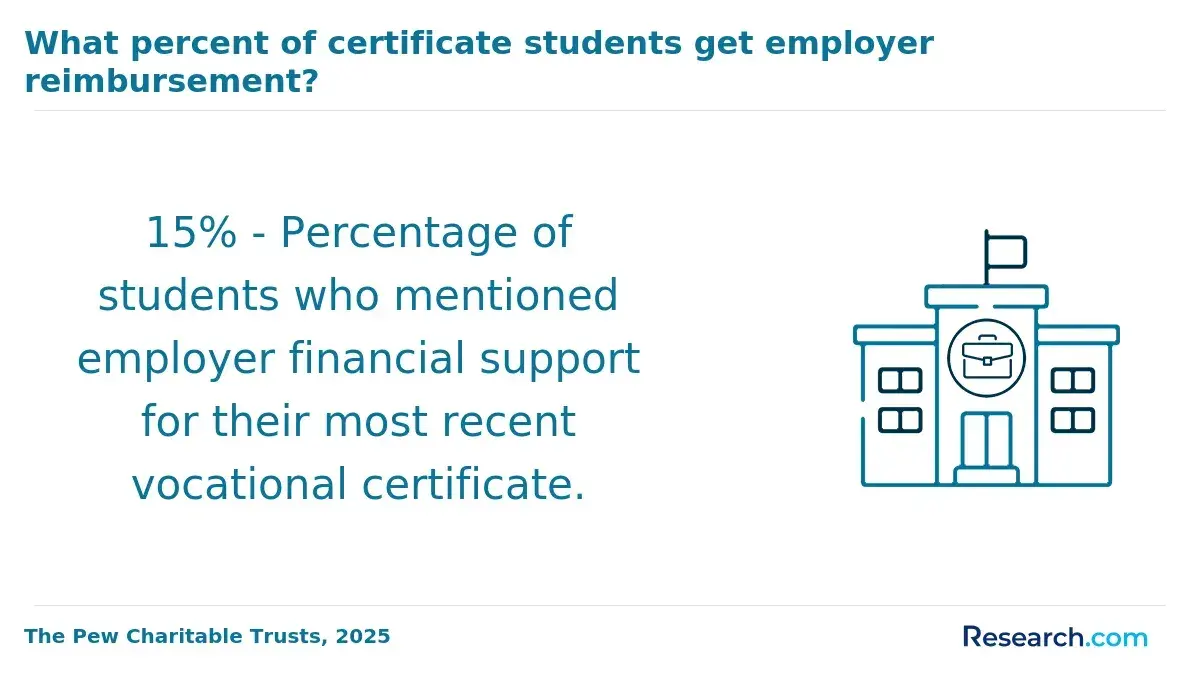
Federal student aid eligibility generally depends on the school and the program's eligibility status; many short noncredit certificates do not qualify. Credit-bearing certificates at eligible institutions may be treated differently, and some workforce programs use separate state, local, or workforce-board funding. Employer tuition assistance can be valuable, but reimbursement often requires prior approval, a minimum grade, continued employment, and documentation.
Use this decision framework to compare the real financial commitment rather than advertised tuition alone.
| Funding route | When it may fit | Important limitation |
| Employer tuition benefit | Training directly supports your current role or career path | May reimburse after completion and impose grade or service requirements |
| Federal aid | Eligible credit-bearing programs at eligible institutions | Availability varies by program length and institutional eligibility |
| Workforce funding | Eligible job seekers or workers pursuing in-demand fields | Rules, approved-provider lists, and availability vary locally |
| Payment plan | Short programs with manageable monthly installments | Does not reduce the total price and may include fees |
Calculate whether the credential is likely to improve access to a specific role, exam, promotion path, or portfolio - not merely whether the monthly payment looks affordable. Adults seeking the longest academic route should distinguish short career training from 1-year PhD programs online no dissertation USA, which are advanced degree pathways with substantially different admissions, workload, and cost considerations.
What careers and job roles are common for graduates of short online certificate programs?
Short online certificates are most useful when they support a clearly defined entry-level task set, help an experienced worker update skills, or prepare a learner for a separate certification exam. Common outcomes include administrative support, bookkeeping support, IT support, medical billing, patient scheduling, cybersecurity support, digital marketing coordination, web content work, project coordination, and skilled-trade apprenticeship preparation.
Career potential depends on the credential's fit with employer requirements. A short certificate or an associate degree may be enough to demonstrate a focused skill for some roles, while occupations involving diagnosis, direct patient care, licensed trade work, law practice, or advanced technical responsibility typically require additional education, supervised experience, examination, or licensing.
The table distinguishes realistic uses of a certificate from situations where a longer route is usually more appropriate.
| Goal | Certificate can be useful for | May require more than a certificate |
| Healthcare administration | Billing, coding preparation, scheduling, records support | Employer-preferred certification or experience for advanced roles |
| Information technology | Help desk skills, cloud basics, data tools, cybersecurity foundations | Industry certification, portfolio, experience, or degree for specialized roles |
| Skilled trades | Safety, theory, pre-apprenticeship knowledge, code awareness | Apprenticeship, supervised hours, licensing examination, field experience |
| Design and marketing | Portfolio projects, software skills, content production | Demonstrated portfolio and client or workplace experience |
| Legal support | Legal research, document preparation, office procedures | Degree, recognized paralegal preparation, or employer-specific experience |
When reviewing job postings, identify the minimum requirement that appears repeatedly. If employers consistently request a degree, license, apprenticeship, or named certification, treat a short certificate as a stepping stone rather than a complete substitute.
What salary ranges and earning potential are associated with popular online certificates?
Salary research should begin with the occupation, location, experience level, and employer - not with a promise attached to a certificate. The U.S. Bureau of Labor Statistics reported a May 2024 median annual wage of $48,780 for all occupations. Some certificate-aligned fields can exceed or fall below that benchmark, but pay varies substantially by state, specialization, shift, commission structure, and whether a role requires additional credentials.
The figures below are May 2024 national median annual wages reported by the Bureau of Labor Statistics for selected occupations. They are not salaries guaranteed to certificate completers, and some roles require more education or experience than a short online program provides.
| Occupation | May 2024 median annual wage | Certificate relevance |
| Medical records specialists | $50,250 | Medical coding or health information certificates may support entry preparation |
| Computer user support specialists | $60,340 | IT certificates and industry certifications can support entry-level preparation |
| Paralegals and legal assistants | $61,010 | Certificate or associate-level preparation may be relevant, depending on employer |
| Web developers and digital designers | $95,380 | Portfolio, technical skills, and experience strongly influence entry opportunities |
For a personal return-on-investment estimate, compare total program cost and time away from work with local job postings, starting pay ranges, required credentials, and the probability that the program actually meets those requirements. Be cautious of providers that quote a high occupation-wide wage without explaining that many workers in that occupation hold degrees, licenses, or years of experience.
How do online certificate curricula, coursework, and learning formats differ by field of study?
Online certificate curricula differ by whether the field can be taught primarily through knowledge, software practice, portfolio work, or supervised performance. Business, IT, project management, coding, bookkeeping, design, and many compliance topics can often be completed fully online. Healthcare, skilled trades, laboratory work, and some public-safety programs usually combine online theory with clinicals, labs, simulations, externships, or local assessments.
Learning format affects both work-life balance and credential value. Recorded lectures and flexible assignments suit shift workers, while live skills demonstrations can provide feedback but require calendar coordination. In AI-affected fields such as design, marketing, and IT, prioritize curricula that teach verification, privacy, ethical use, problem solving, and portfolio evidence rather than relying only on tool-specific tutorials.
Compare the instructional features below because they show whether a program's format fits both your learning needs and the field's expectations.
| Field | Common online coursework | Often needed beyond online coursework |
| IT and cybersecurity | Virtual labs, troubleshooting exercises, projects, exams | Practice environments, certification exams, portfolio or work experience |
| Healthcare administration | Terminology, coding concepts, privacy, claims workflows | Employer training or separate certification examination |
| Clinical healthcare | Anatomy, theory, case studies, simulations | Approved clinical placement and in-person competency evaluation |
| Trades | Safety, blueprint reading, code theory, estimating | Hands-on labs, apprenticeship, supervised field practice |
| Arts and design | Software instruction, critiques, briefs, portfolio projects | Portfolio presentation, client communication, current software access |
Ask to see a syllabus and a sample assignment. A useful curriculum names the skills learners will practice, the software or equipment required, the feedback process, and the evidence graduates can show an employer.
What licensing, certification, or continuing education requirements can online certificates help fulfill?
Online certificates can help learners prepare for licensing, certification, or continuing education, but their role varies. A certificate is proof that a school or provider awarded training. A certification is a credential from a professional organization, commonly earned through an exam and ongoing renewal. A license is legal permission from a state or other government authority to practice a regulated occupation.
For example, a medical coding certificate may prepare a learner for an industry certification examination, while an HVAC theory certificate may support apprenticeship learning but does not itself grant a state trade license. Continuing education certificates may document completed hours for a profession, but the relevant licensing board decides whether those hours count.
Confirm these details directly before paying for any program that claims to meet professional requirements.
- Identify the exact license, certification, or renewal requirement for your intended job and state.
- Check the licensing board or certifying organization's published eligibility rules, including education, clinical hours, examinations, and renewal standards.
- Ask the provider for written confirmation of how its curriculum aligns with that requirement and what it does not provide.
- Verify whether online coursework, virtual labs, proctored exams, and out-of-state clinical sites are accepted where you plan to work.
- Budget separately for application, examination, background-check, fingerprinting, renewal, and continuing education costs when applicable.
A major red flag is language suggesting that completion "makes you licensed" without naming the licensing jurisdiction and the additional steps required. Requirements can change by state and profession, so use the program as preparation only after confirming current rules with the authority that governs your target role.
Other Things You Should Know About
They can be worthwhile when they teach skills requested in your target job postings, prepare you for a recognized exam, or create portfolio evidence. They are less useful when the target role requires a degree, license, apprenticeship, or extensive supervised experience that the program does not include.
Some noncredit certificates can be completed in weeks, especially in software, business tools, digital marketing, or introductory IT. The fastest option is not always the best choice; verify workload, employer recognition, and whether it leads to the next credential or job requirement you need.
Possibly. Eligibility depends on the institution and whether the specific program qualifies for aid. Credit-bearing certificates at eligible schools may have different options than noncredit workforce programs. Ask the financial aid office and your employer before enrolling.
Many employers accept online learning when the provider is credible and the learner can demonstrate relevant skills. Acceptance is stronger when the certificate comes from a recognized college, industry organization, or established provider and is paired with a portfolio, exam result, work sample, or practical experience.
References
- Student Loan Options for Certificate Programs https://collegefinance.com/student-loans/student-loan-options-for-certificate-programs
- ISQOLS https://isqols.org/Work-Life-Balance-Certification
- 8 Types of Flexible Work Arrangements to Support Your Employees https://getbenepass.com/blog/flexible-work-arrangements
- ebm | Better BenAdmin https://getebm.com/the-benefits-of-flexible-work-schedules/
- Federal Employees - Flexible Work Schedules https://www.opm.gov/policy-data-oversight/pay-leave/work-schedules/fact-sheets/alternative-flexible-work-schedules/
- Online Courses https://www.chicagoinstituteofbusiness.com/courses/view/52/work-life-balance-course
- Why IT Careers Offer the Ultimate Work-Life Balance | CompTIA https://www.comptia.org/en-us/blog/it-careers-work-life-balance/
- How to Balance Work and Life: Essential Tips for Fresh Graduates https://www.psb-academy.edu.sg/blog/how-to-balance-work-and-life-essential-tips-for-fresh-graduates
- Impact of Academic Continuing Education and Training Post-Diploma Programme on Employment and Wage Outcomes https://www.mti.gov.sg/resources/economic-survey-of-singapore/economic-survey-of-singapore-and-feature-articles/impact-of-academic-continuing-education-and-training-post-diploma-programme-on-employment-and-wage-outcomes/
- Types of Flexible Work Arrangements | Benefits and Disadvantages https://www.patriotsoftware.com/blog/payroll/the-benefits-of-flexible-work-schedules/