2027 Best Stackable Credentials With No Campus Visits Required

Co-Founder and Chief Data Scientist
Choosing a short online credential is risky when you cannot tell whether it leads to a job, a certification exam, or college credit. Stackable credentials can reduce that uncertainty by letting adults complete smaller milestones that build toward larger certificates or degrees.
The U.S. Bureau of Labor Statistics projects healthcare occupations to grow much faster than average from 2023 to 2033, making targeted training especially relevant. This guide compares no-campus-visit options, explains where online learning works, and shows how to avoid credentials that do not support your long-term goal.
Key Things You Should Know
- Choose credit-bearing stackable certificates when you want coursework that may apply toward an associate or bachelor's degree; confirm the receiving school's written transfer policy before enrolling.
- Fully online programs can work well for business, IT, legal support, and design, but many healthcare and skilled-trade roles still require supervised clinicals, labs, examinations, or state-approved field training.
- BLS projects computer and information technology occupations to grow much faster than average from 2023 to 2033; however, occupational salary data describes jobs, not guaranteed outcomes for certificate completers.
Top 10 Best Stackable Credentials With No Campus Visits Required
Popular Trade School Programs
Online stackable trade pathways often begin with construction management, HVAC theory, electrical technology fundamentals, welding safety, industrial maintenance, or logistics certificates. These programs can teach estimating, codes, blueprint reading, and safety documentation remotely. They are best for learners already working in the field or seeking entry-level support roles. Hands-on trades usually still require employer training, apprenticeships, lab work, or state licensing steps. Ask whether the credential includes practical assessments and whether it leads to an apprenticeship rather than assuming online coursework alone qualifies you for field work.
Healthcare Programs
Common stackable healthcare options include medical billing and coding, health information technology, medical office administration, pharmacy technician preparation, and nursing prerequisites. Administrative and informatics coursework can often be completed online, while patient-care programs commonly require in-person clinical experiences. A certificate may prepare a student for a separate certification exam, but it is not itself a professional certification. Choose a program with clear eligibility information for the relevant exam and state rules. For licensed roles such as practical nurse, registered nurse, or radiologic technologist, confirm board approval before paying tuition.
Criminal Justice / Law Programs
Online certificates in criminal justice, paralegal studies, legal research, cybersecurity law, corrections, and public safety administration can stack into associate or bachelor's degrees at some colleges. They suit adults pursuing administrative, compliance, records, victim-services, or legal-support work. A paralegal certificate does not authorize someone to practice law, and police, corrections, and court positions may require background checks, physical standards, academy training, or local hiring examinations. For paralegal study, review whether employers in your area prefer programs approved by recognized professional bodies or a degree-based pathway.
Arts & Design Programs
Graphic design, UX design, digital media, animation, web content, photography, and visual communications certificates are commonly available without campus visits. Stackable options may progress from software fundamentals to a career certificate and then an associate or bachelor's degree. Portfolio quality usually matters more to employers than the credential title alone, so select programs with instructor feedback and project-based work. A short noncredit course can build a specific skill, while a credit-bearing certificate may be better for learners who expect to continue into a degree. Check software, hardware, and subscription costs.
What are stackable credentials and how do fully online options work for adults?
Stackable credentials are intentionally connected educational milestones. A learner might complete a short certificate, apply those courses to a longer certificate, and later use eligible credits toward an associate or bachelor's degree. They may be offered by community colleges, universities, workforce providers, professional associations, or employers.
A no-campus-visit option delivers instruction, advising, assessments, and student services online. "Fully online" does not always mean every requirement is remote: proctored exams may occur through online monitoring, while some programs arrange local clinical, internship, or practicum placements. Learners seeking flexible pacing can compare self paced degrees, but self-paced study still requires reliable time management and may not fit cohort-based clinical programs.
The comparison below separates the most common credential models so readers can match the program structure to their objective.
| Credential model | Typical provider | Best use | Key limitation |
| Credit-bearing certificate | Accredited college | Building toward a degree | Transfer is never automatic |
| Noncredit career certificate | College continuing education or training provider | Fast skill development | Usually does not create transferable college credit |
| Industry certification preparation | College or training provider | Preparing for an external exam | Passing the course does not award the certification |
| Digital badge or microcredential | College, employer, or platform | Demonstrating a narrow skill | Recognition varies substantially by employer |
Which online stackable credentials offer the strongest career and salary outcomes?
The strongest career value usually comes from credentials tied to a defined occupation, recognizable employer skill, or a documented route into further education. Information technology, health information, accounting support, supply-chain operations, project coordination, and cybersecurity can be practical online choices because much of the work and assessment can occur digitally.
The BLS reports that computer and information technology occupations had a median annual wage of $105,990 in May 2023. That figure covers a broad occupational group, many roles requiring degrees and experience, so it should not be read as expected pay after an entry-level certificate. Use it as a signal to investigate role-specific requirements, not as an earnings promise.
Compare the outcome pathway rather than the credential name alone.
| Pathway | Online fit | Credential value | Best next check |
| IT support to networking or cybersecurity | High | Can combine college credits with industry exam preparation | Review entry-level job postings and certification prerequisites |
| Medical billing and coding | High | Can support administrative healthcare applications | Verify whether employers prefer a separate coding certification |
| Business or accounting support | High | Useful for bookkeeping, payroll, and office operations foundations | Check software training and credit transfer options |
| Direct patient care | Limited | May begin with online theory | Confirm local clinical and licensure requirements |
How do you verify accreditation and quality for online stackable credential programs?
For a credit-bearing college credential, verify institutional accreditation through the U.S. Department of Education or the Council for Higher Education Accreditation directories. Institutional accreditation matters for federal aid eligibility and for the likelihood that another college will review transfer credit, though it does not compel another institution to accept it.
Programmatic approval matters when a field is regulated. Nursing, medical imaging, teacher preparation, counseling, and some technical programs may need specialized approval or state authorization. A noncredit provider may not be institutionally accredited; in that case, judge quality through the issuing organization, instructor qualifications, employer recognition, assessment method, refund terms, and transparent outcomes.
Before paying a deposit, complete these checks.
- Identify whether the award is college credit, a completion certificate, exam preparation, or an external certification.
- Confirm the institution, program, and delivery format meet any state board or employer requirement for your target role.
- Request the curriculum, total charges, transfer agreement, and any required in-person components in writing.
- Search for complaints, abrupt name changes, pressure-based enrollment tactics, or claims of guaranteed employment.
What admission requirements and prior experience do online stackable credential programs expect?
Admissions expectations depend on the provider and level of study. Entry-level college certificates often require a high school diploma or equivalent and an application; some programs use placement measures or prerequisite courses. Graduate certificates normally require a bachelor's degree, while industry training may only require basic computer skills or prior work experience.
Programs involving clinical placements, public safety agencies, or employer sites can add background checks, immunizations, drug screening, CPR training, identity verification, or technology requirements. These costs and conditions can apply even when instruction is fully online.
Ask admissions staff questions that distinguish a realistic fit from a marketing claim.
- What academic, technical, and placement requirements must be completed before the first course?
- Are credits awarded, and exactly which later certificates or degrees accept them?
- Does the program require live sessions, proctored exams, a practicum, or travel to a local site?
- What happens if I cannot secure an approved clinical, internship, or field placement near me?
How long do online stackable credentials take and what do they typically cost?
Completion time ranges from a few weeks for a focused noncredit microcredential to roughly one year for many college certificates. Associate degrees commonly take about two years of full-time study, although transfer credit, prior learning assessment, part-time enrollment, and course availability can change the timeline. Adults balancing work or caregiving should prioritize predictable course sequencing over the shortest advertised finish time. Readers considering a graduate-level step later can also compare affordable master's degrees online.
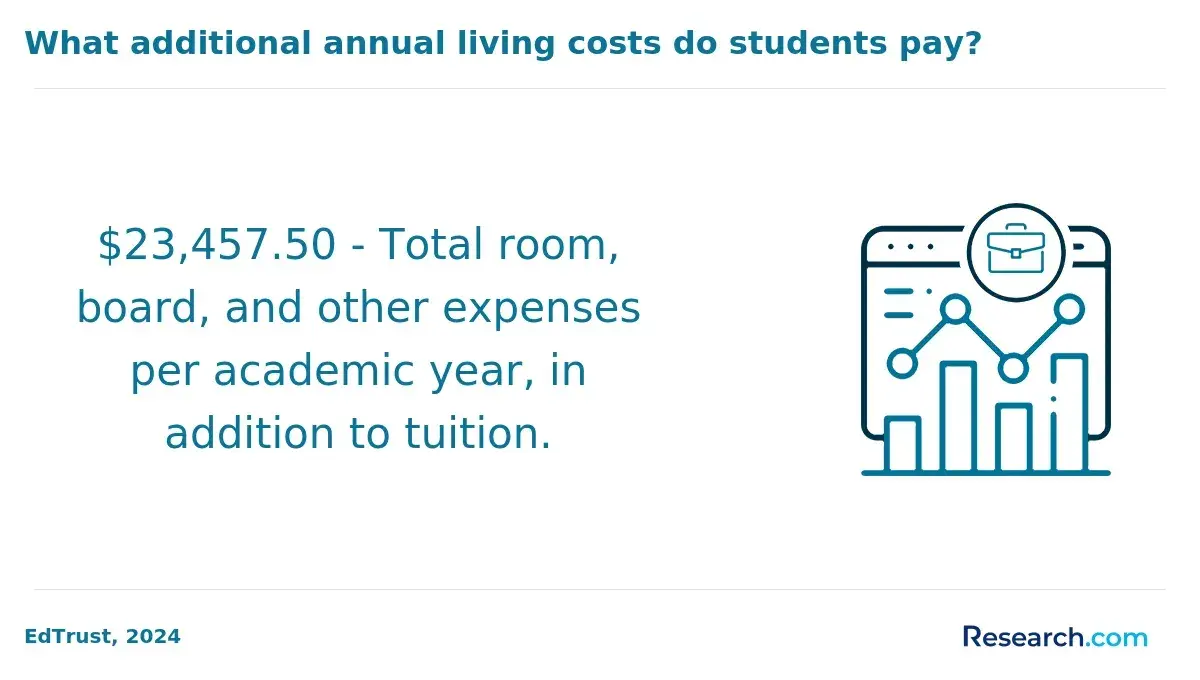
Total cost is more than tuition. The National Center for Education Statistics reported that the average published tuition and fees for in-district students at public two-year institutions was $3,990 in 2022-23. Your actual cost can differ widely by residency, school, course load, and aid eligibility; online learners should add technology, textbooks, exam fees, supplies, background checks, and travel for required placements.
This cost framework helps compare programs with different advertised prices.
| Cost category | Why it matters | What to request |
| Tuition and mandatory fees | May be charged per credit or per term | Full program estimate, not one-course price |
| Books, software, and equipment | Can be substantial in design and technical fields | Required materials list |
| External exam and licensing costs | Often separate from tuition | Exam eligibility and current fee schedule |
| Field-placement expenses | May include travel, uniforms, screenings, or insurance | Written placement cost estimate |
What program formats and learning platforms are used in no-campus-visit stackable credentials?
No-campus-visit programs typically use a learning management system for readings, assignments, discussion boards, quizzes, recorded lectures, and instructor feedback. Formats range from asynchronous courses, which allow work at flexible times, to synchronous classes with required video meetings. Cohort programs can provide structure and networking; asynchronous programs generally fit variable work schedules better.
Online delivery is not a shortcut around performance standards. Programs may use remote proctoring, simulations, portfolio reviews, employer-based projects, virtual labs, or locally supervised experiences. Test the platform on your own device before enrolling and ask about accessibility support, tutoring, library access, and response times from instructors.
Parents and caregivers should examine weekly deadlines, not just whether lectures are recorded. Flexible program design can be especially important for learners reviewing degrees for moms going back to school, since a fixed practicum or live laboratory may be harder to arrange than online coursework.
How do stackable credentials build into degrees and long-term education pathways?
A genuinely stackable pathway has a documented sequence: each completed credential applies toward the next one under stated rules. The most useful pathways identify the course numbers, maximum transferable credits, grade requirements, time limits, and the degree program that accepts them. Do not rely on a verbal statement that credits are "likely" to transfer.
Stacking is especially valuable for adults who want an employable milestone before committing to a full degree. It can also reduce duplicated coursework if every stage is completed at the same institution. Learners with ambitious long-term academic plans may eventually explore shortest doctoral programs, but doctoral admission typically requires prior degrees, advanced academic preparation, and field-specific qualifications; a short credential is only an early step, not a substitute.
Use this progression test before selecting a pathway.
- Start with the final role or degree you may want, then work backward to identify required education and licensure.
- Obtain the current catalog language showing how each certificate applies to the next credential.
- Compare course numbers and credit totals, including any minimum grade required for progression.
- Keep syllabi, transcripts, and written transfer evaluations in case policies change or you change institutions.
What licensing or certification requirements apply to careers using stackable credentials?
Licensure is government authorization to practice a regulated occupation. Certification is usually awarded by a professional organization after an applicant meets eligibility standards, which may include education, an examination, experience, or continuing education. A school certificate is evidence of completing a course of study; it does not automatically confer either licensure or certification.
Fully online programs are most straightforward in fields without hands-on licensing requirements. For regulated healthcare, education, counseling, skilled trades, and public-safety roles, requirements vary by state and sometimes by employer. A program can be academically legitimate but still fail to meet your state's eligibility rules.
Before enrolling in a career-focused pathway, verify these points with the appropriate board or certifying body.
- Whether the exact program and delivery format satisfy educational eligibility requirements.
- Whether clinical, laboratory, supervised-experience, or apprenticeship hours are required and who arranges them.
- Whether graduates must pass an examination, meet background requirements, or obtain employer sponsorship.
- Whether the credential is accepted in the state where you expect to work, not merely where the school operates.
How should students compare and choose reputable online stackable credential providers?
Start with your intended job, not the provider's marketing label. Then compare programs on whether they are credit-bearing, fully remote in practice, recognized by employers or regulators, affordable after all fees, and connected to a documented next step. The best option is not always the fastest: a lower-cost noncredit course may be sufficient for a software skill, while a credit-bearing certificate can be the better investment if you expect to complete a degree.
Use the following red flags to narrow your list. They matter because weak providers often obscure the information needed to evaluate value and eligibility.
| Red flag | Why it is risky | Better alternative |
| "Fully online" with no placement details | Required travel may appear after enrollment | Get all practicum and residency terms in writing |
| Guaranteed job or salary claims | Hiring and pay depend on location, experience, and employer | Review role requirements and local job postings |
| Unclear credential type | You may expect college credit or certification that is not awarded | Confirm the exact award and issuing organization |
| No published transfer policy | Stackability may be promotional rather than contractual | Choose a documented pathway in the academic catalog |
Request a written cost estimate, curriculum map, technical requirements, refund policy, and outcome information. If an advisor cannot clearly explain what the credential qualifies you to do and what it does not, pause before enrolling.
Other Things You Should Know About
Many can, particularly in business, IT, administration, legal support, and digital design. Programs requiring clinical care, laboratory practice, apprenticeships, or licensing may still require local in-person experiences.
They can be if you intend to continue into a related degree and the college documents how the credits apply. Noncredit certificates may be more efficient for a narrow workplace skill but usually do not transfer as academic credit.
Sometimes. Eligibility is set by the certifying organization, not the school. Check the organization's current education, examination, and experience rules before choosing a preparation program.
Eligibility depends on the school, program length, credit status, and student circumstances. Degree-seeking, credit-bearing programs at eligible institutions are more likely to support federal aid than short noncredit training, but students should confirm directly with the financial aid office.
References
- Six Types of Credentials Non-Traditional Students Want https://laurelridgeworkforce.com/six-types-of-credentials-non-traditional-students-want/
- Microcredentials vs Certificates: What Universities Need to Know https://moderncampus.com/blog/microcredentials-vs-certificates-what-universities-need-to-know
- Stackable Credentials: Living Links Between Learning and Work https://www.cael.org/resouces/pathways-blog/stackable-credentials-living-links-between-learning-and-work
- Best Online Colleges for Working Adults [2026] https://www.straighterline.com/blog/degree-completion-best-online-colleges-for-working-adults
- Examining Employers' Perceptions of Online Credentials - Ithaka S+R https://sr.ithaka.org/publications/examining-employers-perceptions-of-online-credentials/
- How to Create Stackable Credentials That Will Draw Learners to Your School https://jenzabar.com/blog/how-to-create-stackable-credentials-that-will-draw-learners-to-your-school
- Stackable Credential Programs | Martin University https://www.martin.edu/stackableprograms
- Stackable Micro-Credentials: Build Learning Pathways https://www.virtualbadge.io/blog-articles/stackable-micro-credentials-build-learning-pathways
- What are Stackable Credentials? https://assess.com/stackable-credentials/
- The Potential for Stackable Credentials: From 30,000 Feet - The EvoLLLution https://evolllution.com/programming/credentials/the-potential-for-stackable-credentials-from-30000-feet