2027 AI Agents in an Online Data Science Master's: Courses, Projects, and Program Selection

Co-Founder and Chief Data Scientist
An online data science master's may advertise AI agents without giving students much opportunity to build or evaluate one. For prospective students interested in agentic systems, the important distinction is between exposure to a current tool and graduate-level work in machine learning, software systems, and reliable evaluation.
This guide shows where agent coursework fits in a data science degree, what a credible project looks like, and how to compare programs before committing your time and money.
Key Things You Should Know
- An AI agents course is most valuable when students build systems that use tools or data, then test their accuracy, reliability, cost, and safety, not merely write prompts.
- Look for statistics, machine learning, data engineering, and software development alongside agent electives; an agent-focused course cannot replace those foundations.
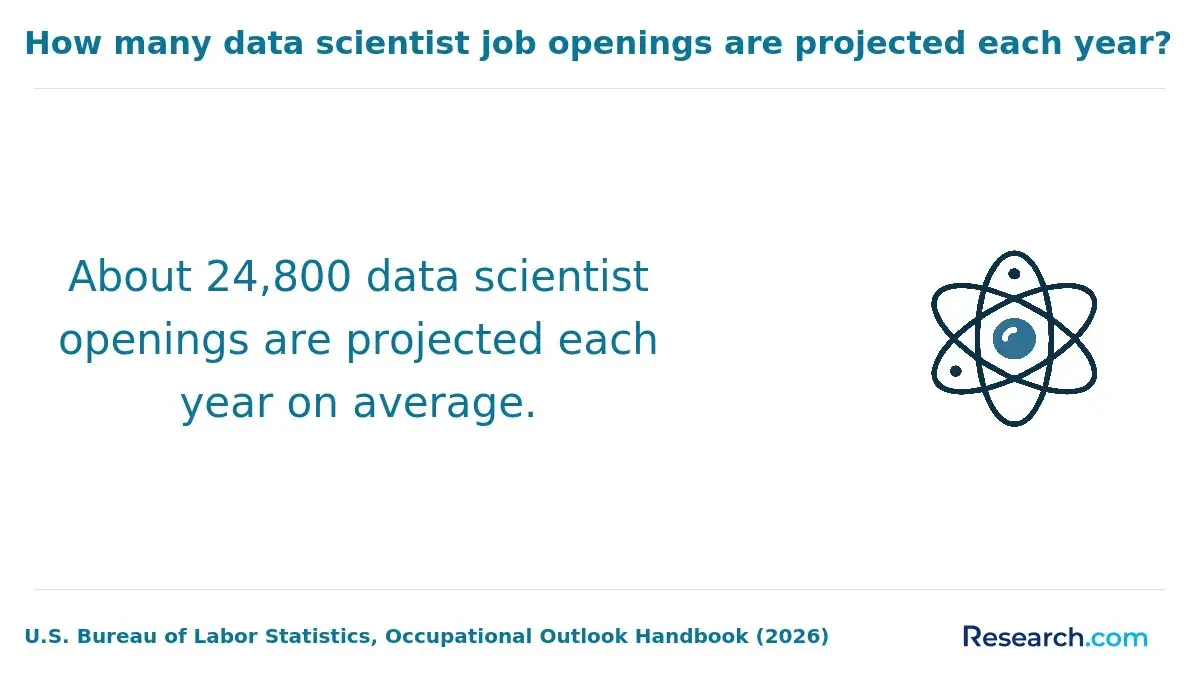
- The U.S. Bureau of Labor Statistics projects 35% growth in data scientist employment from 2025 to 2035, but that occupation-wide forecast does not establish demand for graduates of a particular program or for agent-specific roles.
What Is an AI Agents Course in an Online Data Science Master's?
An AI agent is a system designed to pursue a task by selecting actions, such as retrieving information, using a software tool, or passing work to another component.
In a data science master's, a substantive agents course connects that behavior to model limitations, data quality, evaluation, and system design. It may appear under titles such as applied AI, natural language processing, generative AI, or intelligent systems rather than "AI agents."
Course depth matters more than its title. A passing lecture introduces terminology; a dedicated course should require students to implement and assess agent behavior.
Advanced elective or capstone work may add orchestration, monitoring, security, and comparison against simpler non-agent workflows. A strong syllabus also addresses failures such as fabricated answers, prompt injection, inappropriate tool use, and exposure of sensitive data.
If your main goal is to design AI systems rather than analyze data with them, compare data science curricula with artificial intelligence degrees available online. The better fit depends on whether the required courses build the statistical and engineering skills your target work needs.
What Courses Are Included in an Online Data Science Master's?
Course requirements vary by institution. The table distinguishes the foundations an agent project draws on from coursework that may be offered only as an elective; use the distinction when reading a program's current catalog:
| Curriculum area | Why it matters for AI agents | What to look for |
| Statistics and experimental design | Supports valid comparisons and uncertainty assessment. | Evaluation methods beyond a demonstration that "works." |
| Machine learning | Explains model behavior, training, validation, and limitations. | Hands-on modeling and error analysis. |
| Data engineering and databases | Makes retrieved or tool-accessed information usable and traceable. | Data pipelines, database work, and data-quality checks. |
| Software development | Supports tool integration, testing, and maintainable applications. | Programming assignments with tests or documented code. |
| NLP, generative AI, or agents | Applies the foundations to language-driven systems. | Agent implementation, baselines, evaluation, and safety. |
A program need not offer a course named "AI Agents" to provide meaningful preparation. Conversely, an agent elective cannot make up for missing technical foundations. Check prerequisites and scheduling as well as the catalog: an elective that rarely runs may not fit your graduation plan.
What Projects Do Students Complete in an Online Data Science Master's?
Projects differ across programs, and a general data science capstone may not permit an agent topic. Where students can choose one, a useful example is an agent that answers questions from an approved document collection, cites retrieved passages, and refers uncertain or sensitive requests to a human. Its value lies in the evaluation, not just the interface.
A credible agent project should make the following choices visible so an instructor or employer can judge what the system actually accomplishes:
- Problem and baseline: Define a narrow user task and compare the agent with a simpler search, rules-based, or single-model approach.
- Data and permissions: Document the source, permitted uses, privacy controls, and how documents are updated.
- Evaluation: Test representative tasks for answer quality, source fidelity, failed tool calls, and cases requiring refusal or escalation.
- Reproducibility: Record code, configuration, test cases, and dependencies so another person can inspect the result.
- Operating trade-offs: Explain when added agent steps improve results and when they create unnecessary delay, expense, or risk.
When comparing programs, ask to see a project brief or anonymized student example. A polished chatbot demo alone does not show whether students learned to measure performance or handle failure.
How Do Online and Campus-Based Data Science Master's Programs Compare?
Delivery mode does not determine technical rigor; access to instruction, collaborators, computing resources, and project feedback matters more. The practical differences are most important if you plan to develop an agent through repeated testing and revision.
| Consideration | Online program | Campus-based program |
| Schedule | May accommodate work, but live sessions and group meetings can still be required. | Often has more fixed meeting and travel commitments. |
| Project collaboration | Depends heavily on remote feedback, team coordination, and access to tools. | May make in-person collaboration easier, depending on the course. |
| Professional access | Networking depends on how deliberately the program connects remote students. | Campus events may be easier to attend regularly. |
Choose online study if its schedule lets you complete substantial project work and its faculty provide meaningful remote feedback. Campus study may be preferable if in-person collaboration is central to how you learn. For either format, confirm live-session times, group-project expectations, and whether students can access the computing resources needed for their proposed work.
What Are the Admission Requirements for an Online Data Science Master's?
Requirements vary by program. Applicants may be asked to document prior study or proficiency in programming, calculus, linear algebra, and statistics; other programs offer preparatory coursework or consider relevant professional experience. Preparation for succeeding in an AI agents elective is not necessarily a formal admissions prerequisite.
Compare your background with each program's published requirements, then ask admissions staff how a missing course can be satisfied. A small, well-documented programming or data project can help demonstrate readiness where a program considers projects, but it does not automatically replace a required transcripted course.
Application components vary too; applicants concerned about essays can examine online ML master's options without a personal statement while confirming each school's current policy.
How Long Does an Online Data Science Master's Take and Cost?
Length and price depend on required credits, course availability, enrollment pace, and institutional fees. An advertised tuition figure is not a complete budget for agent-focused study: software or cloud usage, textbooks, and possible travel may add costs.
The amount of any API or computing expense depends on course requirements and available university resources; do not assume you must buy your own access.
To compare programs on equal terms, calculate the cost of the entire required degree under the pace you can sustain, then check whether the courses you want will be offered before you finish.
Data science master's duration and tuition comparisons can help you identify options, but confirm current tuition, mandatory fees, and completion limits with each university. A faster degree is not the better value if its schedule leaves too little time for a substantial project.
How Can You Verify Accreditation for an Online Data Science Master's?
Verify the institution's current accreditation through its named accreditor and an official U.S. Department of Education or accreditor directory.
Check that the degree is awarded by that institution, rather than assuming a course platform's branding establishes the credential's status. Institutional accreditation and approval of an individual program are different claims; ask the school to identify any program-specific accreditation it advertises.
If you will study from another state, also confirm that the institution can enroll students where you reside and whether any in-person requirement applies. Accreditation is a necessary credibility check, not proof that a curriculum includes rigorous agent work or that credits will transfer elsewhere.
What Careers Can an Online Data Science Master's Prepare You For?
The degree can support work in data science, machine learning, analytics, or applied AI, depending on the student's prior experience and the program's depth. Agent projects are particularly relevant to roles that involve evaluating language-model applications, connecting models to organizational data, or monitoring AI-assisted workflows.
Job titles differ by employer, and a data science degree alone may not supply the software engineering experience a production AI role requires.
Match the degree to the work you want to show employers. For analytical roles, emphasize statistical reasoning and measurable decisions; for AI application roles, add tested code, data integration, and evidence of safe failure handling.
Data science program selection by career demand offers a broader role-based comparison, but your target job descriptions should guide which coursework and portfolio work you prioritize.
What Salary and Job Outlook Can Data Science Graduates Expect?
The U.S. Bureau of Labor Statistics reports a $120,230 median annual wage for data scientists in May 2025. That is an occupation-wide figure, not an expected starting salary for a master's graduate or a measure of the payoff from studying AI agents. Experience, location, employer, and the actual role all affect an individual offer.
BLS also projects substantial growth in data scientist employment from 2025 to 2035. Use that outlook as context for the occupation, not as a promise of an agent-specific opening. When assessing a program's employment claims, ask which graduates were surveyed, how many responded, when outcomes were measured, and whether reported pay is a salary level or an increase after graduation.
How Do You Choose a Reputable Online Data Science Master's Program?
Start with the current catalog and a sample syllabus, then test whether the program can support the kind of agent project you want to complete. A ranking or course title is a poor substitute for evidence of technical depth, access, and feedback.
These questions make a short list easier to evaluate:
- Check foundations: Are statistics, machine learning, data engineering, and software development taught at a level appropriate to your goals?
- Verify agent depth: Is the topic a brief unit, a regularly offered elective, or a supervised project? What do students build and measure?
- Confirm project support: Can you pursue an agent topic, obtain faculty feedback, and use suitable data and computing resources?
- Compare practical fit: Will course timing, live meetings, total cost, and completion rules work with your commitments?
- Examine outcomes carefully: Are career services accessible online, and is any graduate-outcome evidence specific enough to inform your decision?
If professional connections matter to your goals, compare how remote students actually participate in mentoring and events; AI master's options with professional alumni networks provide another set of programs to investigate.
Choose the program whose required learning and feasible project opportunities match your target role, not the one that uses "agents" most prominently in its marketing.
Other Things You Should Know About Data Science
Only with the employer's permission and in accordance with university rules. Ask about confidentiality, storage, publication, and use of third-party AI services before sharing any data.
Not necessarily. A course may provide access, permit local models, or let students choose another approach. Confirm required tools and who pays for usage before enrolling.
Yes. A reproducible prototype with clear tests, documented limitations, and a justified design can demonstrate substantial skill even if privacy or access rules prevent public deployment.
Policies vary, especially when employer data, sponsored research, or teammates are involved. Review the university's intellectual-property rules and any project agreement before planning to publish the code.
References
- Are Prerequisite Courses Barriers to Pharmacy Admission or the Keys to Student Success? - PMC https://pmc.ncbi.nlm.nih.gov/articles/PMC10159397/
- Program Eligibility, Written Arrangements, and Distance Education | 2024-2025 Federal Student Aid Handbook https://fsapartners.ed.gov/knowledge-center/fsa-handbook/2024-2025/vol2/ch2-program-eligibility-written-arrangements-and-distance-education
- Best Data Science & AI Master's Program | Ritchie School, DU https://ritchieschool.du.edu/data-science
- Awareness of Agentic AI: Essential Knowledge for Faculty | The University of Iowa https://teach.its.uiowa.edu/awareness-agentic-ai-essential-knowledge-faculty
- UC Berkeley iSchool Online Master's in Data Science (MIDS) https://ischoolonline.berkeley.edu/data-science/
- What You'll Learn in Applied Data Science: Modeling to AI | Bay Path University https://www.baypath.edu/news/bay-path-university-blogs/post/what-you-ll-learn-in-applied-data-science-modeling-to-ai/
- Online Master's in Data Science (MSDS) | Northwestern University https://sps.northwestern.edu/masters/data-science/
- Data Science and Artificial Intelligence Master's Degree Program | Harvard Extension School https://extension.harvard.edu/academics/programs/data-science-artificial-intelligence-graduate-program/
- Agentic AI, explained | MIT Sloan https://mitsloan.mit.edu/ideas-made-to-matter/agentic-ai-explained
- Master of Science in Data Science & Artificial Intelligence | fiu.edu https://www.cis.fiu.edu/degree/master-of-science-in-data-science/