2027 How to Request a Data Science Master's Recommendation from a Nontechnical Manager

Co-Founder and Chief Data Scientist
A nontechnical manager can be a strong recommender for a data science master's application - if they have seen how you solve problems, work with evidence, and communicate results. The decision is whether their firsthand examples will add something your transcript and technical references cannot.
This guide helps working applicants choose the right manager, make a clear request, and equip the writer to describe their potential without pretending to assess skills they have not observed.
Key Things You Should Know
- Choose a nontechnical manager who can describe specific work they observed; a senior title alone is less useful than credible examples.
- Ask whether they can write a strong, specific recommendation, then provide the deadline, program instructions, résumé, goals, and a short list of verifiable achievements.
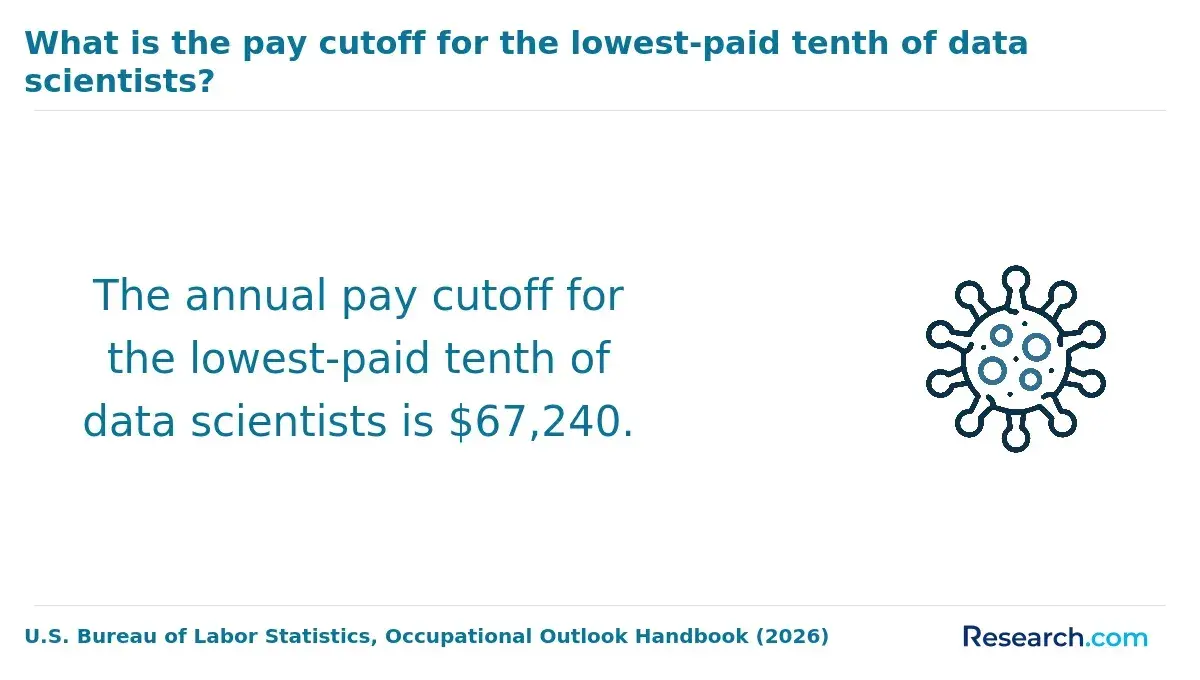
- Pair the manager's account of your workplace judgment with technical evidence elsewhere in the application. The U.S. Bureau of Labor Statistics projects 35% growth in data scientist employment from 2025 to 2035, but labor demand does not replace a program's admissions criteria.
How can a nontechnical manager recommend you for a data science master's program?
A manager does not need to evaluate your code or mathematics to explain how you frame ambiguous questions, test assumptions, use information responsibly, and turn findings into decisions. Their strongest contribution is an independent account of your work in context: what problem you faced, what you did, and what changed.
First, check each program's recommender rules. Some programs specify academic or professional references, require a particular relationship, or ask writers to answer set questions. If professional references are accepted, a manager's letter may complement - not substitute for - coursework, projects, or a technical reference demonstrating quantitative readiness.
Match the letter to the degree you are actually seeking. If your shortlist includes AI-focused programs as well as data science programs, use AI degree selection by career objective to clarify your goals before asking a manager to endorse a program choice they may not understand.
What should a nontechnical manager include in a data science recommendation letter?
The letter should establish how the writer knows you, how closely they supervised your work, and which observed behaviors support graduate study. Two detailed examples generally communicate more than a long list of adjectives. Useful content includes the problem's constraints, your individual contribution, how you handled uncertainty or feedback, and the result - without claiming a technical skill the manager cannot verify.
A credible assessment can also identify your next step. For example, a manager might say that your analysis improved a team's decisions while formal graduate training would deepen the statistical methods you can apply. That is more informative than asserting that you have already mastered graduate-level data science.
How do you ask your manager for a data science master's recommendation?
Ask privately, leave room for an honest refusal, and explain why this particular manager has useful evidence. The request should make the commitment clear before a portal invitation arrives. For applicants balancing work and study, compare data science programs for employed professionals to help you with a realistic study plan.
A short request can cover the essentials:
- State the program and your reason for applying: "I'm applying to a data science master's to build on the analytical work I've done on our team."
- Ask for a strong, specific recommendation: "Would you feel comfortable describing my work on the forecasting project and how I use evidence with stakeholders?"
- Give the deadline and expected process: "The school will email you a submission link, and the letter is due on [date]. May I send you the instructions and a brief project summary?"
If the manager hesitates, thank them and consider another writer. A reluctant letter is unlikely to provide the detail you need.
How can your manager describe your technical potential without technical expertise?
Ask the manager to describe observable habits, not to certify technical proficiency. They might have seen you question data quality, explain why a comparison was misleading, learn an unfamiliar tool, seek review from a specialist, or revise an analysis after new evidence appeared. They can describe those actions and their effects while leaving judgments about coding, statistics, and mathematical preparation to qualified reviewers.
If you are still building that preparation, show it separately through relevant coursework or projects. Preparatory courses for AI master's programs may help applicants comparing AI-related options, but preparation is not necessarily fulfillment of a particular data science program's formal prerequisites. Check each program's policy directly.
What workplace achievements strengthen a data science recommendation letter?
Choose achievements that reveal how you work with evidence, even if your job title is not technical. Good candidates include improving a reporting process, identifying a flaw in a metric, defining a measurable business question, collaborating with an analyst, or explaining uncertain findings to decision-makers. The manager should distinguish your contribution from the team's and use a verified result only when they can substantiate it.
Responsible judgment can be just as revealing as a favorable outcome. If you raised a privacy concern or explained why an automated recommendation needed human review, the manager can describe that decision. Applicants seeking graduate study combining AI ethics and governance can use such an example when it genuinely reflects their work - not as a substitute for technical evidence.
Which application materials should you give your recommendation writer?
Send a compact packet that helps the manager write independently. Highlight facts they can confirm and label anything outside their direct observation. Include:
- The program name, recommendation prompts, submission instructions, and deadline for each application.
- Your current résumé and a brief explanation of why the degree fits your next step.
- Two or three workplace examples with dates, your contribution, collaborators, and results the manager can verify.
- A short note identifying technical evidence elsewhere in your application, such as relevant courses or projects.
Offer to answer questions, but do not pressure the manager to copy your language or attest to work they did not see. If a program prohibits applicant-drafted letters, follow that rule.
How much notice should you give a manager before requesting a recommendation?
Ask as soon as your program shortlist and deadlines are reasonably firm. Four to six weeks is a practical courtesy for a busy manager, not a universal admissions rule. Allow more time for holidays, travel, multiple applications, or a workplace approval process. Check each school's actual deadline and whether recommendations have a separate cutoff.
After the manager agrees, send the packet promptly. A brief reminder before the deadline is appropriate; use the application portal's status information when available rather than assuming a letter was submitted. If time is short, ask candidly whether the manager can still write a thoughtful letter, and have an eligible backup writer in mind.
What mistakes should managers avoid in data science recommendation letters?
The main risk is a letter that sounds impressive but supplies no trustworthy evidence. If your manager asks what would be helpful, steer them away from these pitfalls:
- Claiming expertise they cannot assess, such as calling you an advanced programmer without having observed your technical work.
- Repeating your résumé instead of describing firsthand interactions and your individual contribution.
- Using unsupported rankings or exaggerated outcomes when the comparison group or result is unclear.
- Revealing confidential company information or sensitive client data to make an example sound specific.
- Sending a generic letter that does not answer the program's questions or identify the degree you seek.
Specificity need not compromise confidentiality: a writer can describe the type of decision, your approach, and an approved result without disclosing protected details.
How should a manager submit a master's recommendation letter?
Follow the individual program's instructions. Commonly, you enter the writer's contact details in an application portal and the school sends them a private invitation or questionnaire. Other programs may specify a different process. The manager should submit directly through the authorized channel, use the correct application, and keep a confirmation if one is provided.
Before adding their email address, confirm it with them and ask whether workplace filters might block automated messages. Do not submit on the manager's behalf or assume that uploading a letter yourself meets the school's requirements. If an invitation fails to arrive, use the program's stated support process rather than sharing a private submission link.
What alternatives exist if your manager cannot write a strong recommendation?
Choose the person who can provide the strongest eligible firsthand evidence: a former supervisor, project lead, faculty member, or technical collaborator may be better placed than your current manager. Check each school's rules before substituting a peer or client. If the program requires a supervisor and your current manager cannot help, ask admissions whether another person who supervised your work qualifies.
If no appropriate writer is available before the deadline, consider a later application cycle rather than submitting a letter that cannot support your case. Changing degrees solely to avoid the problem is unlikely to help: even when reviewing online artificial intelligence degrees on a budget, verify both program fit and recommendation requirements before changing your shortlist.
Other Things You Should Know About Data Science
Read the choice and the school's explanation before deciding. Waiving access may reassure a writer that their assessment is confidential, but policies and rights vary. Do not assume waiving access changes how the school evaluates the letter.
No. Applying to graduate school does not necessarily mean you plan to leave your job. Tell a manager your actual plans and avoid promising a work arrangement you have not confirmed.
Only within your employer's rules. Ask the manager to use approved, nonidentifying descriptions and omit client names, restricted data, or results that cannot be shared.
You can share it if you are comfortable doing so. It may help them understand your goals, but their recommendation should remain an independent account of work they observed.
References
- Ten simple rules for writing compelling recommendation letters | nih.gov https://pmc.ncbi.nlm.nih.gov/articles/PMC7906297/
- Asking for Letters of Recommendation | Academic Advising https://advising.stanford.edu/current-students/advising-student-handbook/letters-recommendation
- How to Write and Request a Letter of Recommendation | UMBC Professional Programs https://professionalprograms.umbc.edu/blog/how-to-write-and-request-a-letter-of-recommendation/
- Letters of Recommendation for Grad School I Stanford Online https://online.stanford.edu/guide-letters-recommendation-graduate-school-applications
- Recommendation Limits by Program - Graduate Program https://gradapp.ucsf.edu/portal/limits-by-program
- How to request a letter of recommendation: A complete guide | About the University of Cincinnati https://www.uc.edu/blog/how-to-request-a-letter-of-recommendation.html
- 2025-2026 MSDS Application Tips from Data Science Admissions - School of Data Science https://datascience.virginia.edu/news/2025-2026-msds-application-tips-data-science-admissions
- Recommendations - Stanford Graduate Admissions https://gradadmissions.stanford.edu/apply/recommendations
- Letters of Recommendation - Graduate School of Arts & Science https://gsas.nyu.edu/admissions/arc/letters-of-recommendation.html
- Everything You Need to Know About Recommendation Letters | tufts.edu https://asegrad.tufts.edu/news-events/news/everything-you-need-know-about-recommendation-letters