2027 Best Online Certificate Programs for Low Student Debt

Co-Founder and Chief Data Scientist
Choosing a short online program can save money, but only if the credential matches a real job requirement. The College Board reported that the average bachelor's degree recipient who borrowed graduated with $29,400 in debt in 2022-23. Online certificates can reduce borrowing by shortening enrollment and avoiding relocation, but they are not interchangeable with degrees, licenses, or professional certifications.
This guide helps career changers, working adults, and cost-conscious students compare low-debt paths, evaluate quality, and choose a credential with realistic value.
Key Things You Should Know
- Low-debt online certificates are usually shortest and most useful when they teach a specific employer-requested skill, prepare students for a recognized exam, or stack into academic credit; a low price alone does not make a program valuable.
- Federal aid generally applies only to eligible programs at Title IV-participating institutions, while many noncredit certificates rely on employer tuition support, workforce grants, payment plans, or personal funds.
- The U.S. Bureau of Labor Statistics projects employment in healthcare occupations to grow much faster than average from 2023 to 2033, while technology, skilled-trade, legal-support, and design programs require especially careful checks of local hiring and licensure rules.
Top 10 Best Online Certificate Programs for Low Student Debt
Popular Trade School Programs
Online trade certificates commonly cover construction estimating, HVAC theory, electrical fundamentals, welding safety, manufacturing, CAD, logistics, and project coordination. They suit learners who need classroom knowledge before supervised lab work, apprenticeships, or employer training. Fully online study rarely replaces required hands-on hours for welding, electrical work, plumbing, or HVAC licensing. Choose a credit-bearing community-college certificate when future transfer matters; choose industry training when an employer recognizes it. Confirm tool, lab, exam, and local apprenticeship costs before comparing tuition.
Healthcare Programs
Online healthcare certificates may include medical billing and coding, health information technology, pharmacy technician theory, medical office administration, patient care coordination, and medical assisting coursework. Many are appropriate for entry-level administrative roles, but clinical programs usually require in-person externships and may have state-specific approval rules. A certificate is not the same as a professional certification such as a coding credential earned through an exam. Ask whether the curriculum prepares for a named certification exam, whether externship placement is included, and whether graduates meet requirements in the state where they plan to work.
Criminal Justice / Law Programs
Online certificates in criminal justice, legal studies, paralegal studies, homeland security, and cybersecurity investigations can support public-service or legal-support career exploration. They work best for current professionals seeking focused knowledge or students building toward an associate or bachelor's degree. A paralegal certificate may be useful to employers, but it does not authorize someone to practice law. Police, corrections, court, and security roles can impose background checks, fitness standards, academy training, or agency-specific requirements that an online certificate does not replace.
Arts & Design Programs
Online arts and design certificates often focus on graphic design, UX design, digital marketing content, photography, animation, web design, or digital media production. Portfolio quality usually matters more to employers than the certificate title, so programs should include feedback, current software access, and projects the student can show publicly. Noncredit certificates can be affordable for skill building, while credit-bearing certificates may better support a later degree. Avoid programs that promise design employment without showing portfolio expectations, instructor qualifications, or software and equipment expenses.
How do online certificate programs help reduce overall student debt compared with campus options?
Online certificate programs can lower total student debt because students may avoid housing, commuting, parking, relocation, and lost work hours. Their biggest advantage is often time: a focused certificate can require fewer courses than a degree, reducing both tuition exposure and the likelihood of borrowing for living expenses. However, online is not automatically cheaper. Some programs charge distance-learning, proctoring, technology, lab, exam, or practicum fees.
This comparison shows the cost drivers students should examine rather than relying on advertised tuition alone.
| Cost or debt factor | Online certificate | Campus-based option | Decision implication |
| Tuition exposure | Often fewer credits or shorter noncredit training | May involve longer terms and broader course requirements | Compare total required program price, not per-credit price alone. |
| Living costs | May allow students to remain employed and live at home | Can require commuting, relocation, or reduced work availability | Calculate transportation and income changes alongside tuition. |
| Hands-on training | May require local labs, clinicals, tools, or externships | Facilities may be included or separately charged | Programs with required in-person components are not fully location-independent. |
| Completion risk | Flexible pacing can help workers but requires self-management | Fixed schedules can create structure | A cheaper program loses value if its format makes completion unlikely. |
For learners who need hands-on instruction, a hybrid community-college program may create better value than a fully online option with unclear practical training. The right comparison is total borrowing needed to finish a credential that employers or regulators actually recognize.
What admission, technology, and time commitments do online certificate programs typically require?
Admission requirements depend on whether the program is an academic certificate, a workforce course, or a provider-issued professional certificate. Community-college certificates may request a high school diploma or equivalent, placement information, transcripts, and program-specific prerequisites. Short noncredit programs may require only registration. Advanced technology or graduate certificates can require prior coursework, a degree, or work experience.
Before applying, confirm these practical requirements with the provider:
- Whether the certificate is credit-bearing, noncredit, undergraduate, graduate, or preparation for an external certification exam.
- Whether prerequisite courses, background checks, drug screening, immunizations, or placement testing apply to the intended field.
- Whether the learning platform works on the student's computer and internet connection and whether remote proctoring requires a webcam or specific browser.
- Whether synchronous meetings, local clinicals, labs, internships, or exam appointments are mandatory.
- Whether course workload fits employment and caregiving responsibilities; accelerated courses can compress a full course load into fewer weeks.
Students comparing institutional programs can reduce an upfront barrier by reviewing free application online colleges. An application-fee waiver does not reduce program tuition, but it can make it easier to compare several eligible schools before committing.
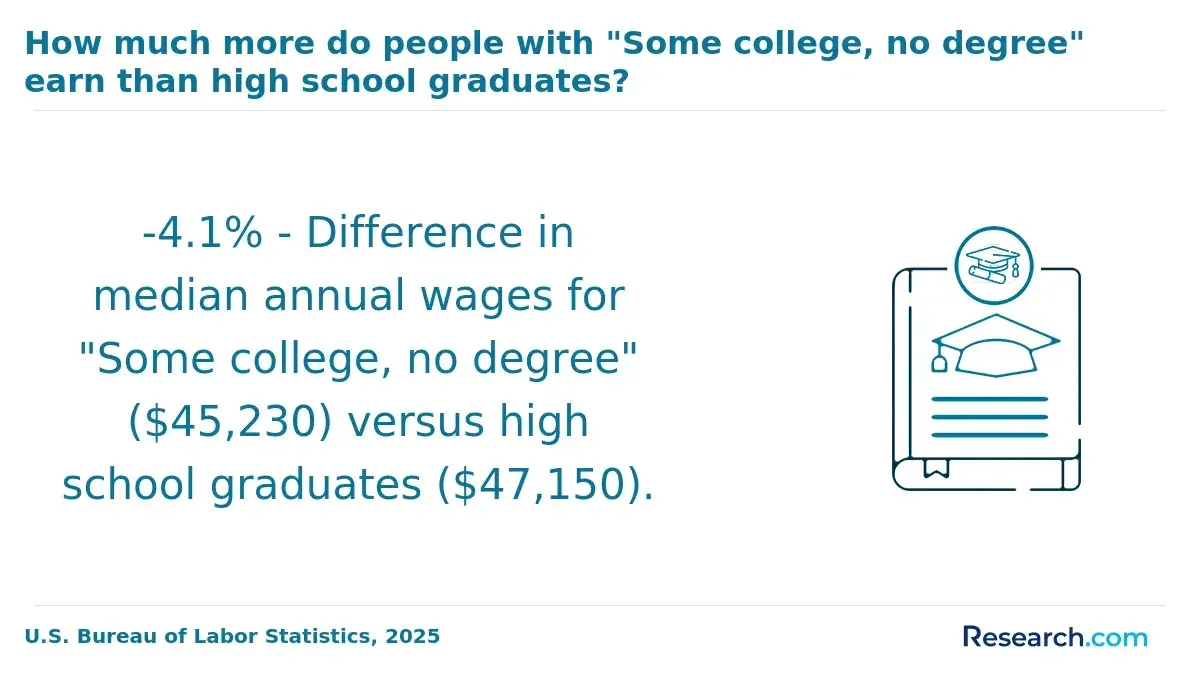
How much do online certificate programs cost and what financial aid is available?
Cost varies widely by provider, length, credit status, required equipment, and whether an externship or certification exam is included. For-credit certificates at public community colleges may charge per credit, while university extension and third-party professional certificates often charge a set program price. Do not assume a lower advertised price includes books, software, exam vouchers, supplies, background checks, clinical travel, or retake fees.
Students should separate funding sources by program type before making a borrowing decision.
| Funding option | Most relevant program type | Important limitation |
| Federal grants and loans | Eligible certificates at participating institutions | Availability depends on program eligibility, enrollment status, and student aid eligibility. |
| State workforce grants | In-demand occupational training | Rules, approved providers, and award amounts vary by state. |
| Employer tuition assistance | Job-related certificates and certifications | May require preapproval, continued employment, or repayment if the employee leaves. |
| Veterans education benefits | Approved education and training programs | Approval and covered costs differ by program and benefit chapter. |
| Payment plans or scholarships | Institutional and noncredit programs | Payment plans spread costs but do not reduce the total price. |
Military-connected learners should verify school and program approval before relying on benefits; online military colleges can be a useful starting point for comparing institutions built to support service members and veterans. Borrow only after grants, employer support, and realistic cash-flow options have been reviewed.
How can students verify accreditation and quality for online certificate programs?
Quality checks differ by credential type. For a college-issued academic certificate, verify that the institution holds recognized institutional accreditation and that the specific program has any required specialized approval. For a noncredit industry certificate, assess the provider's employer recognition, curriculum currency, instructor expertise, assessment method, refund policy, and transparency about outcomes. A certificate of completion from an unrecognized provider may still teach useful skills, but it may carry limited hiring or transfer value.
Use this sequence before enrolling in a program that claims to lead to regulated or career-specific work:
- Identify the exact job, certification, or license you want rather than choosing a broad subject area.
- Check the relevant state licensing board, certifying organization, or employer postings to learn the actual eligibility requirements.
- Confirm in writing whether the program meets educational requirements, includes required practical hours, and prepares students for any separate exam.
- Ask for the complete cost, withdrawal policy, completion requirements, and whether credits transfer to a named degree program.
- Compare at least two providers using the same criteria, including schedule, support, and required local attendance.
Red flags include claims of guaranteed jobs or licenses, vague statements about accreditation, pressure to borrow quickly, missing instructor information, and refusal to provide a total-cost estimate. Legitimate providers explain what their credential does and does not qualify a student to do.
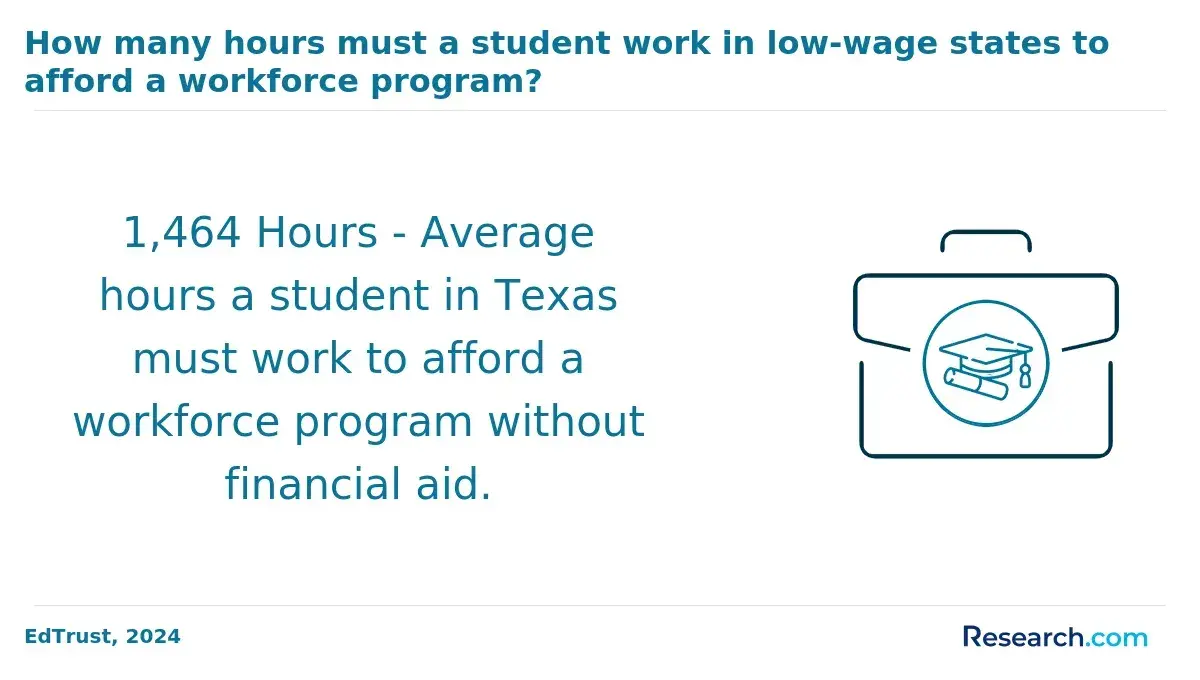
What are the fastest-growing career fields offering high-value online certificates?
Fast growth does not mean every short certificate leads directly to a role, but it can help students identify fields worth researching. The Bureau of Labor Statistics projects healthcare occupations to grow much faster than the average for all occupations from 2023 to 2033, driven in part by aging populations and care needs. Healthcare administration, health information, and allied-health support programs may be useful entry points, although clinical roles often require more than online coursework.
Other high-value areas are shaped by employer demand for practical, current skills:
- Cybersecurity and IT support, where vendor certifications, hands-on labs, and documented troubleshooting skills can matter alongside formal education.
- Data analytics and business intelligence, where certificates are strongest when they produce work samples using spreadsheets, SQL, visualization, or approved tools.
- Supply chain, logistics, and project coordination, where a certificate can complement existing operations experience.
- Skilled trades and industrial technology, where online theory often pairs with apprenticeships, employer training, or supervised lab work.
- Medical coding, health information, and revenue-cycle support, where employers may value recognized certification preparation and knowledge of current systems.
AI is changing entry-level work in technology, design, marketing, and office support. Choose programs that teach verification, workflow judgment, privacy, communication, and tool use rather than promising that one software platform will remain sufficient.
Which online certificate programs lead to the strongest salary growth and advancement opportunities?
The strongest advancement potential usually comes from certificates that add a documented skill to relevant experience, prepare a learner for a recognized certification, or form part of a stackable academic pathway. Occupational wage data should be treated carefully: a role's median pay reflects workers across education and experience levels, not the earnings of certificate completers. The Bureau of Labor Statistics reported a 2023 median annual wage of $120,360 for information security analysts, but that occupation commonly requires a bachelor's degree plus related experience; a short cybersecurity certificate alone may not qualify a beginner for that role.
This comparison helps distinguish certificates that can support progression from those best used for exploration.
| Certificate focus | Potential career value | When it is a stronger investment | Key caution |
| IT support or networking | Can support entry-level technical support pathways and vendor exam preparation | Paired with labs, troubleshooting practice, and a recognized certification plan | Advanced security and engineering roles often require experience or degrees. |
| Medical coding or health information | Can build knowledge for administrative healthcare roles | Curriculum aligns with an employer-recognized certification examination | Job availability and preferred credentials vary by employer. |
| Project management | Can improve organization, scheduling, and stakeholder skills | Student already has industry experience to apply the methods | Entry-level certificates do not substitute for experience-based credentials. |
| Accounting or bookkeeping | Can support clerical finance and small-business work | Includes current software and practical recordkeeping projects | It does not qualify a student for CPA licensure. |
For professionals seeking a larger advancement step, compare a focused certificate with the easiest masters degree option only after checking employer expectations. "Easiest" should not outweigh accreditation, workload, specialization, total cost, and the degree's relevance to the intended role.
How do online certificates fit into broader education pathways such as degrees and licensing?
Online certificates can be standalone training, credit-bearing academic awards, or part of a stackable pathway. A credit-bearing undergraduate certificate may apply toward an associate or bachelor's degree if the receiving institution accepts the coursework. A noncredit professional certificate may demonstrate skill development but usually does not transfer as academic credit. Graduate certificates are designed for learners who already meet the institution's graduate admission requirements and may or may not transfer into a master's program.
Students planning beyond an entry credential should compare the pathways before paying for classes.
| Pathway | Best for | Transfer or progression question |
| Standalone noncredit certificate | Fast skill building or employer-required training | Does the employer recognize it, and is academic credit unnecessary? |
| Credit-bearing college certificate | Students who may continue into a degree | Which exact courses apply, and what grade is required for transfer? |
| Associate pathway | Entry-level career preparation with broader general education | Can the certificate courses count toward an associate's degree at the same school? |
| Certificate plus external certification | Fields with recognized exams or employer standards | Does the program meet exam eligibility, and what separate fees apply? |
Licensure is a separate issue. Occupations in nursing, teaching, counseling, electrical work, and healthcare—many of which require at least an associate's degree—can demand state-approved education, supervised experience, examinations, or background checks. Students should obtain confirmation from the applicable board before enrolling in an online program marketed across state lines.
What strategies can students use to minimize borrowing while completing an online certificate?
Debt reduction is most effective when students make the funding decision after confirming the credential's relevance. Start with the job target and work backward to identify the minimum education, practical experience, certification, or license actually required. Then compare the complete price of only programs that meet that requirement.
These steps reduce the chance of borrowing for a credential that does not advance the intended goal:
- Set a maximum total budget that includes tuition, technology, books, software, travel, exam fees, and lost work time.
- Request a written breakdown of all mandatory charges and ask whether course materials, retakes, externships, or certification vouchers cost extra.
- Apply first for grants, workforce funding, institutional scholarships, veteran benefits when eligible, and employer assistance.
- Take only the courses required for the credential and verify whether prior learning, military training, or transfer credit can reduce duplication.
- Use a part-time pace when it preserves income and completion quality, but avoid extending enrollment so long that repeated fees erase the savings.
- Borrow only the amount needed after comparing the expected payment with a conservative entry-level income budget.
A common mistake is financing a vague career-change program before reviewing local job postings. Read several postings first, note the recurring requirements, and ask admissions staff to explain exactly how their curriculum maps to those requirements.
How do program length, pacing, and learning format vary across online certificate options?
Program length ranges from a few weeks for a noncredit professional certificate to one year or more for a college certificate with multiple courses, prerequisites, and clinical or lab requirements. Self-paced programs can be convenient, but students should verify whether there is a maximum completion period, live support, graded feedback, and a final assessment. Instructor-led online programs usually follow weekly deadlines; hybrid programs add scheduled local sessions.
The format should fit the skill being learned, not just the student's preferred schedule.
| Format | Typical fit | Low-debt advantage | Trade-off |
| Self-paced online | Motivated learners building software, business, or foundational knowledge | Can fit around work and may allow faster completion | Less structure and inconsistent access to feedback. |
| Scheduled online | Students who benefit from instructor deadlines and peer interaction | May reduce repeat-course risk through structure | Requires attendance at set times. |
| Hybrid | Clinical, lab, trade, and skills-based preparation | Limits campus travel while retaining practical instruction | May involve commuting, tools, or local placement costs. |
| Competency-based | Experienced learners who can demonstrate existing knowledge | May shorten time to completion | Requires strong independent study habits and clear assessment rules. |
Choose accelerated pacing only when you can consistently complete readings, projects, and assessments each week. A slower, affordable program that you can finish while working is often a better low-debt choice than a rapid option that leads to withdrawals or repeated courses.
Other Things You Should Know About
They can be worth it when the credential teaches a skill requested by employers, prepares you for a recognized certification, or fits into a degree pathway. They are less useful when the provider cannot explain employer recognition, practical training, or total cost.
Possibly. Federal aid may be available for eligible certificate programs at participating schools, but many noncredit and third-party certificates do not qualify. Check the specific program's aid eligibility and explore employer, state workforce, and institutional funding.
No. A certificate usually shows completion of an educational program. A professional certification is awarded by a certifying organization after meeting its standards, which may include an exam, experience, continuing education, or all three.
Confirm the provider's identity, institutional accreditation when applicable, total cost, refund policy, instructor information, and any specialized approval required for the field. For licensed occupations, verify requirements directly with the relevant state board.
References
- Explore Online Certificate Programs Approved by FAFSA https://www.edumed.org/online-schools/fafsa-approved-certificate-programs/
- StraighterLine vs. Traditional College Costs: What You'll Really Pay (And How to Avoid Student Loan Debt) https://www.straighterline.com/blog/straighterline-vs-traditional-college-costs-loans
- Dept. of Education's College Scorecard shows where student loans pay off... and where they don't | Brookings https://www.brookings.edu/articles/ed-depts-college-scorecard-shows-where-student-loans-pay-off-and-where-they-dont/
- How to finance edX courses | edX https://www.edx.org/resources/how-to-get-financial-assistance-for-edx-courses
- Accreditation Office Hours https://acbsp.org/
- Student Loan Debt Statistics [2026]: Average + Total Debt https://educationdata.org/student-loan-debt-statistics
- What is the typical debt load for graduates of four-year public universities - APLU https://www.aplu.org/our-work/4-policy-and-advocacy/publicuvalues/student-debt/
- 9 Best Online Certificate Programs that Lead to Higher Pay https://blackstone.edu/9-best-online-programs-for-higher-pay/
- Transferology https://www.transferology.com/
- Best Online Courses to Take to Get a Job https://quickcv.io/blog/best-online-courses-to-get-a-job