2027 Best Online Career Training Programs With Student Success Coaching

Co-Founder and Chief Data Scientist
Choosing online career training is difficult when programs promise flexibility but provide very different levels of coaching, employer relevance, and hands-on preparation. The U.S. Bureau of Labor Statistics projects healthcare support occupations to grow 15% from 2023 to 2033, faster than the average for all occupations. This guide helps career changers, working adults, and new entrants compare training paths, identify meaningful student success support, evaluate costs and quality, and choose a program aligned with a specific job target rather than a vague credential.
Key Things You Should Know
- Choose a program by the job it prepares you for: many online certificates build job skills, but regulated careers may also require supervised clinical hours, a state license, or a separate certification exam.
- Coaching should be concrete: look for assigned advisors, progress check-ins, tutoring, career services, and help arranging required externships - not just access to a help desk.
- Use labor-market data carefully: BLS projects healthcare support occupations to grow 15% from 2023 to 2033, but occupation-level pay and hiring projections do not guarantee outcomes for every certificate graduate.
Top 10 Best Online Career Training Programs With Student Success Coaching
Popular Trade School Programs
Online trade training commonly covers electrical theory, HVAC fundamentals, welding concepts, construction management, automotive service, and industrial maintenance. A noncredit certificate may teach entry-level knowledge quickly, while a credit-bearing certificate or associate degree can include general education and may transfer toward further study. Hands-on trades usually require in-person labs, employer training, or apprenticeships; fully online delivery alone rarely establishes practical competence. Choose an associate degree when you want broader technical coursework, and choose a short certificate when it clearly supports a specific apprenticeship, employer requirement, or industry examination.
Healthcare Programs
Common online or hybrid options include medical billing and coding, pharmacy technician, medical assisting, health information technology, and practical nursing prerequisites. Programs may award a school certificate, diploma, or associate degree; these are different from certifications issued by professional organizations after an exam. Medical assisting, nursing, and many technician roles can require clinical placements, background checks, immunizations, and state-specific approvals. Before enrolling, verify whether the curriculum prepares students for the relevant certification examination and whether the school helps secure clinical experiences. Coding-focused programs can be more fully online but still require careful employer-recognition research.
Criminal Justice / Law Programs
Online certificates and associate degrees may focus on criminal justice, legal studies, paralegal studies, corrections, homeland security, or cybersecurity foundations. They can suit learners seeking foundational knowledge for administrative, compliance, records, or support roles. A paralegal certificate is not a law degree and does not authorize someone to practice law; employer preferences and state rules vary. Police, corrections, and security careers may require academy training, fitness standards, background checks, or agency-specific hiring steps beyond academic coursework. Ask whether the program includes legal research, writing, ethics, and realistic case-management tools.
Arts & Design Programs
Online career programs in graphic design, web design, digital marketing, animation, photography, user experience, and video production typically award certificates, diplomas, or associate degrees. Portfolio quality often matters as much as the credential for creative entry-level work. Strong programs provide instructor critique, software access guidance, portfolio reviews, and projects based on realistic briefs. A short certificate can work for learners adding a focused software or design skill, while an associate degree may better fit beginners who need design foundations, communication coursework, and a larger portfolio. Confirm ownership rights and export access for work created in program platforms.
What is an online career training program with student success coaching?
An online career training program is a structured, job-focused learning experience delivered primarily through digital coursework. It may be offered by a community college, university, vocational school, workforce provider, professional association, or private training company. Its credential can be a noncredit certificate, diploma, academic certificate, or associate degree.
Student success coaching is the distinguishing feature. It means proactive support designed to help learners finish and transition into work, such as an assigned coach, scheduled progress reviews, study planning, referrals to tutoring, accountability outreach, résumé feedback, interview practice, and job-search support. It is more substantial than a general admissions representative or technical-support line.
The best format depends on the career target. Online learning works well for theory, software, documentation, business processes, and exam preparation. It is less sufficient by itself for occupations requiring physical skill demonstrations, clinical practice, equipment operation, or state-approved supervised hours.
How do online career training programs compare to campus-based options for outcomes?
Online and campus-based options can lead to comparable outcomes when they teach the same competencies, use qualified instructors, provide equivalent assessment, and meet any programmatic approval requirements. The delivery mode matters less than whether the program includes the practical experiences and career support required for the target role.
The comparison below highlights the trade-off a prospective student should evaluate before treating convenience as a quality signal.
| Decision factor | Online career training | Campus-based training |
| Scheduling | Often supports asynchronous study around work and family | Usually follows set class and lab times |
| Practical learning | May require local labs, externships, simulations, or employer sites | Can provide on-site equipment and supervised practice |
| Coaching access | Depends on scheduled virtual meetings and proactive outreach | May offer easier face-to-face contact |
| Best fit | Self-directed learners with reliable technology and a compatible career goal | Learners who need regular in-person structure or extensive lab time |
For learners who need a broader credential rather than short training, reviewing online degrees that pay well can clarify whether an associate or bachelor's path better matches the role's entry requirements. Ask each provider for completion, placement, licensure-exam, and employer-partnership information specific to the program - not institution-wide marketing claims.
How can students verify accreditation and quality standards for these online programs?
Quality verification starts with identifying what kind of provider and credential you are considering. Institutional accreditation is most relevant to colleges offering academic credit and degrees. Programmatic accreditation or state approval can be essential in regulated fields such as nursing and allied health. Private, noncredit providers may not hold institutional accreditation, so evaluate industry alignment, instructor qualifications, curriculum transparency, and employer recognition instead.
Use these checks before paying an enrollment deposit. They reduce the risk of completing a program that does not meet a licensing board's, certifier's, or employer's expectations.
- Confirm the provider's legal name, location, refund policy, complaint process, and authorization to offer training in your state.
- For credit-bearing college programs, verify institutional accreditation through the U.S. Department of Education or Council for Higher Education Accreditation directories.
- For regulated occupations, contact the relevant state licensing board and ask whether the exact program satisfies educational requirements.
- Ask whether a separate certification examination is required, what eligibility rules apply, and whether the curriculum is designed to prepare for it.
- Request written information on clinical placements, externships, equipment, instructor credentials, completion support, and total charges.
A major red flag is a provider that says it is "accredited" without naming the accreditor, scope, and status. Another is a program that suggests it leads directly to licensure while avoiding state-specific eligibility details.
What admission requirements and prior experience do online career training programs expect?
Admission expectations range from open enrollment to selective academic review. Short, noncredit career programs often require a high school diploma or equivalent, identification, basic computer access, and payment arrangements. Credit-bearing certificates and associate degrees may require an application, transcripts, placement assessment, or prerequisite courses. Programs with clinical or fieldwork components can add criminal-background checks, drug screening, immunizations, CPR training, health documentation, or minimum-age requirements.
Prior experience is usually not required for entry-level training, but it may be necessary for advanced certificates, specialized technology tracks, or professional certifications. Do not confuse a school's admission requirements with eligibility for a later certification exam or license.
Before applying, compare the program's entry expectations with your situation:
| Applicant situation | Potentially suitable option | Question to confirm |
| New to the field | Foundational certificate or associate degree | Are introductory skills and career exploration included? |
| Already employed | Part-time certificate or targeted professional training | Can assignments and coaching meetings fit your work schedule? |
| Seeking a licensed role | Board-approved academic or clinical program | Does the program meet requirements in your intended state? |
| Changing careers quickly | Short training tied to a defined entry-level job | What practical experience and job-search support are included? |
How long do online career training programs take, and what do they typically cost?
Completion time can range from a few weeks for focused noncredit training to roughly two years for a full-time associate degree. Pace depends on prerequisites, course load, required clinical or lab hours, and whether students study continuously. An accelerated schedule can reduce elapsed time, but it increases weekly workload and is not automatically a better value.
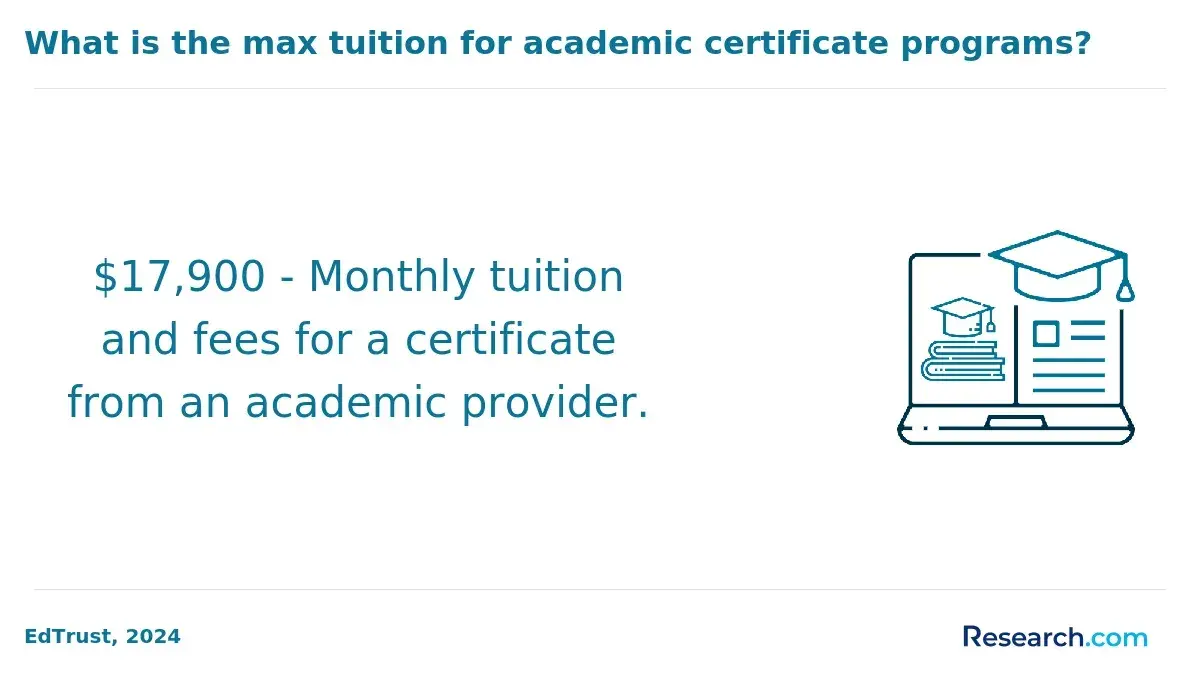
Cost is equally variable. For context, College Board reported average published tuition and fees of $4,050 for in-district students at public two-year colleges in 2024-25. That benchmark does not include books, software, tools, exam fees, transportation, or clinical requirements, and private training providers may price programs very differently.
This cost checklist helps readers compare written offers on a like-for-like basis rather than choosing based on advertised tuition alone.
| Cost category | Why it matters | What to request |
| Tuition and mandatory fees | May be billed separately or change by residency and course load | Total program price in writing |
| Materials and technology | Laptops, software, textbooks, uniforms, and kits can be required | Itemized supply list |
| Testing and credentials | Certification exams, background checks, and licenses may be separate | List of required third-party costs |
| Practical training | Travel, parking, childcare, and unpaid placement time affect affordability | Externship location and scheduling policy |
Compare payment plans, employer tuition assistance, scholarships, and federal aid only when the provider and program are eligible. Learners pursuing a faster degree route can also explore an online accelerated bachelor's degree if the intended occupation typically requires a bachelor's degree.
What skills, courses, and support services are included in these online programs?
Effective online career training combines technical instruction with employability skills and structured support. Core coursework varies by field, but programs often include occupational terminology, safety or ethics, documentation, software, communication, problem solving, and role-specific procedures. Healthcare programs may add privacy and coding systems; design programs may emphasize portfolio production; skilled-trade programs may cover mathematics, regulations, and diagnostic concepts.
Ask for a sample course sequence and a written description of the coaching model. The following services are particularly useful because they address common reasons online learners pause or leave training.
- Named success coach with scheduled check-ins, clear response-time expectations, and escalation support when a student falls behind.
- Academic tutoring, accessibility services, technology onboarding, and realistic study plans for working adults.
- Career preparation such as résumé review, mock interviews, portfolio feedback, employer introductions, and job-search workshops.
- Support for required practical experiences, including placement coordination when the program advertises externships or clinical learning.
Training certificates and professional certifications serve different purposes. A school certificate documents completed study; a certification usually requires standards set by an independent organization and may include an examination. Review certifications that pay well when a recognized industry credential may strengthen, rather than replace, career training.
What careers and job roles do online career training programs prepare students for?
Online career training can prepare learners for entry-level and support roles when the curriculum matches employer needs and any required practical components are completed. It is most useful when a job posting identifies a specific skill set, software platform, industry exam, or training background that the program directly addresses.
The roles below illustrate possible directions, not automatic placement outcomes. Employers may require experience, a degree, a license, background clearance, or a separate certification in addition to training.
| Program focus | Possible entry-level roles | Important limitation |
| Medical billing and coding | Billing specialist, coding support, patient-account representative | Employers may prefer a recognized coding certification |
| Information technology support | Help desk technician, desktop support trainee | Technical certifications and hands-on troubleshooting can improve candidacy |
| HVAC or electrical fundamentals | Apprentice, installer helper, maintenance trainee | Field training, apprenticeship, and licensing rules can apply |
| Paralegal studies | Legal assistant, records specialist, litigation support assistant | Requirements vary by employer and jurisdiction |
| Digital design | Production artist, junior content designer, marketing design assistant | A portfolio is commonly central to hiring decisions |
A certificate is a sensible first step when the target job is genuinely entry-level and skill-specific. Consider an associate or bachelor's degree when postings consistently require broader education, advancement depends on a degree, or you want more transfer and career-mobility options.
What salary ranges and job outlook can graduates expect in these career fields?
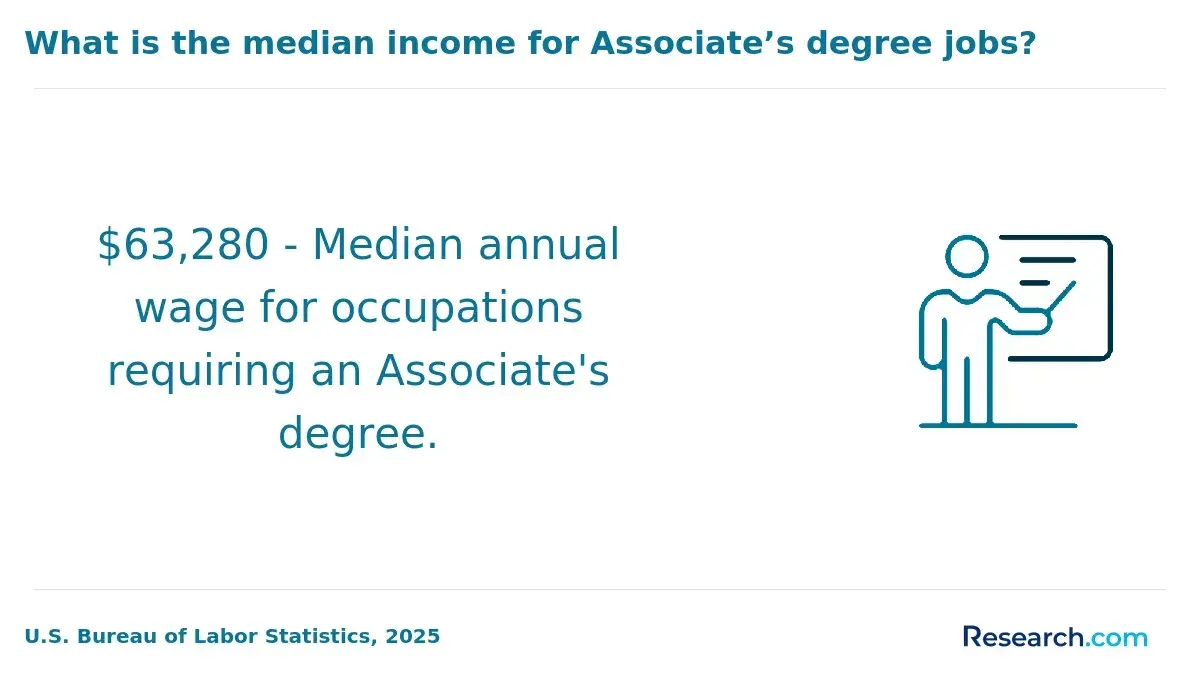
Salary and outlook should be evaluated by occupation, location, experience, schedule, and employer - not by a program's marketing language. The BLS reports that the median annual wage for all occupations was $49,500 in May 2024. Use that national figure only as a broad comparison point; local pay and entry-level offers can be lower or higher.
Several training-aligned fields have different demand patterns. BLS projections for 2023-33 show faster-than-average growth in healthcare support occupations, while technology, construction, legal support, and creative work have distinct local hiring cycles. Automation and AI are also changing task mix: employers may increasingly value workers who can use digital tools, verify outputs, communicate clearly, and handle exceptions rather than perform only routine tasks.
To assess return on investment, gather local job postings for your intended role, note their education and certification requirements, and compare likely first-year earnings with the full training cost and time away from paid work. Be skeptical of salary claims that do not identify the occupation, location, measurement period, and share of graduates included.
How do students choose a reputable online career training program with strong coaching?
A reputable program is not necessarily the shortest or cheapest one. It is the one that credibly connects its curriculum, delivery format, coaching, practical training, and credential to your intended job. Start with the occupation, then work backward to identify required education, licensure, certification, and experience.
Use this decision process before enrolling:
- Identify two or three target job titles and review local postings for recurring requirements.
- Confirm whether the role requires a license, certification exam, apprenticeship, clinical hours, or degree.
- Compare at least three programs using written totals, weekly workload, refund terms, practical-training arrangements, and coaching access.
- Ask to speak with a program advisor about completion support and with career services about employer relationships and placement methodology.
- Choose the option that meets the job requirement with the least unnecessary time, debt, and credential mismatch.
Military spouses and dependents should also check transfer policies, portability, deployment-related attendance policies, and education benefits. This guide to the best online college for military spouses may help compare institutions designed for mobile learners.
Common mistakes include enrolling before confirming state eligibility, assuming "online" means no required in-person work, overlooking exam and equipment costs, and accepting vague placement claims. Avoid these problems by getting answers in writing and preserving copies of the catalog, enrollment agreement, and refund policy.
Other Things You Should Know About
Some offer career coaching, job-search workshops, employer introductions, or placement assistance, but no program should imply that employment is guaranteed. Ask how placement is defined, which employers participate, and whether outcomes are reported for the exact program.
It can be worthwhile when coaching is scheduled, individualized, and paired with tutoring and career support. Compare the actual services, frequency of contact, and availability outside standard work hours rather than relying on the word "coaching" in marketing.
Some theory-based training can be completed online, but many trade and healthcare paths require in-person labs, clinical rotations, externships, supervised practice, or licensing steps. Confirm every in-person requirement before enrolling.
Transferability depends on whether the certificate is credit-bearing, the receiving institution's policies, course equivalencies, and grade requirements. Noncredit career certificates usually do not transfer as college credit, so obtain written confirmation if future degree study is important.
References
- EdAssist | Fuel Your Next Career Move: 4 Ways to Pay for Continuing Education https://www.brighthorizons.com/resources/blog/edassist/fuel-your-next-career-move-4-ways-to-pay-for-continuing-education
- The Effects of Student Coaching in the United States | The Abdul Latif Jameel Poverty Action Lab https://www.povertyactionlab.org/evaluation/effects-student-coaching-united-states
- Pairing financial assistance with student success coaching - InsideTrack https://www.insidetrack.org/blog/why-pairing-scholarships-with-student-success-coaching-is-so-powerful
- Financial Aid for Adult Education https://www.vsac.org/plan/adult-learners/financial-aid
- Which College Students Could Benefit Most from Success Coaching? - TimelyCare https://timelycare.com/blog/which-college-students-could-benefit-most-from-success-coaching/
- College Possible - National College Access and Success Programs https://collegepossible.org/
- Academic Life Coach Training | Life Coach Schools Online https://www.coachtrainingedu.com/academic-life-coach-training/
- "Student Success Coaching: Holistic Support Model for At-Risk Student Retention" https://resources.rework.com/libraries/higher-education-growth/student-success-coaching
- Student Success Coaching Certificate | DC Education Group https://www.dceducationgroup.com/success-coach-certificate
- Advancing Student Outcomes at Michigan's Public Universities through Student Success Coaching Programs https://www.masu.org/news/student-success/02-23-2018/advancing-student-outcomes-michigans-public-universities-through