2027 Best Certificate Programs With Career Coaching

Co-Founder and Chief Data Scientist
A short program is only a smart career move if it teaches job-relevant skills and helps you turn them into interviews. Certificate programs with career coaching combine focused training with services such as résumé review, mock interviews, employer introductions, and job-search strategy. They can suit career changers, working adults, and people seeking entry-level skills. The U.S. Bureau of Labor Statistics projects healthcare support occupations to grow 15% from 2023 to 2033, illustrating why targeted training can matter. This guide compares program types, recognition, costs, timelines, and realistic next steps.
Key Things You Should Know
- Choose a certificate when you need structured training; choose a professional certification when an employer or regulator expects an exam-based credential from a certifying body.
- Career coaching is the differentiator: confirm the program provides named advisors, résumé and interview support, employer access, and outcome reporting rather than a self-service job board.
- Cost and payoff vary sharply: 2024-25 average published tuition and fees at public two-year colleges were $4,050, while many noncredit and private career programs price separately and may not qualify for federal aid.
Top 10 Best Certificate Programs With Career Coaching
Popular Trade School Programs
Trade certificates commonly prepare students for HVAC, welding, electrical, plumbing, automotive, diesel technology, or construction roles. Programs may run through community colleges, technical schools, unions, or employer-sponsored apprenticeships. Hands-on lab time is essential for equipment-based work, so fully online options are usually unsuitable. An electrical or plumbing certificate can build foundational knowledge, but state licensing often requires supervised work hours and an exam. Ask whether coaching includes apprenticeship referrals, local employer partnerships, tool costs, safety training, and preparation for credentials such as EPA Section 608 for HVAC technicians.
Healthcare Programs
Healthcare certificates include medical assisting, pharmacy technician, dental assisting, phlebotomy, practical nursing, billing and coding, and nursing assistant training. The right choice depends on whether the role requires clinical placement, a state-approved curriculum, a license, or a separate certification exam. Medical coding may be accessible online, while nursing and patient-care pathways require supervised clinical experiences. Career coaching should include clinical-placement support and guidance on employer expectations. Verify that a program meets the applicable state board or employer requirements before enrolling; a general online certificate may not qualify a learner for patient-facing work.
Criminal Justice / Law Programs
Certificates in paralegal studies, legal office administration, criminal justice, court reporting support, and cybersecurity-related investigations can build administrative or research skills. A paralegal certificate is often best for people who already hold an associate or bachelor's degree and want legal specialization; hiring requirements differ by law firm and state. Criminal justice certificates may support entry-level support roles but do not replace academy training for sworn law enforcement positions. Look for coaching that covers legal-document formatting, confidentiality, internship access, professional networking, and realistic screening requirements, including background checks where relevant.
Arts & Design Programs
Graphic design, UX/UI design, digital marketing design, photography, animation, web design, and video production certificates focus on portfolio-ready work. These programs are strongest when coaching includes portfolio critiques, project briefs that resemble client work, and interview preparation. Employers often evaluate demonstrated skills more closely than the certificate name, particularly in creative fields. Before paying for a program, review student portfolios, software access, instructor experience, and the ownership rules for completed work. A certificate can create a focused entry point, but sustained practice and a polished portfolio remain central to hiring.
What Certificate Programs Offer Career Coaching?
The best certificate programs with career coaching make coaching a defined service, not a marketing claim. Community colleges may offer career centers and credit-bearing certificates; workforce providers may offer intensive coaching and employer projects; universities may provide professional certificates with alumni-style career resources. For people comparing short, exam-focused options, these easy certifications to get can be a useful alternative when a recognized industry credential matters more than coursework.
Ask each provider for written answers to these questions before applying:
- How many one-to-one coaching sessions are included, and who delivers them?
- Will I receive résumé feedback, mock interviews, networking guidance, and job-search accountability?
- Which employers hire from this program, and can you share recent outcome definitions and reporting periods?
- Does coaching continue after completion, and is there an extra fee?
- Does the curriculum lead to a portfolio, licensing eligibility, or preparation for a separate certification exam?
Red flags include vague placement promises, pressure to enroll immediately, refusal to explain total costs, and claims that a certificate alone guarantees employment. Prefer providers that clearly distinguish career support from guaranteed placement.
Which Certificate Programs Are Best for Career Change?
For a career change, the best certificate is the shortest credible program that closes a specific skills gap for a target role. Choose an entry-level, skills-based certificate when you need a portfolio or practical foundation; choose a credit-bearing certificate when you may later pursue an associate or bachelor's degree; choose a certification-prep pathway when job listings explicitly request a particular credential.
This comparison shows when common pathways make sense.
| Career-change goal | Best-fit credential | Why it may fit | Key caution |
| Move into IT support or data work | Professional certificate plus industry certification preparation | Can demonstrate current technical skills quickly | Confirm employers in your area recognize the credential |
| Enter a licensed trade | Technical certificate or apprenticeship | Combines practical training with a route to supervised hours | Check state licensing requirements first |
| Move into healthcare support | State-approved or employer-recognized certificate | May meet training rules for defined support roles | Clinical, exam, and background requirements may apply |
| Advance from an existing degree | Post-baccalaureate or graduate certificate | Adds a focused specialization | It may not substitute for a required degree or license |
Do not use a certificate to solve a problem that actually requires a degree. If your destination role requires broader academic preparation, compare accelerated routes such as a bachelor degree online in 2 years before paying for a standalone program.
How Do Online and Campus Certificate Programs Compare?
Online certificates work well for software, business, design, project coordination, coding, and other fields where work can be demonstrated digitally. Campus or hybrid programs are generally better for clinical practice, welding, HVAC, automotive repair, and other training requiring specialized equipment, observation, or supervised practice.
The comparison below helps match the delivery format to the kind of coaching and training you need.
| Factor | Online certificate | Campus or hybrid certificate |
| Schedule | Often flexible, especially asynchronous courses | Usually set meeting, lab, or clinical times |
| Coaching access | Video appointments, digital reviews, virtual events | In-person advising, campus recruiting, local networking |
| Hands-on learning | Best for digital or theory-based skills | Best for equipment, labs, and clinical practice |
| Geographic reach | Can broaden provider choices | May strengthen local employer connections |
| Important check | Verify live support, time zone, and any residency requirements | Confirm commute, lab fees, and placement location |
Online delivery does not automatically mean self-paced or lower quality. Review required meeting times, instructor access, coaching availability, and whether any internship, practicum, or licensing requirement must be completed locally.
Are Certificate Programs Accredited and Employer Recognized?
Recognition depends on the credential and occupation. A college certificate may be credit-bearing and issued by an institution accredited by an institutional accreditor. A noncredit certificate may demonstrate completed training but usually carries no academic credit. A professional certification is different: it is awarded by a certifying organization after its eligibility, examination, and renewal requirements are met.
Use this verification sequence before committing funds:
- Read job postings for your target role and note required degrees, licenses, software, and certifications.
- Confirm the issuing school's institutional status if academic credit, federal aid, or transferability matters to you.
- For regulated work, verify program approval directly with the relevant state board or licensing authority.
- Ask whether credits transfer, stack into a degree, or expire after a stated period.
- Request the exact credential title printed on completion documents and compare it with employer language.
Common mistakes include assuming institutional accreditation approves every specialized program, or assuming a certificate grants a license. Licensure and certification eligibility are separate questions that must be confirmed for your state and occupation.
What Jobs Can Certificate Programs Lead To?
Certificate programs can lead to interviews for entry-level or support roles, but the credential alone may not meet every employer's education, experience, examination, or licensing requirements. Career coaching can help translate coursework into evidence of ability through a portfolio, résumé, targeted applications, and practice interviews.
These examples connect common program areas to realistic job targets and the additional conditions readers should investigate.
| Program area | Possible job targets | Typical additional consideration |
| IT support | Help desk technician, desktop support specialist | Employers may prefer vendor or industry certifications |
| Medical billing and coding | Billing specialist, coding support role | Certification may be preferred; coding roles vary by employer |
| HVAC | HVAC helper, technician trainee | EPA refrigerant credential and supervised experience can matter |
| Paralegal studies | Legal assistant, paralegal | Employers may prefer a degree plus specialized training |
| Digital design | Junior designer, production artist | Portfolio quality is often decisive |
Use coaching to target roles that match your actual eligibility now, then build toward advanced credentials or degrees as job requirements become clearer.
How Much Do Certificate Programs Cost?
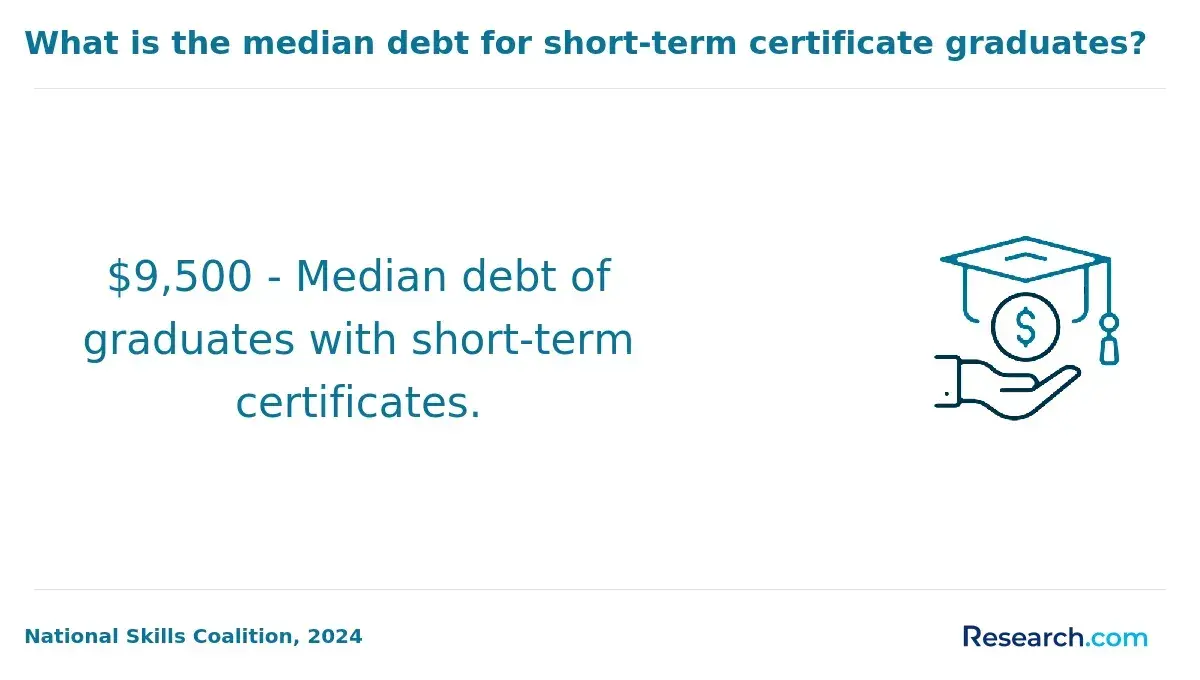
Certificate cost is more than tuition. Budget for application fees, books, software, tools, exam fees, background checks, uniforms, transportation, clinical costs, and lost work time. For context, College Board reported average published tuition and fees of $4,050 for in-district students at public two-year colleges in 2024-25; individual certificate prices can be lower or substantially higher depending on field and provider.
Compare the full price using these cost categories rather than selecting a program based on advertised tuition alone.
| Cost category | Why it affects your decision |
| Tuition and mandatory fees | May differ by residency, course load, and delivery mode |
| Required equipment and materials | Can be significant in trades, healthcare, and design |
| Certification or licensing exams | May be separate from program tuition |
| Clinical, lab, or practicum expenses | Can include screening, insurance, uniforms, or travel |
| Financing terms | Private loans and payment plans can increase total cost |
Credit-bearing certificates at eligible institutions may qualify for federal, state, or institutional aid, while many noncredit programs do not. Ask about employer tuition assistance and compare schools, including a university with free application fee, before paying multiple application charges.
How Long Do Certificate Programs Take?
Completion time ranges from a few weeks for narrow noncredit training to one year or more for credit-bearing, clinical, or technical certificates. Part-time programs can make a career change more manageable while you work, but they delay completion. Accelerated schedules reduce calendar time but demand more weekly study and may leave less room for job searching.
Time estimates should be treated as program-design information, not a guarantee. A practicum, clinical placement, missed course sequence, licensing exam, or apprenticeship wait can extend the route to employment. Ask whether the published timeline includes all required labs, placements, exams, and career-coaching access after graduation.
What Admission Requirements Do Certificate Programs Have?
Admission requirements reflect the provider and credential level. Noncredit career certificates may require only identification, payment, and basic readiness. College certificates can require an application, placement process, prerequisite courses, immunizations for clinical programs, or proof of prior education. Graduate certificates generally require a completed bachelor's degree and may expect related coursework.
Before applying, create a short eligibility checklist:
- Confirm the required education level and any prerequisite classes or placement testing.
- Check whether criminal background screening, drug testing, immunizations, or physical requirements apply to clinical or field placements.
- Determine whether you need a computer, software, tools, reliable internet, or transportation before classes begin.
- Verify deadlines, cohort start dates, and whether coaching is available to part-time students.
If your longer-term goal requires advanced study, compare certificate prerequisites with the admissions expectations for masters degrees. Do not assume a short certificate will replace foundational undergraduate coursework.
How Do Salaries and Job Outlook Compare After Certification?
Salary and outlook should be evaluated by occupation, location, experience, and employer - not by a certificate's marketing claims. The BLS projects overall employment to grow 4% from 2023 to 2033, but growth differs widely by field. A faster-growing occupation can still have competitive hiring, licensing barriers, or limited local openings.
This occupational context helps readers interpret common certificate-related paths.
| Occupation | 2023 median annual wage | Projected growth, 2023-33 | Certificate limitation |
| Medical assistants | $42,000 | 15% | Employer preferences and state rules vary |
| Heating, air conditioning, and refrigeration mechanics and installers | $57,300 | 9% | Training may need to be paired with credentials and experience |
| Paralegals and legal assistants | $60,970 | 1% | Many employers prefer degree-level education or experience |
| Computer user support specialists | $60,810 | 5% | Requirements range from certificates to degrees depending on employer |
These are BLS occupation-wide figures, not outcomes for certificate completers. Use them to compare fields, then review local job ads and ask programs how they define employment, what roles graduates obtain, and whether reported pay includes full-time positions only.
Other Things You Should Know About
They can be worthwhile when the curriculum matches local job requirements and coaching provides concrete help such as portfolio review, interview practice, and employer introductions. They are less compelling when career support is vague or the credential is not recognized in your target field.
A certificate is usually awarded after completing an educational program. A certification is awarded by a professional organization after meeting its standards, often including an exam and ongoing renewal. Some certificate programs prepare students for a separate certification exam.
Possibly, especially in digital and administrative fields, but outcomes depend on the role, your prior experience, demonstrated skills, and employer requirements. For clinical, trade, and licensed occupations, online coursework may need in-person labs or supervised placements.
Ask how many individual sessions are included, whether advisors have relevant hiring experience, what employer relationships exist, and whether the provider publishes clearly defined outcomes. Avoid programs that promise placement without explaining their process.
References
- 6 Most Trusted Career Coach Certifications for 2026 (Reviewed) https://luisazhou.com/blog/career-coach-certifications/
- Graduate Employment Outcomes: How to Measure & Improve https://gosprout.app/graduate-employment-outcomes/
- Student Career Coach Certification - CSCC https://parwcc.com/student-career-coach-certification-cscc/
- How to Become a Career Coach | University of Phoenix https://www.phoenix.edu/articles/business/how-to-become-a-career-coach.html
- Mindful Career: Career Coaching https://mindful-career.com/career-coach-in-u-s
- Career Coach Certification: What Actually Counts in 2026 https://tandemcoach.co/career-coach-certification/
- Top 9 Career Coaching Certifications - MentorCruise https://mentorcruise.com/certifications/careercoaching/
- Find a Certified Career Coach for Career Advancement https://www.thecareerstrategygroup.com/finding-a-certified-career-coach-for-career-advancement/
- Career Coaching Certification: Cost & Programs | Pigment https://pigment.is/blogs/blogs/career-coaching-certification
- Why Employment Outcome Rates Matter | ACI Learning https://www.acitechacademy.com/blog/why-employment-outcome-rates-matter-a-guide-for-students-and-employers/