2027 Best Non-Degree Programs With 6-Week Courses

Co-Founder and Chief Data Scientist
If you need employable skills quickly, a 6-week non-degree program can be a practical starting point - but it is not a shortcut to every licensed or technical career. These short programs usually deliver a school-issued certificate of completion, not a professional certification or college degree.
The U.S. Bureau of Labor Statistics projects healthcare support occupations to grow 15% from 2023 to 2033, creating demand for some entry-level support skills. This guide helps career changers, job seekers, and working adults compare programs, costs, delivery formats, career limits, and quality signals before committing time or money.
Key Things You Should Know
- A legitimate 6-week program can build focused, entry-level skills in areas such as customer support, office software, basic design, safety, or healthcare administration, but it rarely meets the full education, clinical-hour, apprenticeship, or licensure requirements for regulated occupations.
- Cost and recognition matter more than speed: compare total charges, equipment, exam fees, instructor qualifications, employer relevance, and whether the credential is credit-bearing, noncredit, stackable, or merely a completion certificate.
- Use occupational data as context rather than a promise: for example, BLS reports a $44,200 median annual wage for medical assistants in May 2024, but a 6-week course alone may not meet an employer's or state's training expectations for that occupation.
Top 10 Best Non-Degree Programs With 6-Week Courses
Popular Trade School Programs
Six weeks can introduce trade fundamentals, OSHA-style workplace safety, blueprint reading, hand-tool use, welding basics, or HVAC maintenance concepts. These courses suit people exploring a trade or preparing for helper roles.
They generally do not replace an apprenticeship, required supervised hours, or state licensing. Electrician training, for example, commonly requires years of apprenticeship before independent work. An associate degree in welding technology, HVAC, or electrical technology is a longer, credit-bearing option for learners who need broader lab training. Choose short trade training only when it includes meaningful hands-on practice and a clear next step.
Healthcare Programs
Short healthcare offerings often cover medical terminology, HIPAA awareness, front-office workflow, billing basics, CPR preparation, or patient-service skills. A six-week certificate may help with healthcare administrative support, but it usually cannot substitute for clinical education required for nursing, radiologic technology, phlebotomy, or medical assisting.
Verify whether a program prepares students for a separate certification exam and whether employers in your area recognize it. An associate degree in nursing or allied health is substantially longer and may be necessary for roles tied to licensure, clinical practice, or advanced technical duties.
Criminal Justice / Law Programs
Six-week legal or criminal justice courses may teach legal research introductions, records management, report writing, court terminology, victim advocacy basics, or public-safety communications. They can strengthen applications for administrative support roles but do not make someone a lawyer, police officer, paralegal, or corrections officer.
Those paths often require agency hiring standards, background checks, academy training, or more extensive education. A criminal justice or paralegal studies associate degree provides a broader academic pathway. Confirm that a short program teaches current jurisdiction-specific practices rather than making vague promises about law-enforcement placement.
Arts & Design Programs
Short arts and design programs can develop a portfolio starter project in graphic design, digital illustration, social media content, photography editing, or basic web design. They work best for learners who already have computer access and can practice outside class. A completion certificate can demonstrate training, but employers usually evaluate portfolio quality more closely than course length.
An associate degree in graphic design offers deeper critique, software practice, and portfolio development. Avoid programs that promise professional designer status without showing instructor work, software access, project examples, and realistic entry-level outcomes.
What types of careers can 6-week non-degree programs realistically prepare you for?
Six-week non-degree programs realistically prepare learners for narrowly defined tasks, not broad professional authority. The strongest outcomes usually occur when the course adds a concrete skill to prior work experience, a high school diploma, existing technical knowledge, or an employer's internal training pathway.
The comparison below distinguishes plausible entry points from roles that normally require additional training. It helps prevent a common mistake: interpreting an introductory course title as a qualification for a regulated occupation:
| Training focus | Potential entry-level direction | Typical limitation |
| Office software, bookkeeping basics, customer systems | Administrative assistant, customer service representative, data-entry support | Hiring depends on demonstrated software proficiency and prior experience |
| Medical office workflow and terminology | Reception, scheduling, patient-access, or billing-support roles | Does not automatically qualify a learner for clinical duties |
| Trade safety and tool fundamentals | Helper, laborer, warehouse, or trainee opportunities | Does not replace an apprenticeship or occupational license |
| Digital design tools | Freelance content support, production assistant, junior design tasks | A portfolio, not the certificate alone, is usually decisive |
Choose a short program when the job target has a clear beginner pathway and local employers value the taught tools. Consider quick online degrees or a longer certificate when job postings consistently request college credit, clinical experience, a license, or advanced technical competence.
How do online 6-week certificate programs compare to campus-based options?
Online 6-week programs are usually better for learners who need schedule flexibility, live far from a campus, or are pursuing software-based and administrative skills. Campus or hybrid options are generally stronger when safe equipment use, clinical simulation, instructor observation, or portfolio critique is central to the learning outcome.
This comparison focuses on the factors that affect whether the short format will actually work for your career goal:
| Factor | Online option | Campus or hybrid option |
| Scheduling | Often asynchronous or evening-friendly | Set class and lab times |
| Hands-on learning | Best for software, theory, and simulations | Better for tools, labs, equipment, and supervised practice |
| Networking | Requires proactive virtual participation | More direct access to peers, instructors, and local employers |
| Hidden costs | Computer, software, webcam, and reliable internet | Commuting, parking, supplies, uniforms, and possible lab fees |
Do not assume an online course is easier because it is remote. Six weeks compresses deadlines, so ask how many hours of independent work are expected each week and whether live attendance is mandatory. Learners seeking a more substantial credential can compare accelerated programs that provide a longer academic sequence.
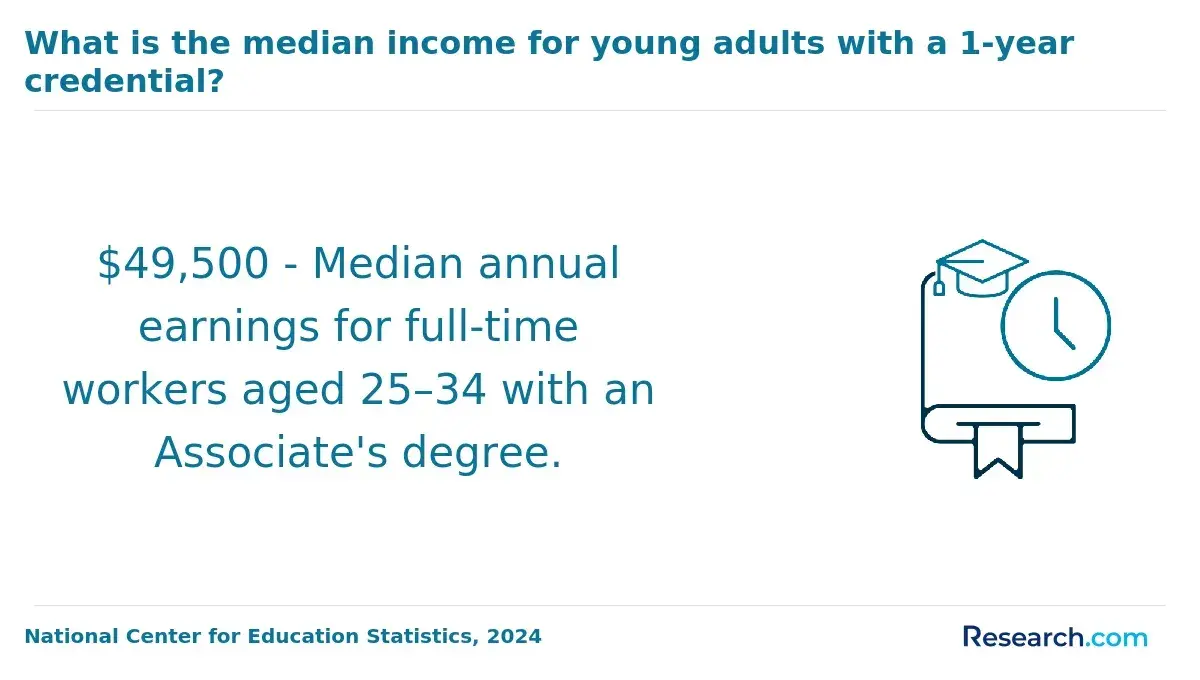
What accreditation and quality standards should 6-week non-degree programs meet?
Quality standards depend on the provider and the career field. A community college's credit-bearing certificate should be offered by an institution accredited by a recognized institutional accreditor. A noncredit workforce course may not have institutional accreditation, but it should still identify its provider, instructors, curriculum, refund rules, instructional hours, and employer or industry alignment.
For healthcare, skilled trades, and other regulated fields, also verify whether the program meets state board, employer, clinical-site, apprenticeship, or certification-exam requirements.
A school-issued certificate documents course completion; a professional certification is awarded by an independent credentialing body after its own eligibility and assessment process.
Ask for written answers to these questions before paying:
- Is this credential academic credit, continuing education, noncredit career training, or a certificate of completion?
- What job tasks does the curriculum prepare students to perform, and which tasks remain off-limits without further training or licensure?
- Does the course qualify graduates to take a named certification exam, and are there additional eligibility requirements?
- Which employers, boards, unions, or industry partners recognize the program, if any?
What admission requirements and prerequisites do most 6-week programs have?
Admissions for a six-week non-degree program are often lighter than degree admissions, but requirements vary sharply by subject. Many open-enrollment courses require only an application, payment arrangement, and basic technology access. Career programs involving clients, labs, or regulated settings may require more documentation.
Common requirements can include a high school diploma or equivalent, identity verification, placement screening, immunizations, drug screening, background checks, CPR training, physical ability documentation, or prerequisite coursework. Healthcare and public-safety programs may impose requirements because of clinical sites or employer policies, not because every short course has conventional college admissions.
Before enrolling, obtain the requirements in writing and confirm the deadline. Do not spend on tuition before learning whether a background finding, prior conviction, missing vaccination record, or lack of required equipment could prevent participation or employment. If you want a broader credential with more standardized entry routes, review easiest associate degrees alongside the actual prerequisites for your intended occupation.
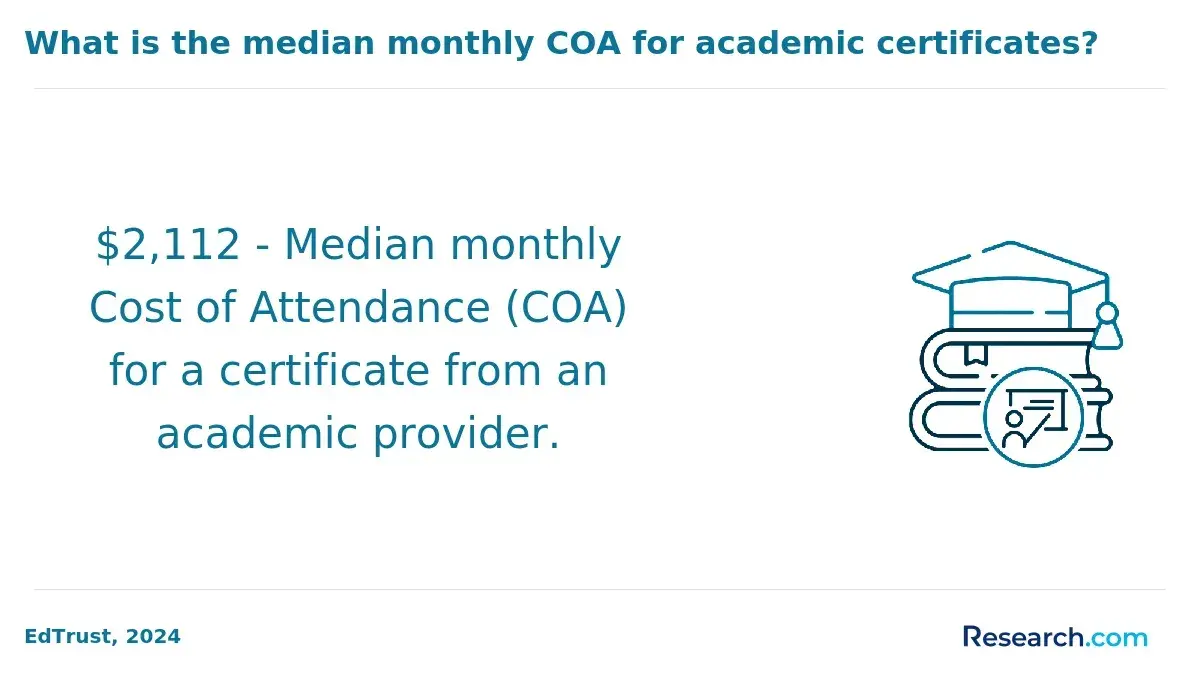
How much do 6-week non-degree programs cost, and what aid is available?
Six-week non-degree programs have no single national price because providers range from public community colleges and adult education centers to private career schools and online platforms. Tuition is only one part of the investment. Total cost can include registration charges, books, software subscriptions, tools, uniforms, examination fees, background checks, insurance, transportation, and unpaid time away from work.
Federal Pell Grants generally apply to eligible programs at eligible institutions, and many standalone short noncredit courses do not qualify. That does not make a program unaffordable, but it means you should confirm aid eligibility rather than assuming federal aid will cover it.
Workforce Innovation and Opportunity Act funding, state workforce grants, employer tuition assistance, veterans' education benefits, and payment plans may be available depending on the provider and student eligibility.
Use this cost check before comparing advertised tuition:
- Request an itemized, written estimate of all required expenses through completion.
- Ask whether the quoted price includes exam attempts, materials, software, labs, and retake fees.
- Compare the cost with local entry-level postings and the additional training needed after the course.
- Read the withdrawal and refund policy before making a deposit or signing a financing agreement.
A short course is most cost-effective when it leads to a specific next step - such as employer-required software competency, a recognized exam pathway, or a trial of a field before a longer program - not simply a résumé line.
What do students typically learn in 6-week career-focused certificate curricula?
A career-focused six-week curriculum is usually intensive and narrow. Expect a sequence of foundational concepts, guided demonstrations, practice assignments, feedback, and a final assessment or project. Strong programs state the learning objectives in measurable terms, such as creating a spreadsheet, documenting a customer interaction, following a safety protocol, or producing a portfolio piece.
What students learn should match the delivery format. Online programs can effectively teach digital platforms, terminology, workflow, and documentation. In-person time matters more for equipment handling, patient interaction, physical techniques, and supervised safety practices. A credible provider explains what happens during each instructional hour and what students must practice independently.
Do not confuse a fast pace with comprehensive training. Six weeks may establish vocabulary and basic competence, while advanced troubleshooting, professional judgment, internships, clinical experience, and work-based learning typically require additional time.
What salaries and entry-level roles are common after 6-week training programs?
Salary information should be evaluated by occupation, location, experience, employer, and credential requirements - not attributed automatically to a six-week certificate.
The Bureau of Labor Statistics reported May 2024 median annual wages of $44,200 for medical assistants, $61,010 for paralegals and legal assistants, and $61,300 for graphic designers. Those figures include workers with varying education and experience levels and should not be read as starting pay or as outcomes guaranteed by short training.
For short-program graduates, more realistic entry points may include receptionist, scheduler, billing-support worker, customer-service representative, production assistant, junior content creator, trainee, or trade helper. Some jobs may require a high school diploma plus employer training rather than the course itself.
Compare local job advertisements before enrolling. Look for repeated requirements, required software, physical demands, schedule expectations, background-screening policies, and whether employers mention a degree, certification, license, or experience that the course does not provide.
How does the job outlook and industry demand affect short-term program value?
Industry demand affects the value of a short course because employers hire for actual job tasks, not course duration. The BLS projects healthcare support occupations to grow 15% from 2023 to 2033, faster than the average for all occupations.
That broad trend supports interest in healthcare support work, but individual positions may still require local experience, clinical training, certification, or employer-specific onboarding.
Automation and generative AI are also changing entry-level work. Routine administrative tasks, simple design production, and basic documentation may be streamlined by software, increasing the value of learners who can check accuracy, communicate with customers, protect sensitive information, and use digital tools responsibly.
Choose a six-week program when it teaches a current workflow used in local postings and gives you work samples to show. For independent work that suits quieter, focused environments, explore jobs for introverts while checking whether the role needs deeper education than a short course provides.
How can you choose a reputable 6-week non-degree program and avoid scams?
A reputable 6-week program makes specific, verifiable claims about what students learn, what the credential means, what it costs, and what it does not qualify them to do. Be cautious when a provider emphasizes urgency, salary promises, or vague "job-ready" language while withholding curriculum details.
Use the following process to compare programs before you enroll:
- Start with three to five local or remote job postings for the role you want and list their repeated requirements.
- Match each requirement against the program syllabus, instructional hours, hands-on components, and stated outcomes.
- Verify the provider's identity, applicable institutional accreditation, state authorization, and any field-specific approvals.
- Calculate the full cost, including equipment, exams, transportation, and income lost during class or practicum time.
- Ask for written information about refunds, completion expectations, career services, and whether employment data is independently defined and audited.
- Contact local employers or hiring managers when possible to ask whether they recognize the credential.
Major red flags include guaranteed jobs or licenses, pressure to pay immediately, unclear refund terms, no named instructors, copied course descriptions, claims that a completion certificate is the same as professional certification, and promises that a fully online course satisfies hands-on licensing rules. If a program cannot document its value, pause and compare longer, credit-bearing, apprenticeship, or employer-sponsored alternatives.
Other Things You Should Know About
Possibly, especially in entry-level administrative, customer-service, support, or trainee roles. Results depend on local employer requirements, your prior experience, the skills taught, and whether the role requires a license, certification, degree, or supervised training.
No. A certificate usually shows that you completed an educational course. A professional certification is typically awarded by a certifying organization after meeting its standards, which may include an examination, experience, or continuing education.
Usually not by itself. Licensing and clinical roles commonly require approved education, supervised clinical hours, examinations, and state-specific eligibility checks. Confirm requirements with the relevant state board before enrolling.
Employers tend to value relevant skills, credible providers, work samples, and recognized credentials more than delivery mode alone. Online study can be suitable for digital or administrative skills, while hands-on fields may require in-person practice.
References
- Jessup Playbooks: Transitioning to a 7-Week Course Schedule: Why 7-Week Courses? https://libguides.pvcc.edu/7-week-course-schedule/why-7-week-courses
- 7 in-demand certifications in 2025 | edX https://www.edx.org/resources/in-demand-professional-certifications
- Future Ready - Short-Term Programs at No Cost for Eligible Chicagoans - City Colleges of Chicago: Apply Now https://pages.ccc.edu/futureready/
- New Research Shows Community Colleges are a Great Way To Boost Career Prospects - Without Getting a Degree https://www.calbright.edu/newsroom/blog/new-research-shows-community-colleges-are-a-great-way-to-boost-career-prospects-without-getting-a-degree/
- Getting a job without a 4-year degree. Prospects increase with a certificate. https://www.luminafoundation.org/resource/non-degree-credentials-provide-value-for-adults-in-the-labor-market/
- Average Cost of College [2025]: Yearly Tuition + Expenses https://educationdata.org/average-cost-of-college
- The Cost of Studying Abroad: Everything You Need To Know https://www.semesteratsea.org/cost-of-studying-abroad/
- Understanding the Viability and Growth of the Non-Degree Market https://encoura.org/resources/wake-up-call/understanding-the-viability-and-growth-of-the-non-degree-market/
- Explore Your Bright Horizons Benefits https://www.brighthorizons.com/article/education/navigating-non-degree-landscape
- Best Online Colleges for Working Adults [2026] https://www.straighterline.com/blog/degree-completion-best-online-colleges-for-working-adults