2027 Best Online Certificate Programs With Fast Admissions Decisions

Co-Founder and Chief Data Scientist
Choosing an online certificate often means balancing speed against whether the credential will actually support your career goal. Fast admissions can help you start sooner, but a quick decision is not the same as a low-quality program.
The U.S. Bureau of Labor Statistics projects healthcare support occupations to grow 15% from 2024 to 2034, illustrating why short, career-focused training remains appealing. This guide explains fast-admission options, costs, accreditation, timelines, and the questions to ask before enrolling.
Key Things You Should Know
- Fast admissions usually means rolling review, simplified application materials, or multiple start dates - not guaranteed acceptance; many programs still require a high school diploma, transcript, prerequisite coursework, or background check.
- A certificate is an educational credential awarded for completing a program; a certification is generally a separate professional credential awarded by an industry organization, often after an exam or experience requirement.
- Short programs can take weeks or months, while credit-bearing college certificates commonly take 6-18 months; verify whether coursework meets employer, certification, or state licensure requirements before paying.
Top 10 Best Online Certificate Programs With Fast Admissions Decisions
Popular Trade School Programs
Online trade certificates work best for the academic and technical portions of a field, while hands-on skills usually require local labs, employer training, or supervised practice. Common options include HVAC fundamentals, electrical technology, construction management, welding theory, automotive service, and industrial maintenance. HVAC and electrical programs may prepare learners for entry-level work or an industry exam, but they do not replace state licensing or required apprenticeships. Choose an associate degree when you want broader general education credits or a longer-term path into supervision; choose a focused certificate when you need targeted entry-level training quickly.
Healthcare Programs
Online healthcare certificates commonly cover medical billing and coding, medical assisting coursework, pharmacy technician preparation, health information technology, and community health support. Clinical programs often use a hybrid format because externships, skills checks, and patient-contact requirements cannot be completed entirely online. Verify whether a program qualifies graduates for a certification examination and whether your state requires registration, licensure, or approved training. Medical coding can suit detail-oriented learners seeking administrative work, while nursing and allied-health roles generally require more extensive clinical education than a short online certificate alone provides.
Criminal Justice / Law Programs
Online certificates in criminal justice, legal studies, paralegal studies, homeland security, and cybersecurity law introduce legal systems, documentation, ethics, and investigative procedures. A paralegal certificate may be useful for people who already hold an associate or bachelor's degree and want focused legal training. However, it does not authorize someone to practice law or represent clients as an attorney. Criminal justice certificates can support work in security, records, compliance, or public-service settings, but police and corrections jobs commonly have agency-specific physical, background, and academy requirements beyond academic coursework.
Arts & Design Programs
Online arts and design certificates often focus on graphic design, digital media, UX design, photography, web design, animation, or video production. They can be a practical route for learners who need portfolio projects and software skills rather than a full degree. Admissions may be quick because many entry-level programs do not require a portfolio, although advanced certificates may. Compare curriculum access to industry-standard software, instructor feedback, portfolio review, and project ownership. A certificate is most valuable when it produces work samples aligned with the jobs or freelance services you intend to pursue.
What Are the Fastest Online Certificate Programs?
The fastest online certificate programs are usually short, nondegree offerings with open enrollment, rolling admissions, or frequent start dates. They may take as little as a few weeks when they teach a narrow skill, such as spreadsheet analysis, bookkeeping basics, project tools, digital marketing, or introductory IT support. Programs that include clinical work, licensing preparation, lab practice, or academic-credit requirements usually take longer.
For learners comparing very short options, these 6-week online courses with certificates can help illustrate the difference between a brief skills course and a longer college certificate. A six-week course may strengthen a résumé, but it may not carry college credit or meet an employer's preferred credential requirement.
The comparison below shows why "fastest" should be evaluated alongside recognition and career relevance.
| Program type | Typical pace | Admissions pattern | Best use | Key limitation |
| Noncredit skills certificate | Weeks to a few months | Open enrollment or rapid registration | Building a specific workplace skill | May not transfer for college credit |
| Career-training certificate | Several months | Rolling admissions are common | Preparing for entry-level support roles | May require an external exam or practicum |
| Credit-bearing college certificate | About 6-18 months | Term-based or multiple starts | Stacking credits toward a degree | Transcript and prerequisites may be required |
| Graduate certificate | About 6-12 months | Usually formal review | Specializing after a bachelor's degree | Not designed for most entry-level learners |
Fast enrollment is a strong reason to choose a program only when the curriculum, delivery format, and credential outcome match your target job. If you need regulated training, prioritize approved clinical or licensing pathways over the shortest advertised timeline.
How Do Online Certificate Admissions Work?
Online certificate admissions vary by provider. Universities and community colleges commonly review an application, identity information, and prior education records. Private training providers may use open enrollment, meaning eligible learners can register and begin quickly. "Admission decision" can therefore mean anything from instant registration to a formal acceptance notice.
Before applying, use the following steps to distinguish genuinely fast admissions from vague marketing.
- Identify the exact credential you need: academic certificate, career-training certificate, professional certificate, or preparation for an external certification exam.
- Check the published start dates, application deadline, document requirements, and typical decision timeframe.
- Confirm whether high school completion, college transcripts, placement testing, prerequisite courses, immunizations, or a background check apply.
- Ask whether acceptance is conditional on completing prerequisites or submitting final records.
- Get the full cost, refund policy, expected weekly workload, and clinical or proctored-exam requirements in writing before enrolling.
Applicants who already have transcripts and identification ready can often move more quickly. Still, avoid treating a low-barrier application as proof that the program is a good fit. The right admissions process should verify requirements that matter for safe practice, academic readiness, or legal compliance.
Which Online Certificate Programs Are Accredited?
Accreditation matters most for credit-bearing college certificates and programs leading toward regulated healthcare or professional pathways. Institutional accreditation evaluates the college as a whole; programmatic accreditation evaluates a specific discipline or training program. Neither is automatically necessary for every noncredit course, but both can affect transferability, financial aid eligibility, employer recognition, and licensure options.
Graduate certificates deserve particular scrutiny because they build on previous college study. Learners considering graduate-level specialization may also compare it with easiest graduate degrees when a full master's degree better matches an employer's advancement requirements.
Use this comparison to determine the kind of quality check that fits your goal.
| Credential setting | Most important verification | Why it matters |
| Community college or university certificate | Institutional accreditation and transcript status | Helps assess credit quality and possible transfer options |
| Healthcare training | Program approval, clinical placement rules, and state requirements | May affect eligibility for exams, employment, or licensure |
| Industry-focused technology certificate | Employer recognition and alignment with current tools or certification exams | Shows whether the curriculum reflects workplace demand |
| Private noncredit provider | Provider reputation, instructor qualifications, refund policy, and outcome transparency | Noncredit programs may not have college accreditation |
Do not assume that a school's institutional accreditation makes every program appropriate for your state or profession. For nursing, allied health, teaching, counseling, and other regulated fields, confirm requirements directly with the relevant state licensing board before starting.
How Much Do Online Certificate Programs Cost?
Online certificate costs range widely because the credential type matters more than the delivery label. A short noncredit course may charge a flat fee, while a college certificate may bill per credit and add technology, books, lab, exam, clinical-placement, or graduation fees. College Board reported average published in-district tuition and fees of $4,050 for public two-year colleges in 2024-25. That figure is a useful benchmark for comparing college pathways, not a price estimate for every online certificate.
Look beyond tuition when comparing offers. The cost categories below can change the real price and the value of a fast-start program.
| Cost factor | What to check | Decision impact |
| Tuition model | Per credit, per course, subscription, or flat program price | Determines whether a slower pace costs more |
| Required tools | Laptop, software, equipment, uniforms, or supplies | Can make a low-tuition program less affordable |
| External examinations | Certification, licensing, or proctoring fees | May be necessary for the intended career outcome |
| Clinical or practicum costs | Travel, health screening, insurance, and background checks | Often apply even when classes are online |
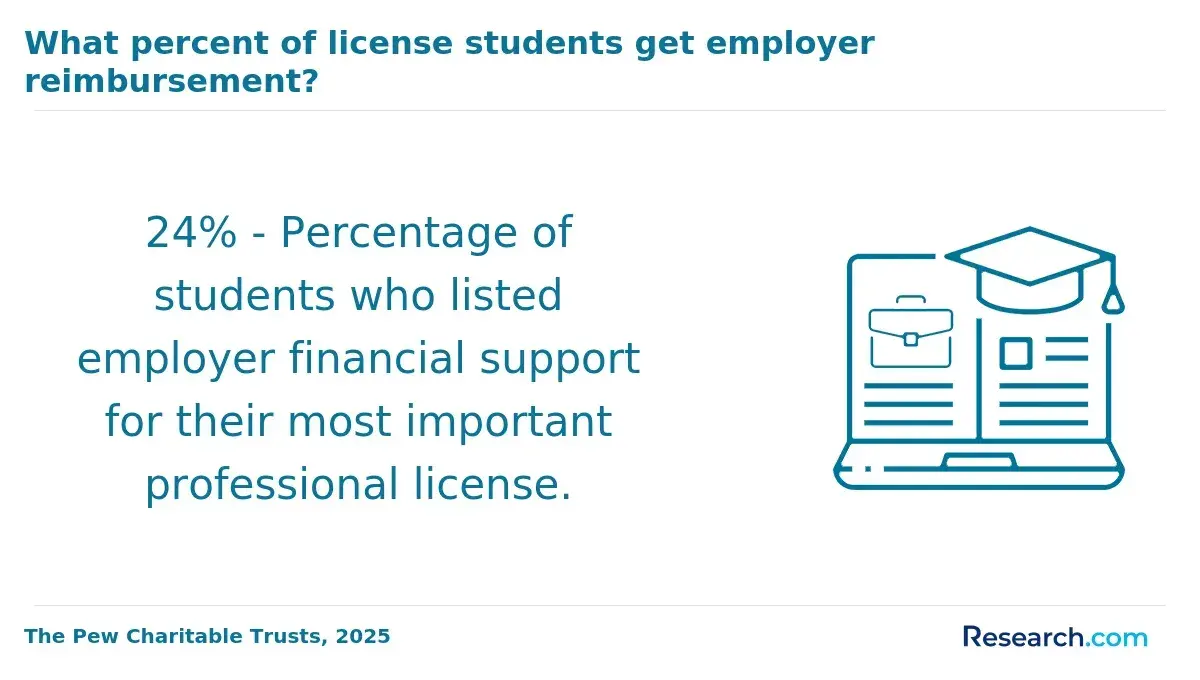
| Financial support | Federal aid eligibility, employer tuition assistance, scholarships, and payment plans | Varies by institution and credit status |
Credit-bearing certificates offered by eligible institutions may qualify for some federal financial aid when students meet program and enrollment requirements; many short noncredit programs do not. Ask the financial-aid office whether the specific certificate, not simply the school, is aid eligible. Compare total out-of-pocket cost against the job requirement you are trying to meet.
How Long Do Online Certificate Programs Take?
Completion time depends on credit load, course sequencing, prerequisites, and whether the program includes practical training. A self-paced noncredit certificate can be completed quickly by a learner with substantial weekly availability. A college certificate may take longer even online because courses run in terms and some classes must be completed in order.
Choose the timeline based on the constraint that matters most to you.
- Choose an accelerated program if you can consistently manage the required workload and do not need extensive hands-on training.
- Choose part-time study if you are working, caregiving, or need time to absorb technical material; it can reduce overload but extend completion.
- Choose a credit-bearing certificate if you may later pursue an associate or bachelor's degree and the school confirms how credits apply.
- Choose a hybrid or local program when labs, clinical placements, equipment practice, or supervised fieldwork are essential to your goal.
Ask for a term-by-term course sequence rather than relying on the shortest completion claim. A program advertised as "six months" may require daytime practicum hours, limited course availability, or prerequisites that make the calendar longer for your situation.
Which Careers Use Online Certificate Programs?
Online certificates can support careers in healthcare administration, IT support, bookkeeping, project coordination, legal support, digital marketing, skilled-trade support, and design. They are most useful when they teach a clearly defined skill that employers can assess through a portfolio, work sample, external certification, supervised experience, or transcript.
Career fit matters as much as program speed. Learners who prefer independent, focused work may find useful ideas in this guide to jobs for introverts, then compare each role's actual education, communication, and licensing requirements.
The U.S. Bureau of Labor Statistics projects employment of information security analysts to grow 29% from 2024 to 2034. That growth signals continued demand for cybersecurity expertise, but an entry-level certificate alone does not normally qualify someone for every analyst role; employers may also seek a degree, experience, a portfolio, or industry certifications.
AI is also changing certificate decisions. Employers increasingly value evidence that applicants can use digital tools responsibly, verify outputs, document processes, and solve real workplace problems. Programs that include current software, practical projects, and human feedback may offer more value than generic courses that only provide completion badges.
What Jobs Can You Get With a Certificate?
A certificate can help qualify you for some entry-level or support roles, but the outcome depends on the field, local employer expectations, experience, and any licensing rules. It is more accurate to view a certificate as evidence of focused training than as an automatic job guarantee.
This table separates common certificate-aligned job targets from occupations that commonly require additional preparation.
| Career area | Possible certificate-aligned role | What may also be needed |
| Healthcare administration | Medical billing specialist or medical records assistant | Employer software training or an industry certification |
| Information technology | Help desk technician or junior technical support specialist | Hands-on troubleshooting ability and vendor certifications |
| Legal support | Legal assistant or paralegal support staff | Prior degree, legal software skills, or employer experience |
| Business operations | Bookkeeping assistant, payroll clerk, or project coordinator | Software proficiency and workplace experience |
| Design | Production artist, junior designer, or freelance content creator | A strong portfolio and relevant software skills |
| Clinical healthcare | Role varies by program and state | Approved training, examination, registration, or licensure |
Be cautious of programs that market a certificate as sufficient for licensed professions without explaining the next steps. For regulated work, confirm the employer or board requirement first, then select the education pathway that explicitly meets it.
How Much Can Certificate Graduates Earn?
Certificate graduates do not have one standard salary. Pay is set by occupation, location, experience, employer, schedule, and credentials beyond the certificate. The U.S. Bureau of Labor Statistics reported a 2024 median annual wage of $44,200 for medical assistants; this is occupational wage information, not proof that every certificate holder earns that amount or that a certificate alone qualifies a person for the role.
Use occupational pay data to compare the long-term ceiling of a field, not to infer a guaranteed return. Readers weighing short training against longer academic paths can also review highest paying majors to see when a degree may better support their income target.
The following examples show how earnings research should be interpreted.
| Occupation | 2024 BLS median annual wage | Certificate decision context |
| Medical assistants | $44,200 | Programs may support entry into the field; employer preferences and state rules vary. |
| Paralegals and legal assistants | $61,010 | A certificate can be useful, particularly with prior college education, but employers set hiring standards. |
| HVAC mechanics and installers | $59,810 | Training is often combined with hands-on experience, licensing, and employer requirements. |
| Graphic designers | $61,300 | A portfolio can be as important as formal coursework for many roles. |
Calculate value by comparing the program's total cost, time away from work, required follow-on training, and realistic local job openings. A lower-cost certificate with clear employer relevance can be a better investment than a more expensive credential with vague outcomes.
How Do You Choose a Reputable Online Certificate Program?
A reputable online certificate program is transparent about what learners earn, how long it takes, what it costs, and what it does not qualify them to do. The best choice is not always the program with the fastest admissions decision; it is the one that reliably fits your intended occupation and constraints.
Before enrolling, compare programs using these practical checks.
- Match the curriculum to job postings in your area and identify whether employers ask for a degree, an industry certification, a portfolio, or a specific software skill.
- Verify the credential type, whether it is credit-bearing, and whether credits can apply to a future degree if that matters to you.
- Confirm institutional accreditation for college programs and any program approval needed for clinical, licensing, or certification pathways.
- Request the complete cost of tuition, supplies, exams, proctoring, travel, clinical requirements, and withdrawal fees.
- Ask how online students receive instructor support, career services, technical help, accommodations, and required hands-on placement assistance.
- Read the refund policy and avoid providers that promise jobs, licenses, salaries, or certification eligibility without clear written conditions.
Common mistakes include choosing based only on speed, confusing a completion certificate with an industry certification, and assuming "online" means no in-person requirements. A strong final step is to contact one or two local employers, licensing boards when relevant, or professional associations to confirm that the credential is recognized for the role you want.
Other Things You Should Know About
Many providers use open enrollment or rolling admissions, so eligible applicants may receive a decision quickly. College-based and clinical programs can take longer because they may review transcripts, prerequisites, health records, or background checks.
They can be legitimate, but speed alone does not establish quality. Check the provider's reputation, credential type, published curriculum, full cost, refund policy, and any accreditation or approval relevant to your goal.
It may help when it teaches skills employers request and gives you credible evidence of competence, such as a portfolio, academic credit, supervised experience, or preparation for a recognized certification. It does not guarantee employment.
Possibly, if it is a credit-bearing certificate from a college and the receiving institution accepts the credits. Noncredit certificates usually do not transfer. Ask both the certificate provider and any future degree program for written transfer guidance.
References
- Scholarships for Short-Term Certificates https://www.sscc.edu/financialaid/short-term-certificate.shtml
- Course Completion Rate Benchmarks: Improve Yours (2026) | Ruzuku https://www.ruzuku.com/learn/articles/course-completion-rates
- How Online Certificate Programs Can Advance Your Career | UT Permian Basin Online https://online.utpb.edu/about-us/articles/general/how-online-certificate-programs-can-advance-your-career
- Find Scholarships for College for FREE | Fastweb https://www.fastweb.com/
- CourseCareers https://coursecareers.com/blog-posts/how-to-choose-the-right-online-career-training-program
- Admissions Process https://www.ccp.edu/admission-aid/admissions/admissions-process
- Application Process https://catalog.greatbay.edu/application-process
- Scholarships - Finaid https://finaid.org/scholarships/
- Financial Aid For Online Colleges https://www.affordablecollegesonline.org/financial-aid/financial-aid-for-online-colleges/
- Apply to college with Common App | Your future starts here https://www.commonapp.org/