2027 Best Certificate Programs With Flat-Rate Tuition

Co-Founder and Chief Data Scientist
A certificate's advertised flat tuition can simplify budgeting, but it does not automatically make a program low-cost, accredited, or career-qualifying. This guide is for career changers, recent graduates, and working adults comparing short training options.
U.S. Bureau of Labor Statistics projections for 2024-2034 show faster-than-average growth in several certificate-relevant fields, including HVAC and medical assisting. Learn how flat-rate pricing works, what extra expenses to expect, and how to choose a program that fits your target job, schedule, and state requirements.
Key Things You Should Know
- Flat-rate tuition is one set program price rather than a per-credit charge, but students should still budget for fees, books, tools, uniforms, exams, background checks, and licensing costs.
- The strongest options match the required credential for a specific job: a school certificate may build skills, while a separate industry certification or state license may still be required for employment.
- For context, BLS projects 8% employment growth for heating, air conditioning, and refrigeration mechanics and installers from 2024 to 2034, while career outlook varies sharply by occupation and location.
Top 10 Best Certificate Programs With Flat-Rate Tuition
Popular Trade School Programs
Flat-rate trade certificates commonly cover HVAC, welding, electrical technology, plumbing, diesel technology, and industrial maintenance. These programs suit learners who want hands-on training and can attend labs or clinical-style shop sessions. HVAC and electrical programs may prepare students for separate exams, but state or local licensing rules determine whether additional supervised experience is needed.
An associate degree can make sense for broader technical coursework or future advancement; a short certificate is often better for focused entry-level skills. Confirm included tools, safety gear, lab access, and employer partnerships before comparing price.
Healthcare Programs
Common flat-price healthcare options include medical assisting, pharmacy technician, dental assisting, practical nursing prerequisites, phlebotomy, medical billing and coding, and sterile processing. Healthcare is not one uniform credential path: some roles require state approval, clinical hours, an exam, or all three.
A low tuition figure is less useful if it excludes scrubs, immunizations, drug screening, CPR training, clinical placement, or certification testing. Choose a program only after checking the requirements of employers and the licensing board in the state where you expect to work.
Criminal Justice / Law Programs
Certificates in criminal justice, legal studies, paralegal studies, cybersecurity foundations, and public safety administration can introduce legal systems, report writing, ethics, and investigation concepts. They may help current workers build knowledge, but they do not independently qualify someone to practice law or become a licensed attorney.
Paralegal hiring standards vary by employer; some prefer an approved paralegal program or a degree. Students seeking police, corrections, or security work should separately verify academy standards, physical requirements, background screening, and agency-specific hiring policies.
Arts & Design Programs
Flat-rate certificates in graphic design, digital media, UX foundations, photography, animation, interior design support, and web content production are usually portfolio-centered. They work best when the curriculum produces reviewable projects and teaches current software workflows. A certificate can demonstrate structured training, but creative employers commonly evaluate portfolios, practical tests, and relevant experience alongside education.
Ask whether software subscriptions, equipment, printing, portfolio hosting, and critique sessions are included. Learners seeking licensed interior design roles should verify their state's education and examination expectations before enrolling.
What are flat-rate tuition certificate programs and how do they work?
Flat-rate tuition certificate programs charge a stated amount for a defined program, term, or training package instead of billing students by individual credit hour. The price may cover all required courses, or it may cover only instruction; the enrollment agreement should say which model applies.
These programs can be credit-bearing academic certificates from colleges, noncredit workforce certificates from schools, or career-training programs from private providers. They are not the same as professional certifications. For example, a school may award a medical billing certificate after coursework, while an industry organization may award certification after an eligibility review and examination.
Flat pricing is most useful when the curriculum, pace, and completion window are fixed. It is less predictable when retakes, extra terms, externships, materials, or certification examinations carry separate charges. Before signing, request a written total-cost disclosure and confirm what happens if you pause, fail a course, or need additional clinical or lab time.
How much do flat-rate tuition certificate programs typically cost overall?
Overall cost depends more on program type and what tuition includes than on the words "flat rate." Short online noncredit programs can cost far less than lab-intensive, clinical, or licensing-oriented certificates, while college certificates may add institutional fees even when tuition is fixed.
The comparison below separates the advertised price from expenses that can materially change the real investment.
| Cost component | Usually included in flat tuition? | Why it matters |
| Instruction and required courses | Often | Confirm the number of terms, course retakes, and maximum completion period. |
| Books, digital courseware, and software | Sometimes | Technology and design programs may require recurring subscriptions. |
| Tools, uniforms, and protective equipment | Often excluded | Trade and healthcare learners may face substantial required purchases. |
| Exam, background, and licensing fees | Often excluded | These are separate from the educational certificate and may be mandatory for the target role. |
| Transportation, childcare, and lost work time | No | These indirect costs can outweigh a modest tuition difference. |
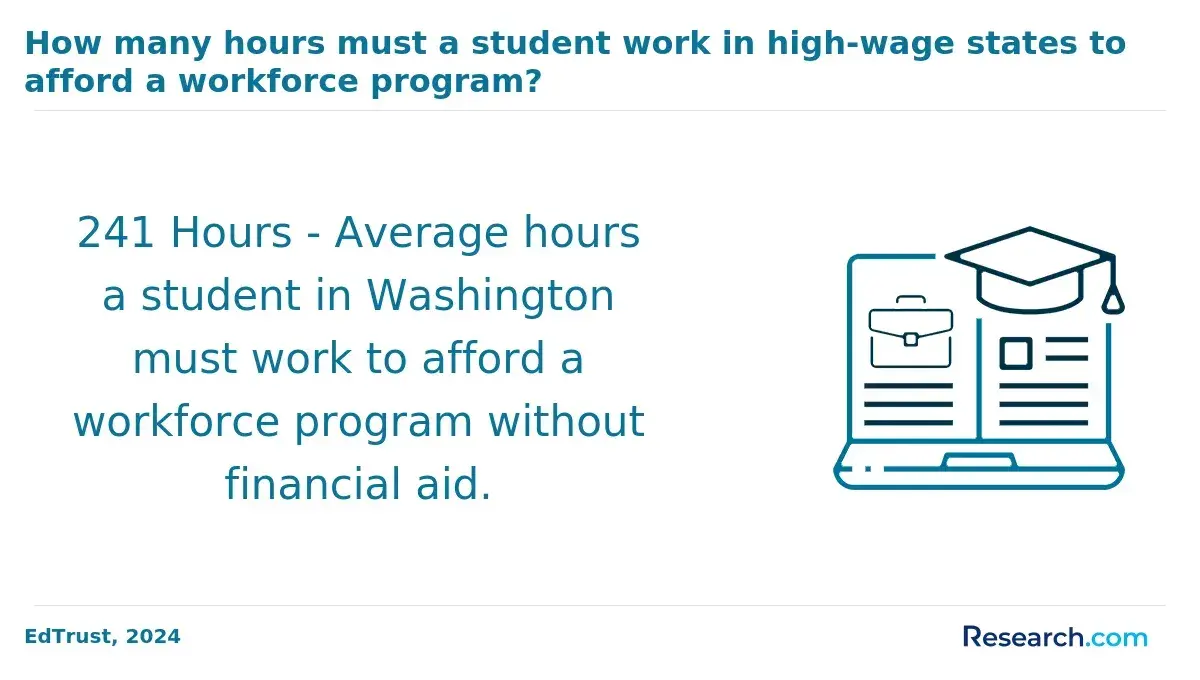
Federal student aid eligibility depends on the school, program length, accreditation, and other rules; do not assume a flat-price program qualifies. Compare employer tuition assistance, workforce grants, payment plans, and aid offers only after identifying the net price and the program's withdrawal policy. Readers who need a lower-cost degree route can also compare a cheapest online university in USA option with a short certificate.
Are flat-rate tuition certificate programs at accredited schools and why does accreditation matter?
Some flat-rate certificate programs are offered by institutionally accredited colleges, while others are delivered by private career schools, employers, platforms, or professional associations. Accreditation matters most when you need federal aid, want academic credit that may transfer, or are entering a regulated field. Institutional accreditation evaluates the college as a whole; programmatic accreditation may apply to specific disciplines such as nursing or allied health.
Use this comparison to match the type of quality review to your goal.
| Program situation | What to verify | Decision implication |
| Credit-bearing college certificate | Institutional accreditation and transfer policy | Credits may be more likely to apply toward a degree, but transfer is never automatic. |
| Healthcare or regulated training | Required program approval, clinical eligibility, and board rules | A school credential may be insufficient if the program is not accepted for licensure or examination. |
| Private career-training provider | State authorization, refund terms, instructor qualifications, and employer recognition | Value rests on skills and market acceptance rather than academic transferability. |
| Industry-focused certificate | Whether employers recognize the provider and whether an external certification is available | May be useful for upskilling but is not necessarily college credit. |
A common mistake is assuming "accredited" means every certificate leads to licensing eligibility. Ask the relevant state board directly when a role is regulated, and obtain the school's answer in writing. If long-term degree completion is your goal, reviewing best majors in college can help you decide whether a stackable college certificate is preferable to standalone training.
Which careers and industries offer strong outcomes with flat-rate certificate programs?
Strong outcomes are most likely when the certificate teaches a defined skill tied to an employer-recognized role, rather than offering broad exposure without a clear hiring pathway. Demand alone is not enough: licensing, local employer preferences, physical demands, and prior experience can affect entry.
The following occupational context can help readers shortlist programs. BLS figures describe the occupation, not earnings or placement outcomes for certificate completers.
| Career area | Relevant certificate pathway | 2024-2034 BLS outlook | Important limitation |
| HVAC | HVAC/R technician training | 8% growth | Employers may seek EPA Section 608 certification; local licensing can apply. |
| Medical assisting | Medical assisting certificate | 12% growth | Clinical training and employer-preferred certification requirements vary. |
| Pharmacy support | Pharmacy technician certificate | 6% growth | State registration and national certification requirements vary. |
| Paralegal support | Paralegal or legal studies certificate | 0% growth | Employers may prefer prior legal experience, a degree, or a specialized program. |
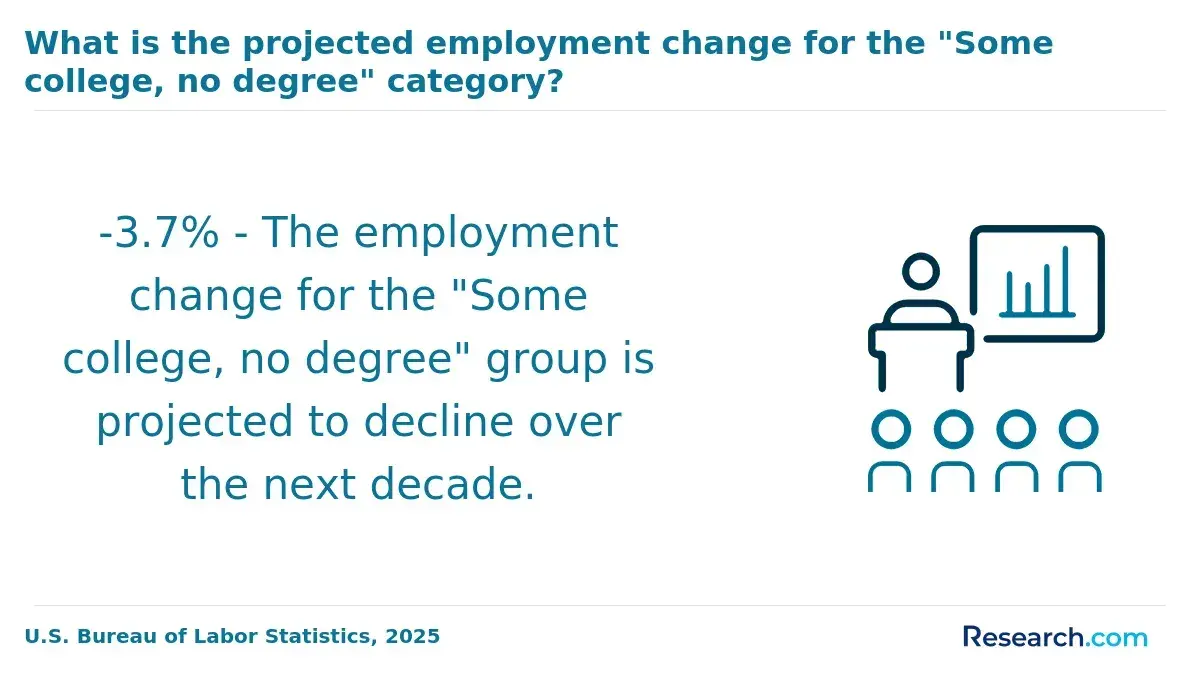
Automation and AI are changing administrative, design, and legal-support workflows, increasing the value of programs that teach verification, documentation, client communication, safety, and job-specific software - not just routine task completion. Choose a certificate when it is the recognized entry route; consider an apprenticeship, associate degree, or bachelor's degree when the target role requires deeper supervised practice or advancement credentials.
How do online flat-rate certificate programs compare with campus-based options?
Online flat-rate certificates can reduce commuting and make a fixed curriculum easier to fit around work, but they are not automatically self-paced. Many use weekly deadlines, live sessions, proctored exams, required campus intensives, or arranged clinical placements. Campus-based programs generally provide easier access to equipment, instructor demonstrations, and local employer relationships.
This comparison highlights the trade-off that matters most: flexibility versus access to supervised practice.
| Factor | Online or hybrid option | Campus-based option |
| Schedule | Often more flexible, though deadlines may still apply | Usually fixed meeting and lab times |
| Hands-on training | May require local placements or short residencies | Built into labs, shops, and simulation spaces |
| Best fit | Computer-based, administrative, or theory-heavy subjects | Trade, clinical, and equipment-dependent training |
| Key risk | Assuming online instruction meets local practical or licensing requirements | Underestimating commute and work-schedule conflicts |
Before choosing online delivery, verify where labs, externships, and assessments occur and who secures a placement. Learners who need greater control over pacing can compare self-paced online universities, while still checking whether a self-paced format fits any practical-training requirement.
What admission requirements and prerequisites do flat-rate certificate programs usually have?
Admission requirements depend on the provider and credential level. Noncredit career certificates may require only an application, identity verification, and payment. College credit certificates may require a high school diploma or equivalent, placement testing, transcripts, and prerequisites. Advanced certificates can require prior college coursework, a degree, or work experience.
Programs involving patient care, public safety, or work sites often add compliance requirements after admission. Applicants should verify the following early because these items can delay completion or limit placement options.
- Academic prerequisites, including required math, science, writing, or prior technical courses
- Minimum age, high school completion, and English-language requirements where applicable
- Background checks, drug screening, immunizations, physical examinations, or CPR certification for clinical or field placements
- Technology standards for online learning, including reliable internet, required software, and proctored-testing equipment
- Whether prior learning, military training, transfer credit, or work experience can reduce time or cost
Do not confuse admission with eligibility for a licensing exam or job placement. A school may admit a student who later cannot meet an employer's background standard or a board's clinical requirement, so ask those questions before paying a deposit.
How long do flat-rate tuition certificate programs take to complete?
Many focused certificates take a few months to about one year, but completion time is set by curriculum hours, clinical or lab scheduling, course sequencing, and the student's attendance pattern. A fixed tuition price does not mean unlimited time to finish.
Short programs can be appropriate for discrete skills, such as basic bookkeeping software or entry-level IT support concepts. Programs leading toward regulated healthcare, skilled-trade, or public-safety work often take longer because supervised practical training cannot be compressed as easily. Part-time evening formats may protect income while extending the calendar timeline.
Ask for the normal completion timeline, the maximum allowed completion period, required attendance hours, and the cost of extensions. An "accelerated" claim deserves extra scrutiny if the program must also provide clinical hours, shop practice, or externship experience. Students aiming beyond an entry credential may find that a certificate is a first step before a degree; compare that path with affordable online master's programs only when the intended occupation genuinely requires graduate education.
What curriculum and coursework should you expect in flat-rate certificate programs?
Curriculum should reflect the tasks students will actually perform, not only broad career descriptions. Credit-bearing certificates commonly include graded courses and may be stackable into an associate or bachelor's degree. Noncredit programs may focus on competencies, simulations, and preparation for an external examination, with limited or no transfer value.
A credible career-focused curriculum generally combines foundational knowledge with practice. Compare course outlines for these features before selecting the lowest flat price.
- Job-specific technical skills, equipment, software, codes, terminology, or procedures
- Safety, ethics, privacy, documentation, and communication expectations relevant to the field
- Hands-on labs, simulations, portfolio projects, clinical experience, or supervised fieldwork when the occupation requires practice
- Career preparation such as résumé support, interview practice, and explanation of certification or licensing pathways
- Assessment standards that show whether students can perform required tasks, not merely watch lessons
For technology and design fields, confirm that course content is current enough to address AI-assisted workflows, quality control, and responsible use of digital tools. For clinical and trade programs, prioritize supervised practice and safety training over purely online convenience.
How can students evaluate job outlook, salary, and licensing needs before enrolling?
Evaluate return on investment by starting with the exact role you want, then working backward to the minimum recognized education, certification, license, and experience requirements. Occupational wage data is useful context, but it is not a promise of pay for a certificate holder. Local wages can differ substantially by metro area, shift, employer, union coverage, and experience.
Use this sequence before you enroll so that tuition is compared against a realistic pathway rather than a marketing claim.
- Find the occupation in the BLS Occupational Outlook Handbook and review national pay, projected openings, duties, and typical entry education.
- Check several current local job postings to identify employer preferences for certificates, degrees, software, experience, and professional certifications.
- Contact the appropriate state licensing board for regulated occupations and confirm whether the specific program meets educational eligibility rules.
- Request the school's written total-cost estimate, completion policy, placement methodology, and any program-level outcome disclosures it can provide.
- Compare the certificate with alternatives such as an apprenticeship, community-college degree, employer training, or external certification exam preparation.
Red flags include vague claims of "job-ready" status, no explanation of licensing limits, pressure to sign immediately, unclear refund rules, and outcome claims without definitions. The best flat-rate program is not always the cheapest one; it is the option with transparent costs and credible alignment to the work you intend to pursue.
Other Things You Should Know About
Not always. A flat rate can be easier to budget, but the total may be higher or lower than per-credit tuition depending on program length, included materials, fees, and required exams. Compare the complete written cost, not the billing format alone.
Possibly, but eligibility varies. Federal aid generally depends on the institution, program, and student eligibility rules. Ask the school's financial aid office whether the specific certificate qualifies and whether tuition is charged by term or as a single package.
Only if the receiving institution accepts the coursework. Credit-bearing certificates from accredited colleges may be more transferable, especially when designed as stackable pathways, but transfer decisions are made by the receiving school.
Sometimes, but not automatically. Some certificates prepare students for an external certification examination or meet part of a licensing requirement. Confirm exam eligibility and state-specific licensing rules directly with the certifying body or licensing board.
References
- 2025 Most Affordable Online Colleges & Degrees https://www.onlineu.com/most-affordable-colleges
- The Top 5 Certificate Programs for Jobs With Growth Potential | CourseStorm https://www.coursestorm.com/blog/top-certificate-programs-for-jobs
- The Benefits of Certificate Programs in Higher Education https://moderncampus.com/blog/benefits-of-certificate-programs.html
- Types of Financial Aid https://www.hhloans.com/types-of-financial-aid/
- What Are the Advantages and Disadvantages of Studying Abroad? https://www.ciee.org/go-abroad/college-study-abroad/blog/what-are-advantages-and-disadvantages-studying-abroad
- Admissions Information https://www.ccp.edu/college-catalog/admissions-information
- Online Certificate Programs | Certifications Programs https://www.uscareerinstitute.edu/online-certificate-programs
- New York Financial Aid | College Fair Guide https://www.collegefairguide.com/state-financial-aid/new-york-financial-aid
- Online Certificate Programs, Online Certificate Courses https://www.onlinedegrees.com/best-online-certificate-programs/
- 7 Advantages to Taking Online Classes | OEDb https://www.oedb.org/ilibrarian/10-advantages-to-taking-online-classes/