2027 Best Stackable Credentials for Remote Jobs

Co-Founder and Chief Data Scientist
Choosing a remote-career credential is difficult because short programs vary widely in employer recognition, credit value, and job relevance. Stackable credentials let learners build smaller certificates into larger academic or professional pathways instead of committing to one long program upfront.
U.S. Bureau of Labor Statistics projections for 2024-2034 show faster-than-average growth in several remote-friendly fields, including data, cybersecurity, health information, and project work. This guide compares practical credential paths, explains their limits, and helps you select training that fits your target role, budget, and schedule.
Key Things You Should Know
- For remote work, the strongest stackable paths usually combine a credit-bearing certificate or industry credential with a portfolio, work samples, and job-specific tools; a credential alone rarely guarantees hiring.
- BLS projects 2024-2034 growth of 29% for information security analysts and 36% for data scientists, making technology stacks especially compelling, though many analyst roles still prefer a bachelor's degree or relevant experience.
- Compare whether each step carries college credit, transfers into an associate or bachelor's degree, prepares for an external certification exam, and includes total costs beyond tuition, such as exam fees, software, equipment, and proctoring.
Top 10 Best Stackable Credentials for Remote Jobs
Popular Trade School Programs
Trade programs are usually designed for hands-on local work, but some stackable credentials support remote-adjacent roles. Examples include an IT support certificate leading to networking or cybersecurity coursework, a bookkeeping certificate leading to accounting software training, and a CAD certificate leading to drafting credentials.
Choose these paths when the program includes software used in remote roles and a clear progression. Electrical, HVAC, welding, and automotive certificates can stack academically, but they generally require in-person labs and do not create fully remote career pathways.
Healthcare Programs
Remote-friendly healthcare stacks commonly begin with medical billing and coding, health information technology, or medical office administration certificates. Learners may add ICD-10, CPT, electronic health record, privacy, or revenue-cycle coursework, then progress to an associate degree where credits transfer.
These programs suit detail-oriented learners interested in administrative healthcare work rather than direct patient care. A certificate is not the same as professional certification: employers may prefer credentials such as CPC or CCS, which have separate eligibility and examination requirements. Clinical licensure programs usually require in-person training.
Criminal Justice / Law Programs
Paralegal studies, legal research, e-discovery, compliance, and court-reporting support programs can create stackable routes toward remote or hybrid legal-services work. A short legal studies certificate may lead into an associate degree or a more focused paralegal certificate, depending on the college's credit policies.
These options fit learners who enjoy research, documentation, deadlines, and confidentiality. They do not qualify someone to practice law or replace attorney licensure. Before enrolling, verify whether local employers prefer an American Bar Association-approved paralegal program or a degree-based pathway.
Arts & Design Programs
Remote creative stacks often combine certificates in graphic design, UX design, digital marketing, web content, video editing, or animation. Learners can build from foundational software courses into a portfolio-focused certificate or associate degree. This route works best when each credential produces demonstrable projects rather than only completion badges.
Employers commonly assess portfolios, practical tests, and communication skills alongside credentials. A design certificate can strengthen entry-level candidacy, but it does not assure freelance income or a remote role. Check software access, instructor feedback, and portfolio ownership before paying.
What are stackable credentials and how do they support remote career pathways?
Stackable credentials are intentionally connected learning milestones. A learner might complete a short college certificate, apply its credits toward an advanced certificate or associate degree, and later transfer eligible credits to a bachelor's program. In a professional stack, a foundational training certificate may prepare the learner for an industry certification, followed by an advanced vendor credential.
For remote pathways, stackability reduces risk: you can test a field, gain a usable skill, and decide whether to continue. It is most valuable when every stage has a documented outcome, including a college credit, an exam-aligned skill, a portfolio artifact, or a recognized employer signal.
Noncredit badges can be useful, but they usually do not transfer automatically. Learners considering a later degree should compare the curriculum with the best 4 year degrees to determine whether a degree is ultimately expected in their target occupation.
A good stack has a visible map from entry level to advancement. Ask the provider to identify exactly which courses transfer, the minimum grade required, expiration rules, and whether the next credential is offered regularly.
Which remote-friendly industries offer the strongest demand for stackable credentials?
Technology, business operations, healthcare administration, legal support, and digital creative services offer some of the clearest remote-compatible stacks. Demand alone should not determine your choice; the credential must match how employers screen candidates in that field.
The comparison below distinguishes fields where a short stack can help launch supporting work from those where a degree or substantial experience is commonly expected.
| Industry pathway | Useful stackable starting point | Remote-work reality | Important limitation |
| IT support to cybersecurity | IT support certificate, networking coursework, Security+ preparation | Help desk, systems support, and some security work can be remote | Advanced security roles often require experience |
| Data and analytics | Spreadsheet, SQL, visualization, and analytics certificate | Many analyst roles are hybrid or remote | Employers may prefer a degree and portfolio |
| Healthcare administration | Billing, coding, health information, privacy training | Claims, coding, and scheduling may be remote | Employer and payer requirements vary |
| Project operations | Business certificate, Agile coursework, project tools training | Coordinator work may be remote | Project manager roles often require experience |
| Digital design and marketing | Design, UX, content, or digital marketing certificate | Portfolio-based work is frequently remote-friendly | Competition can be high and portfolios matter most |
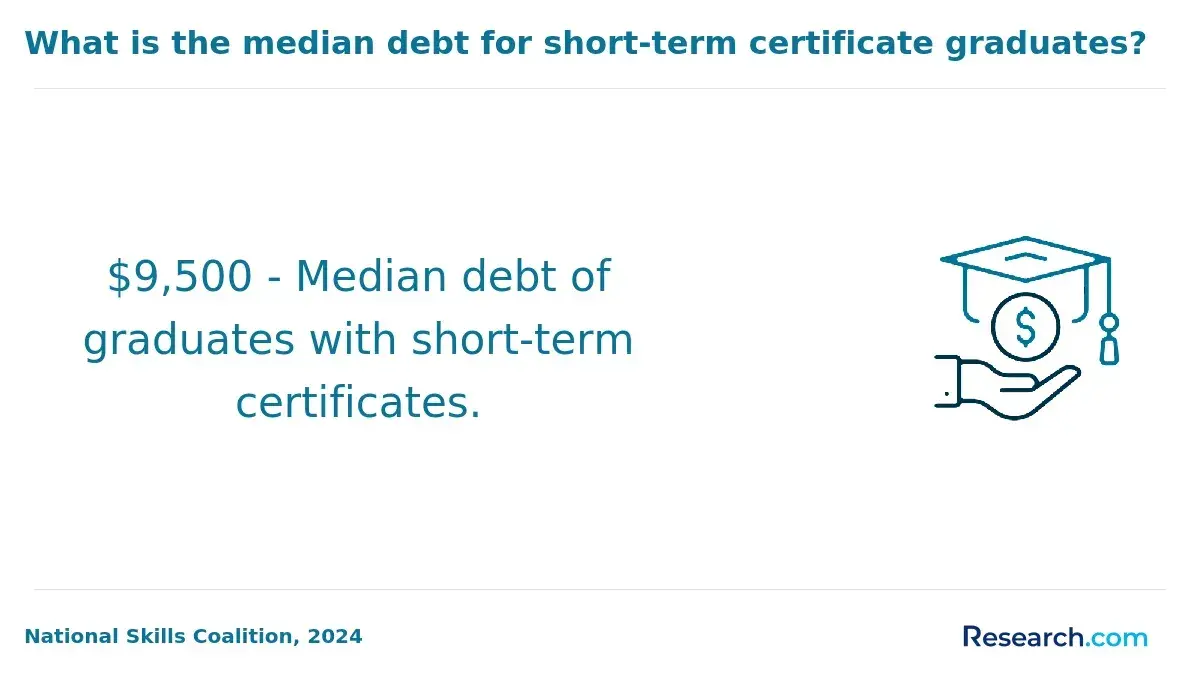
BLS projects 29% employment growth for information security analysts from 2024 to 2034. That signals a strong market direction, but it should not be read as evidence that an introductory cybersecurity certificate alone meets typical analyst hiring requirements.
How do accredited online stackable credential programs compare to campus-based options?
Accredited online college programs and campus programs can carry similar academic value when they award the same credential, use the same faculty standards, and are offered by the same institution.
Online delivery is often the better fit for remote-job preparation because it builds comfort with digital communication, collaboration platforms, and independent scheduling.
However, accreditation applies to institutions and, in some fields, specific programs, not to every individual badge. Institutional accreditation matters most for federal aid eligibility and credit transfer. Programmatic accreditation may matter in regulated fields. Third-party professional certificates can be valuable for employer-recognized skills but usually are not academic credit.
The key trade-off is support versus flexibility. Campus or hybrid options can offer labs, networking, and live advising; online options can reduce commuting and allow part-time progress. If affordability is the deciding factor, compare published tuition, mandatory fees, and transfer policies using options such as the cheapest tuition online college resources before choosing a format.
What admission requirements and prior experience are needed for stackable credential programs?
Admission requirements depend on the credential type. Credit-bearing undergraduate certificates at community colleges may require a high school diploma or equivalent and placement steps, while graduate certificates generally require a bachelor's degree.
Industry certificates often require only an account, payment, and basic computer access. Certification exams may impose separate education or experience rules.
Before applying, confirm which of these requirements applies to your specific pathway:
- Whether the credential is credit-bearing, noncredit, undergraduate, graduate, or employer training.
- Required prior coursework, especially math, writing, anatomy, programming, or statistics prerequisites.
- Technology requirements, including a reliable computer, webcam, required software, and internet speed.
- Whether external certification eligibility requires work experience, supervised practice, or a separate exam.
- Whether prior learning, military training, employer training, or transfer credit can shorten the pathway.
A common mistake is assuming "no degree required" means "no prerequisites." Read the program catalog and certification handbook separately. Applicants seeking a low-friction college application process can also review online college free application options, while still checking program-specific entry rules.
How long do stackable credential pathways take and what do they typically cost?
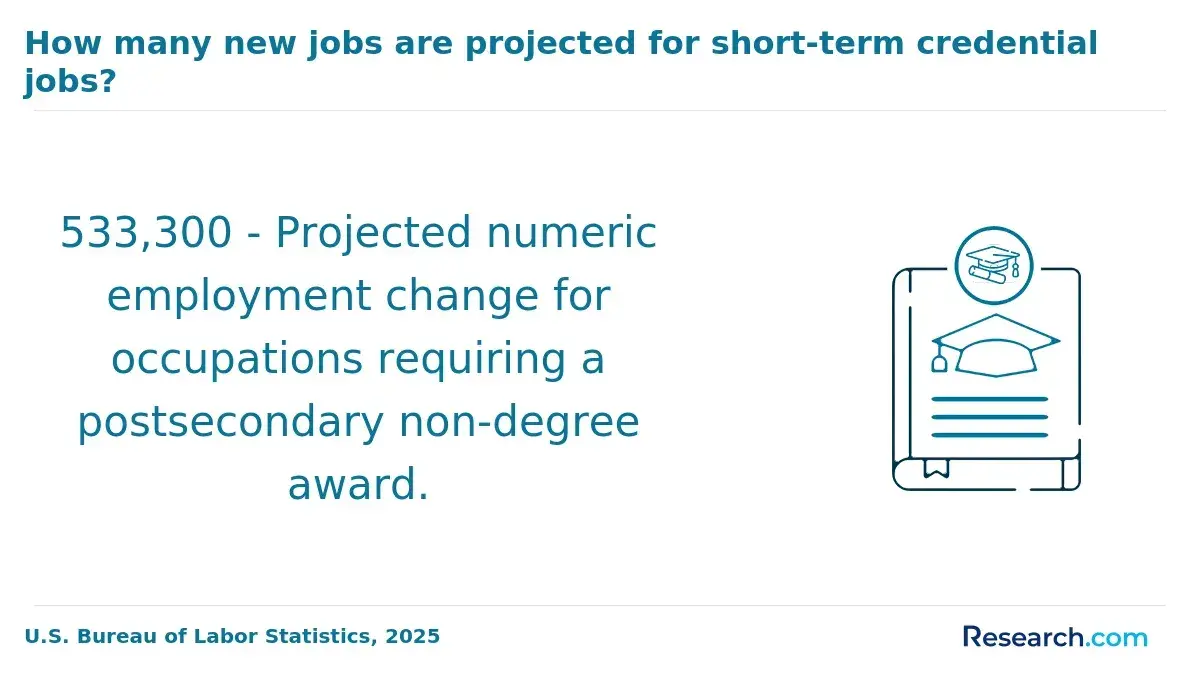
Completion time ranges from a few weeks for a focused noncredit course to one year or more for a credit-bearing certificate. An associate degree typically takes about two academic years of full-time study, although transfer credit and part-time enrollment change the timeline. Stacking is efficient only when later credentials accept the earlier work.
Costs vary too much by provider to treat one price as typical. Use the following cost categories to compare a short program honestly.
| Cost category | What to verify | Why it changes ROI |
| Tuition or subscription | Total charge, not only monthly price | Accelerated pacing can raise monthly payments |
| College fees | Technology, registration, lab, and graduation fees | Fees may not appear in advertised tuition |
| Exam costs | Certification exam, retake, and renewal fees | Certification may require ongoing spending |
| Tools and materials | Software licenses, computer, books, and supplies | Remote study can shift costs to the learner |
| Opportunity cost | Reduced work hours or unpaid practicum time | Low tuition does not always mean low total cost |
Credit-bearing programs may qualify for federal aid if the institution and program meet applicable requirements. Many short noncredit programs do not. Employer tuition assistance, workforce grants, and payment plans can help, but confirm reimbursement conditions before enrolling.
If your goal requires a bachelor's degree later, an affordable credit-bearing start can be preferable to a cheaper nontransferable course; compare this with pathways such as easy masters degrees only after confirming that graduate study is relevant to your intended advancement.
What coursework and skill areas are included in leading remote stackable credential tracks?
Leading remote stacks teach a combination of technical production skills and workplace skills. The best curriculum is not simply the longest one; it gives learners evidence they can perform the tasks a remote employer needs.
Common skill areas include the following:
- Digital communication, documentation, meeting practices, and asynchronous collaboration.
- Spreadsheets, databases, reporting, dashboards, and data privacy fundamentals.
- Role-specific software such as help-desk platforms, accounting systems, design tools, CRM software, or electronic health records.
- Project workflow, version control, task tracking, quality assurance, and deadline management.
- Cybersecurity basics, identity protection, secure file handling, and remote-work privacy practices.
- Portfolio, case-study, or capstone development that demonstrates applied work.
AI is changing entry-level work, especially in writing, design, coding, customer support, and analysis. Choose programs that teach verification, ethical use, privacy awareness, and workflow judgment rather than presenting AI tools as a substitute for foundational competence.
Which professional certifications or licenses align with stackable credentials for remote roles?
A certificate program may prepare you for a certification, but the two credentials are different. Schools award certificates for completing coursework. Professional organizations and vendors award certifications after learners meet their rules, often including an exam, fees, continuing education, or work experience.
These pairings can make a stack more legible to employers when they align with the job description.
| Career area | Educational stack | Potential external certification | Critical check |
| IT support | IT support or networking certificate | CompTIA A+ or Network+ | Confirm the exam objectives match the curriculum |
| Cybersecurity | Networking and security certificate | CompTIA Security+ | Entry certification does not replace hands-on experience |
| Medical coding | Billing and coding certificate | CPC or CCS | Review eligibility, specialty, and employer preferences |
| Project coordination | Business or project management certificate | CAPM or Scrum-related certification | Check experience requirements and renewal rules |
| Digital marketing | Marketing analytics and content certificate | Platform-specific certifications | Prioritize current portfolio work alongside badges |
Do not pay for a program merely because it says "certification included." Ask whether the exam voucher is included, whether eligibility is met at completion, and whether the certification is recognized in the job listings you intend to pursue.
What remote job titles, salary ranges, and advancement opportunities follow these credentials?
Remote job titles vary by employer, and many jobs are hybrid rather than permanently remote. Credentials can support entry into adjacent roles, but education requirements, prior experience, geographic hiring restrictions, and portfolio quality still affect eligibility.
The table uses BLS occupational wage information as context for occupations, not as a promise of pay for certificate completers.
| Potential role | Typical stack | Occupation salary context | Advancement route |
| Computer user support specialist | IT support certificate plus troubleshooting practice | BLS reported a 2024 median annual wage of $60,340 for computer user support specialists | Network support, systems administration, cybersecurity |
| Medical records specialist | Health information or coding certificate | BLS reported a 2024 median annual wage of $50,250 for medical records specialists | Coding specialty, compliance, health information management |
| Paralegal or legal assistant | Paralegal certificate or associate pathway | BLS reported a 2024 median annual wage of $61,010 for paralegals and legal assistants | Litigation support, e-discovery, compliance |
| Graphic designer | Design certificate plus portfolio | BLS reported a 2024 median annual wage of $61,300 for graphic designers | UX, art direction, brand or product design |
Use salary figures to compare occupational ceilings and regional variation, not to calculate a guaranteed return. Review actual job postings in your preferred location, identify recurring requirements, and build your stack around those requirements before enrolling.
How can students evaluate and choose reputable stackable credential providers for remote work?
Choose a provider by working backward from the role you want. Find several current job postings, record the repeated tools, education level, certifications, and experience expectations, then compare programs against that evidence. Avoid providers that promise placement, salary, transferability, or certification eligibility without written terms.
Use this evaluation sequence before committing money or time:
- Define one target role and one realistic backup role, including whether each is genuinely remote, hybrid, or location-restricted.
- Verify the credential issuer, institutional accreditation where academic credit matters, and programmatic approval where a regulated field requires it.
- Request a written course map showing stackable credits, transfer destinations, grade thresholds, and time limits.
- Calculate total cost, including supplies, software, exams, retakes, travel, and lost work time.
- Review curriculum recency, instructor access, career services, portfolio or practicum requirements, and job-outcome disclosures.
- Confirm whether the program prepares for a certification or license, then verify requirements directly with the certifying body or licensing board.
Red flags include vague claims about "national accreditation," pressure to enroll immediately, unclear refund policies, unverified employer partnerships, and a curriculum with no practical assignments. A reputable provider can explain what its credential does and does not qualify you to do.
Other Things You Should Know About the Best Stackable Credentials
Stackable credentials are smaller, connected learning awards that can lead toward a larger credential. A degree is a broader academic award with its own graduation requirements. Some stacks transfer into degrees, while others are noncredit and do not.
They can be worthwhile when they teach skills shown in remote job postings, create work samples, and lead to a recognized next step. They are less useful when the target occupation requires licensure, a bachelor's degree, or substantial experience that the stack does not provide.
Possibly, especially in support, operations, coding, design, or administrative roles, but it depends on the employer and role. Pair the certificate with a portfolio, relevant software practice, and evidence of reliable remote communication.
Not automatically. Credit transfer is determined by the receiving institution, course equivalency, grades, accreditation, and program rules. Obtain written confirmation before assuming a certificate will count toward another program.
References
- Stacked Credentials and Employment https://services.intead.com/blog/stacked-credentials-employment
- What are Stackable Credentials? https://assess.com/stackable-credentials/
- Stackable Credentials: Living Links Between Learning and Work https://www.cael.org/resouces/pathways-blog/stackable-credentials-living-links-between-learning-and-work
- What Are Stackable Credentials and Why Do They Matter? https://www.pltw.org/blog/what-are-stackable-credentials